
A simple evening routine quickly turned into a point of tension when one spouse came home hungry and frustrated. The situation unfolded after a rushed exit, an unfinished meal, and an unexpected decision made in his absence. What seemed minor to one person felt deeply inconsiderate to the other, and that emotional disconnect is what sparked the conflict.
What makes the story more complicated is how expectations around shared effort and communication collided. The husband believed dinner was waiting, while the wife believed sharing food with family was harmless. That gap in understanding pushed an ordinary night into a heated exchange, leaving both sides questioning whether the reaction crossed a line or was completely justified.

‘AITA for being rude to my wife because she fed her parents and left me with nothing?’
It started with dinner plans, a rushed exit, and an assumption that food would wait.
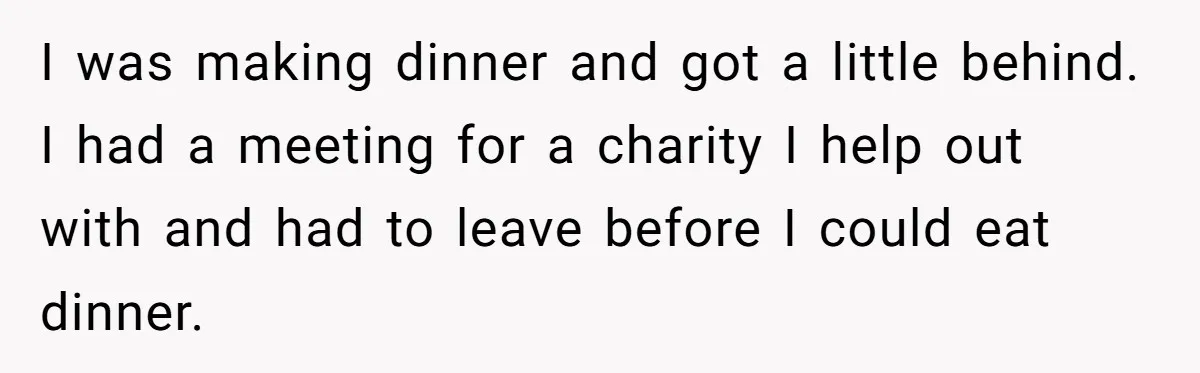
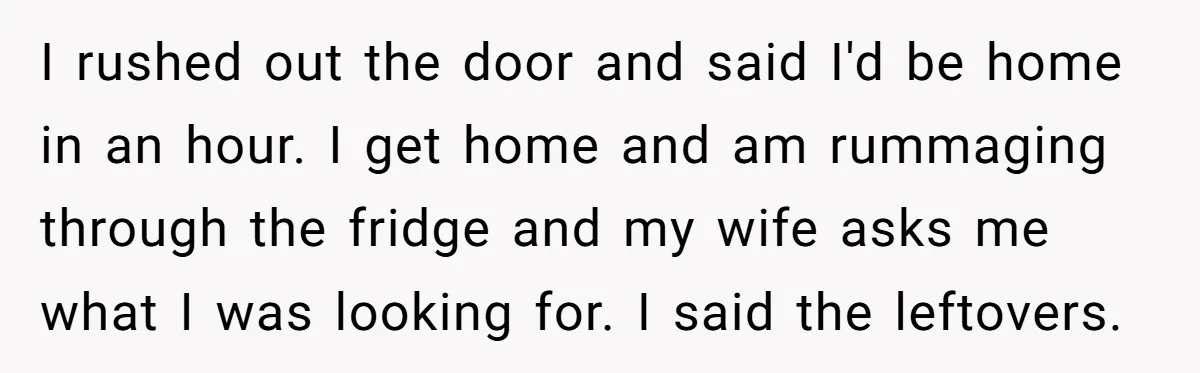
The tension escalated when hunger, frustration, and tone collided.

The night ended without resolution, leaving lingering resentment behind.
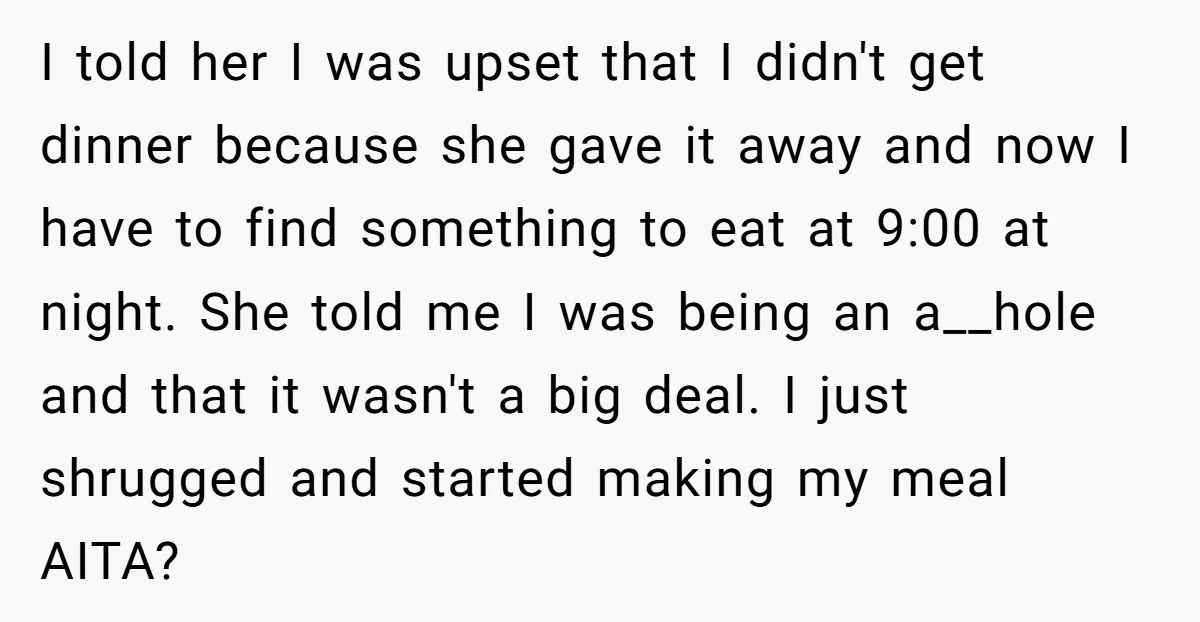
This situation highlights how everyday misunderstandings can escalate when communication breaks down. At its core, the issue is not simply about food, but about effort, expectations, and feeling considered. The husband had invested time into preparing dinner and reasonably expected to eat it later, while the wife made a spontaneous choice that overlooked his plans.
From one perspective, offering food to visiting parents can feel like a natural, generous response. However, what complicates matters is the lack of communication. A brief message or saving a portion could have prevented the frustration entirely. The wife’s dismissal of her husband’s feelings intensified the conflict, making him feel unheard rather than supported.
On the other hand, the husband’s rude tone also contributed to the escalation. Hunger and exhaustion can amplify emotions, but how those emotions are expressed matters. This scenario reflects a broader social dynamic where small acts of consideration—or the absence of them—carry significant emotional weight. Addressing such conflicts requires both accountability and empathy, rather than minimizing the other person’s experience.
Let’s dive into the reactions from Reddit:
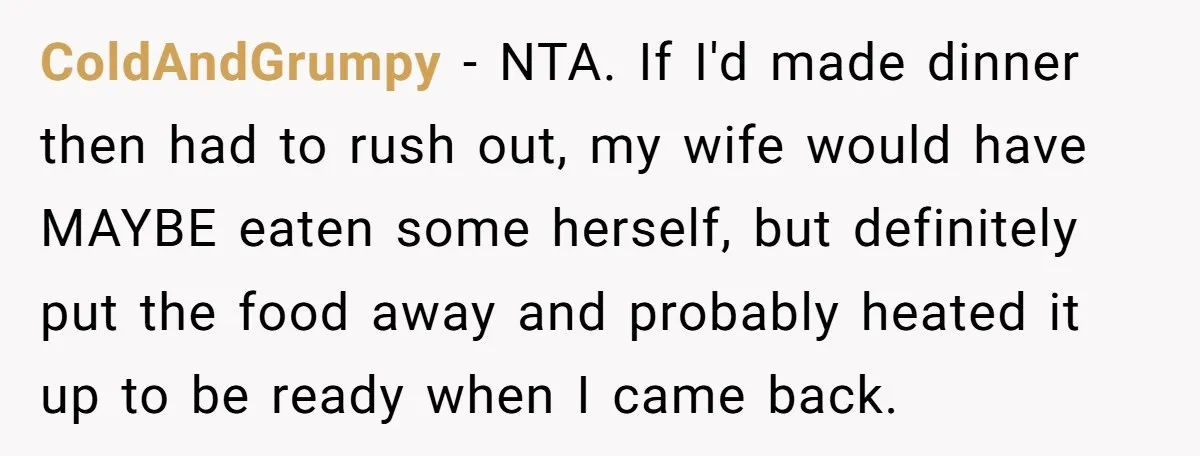
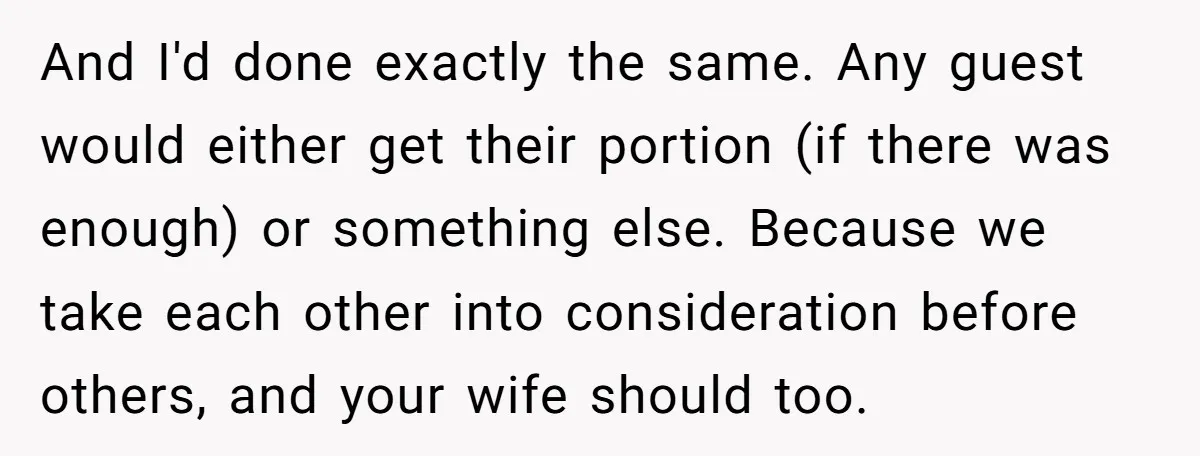
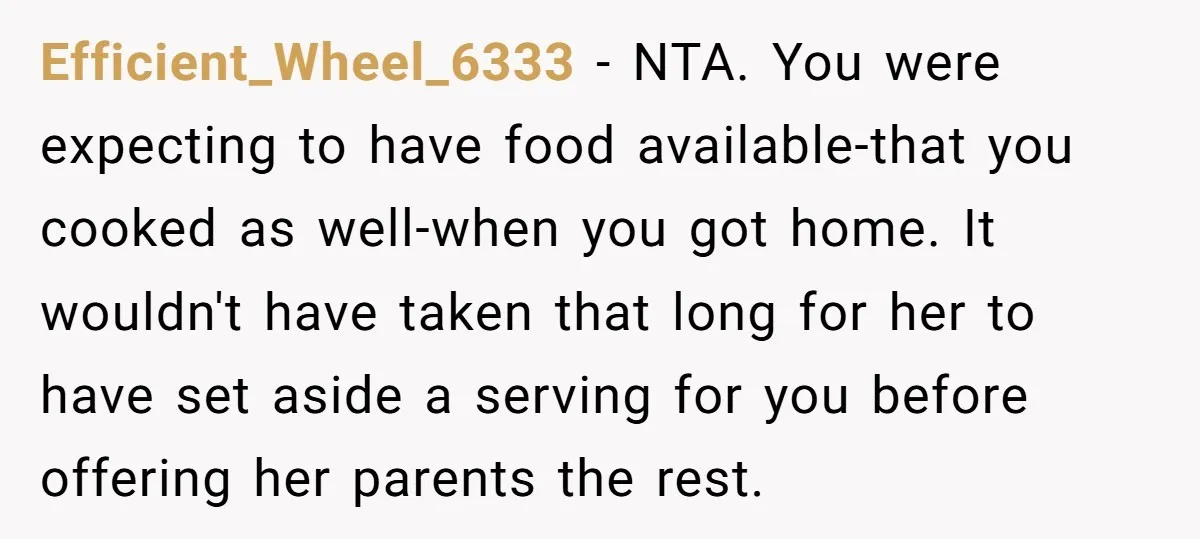
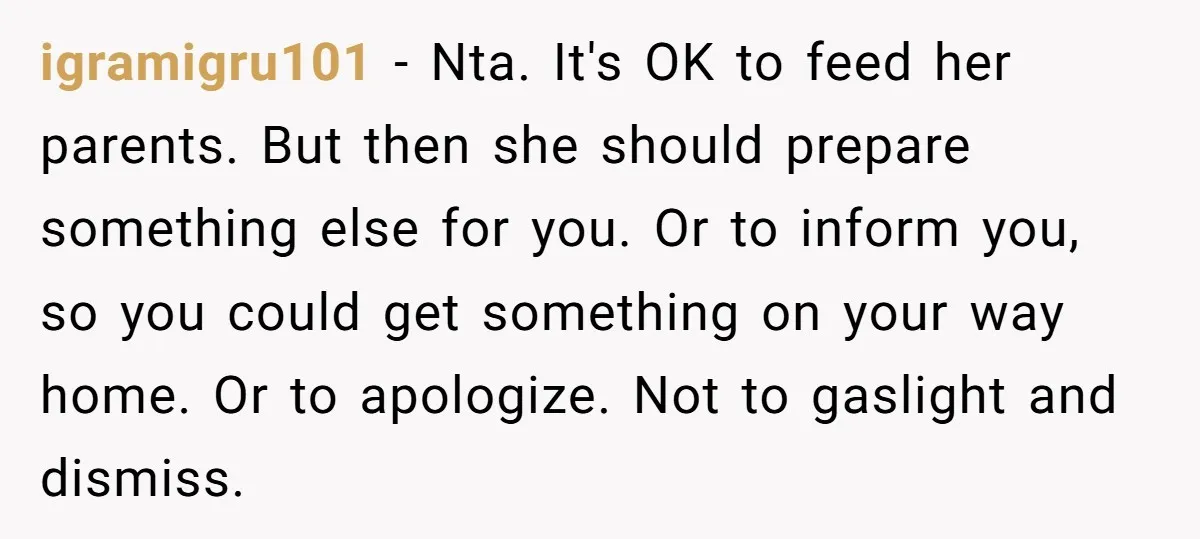
Many users sided with the husband, emphasizing fairness and basic consideration.
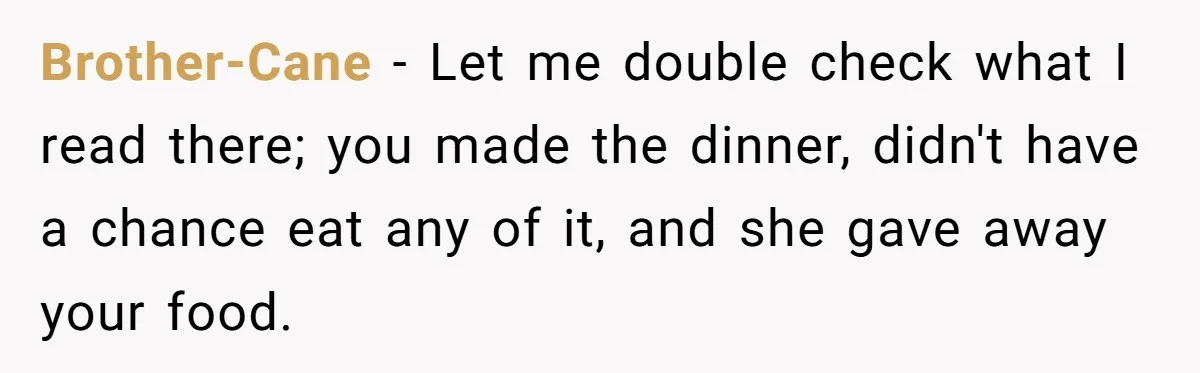


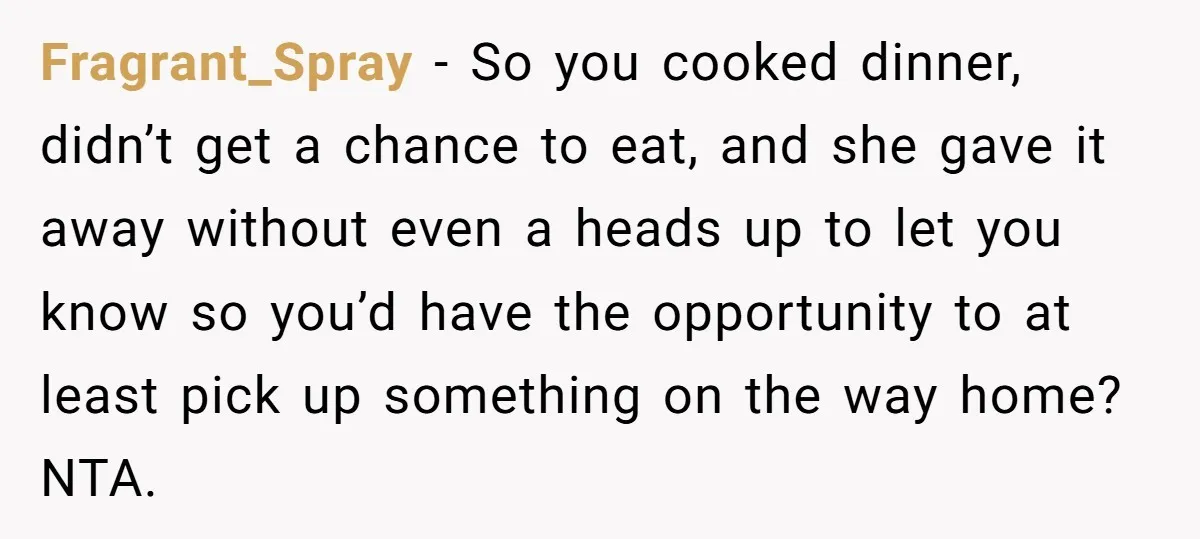
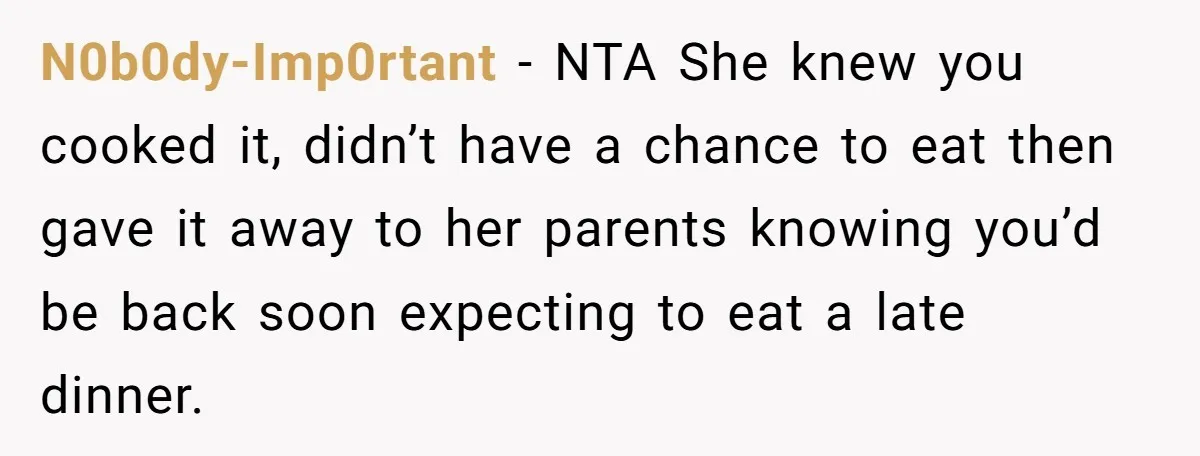

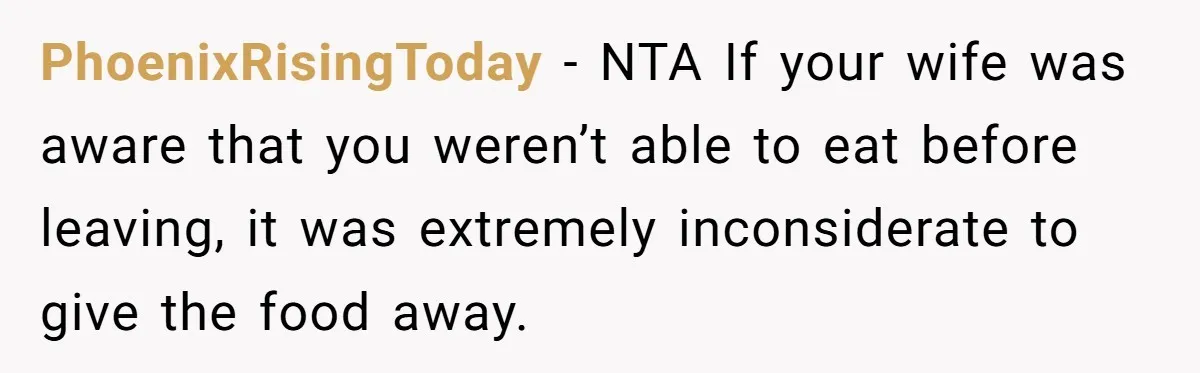
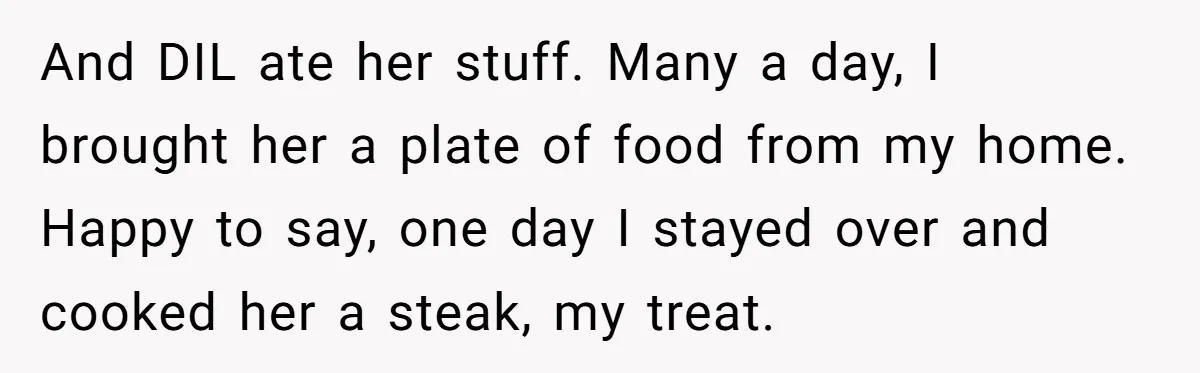
Some commenters offered broader context or personal experiences to frame the issue differently.

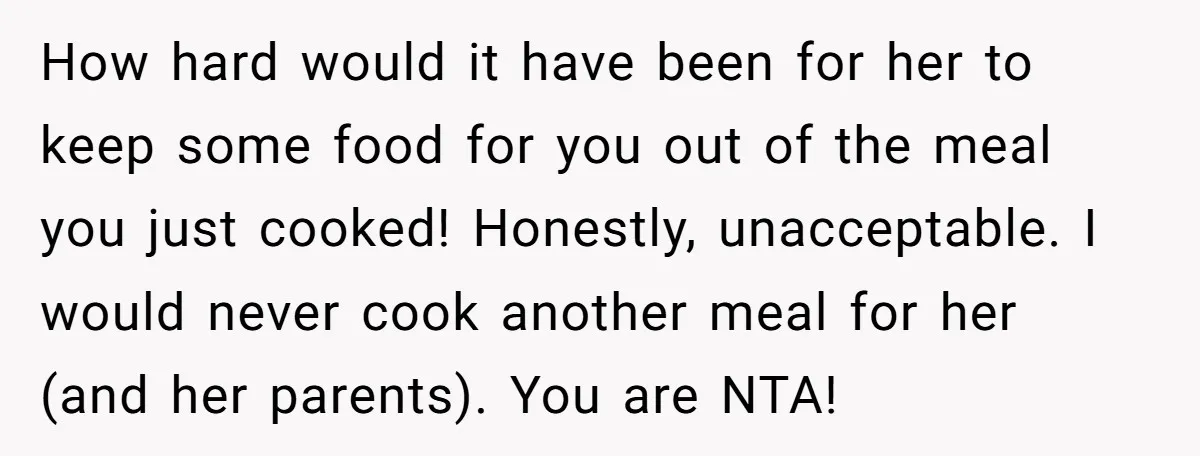




A few responses used humor and bluntness to lighten the mood.
This disagreement may seem small on the surface, but it reflects how unmet expectations and poor communication can quickly erode goodwill. Both partners walked away feeling dismissed, turning a routine evening into a lingering conflict.
Was the reaction justified given the circumstances, or should the response have been calmer? How much responsibility do partners have to anticipate each other’s needs in everyday situations? Where should the line be drawn between generosity toward others and consideration at home?