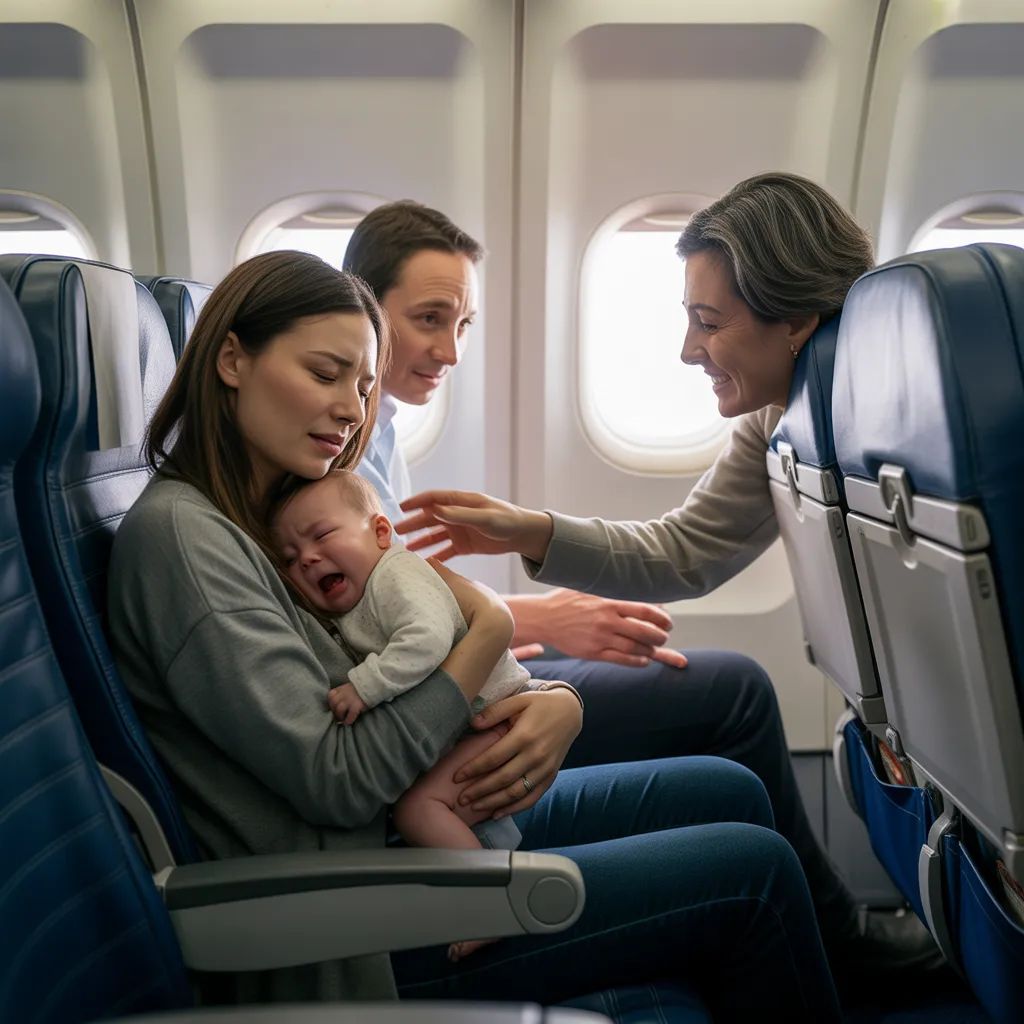
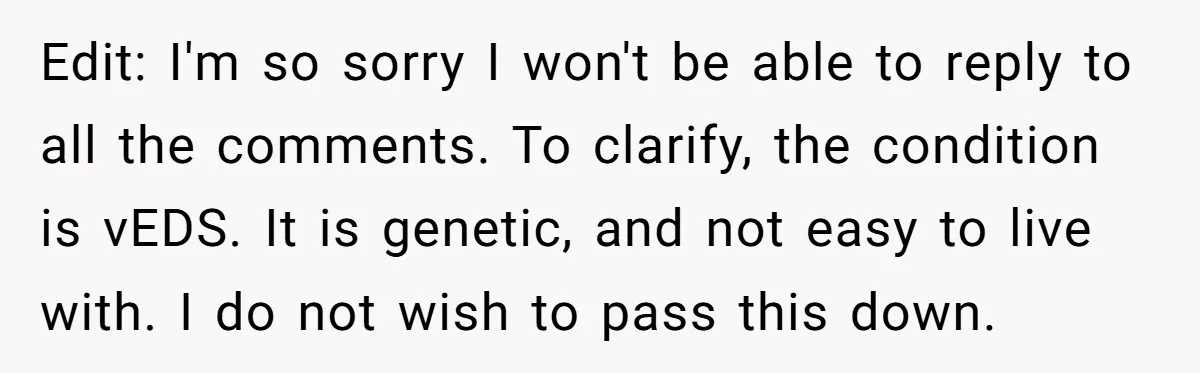
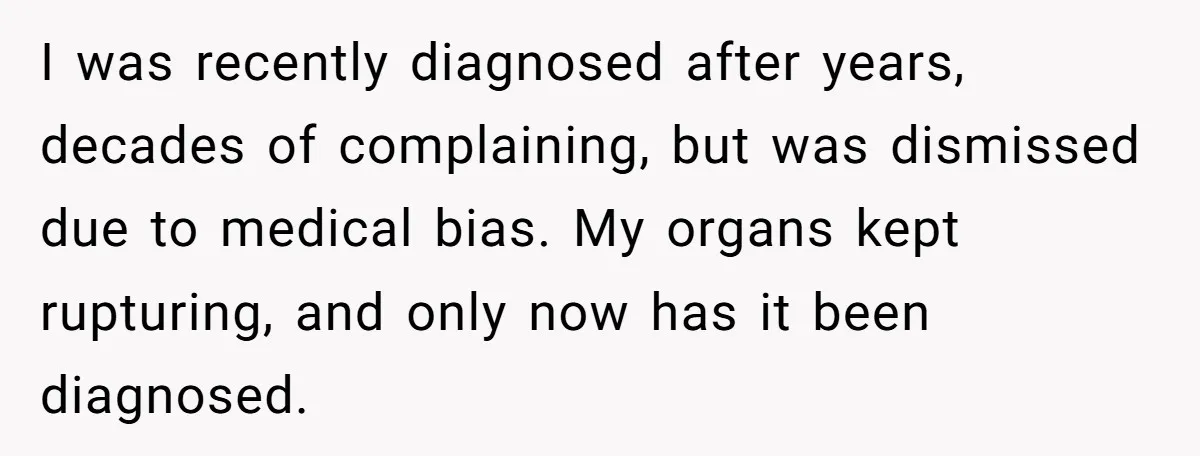
For years, this woman believed motherhood was part of her future. Then a devastating medical diagnosis changed everything. At 29, she learned she has a genetic condition that drastically shortens her life expectancy and makes pregnancy extremely dangerous, with a real chance it could kill her. As she tried to process the grief of losing the future she once imagined, her long-term relationship began to unravel.
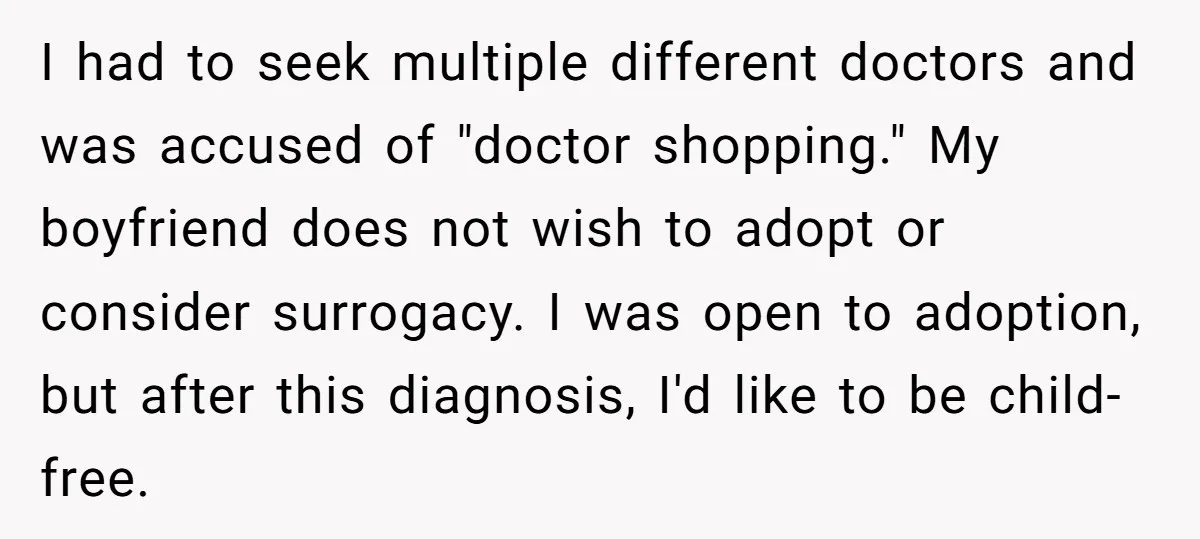
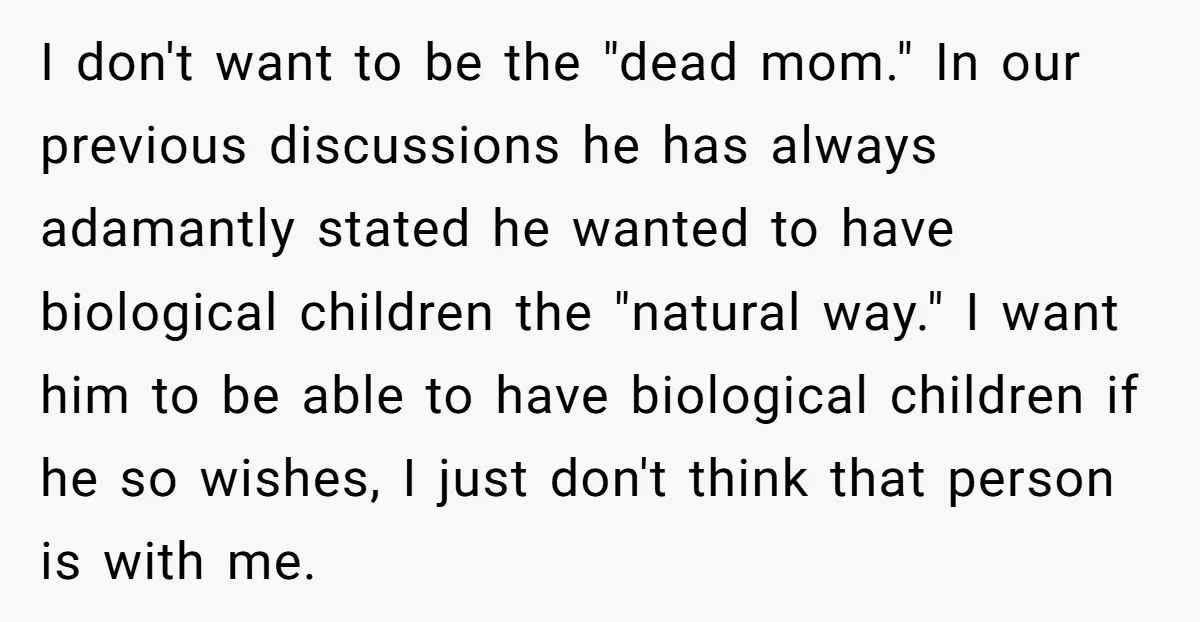
Her boyfriend of three years still wanted children, and not just hypothetically. He insisted on biological kids, framing the risk to her life as a meaningful sacrifice that would allow “a piece of her” to live on after she was gone. What followed was a painful conversation that forced her to choose between preserving her remaining years or fulfilling someone else’s vision of legacy. The community reaction was swift, emotional, and deeply divided.


The relationship had been stable before a life-altering diagnosis shifted everything
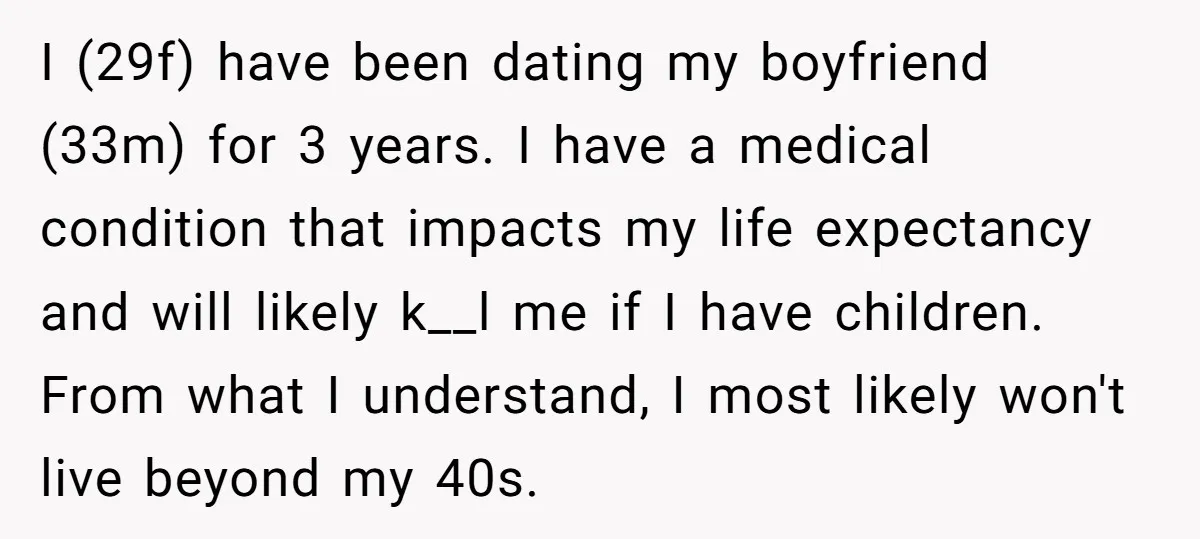
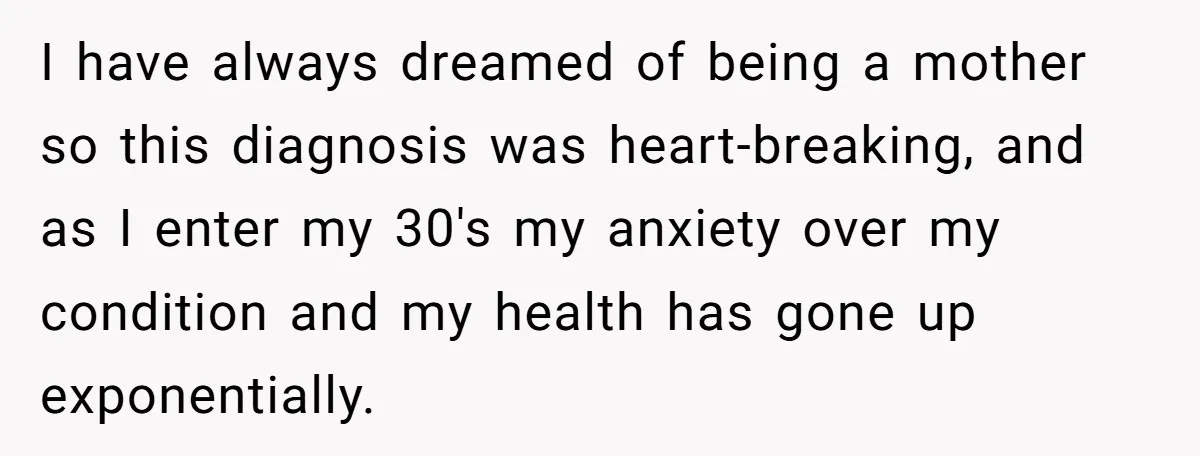
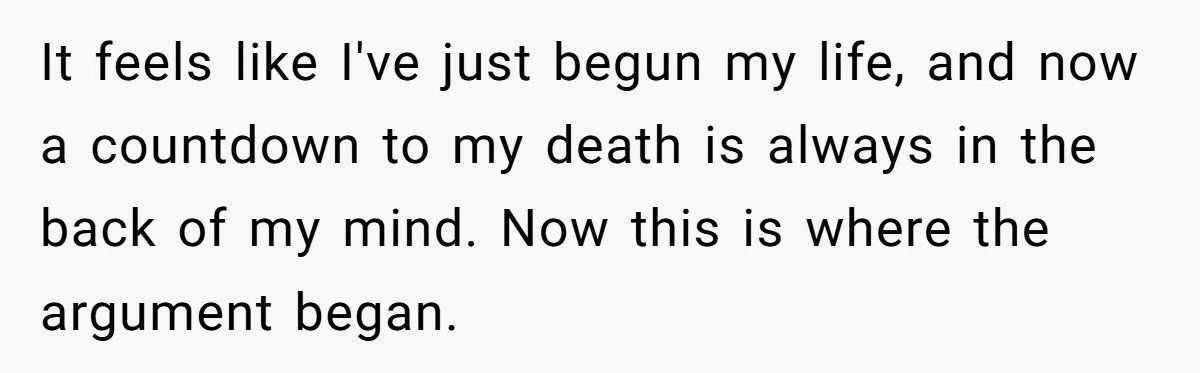
The conflict escalated when they revisited a future they once agreed on
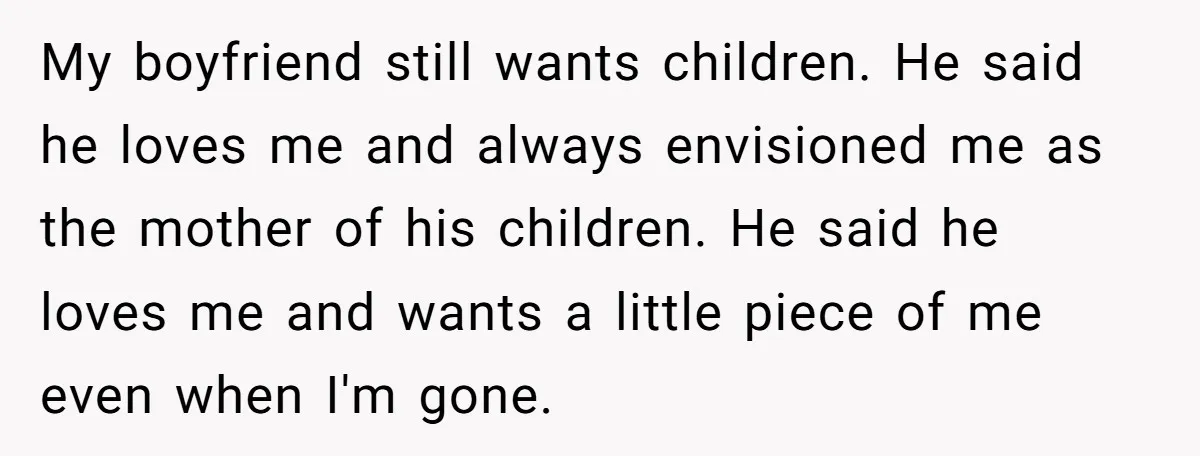
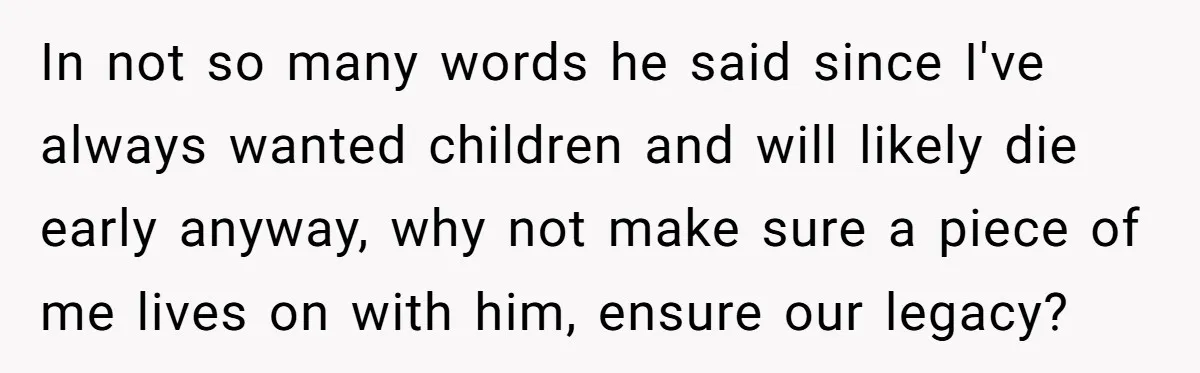
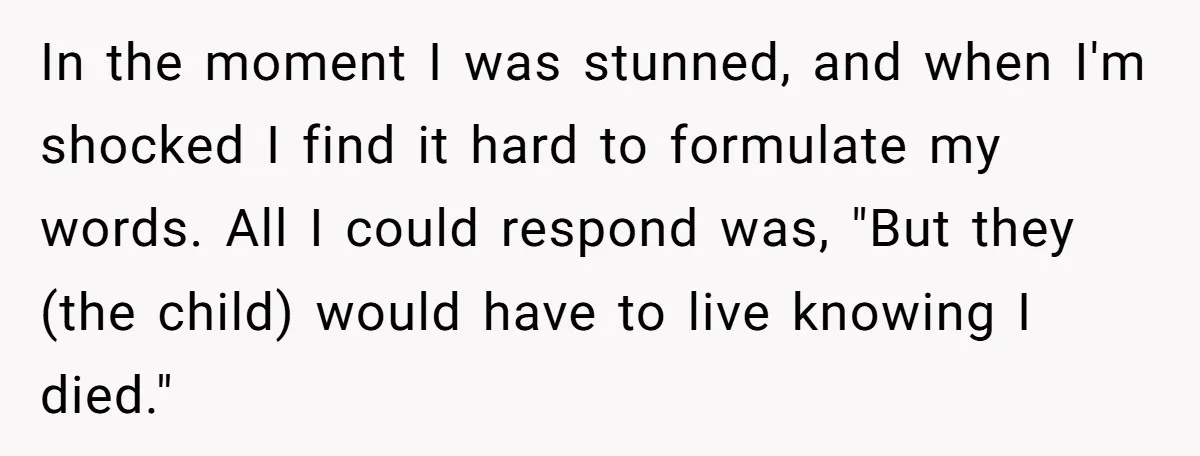
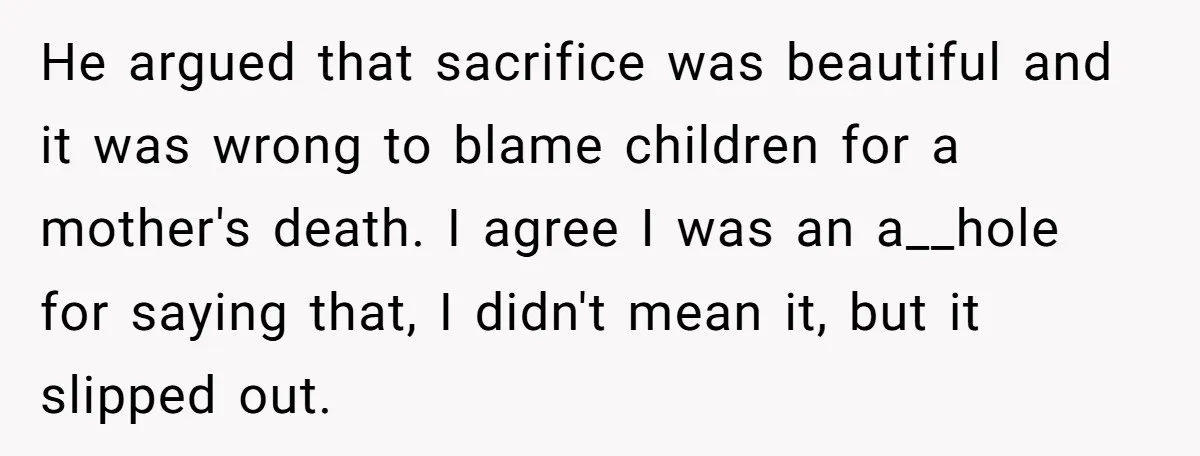
Fear, ethics, and self-preservation collided in a single moment
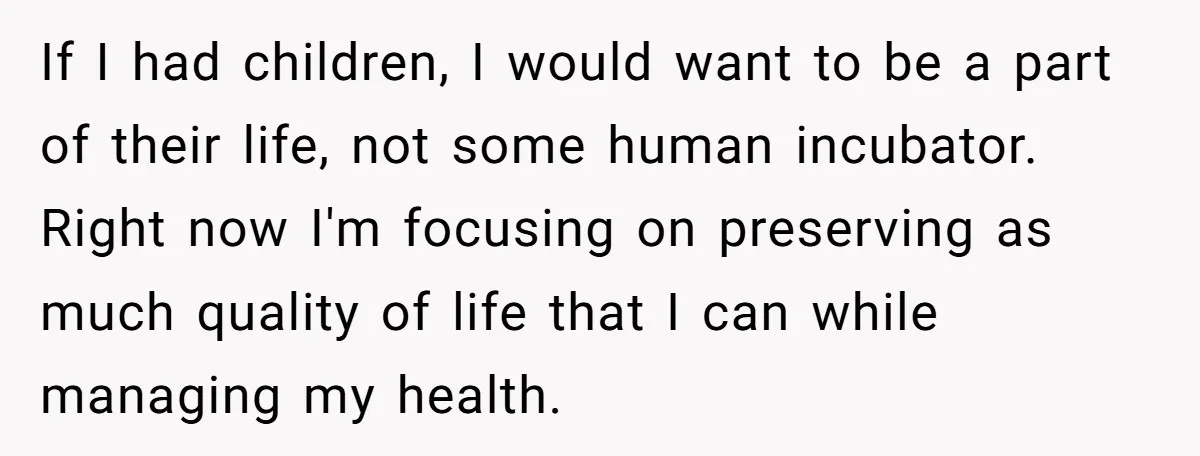
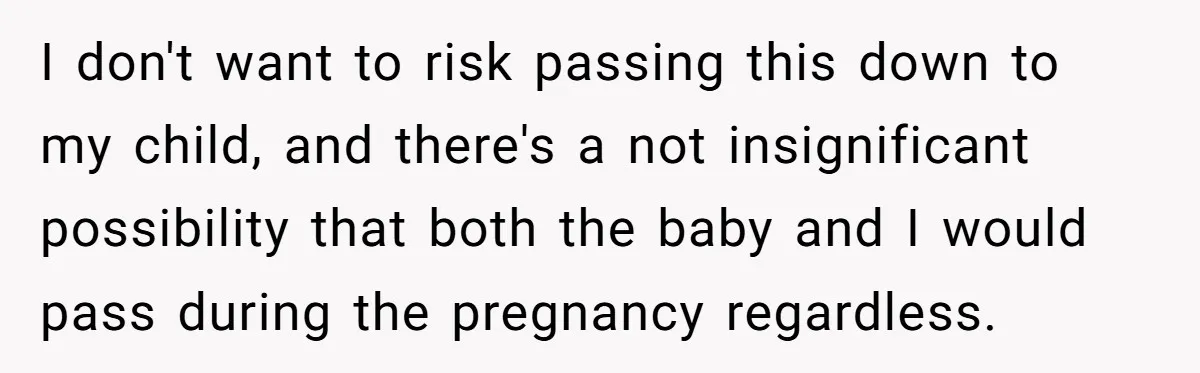
Ultimately, she chose herself, even though it broke them both
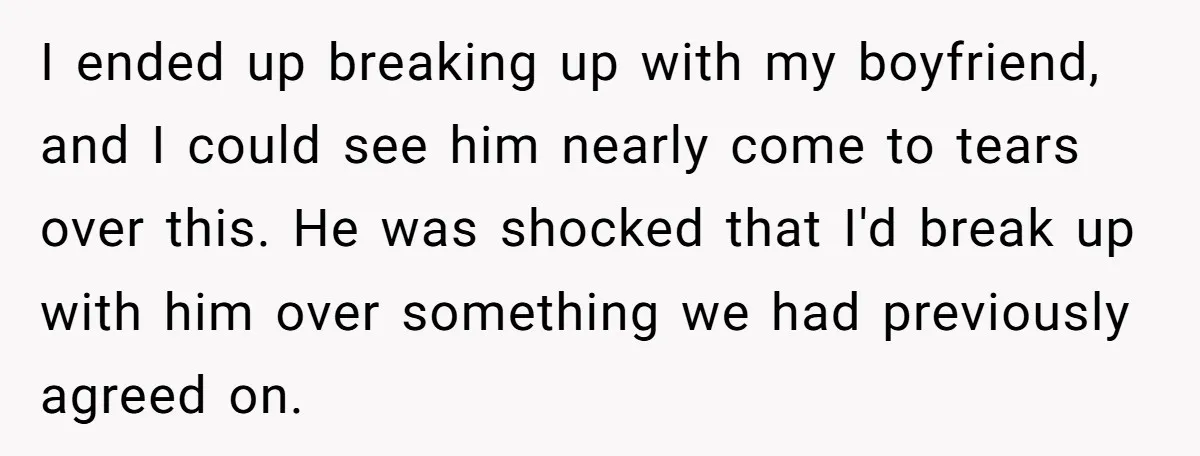
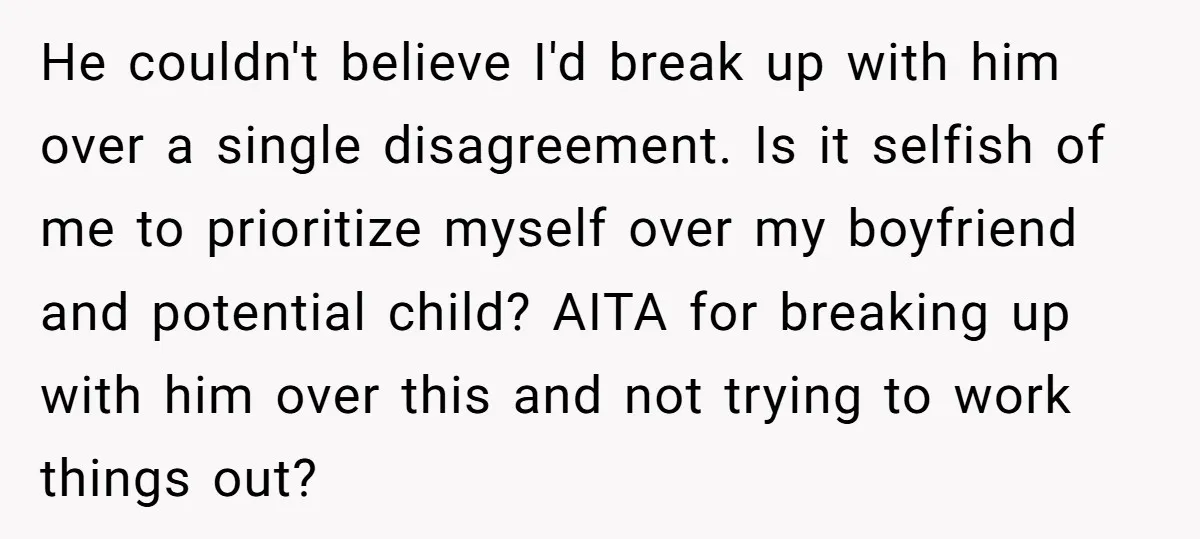
When serious illness enters a relationship, long-held assumptions about the future often collapse overnight. In this case, the central issue is not simply disagreement over children, but bodily autonomy and survival. Pregnancy is never a neutral choice, and when it carries a significant risk of death, the decision becomes profoundly ethical as well as personal.
From the boyfriend’s perspective, he appears to be grieving the future he imagined. Wanting children, especially biological ones, is deeply ingrained for many people. However, framing a partner’s potential death as a “beautiful sacrifice” crosses a critical line. Love does not ask someone to shorten their life for symbolism or legacy. According to Dr. Gabor Maté, a physician known for his work on trauma and chronic illness, long-term stress and lack of autonomy worsen health outcomes.
Feeling pressured into life-threatening decisions can compound both physical and psychological harm. In healthy relationships, support prioritizes safety, dignity, and choice. There is also the question of compatibility. Wanting children versus choosing to be child-free is one of the most fundamental relationship differences. When compounded by a genetic condition that could be passed on, the stakes rise dramatically.
Breaking up in this context is not impulsive; it is an acknowledgment that love alone cannot bridge incompatible futures. Practical advice in situations like this centers on clarity and compassion. Ending a relationship early, painful as it is, prevents deeper resentment later. Therapy, especially with specialists familiar with chronic illness, can help individuals process grief for futures they are forced to let go. Choosing life quality over sacrifice is not selfish; it is an act of self-respect.
Here’s the comments of Reddit users:
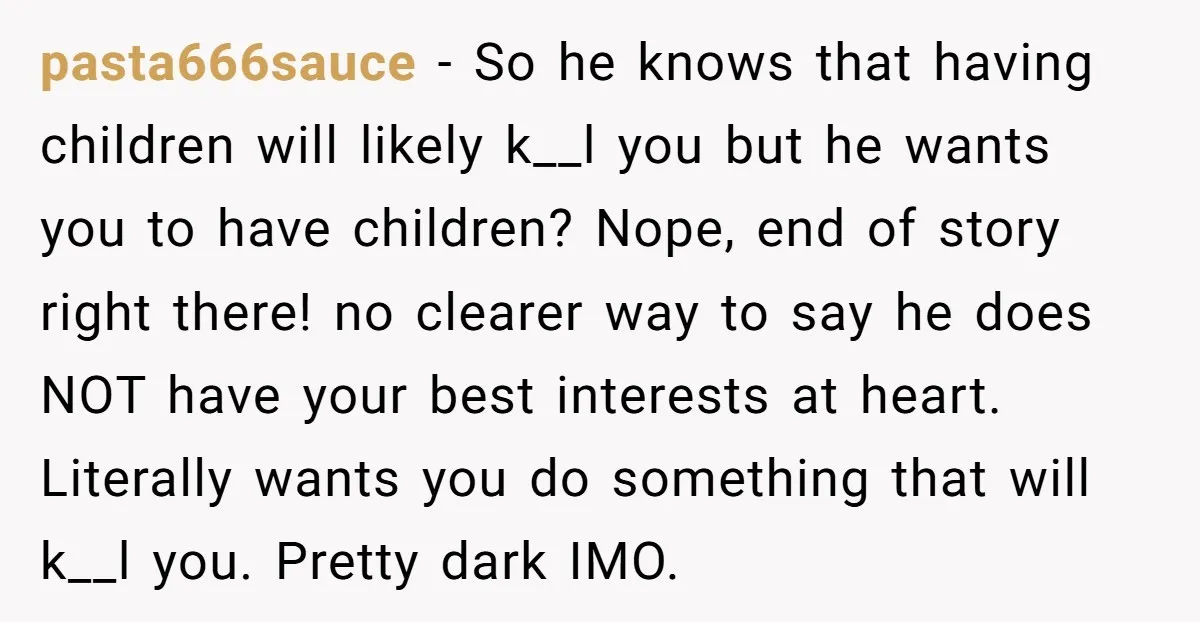
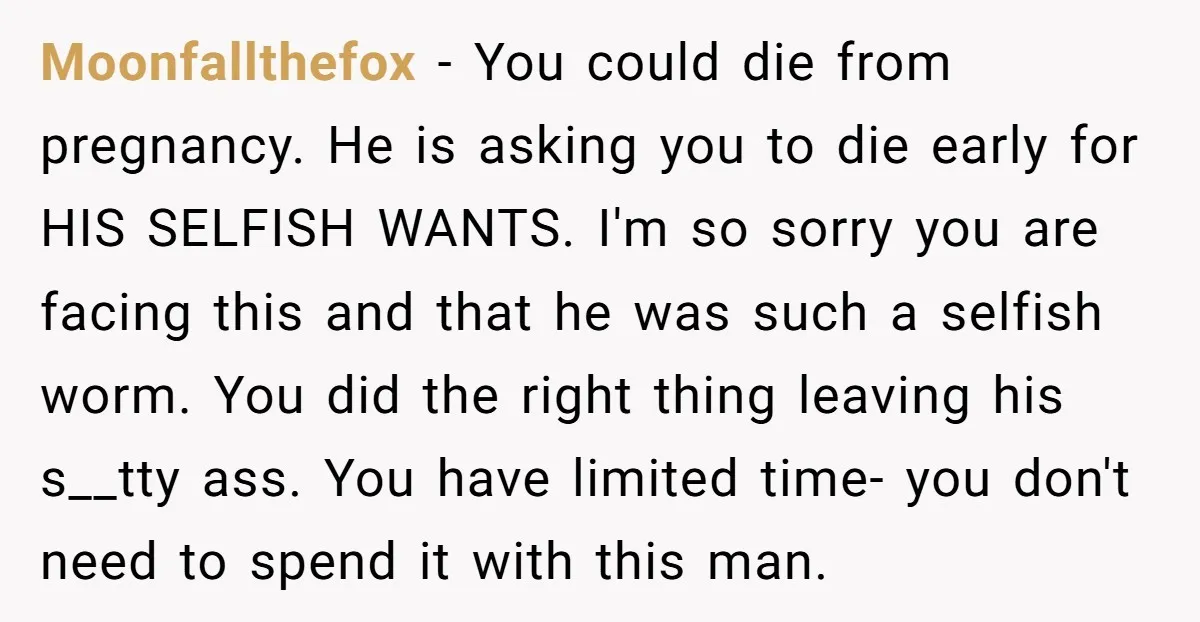
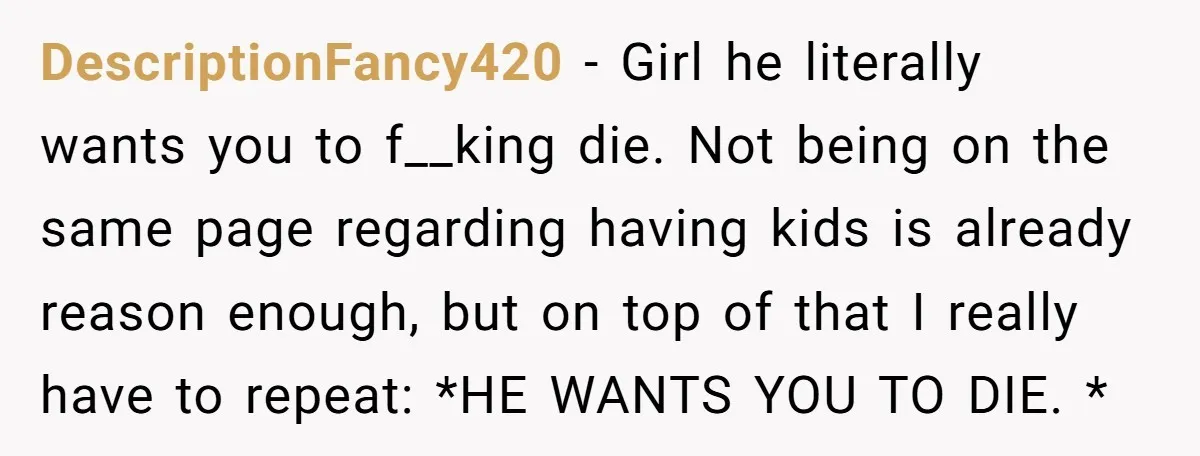
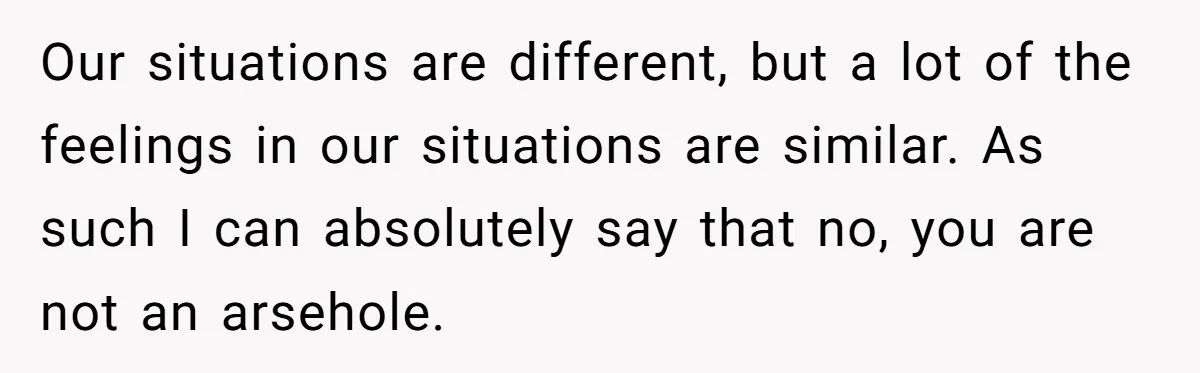
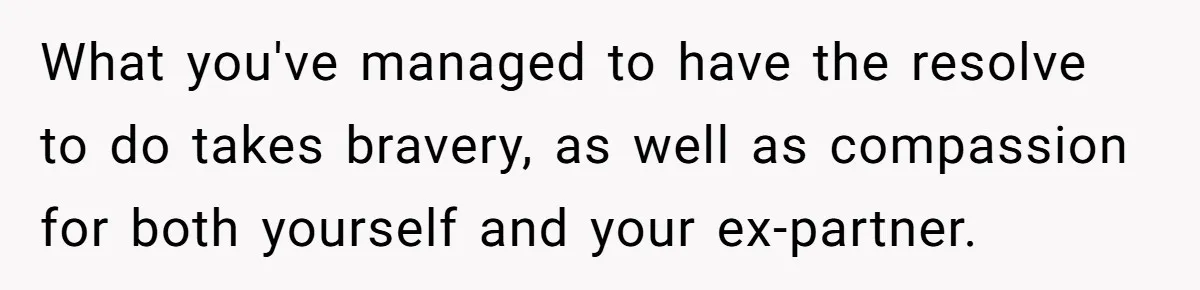
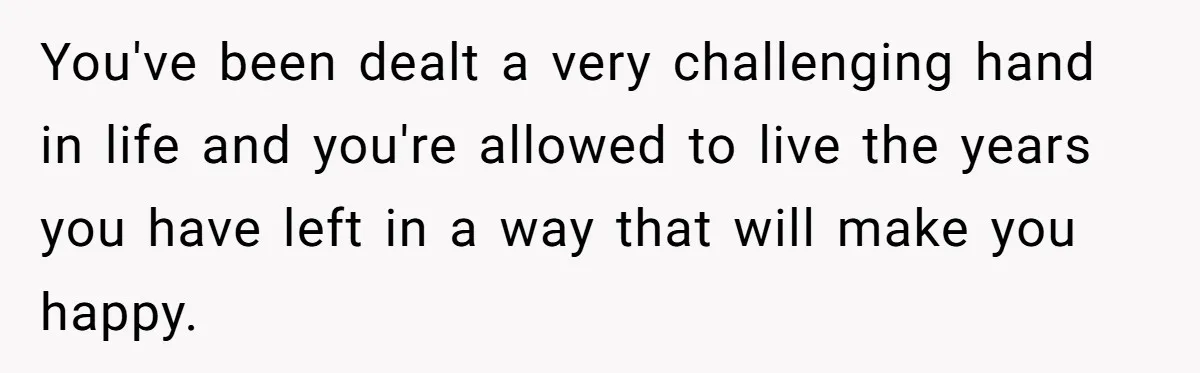
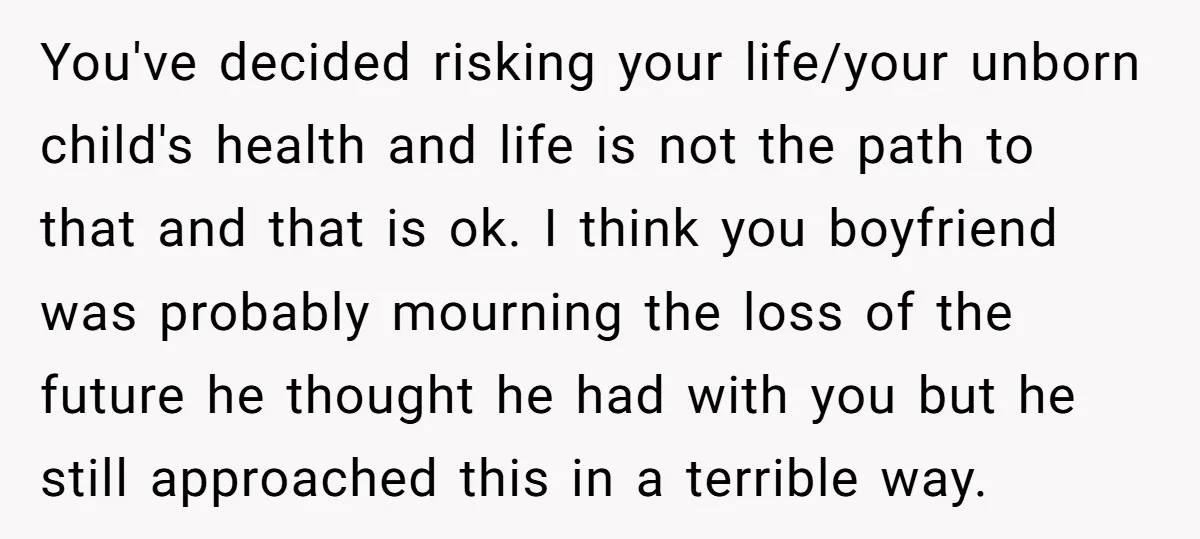
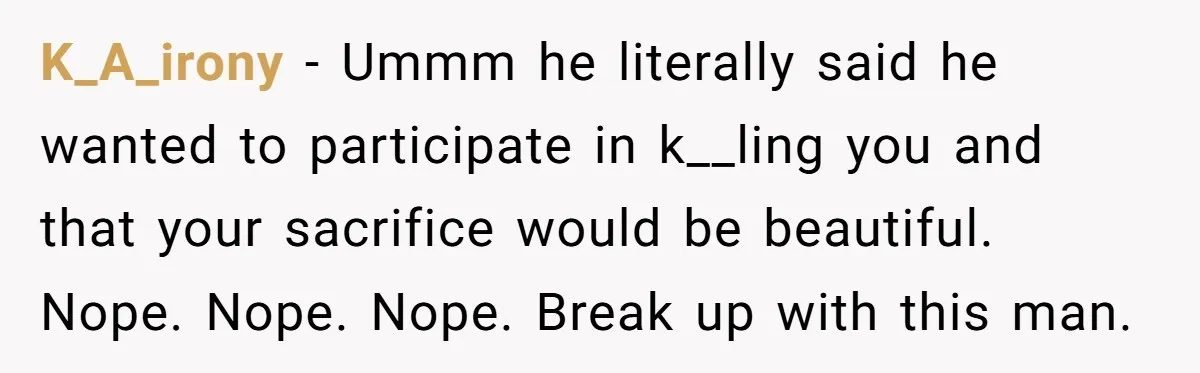
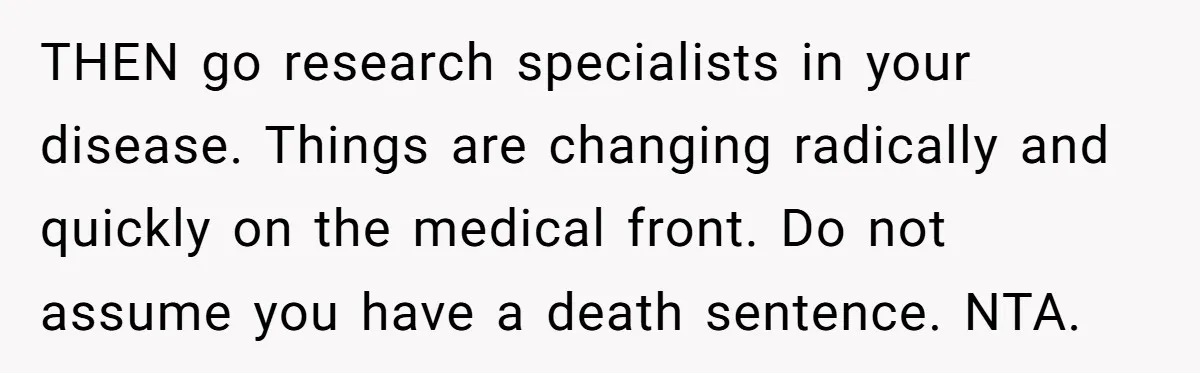
Many users reacted with shock and anger on the poster’s behalf


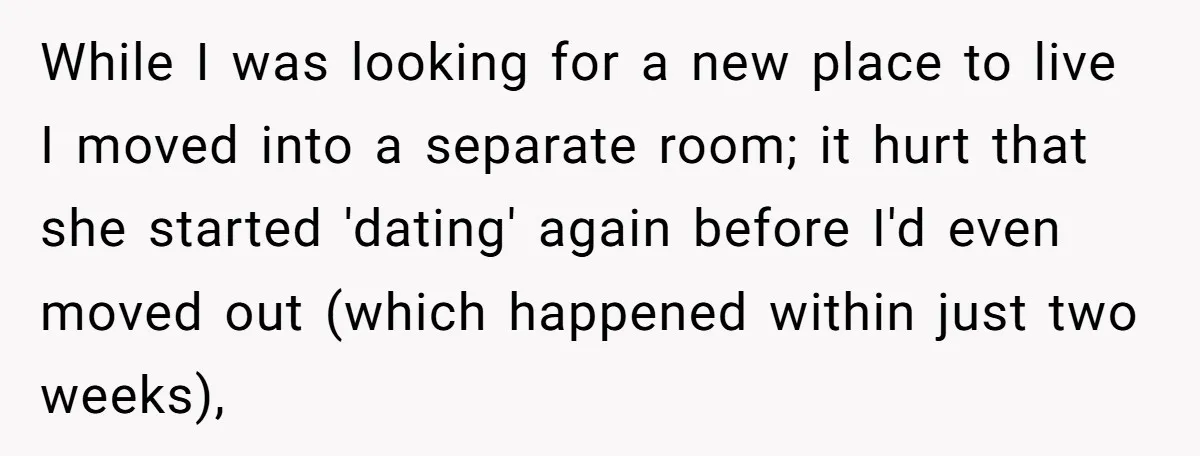
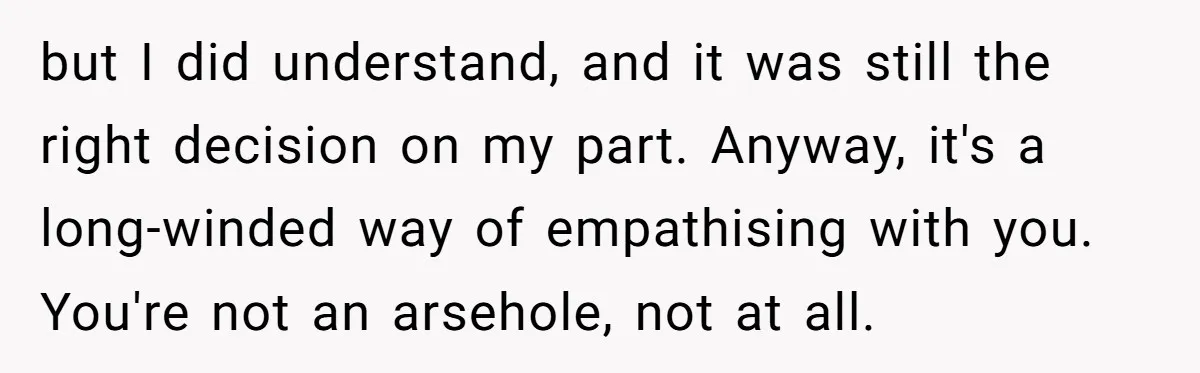
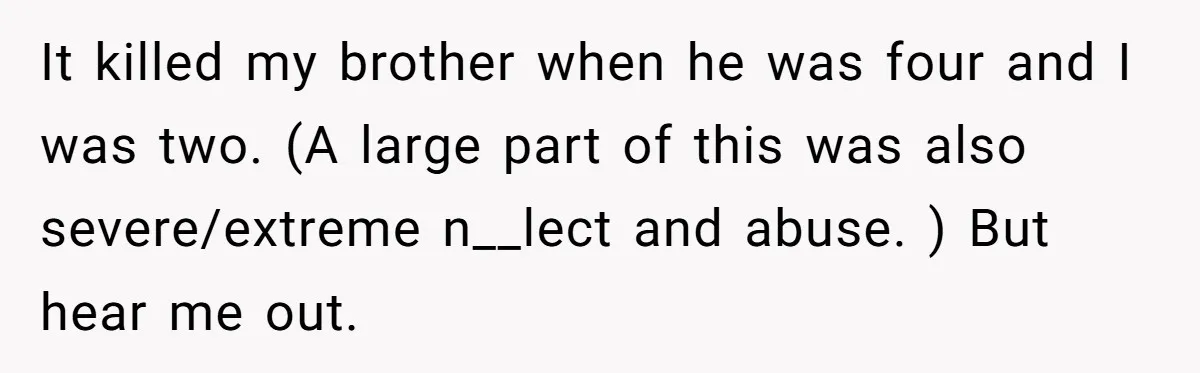
Others shared personal stories to empathize and contextualize
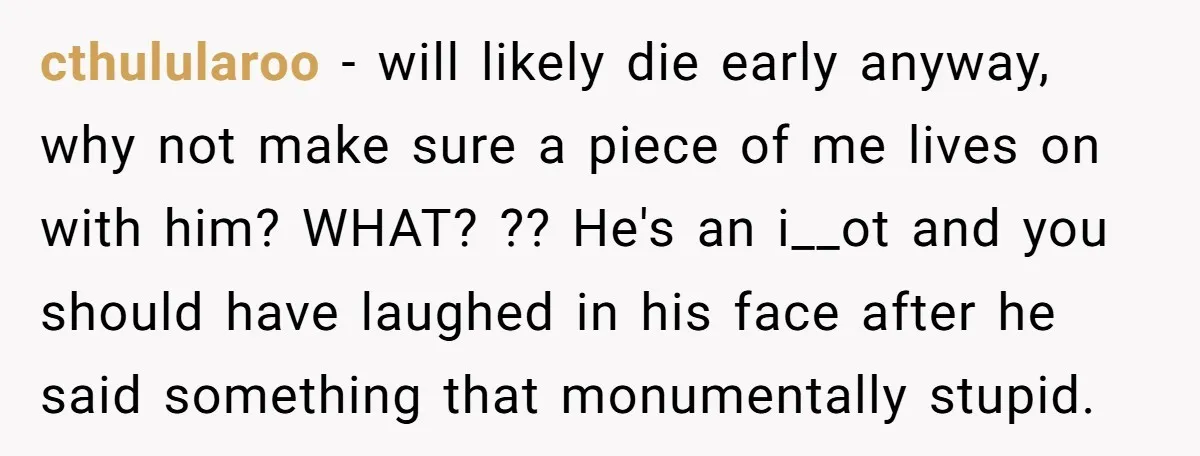


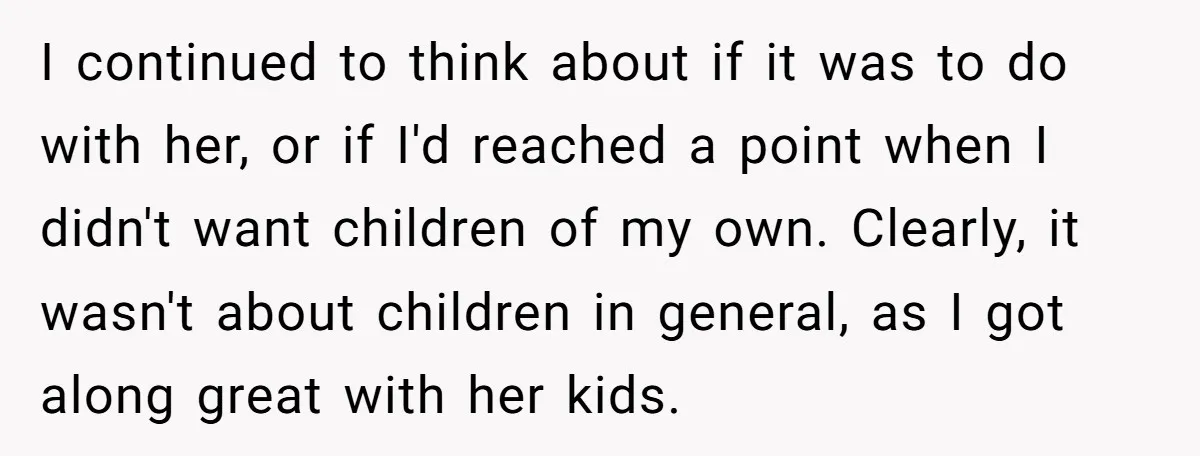
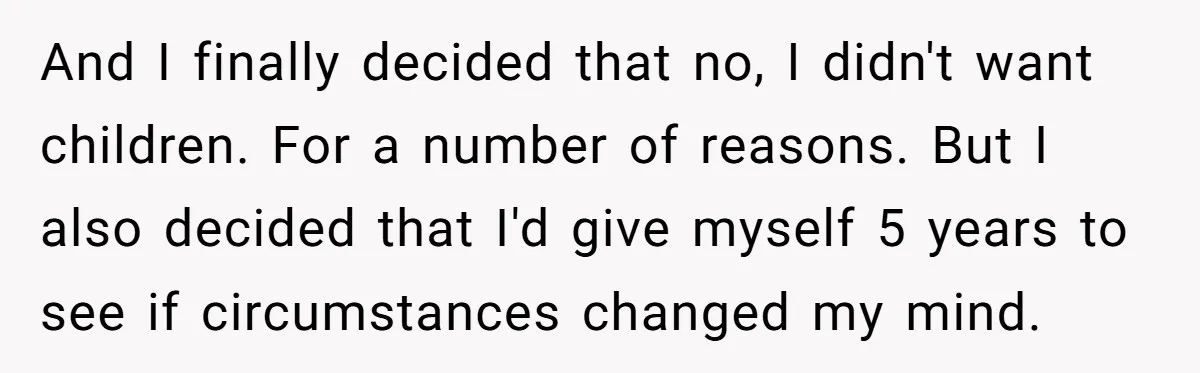
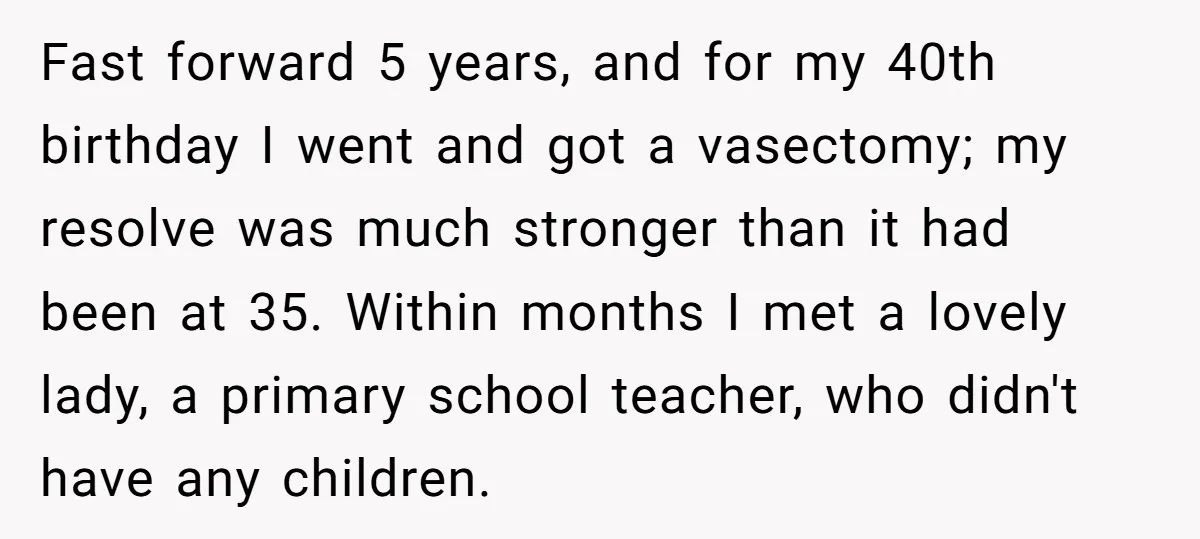
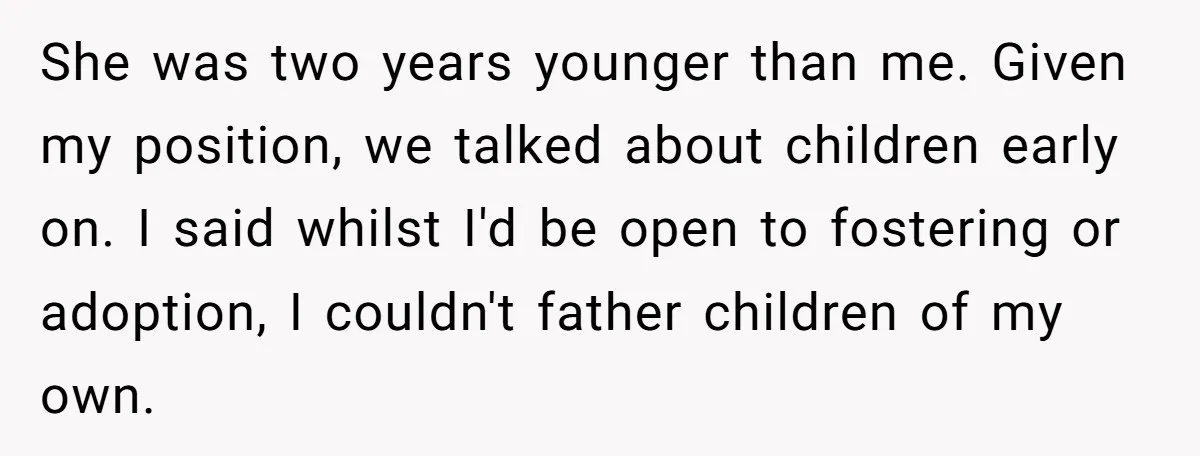
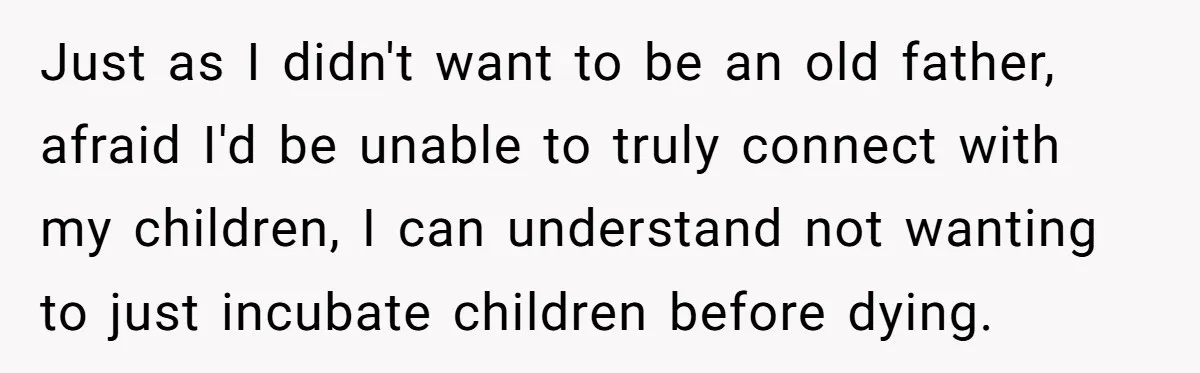
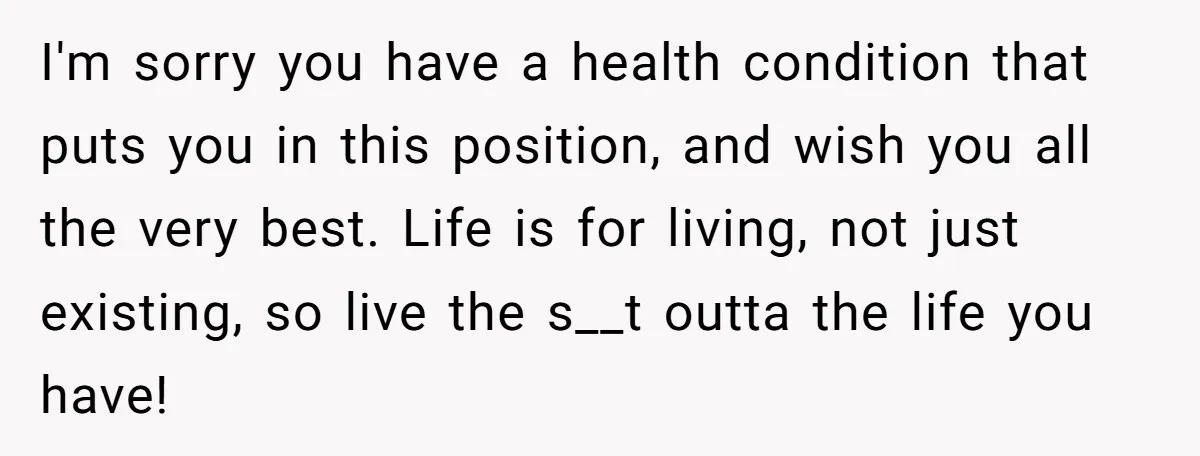

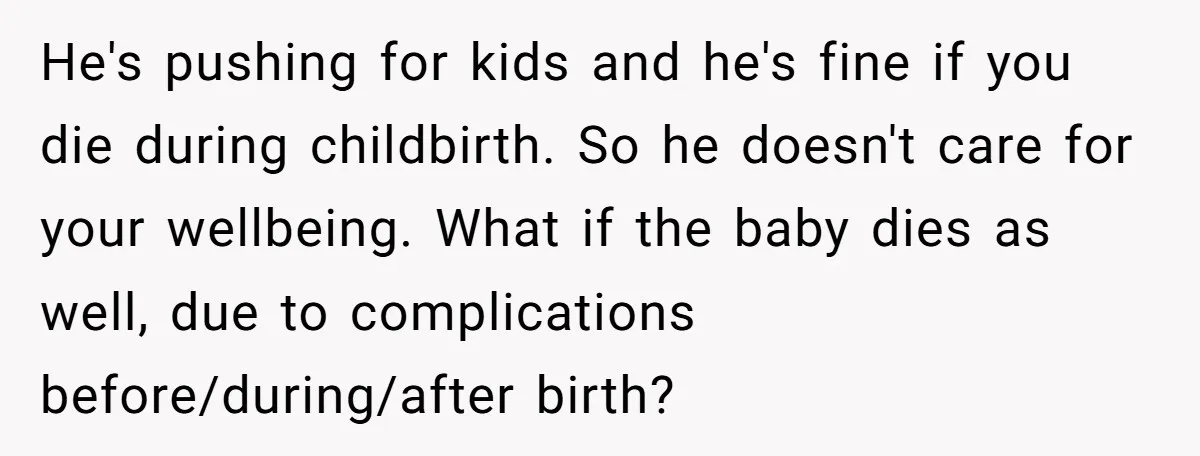
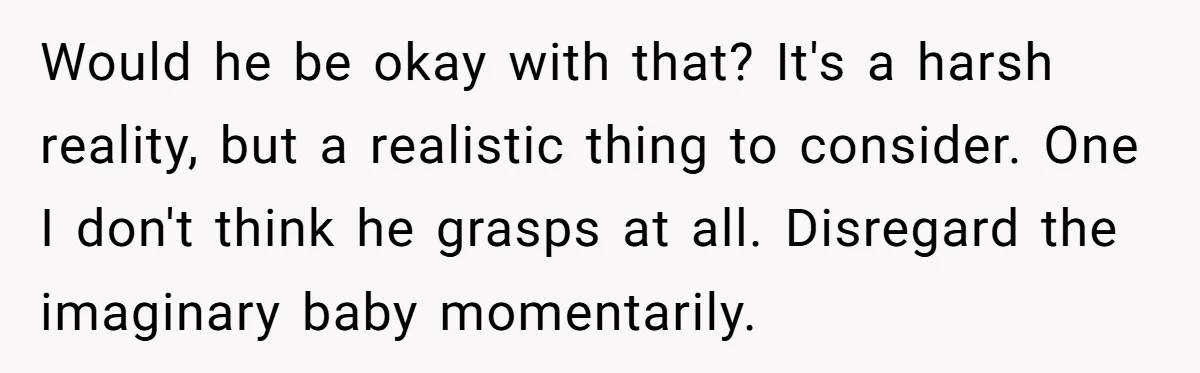
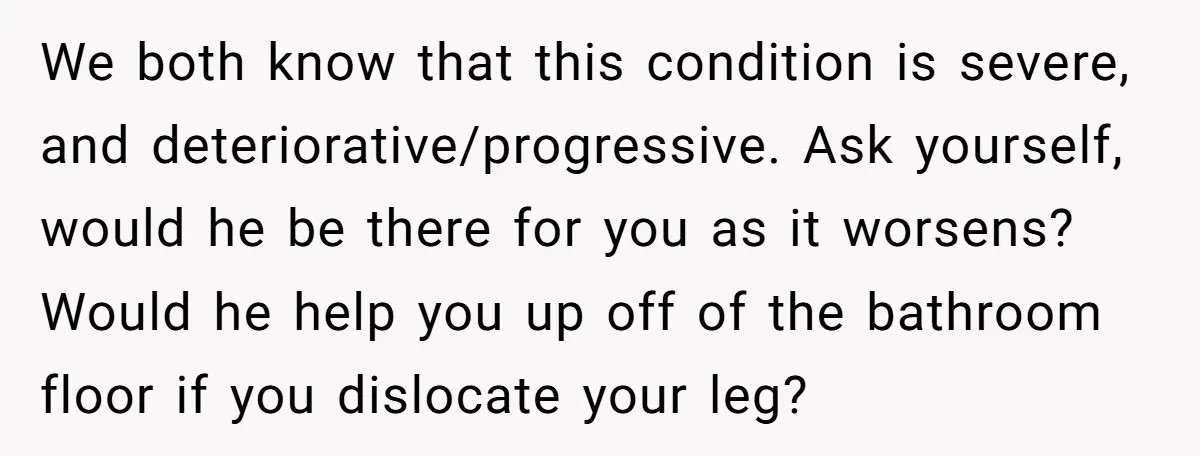
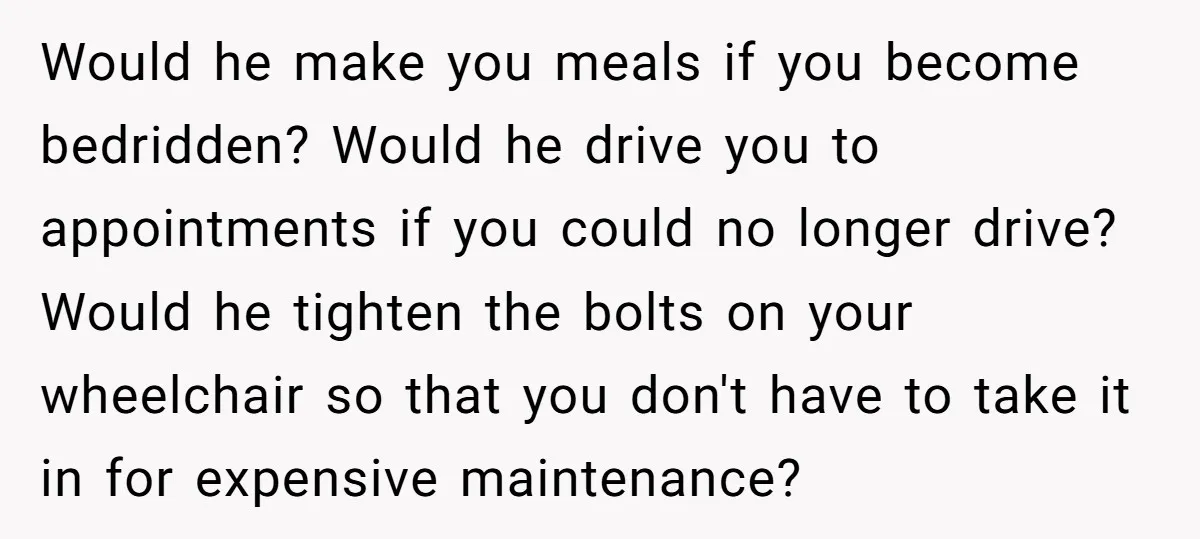
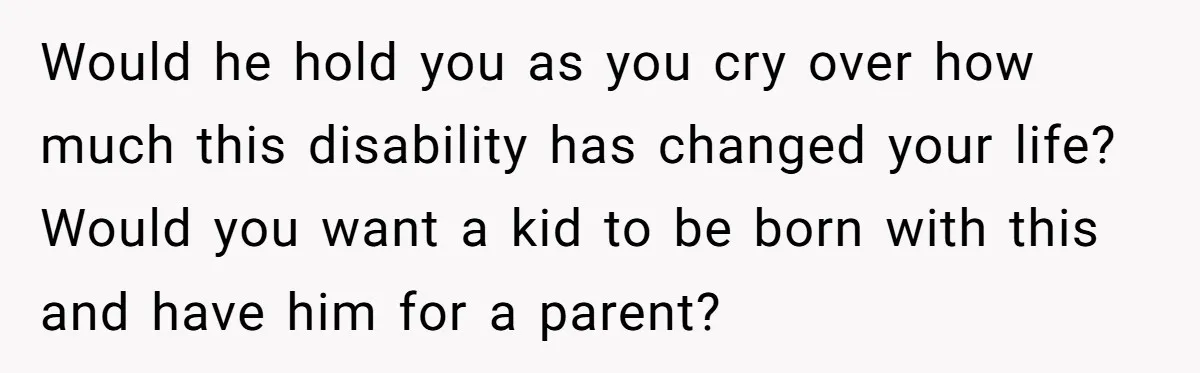
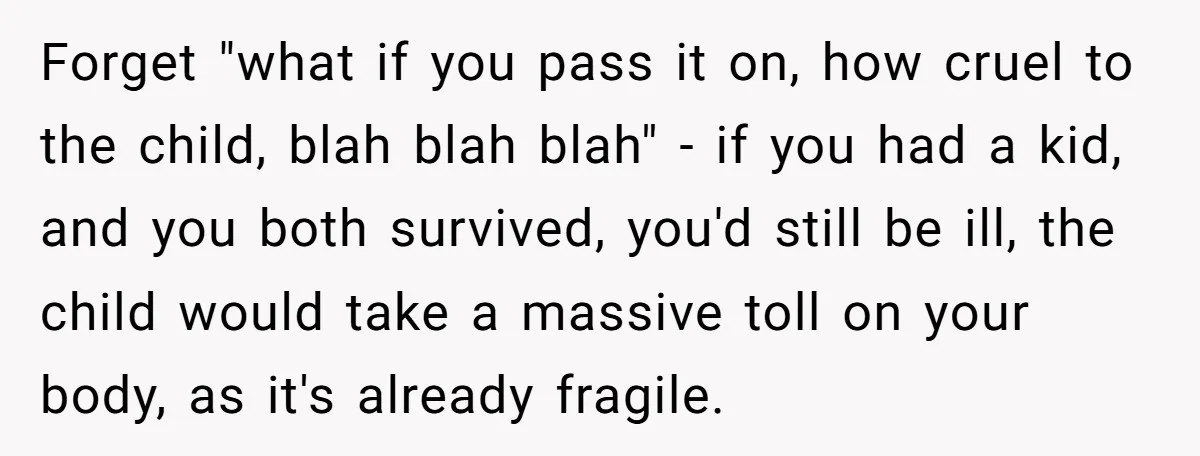
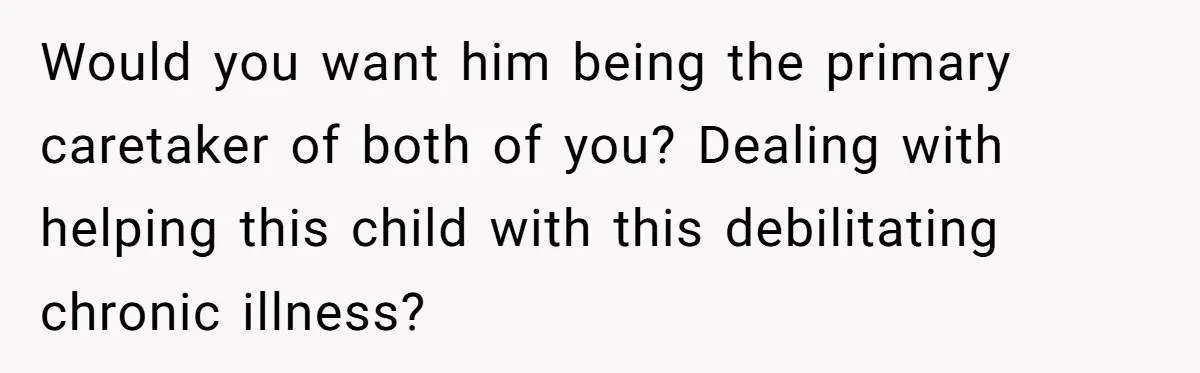
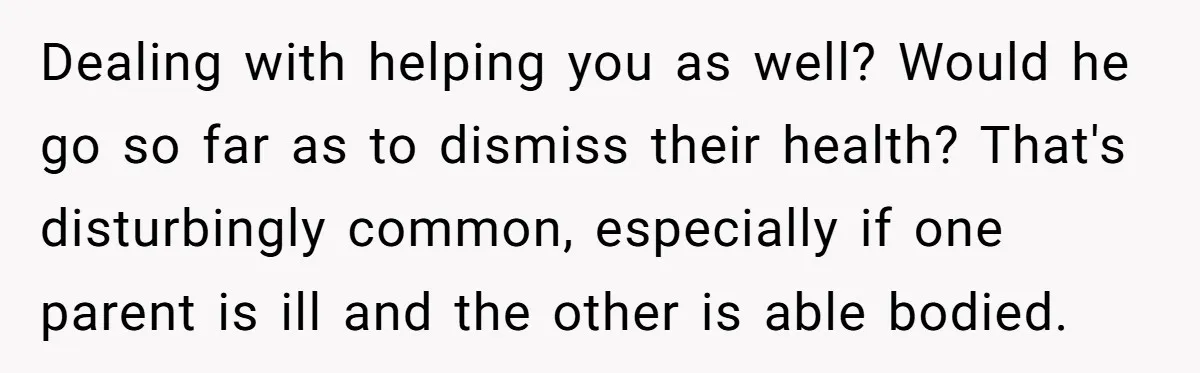

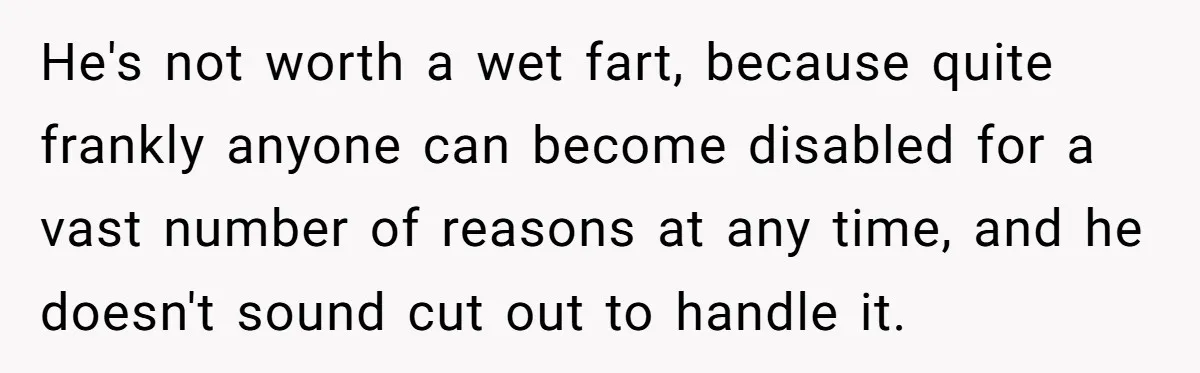
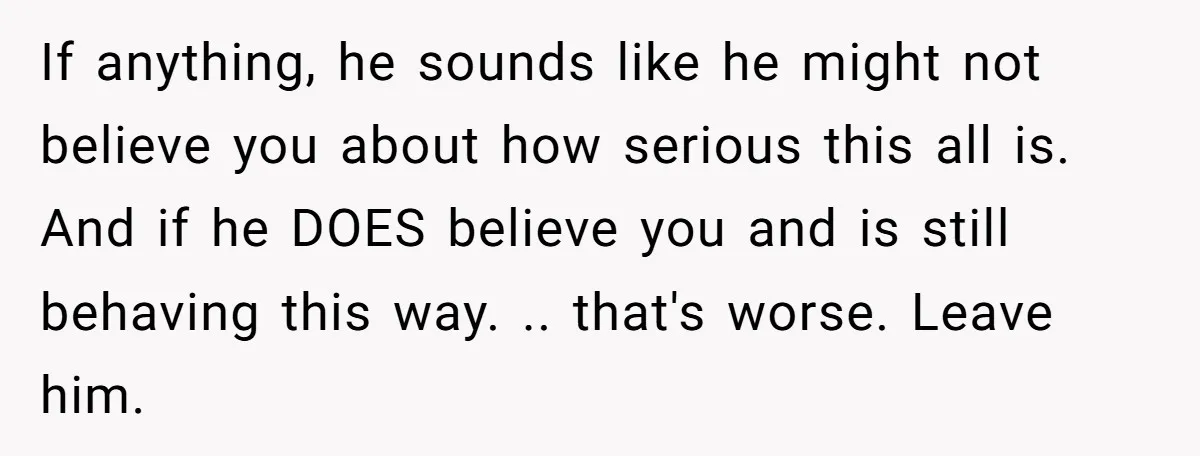
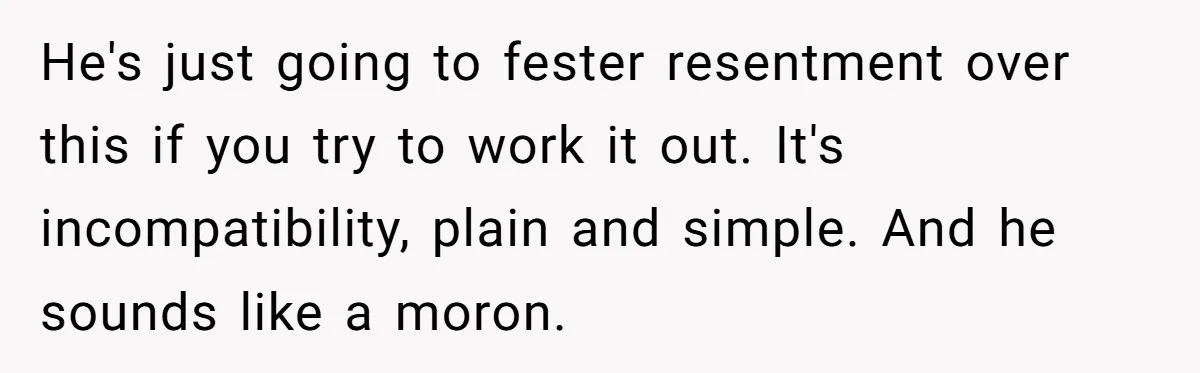
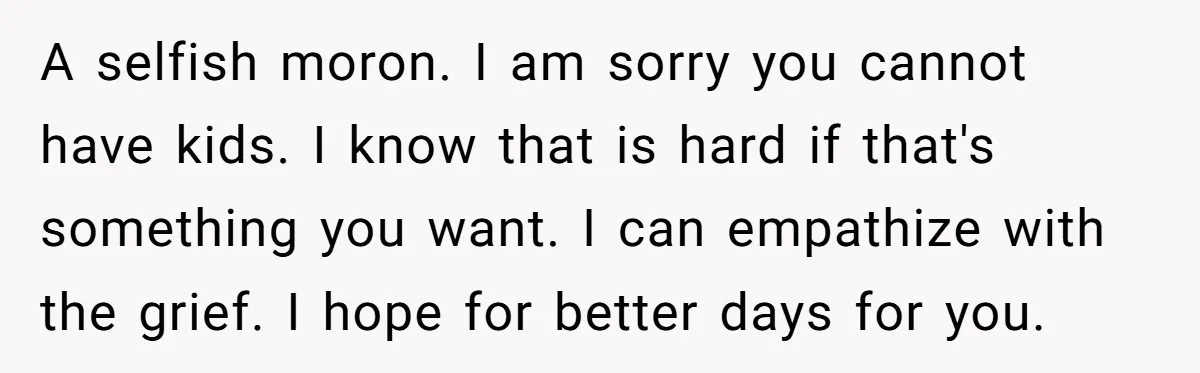
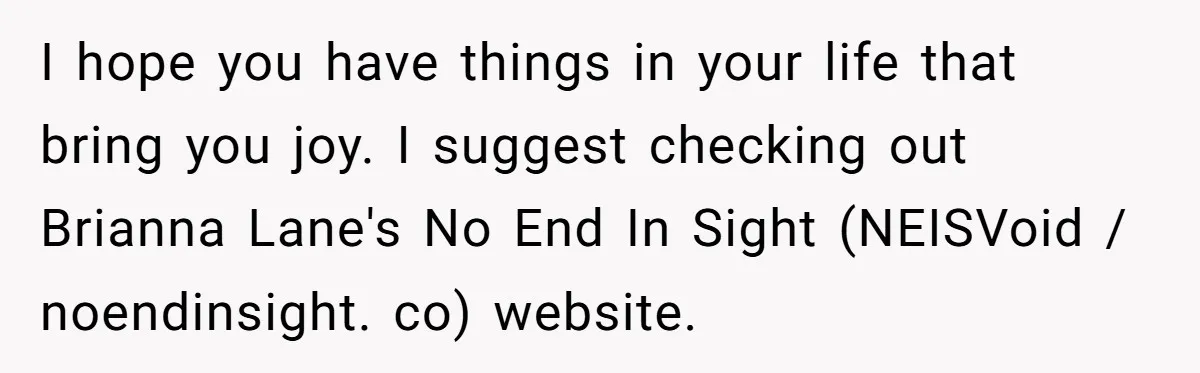
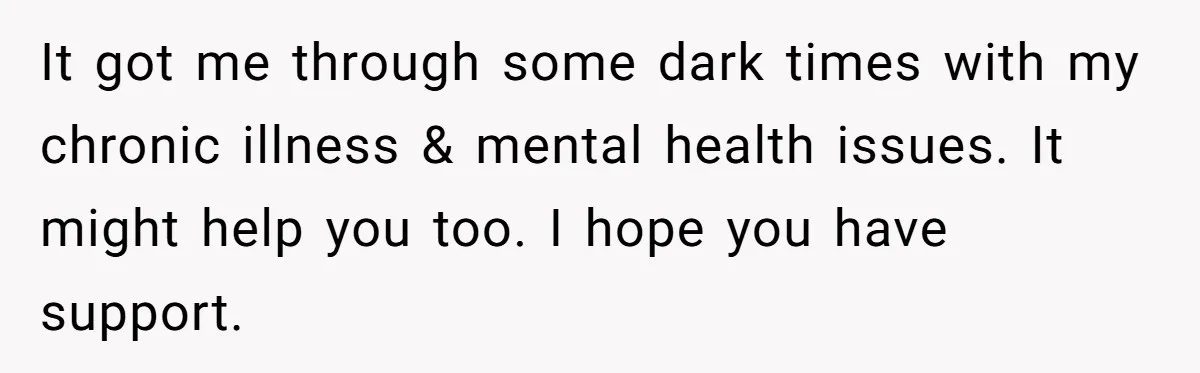
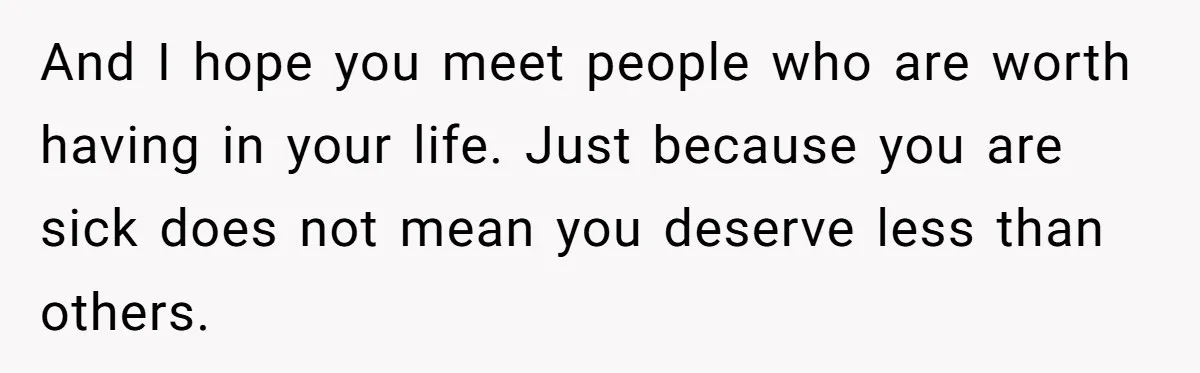
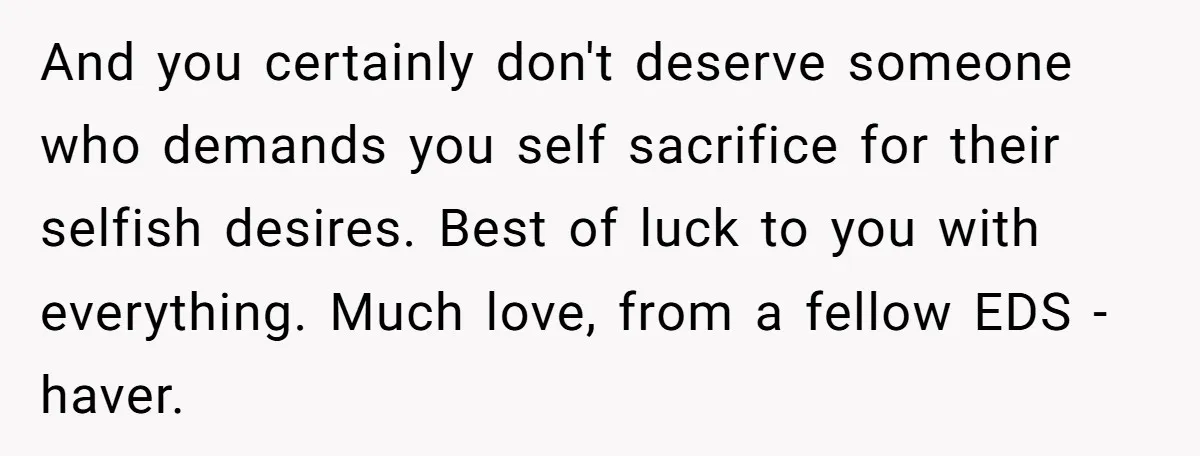

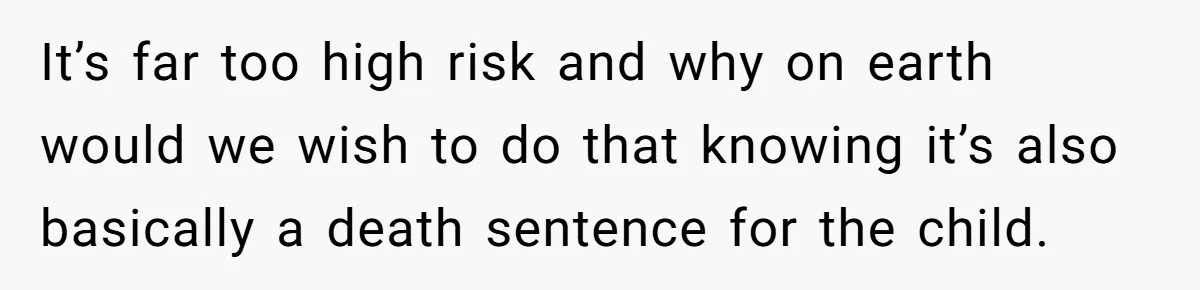

Some commenters focused on long-term realities





This story forces an uncomfortable question into the open: where does love end and self-preservation begin? While grief over lost futures is real on both sides, asking someone to risk their life for legacy crosses an emotional and ethical boundary. Choosing to leave wasn’t about a single argument, but about incompatible values and survival. As readers weigh in, one question lingers: if love requires sacrifice, who gets to decide how much is too much? What would you do in her place?