
A long-standing friendship reached a breaking point after one person repeatedly showed up extremely late to scheduled plans. The situation escalated when the delay interfered with important travel preparations, prompting a direct confrontation about respect and personal time. What followed was not an apology, but a dismissal that shifted blame and reframed the issue as a personality flaw.
The disagreement quickly spiraled into silence, unfollowing on social media, and lingering questions about whether calling out the behavior crossed a line. The story highlights how recurring habits can erode trust, especially when accountability is avoided. It also raises a familiar question many people quietly wrestle with: at what point does patience turn into enabling, and is walking away sometimes the most reasonable response?

‘AITA for calling my friend out for constantly wasting my time and then deciding to stop engaging when she brushed it off?’
It all started with a simple plan to meet before an upcoming flight abroad.


After hours of waiting, frustration finally turned into confrontation.


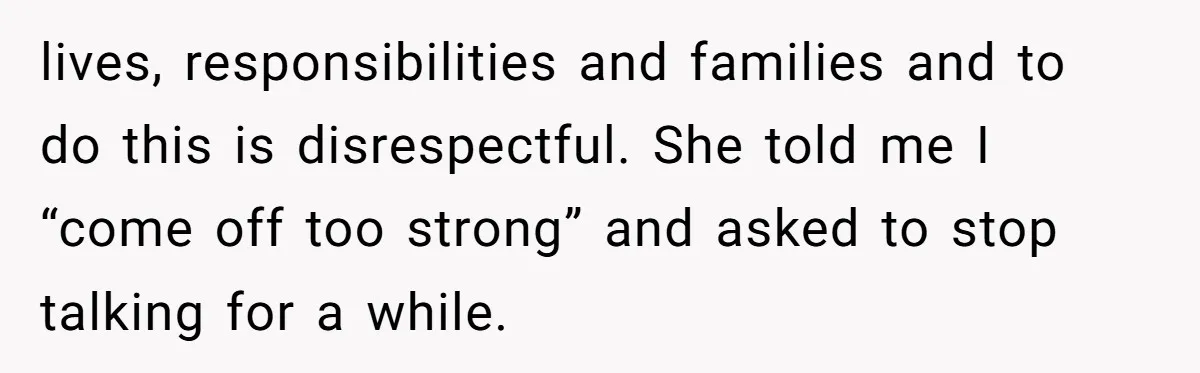
The argument ended with silence, unfollowing, and unresolved resentment.
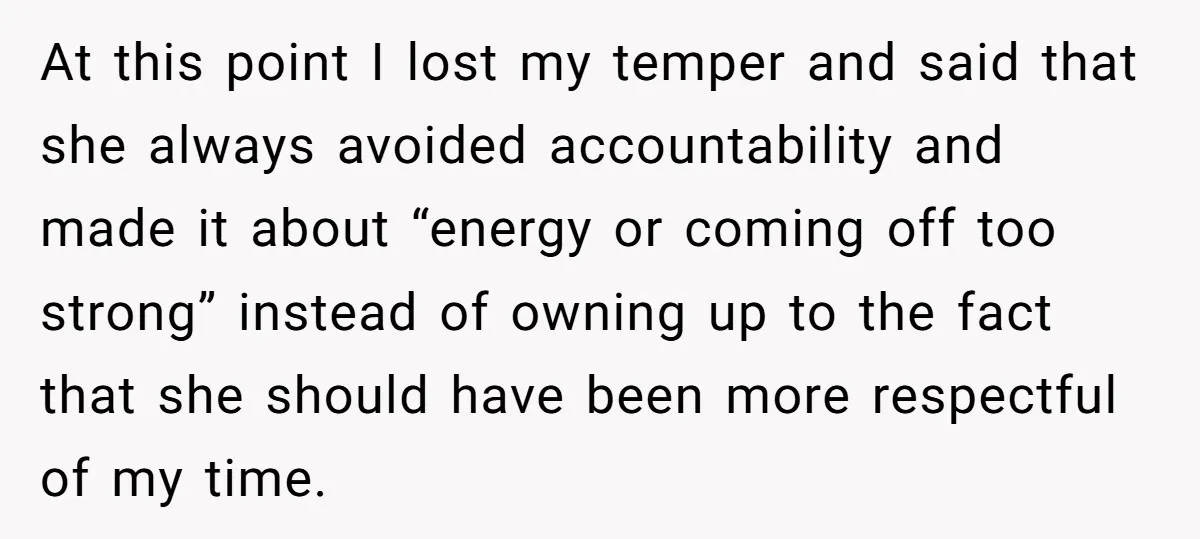


Chronic lateness in friendships is often less about time itself and more about perceived respect. In this situation, the repeated delays created an imbalance where one person consistently adjusted while the other did not. Over time, that dynamic can quietly breed resentment, especially when concerns are dismissed rather than acknowledged.
From one perspective, the friend being late may genuinely feel overwhelmed by her schedule and interpret confrontation as criticism rather than feedback. Framing the issue around “energy” and tone suggests an attempt to deflect discomfort instead of engaging with the behavior itself. However, avoiding accountability does little to resolve the underlying issue and can deepen the rift.
From the poster’s standpoint, setting a clear boundary after multiple failed attempts at gentle communication is a reasonable escalation. Social relationships rely on mutual consideration, and when one party repeatedly ignores agreed-upon plans, disengagement can become a form of self-respect rather than punishment. The broader takeaway reflects a common social dilemma: maintaining connections requires effort on both sides, and when that effort is consistently one-sided, stepping back may be the healthiest option.
See what others had to share with OP:
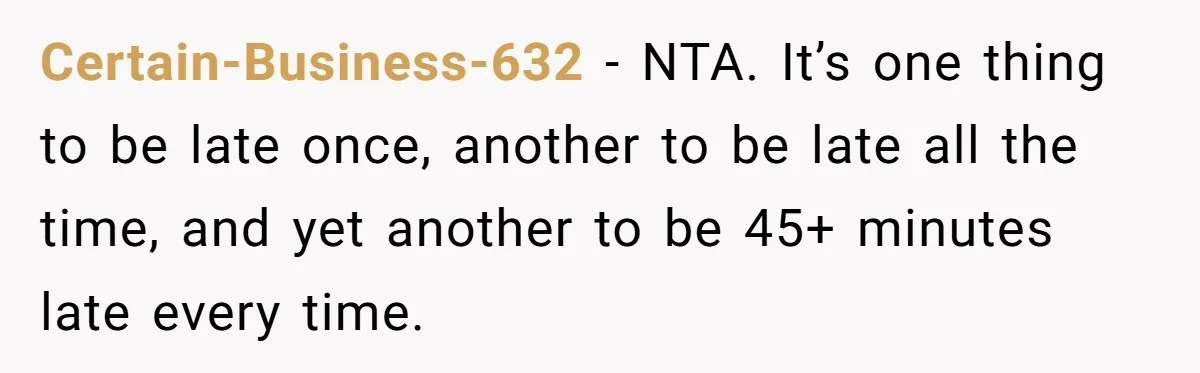
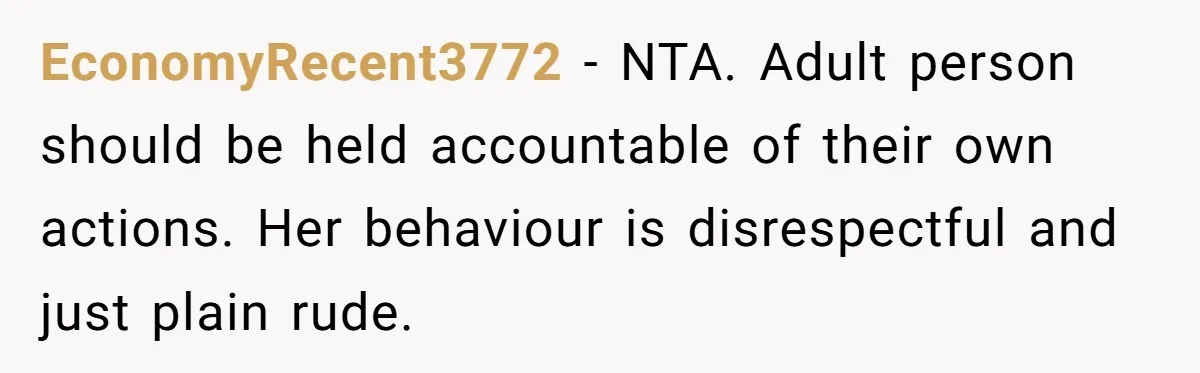
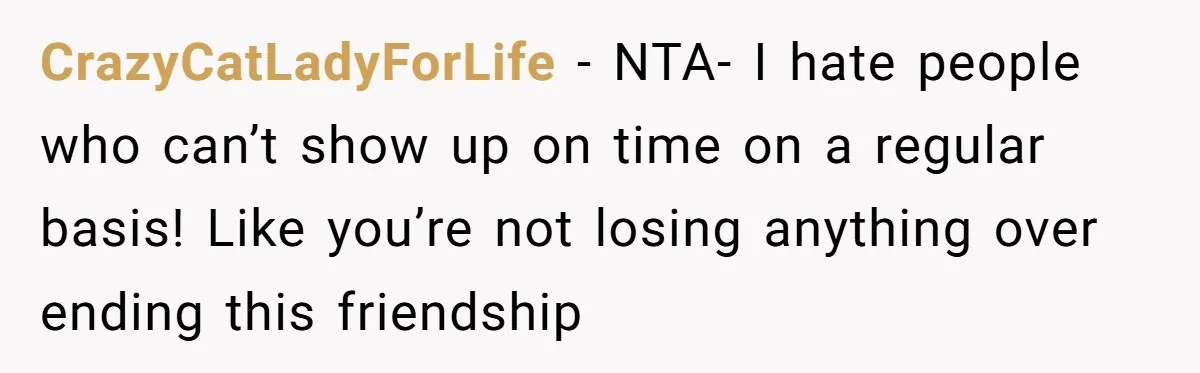
Many users supported the poster, emphasizing respect for time and personal responsibility.



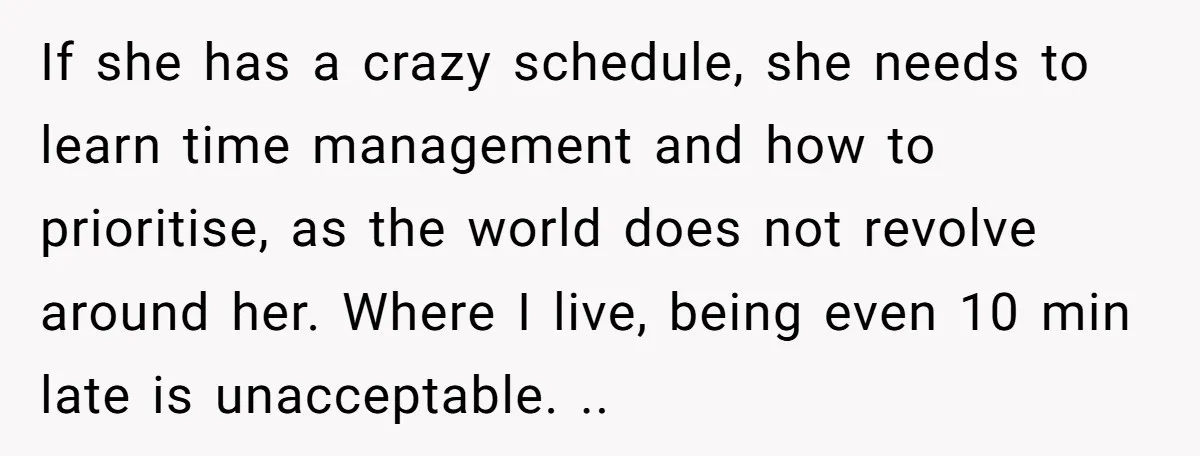
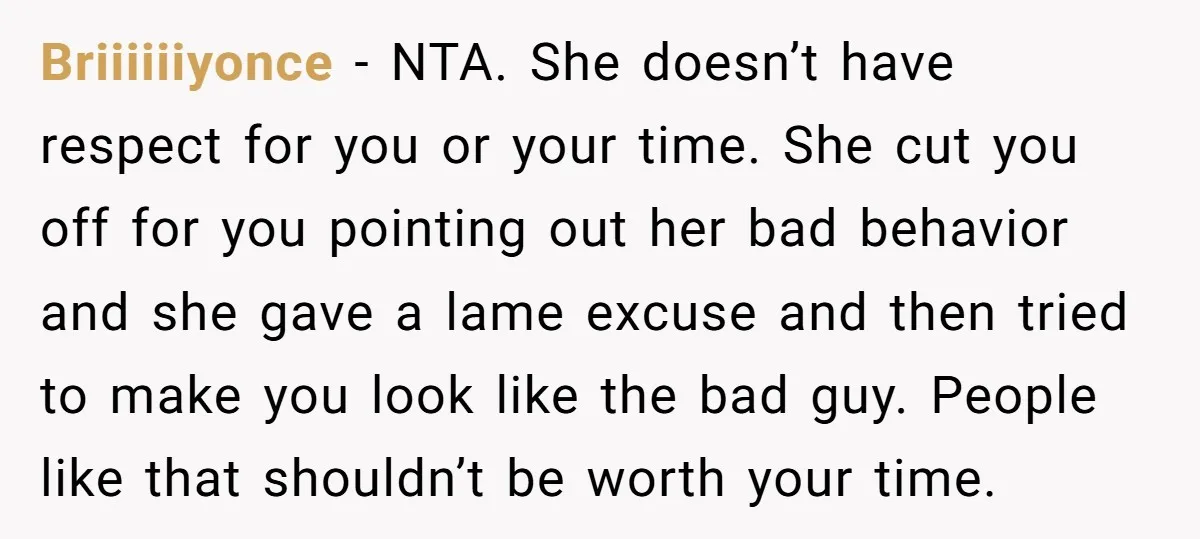
Others offered more measured takes, suggesting distance without escalating conflict.


A few users lightened the mood with blunt or humorous observations.
![[Reddit User] − She *unfollowed* you? Jeez, that's so high school. I'd find that so pathetic I wouldn't be able to continue the friendship lol](https://loknam.com/aita/images/de610ff114/wp-editor-1770189330400-1.webp)

This situation illustrates how repeated small behaviors can eventually fracture a relationship when they go unaddressed or are consistently minimized. While confrontation can be uncomfortable, ignoring ongoing frustration often leads to even bigger emotional blowups later. In this case, disengagement became the final outcome after multiple attempts to communicate.
Do you think chronic lateness is a dealbreaker in friendships, or should it be handled with more flexibility? At what point does calling someone out become necessary rather than confrontational? How would you have handled this situation differently, if at all?