
Family dinners can quickly become tense when expectations clash, especially when pregnancy and emotions are involved. In this situation shared on a social network, a 20-year-old woman found herself at the center of an unexpected confrontation after cooking a meal for her entire family in a hot kitchen.
What makes the story more complicated is that her effort to help was met with criticism rather than appreciation. A single comment about being sweaty and “stinky” shifted the tone of the evening and left everyone uncomfortable at the table. The poster was left questioning whether she had crossed a line or whether her sister’s reaction was unfair. The exchange sparked a wave of strong opinions online, many of which drew from real-world kitchen experiences and family dynamics.

‘AITA for cooking dinner while I was sweaty and “stinky”?’
The evening began with a family dinner prepared in an uncomfortably hot kitchen.
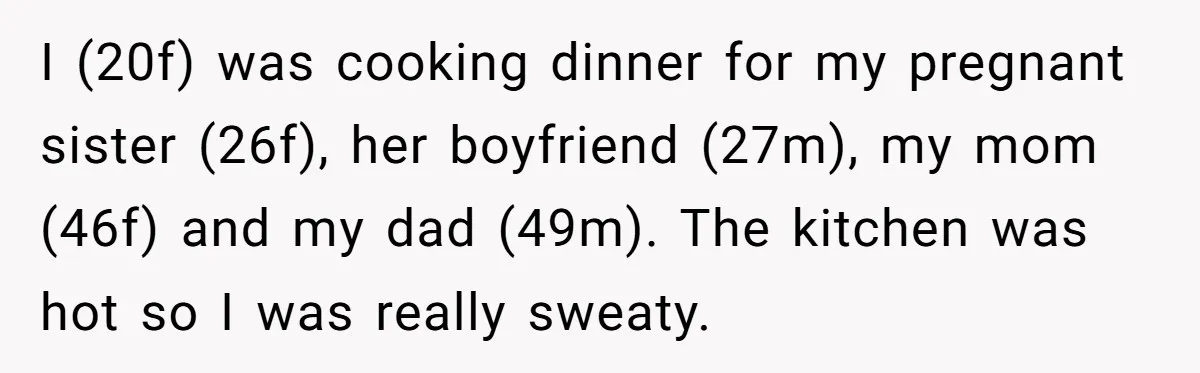
Tension surfaced once everyone sat down to eat together.
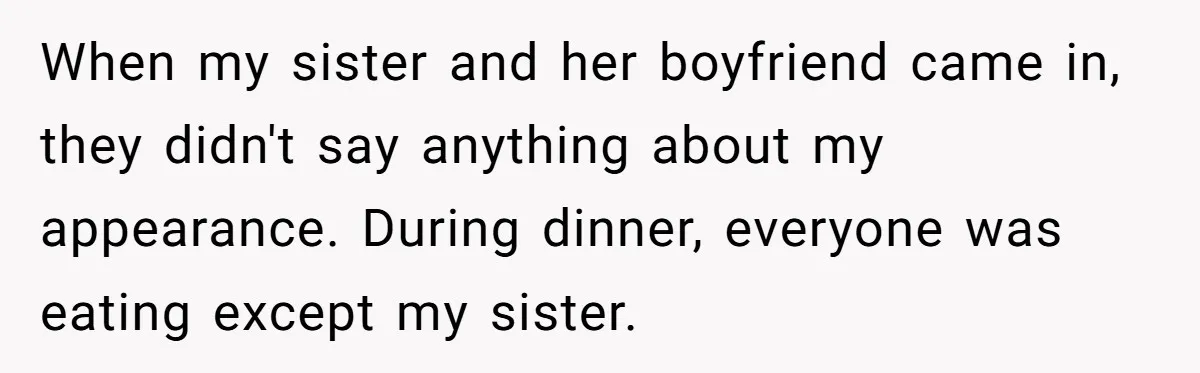
The situation quickly sparked strong reactions from other users online.
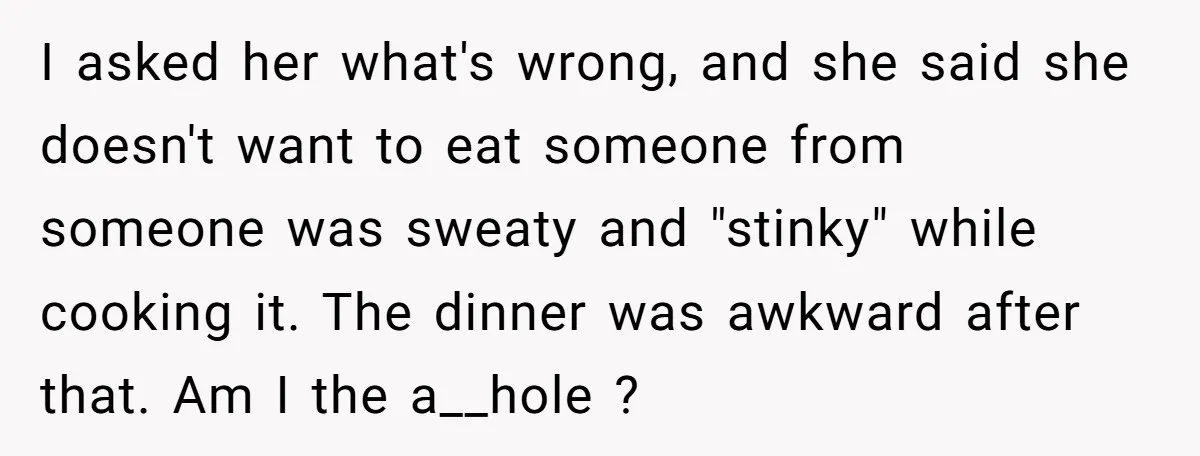
This situation highlights how expectations around care and consideration can clash during shared family moments. Cooking in a hot kitchen naturally leads to sweating, and in most households, this is understood as part of the process rather than a hygiene failure. The poster was performing a task for the benefit of others, which adds an element of goodwill that often shapes how behavior is interpreted.
From the sister’s perspective, pregnancy can heighten sensitivity to smells and textures, making food aversions stronger and sometimes irrational. That context may explain her reaction, but it does not necessarily justify how the concern was expressed. Publicly rejecting the meal at the table created discomfort for everyone and shifted focus away from appreciation toward criticism.
More broadly, the exchange reflects a common social tension: when personal discomfort is voiced without regard for effort or intent. While it is reasonable to decline food, framing matters. The poster’s confusion is understandable, and the response from the community suggests that empathy for physical conditions, whether heat or pregnancy, needs to go both ways.
Let’s dive into the reactions from Reddit:
Many users supported the poster, pointing out the realities of cooking environments and effort.
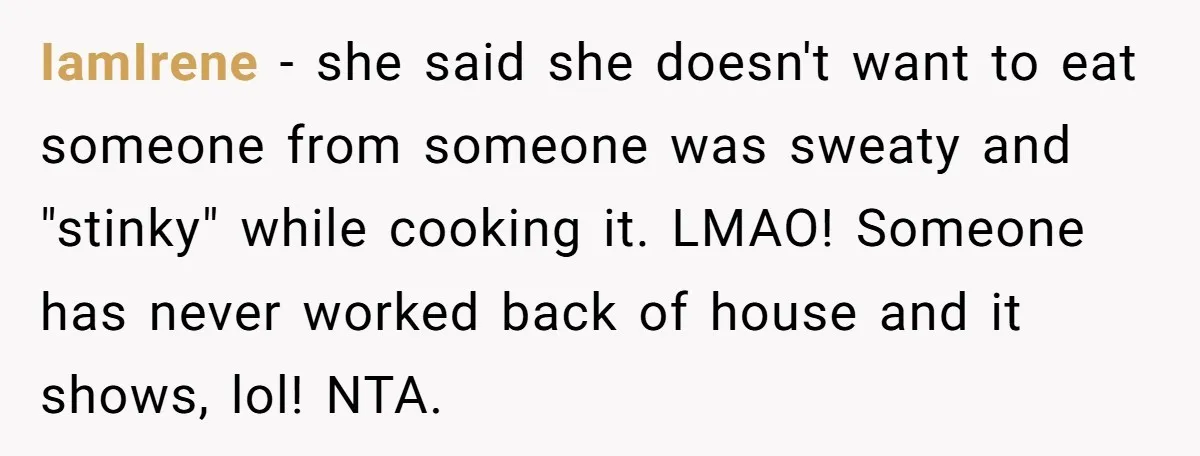




Others echoed the sentiment while offering blunt or practical takes.

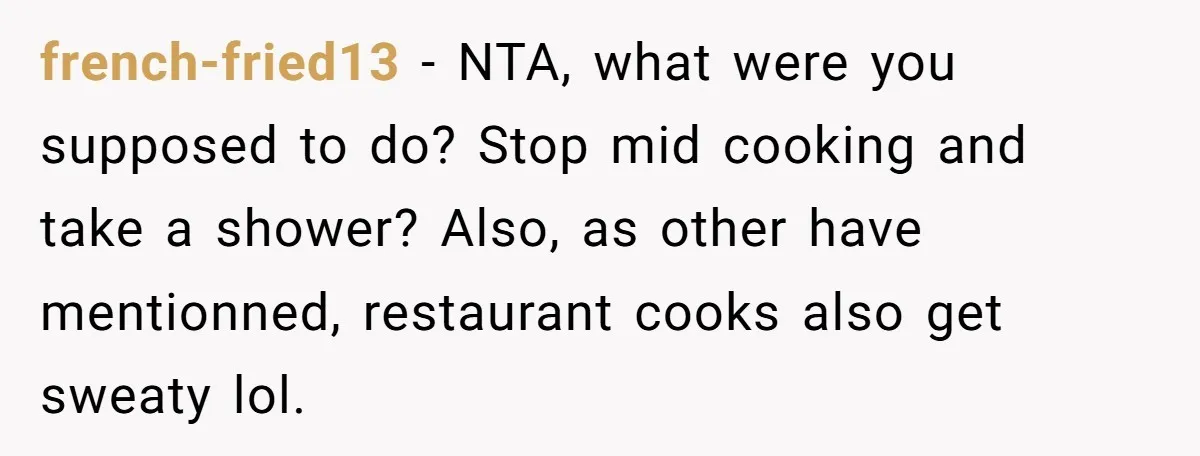

A few comments leaned into humor or firm boundaries to diffuse the tension.


This story shows how quickly a well-intentioned gesture can turn awkward when expectations and sensitivities collide. While physical discomfort can influence reactions, the way concerns are communicated often matters more than the concern itself. The poster’s effort to help her family contrasts sharply with the criticism she received.
Should personal sensitivities excuse blunt or hurtful comments at the dinner table? Is it reasonable to expect someone cooking in a hot kitchen to remain perfectly comfortable? How should families navigate effort, gratitude, and honesty during shared meals?