
Family gatherings can test patience in unexpected ways, especially when personal boundaries blur in crowded spaces. During a packed long weekend at a lakeside property, one man found himself in an awkward standoff after discovering his specially purchased heavy-duty lawn chair had been taken over. What started as a simple request quickly escalated into a chaotic demonstration that left three chairs destroyed and one brother furious.
With nearly 30 relatives staying across the house, campers, and tents, seating was already limited. But for this man, seating wasn’t just about comfort — it was about practicality. As someone with a larger build, he had invested in a reinforced chair rated to hold up to 500 pounds. When his brother insisted he use ordinary plastic chairs instead, the outcome was almost inevitable.

‘AITA for destroying three lawn chairs because mine was being used?’
A crowded family weekend sets the chaotic scene:
The brother dismisses his concerns and pushes back:
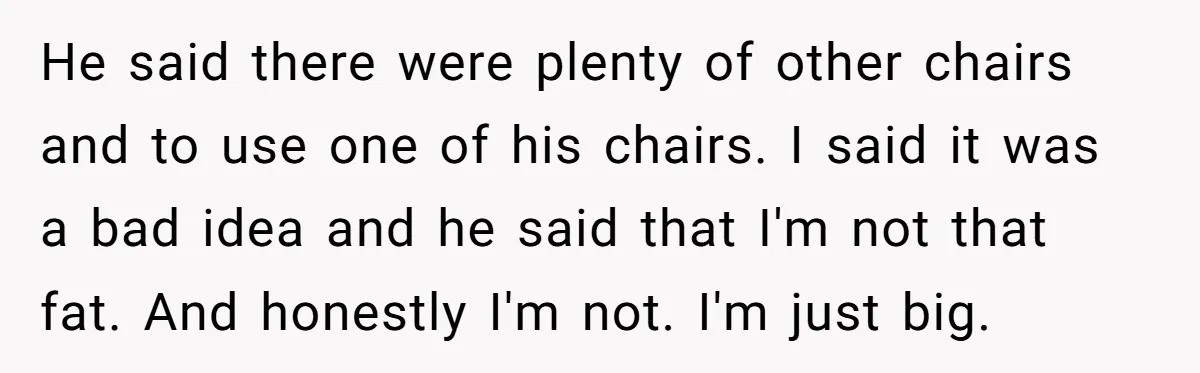
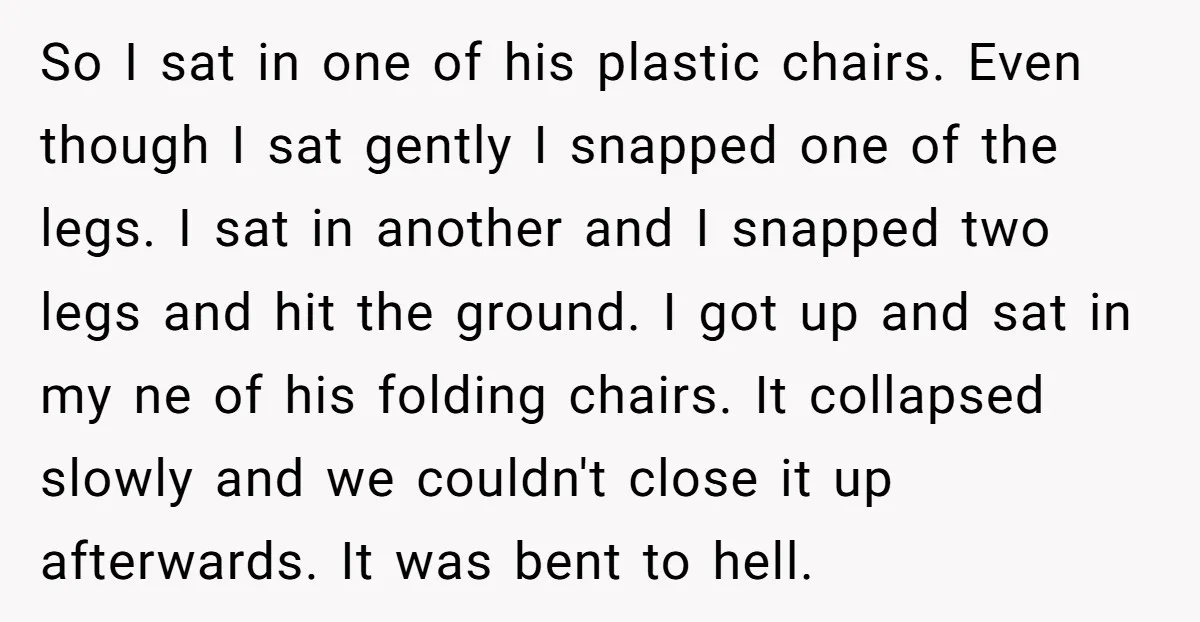
The breaking point finally arrives for his brother:
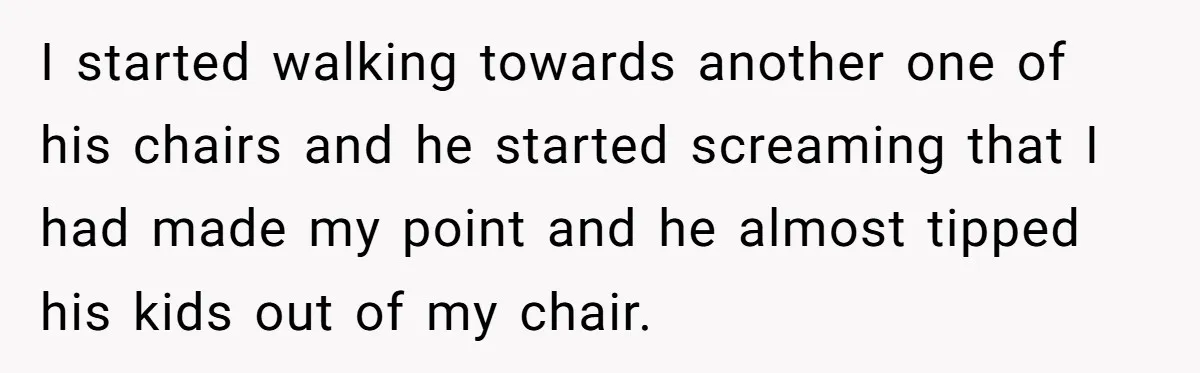
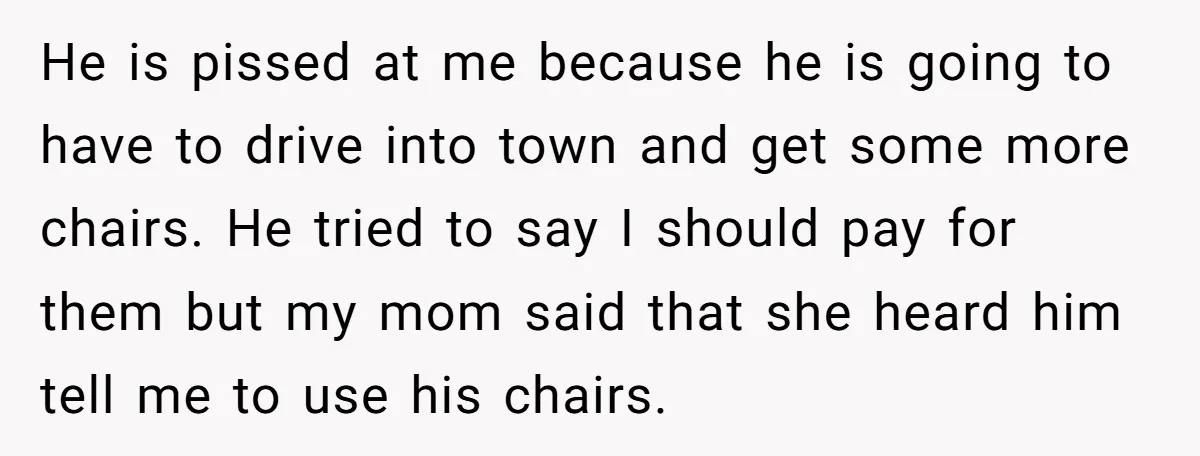
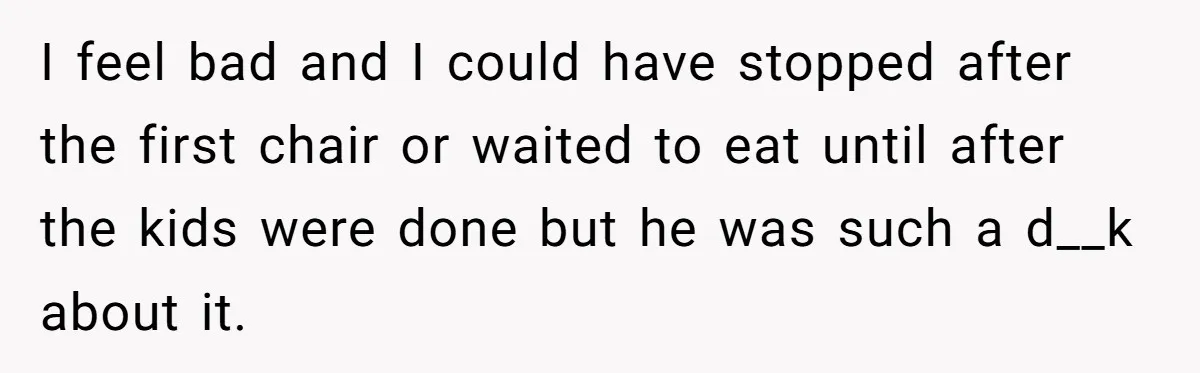
Situations like this often revolve less around furniture and more around boundaries. When personal property is taken without permission, even within families, it can create tension rooted in respect and autonomy. The original poster made an effort to explain his needs clearly. His brother’s dismissal of those concerns shifted the situation from a simple misunderstanding into a power struggle.
Body size can also be a sensitive topic. By minimizing his brother’s concerns about weight limits, the sibling unintentionally invalidated a practical safety issue. That kind of dismissal may trigger defensiveness, especially if someone has previously experienced embarrassment related to their size. The decision to comply literally with the instruction could be interpreted as frustration expressed through action rather than words.
At the same time, escalating the situation carries risks. Breaking multiple chairs — even to prove a point — increases conflict and financial loss. While many online viewers frame it as “malicious compliance,” in real-world family systems this can deepen resentment if not resolved afterward. The healthiest outcome would involve a follow-up conversation clarifying expectations about personal property.
Ultimately, the mother’s intervention reinforced an important principle: accountability. The brother gave explicit permission to use his chairs. Consequences followed that choice. Long term, families benefit when members acknowledge mistakes quickly and correct them without ego. Respecting belongings, modeling responsibility to children, and communicating boundaries calmly tend to prevent similar blowups in the future.
Take a look at the comments from fellow users:
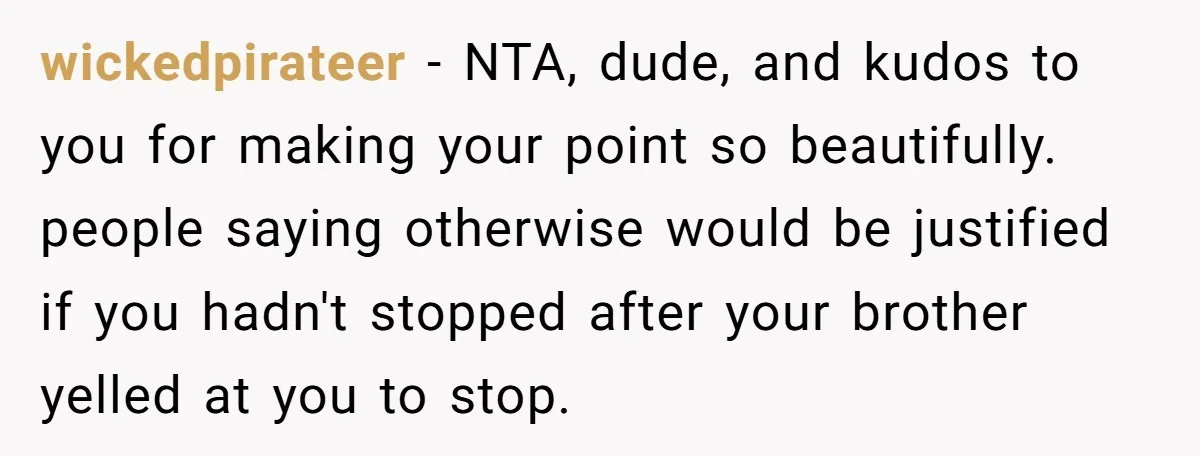
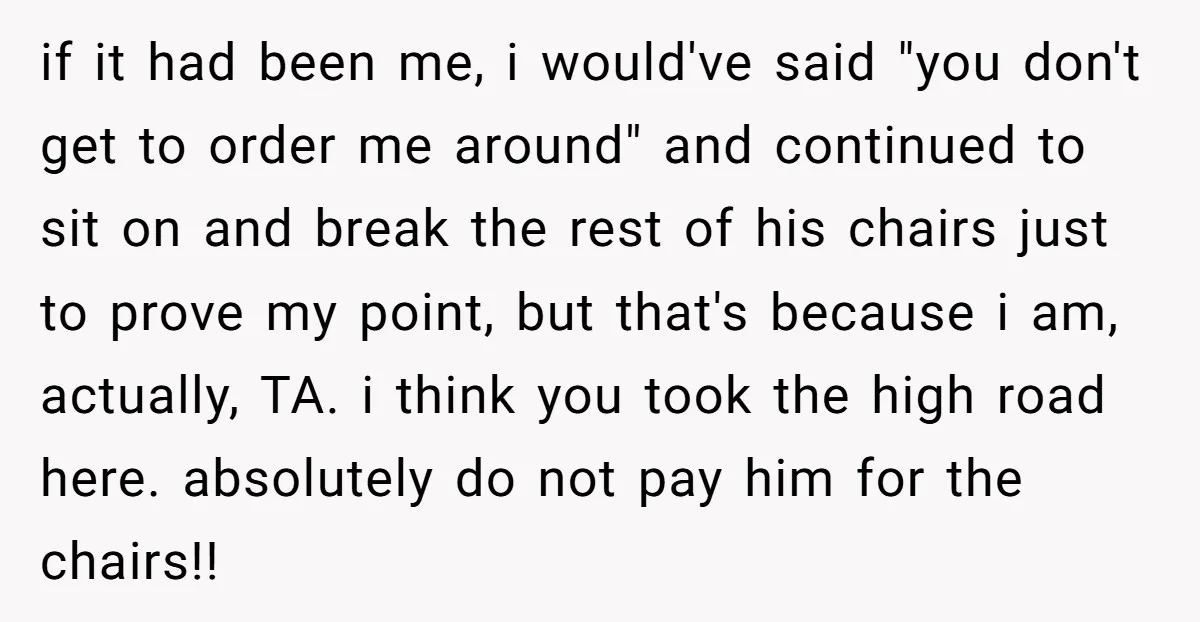
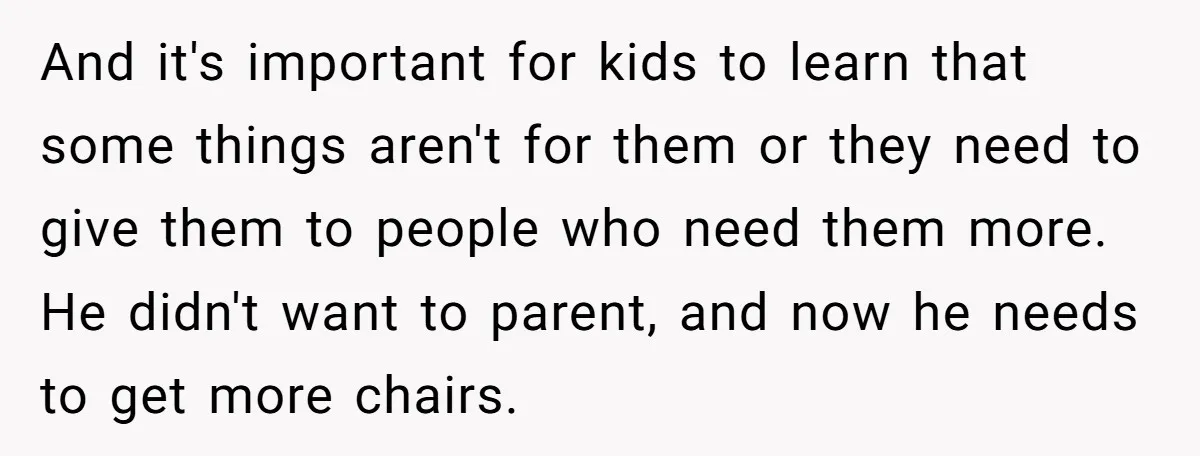
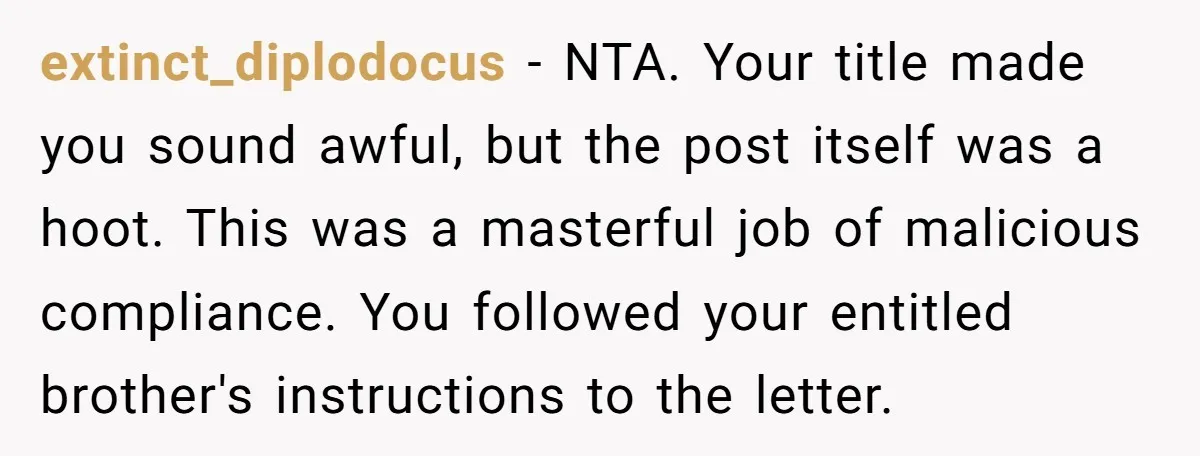
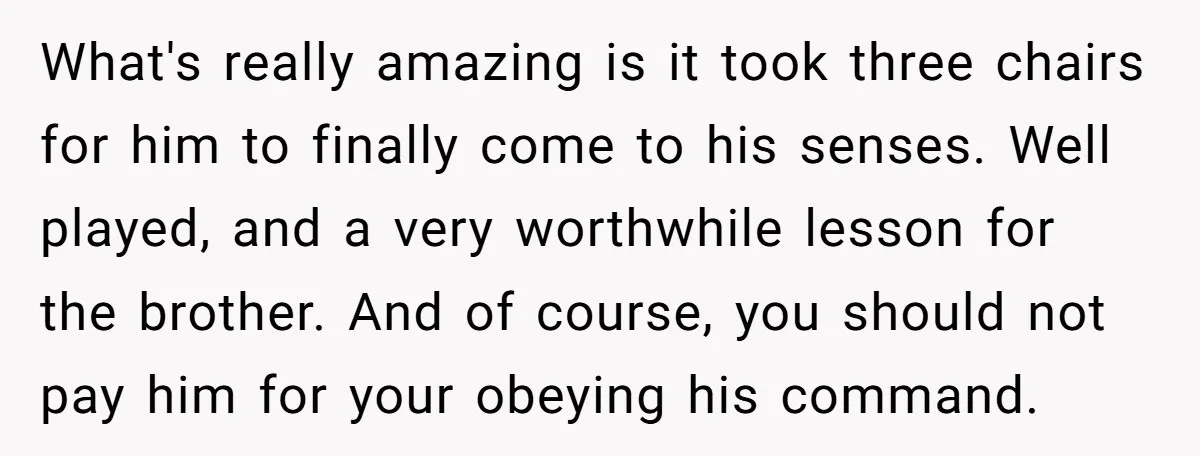
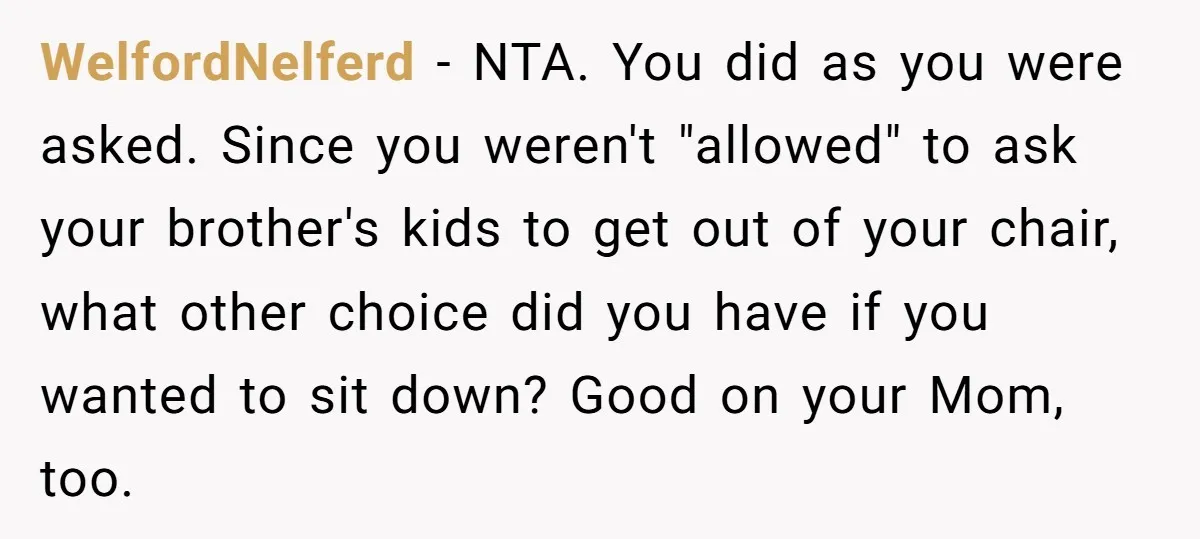
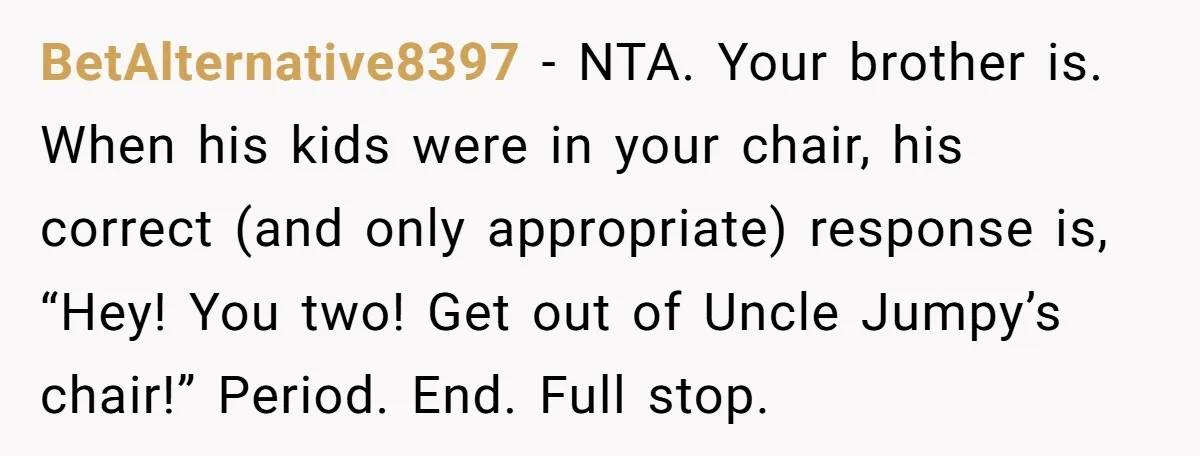
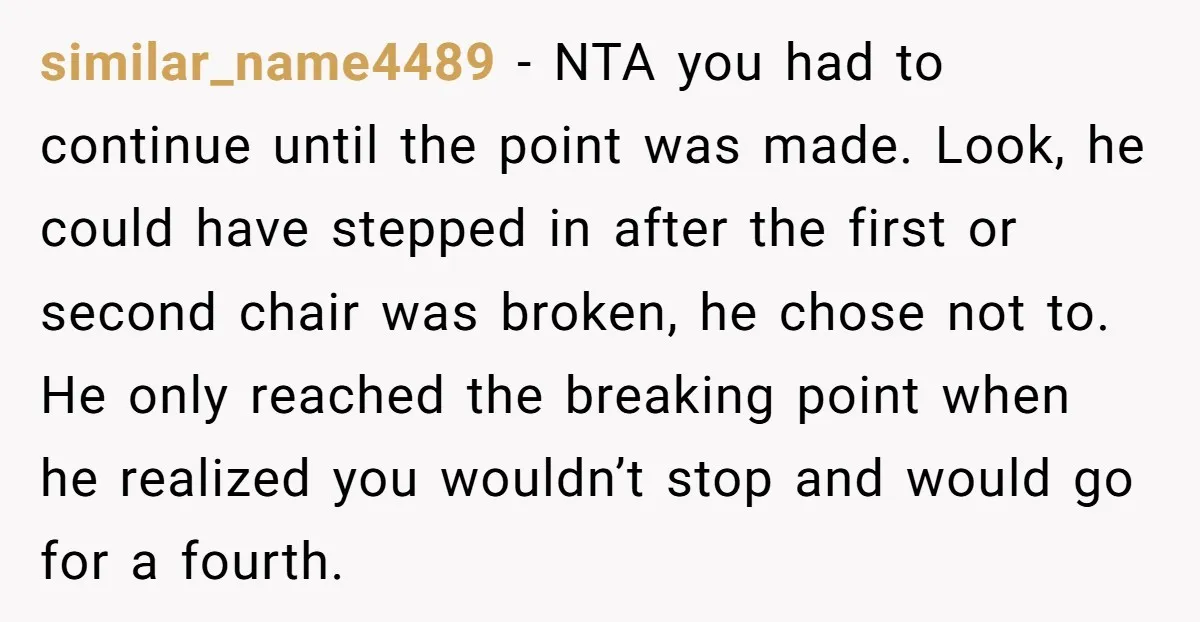
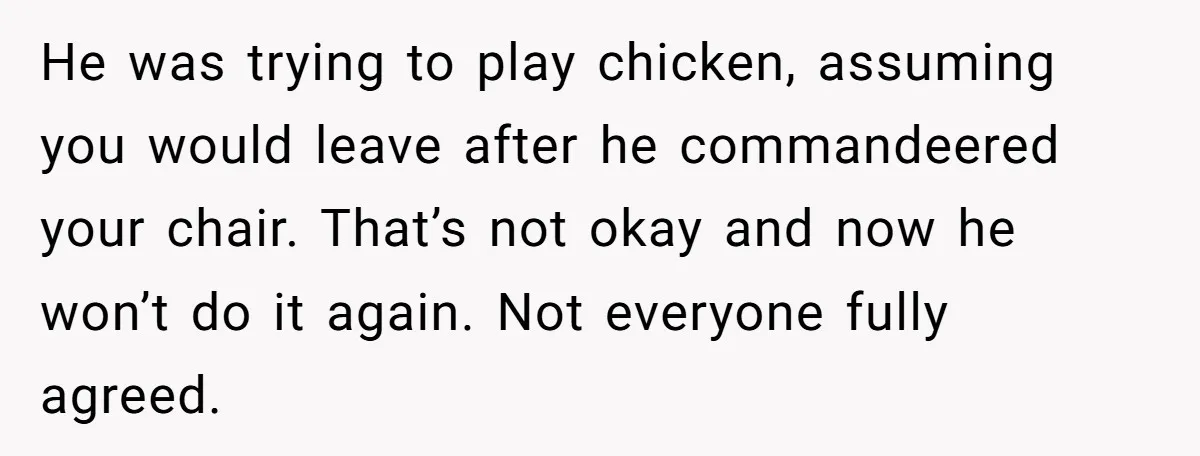
Many commenters sided strongly with the chair owner:

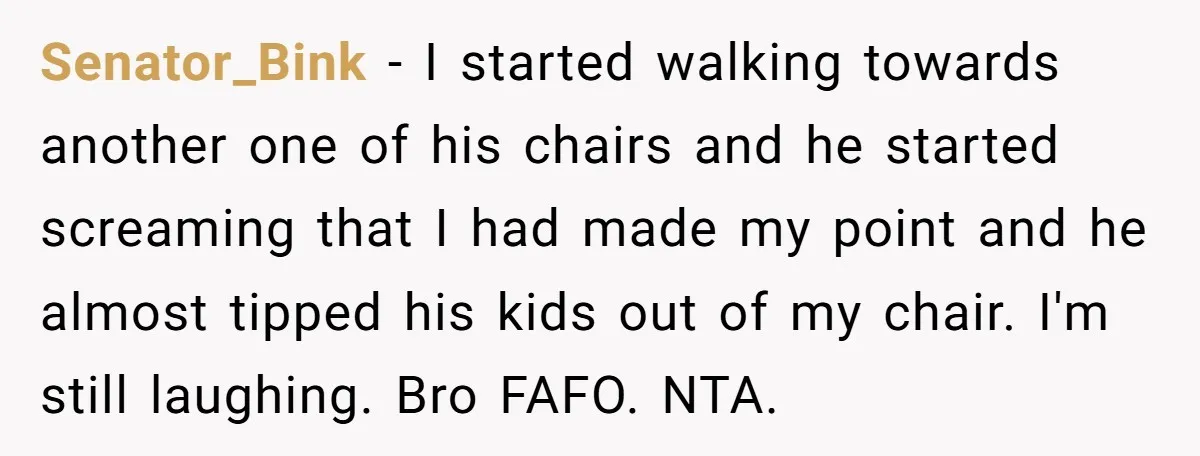
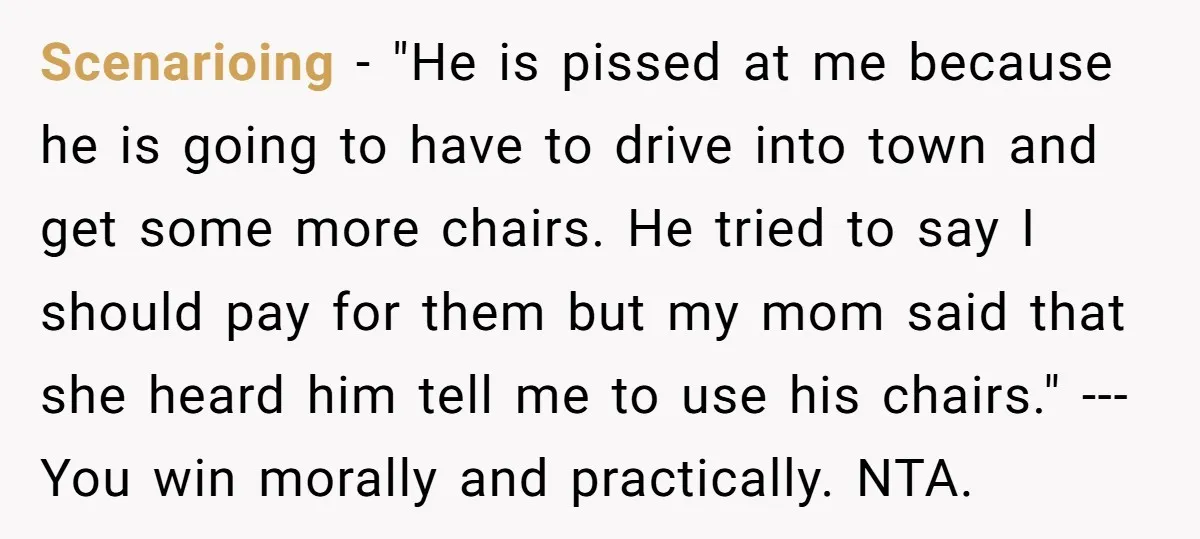


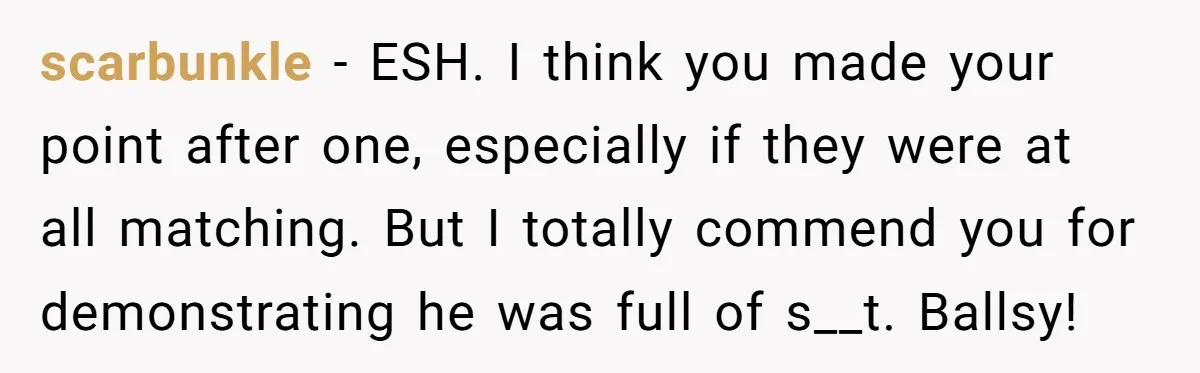
Others simply found the situation hilarious:



![[Reddit User] - NTA. This is gold right here, I can taste the pettiness it's delicious.](https://loknam.com/aita/images/d791706284/wp-editor-1772090195944-4.webp)
In the end, the debate centers on proportional response. Was breaking three chairs excessive, or was it the only way to demonstrate that the warning should have been taken seriously? Many readers saw it as poetic justice. Others felt the lesson could have been delivered after the first snap.
Family dynamics often amplify small conflicts into dramatic scenes. One heavy-duty chair became a symbol of respect, pride, and stubbornness. If you were in his position, would you have stopped after the first broken leg — or kept sitting until the message landed?