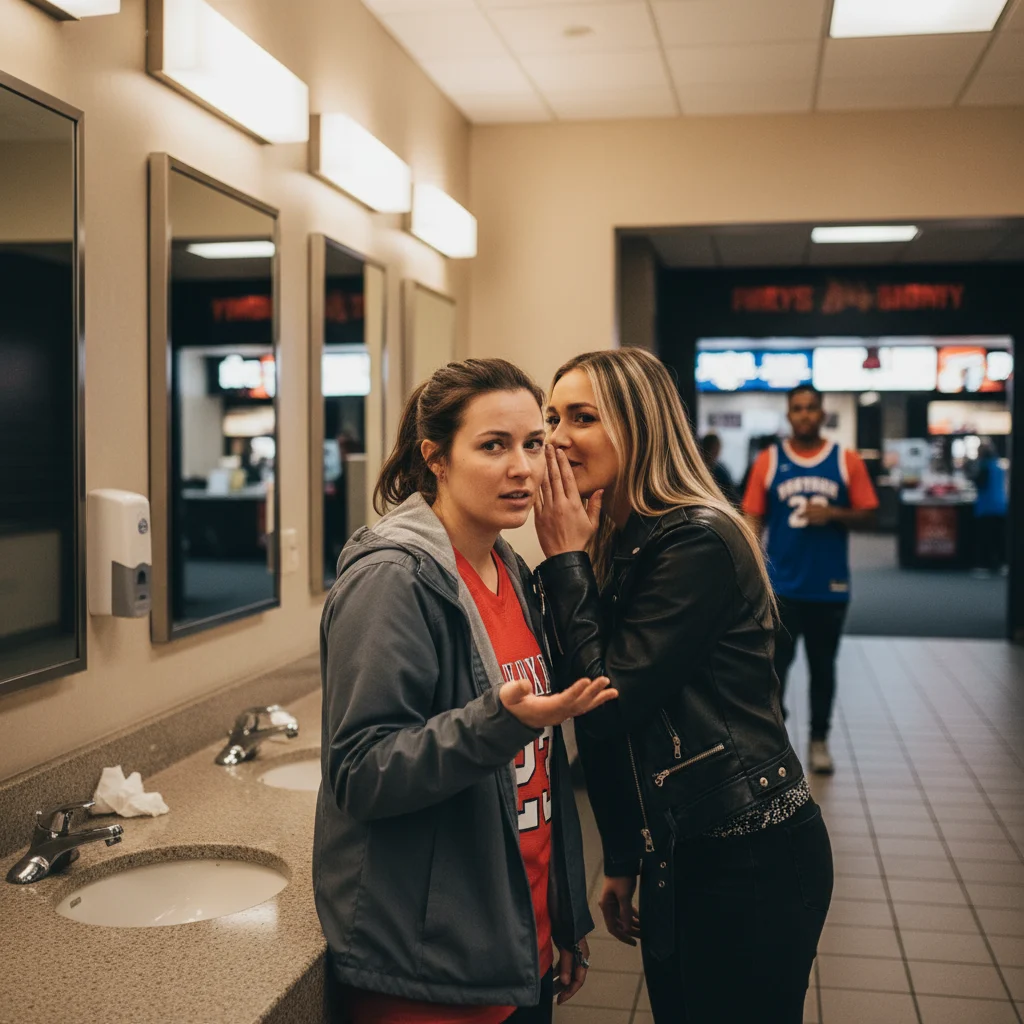
A disagreement over a simple drink turned into a deeper conflict about faith, respect, and control. A woman living with her Christian boyfriend found herself questioning whether she crossed a line by drinking alcohol during a virtual Bible study, even though she never tried to hide it or disrupt the session. What started as a way to unwind after a stressful day quickly became a source of tension between the couple.
What makes the story more complicated is the boyfriend’s recent religious transformation and the woman’s tentative exploration of Christianity herself. As she navigates new spiritual ground, she is also trying to maintain autonomy and comfort in her own home. The situation raises broader questions about religious expectations, mutual respect, and whether small actions can signal deeper incompatibilities in a relationship.

‘AITA for drinking alcohol on a video call?’
It all started when a couple with different beliefs tried balancing faith and daily life.

What followed was a stressful day, a virtual meeting, and an unexpected point of conflict.
After the call ended, a private disagreement brought deeper issues to the surface.

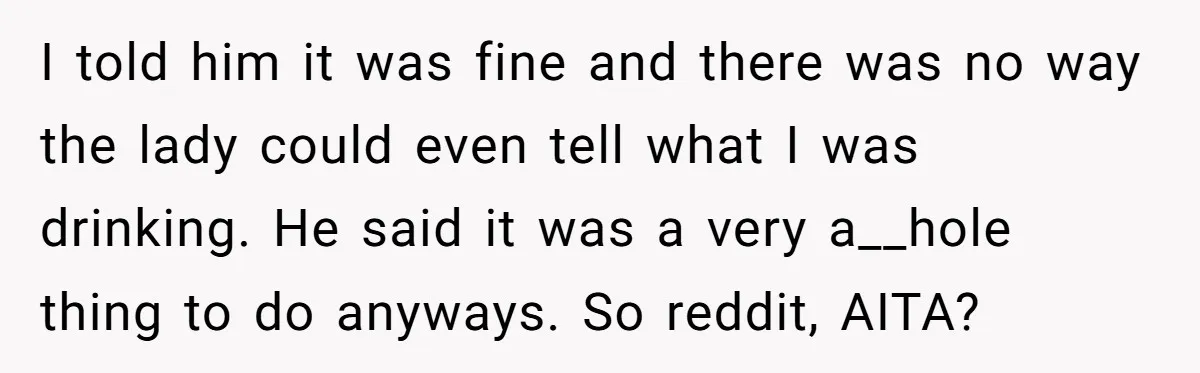
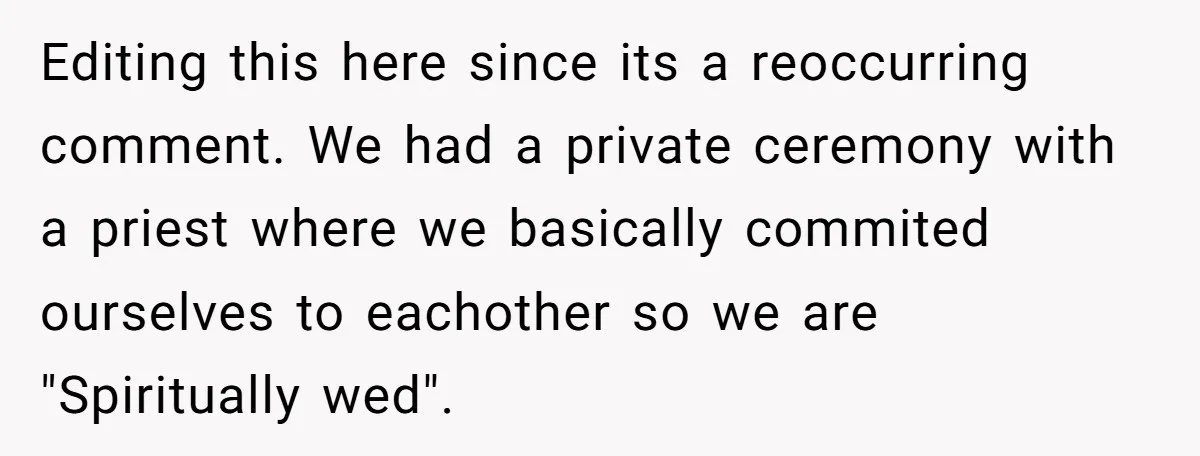
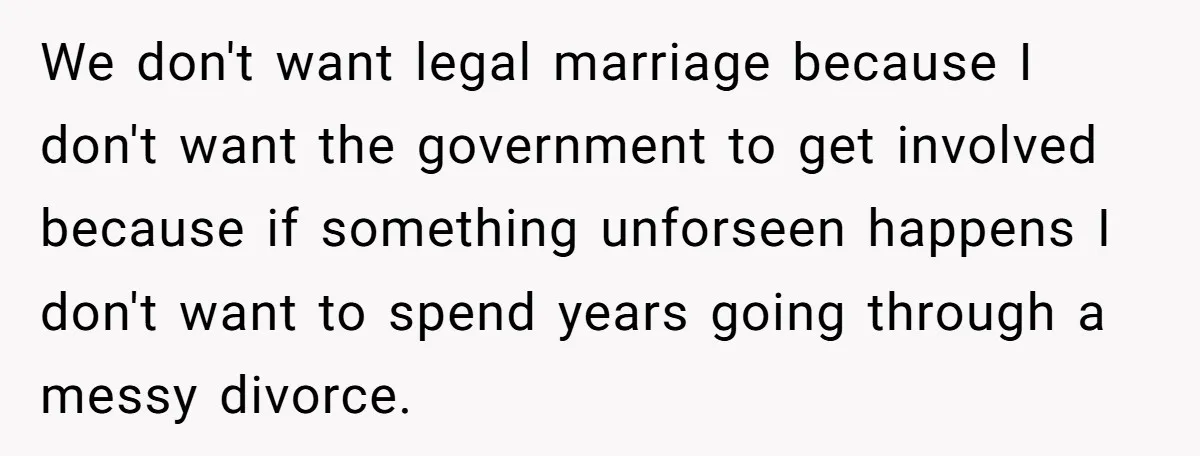

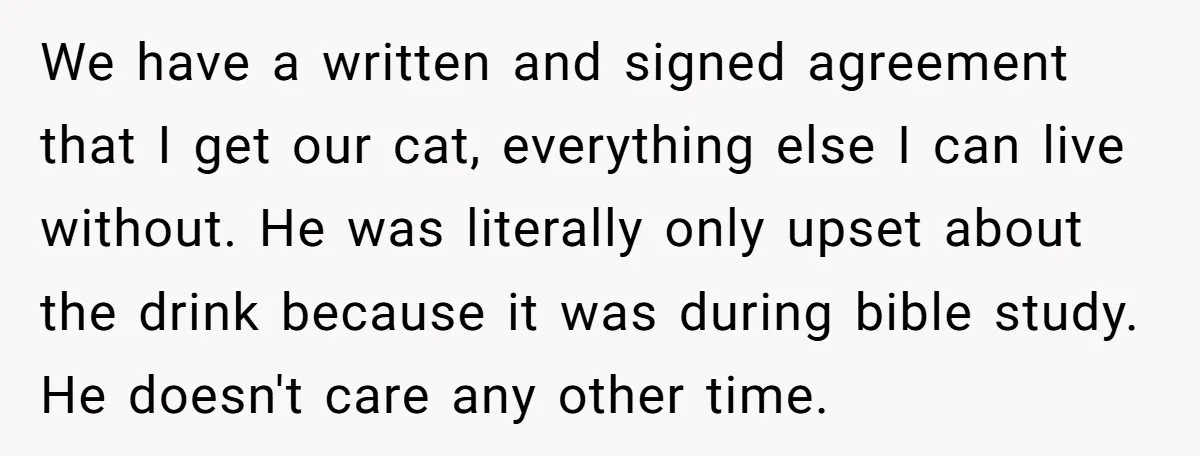

At the heart of this situation is a mismatch in expectations rather than a moral failing. The poster did not attempt to disrupt the Bible study, nor did she openly flaunt behavior meant to offend religious sensibilities. Her boyfriend’s reaction appears rooted in his personal interpretation of faith and reverence, rather than a universally accepted religious rule.
On the other hand, his perspective highlights how deeply meaningful rituals and focused devotion can be for someone experiencing renewed faith. For him, the Bible study represented sacred time that deserved undivided attention, and alcohol symbolized distraction rather than relaxation. While this viewpoint is valid for his own practice, applying it to his partner without prior agreement creates friction.
From a broader social perspective, the issue reflects a common challenge faced by couples with differing levels of religious commitment. Mutual respect requires acknowledging boundaries while avoiding control. Sustainable relationships depend on open dialogue, especially when beliefs shift. Without clear communication, minor disagreements can become symbolic of larger incompatibilities.
These are the responses from Reddit users:
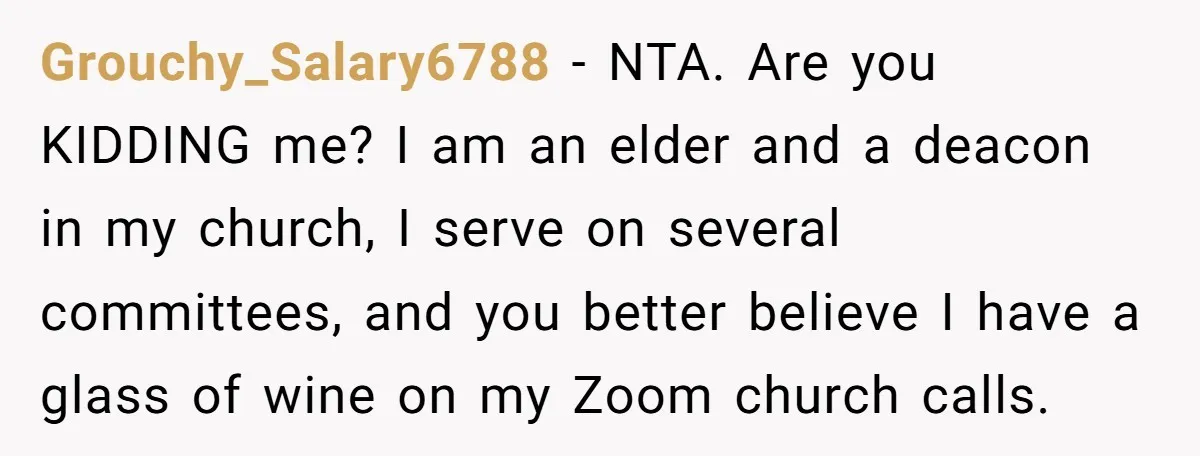
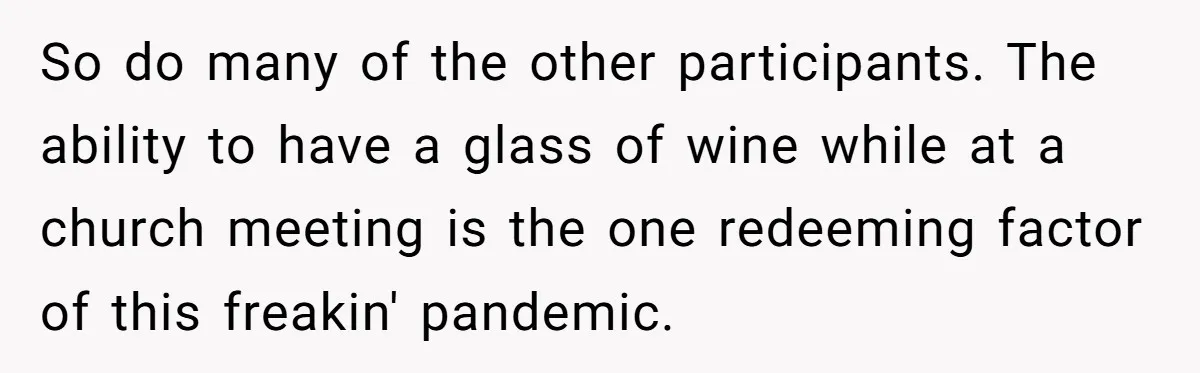
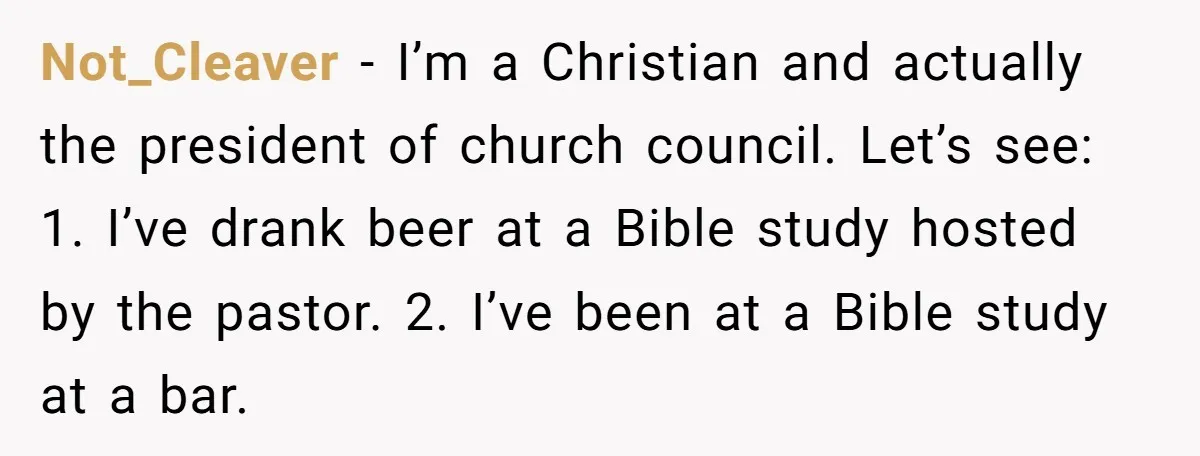
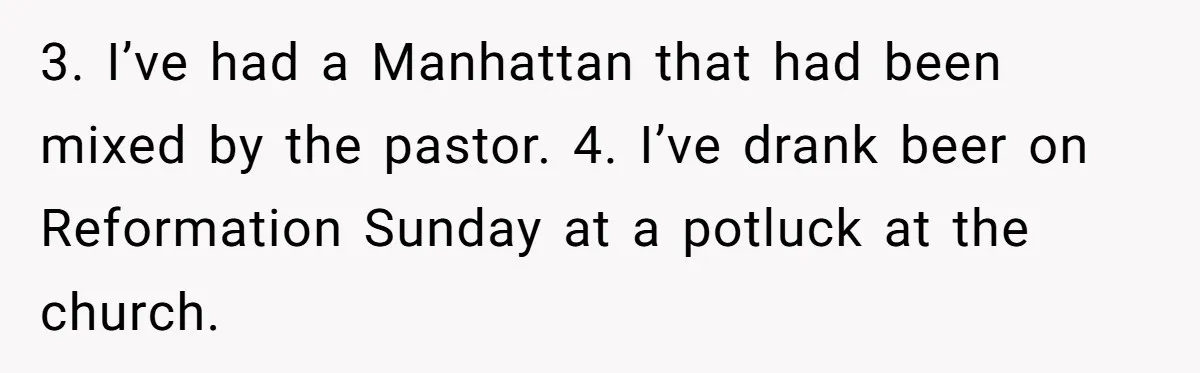
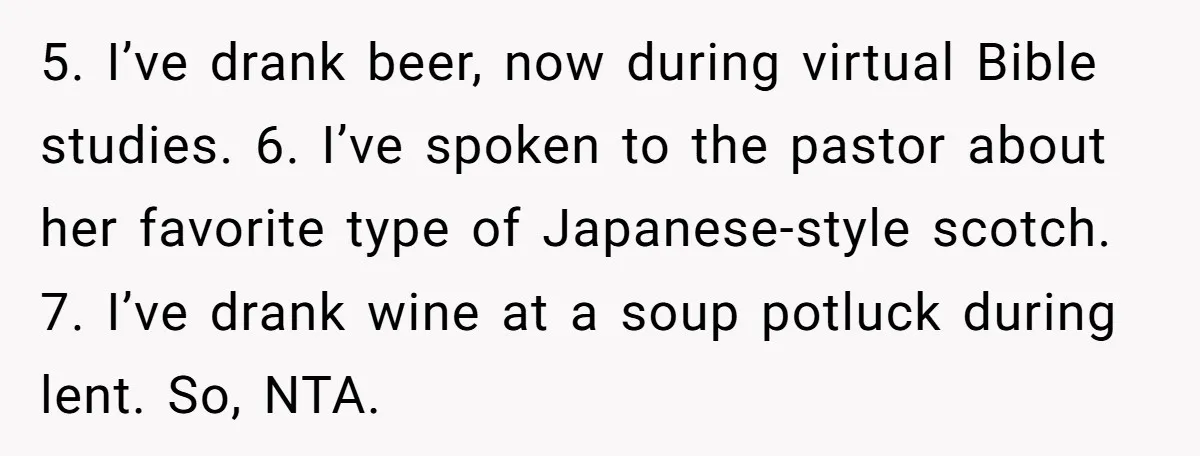
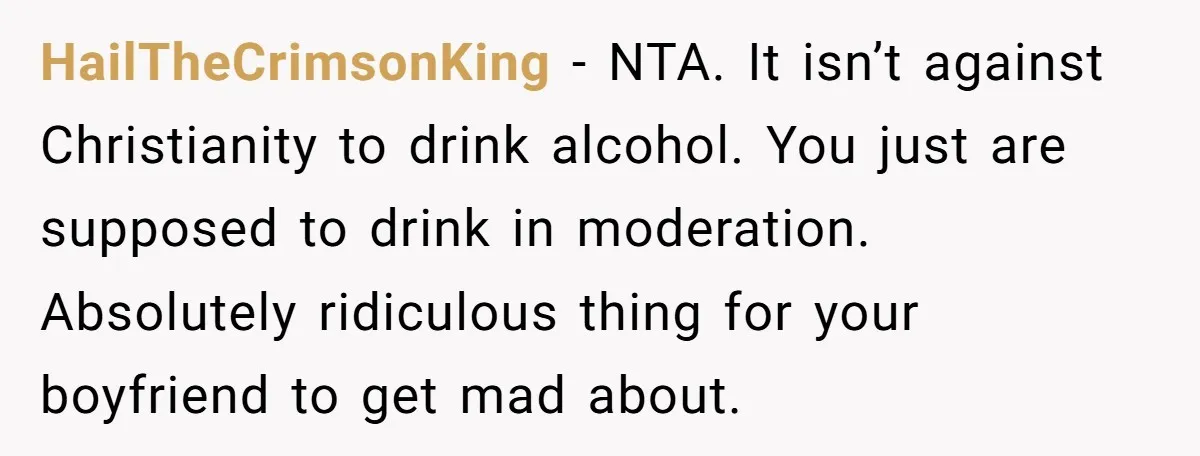
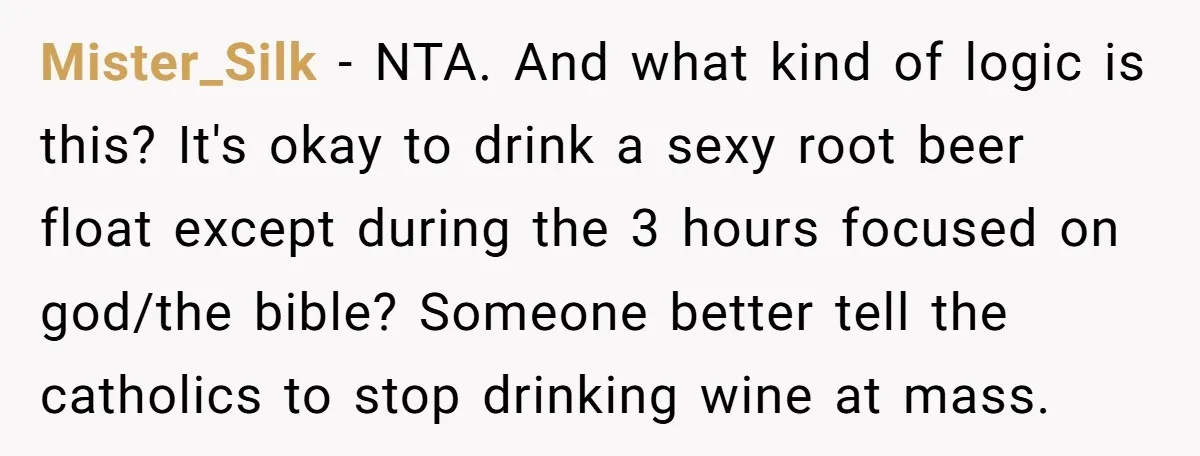
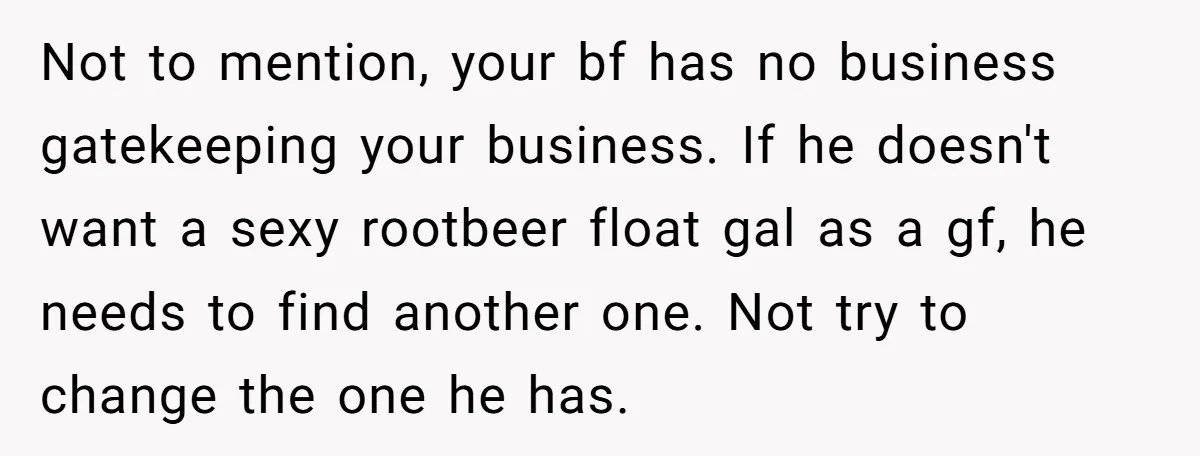
Many users strongly supported the poster, arguing the reaction was unreasonable and overly strict.

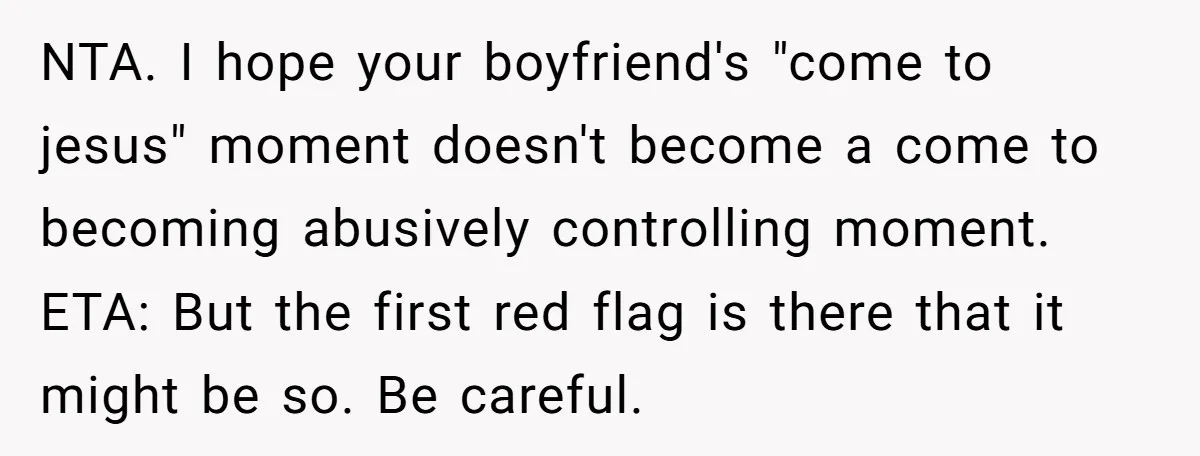
Some commenters offered more balanced takes, questioning compatibility without dismissing either side.
![[Reddit User] − y'all might be incompatible](https://loknam.com/aita/images/21e73bdf4c/wp-editor-1769333922135-1.webp)

![[Reddit User] − NTA Jesus doesn't care you had a beer, he's just glad you showed up. Tell your bf to have a seat.](https://loknam.com/aita/images/21e73bdf4c/wp-editor-1769333924115-3.webp)
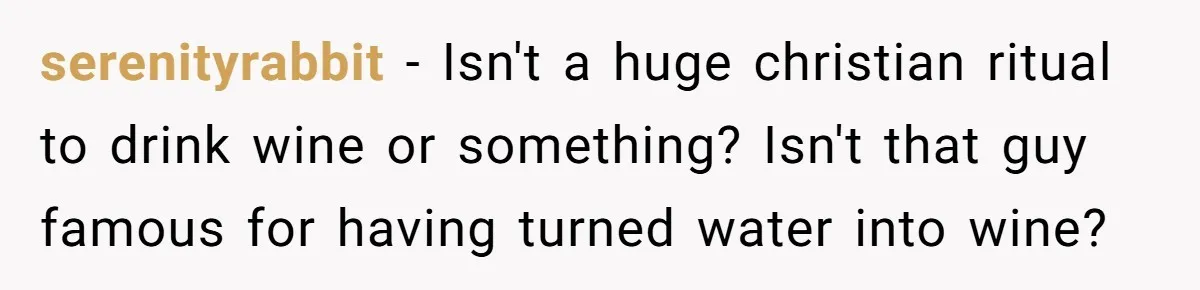
A few responses used humor and irony to lighten the mood.
![[Reddit User] − Your boyfriend is okay with you guys "living in sin" and essentially committing a__ltery but a glass of root beer which is probably less a__oholic than the...](https://loknam.com/aita/images/21e73bdf4c/wp-editor-1769333938121-3.webp)
This story highlights how small actions can take on outsized meaning when filtered through faith and personal transformation. While the poster viewed her drink as harmless, her boyfriend interpreted it as disrespectful within a religious context. Neither perspective is inherently wrong, but the lack of shared expectations fueled the conflict.
Should partners adapt their behavior to match a loved one’s evolving beliefs, or is maintaining personal comfort just as important? How much compromise is reasonable when faith enters a relationship, and where should the line be drawn between respect and control?