
A family gathering turned unexpectedly tense when an older relative mocked a young guest in front of others. The conflict stemmed from long-standing resentment about upbringing differences between city life and traditional rural expectations. While older relatives valued hard labor from childhood, the younger family member had been raised with a gentler approach that emphasized education and basic responsibility instead.
The situation came to a head during a visit after the grandmother suffered an injury. What seemed like a simple request to prepare coffee quickly escalated into public ridicule from an aunt who questioned the young person’s competence. Instead of arguing or reacting emotionally, the response was surprisingly calm yet pointed. The quiet act that followed left the room stunned, split family opinion for years, and sparked debate about respect, fairness, and standing up to long-term criticism within families.

‘AITA for “forcing” an older lady to make coffee?’
Years of family tension had already shaped how relatives treated the poster.
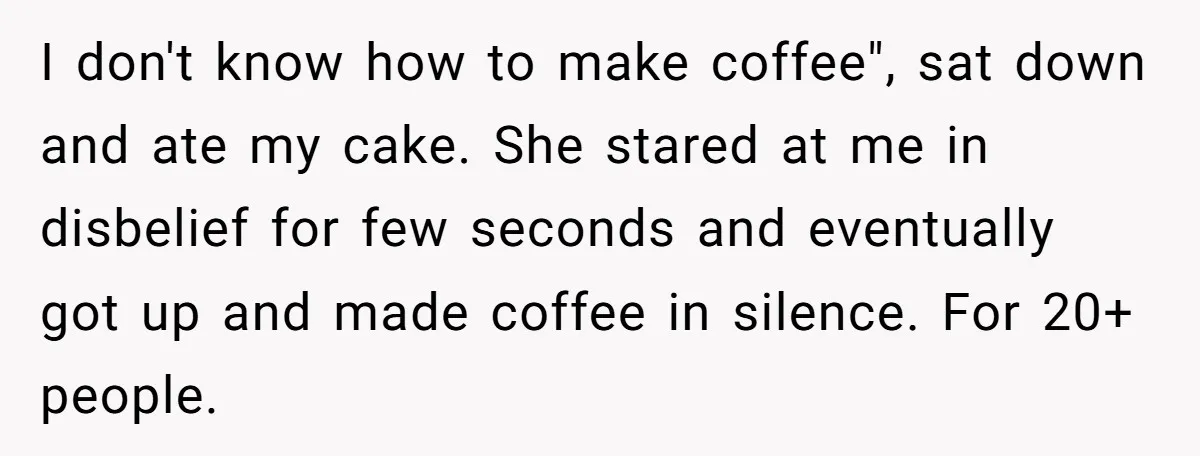
A simple request for coffee quickly turned into public humiliation.
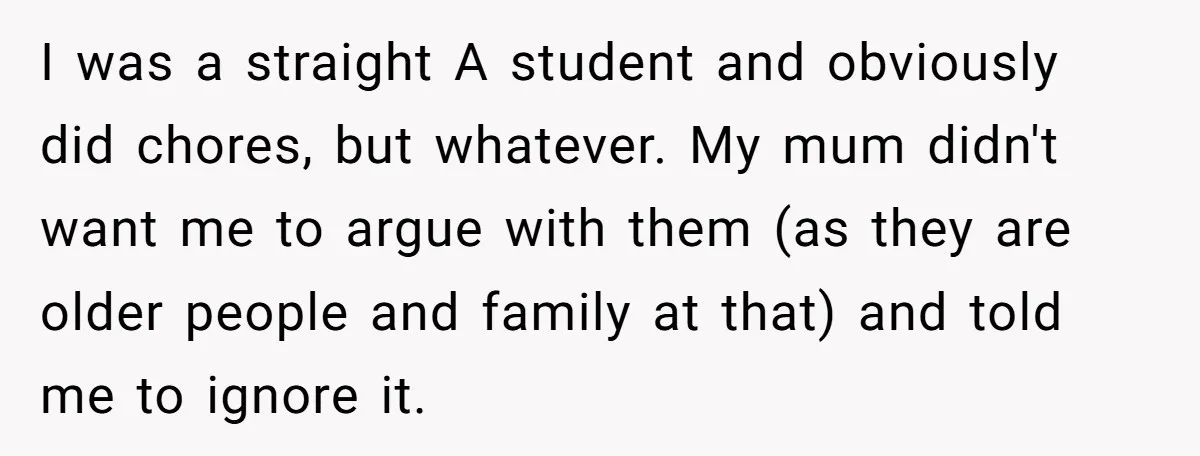
The calm response stunned the room and shifted the responsibility instantly.
![So I did. But then one day I had enough. My grandmother [75] broke her leg while working in the garden. Her youngest sister [67] came to visit her and...](https://loknam.com/aita/images/2fd2d3931e/wp-editor-1771838972296-1.webp)

![Then my grandmother's sister started laughing and said "SHE?!?! SHE will make coffee [hysterical laughing]? She never did anything in her life and had everything handed to her on a...](https://loknam.com/aita/images/2fd2d3931e/wp-editor-1771838974035-3.webp)
![And you trust her with making coffee to bunch of people?!? [more hysterical laughing] She can barely carry a cup on her own! She doesn't even know how to make...](https://loknam.com/aita/images/2fd2d3931e/wp-editor-1771838974892-4.webp)



Family conflicts often arise when different generations hold opposing views about responsibility and upbringing. In this situation, the disagreement reflects a deeper divide between traditional expectations of children contributing labor early and modern approaches that prioritize education and personal development. The tension had clearly built over years, making the coffee incident less about the task itself and more about long-standing resentment.
From one perspective, elders may feel that younger family members should demonstrate respect through service, particularly in cultures where hierarchy and age carry strong social weight. The aunt likely interpreted the refusal as a challenge to authority rather than a reaction to public humiliation. This helps explain why some relatives viewed the action negatively even though the aunt initiated the conflict.
From another perspective, the poster’s reaction was a measured form of self-assertion rather than open confrontation. Instead of arguing, the response mirrored the aunt’s claim and allowed her own words to create the outcome. This reflects a broader social shift toward rejecting unfair expectations placed on children and resisting ridicule calmly rather than escalating disputes. Ultimately, the incident highlights how unresolved generational tension can turn ordinary interactions into symbolic battles over respect, identity, and fairness.
Here’s how people reacted to the post:
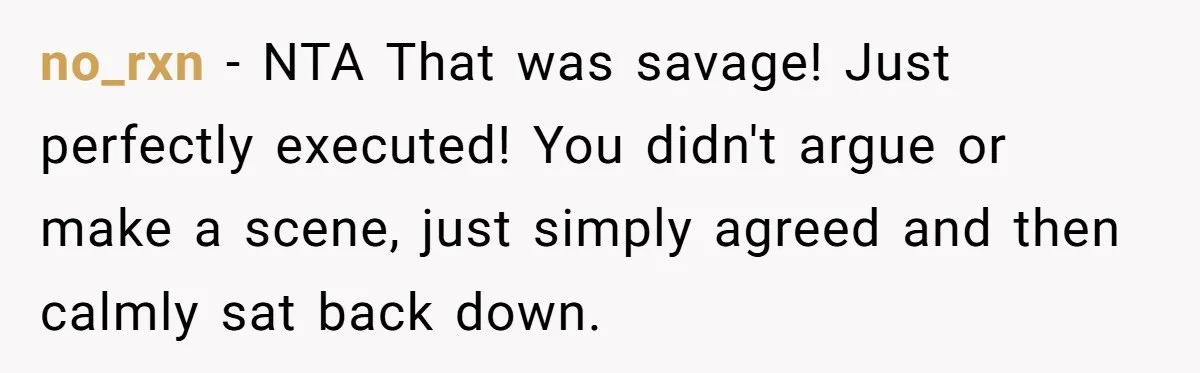
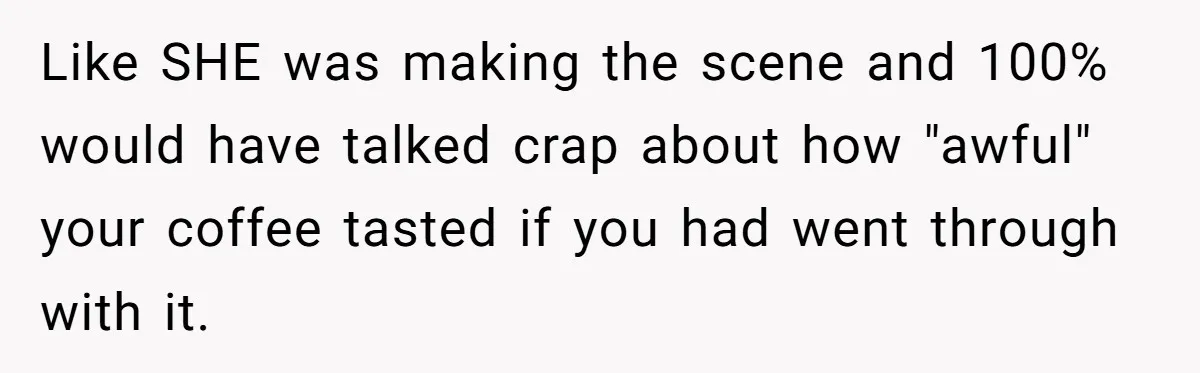
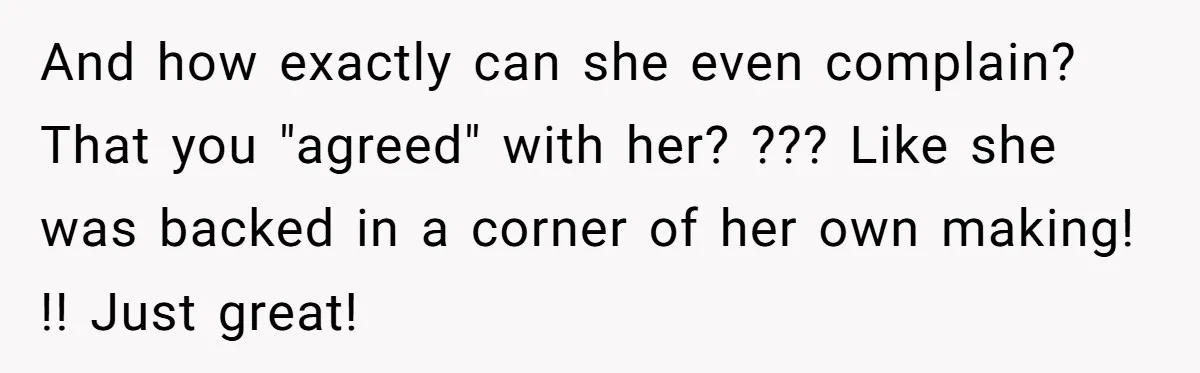
Many users supported the poster, praising the calm but firm response to public ridicule.
![[Reddit User] − Nta! Super nta! Her (the grandmas sister’s) hands aren’t broken, and you’re not a servant! Edit: clarifying who I meant](https://loknam.com/aita/images/2fd2d3931e/wp-editor-1771839046198-1.webp)



Others offered more balanced takes, acknowledging both respect and personal dignity concerns.
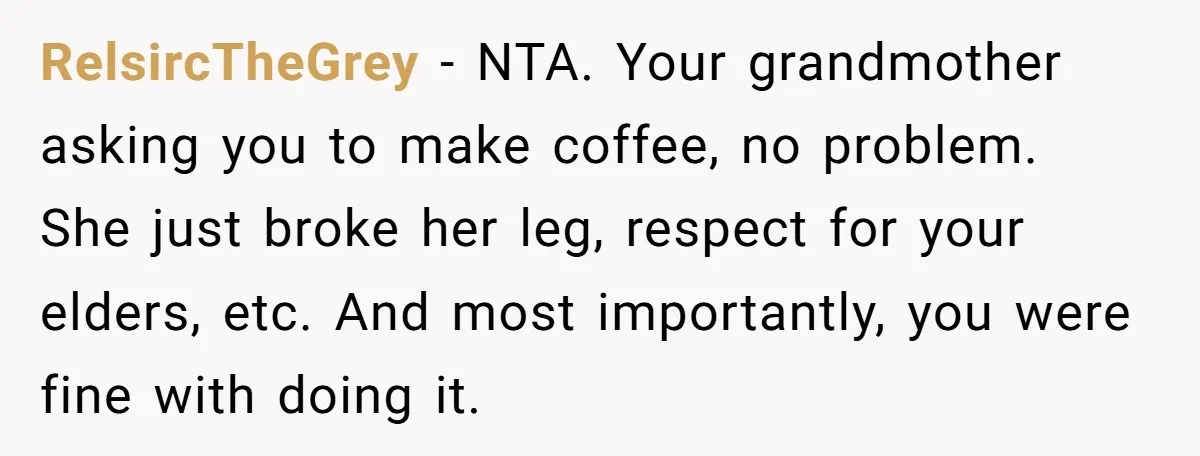
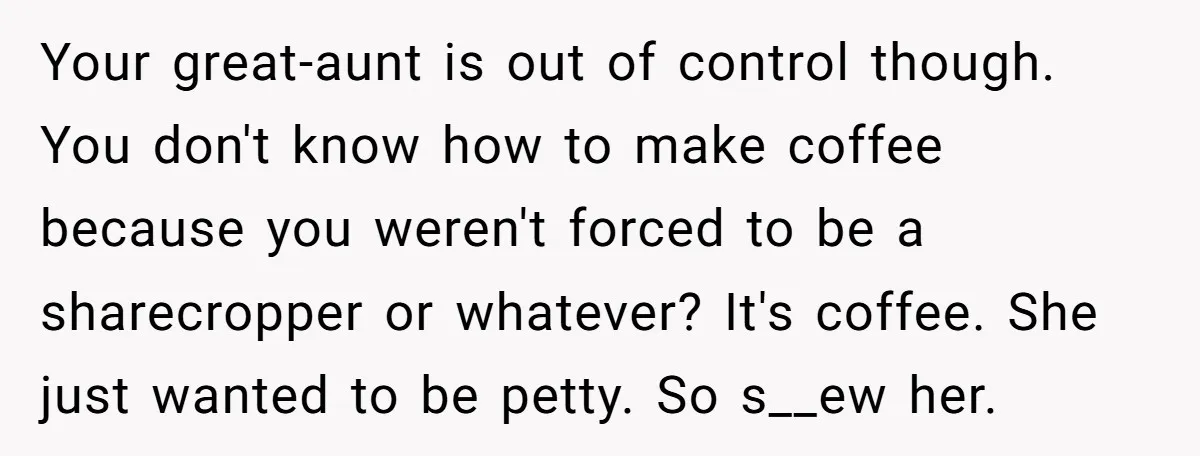


A few comments lightened the mood with humor about the long-remembered moment.
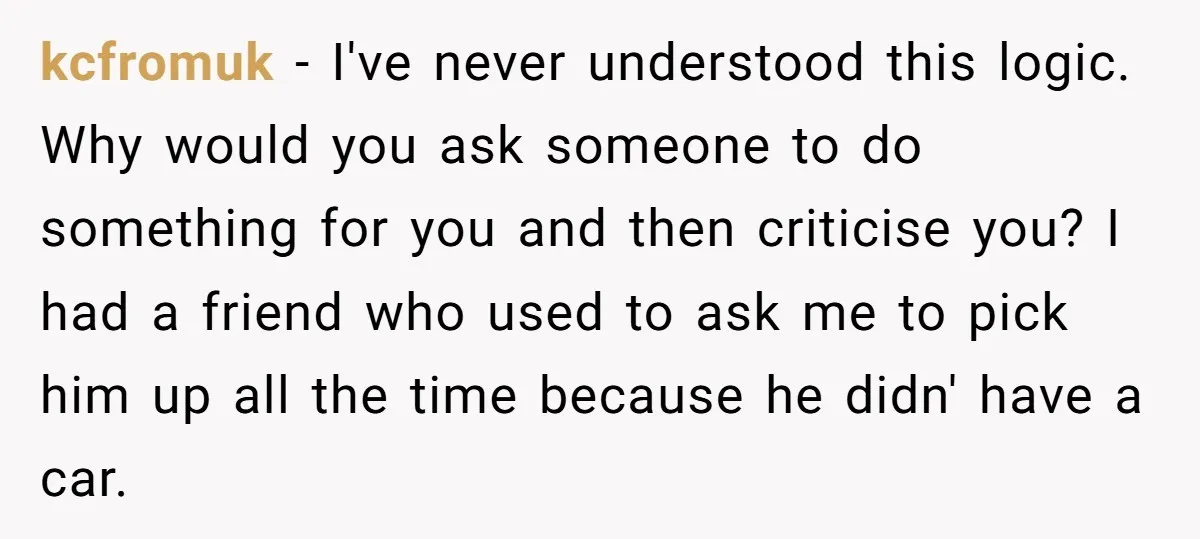


This story reflects a clash between generational expectations and personal dignity within families. What began as a simple request evolved into a moment shaped by years of tension, criticism, and differing views on upbringing. The response itself was quiet but impactful, leaving relatives divided over whether it was justified self-respect or disrespect toward an elder.
Situations like this raise broader questions about family dynamics and cultural expectations. How should someone respond when publicly mocked by relatives? Does age automatically require deference even in unfair circumstances? And where should the line be drawn between maintaining peace and standing up for oneself?