
A father found himself questioning his parenting approach after a disagreement about religion surfaced in his household. What started as a simple Sunday routine soon turned into a bigger discussion about belief, personal choice, and how much influence parents should have over their children’s faith. The family has attended a nondenominational Christian church every week, but recently their 11-year-old son began saying he no longer wanted to go.
When asked why, his answer was simple: he just didn’t believe in it anymore. While the parents initially assumed he was trying to avoid waking up early for the 8 a.m. service, the boy continued repeating the same explanation. The father and mother decided to keep requiring him to attend, believing it might be a temporary phase. However, a family member strongly disagreed with that decision.
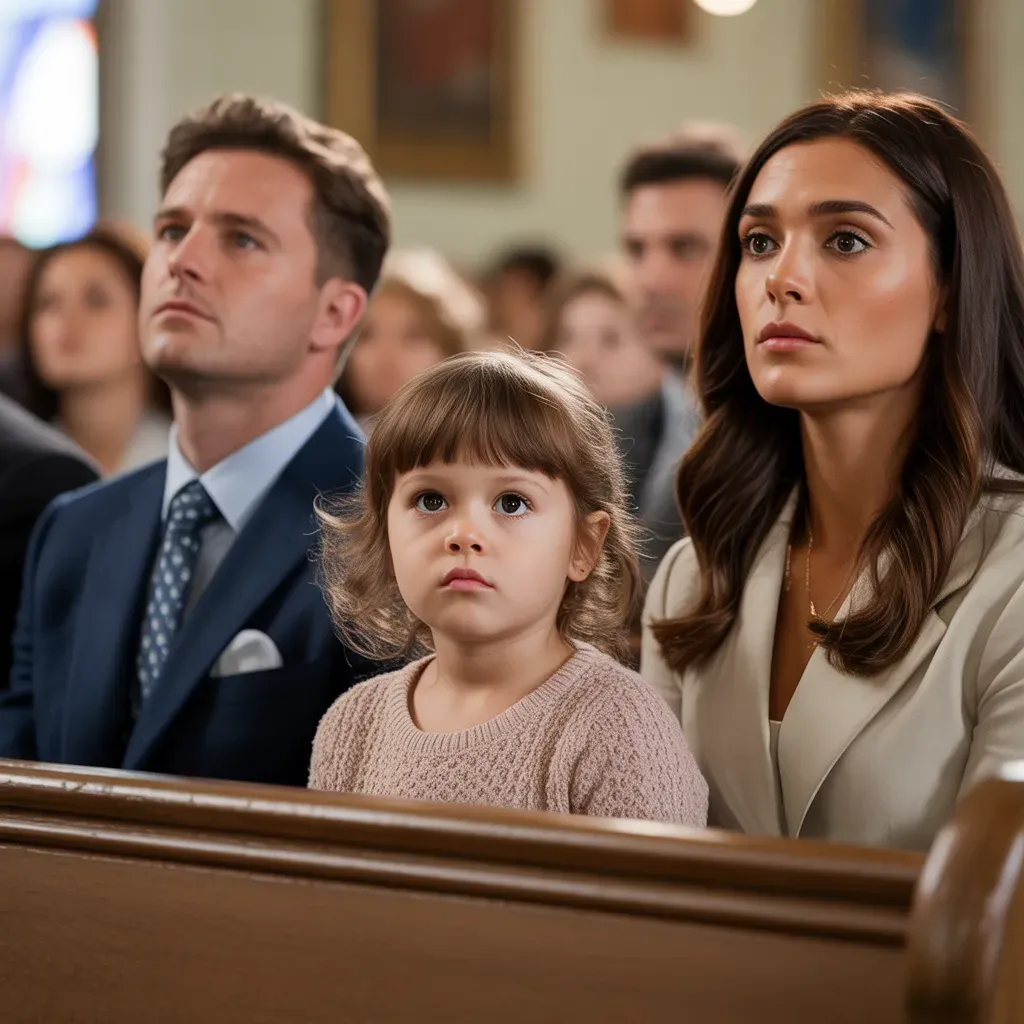
‘AITA for forcing my 11-year-old to attend church with the family?’
The situation began when the child started questioning the family’s weekly routine.
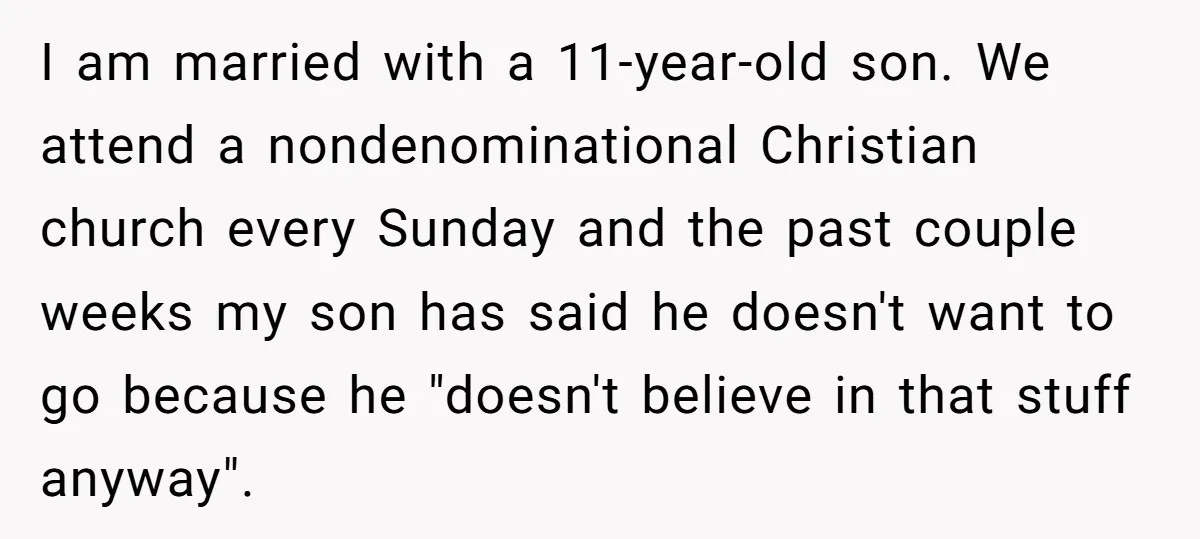

His reasoning remained simple, leaving the parents unsure how seriously to take it.

The disagreement grew when another family member shared a different perspective.

Questions about religion and parenting often involve balancing family traditions with a child’s developing independence. Around the age of eleven, many children begin forming stronger personal opinions about identity, beliefs, and values. This developmental stage naturally leads to curiosity and sometimes skepticism toward ideas they previously accepted without question.
Parents frequently see shared religious practices as an important part of family life. Attending services together may represent more than belief alone; it can symbolize community involvement, cultural tradition, and family bonding. From this perspective, continuing the routine might feel like maintaining an important household value rather than imposing a specific belief.
On the other hand, belief itself cannot be forced. Research in family psychology often shows that when children feel pressured about personal beliefs, they may become more resistant over time. Open discussions about faith, doubt, and personal meaning can sometimes lead to deeper understanding on both sides. Ultimately, families often benefit from creating space for conversation while also explaining the reasons behind their traditions.
Here’s the feedback from the Reddit community:
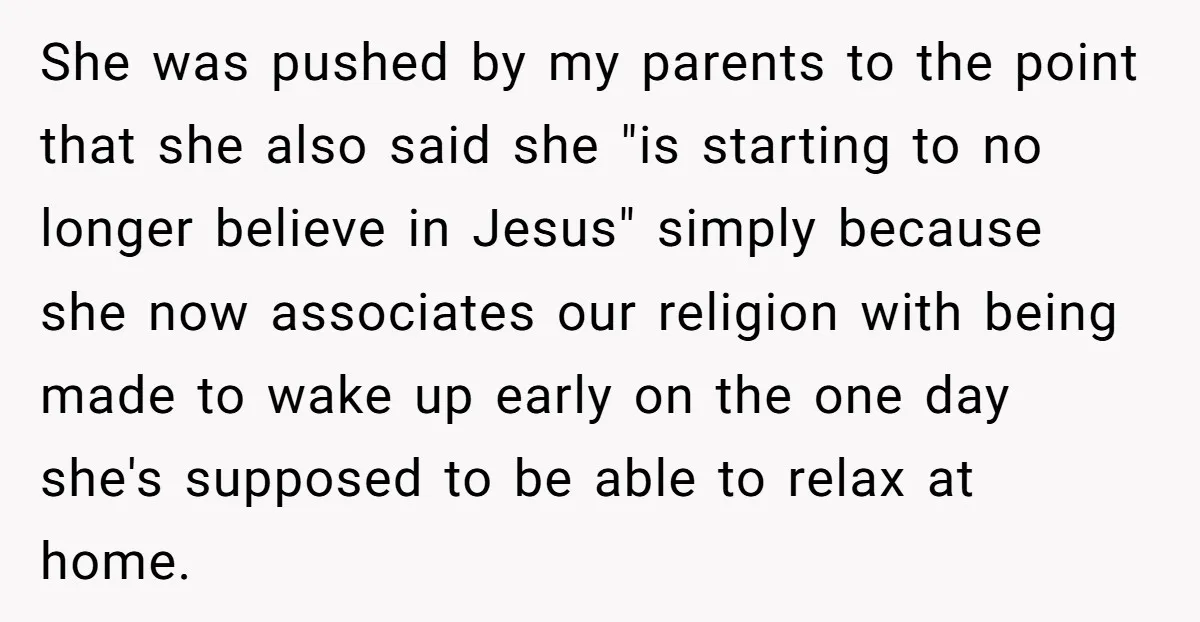
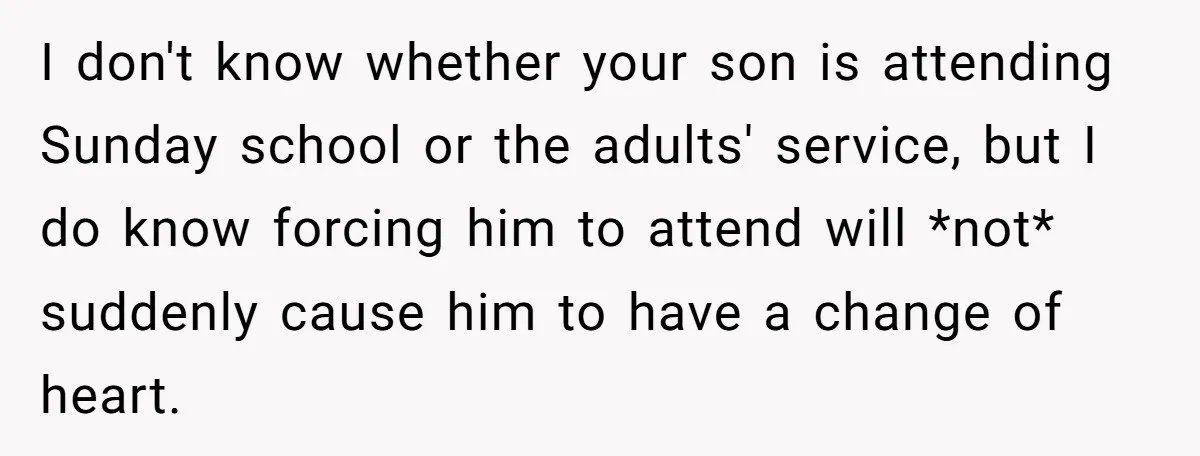
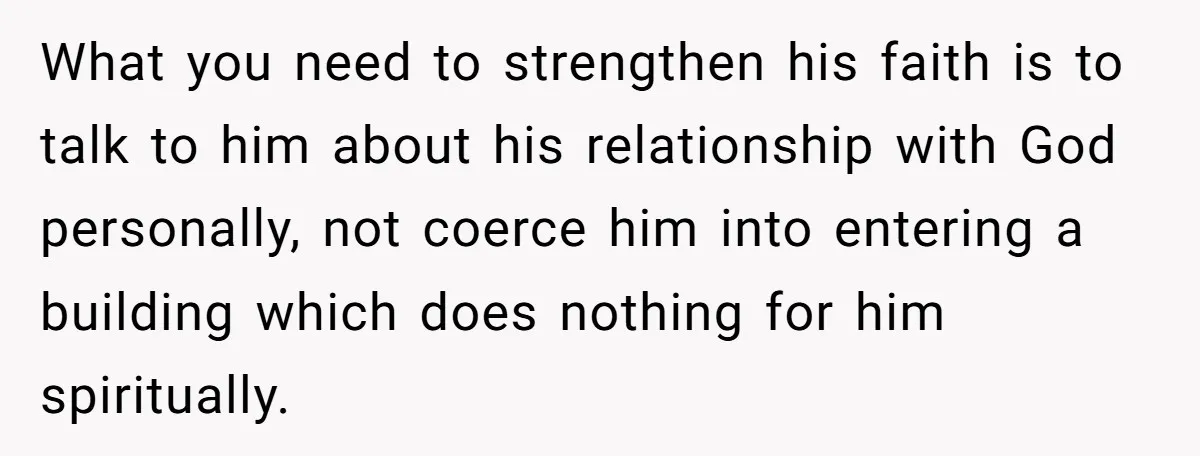
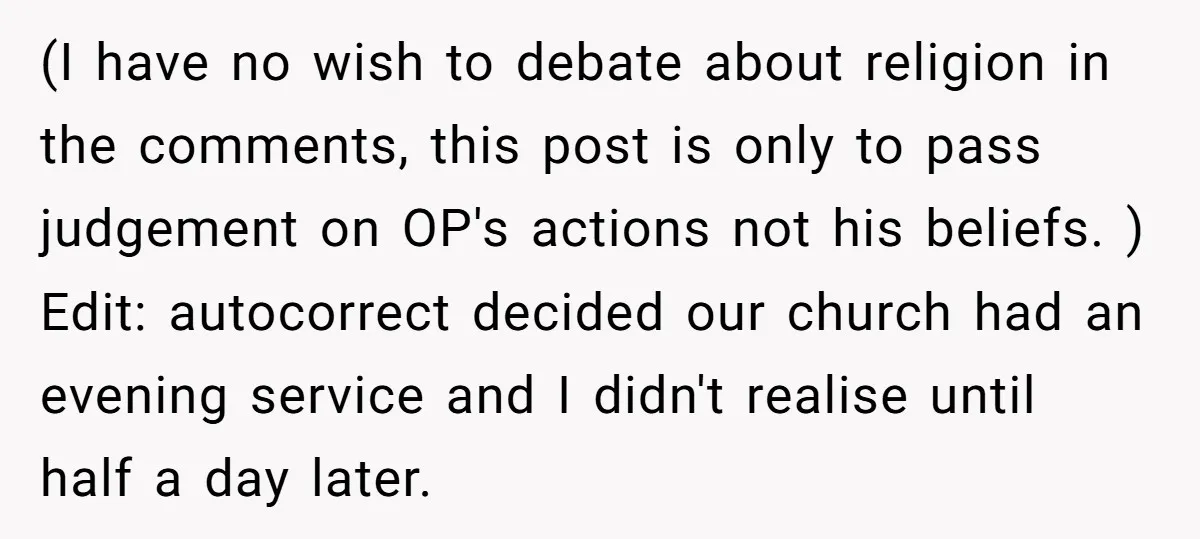
Many commenters believed the parents were wrong to require church attendance.


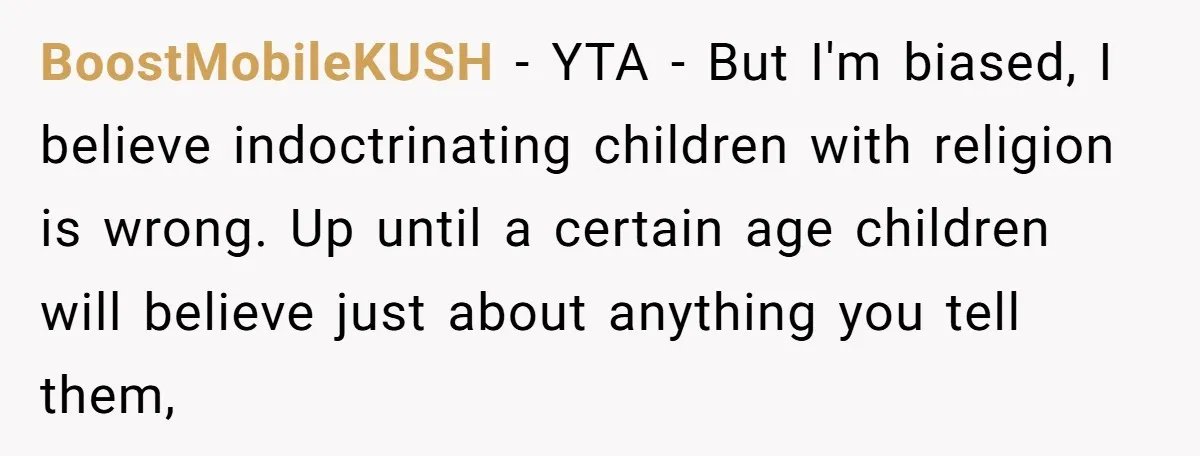
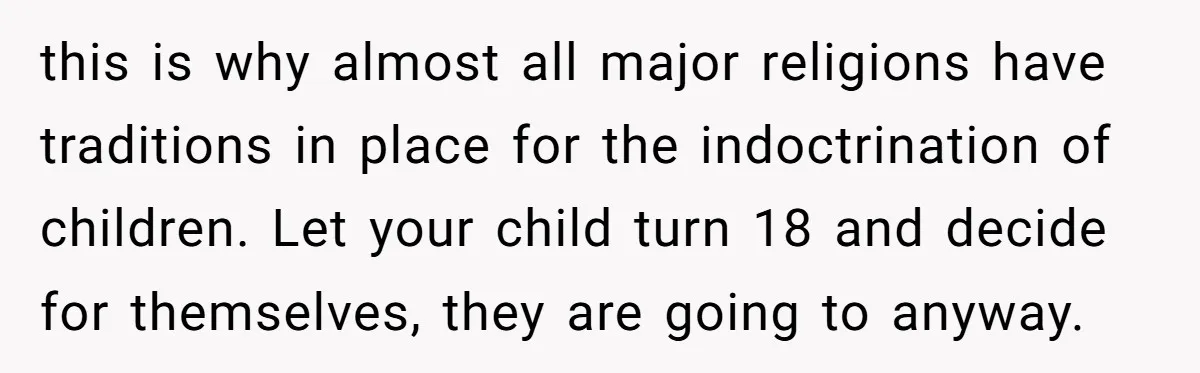




Some commenters emphasized that belief is deeply personal and cannot be forced.
![[Reddit User] − Yes, YTA. He is literally telling you he does not believe in God, and you are forcing him to go to church because for some reason him...](https://loknam.com/aita/images/a5a6d5506d/wp-editor-1773021758393-1.webp)







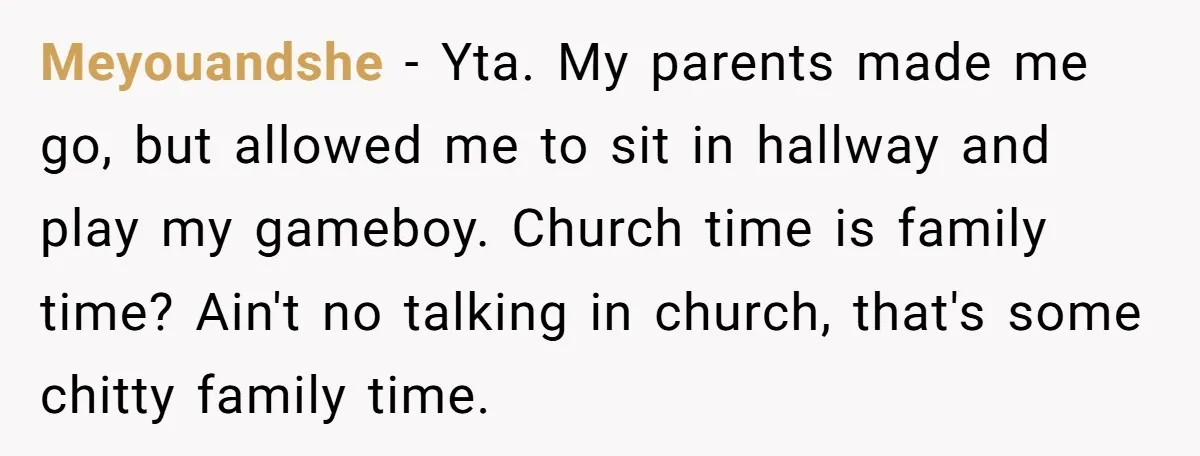
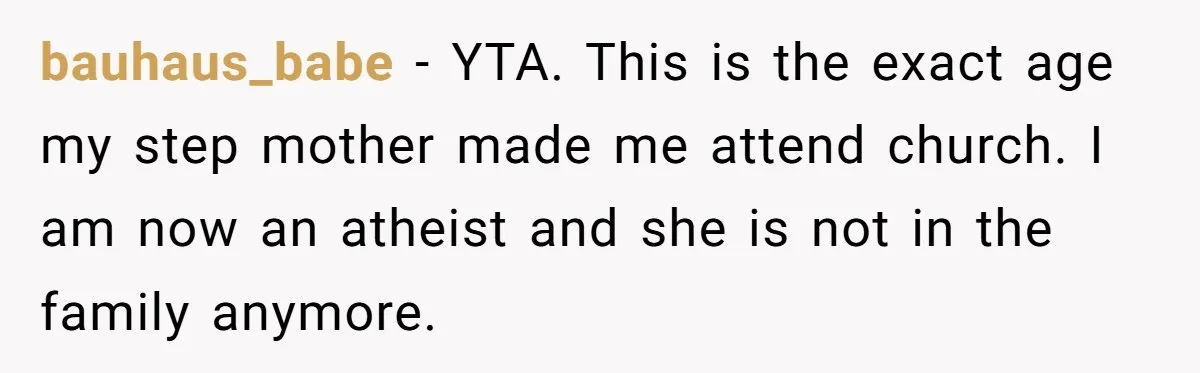
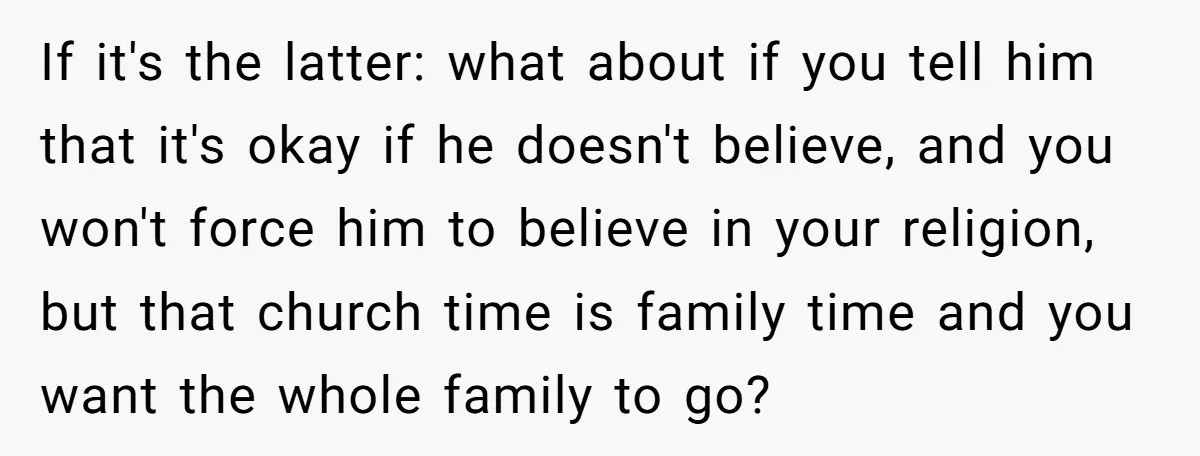
Others shared personal experiences or offered alternative perspectives on family traditions.
![[Reddit User] − INFO. Is he old enough to stay at home alone, or where would he go during church hours? Also, what are your reasons for wanting him to...](https://loknam.com/aita/images/a5a6d5506d/wp-editor-1773021794780-3.webp)


This situation highlights a common challenge many families face when children begin forming their own beliefs. Parents may want to maintain traditions that are meaningful to them, while children increasingly seek independence in deciding what they believe.
It raises an interesting question about how families balance shared activities with personal convictions. Should children be required to participate in religious traditions until they are older, or should they have more freedom to decide earlier? And how can families discuss faith in ways that encourage understanding rather than conflict?