
A young father chose comfort over pressure when his 14-month-old daughter became overwhelmed at a lively fall fair. Instead of forcing her to participate in activities or interact with others, he simply held her close while she buried her face in his shoulder and clung to him tightly.
His wife, however, was upset by the decision. She argued that he was coddling their little girl, preventing her from learning to socialize and “face her fears,” and turning her into a “Daddy’s girl.” The disagreement left him wondering whether he was wrong for prioritizing his toddler’s emotional needs over pushing her out of her comfort zone.

‘AITA for holding my toddler throughout an event she wasn’t enjoying?’
The outing started with clear signs that the toddler wasn’t ready for the excitement.
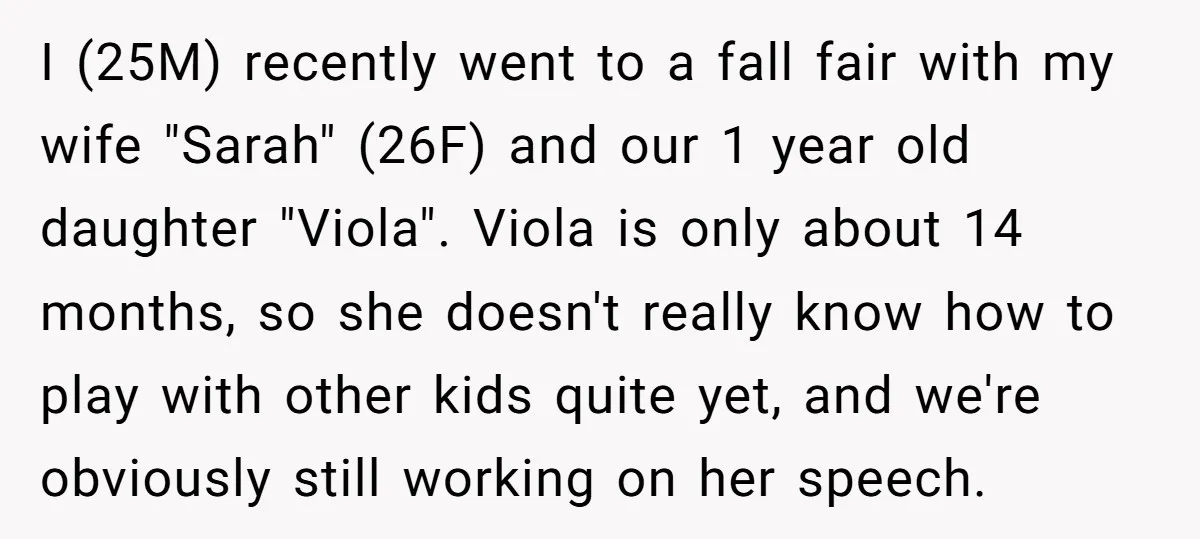

The father chose to respond to his daughter’s distress rather than push through.

His wife saw the situation very differently and voiced strong disapproval.


At 14 months, toddlers are still in the earliest stages of understanding the world around them, and large, noisy events like fairs can easily become overwhelming. What makes the story more complicated is the clash between two very different parenting instincts: one focused on immediate emotional safety and attachment, the other on long-term independence and social skills. The father’s choice to hold and comfort his daughter aligns with what child development experts consistently recommend—building secure attachment through responsive caregiving helps children feel safe enough to explore later on their own terms.
The wife’s concern about socialization and “facing fears” reflects a common anxiety among parents, but it’s misplaced at this age. Serious peer interaction doesn’t typically begin until closer to 2–3 years old, and forcing a very young child into discomfort can backfire by increasing anxiety rather than reducing it. Gentle encouragement works far better than pressure, and there’s no developmental deadline that requires a 14-month-old to engage in crowd activities. Protecting a toddler from overstimulation isn’t coddling—it’s attuned, sensitive parenting.
In the bigger picture, this moment highlights how quickly differing expectations can create tension, even between loving partners. The real key is mutual respect for each other’s instincts and a shared willingness to learn about age-appropriate milestones. The father’s approach—reading his daughter’s cues and providing security—sets a strong foundation for confidence, not dependence.
See what others had to share with OP:
Most readers strongly back the father, insisting a 14-month-old needs comfort, not pressure, in an overwhelming setting.









Many praise the dad for tuning into his daughter’s needs while urging the wife to rethink her expectations.





Others offer gentle advice, emphasizing that security now leads to confidence later.



This heartwarming yet revealing story shows how differently parents can interpret the same toddler behavior—one sees protection and security, the other sees a missed opportunity for growth. Most people agree the father made the right call by listening to his daughter’s clear signals and giving her the comfort she needed in a new, overwhelming environment.
How do you balance comfort and gentle encouragement with young children in busy settings? Have you and your partner ever disagreed on how much to push a little one during outings? What age do you think is realistic for expecting more independent social behavior? Share your experiences in the comments.