
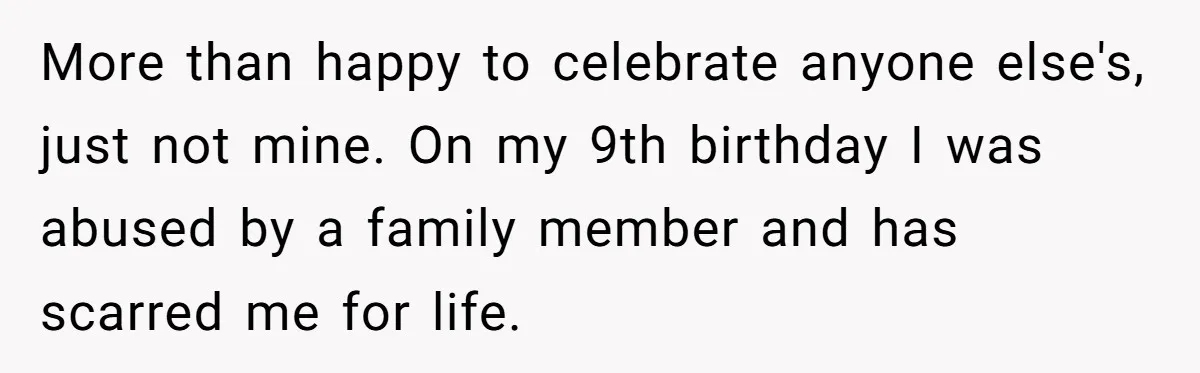
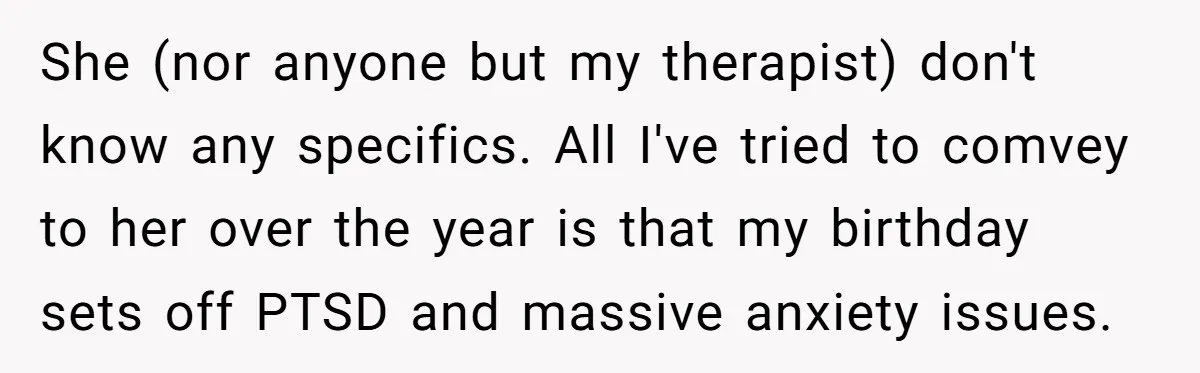
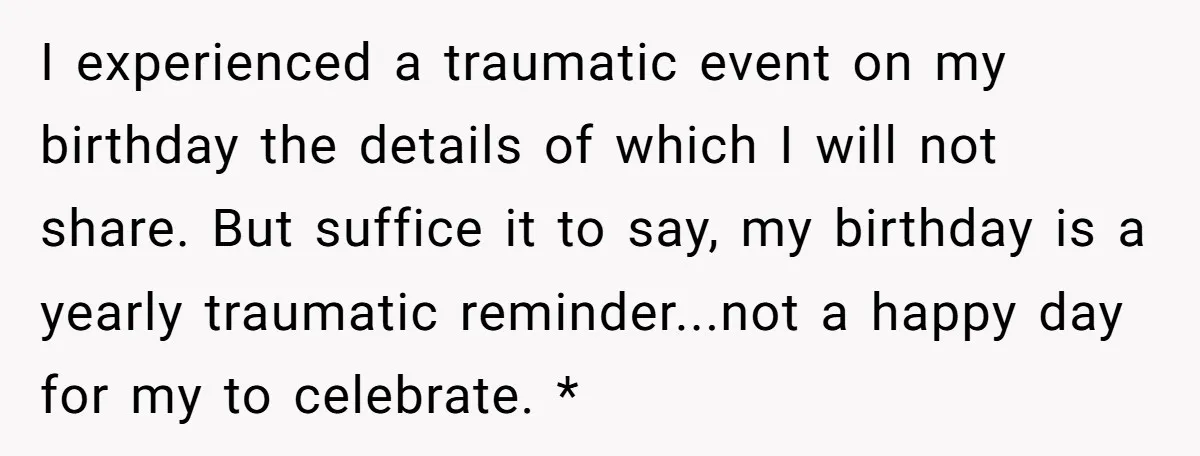
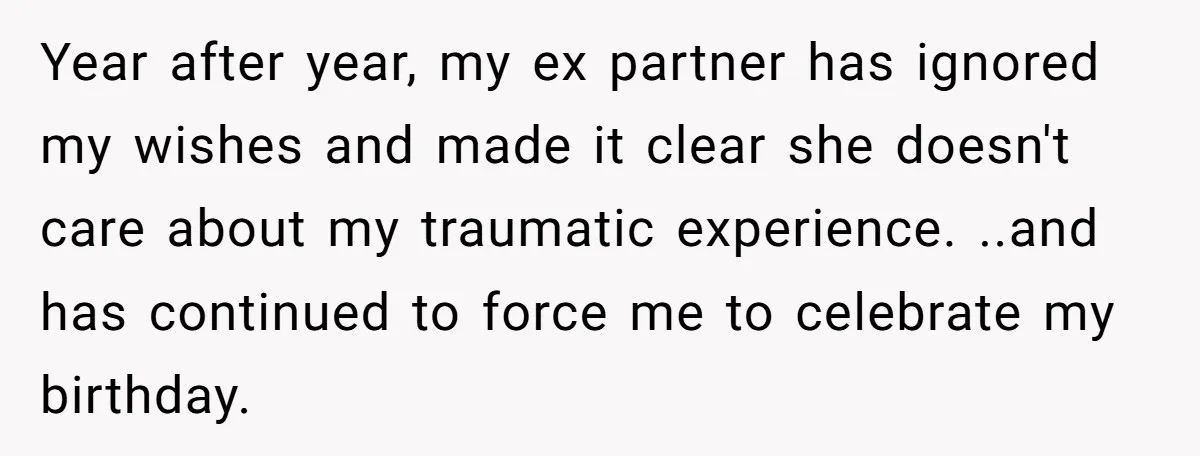
A man who has endured childhood trauma on his ninth birthday has spent years begging his fiancée not to acknowledge the day in any way. For five and a half years, he made it clear that birthdays trigger severe PTSD and anxiety, yet she continued to push gifts and celebrations on him, dismissing his distress.
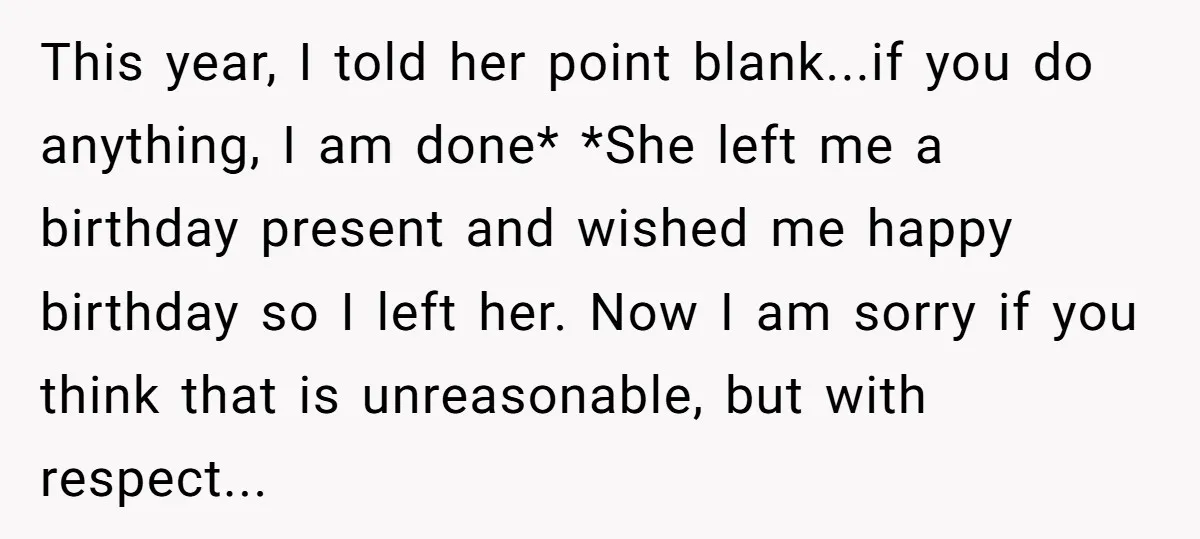
What makes the story more complicated is the final ultimatum he delivered months before the day: one word about his birthday and he would leave for good. She tested that boundary by leaving a large wrapped gift labeled “Happy birthday,” prompting him to pack his bags, block all contact, and end the engagement without further explanation.

‘AITA for leaving my fiancé for forcing me to celebrate my own birthday?’
Childhood trauma turned every birthday into a source of deep pain for the poster.
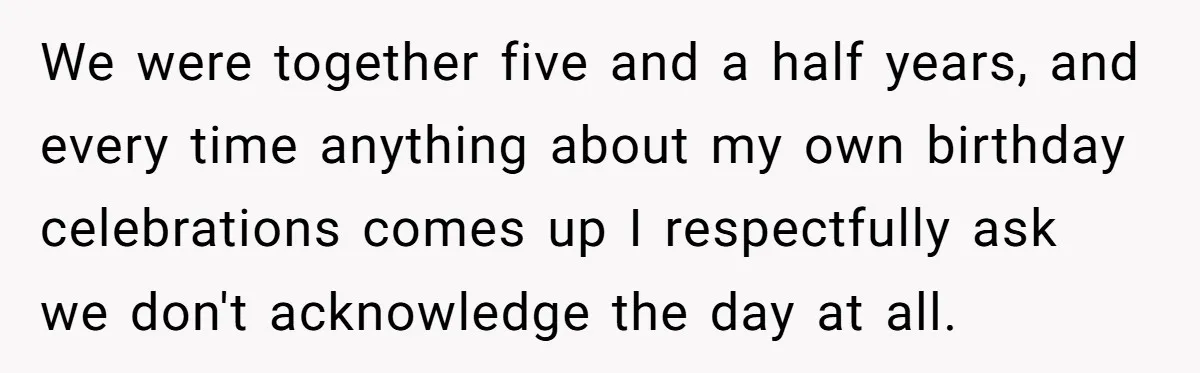
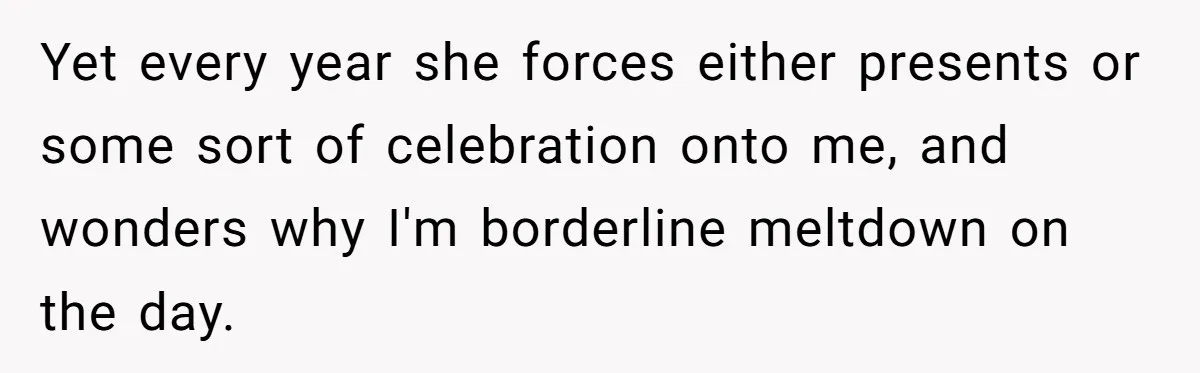
Despite repeated pleas, his fiancée continued to ignore his boundaries year after year.
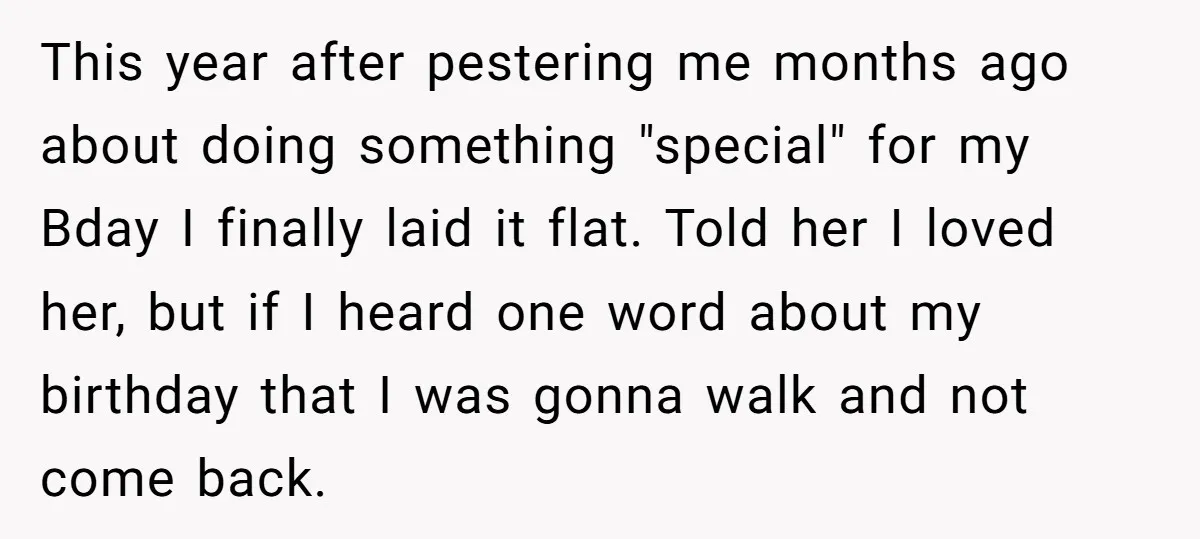
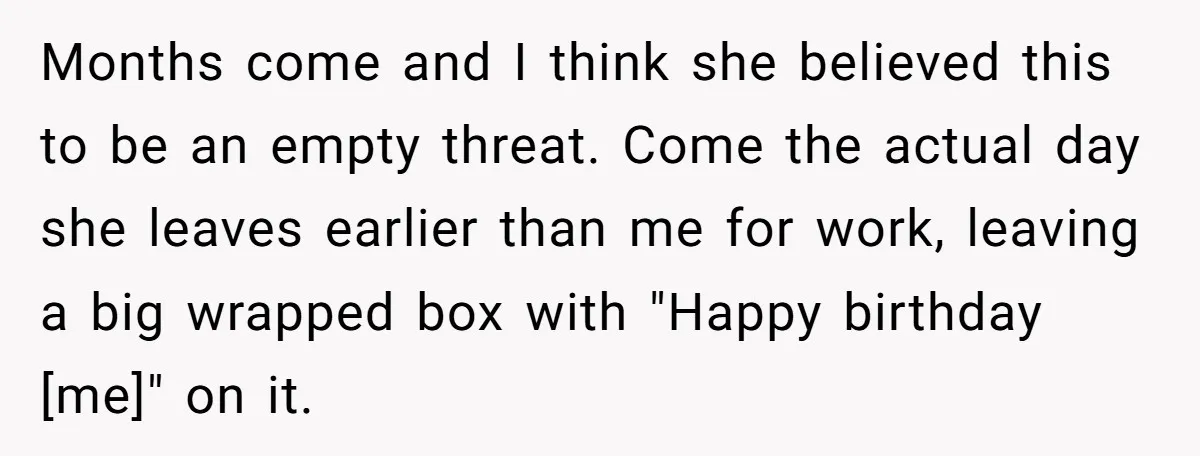
When the boundary was crossed one final time, he followed through and left immediately.
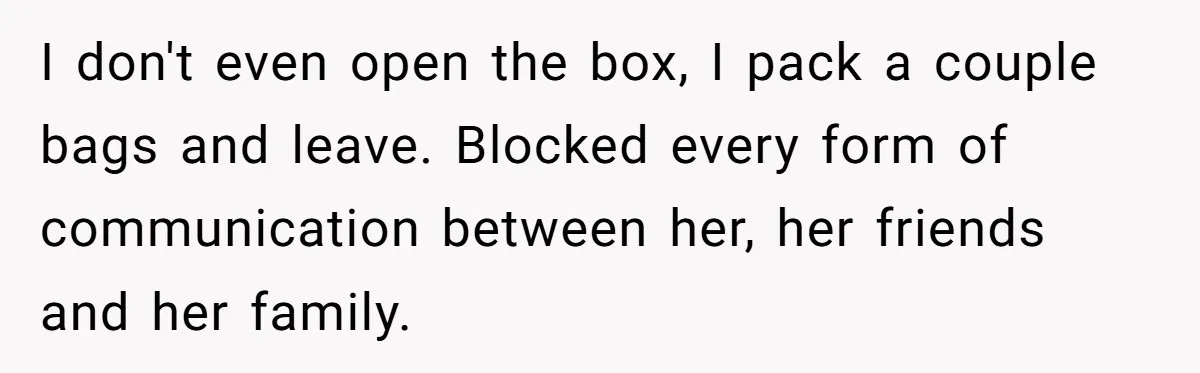
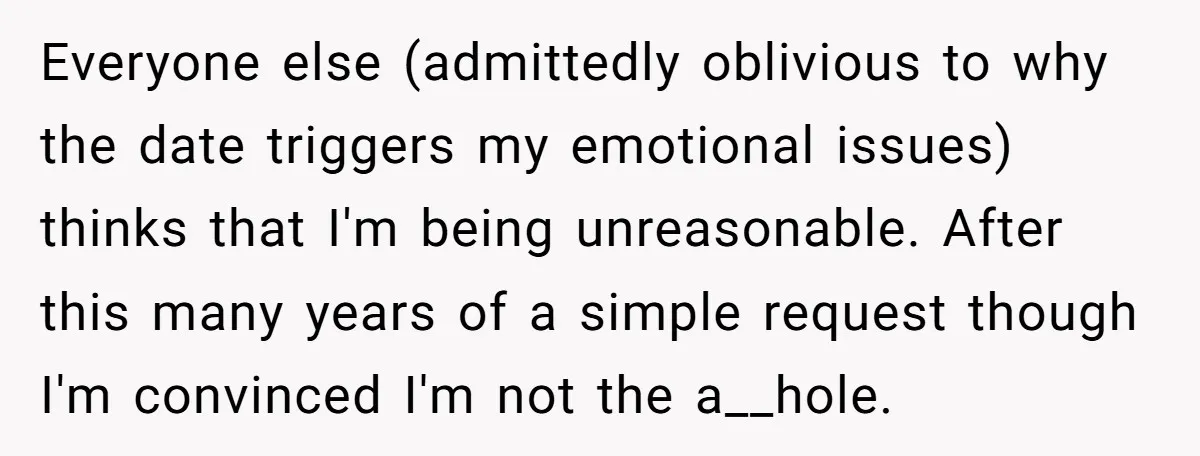
Repeatedly ignoring a partner’s clear and consistent boundary, especially one tied to trauma-induced PTSD, signals a profound lack of respect and empathy. In healthy relationships, “no” must be accepted without requiring full disclosure of painful details; forcing someone to relive or justify their triggers erodes trust and safety.
Some might argue that deeper sharing of the trauma could have helped the fiancée understand, yet many survivors choose privacy for valid reasons—reliving the event can retraumatize them, and boundaries stand on their own merit. Her persistence despite witnessing annual meltdowns suggests she prioritized her vision of a “normal” celebration over his mental health.
On a broader level, society often treats birthdays as obligatory joy, making it hard for those with negative associations to opt out without judgment. This case underscores how weaponizing “good intentions” can become controlling, and why enforcing consequences after years of warnings can be an act of self-preservation rather than overreaction.
Here’s what the community had to contribute:
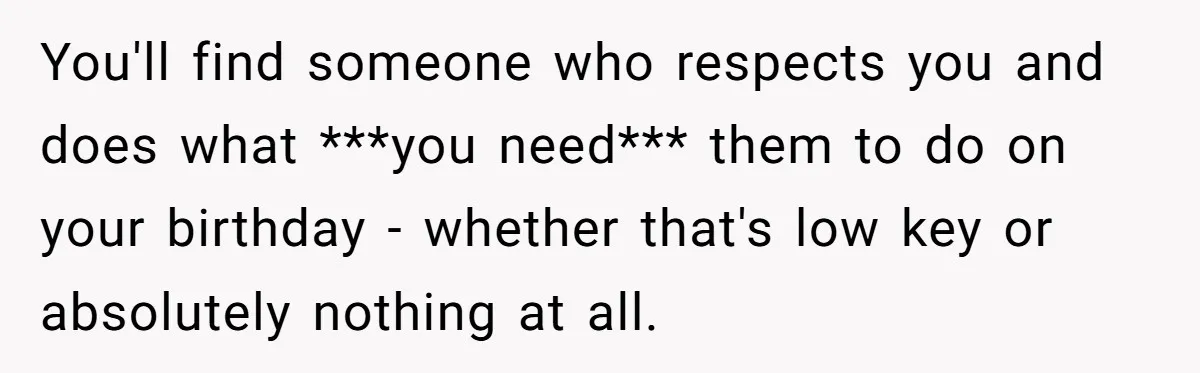
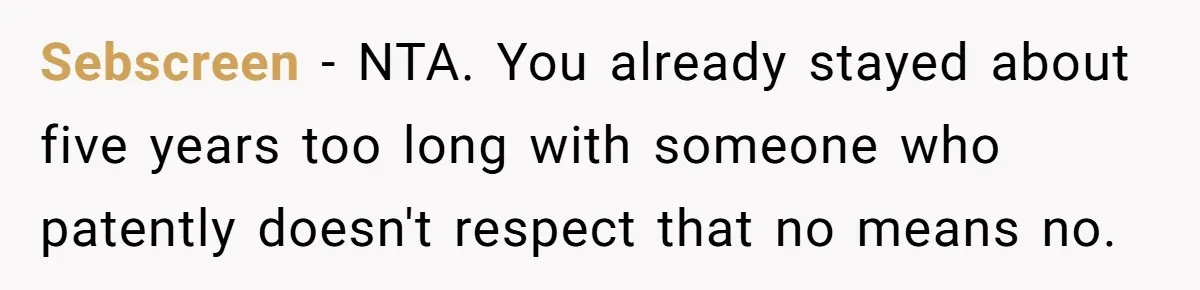
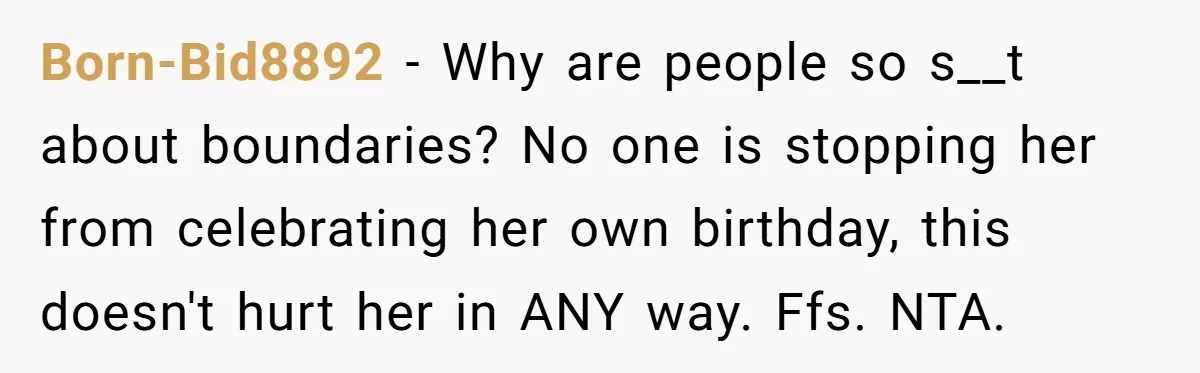
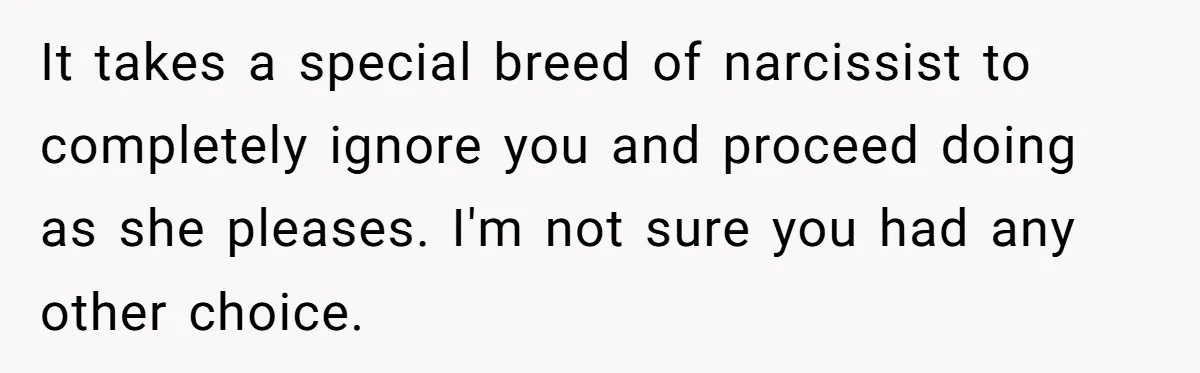
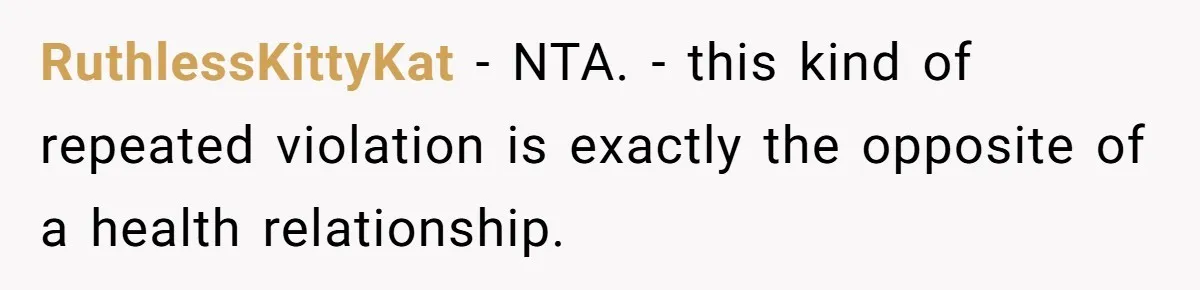
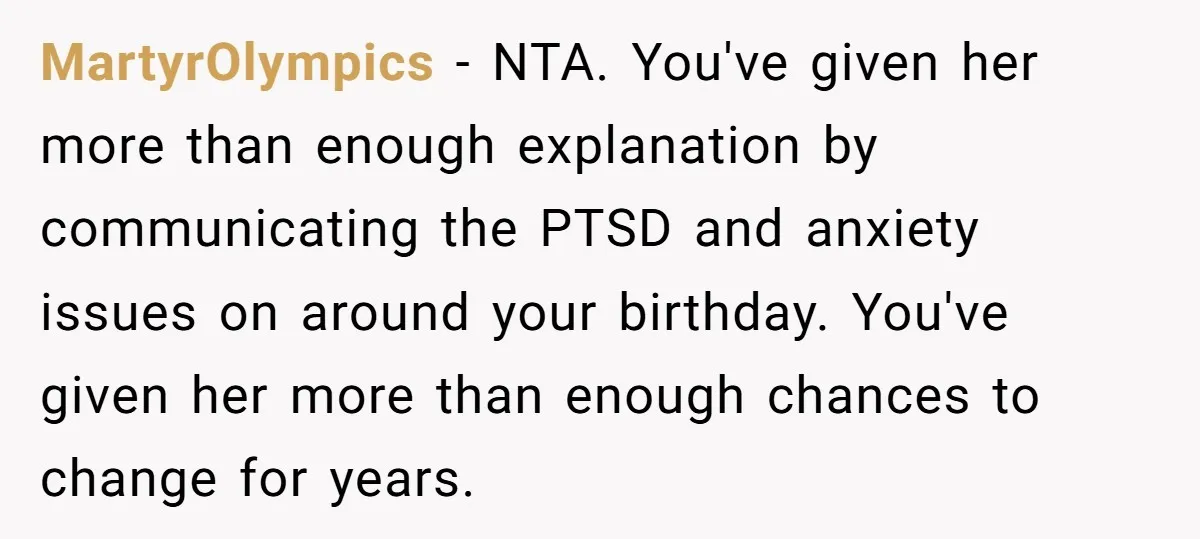
Most users strongly supported the poster, emphasizing that repeated boundary violations justified ending the relationship.



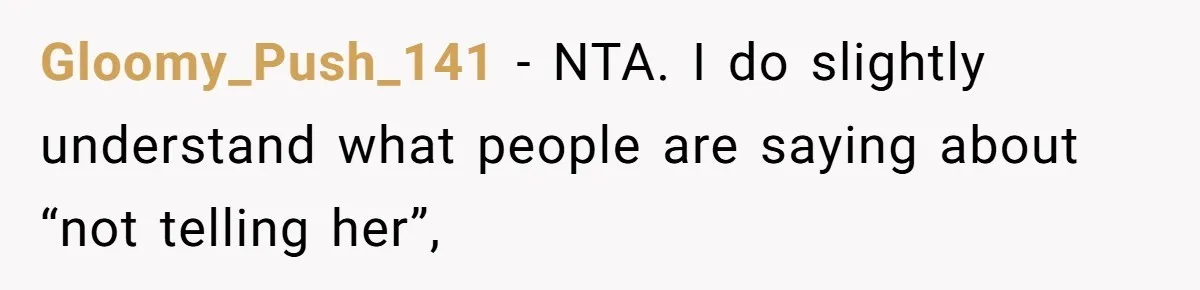
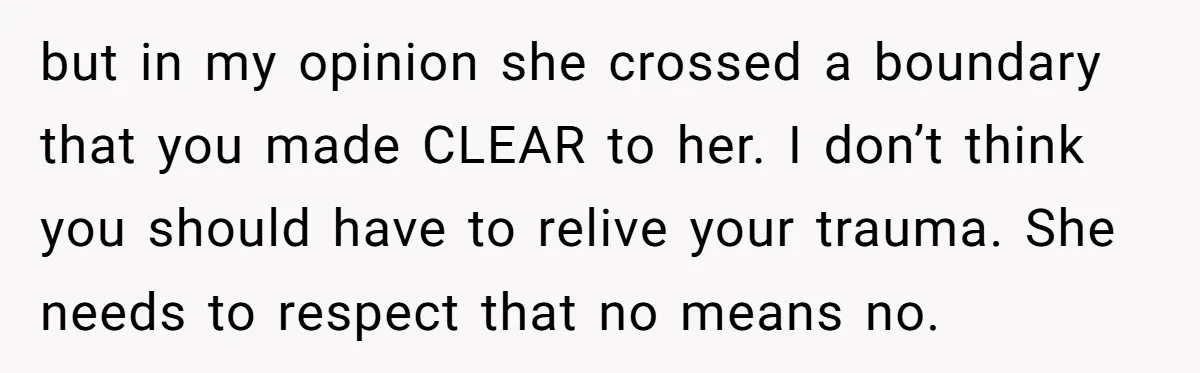
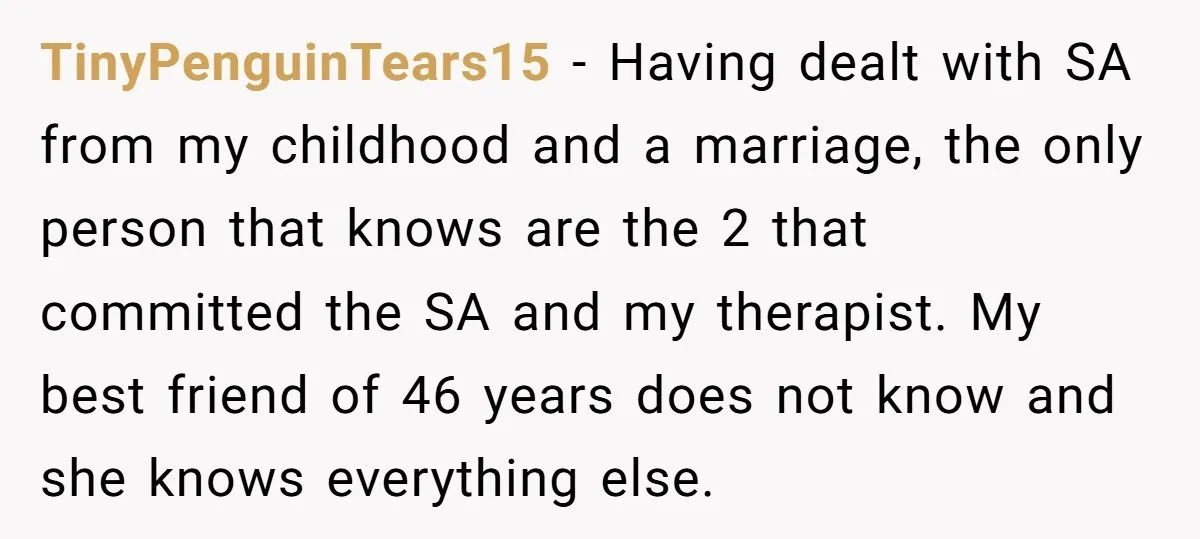
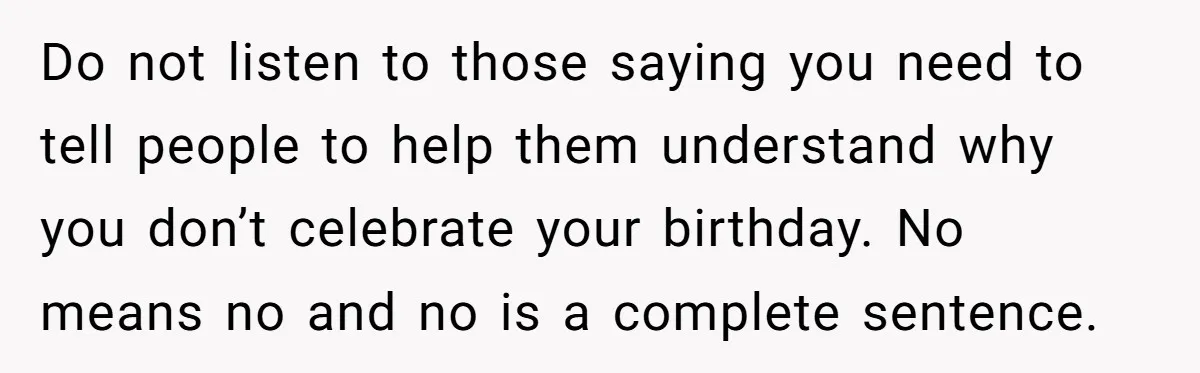
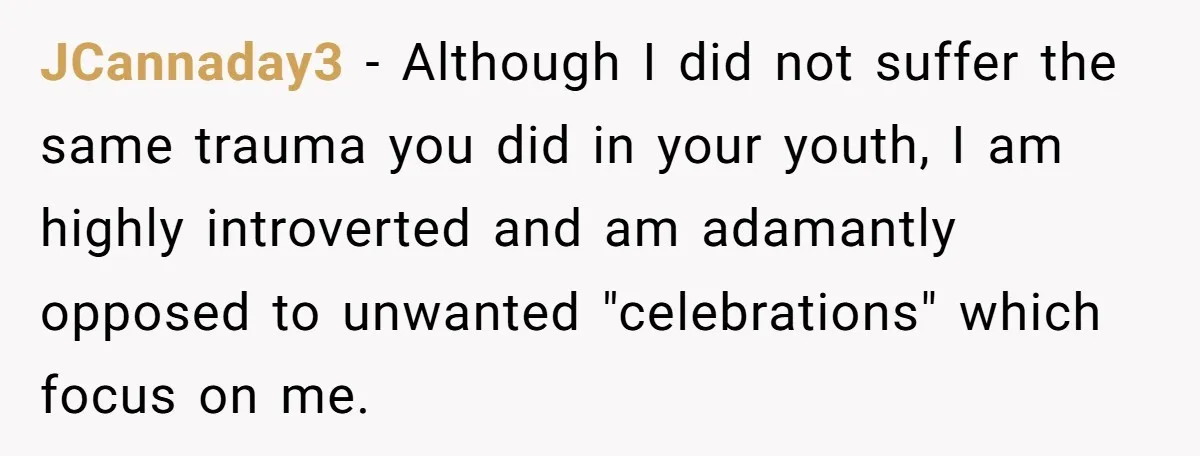
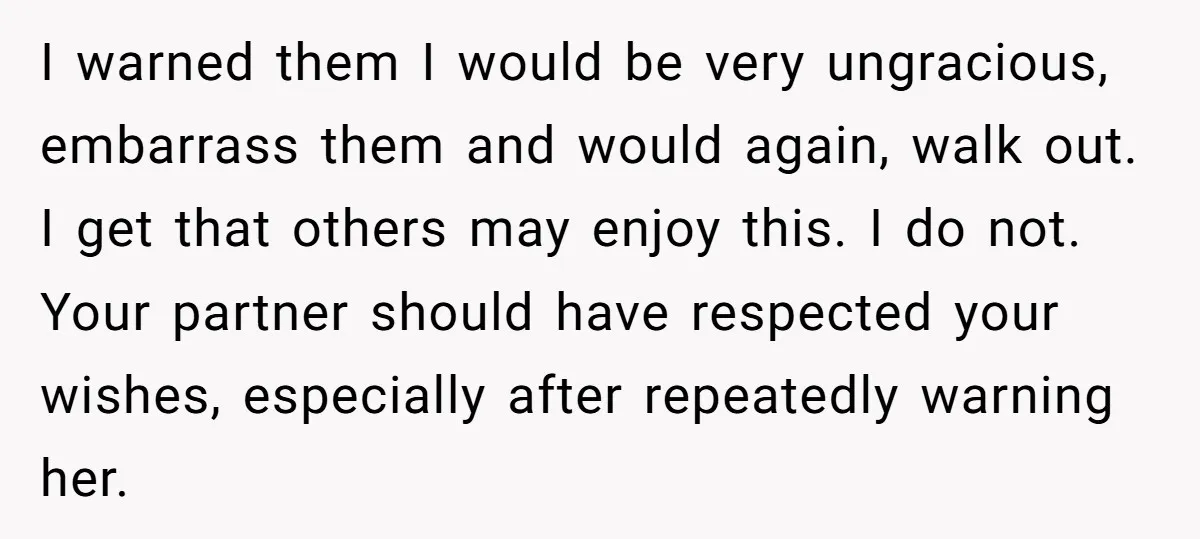
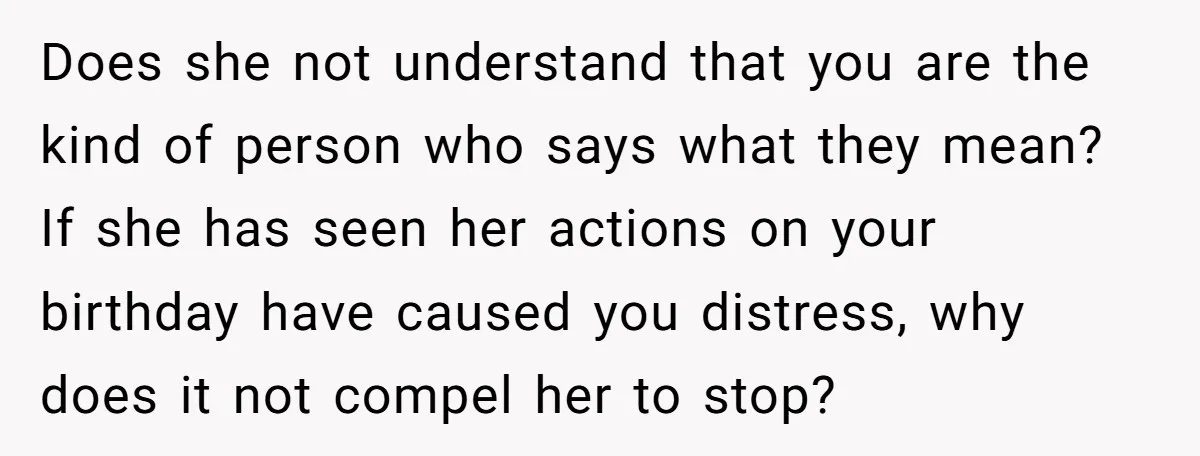
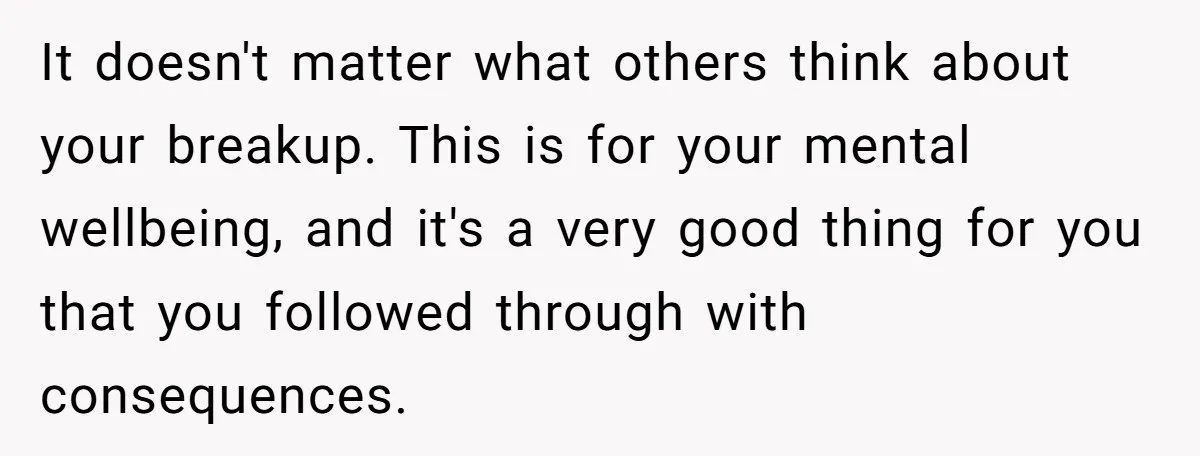
Several commenters offered balanced empathy while still affirming the poster’s choice to leave.
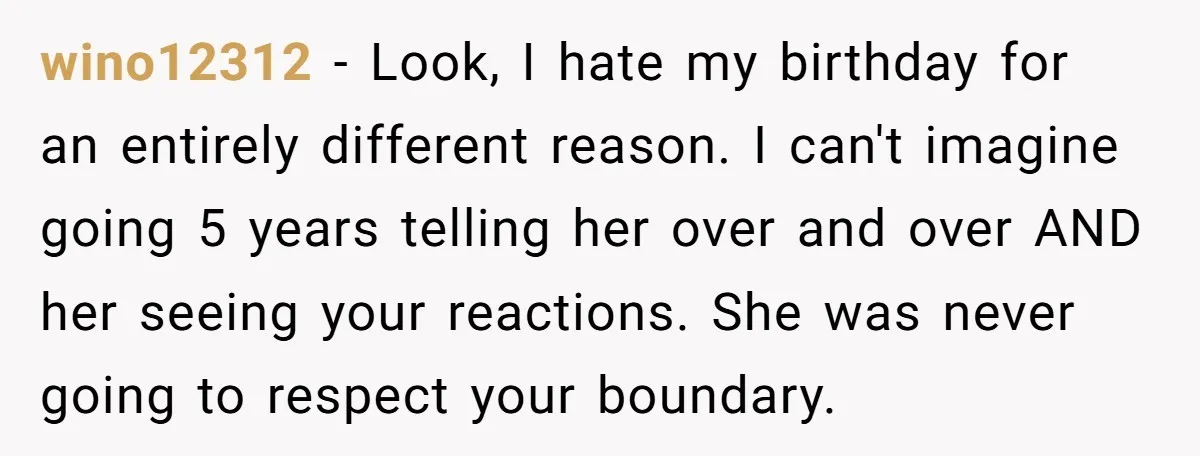
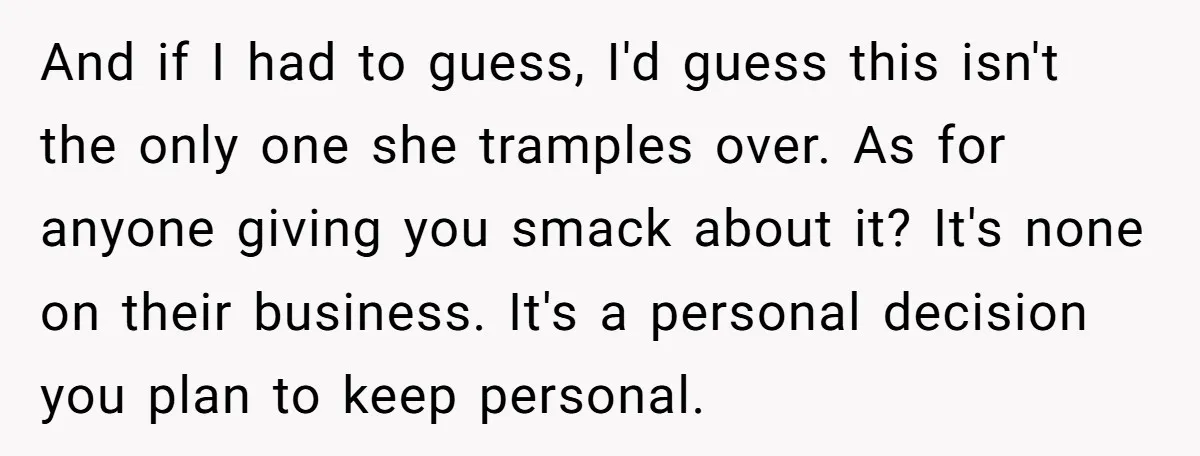

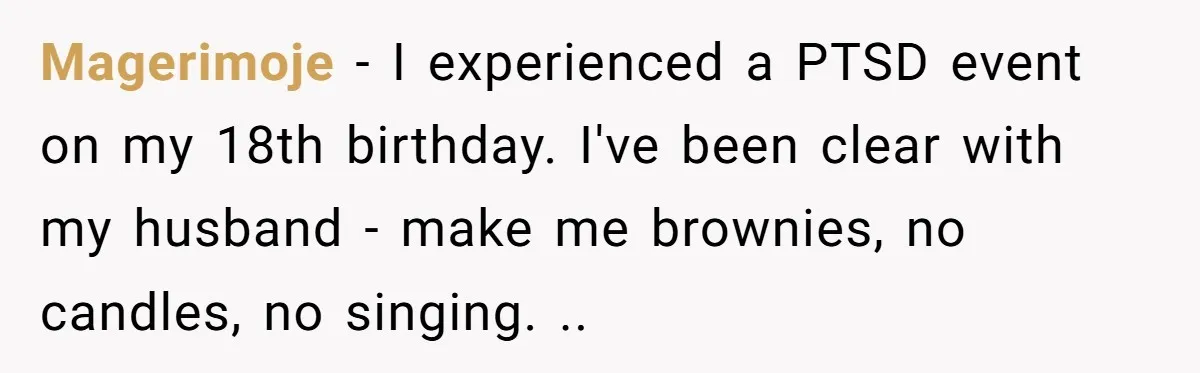
A couple of responses brought personal stories and encouragement to lighten the heavy topic.
After years of ignored pleas tied to serious trauma, the poster chose to protect his mental health by ending the relationship when his final boundary was crossed. The overwhelming community consensus validates that respect for “no” is non-negotiable, regardless of good intentions.
Have you ever had to enforce a hard boundary that others called extreme? When a partner repeatedly dismisses a trigger you’ve clearly explained, at what point does staying become more harmful than leaving?