
A mother of two finally worked up the courage to dig deeper into her long-standing anxiety, believing therapy would help her feel safer and more grounded for her family. What she didn’t expect was that her very first high-intensity CBT session would leave her spiraling with fear, questioning whether opening up had put her children at risk.
The situation quickly sparked heated discussion on social media, with many readers stunned by how the therapist handled the session. Between the pressure to be recorded, the sudden mention of social services, and the lingering fear of consequences, the story struck a nerve. The twist lies in how a space meant for healing instead became the source of fresh trauma, leaving people debating professionalism, ethics, and trust in therapy.


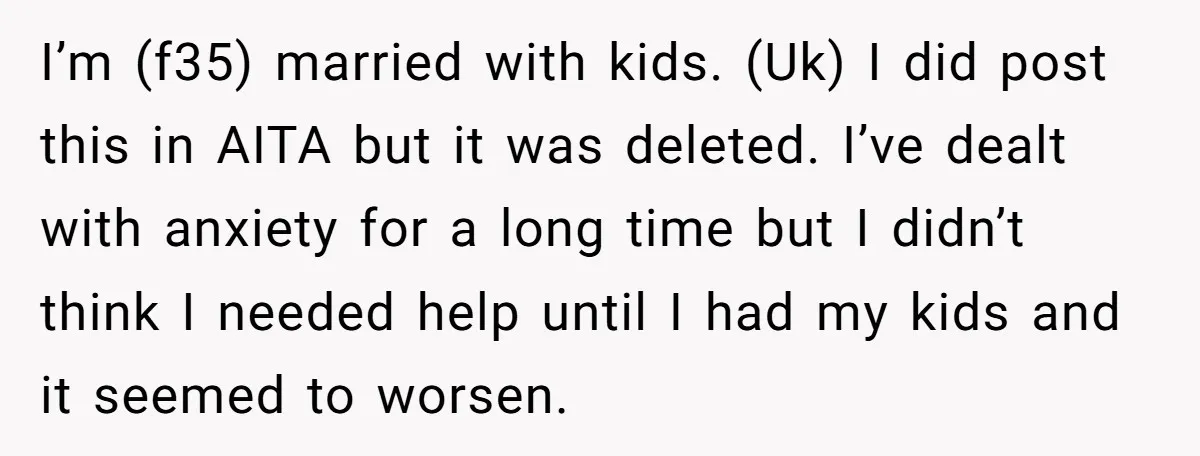
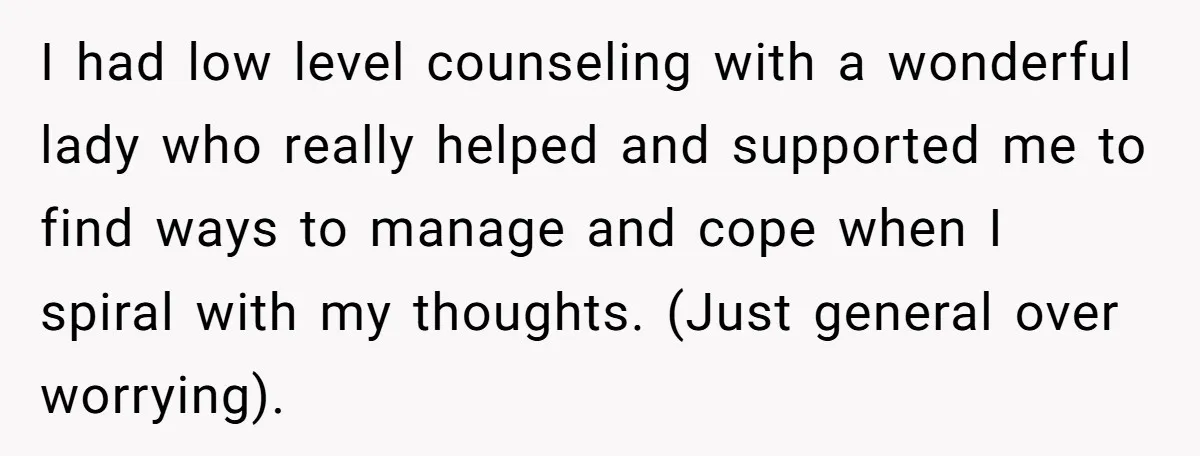
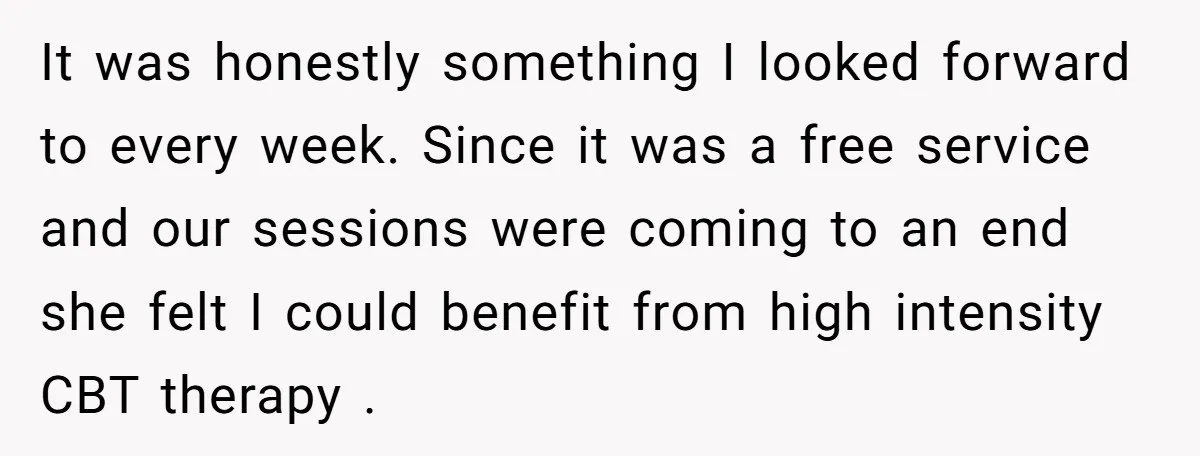
Everything started when the poster finally decided to seek deeper help for her anxiety
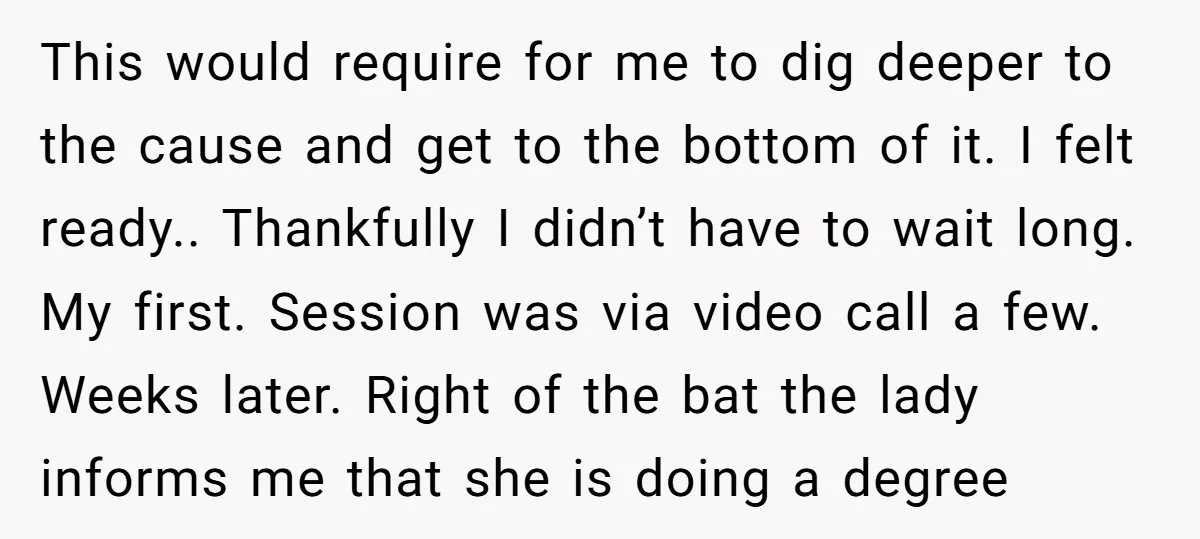
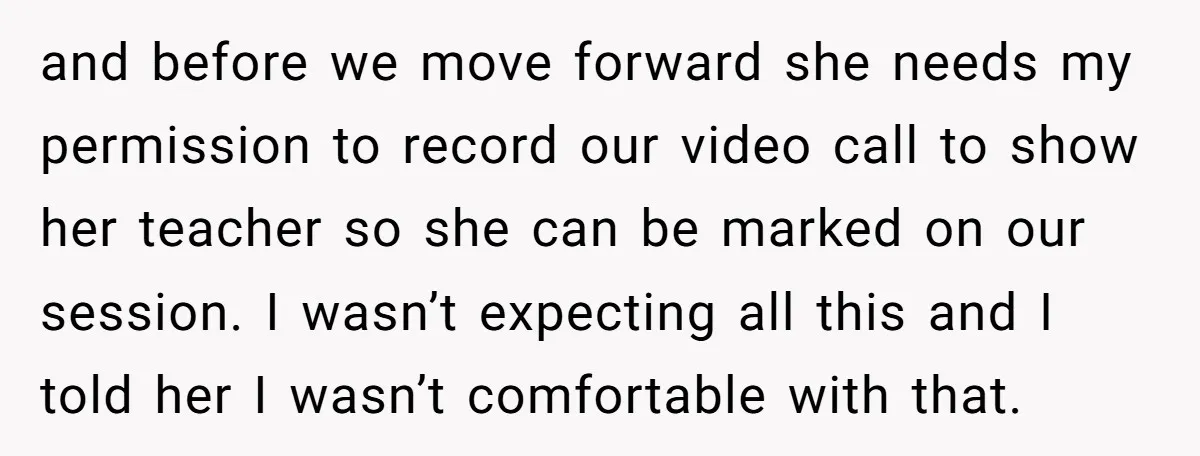
Feeling cornered, the poster reluctantly agreed despite discomfort
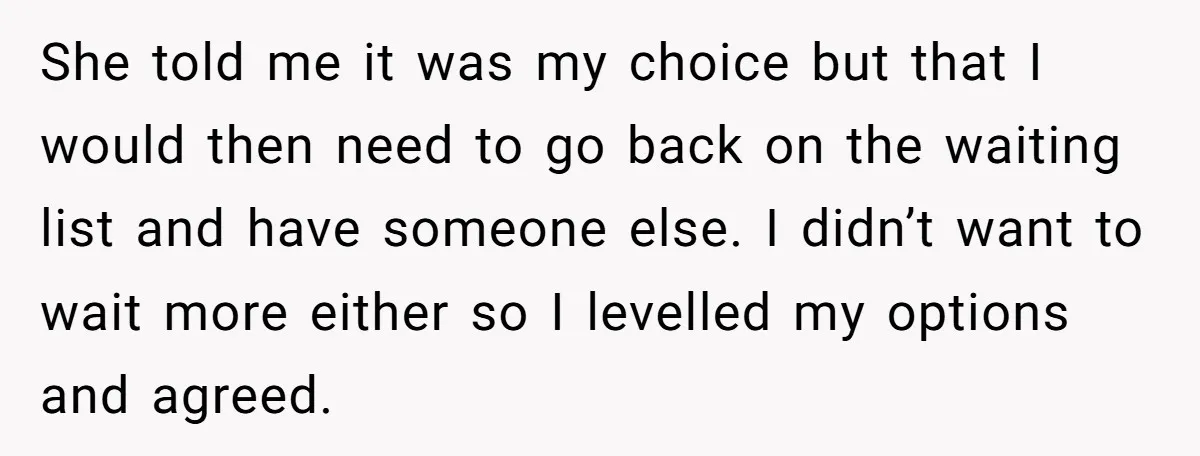

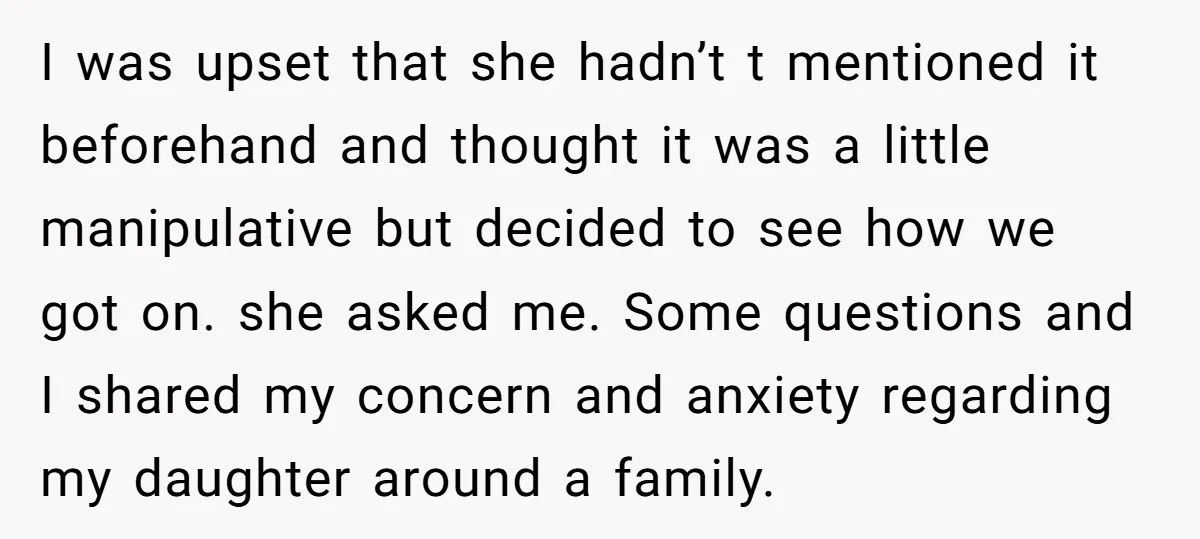

The session shifted dramatically when a deeply personal topic surfaced
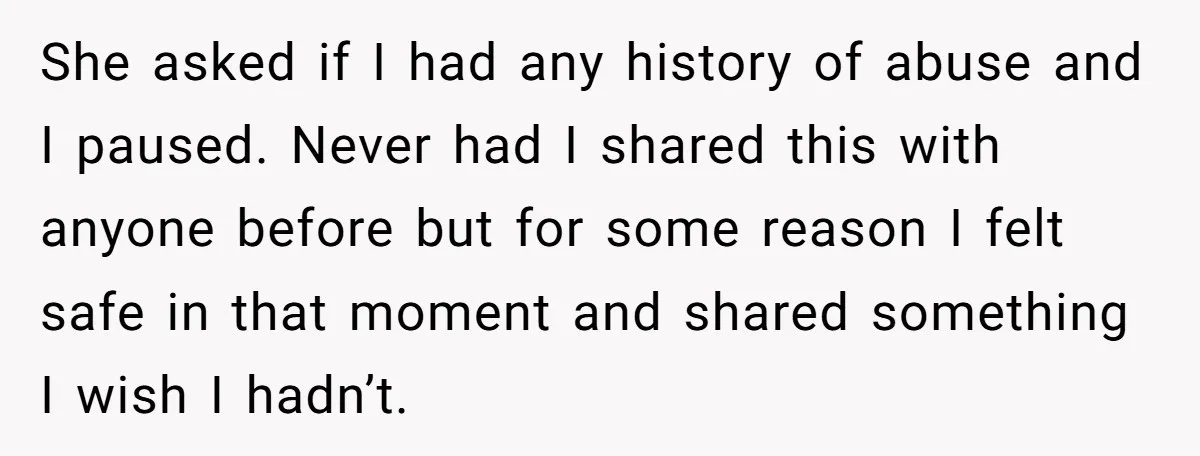
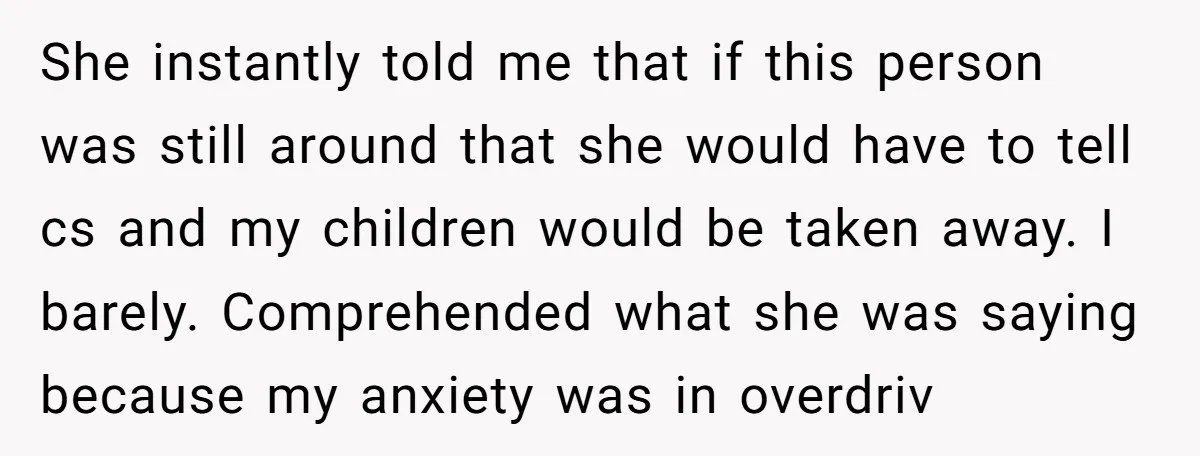


After days of anxiety, the poster made a difficult decision
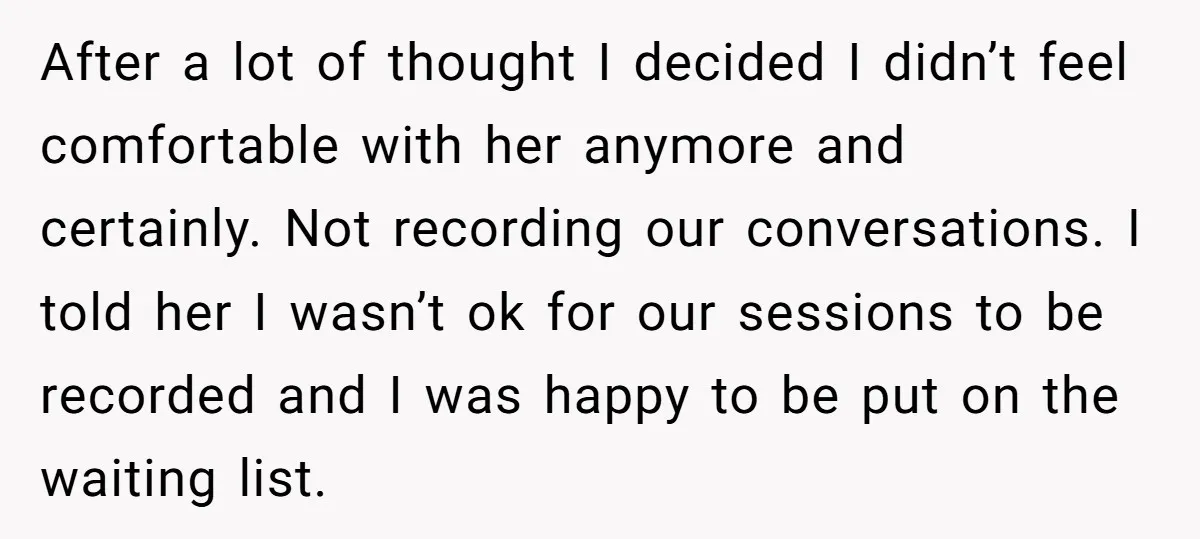


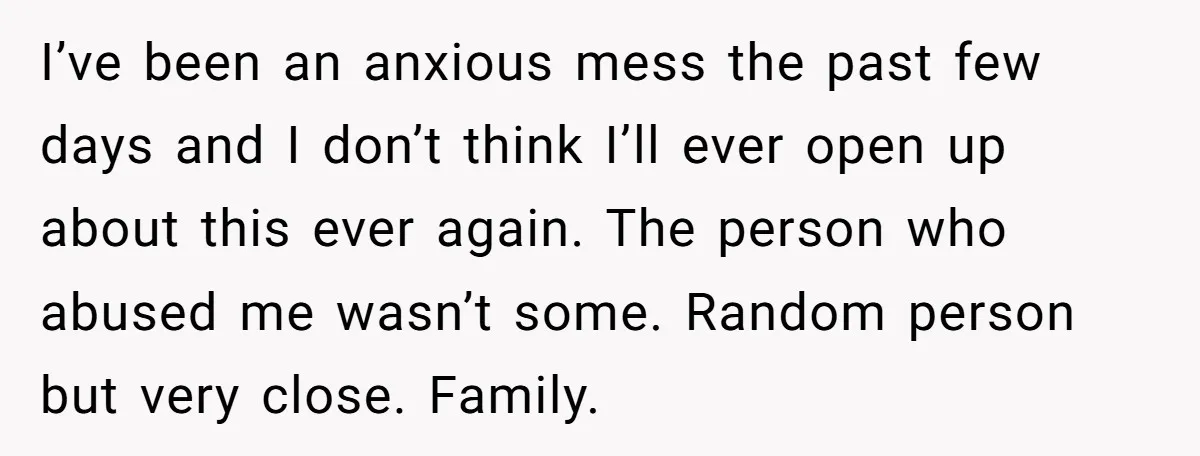
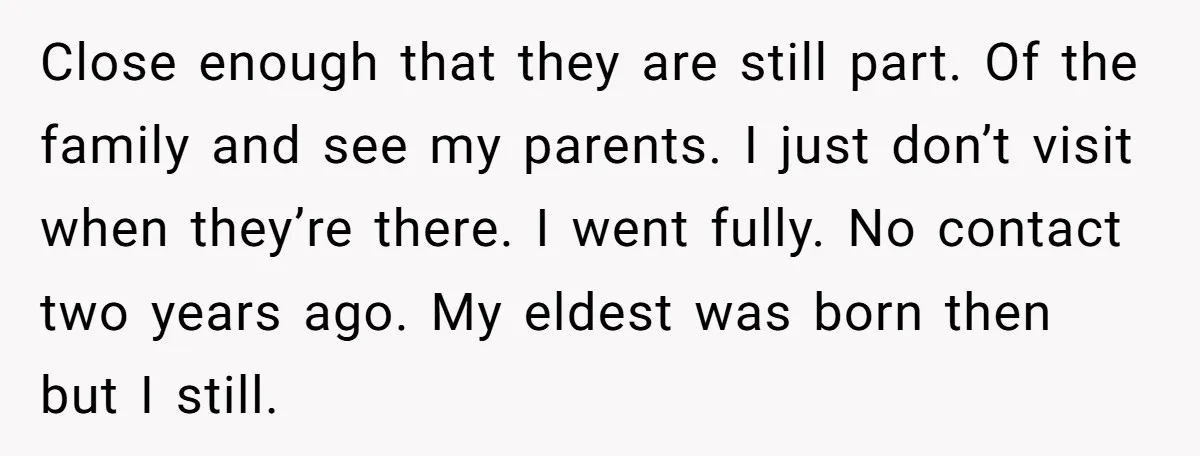
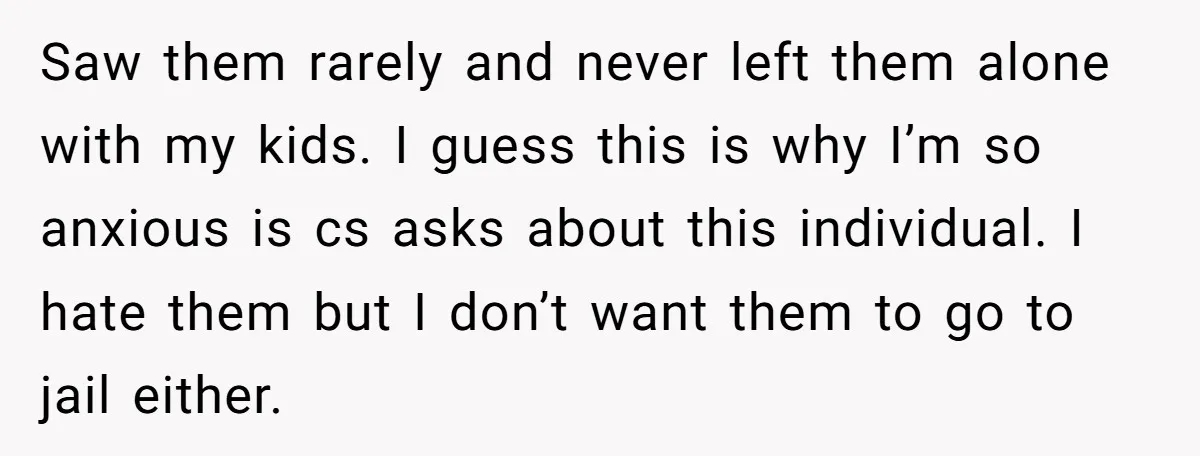
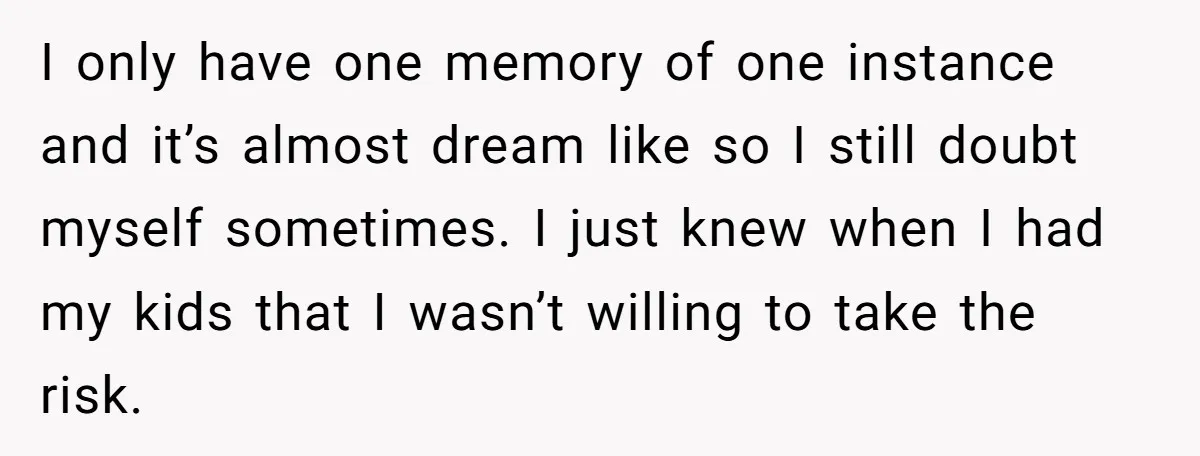

Situations like this highlight how vulnerable people can feel when entering therapy, especially during early sessions. The poster sought help for anxiety, not expecting to confront unresolved trauma under pressure. From her perspective, the therapist’s abrupt warning about social services felt less like safeguarding and more like a threat, amplifying fear rather than offering clarity or reassurance.
It’s important to acknowledge the other side. Therapists, including trainees, often have safeguarding obligations. However, context matters. A disclosure of past abuse, particularly when the alleged abuser is not part of the children’s lives, does not automatically mean children are at risk. Jumping straight to worst-case scenarios can overwhelm someone already prone to anxiety.
Dr. John Gottman of The Gottman Institute has noted, “Trust is built in very small moments, and it’s destroyed just as quickly when someone feels unsafe or unheard.” In therapy, trust is foundational. Without it, meaningful progress becomes almost impossible.
For anyone in a similar position, practical steps include asking clear questions about confidentiality, recording policies, and safeguarding duties before sessions begin. If a therapist’s approach feels distressing or coercive, requesting a supervisor review or changing providers is reasonable. Therapy should feel challenging at times, absolutely, but never frightening or punitive.
These are the responses from Reddit users:
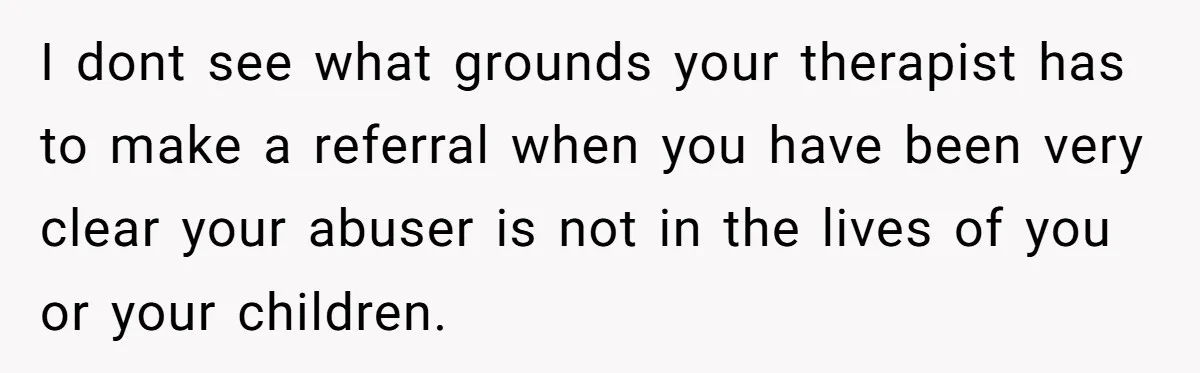
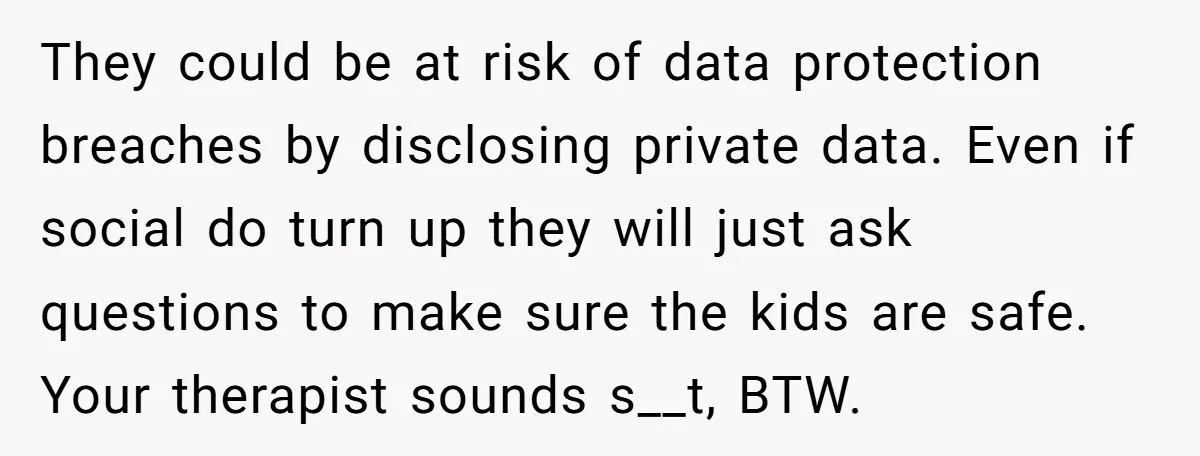
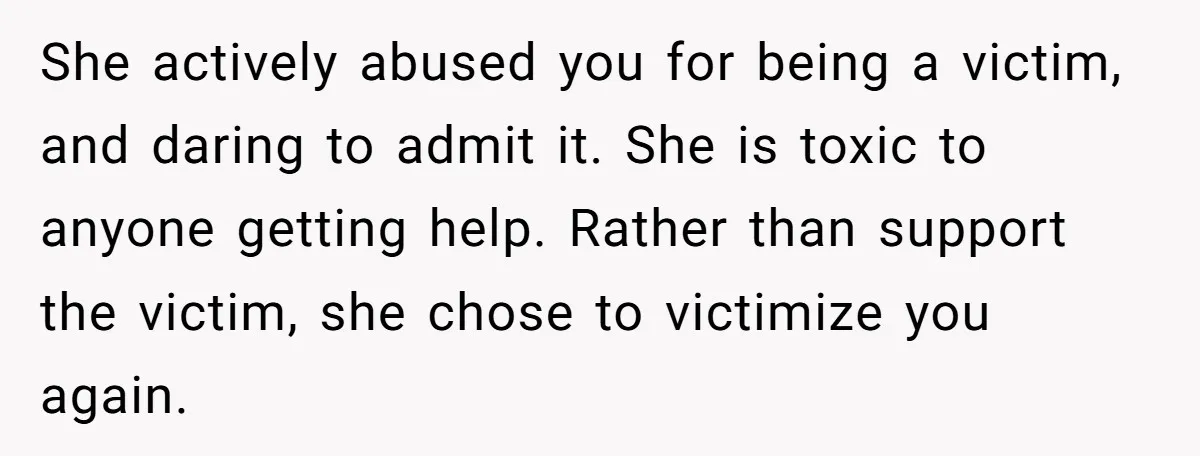
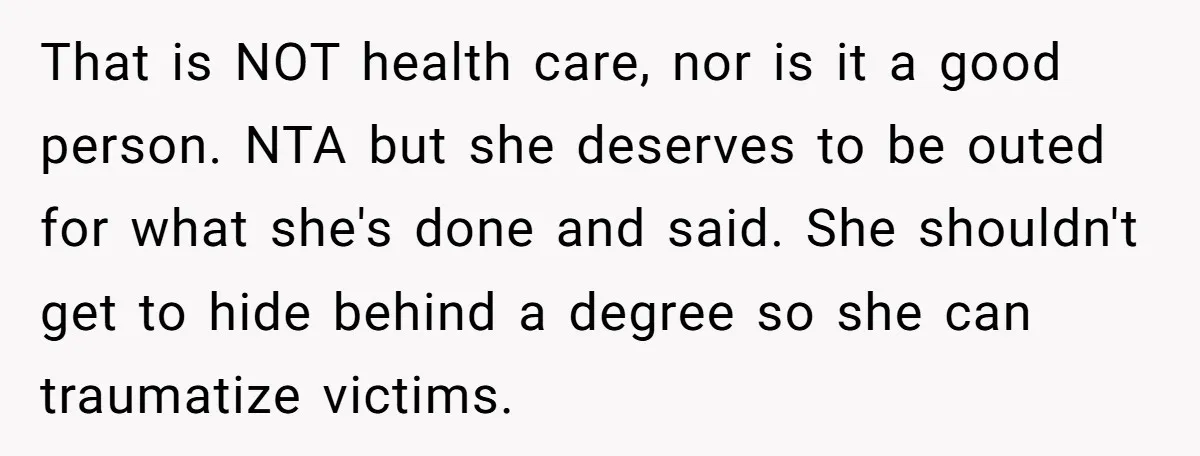
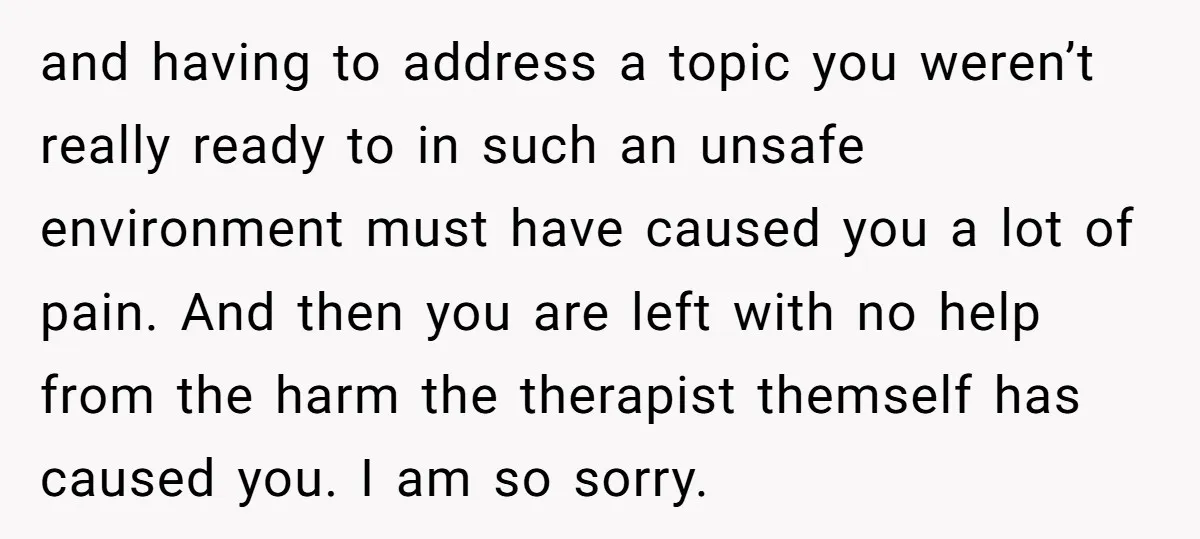
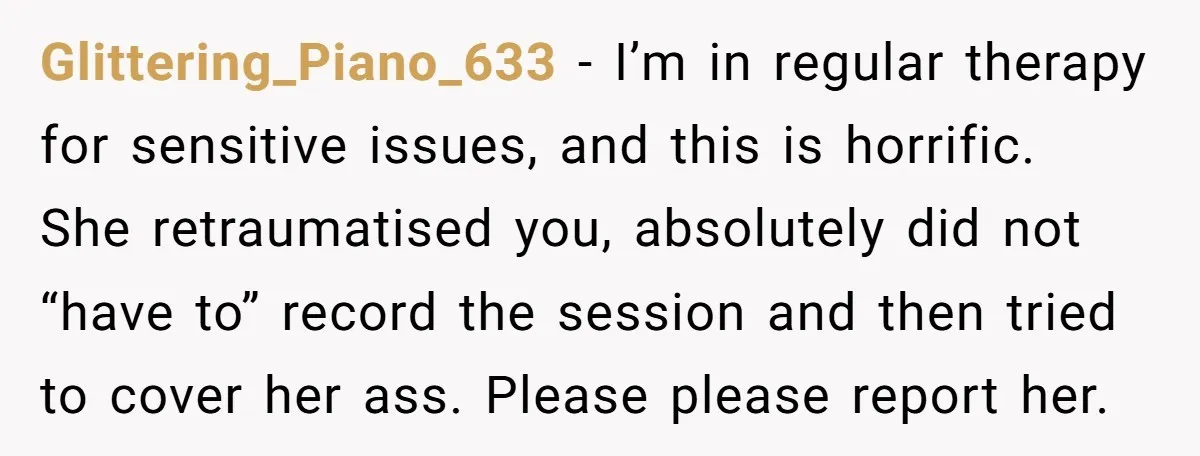
Many users immediately sided with the poster, criticizing the therapist’s conduct
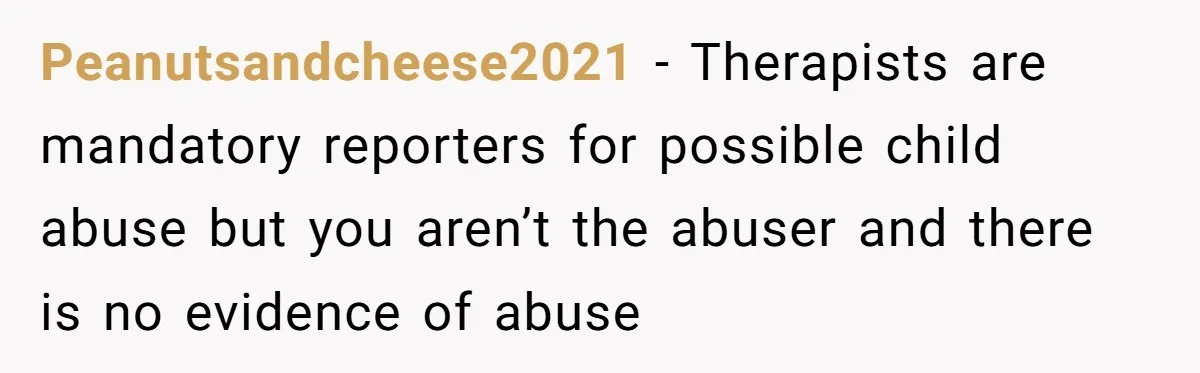


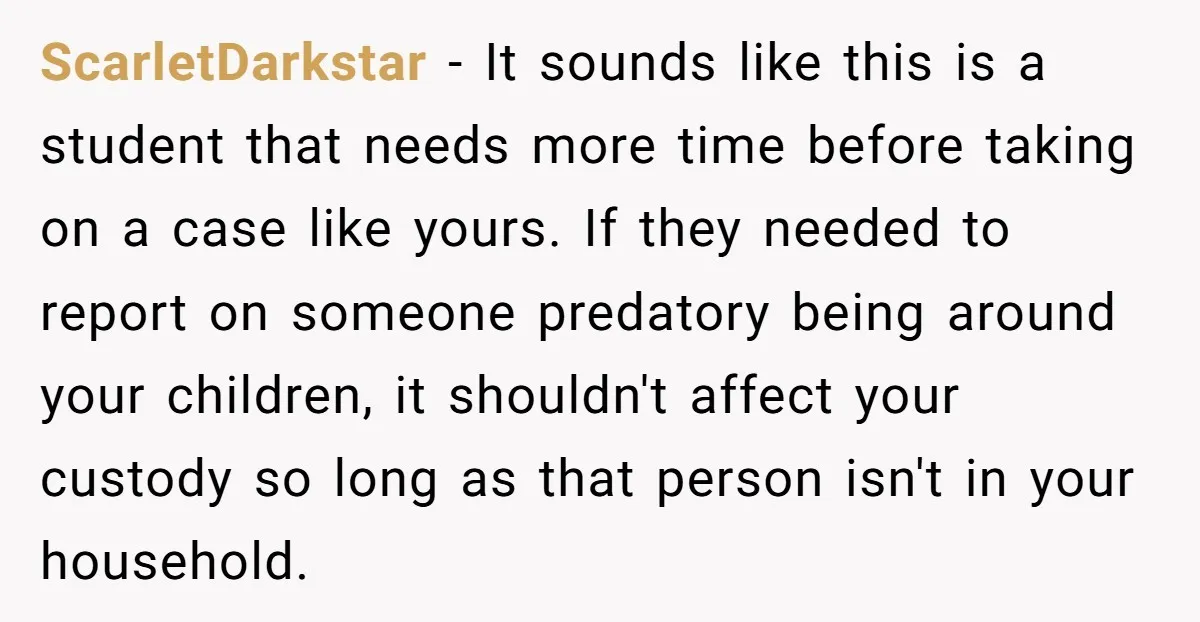
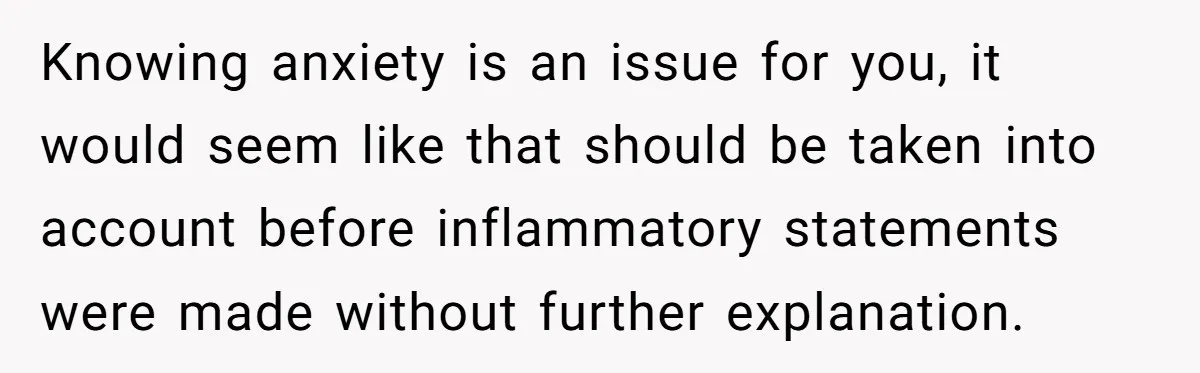



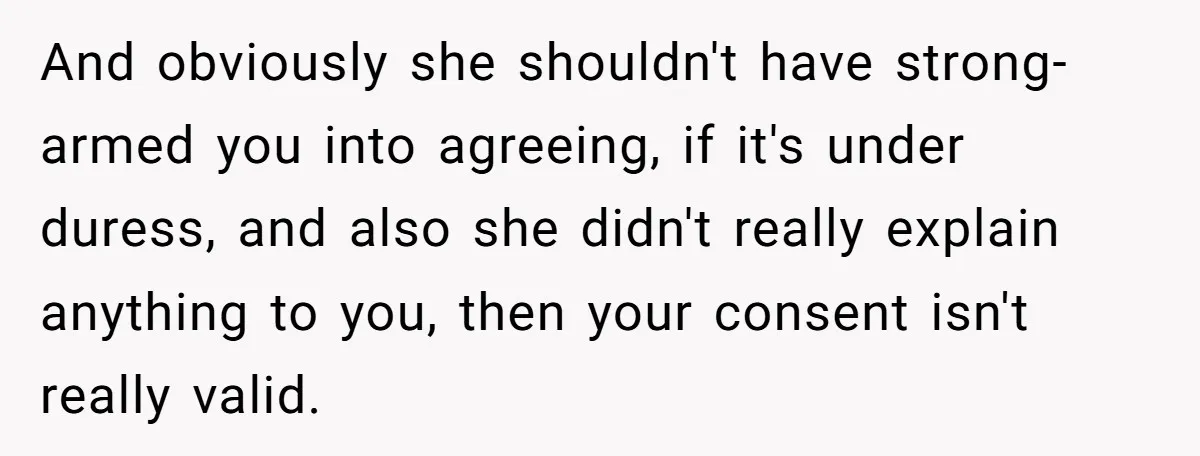
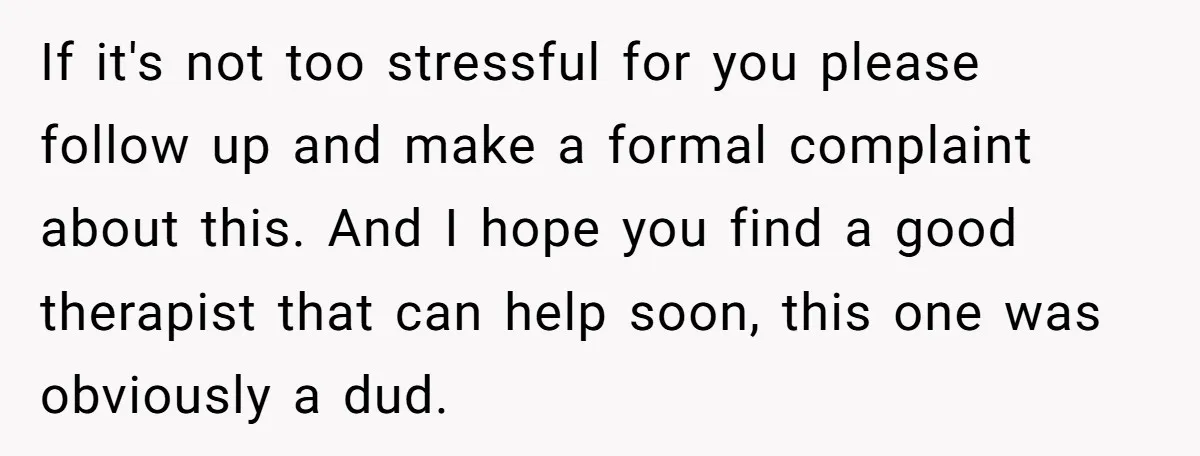
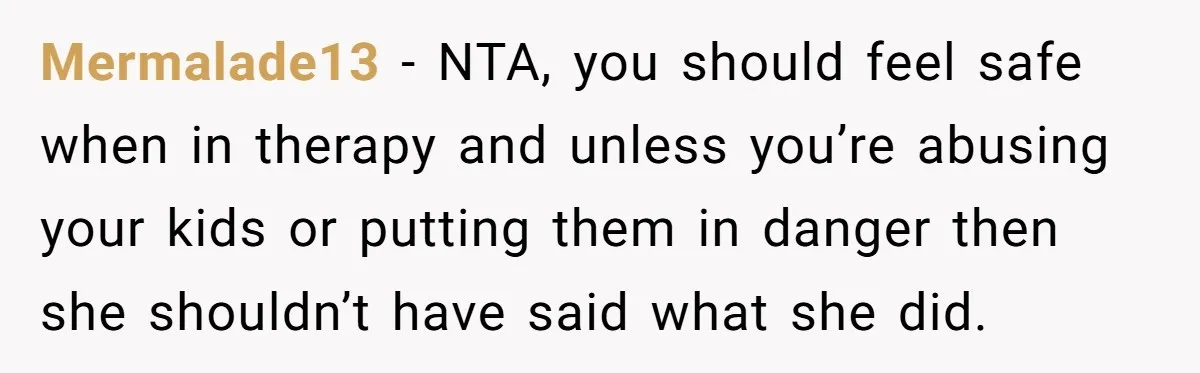

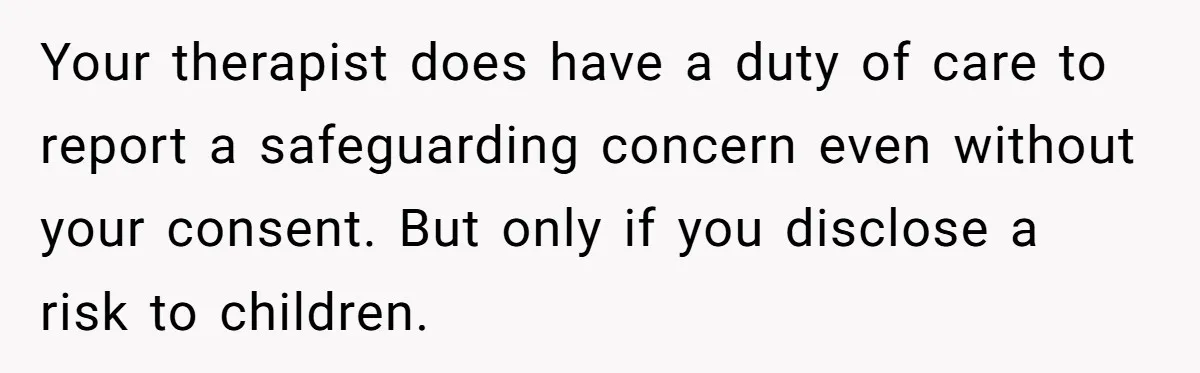
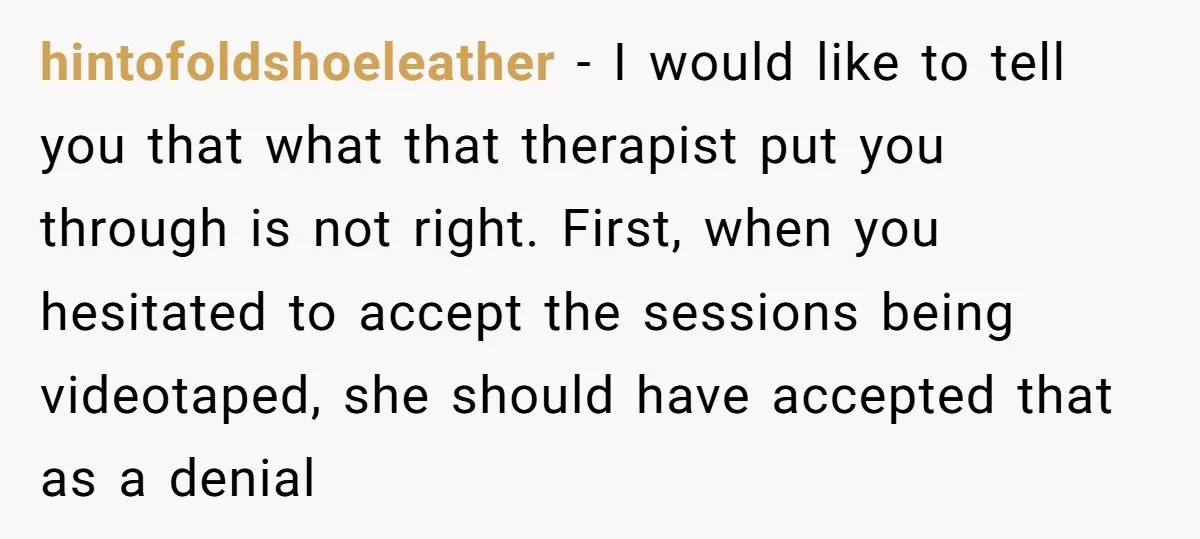
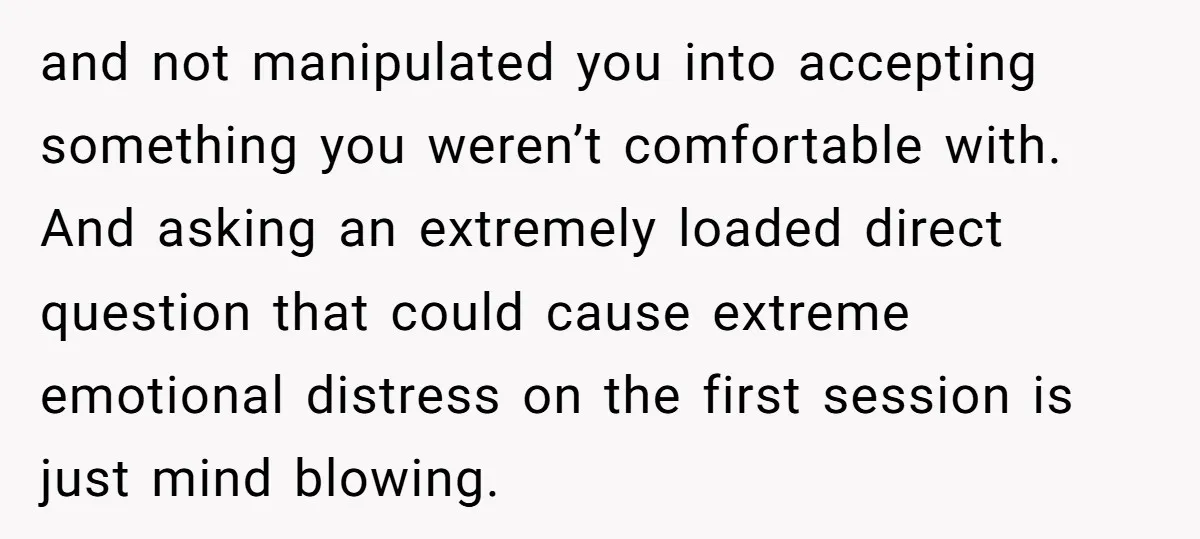
Others offered more balanced takes, explaining safeguarding rules while still criticizing delivery

![[Reddit User] − She instantly told me that if this person was still around that she would have to tell cps and my children would be taken away. I don't...](https://loknam.com/aita/images/cace6efef3/wp-editor-1770197671677-5.webp)
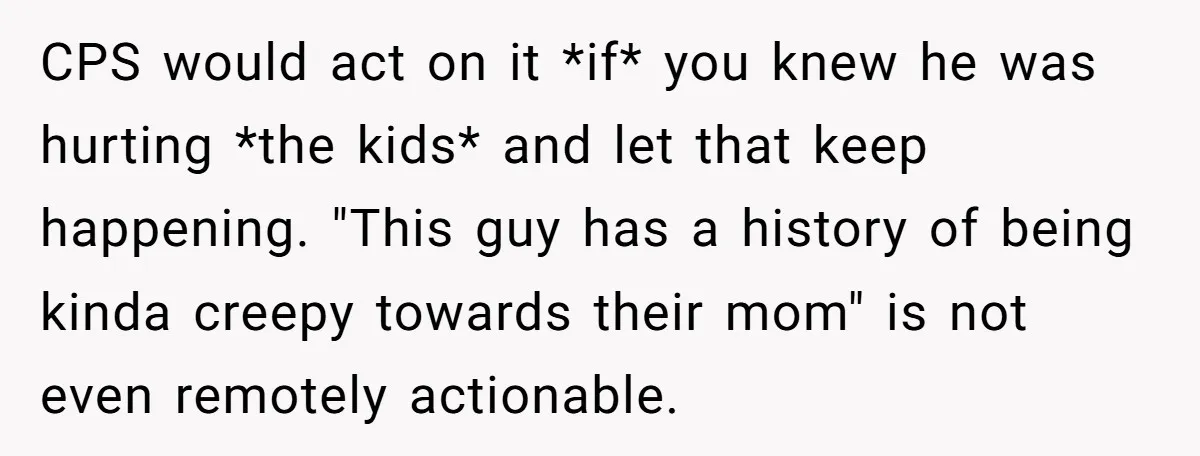
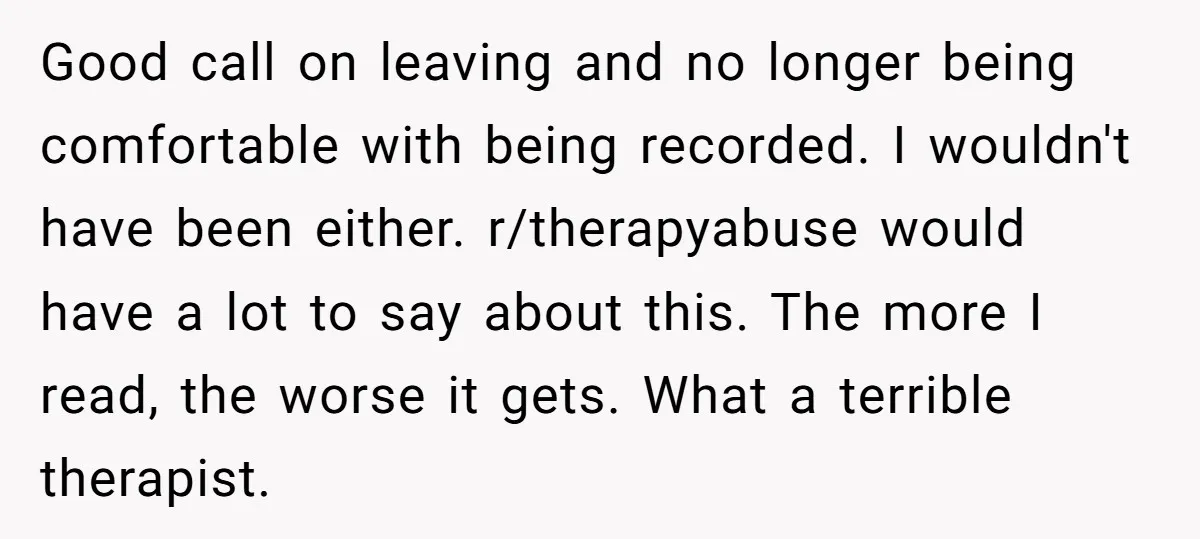


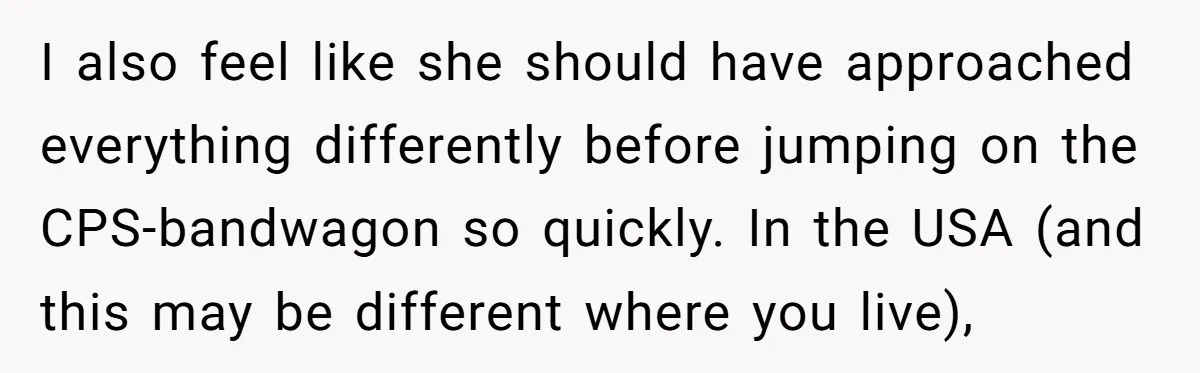
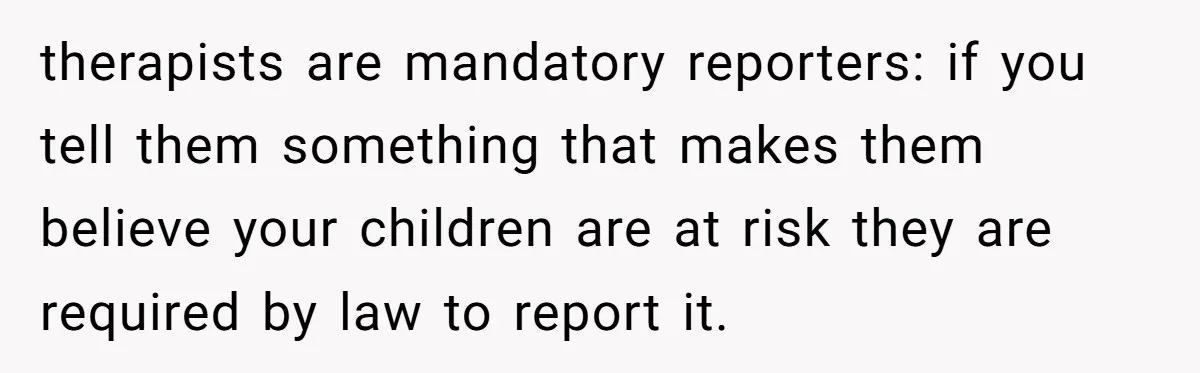

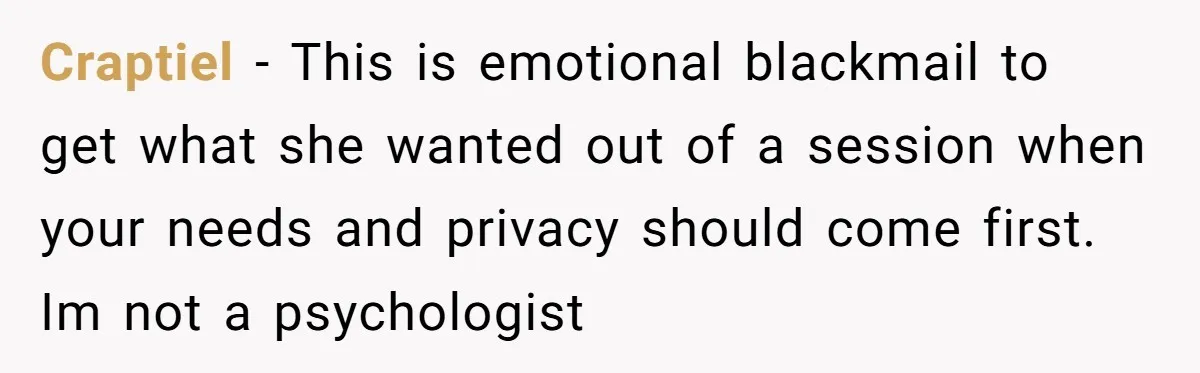
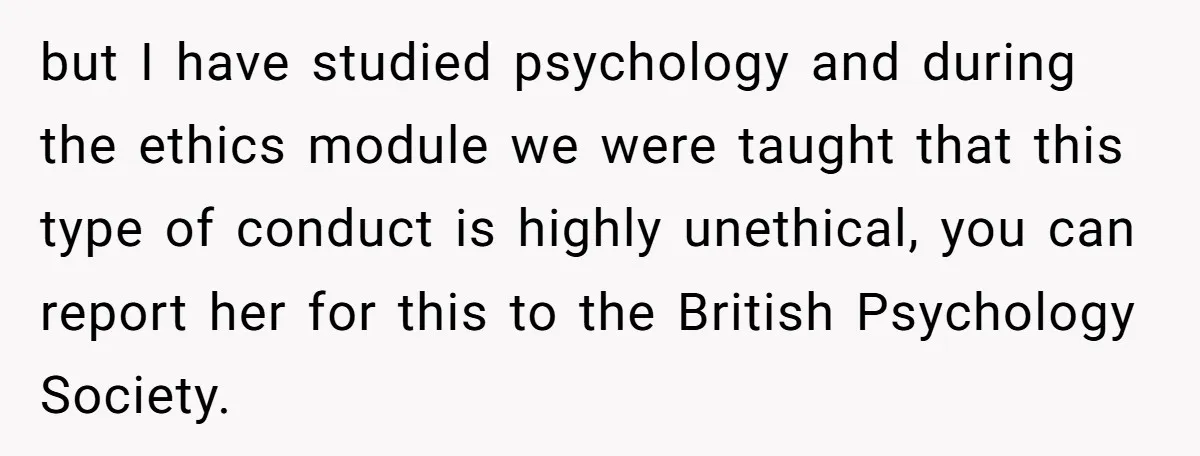
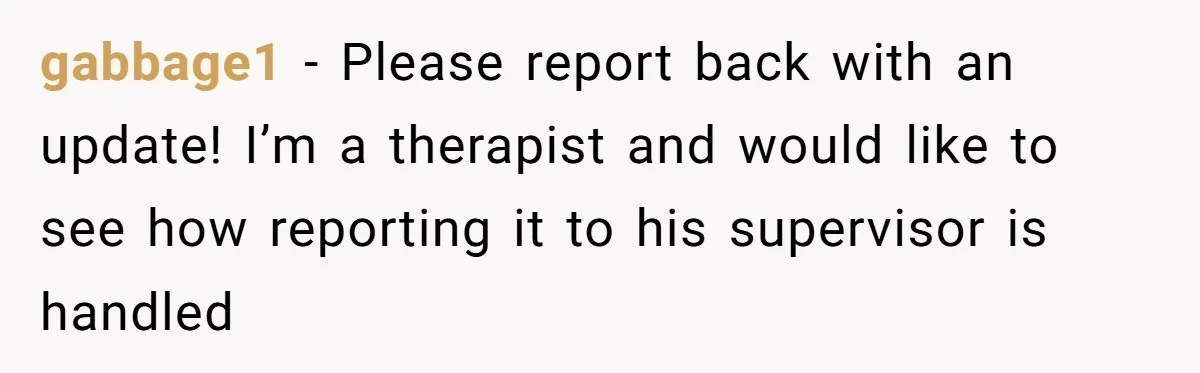
A few comments used blunt or lighter tones to underline frustration


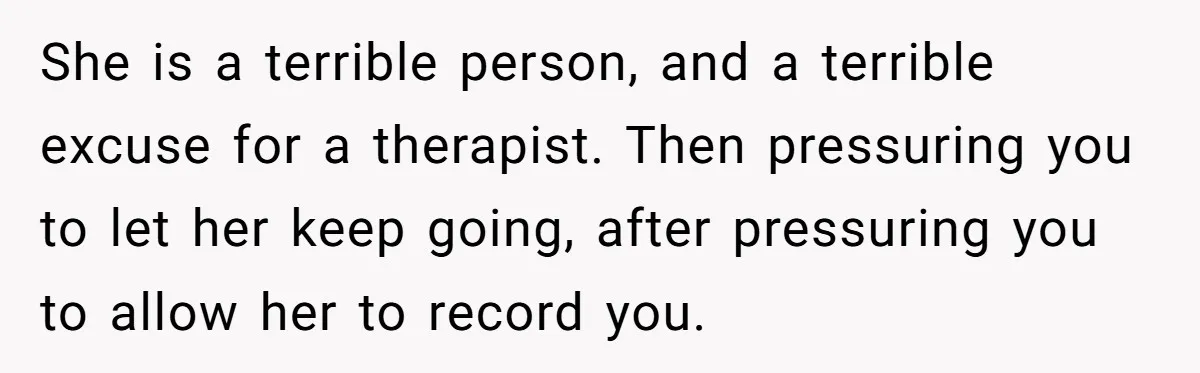
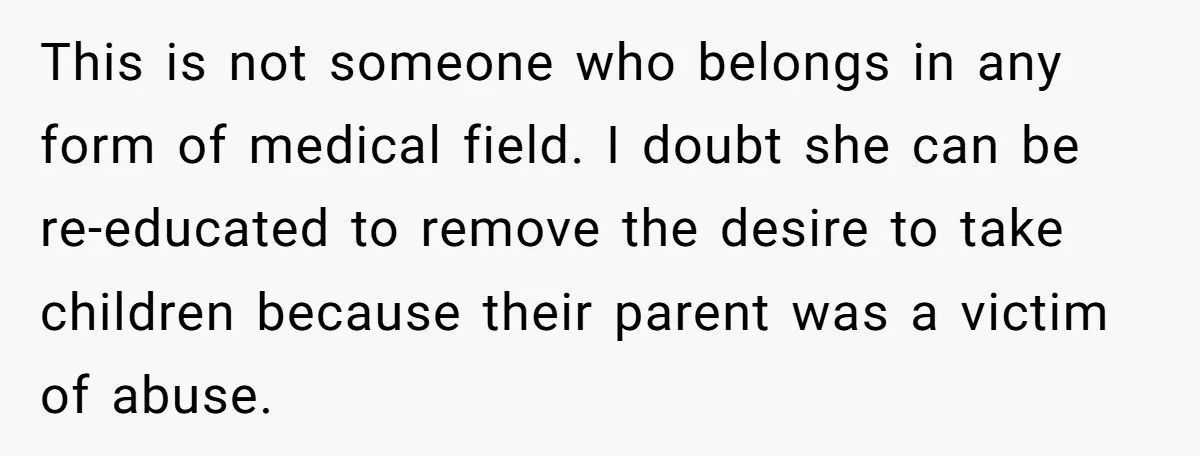


This story left many readers unsettled, not because of what the mother shared, but because of how her vulnerability was handled. While safeguarding children is crucial, so is protecting patients from unnecessary fear and distress. The overwhelming response suggests most people believe the therapist crossed a line, especially during a first session built on fragile trust. It raises a bigger question about training, consent, and accountability in mental health care. What would you do if opening up for help left you feeling more afraid than before?