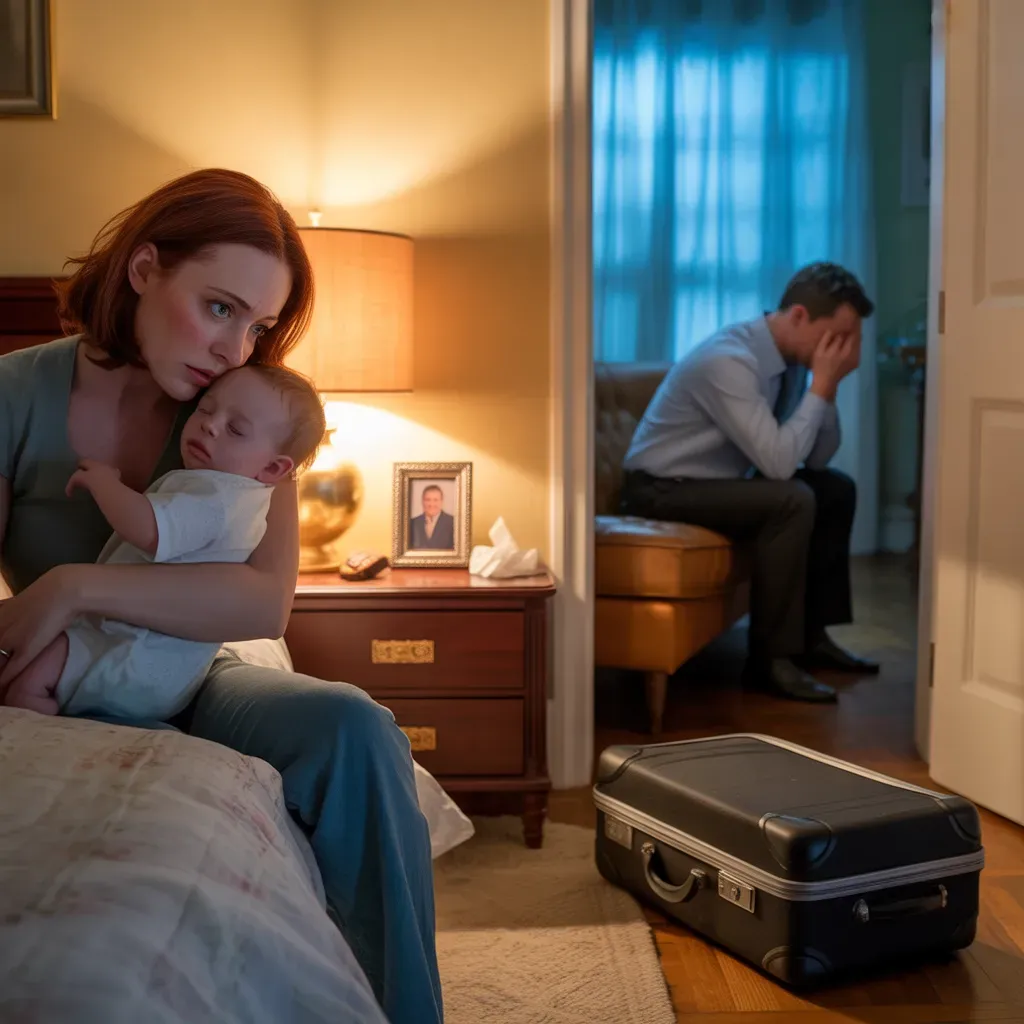
A father preparing to move in with his fiancée found himself facing an unexpected conflict over bedroom arrangements. With a two-bedroom house and a finished basement already assigned to his daughter, the logistics of fitting two more teenagers into the space quickly became a source of tension. What initially seemed like a practical solution soon turned into a deeper disagreement about fairness and family priorities.
As discussions continued, both sides stood firm. The father believed his daughter should not lose the room she had lived in and decorated for years, while his fiancée felt her daughters were being treated unfairly. With relatives taking sides and no clear compromise in sight, the situation raised a difficult question about how blended families should balance history, space, and equality under one roof.

‘AITA for not asking my child to give up her room?’
The couple planned to move in together and chose the larger home.
The proposed bedroom arrangement quickly became a point of disagreement.

Family members took sides as the conflict escalated.
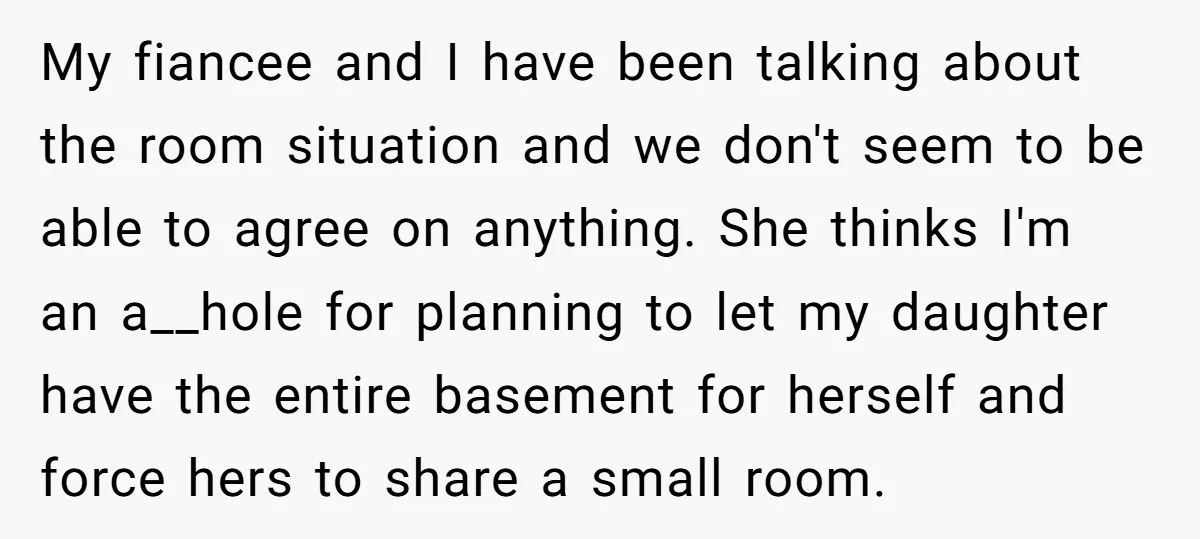
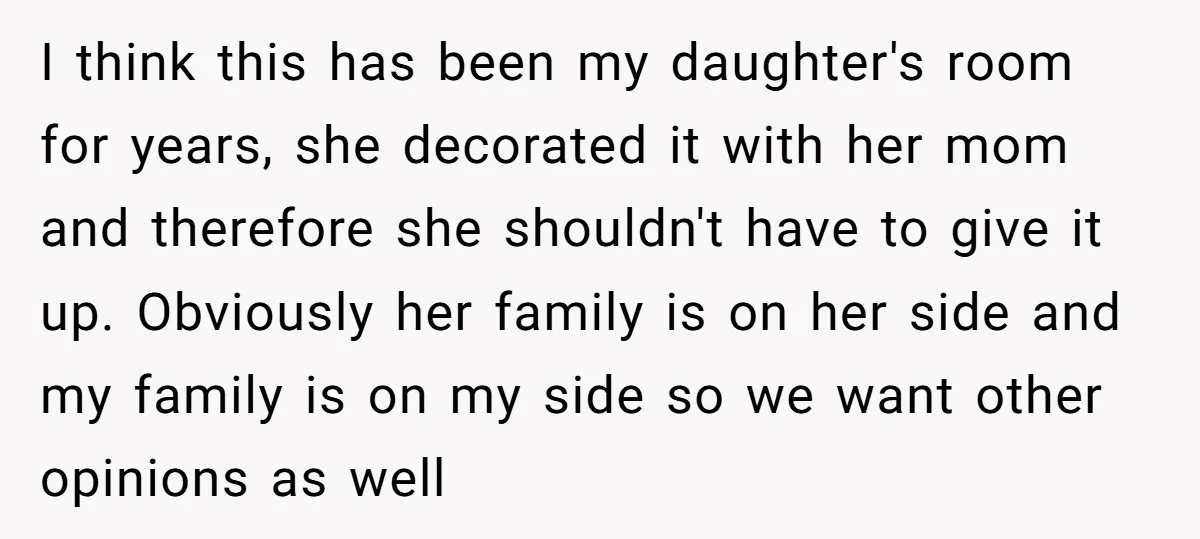
In this situation, the father’s desire to protect his daughter’s established living space is understandable. Her room represents stability, continuity, and a connection to her past, including memories tied to her mother. Asking her to give that up could lead to resentment and feelings of displacement in what has always been her home.
At the same time, the fiancée’s concerns are equally valid. Moving her two teenage daughters into a significantly smaller shared room may send an unintended message about their place in the household. Teenagers are particularly sensitive to perceived favoritism, and unequal living arrangements can quickly foster long-term tension.
From a broader perspective, this conflict highlights the importance of shared decision-making when forming a blended family. Housing choices should reflect collective needs rather than ownership history alone. Without compromise or a structural solution, such as relocating or reassigning space more equitably, unresolved resentment could affect both the couple’s relationship and the children’s sense of belonging.
Take a look at the comments from fellow users:
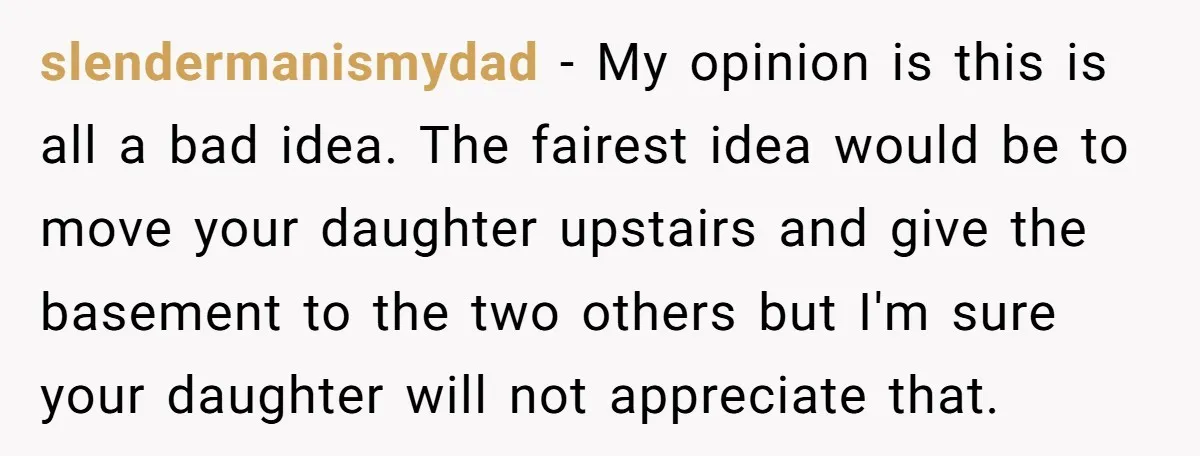
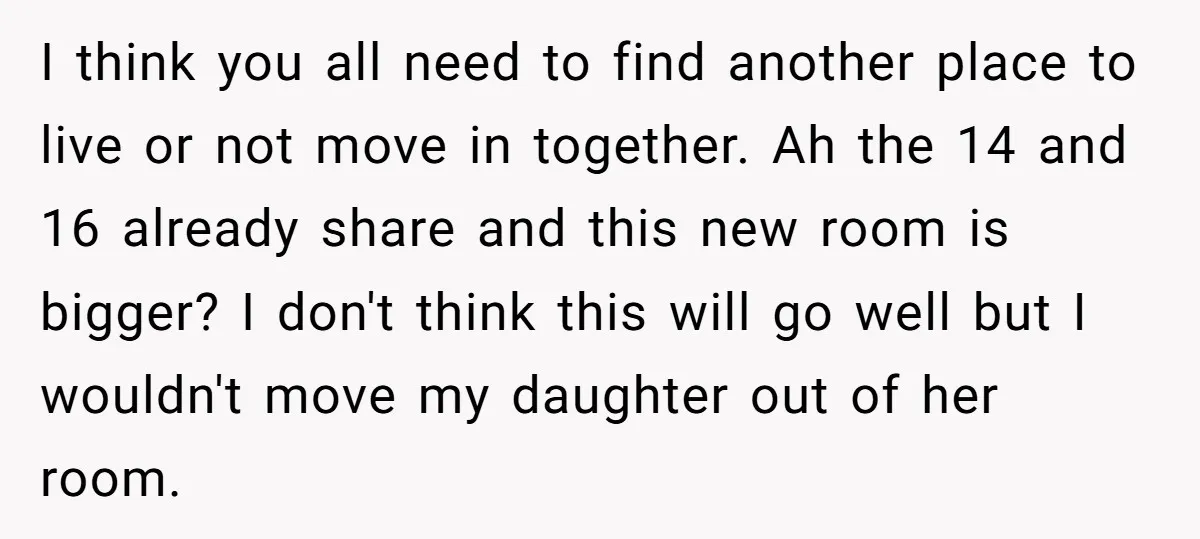
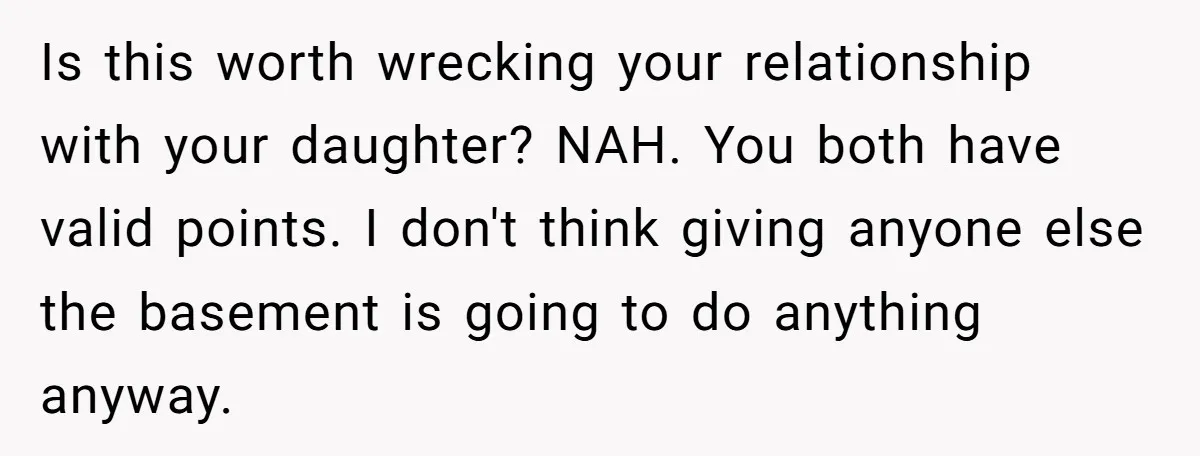
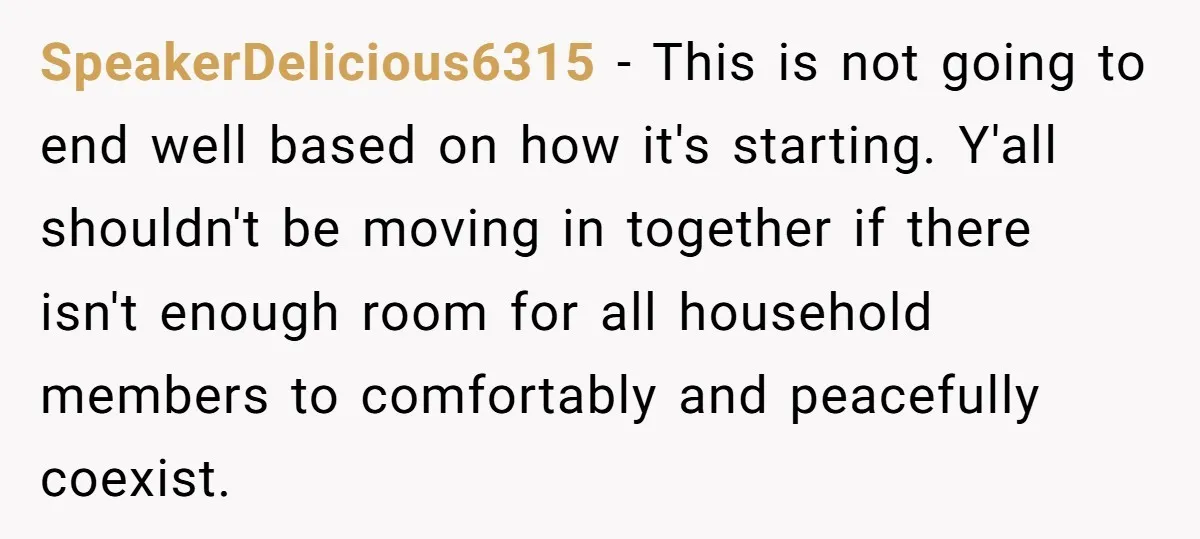
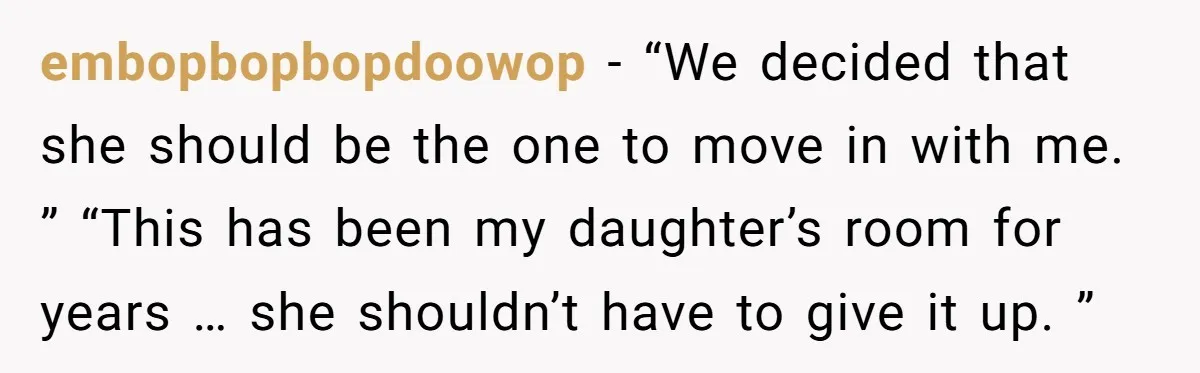
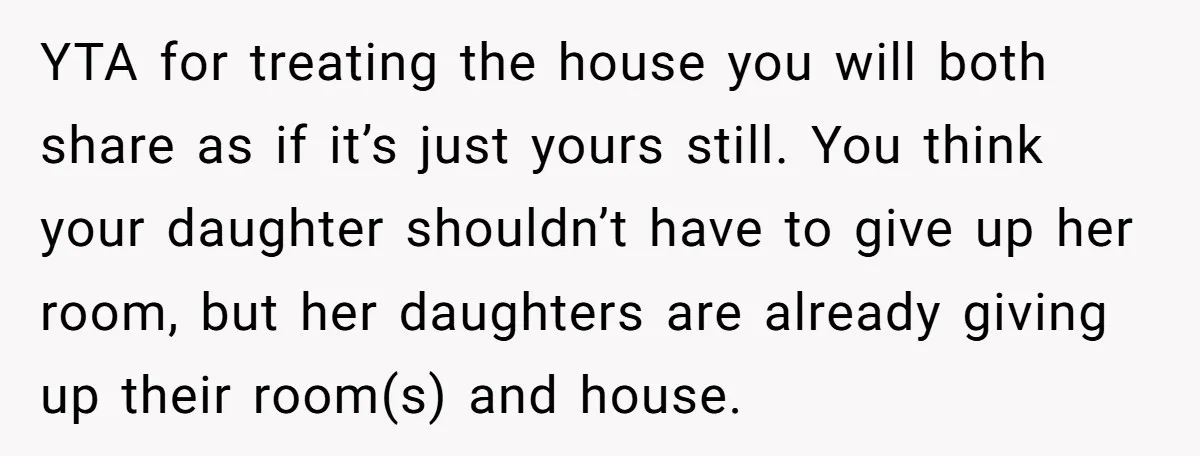
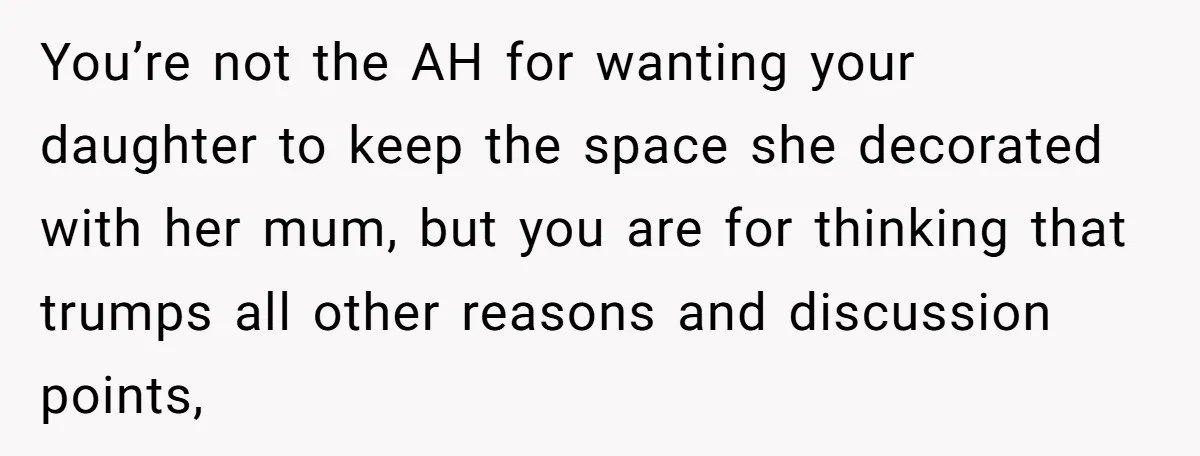
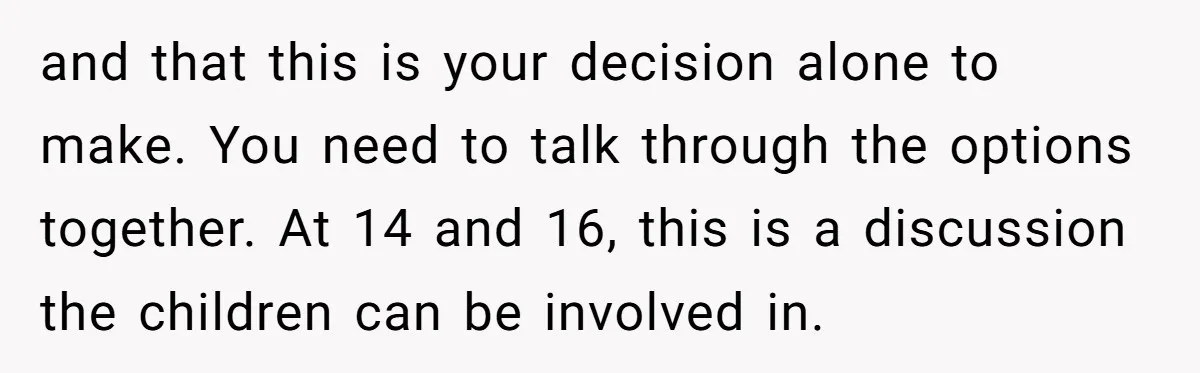
Many users emphasized fairness and warned about long-term resentment.
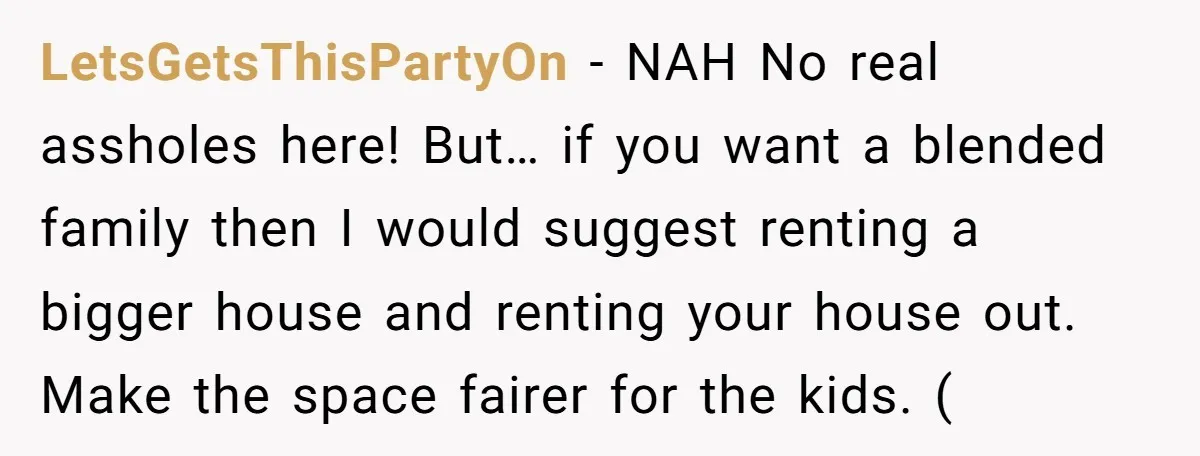
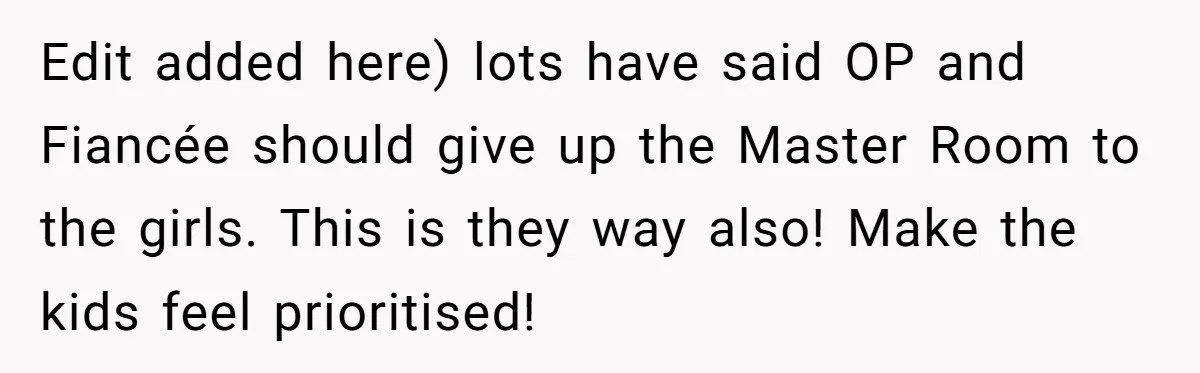
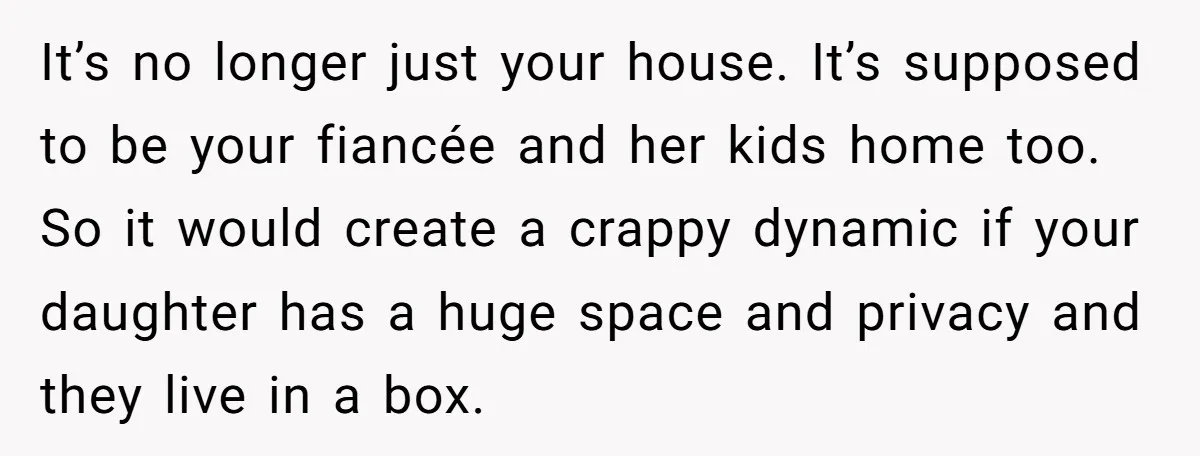
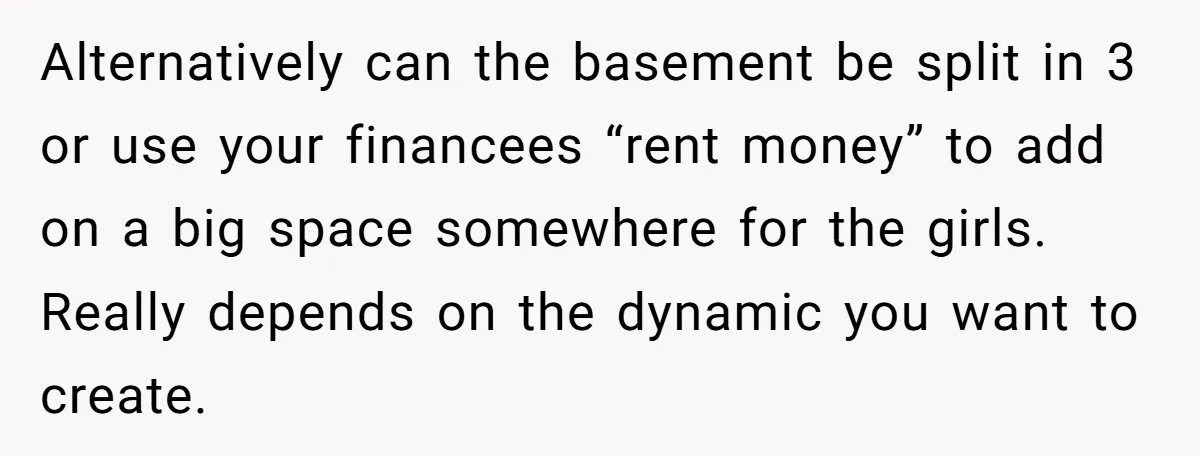
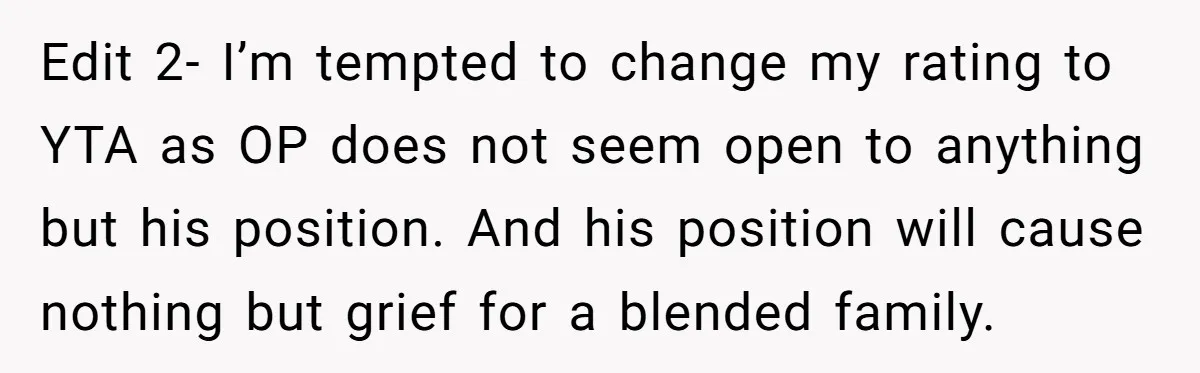
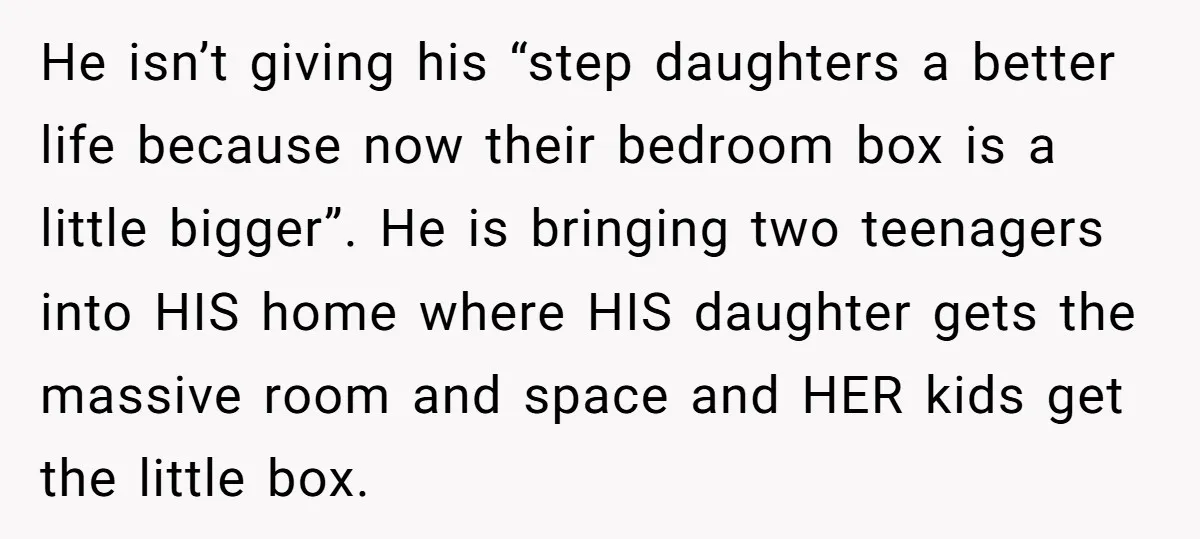
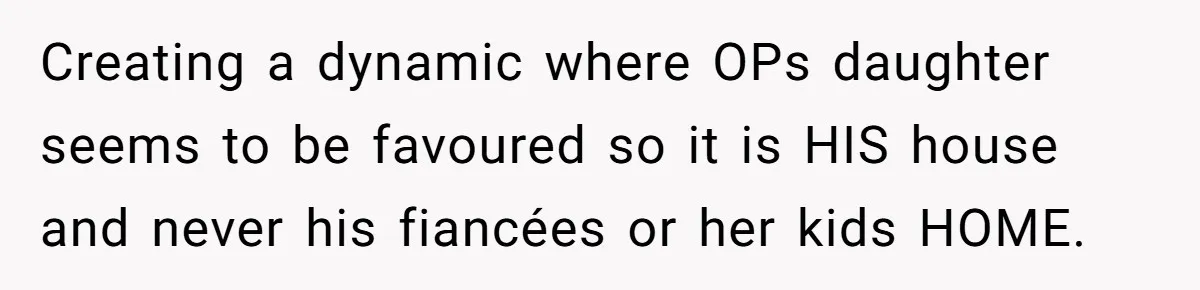

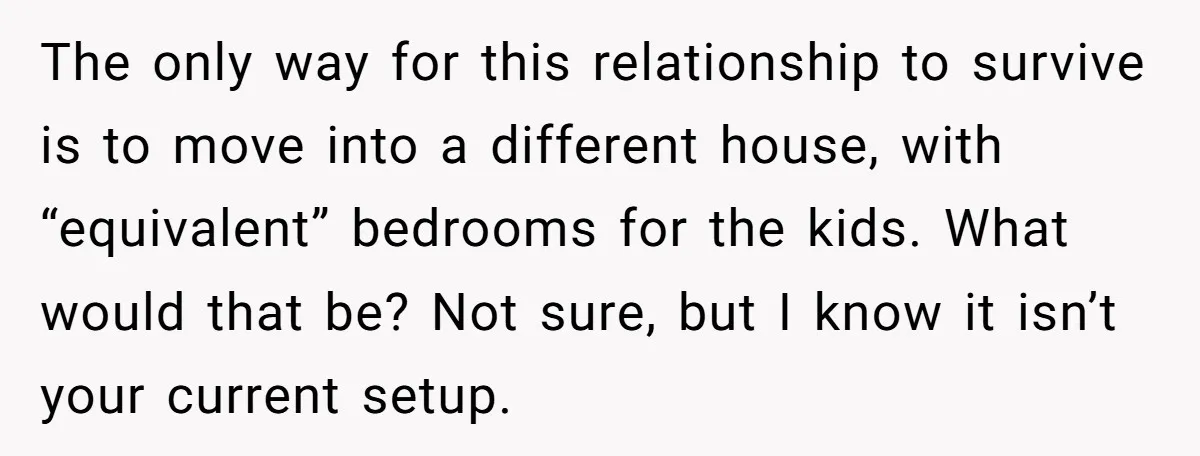
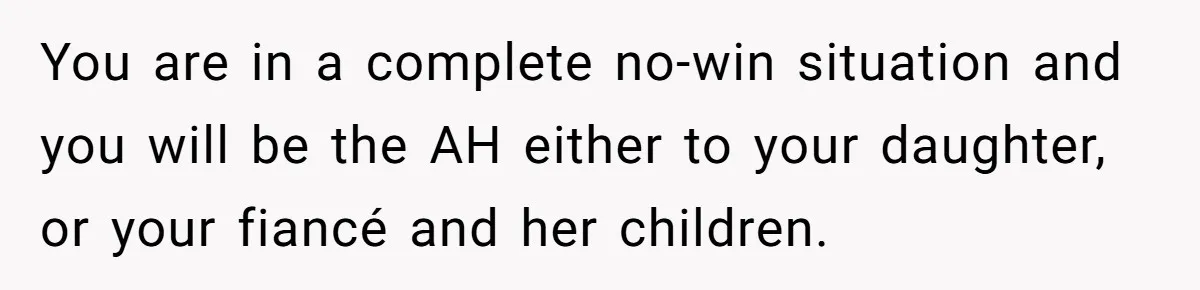
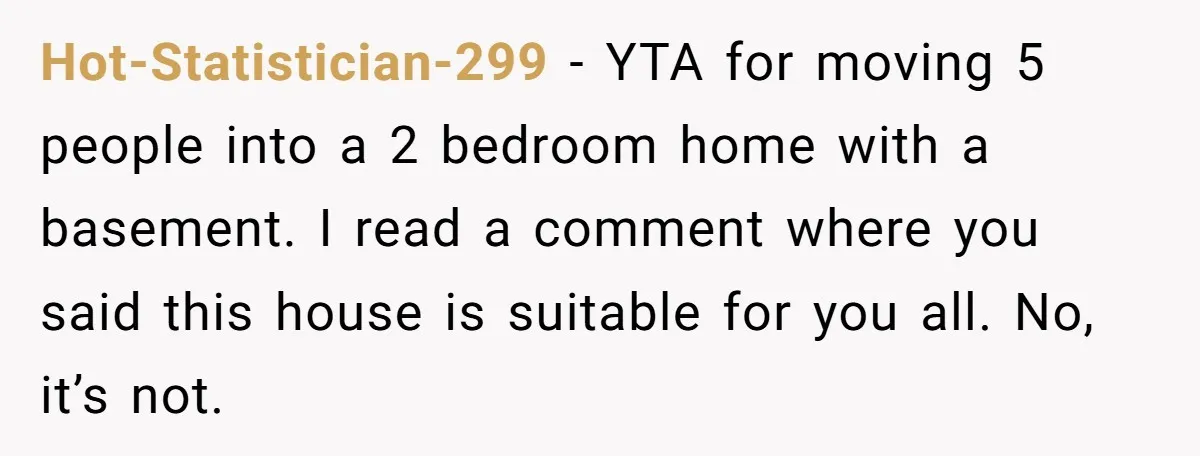
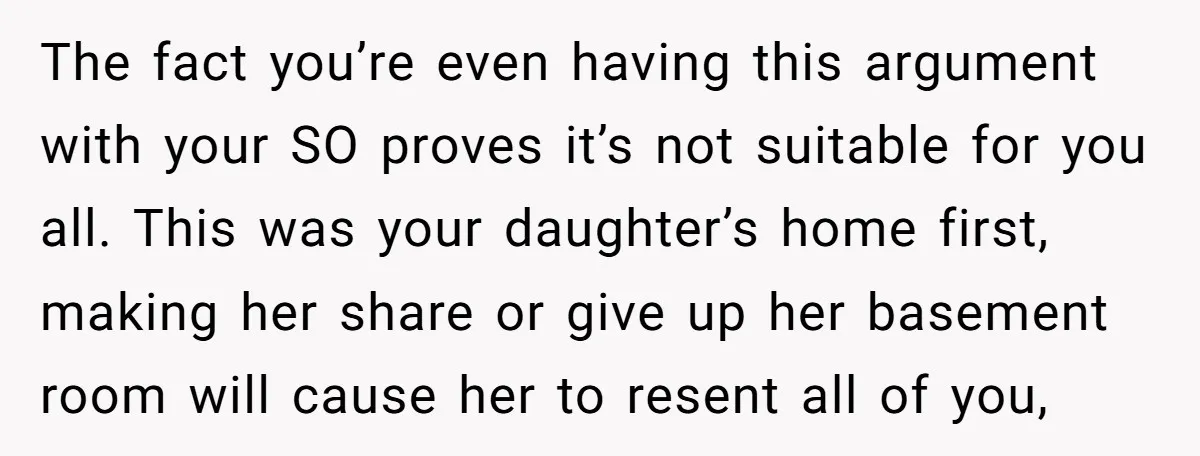
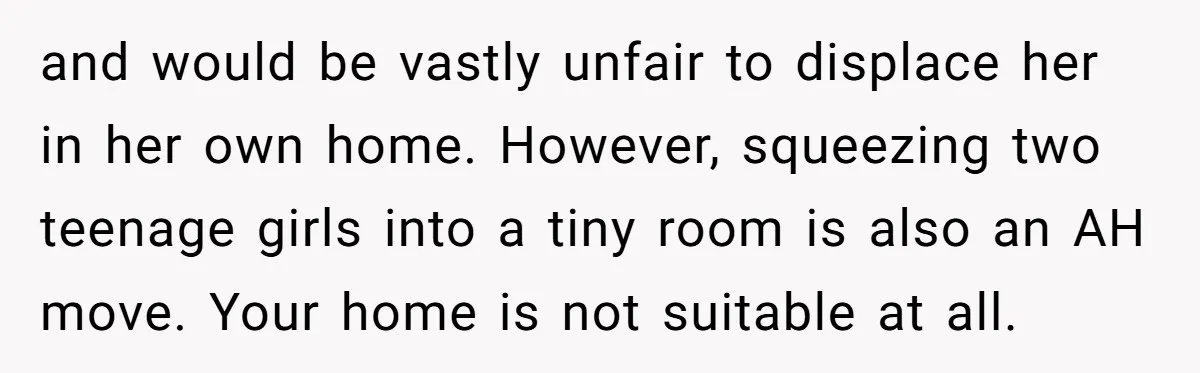
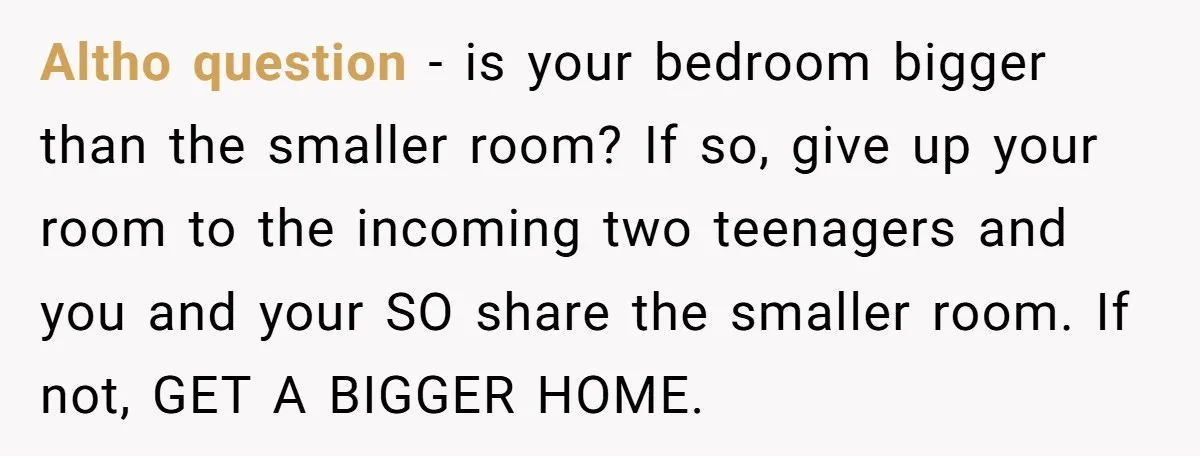
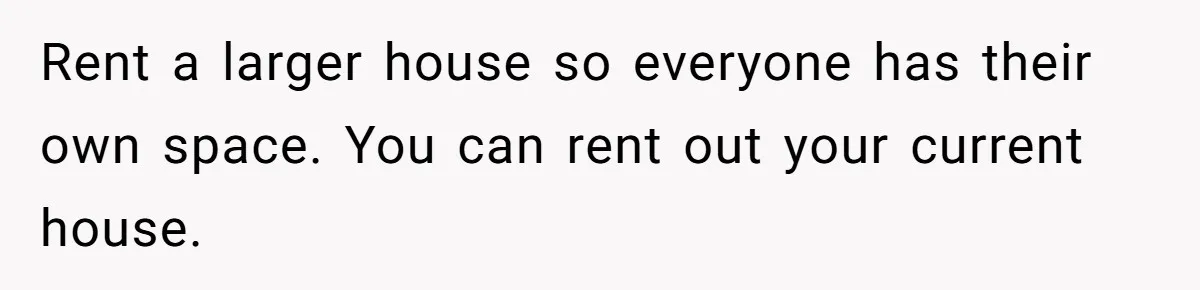
Some users offered balanced perspectives and possible compromises.
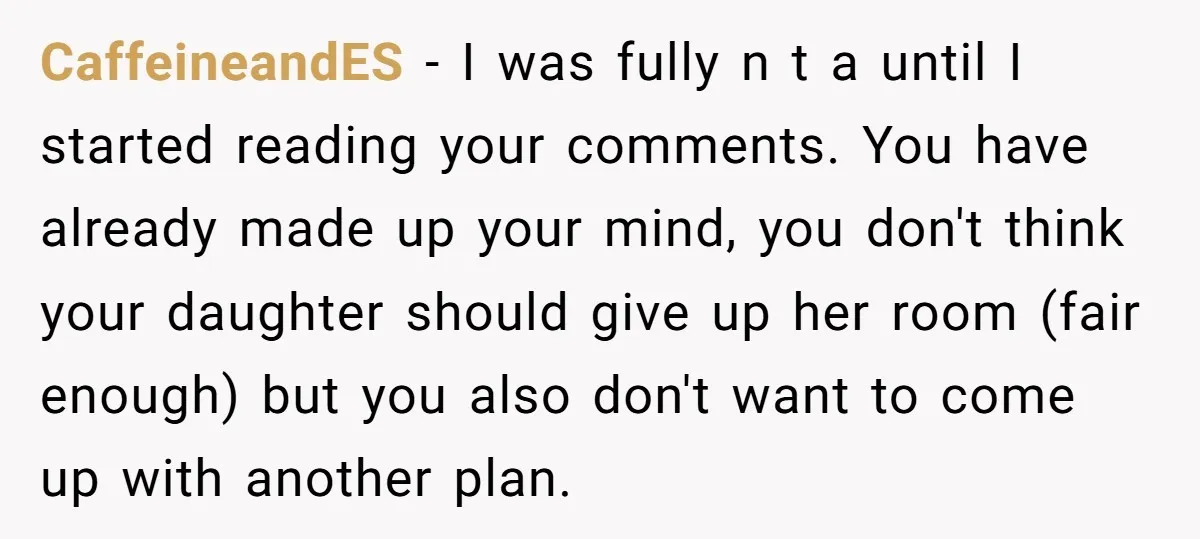
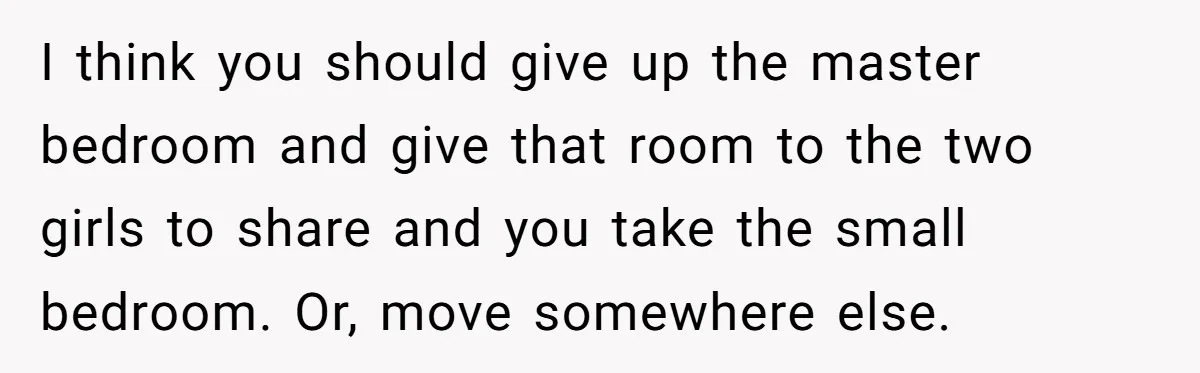
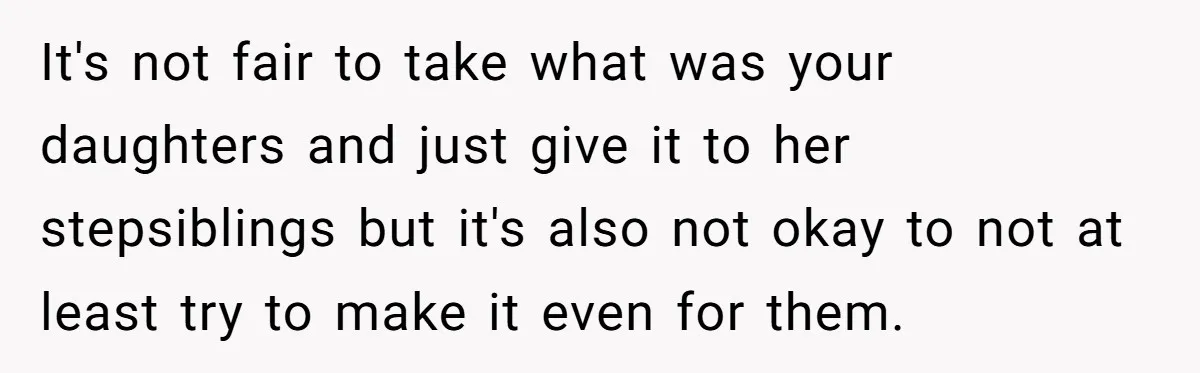

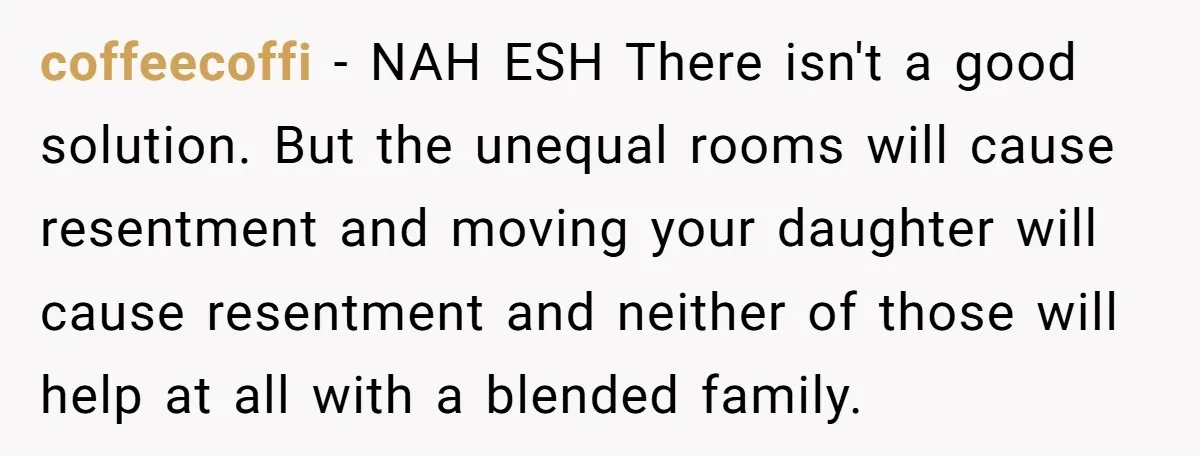
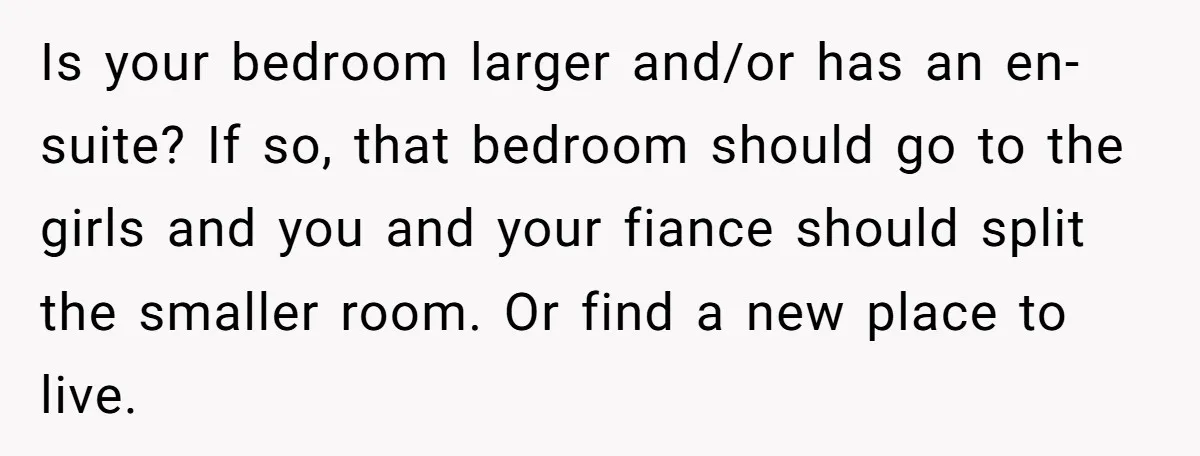
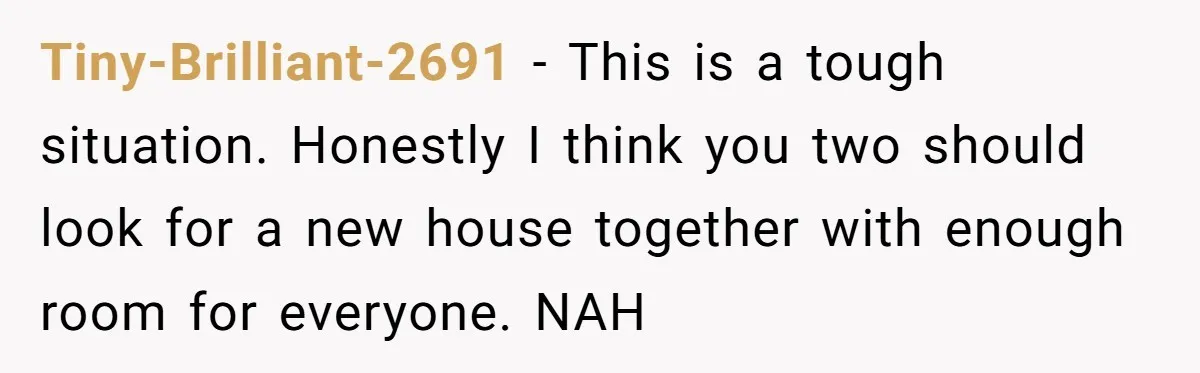
A few comments were blunt or cautionary, lightening the tone slightly.
This story illustrates how blending families involves more than emotional readiness; practical realities like space and fairness play a major role. While protecting a child’s sense of stability is important, so is ensuring that new family members feel equally valued in their new home.
Should families prioritize history or equality when merging households? Is relocating the only fair solution, or can compromises within the existing space truly work? Readers are encouraged to share their thoughts and experiences with blended family living arrangements.