
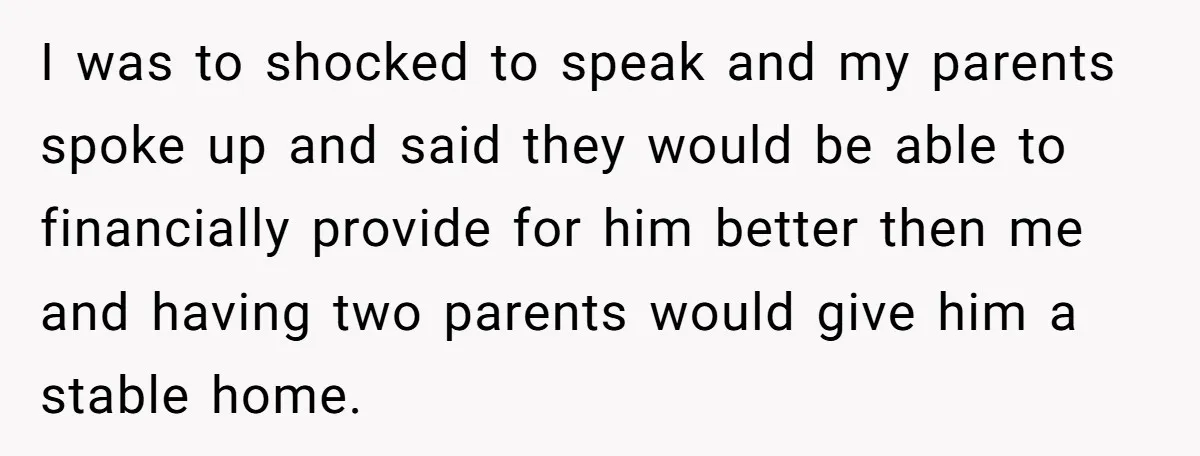
An 18-year-old single mother faces an unthinkable family ultimatum: hand over her 3-month-old son for adoption by her 30-year-old stepsister and brother-in-law, who have struggled with infertility and miscarriages. Her parents joined the pressure, insisting the child would have a more stable, financially secure home with two parents.
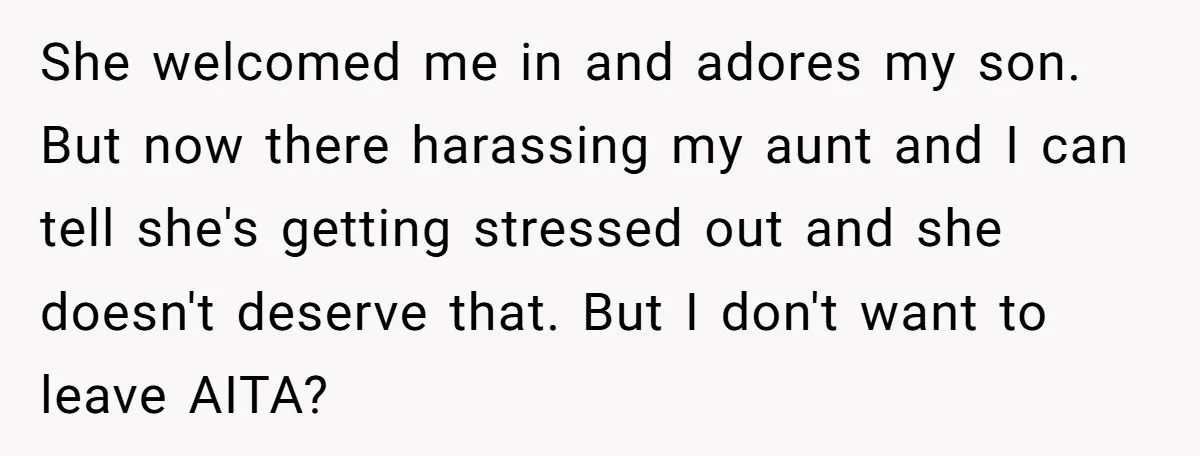
Shocked and hurt, she firmly refused. For days, the family guilt-tripped and harassed her until she packed her and her baby’s things and fled to her biological father’s sister (her aunt), who welcomed them warmly. Now her parents and stepsister are bombarding the aunt with calls and messages, stressing her out. The young mother refuses to return but feels guilty for the strain she’s causing.

‘AITA for not giving my baby to my stepsister and running away?’
After work one evening, her parents summoned her to a serious discussion.


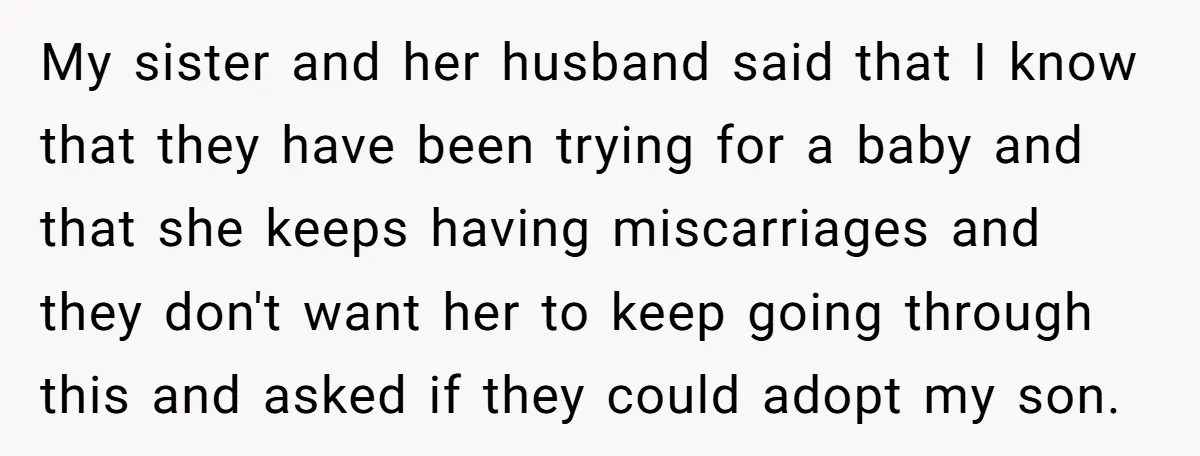
Her parents backed the request, framing it as what’s best for the baby.
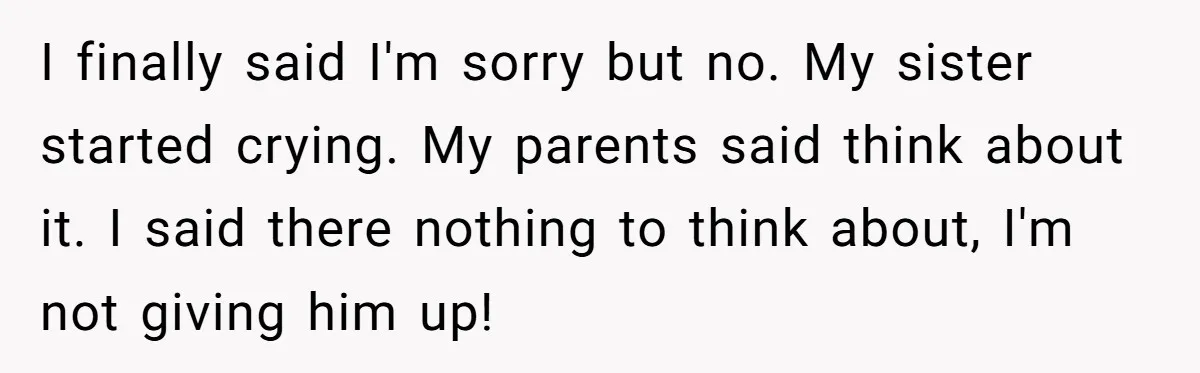
She fled to safety, but the pressure followed her aunt.

The young mother, though young and facing challenges, has made a clear, loving choice to keep and raise her son. Her family’s repeated attempts to guilt her, combined with the ambush-style family meeting, disregard her autonomy as a legal adult and parent. What makes this situation more complicated is the emotional leverage of infertility grief: the stepsister’s pain is real, but using it to pressure someone into surrendering their child is deeply unfair and manipulative.
The parents’ argument that two parents and more money equal “better” dismisses the irreplaceable bond between mother and child and overlooks the many successful single-parent households. Opposing views might argue the family was trying to help in a difficult situation and that the young mother’s youth makes stability harder. Yet consent must be voluntary, not obtained through days of harassment.
The aunt’s stress highlights how the family’s persistence harms extended relationships too. Broader perspective: coercive adoption tactics erode trust and can traumatize both mother and child. Healthy support would mean practical help (childcare, education aid) without strings attached. Protecting her right to parent—and shielding her son from this conflict—is not selfish; it’s responsible.
Here’s how people reacted to the post:
Nearly all readers condemn the family’s actions and strongly support the young mother’s decision to keep her son.




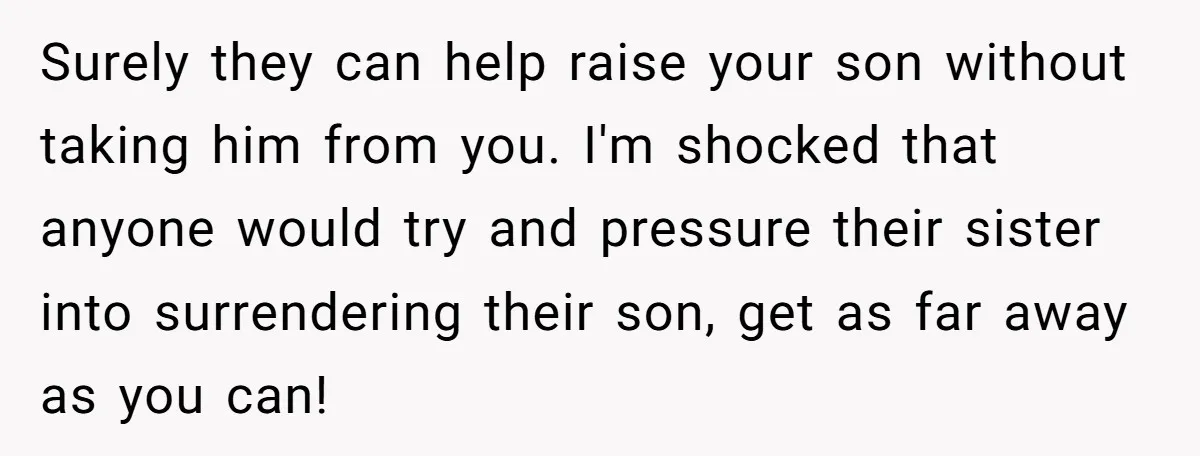

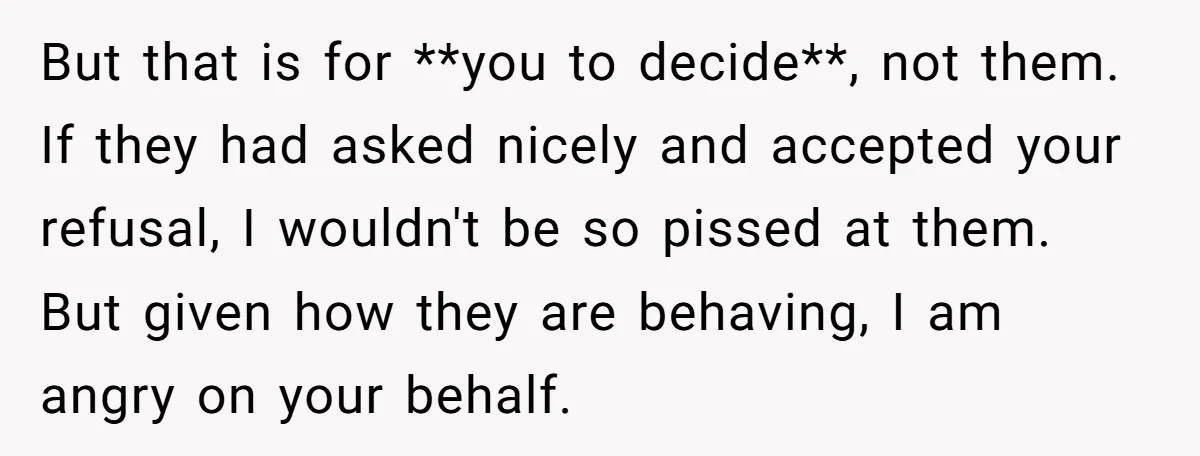
Many emphasize legal protections and practical steps while affirming her right to parent.


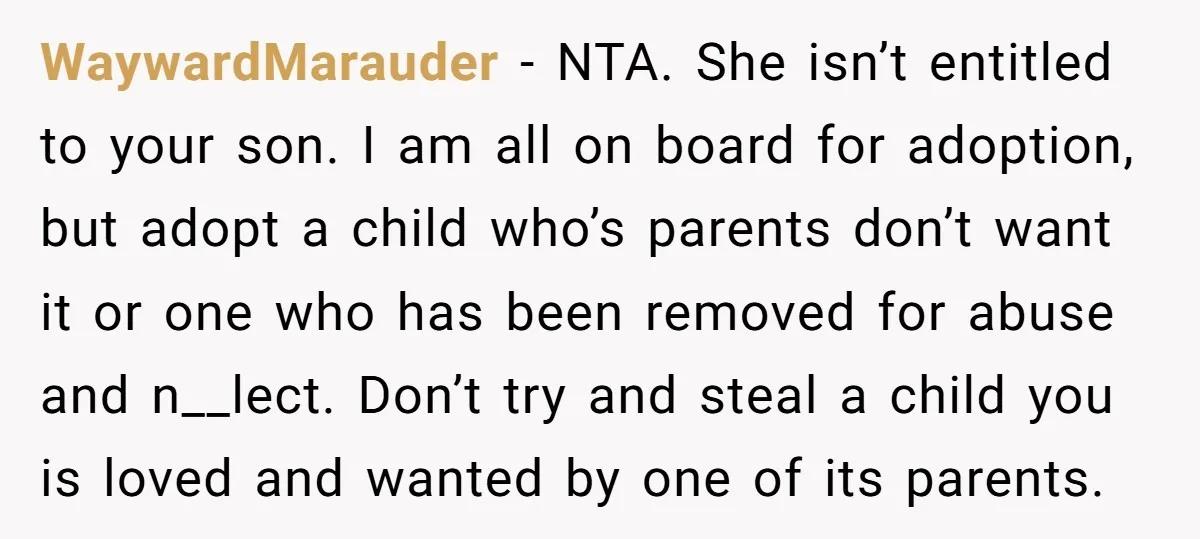
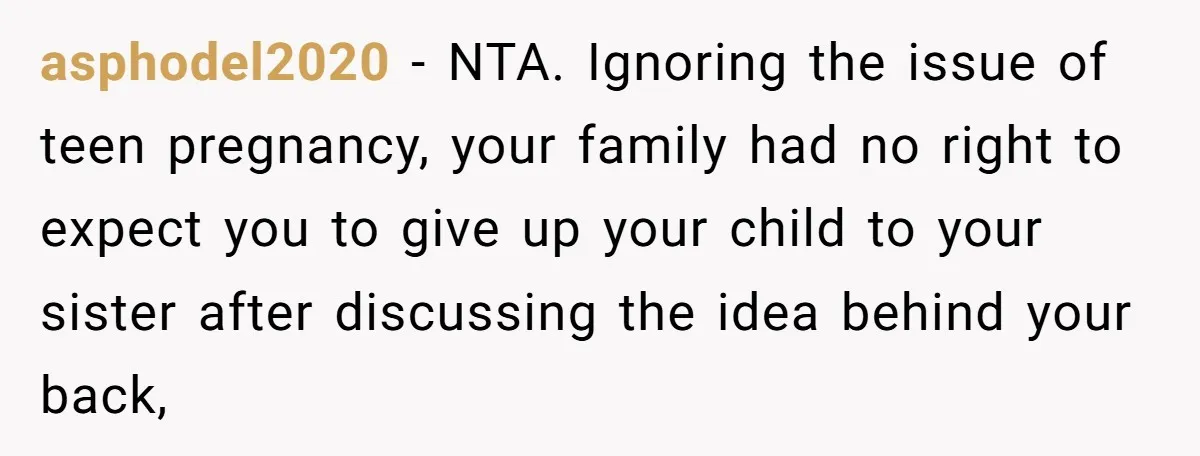
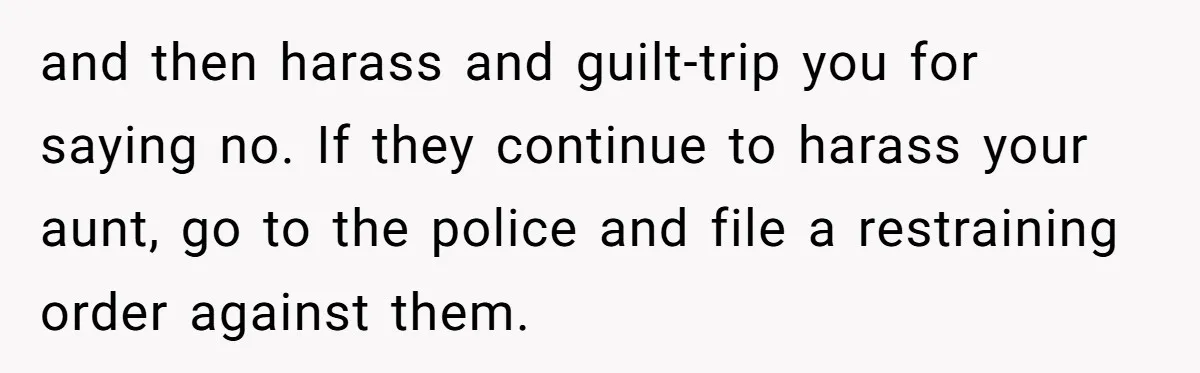
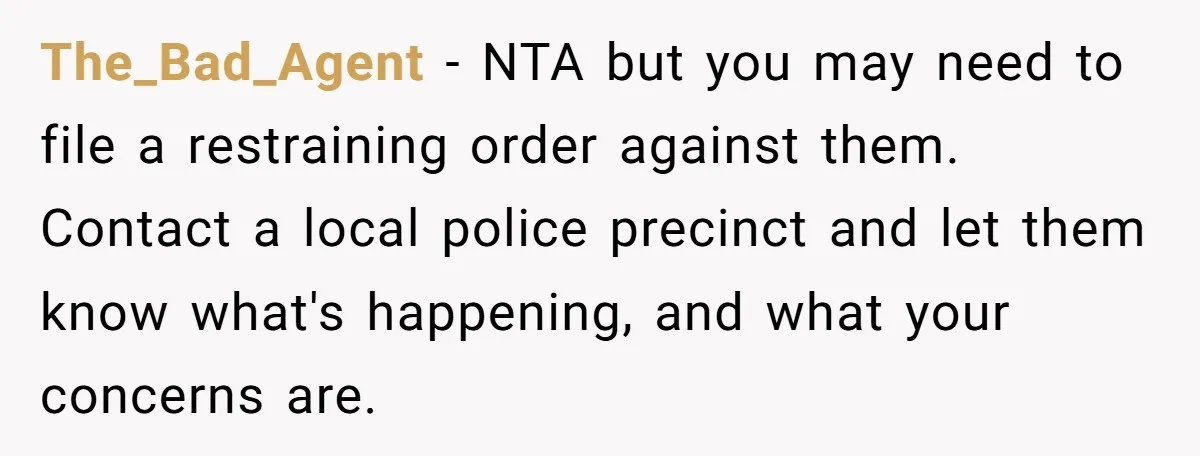
A few comments add warnings about escalation and praise her for protecting her son.




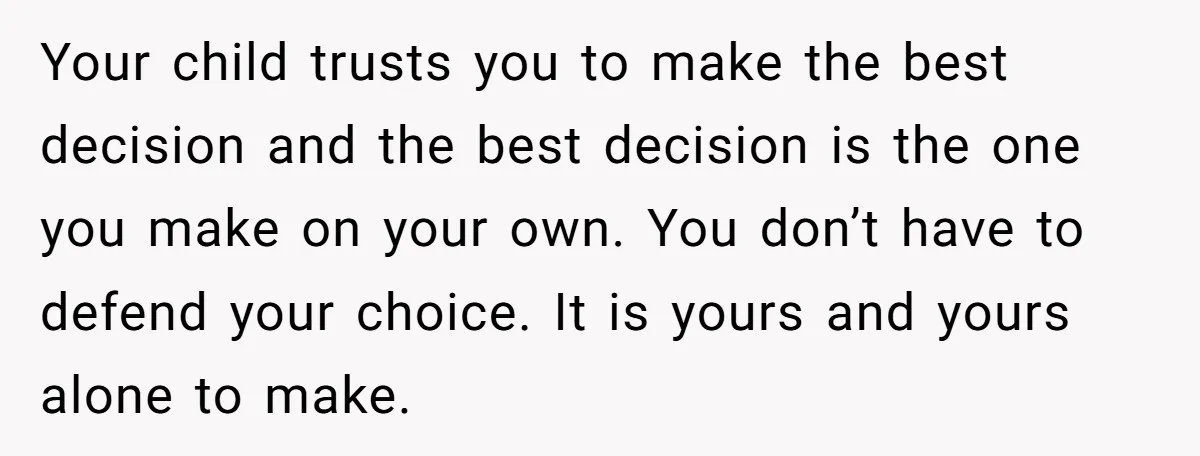
This heartbreaking situation shows how infertility grief can sometimes lead to boundary-violating behavior that prioritizes one person’s desires over another’s parental rights. The young mother’s refusal to give up her son—despite pressure, youth, and hardship—is widely seen as courageous and correct. Her escape to her aunt and firm stance protect both her and her child from ongoing coercion.
Have you ever faced family pressure over a major life decision involving a child? How do you balance protecting your peace with maintaining family ties? What resources or steps would you suggest for a young single parent in a similar high-pressure situation?