
A long overnight bus ride became unexpectedly tense when one passenger’s seating choice sparked a heated disagreement. After returning from vacation, a tall traveler had carefully planned ahead, purchasing two front-row seats to ensure comfort, privacy, and a smoother end to an already crowded journey. What makes the story more complicated is that another passenger, a mother traveling with her young son, believed those seats could solve her own problem.
Her request quickly turned into an argument, drawing attention from nearby passengers and even the bus driver. As voices rose and accusations flew, the situation highlighted a familiar question seen often on social networks: when comfort, money, and children are involved, where does personal responsibility end and social obligation begin?
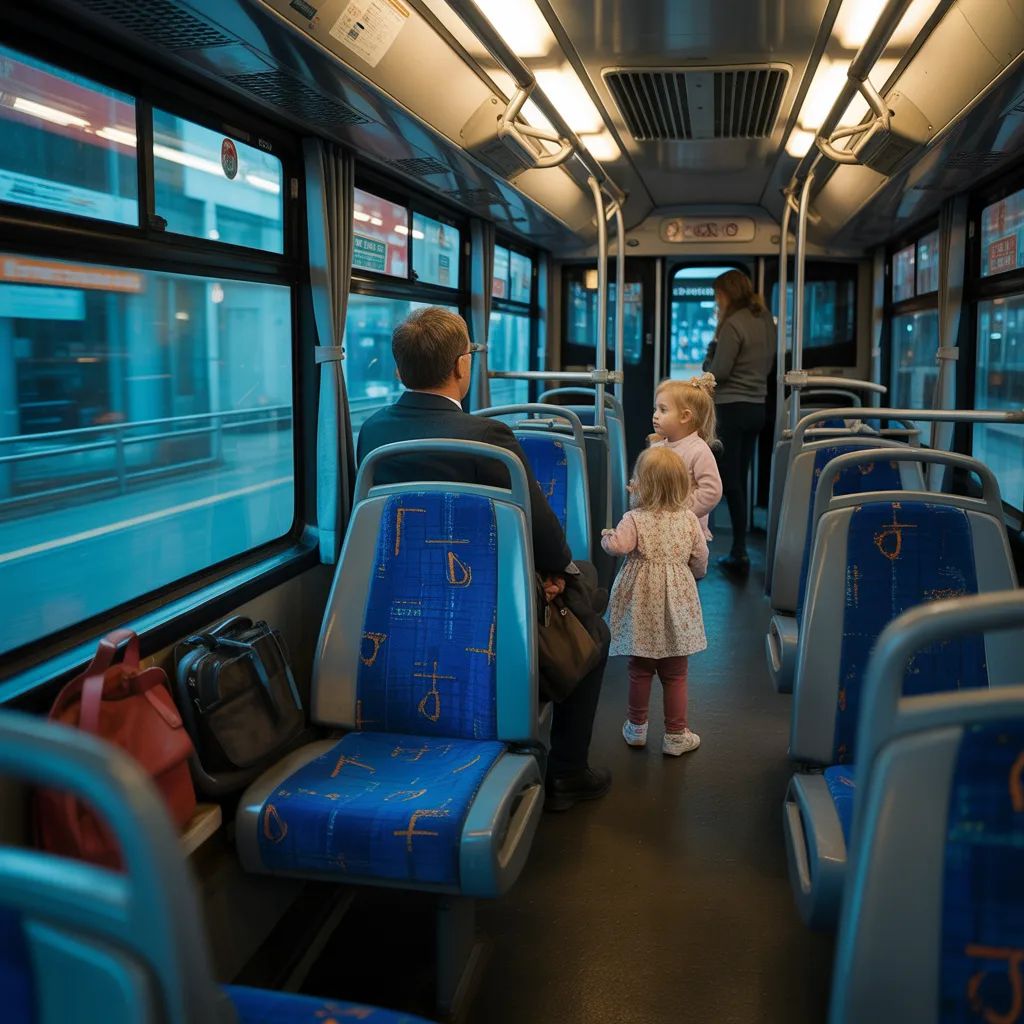
‘AITA for not letting a child sit next to me on the bus?’
Planning ahead for comfort on a long night ride
A request from a mother changes the mood
Escalation, refusal, and an uncomfortable ending
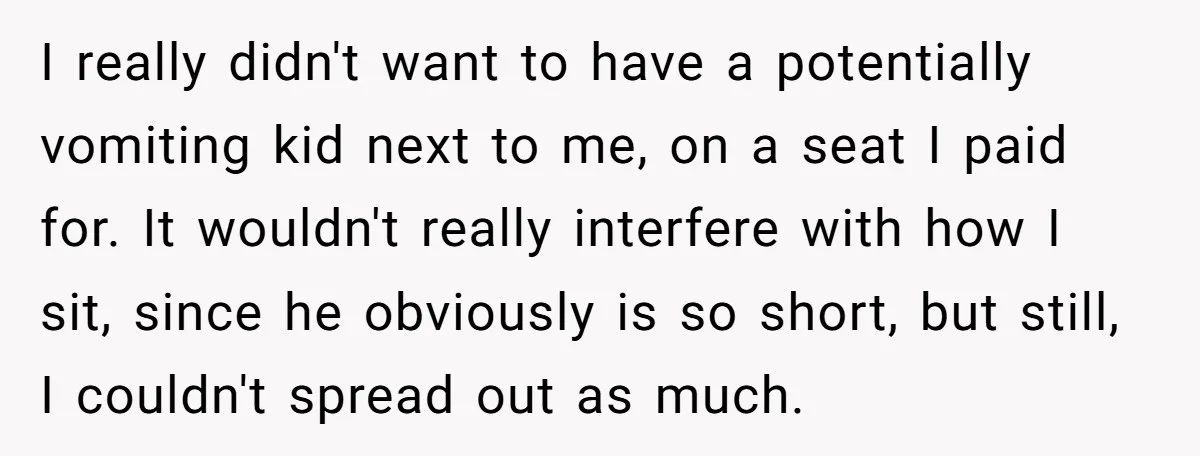
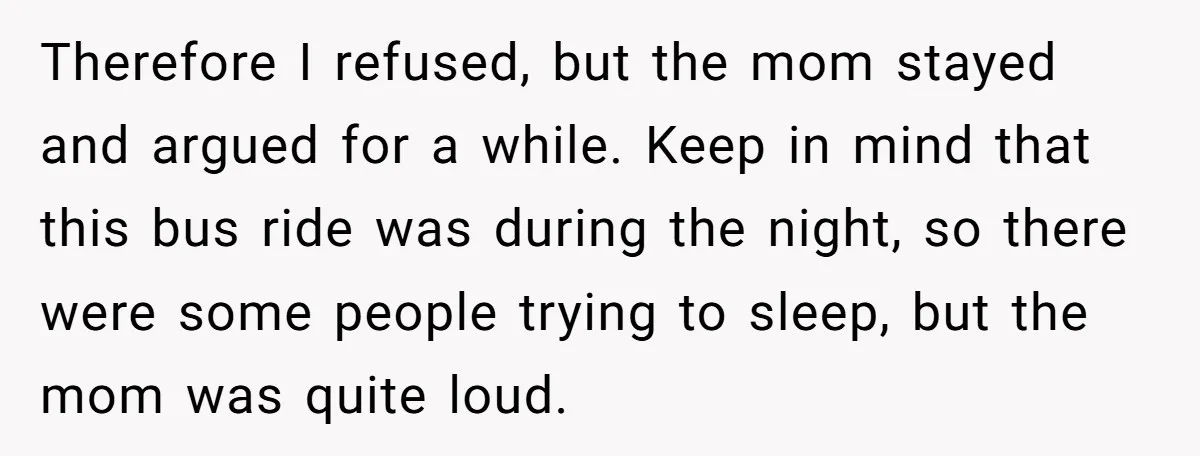
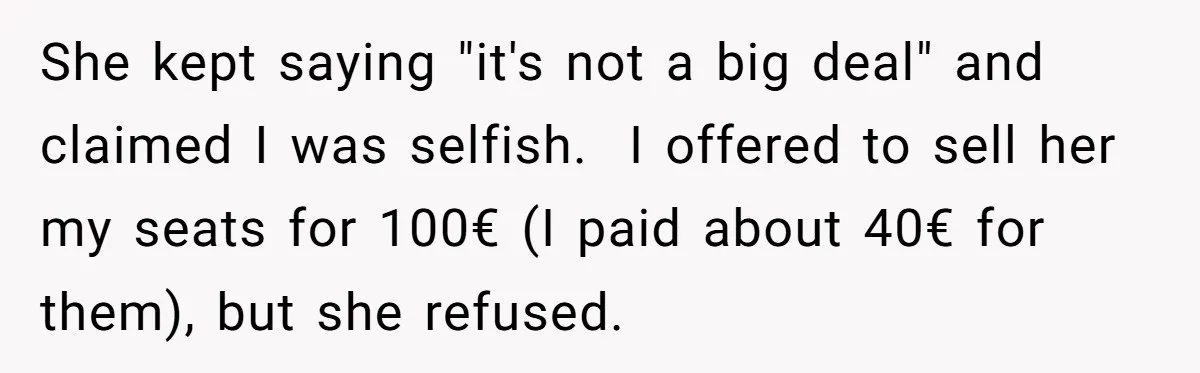
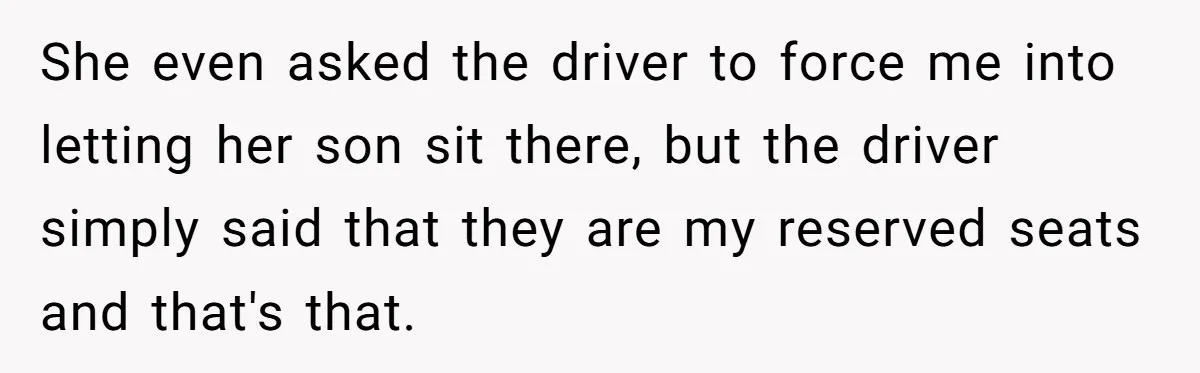
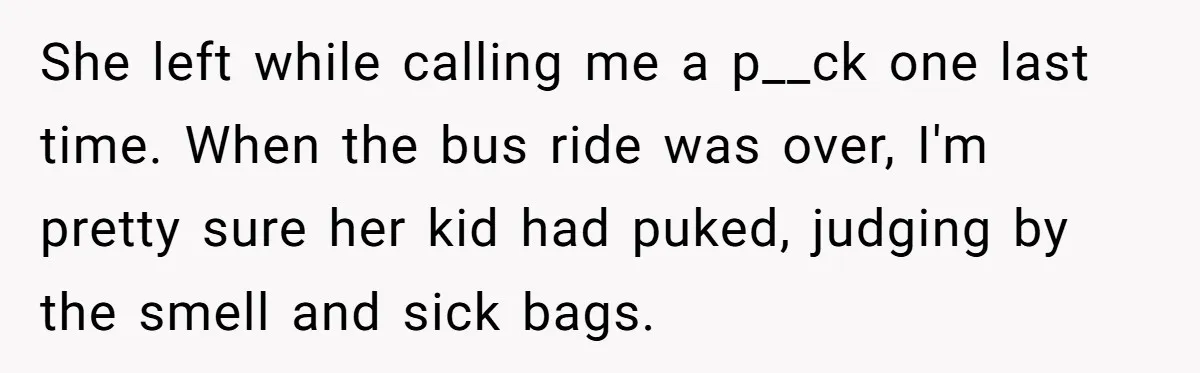
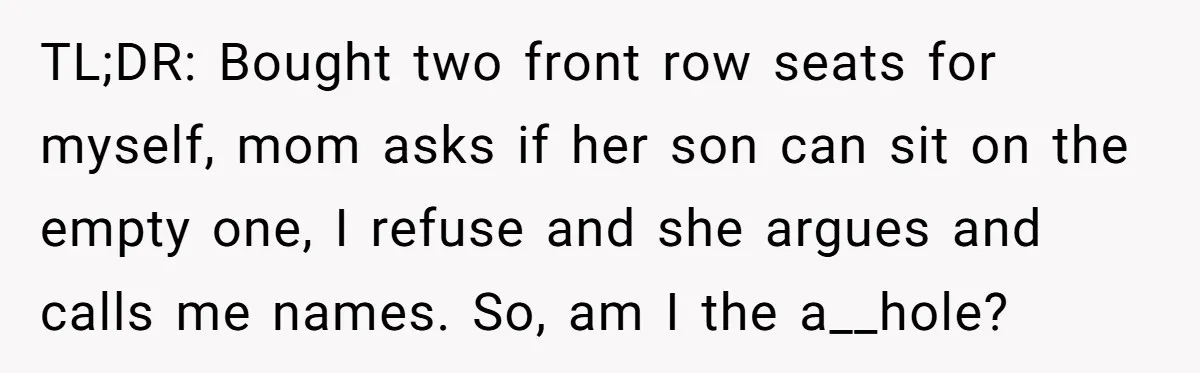
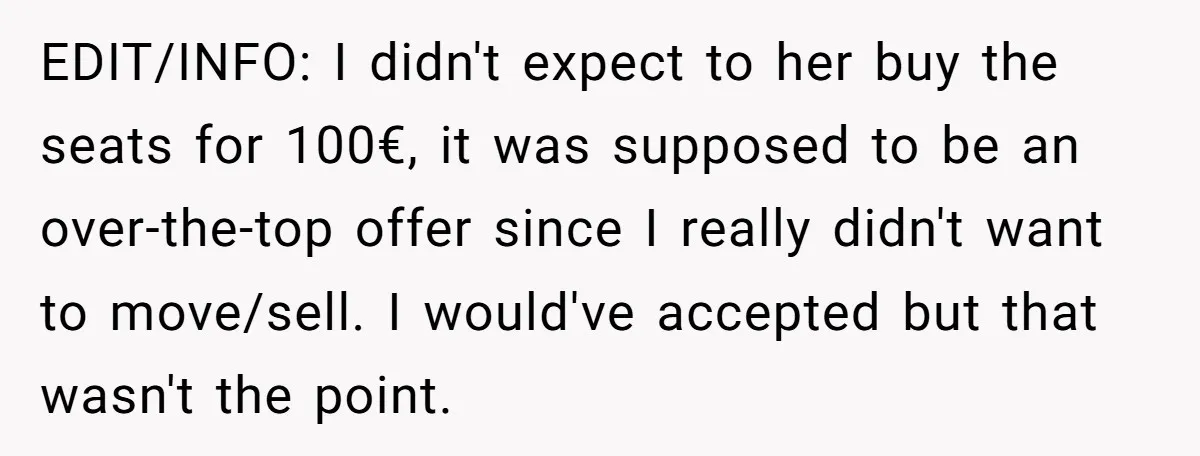
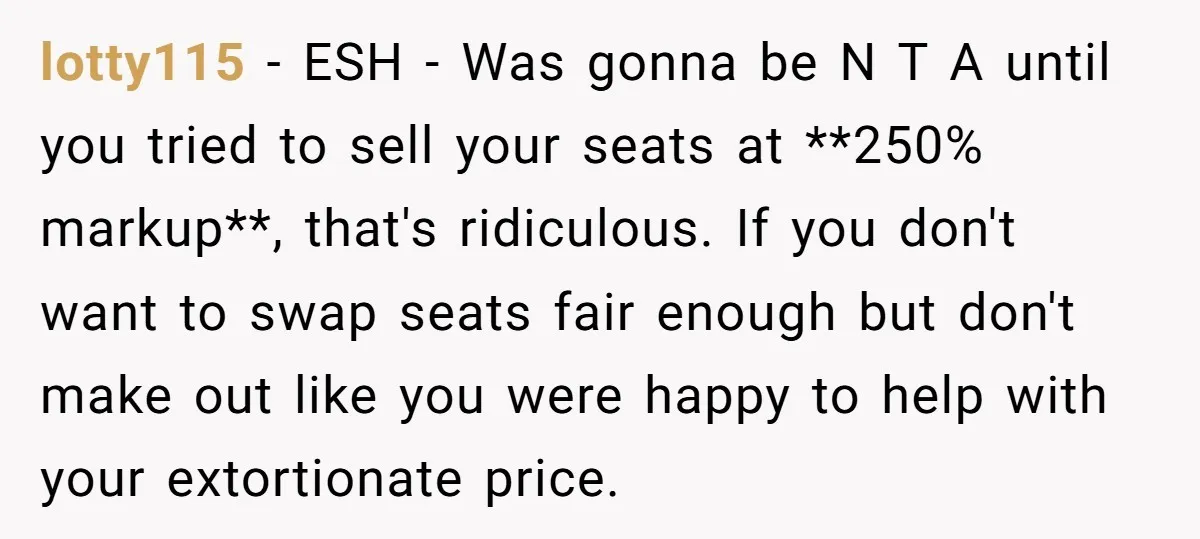
At the heart of this situation is a clash between advance planning and last-minute accommodation. One side prioritized comfort by purchasing extra space ahead of time, anticipating physical limitations and fatigue after travel. From this perspective, the seats were paid for and used exactly as intended. The refusal was not about hostility toward a child, but about avoiding discomfort and potential mess during an overnight ride.
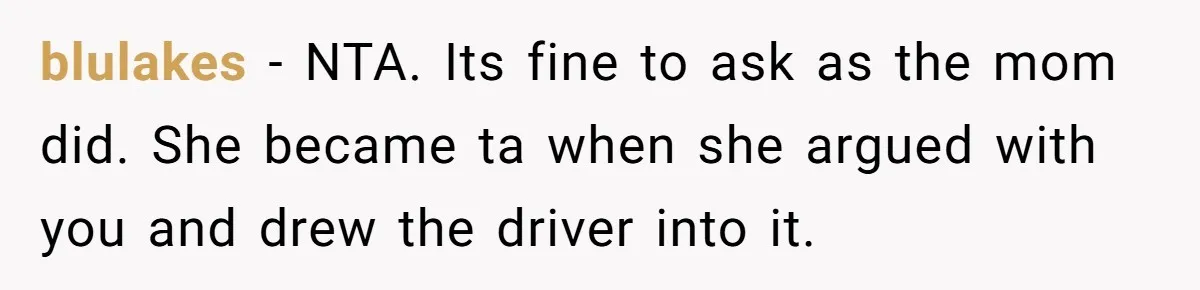
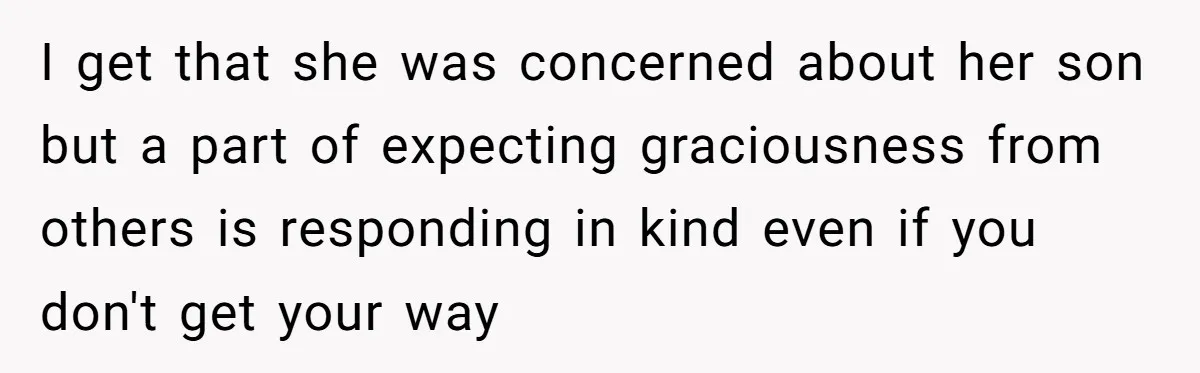
On the other hand, the parent’s concern centered on her child’s well-being. Motion sickness in young children can be stressful, and asking for help is not unreasonable. However, what makes the story more complicated is the escalation after the refusal. Persistence, public arguing, and involving the driver shifted the interaction from a simple request to a disruptive confrontation.
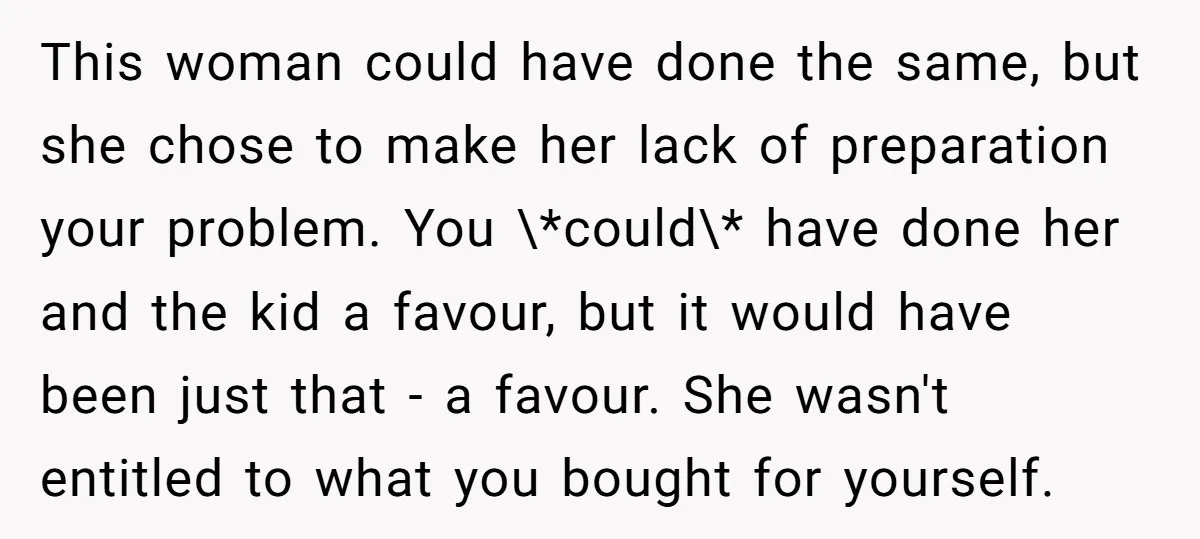
From a broader social standpoint, this case highlights how entitlement perceptions form quickly in public settings. While kindness and flexibility are valued, they cannot be demanded, especially when they require someone else to give up something they deliberately paid for. Mutual respect often depends less on the initial request and more on how people respond when the answer is no.
Here’s the feedback from the Reddit community:
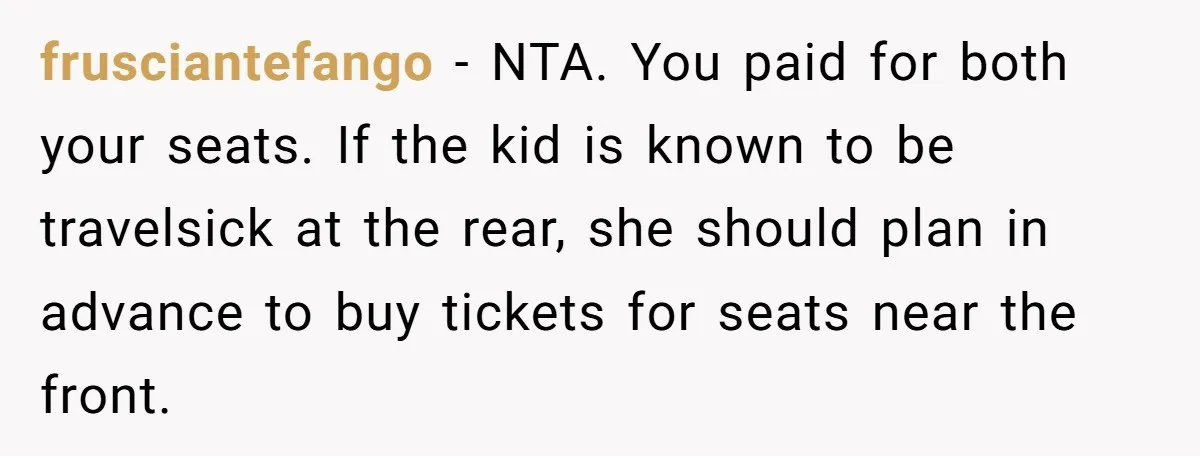
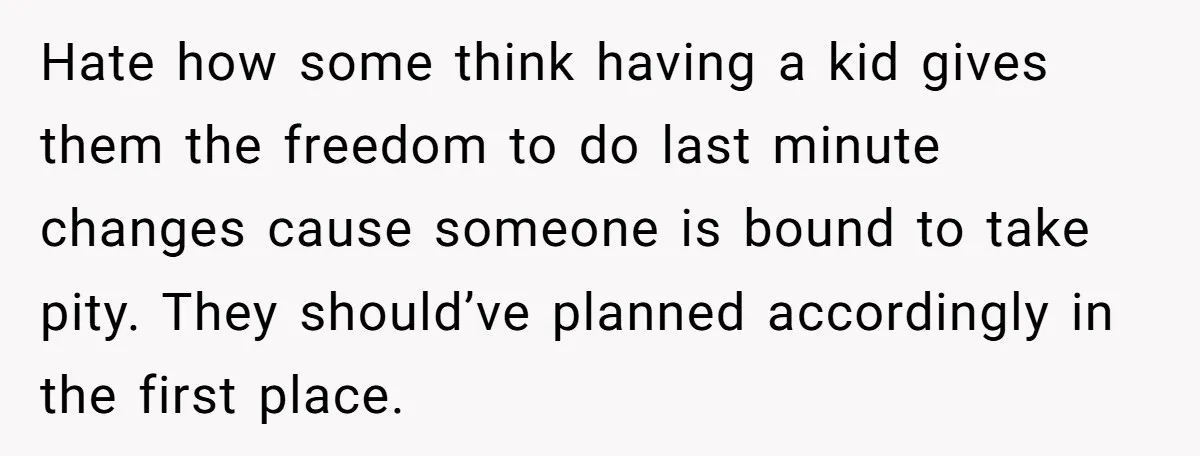
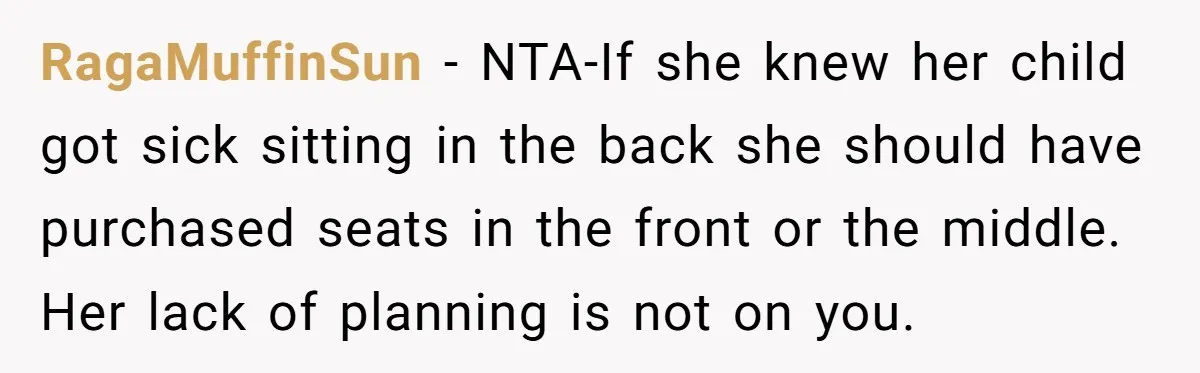
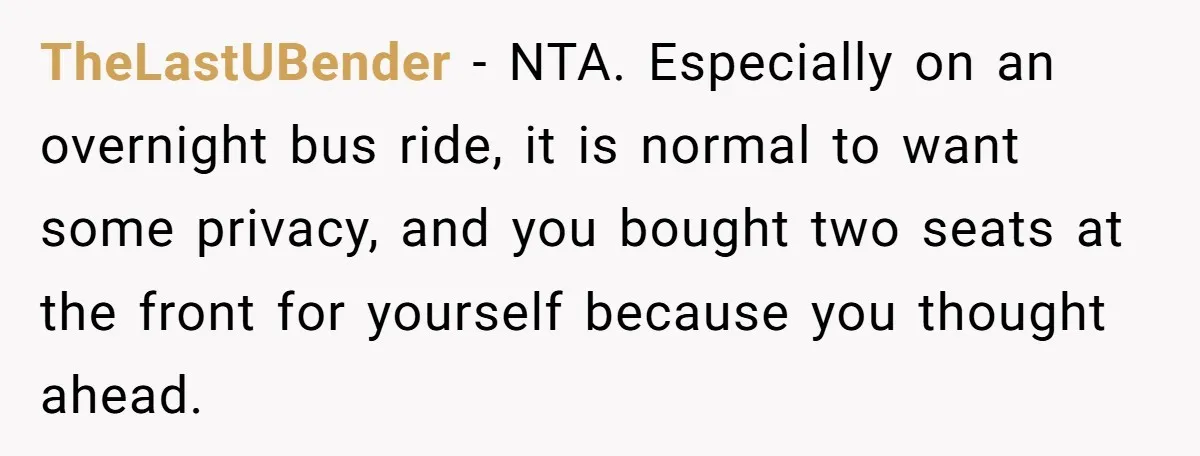
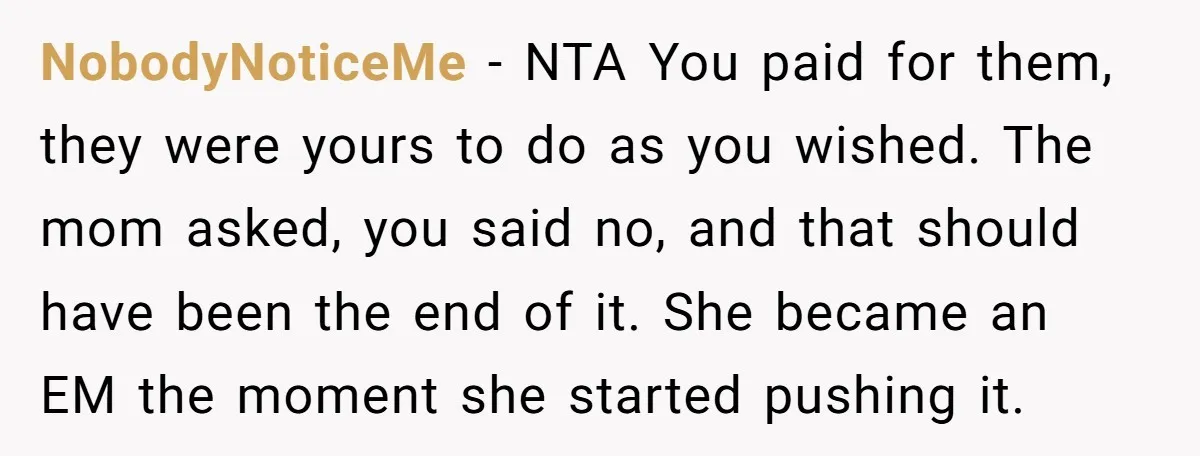
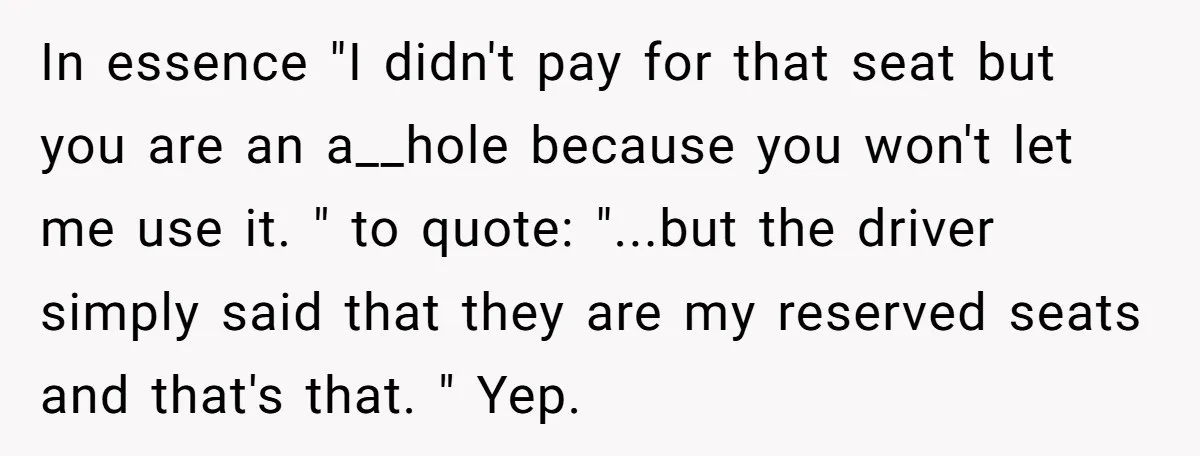
Many users support the poster, arguing that planning ahead should not be punished.
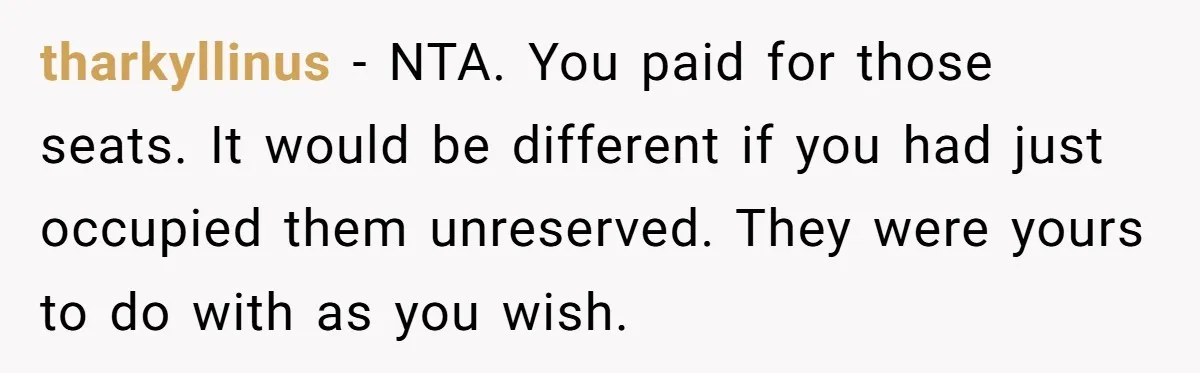
![[Reddit User] − NTA This takes me back to times on a plane where parents wanted me and my husband to change our seats and be separated to accommodate their...](https://loknam.com/aita/images/3448de5683/wp-editor-1769223121680-3.webp)
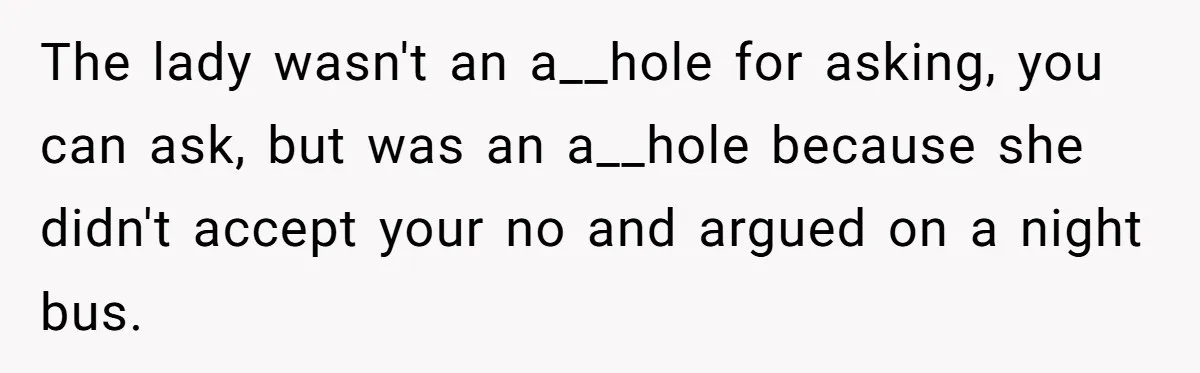
Some users offer mixed views, acknowledging both sides of the argument.
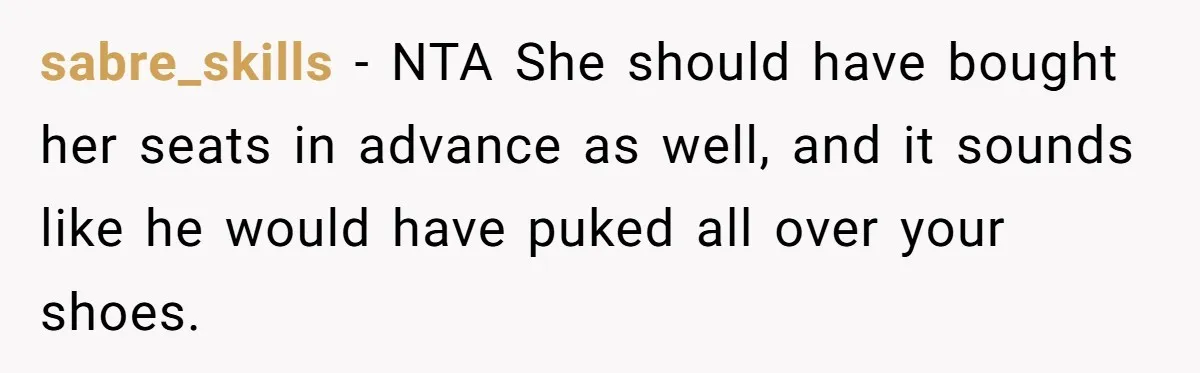
A few commenters inject humor while still siding with the poster.

This story reflects a common tension in public spaces where preparation, comfort, and expectations collide. One passenger planned ahead and paid for extra space, while another hoped for flexibility to address a child’s discomfort. The disagreement escalated not because of the initial request, but because neither side felt understood once the answer was no.
Situations like this raise broader questions about social courtesy and responsibility during travel. Should advance planning always outweigh last-minute needs? When does asking for help cross into entitlement? How should travelers balance empathy with their own limits? Readers are encouraged to share how they would have handled this situation and whether they believe courtesy should ever override what someone has paid for.