
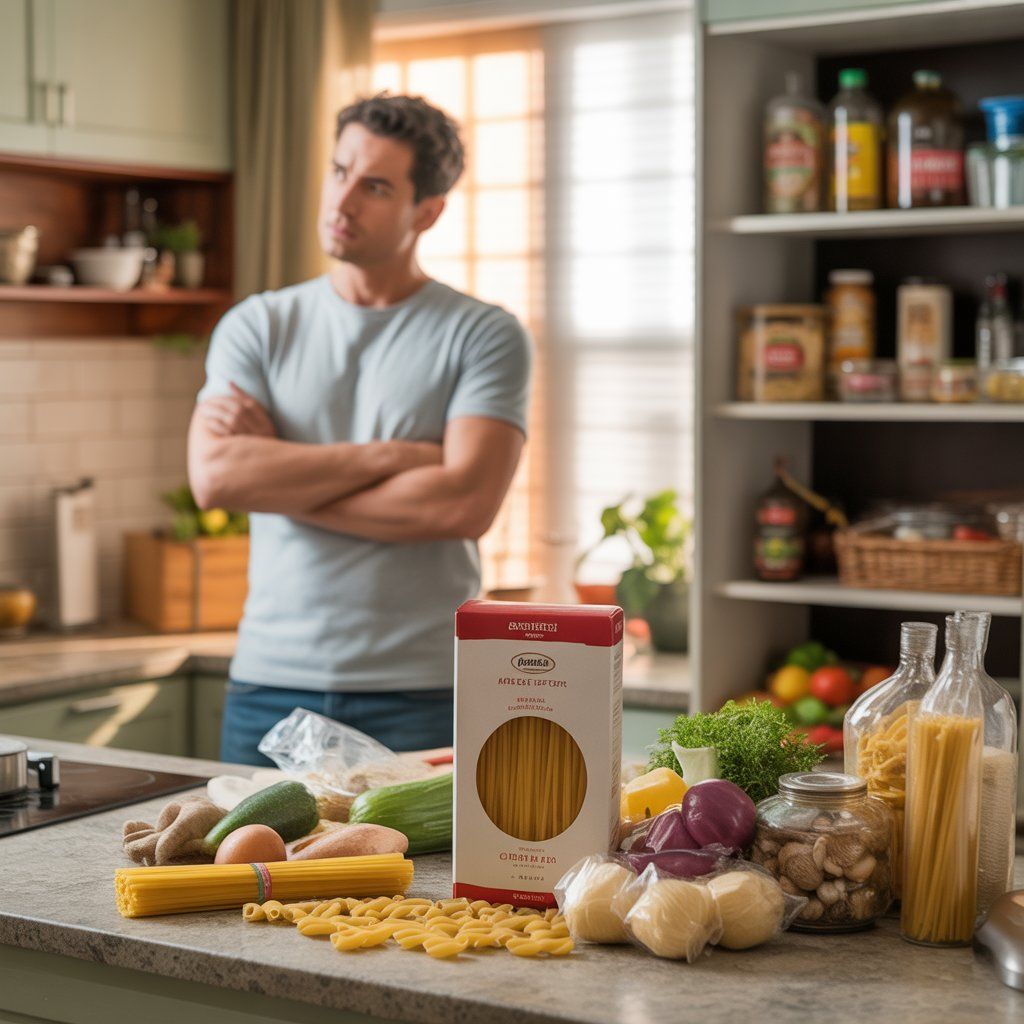
A couple who share cooking responsibilities faces an unexpected standoff over pasta shape. The boyfriend has long declared he hates Spaghetti-O’s—the canned, saucy childhood staple—and the partner respects that by never buying them. When grocery shopping, the partner picked up hoop-shaped Anelli pasta to make the boyfriend’s absolute favorite dish: homemade pasta bake.
As soon as he saw the small rings in the cupboard, he became upset, insisting the shape alone triggered his aversion and demanding a different variety. The partner explained it’s just plain dried pasta, identical in ingredients to every other shape he happily eats, but the boyfriend refused to budge. Now the partner wonders if it’s fair to call his reaction overblown.
‘AITA for not taking my boyfriend’s dislike of Spaghetti-O’s seriously?’
He’s always been clear about hating Spaghetti-O’s.
Anelli pasta seemed perfect for the dish—until it wasn’t.
He insisted the shape alone was a deal-breaker.
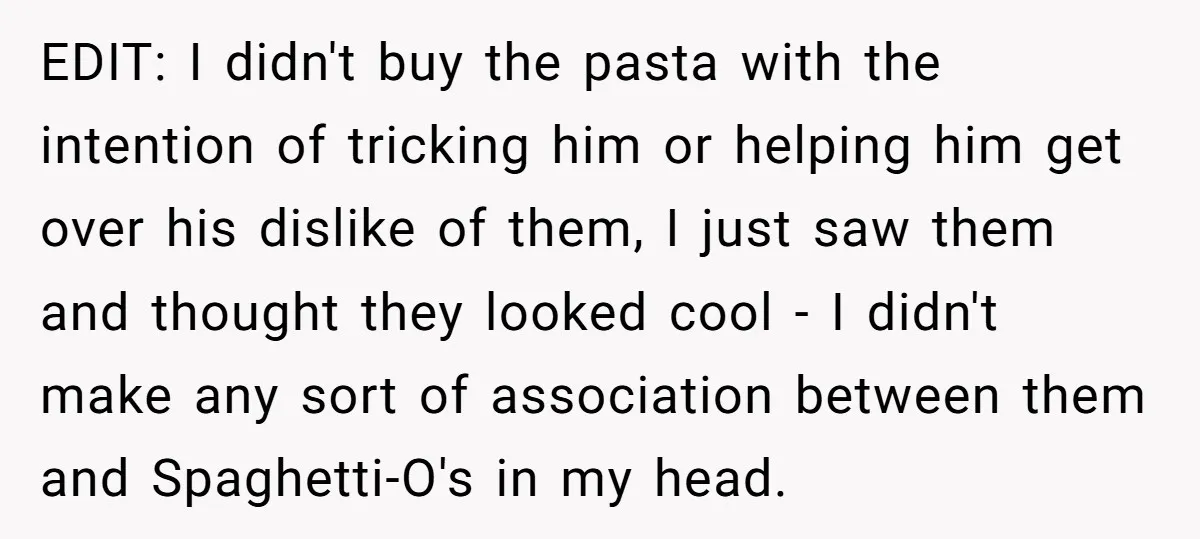
The core conflict here is miscommunication and mismatched expectations around specificity. The boyfriend has been clear about hating Spaghetti-O’s—the canned product with its distinctive sweet-tangy sauce and soft, overcooked rings. Most people would reasonably interpret that as disliking the prepared dish, not a blanket ban on hoop-shaped pasta. The partner’s choice of Anelli for a homemade bake using fresh ingredients aligns perfectly with dishes he already loves. Suggesting it might “help him get over” the aversion was insensitive and dismissive, even if unintentional.
Opposing views might argue that after five years together, the partner should have known the shape alone would trigger discomfort, especially given his fussiness. Food phobias deserve respect without needing justification. However, demanding an immediate replacement trip while refusing to eat otherwise identical pasta feels disproportionate.
Broader perspective: these small food battles often reveal bigger patterns—control, consideration, or unspoken resentments. Healthy compromise would mean acknowledging the aversion without ultimatums, perhaps agreeing on safe shapes in advance. Ultimately, neither person is fully wrong, but both could show more empathy: one for the depth of the dislike, the other for the reasonableness of assuming “Spaghetti-O’s” meant the canned version.
Check out how the community responded:
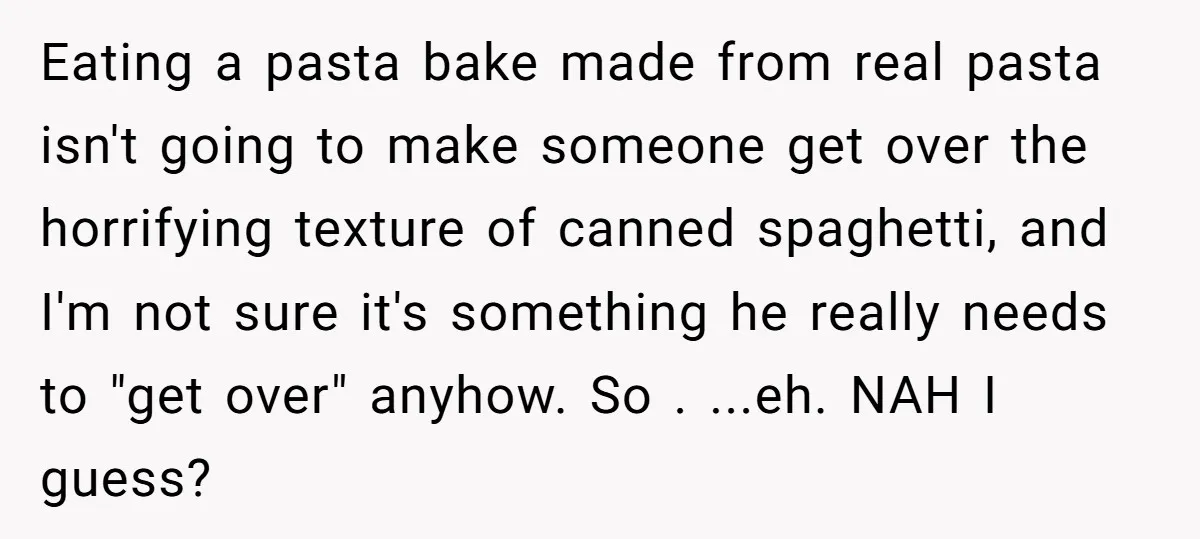
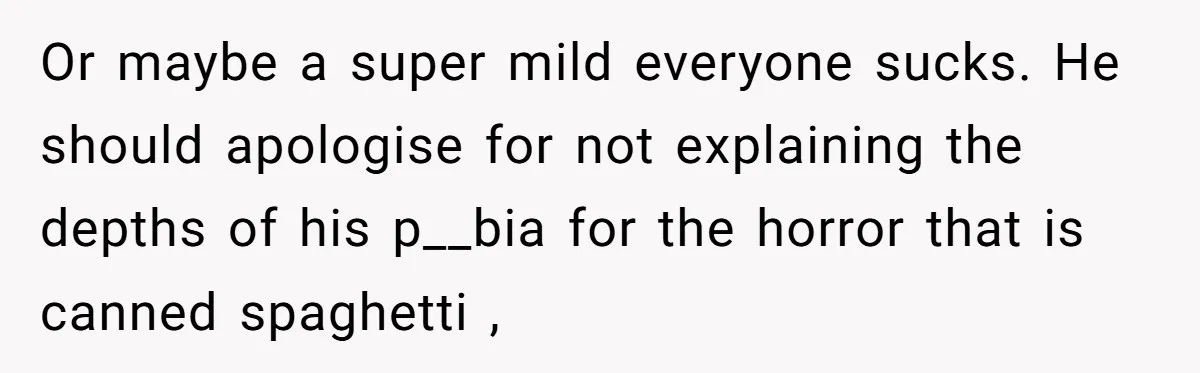
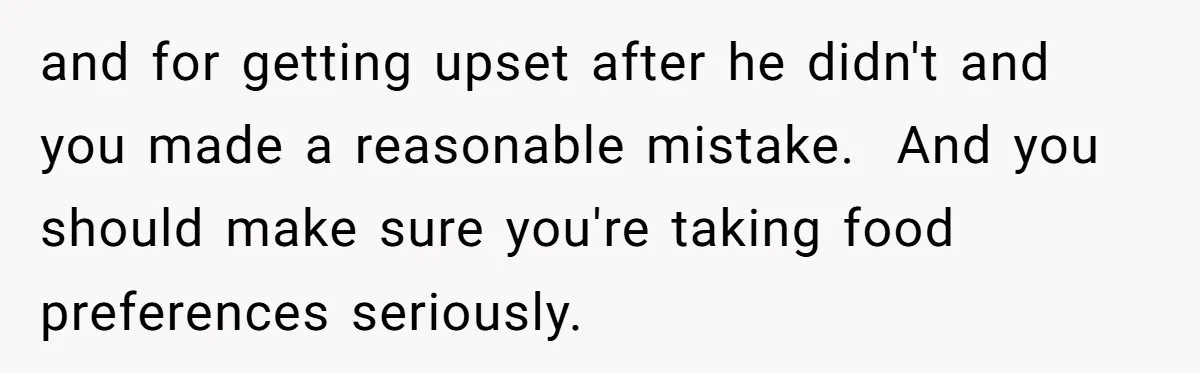
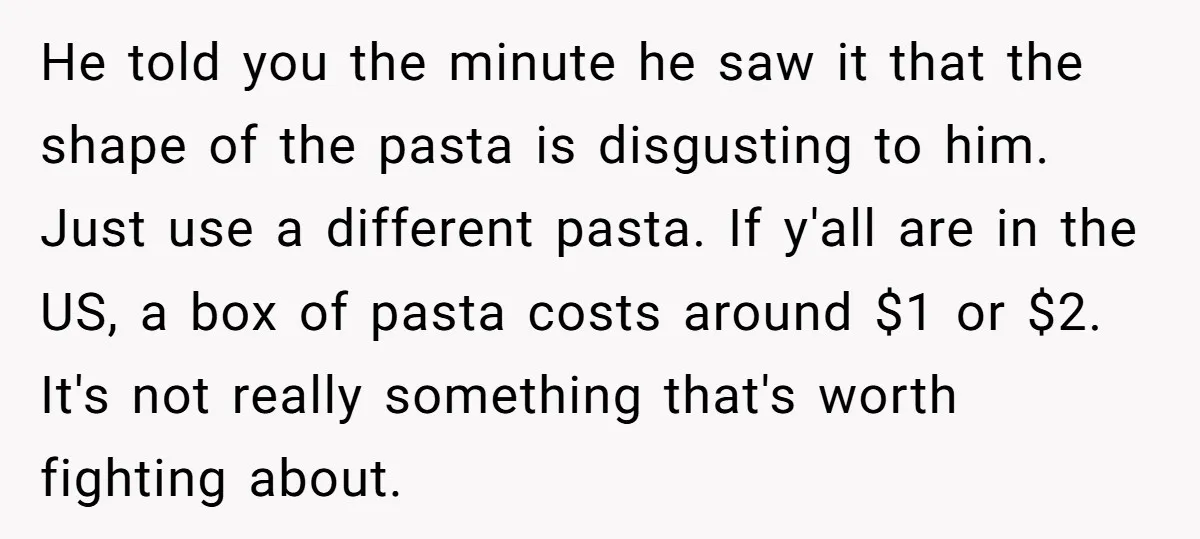
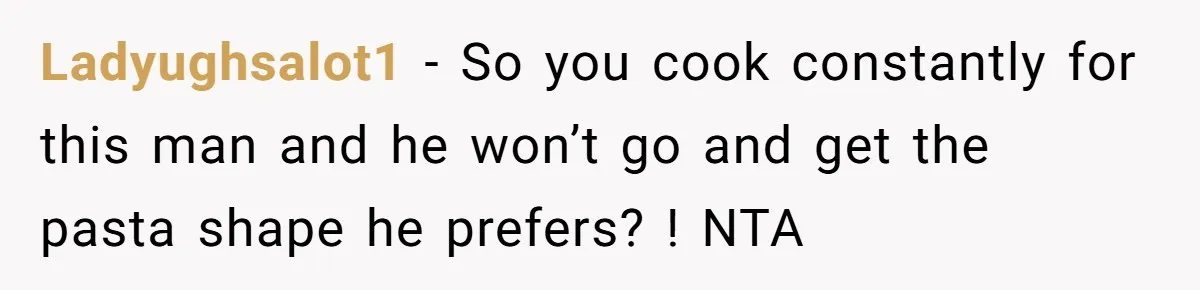
Most readers side with the partner, calling the boyfriend’s reaction unreasonable and overly specific.
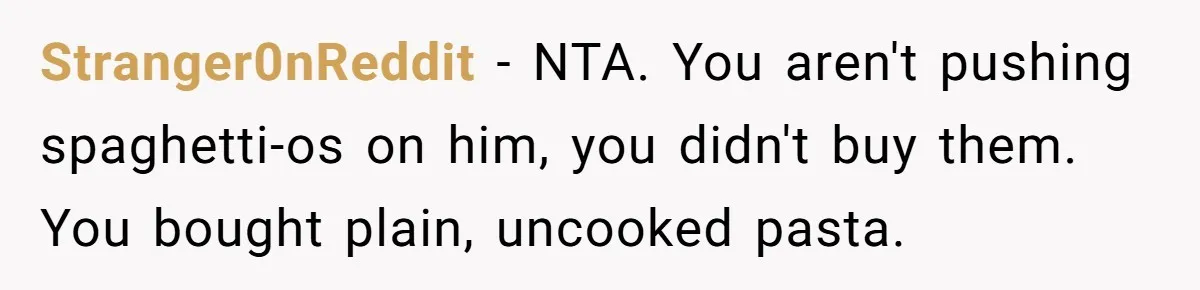
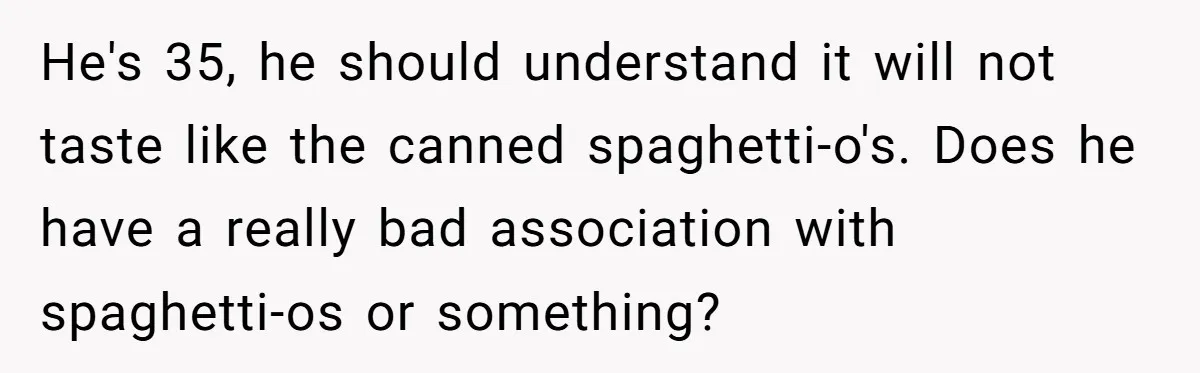
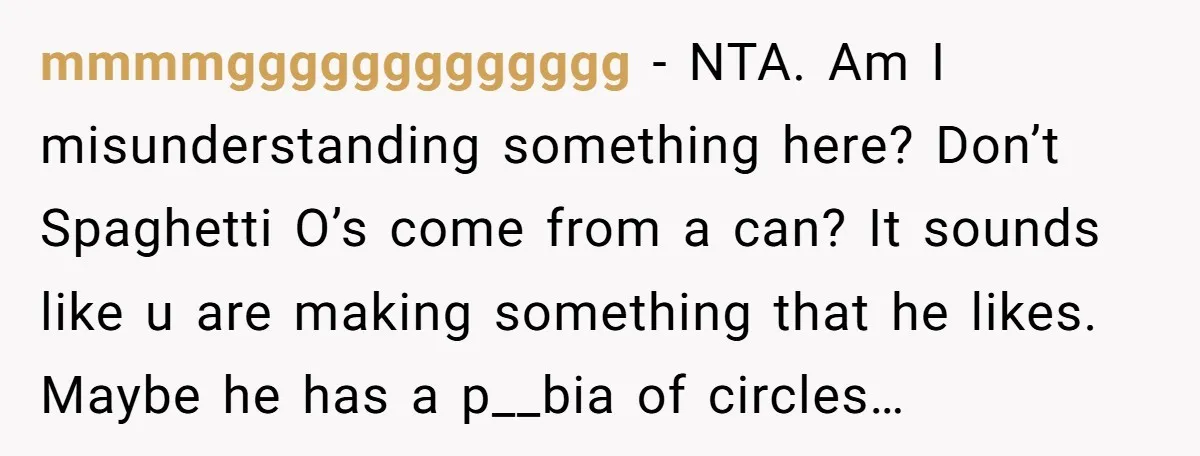
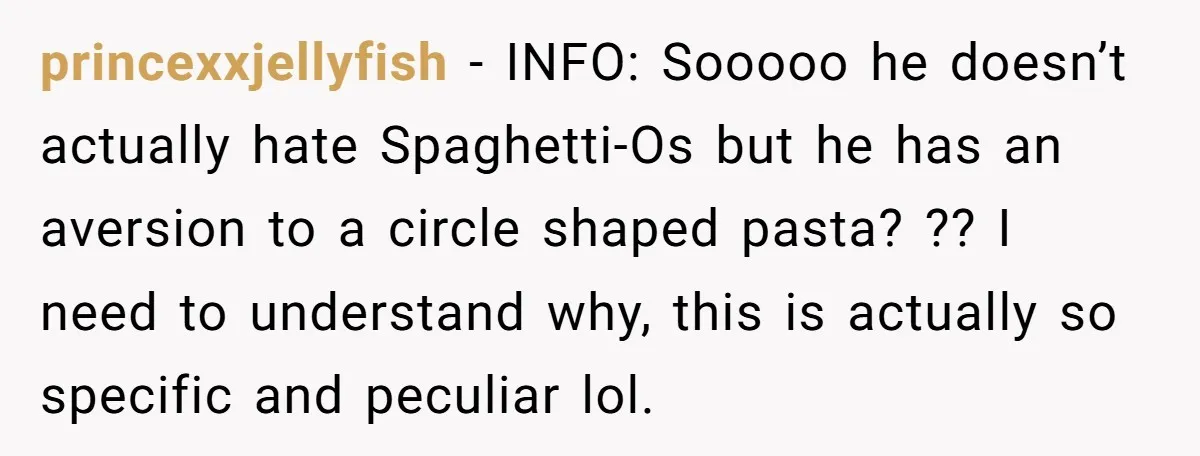
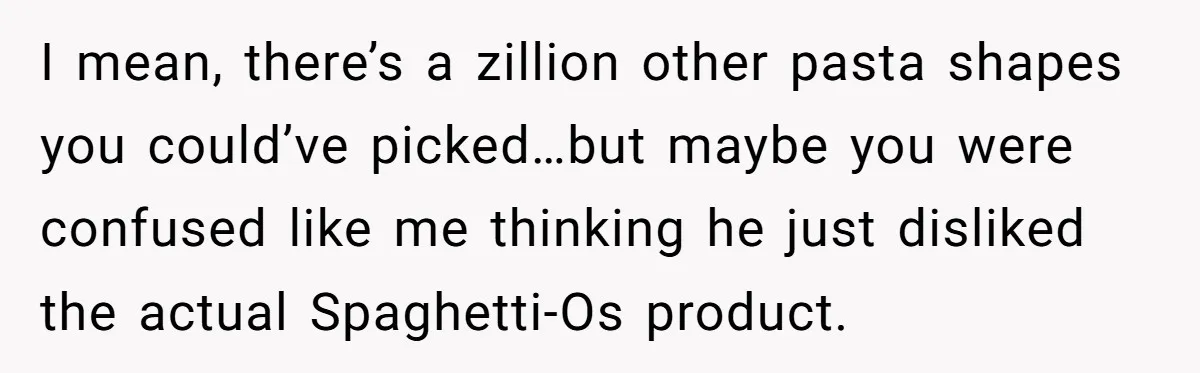
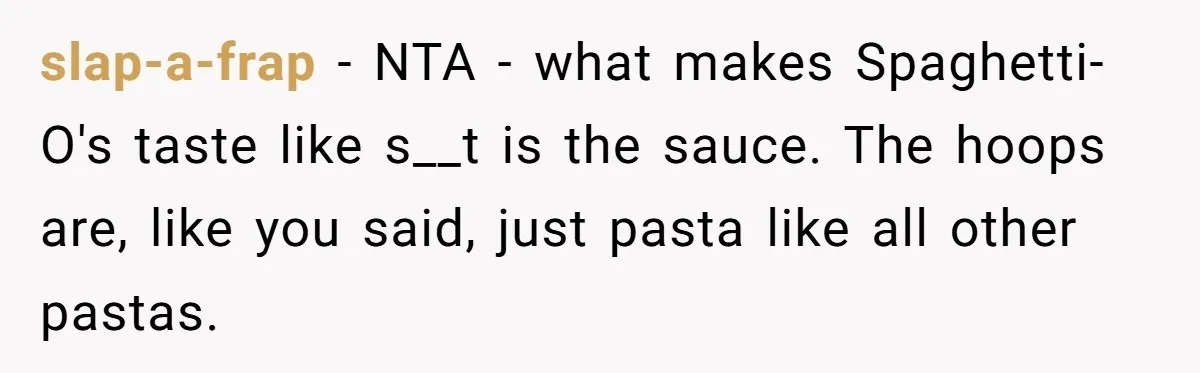
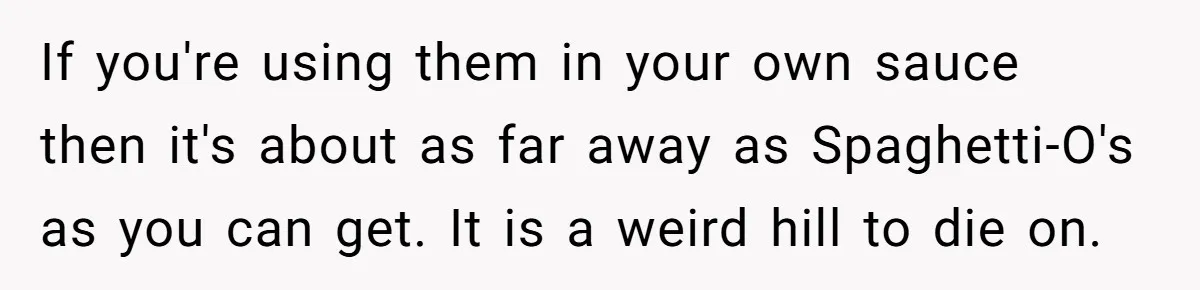
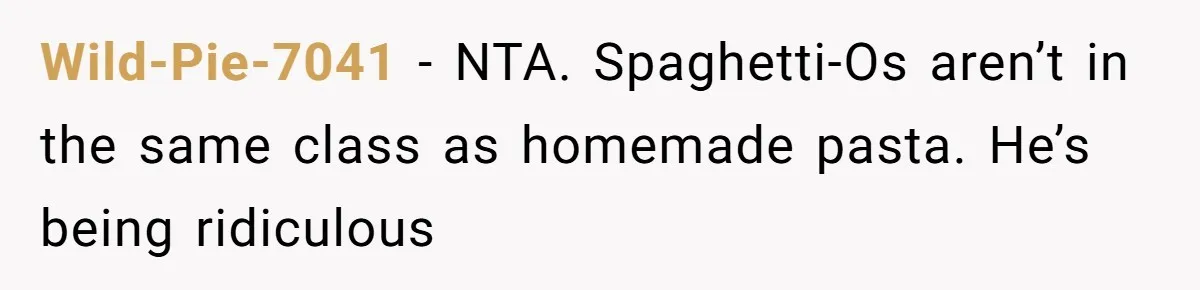
Several users seek more context on the aversion while still leaning toward NTA.
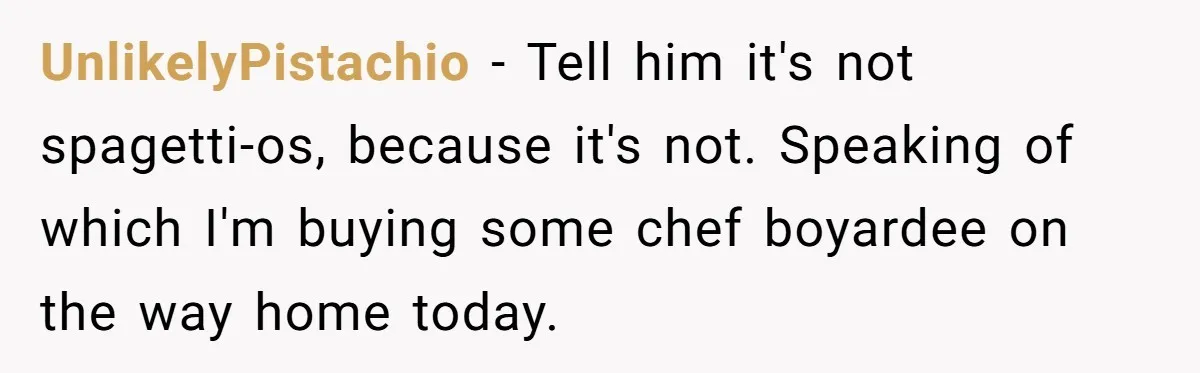
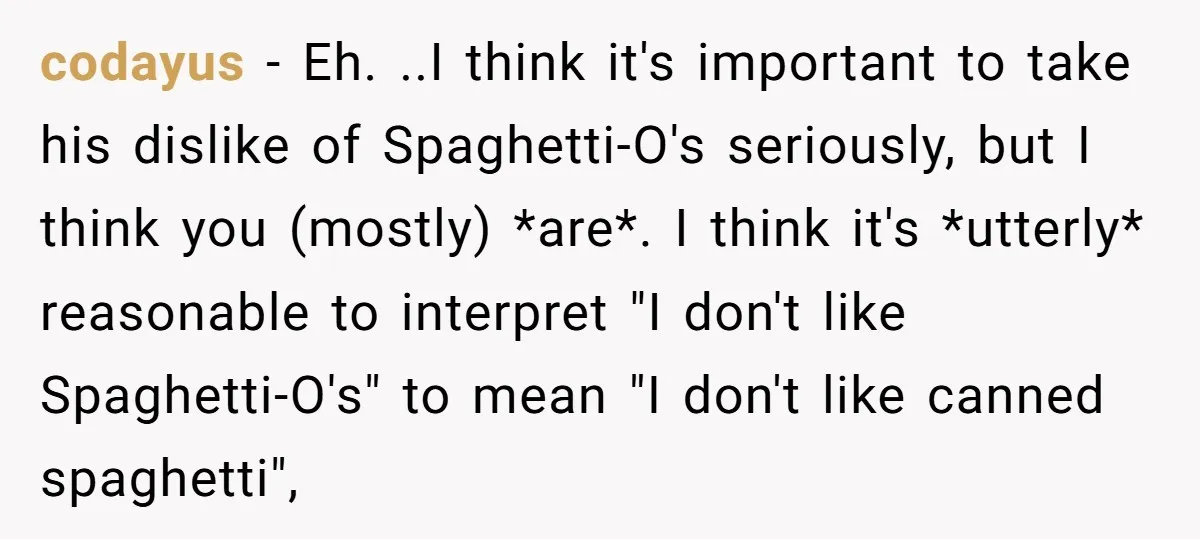
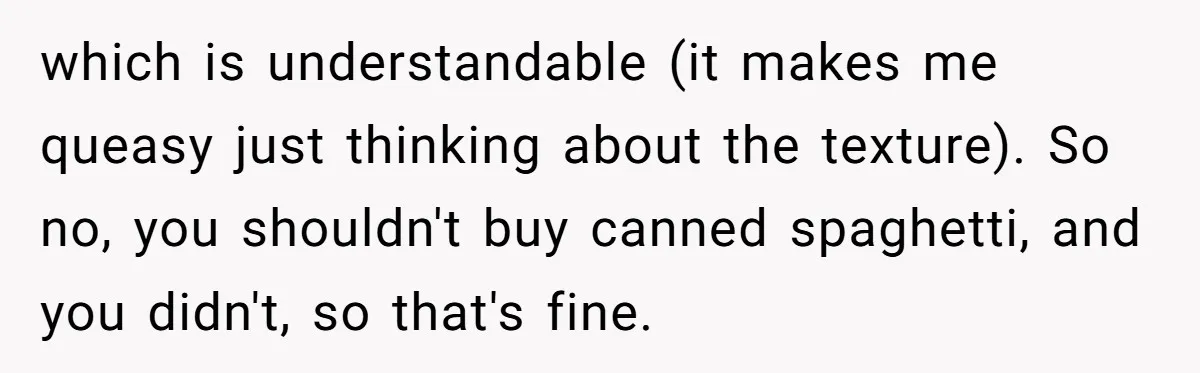
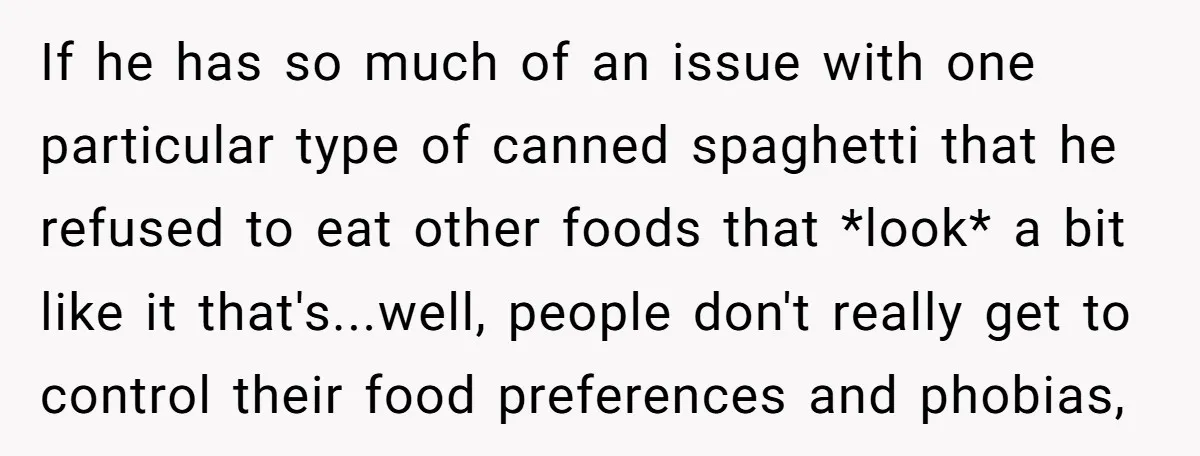
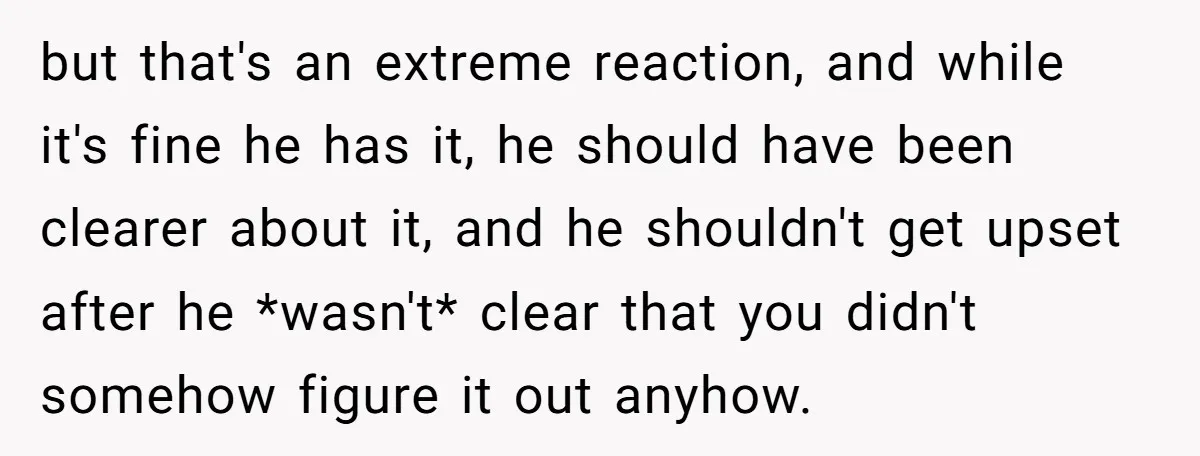
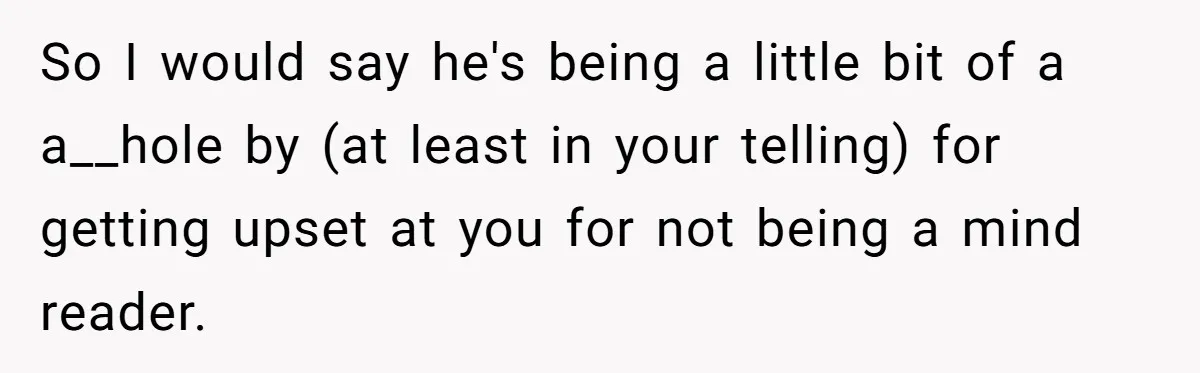
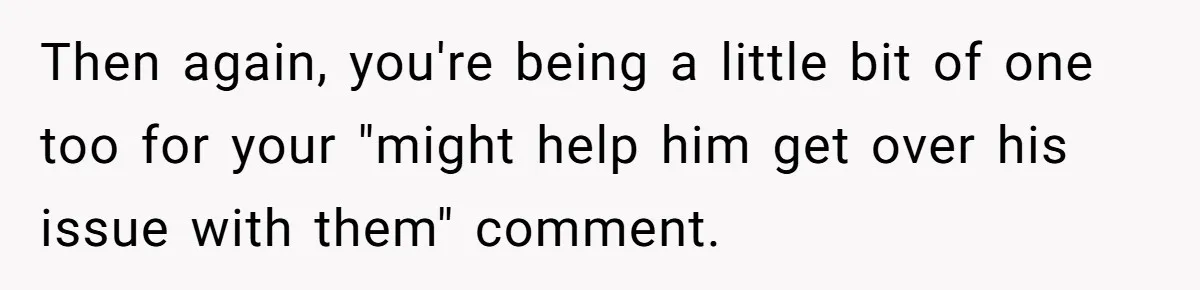
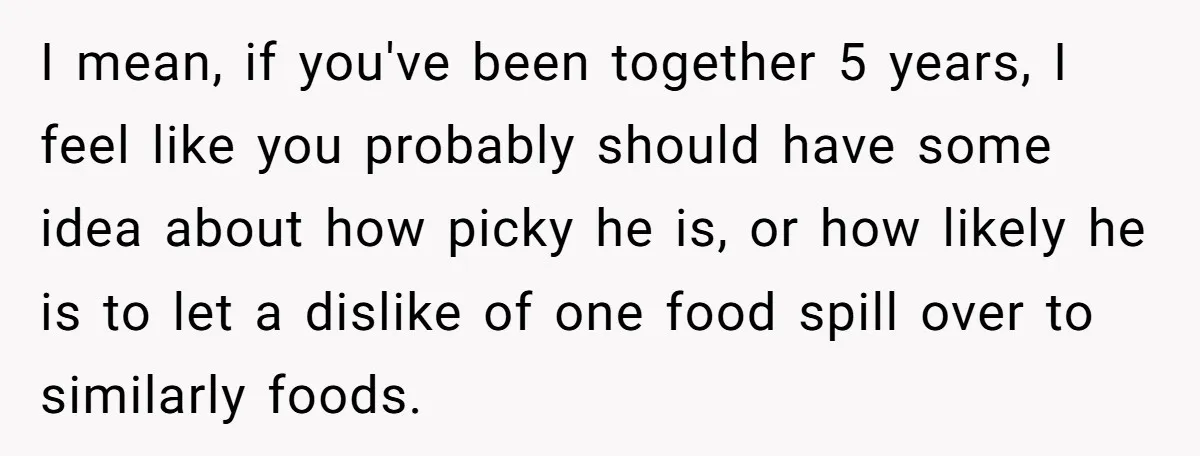
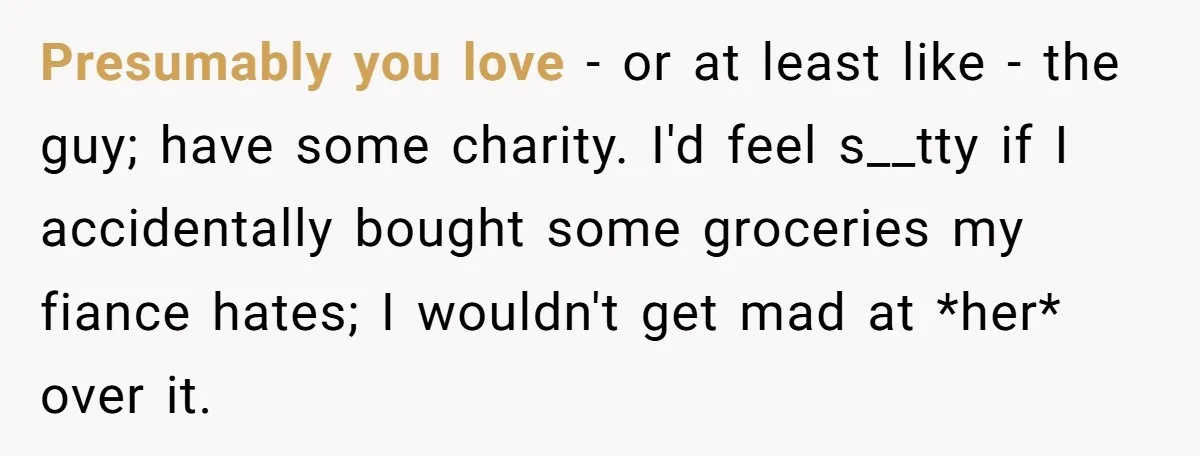

A few comments emphasize respect for preferences without judgment.
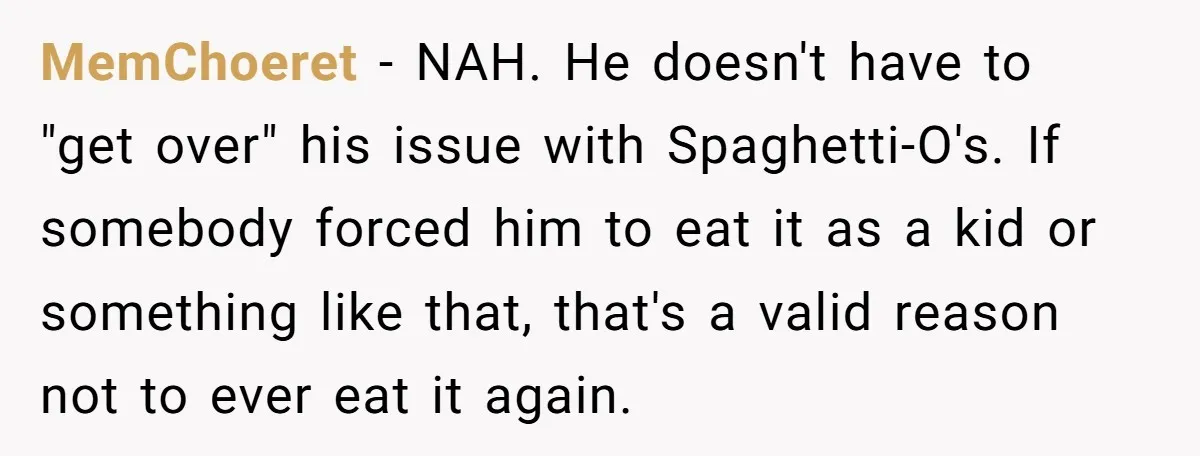
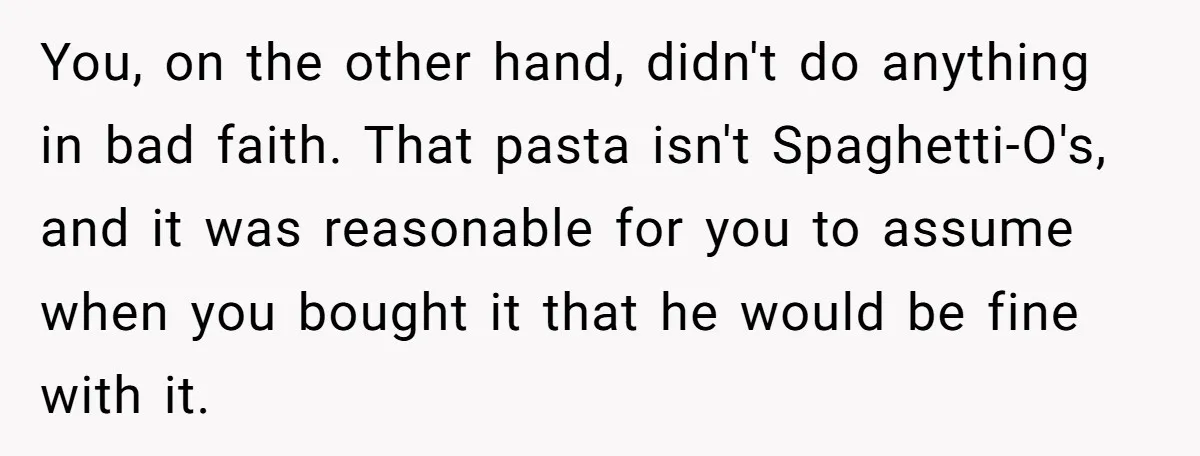
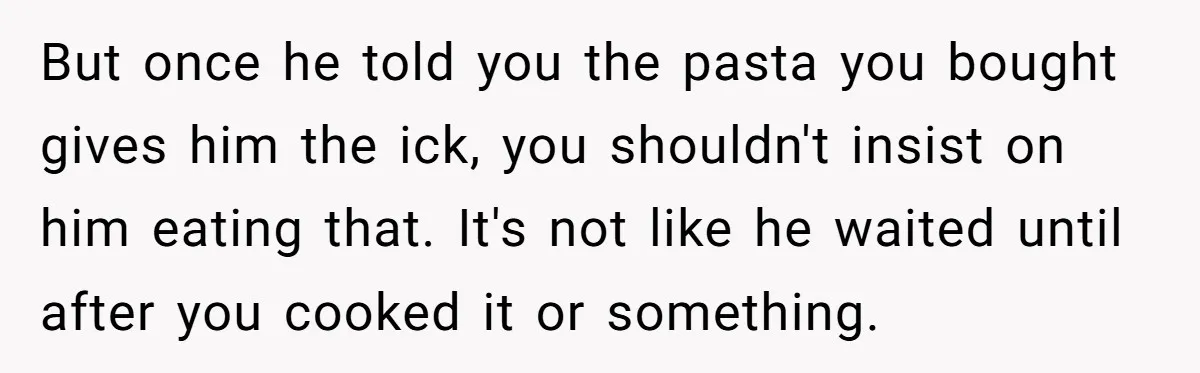
This seemingly trivial pasta disagreement highlights how deeply personal food aversions can run—and how easily misunderstandings arise when one person’s “no” is interpreted more narrowly than intended. Most agree the partner did nothing wrong by choosing a shape that matched the dish, while the boyfriend’s strong reaction to mere appearance feels outsized. The real key seems to be clearer communication about the exact nature of the dislike.
Have you ever had a partner with a very specific food aversion or phobia? How do you navigate grocery choices and cooking when one person’s “no” applies to something broader than expected? Is it fair to ask someone to avoid an ingredient purely based on visual similarity?