
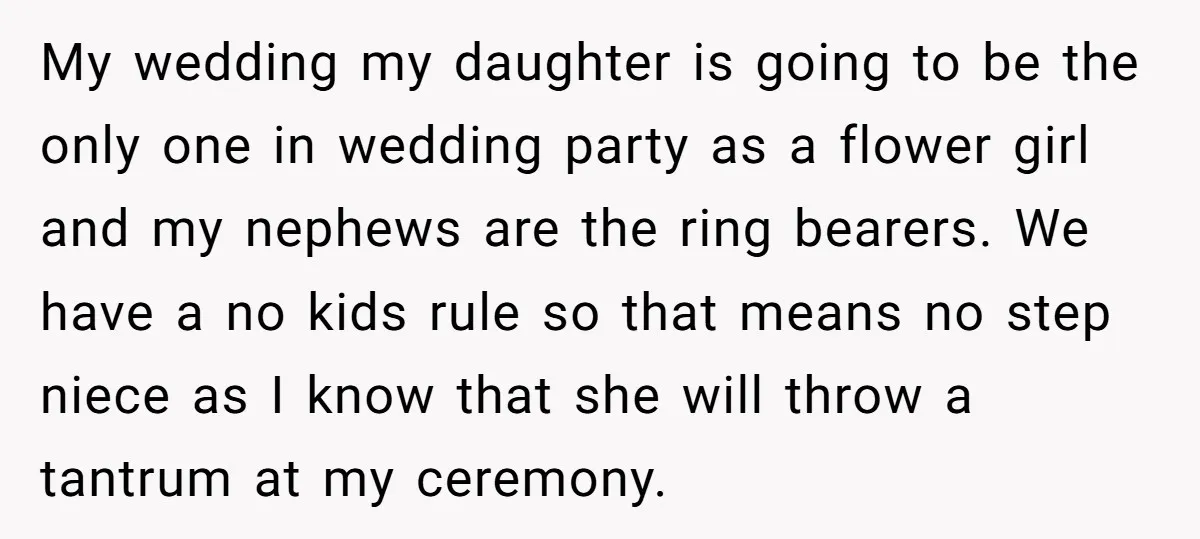
A woman preparing for her destination wedding never expected the biggest challenge to come from her own family. She had already made careful plans: her daughter would be the sole flower girl, and her nephews, whom she once raised for years, would proudly serve as ring bearers. It felt meaningful, intimate, and fair to her.
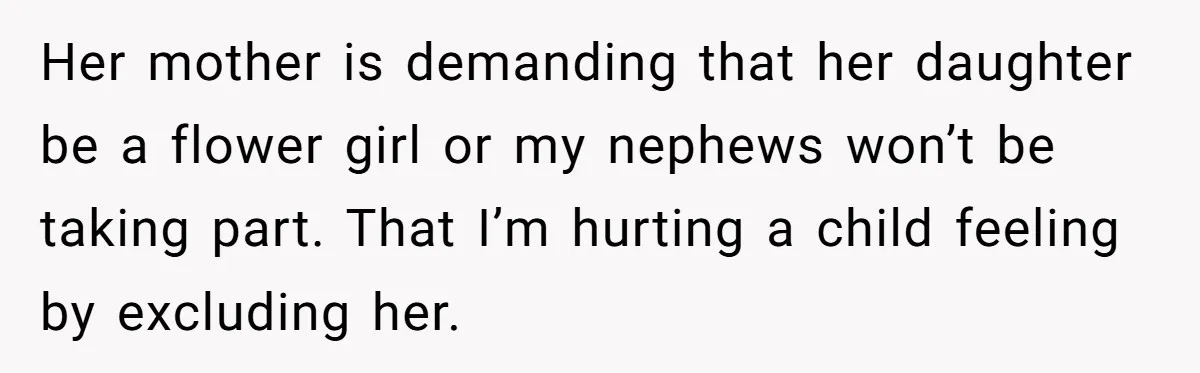
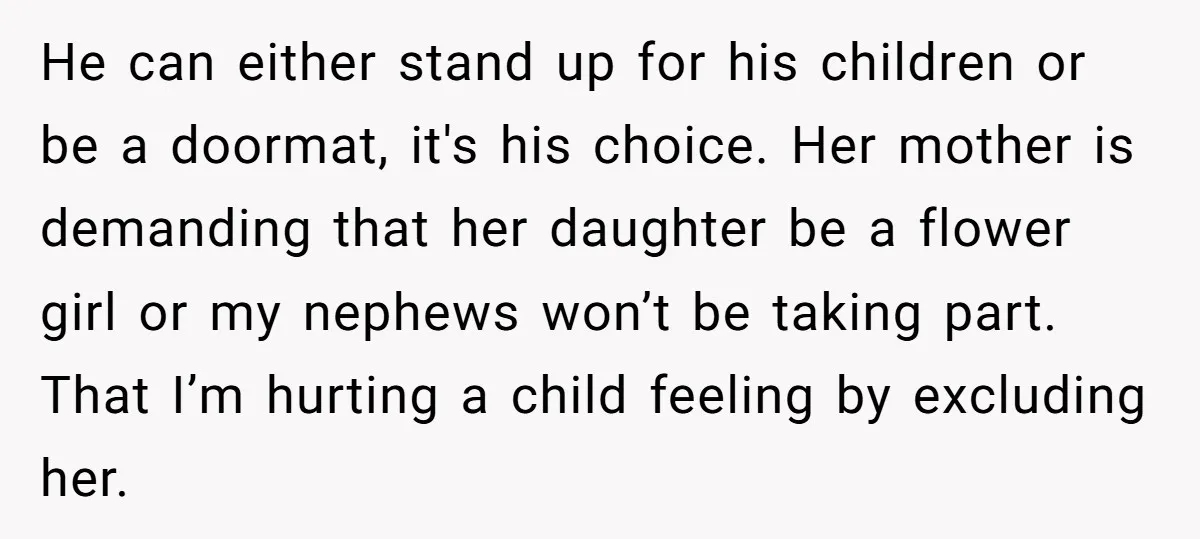
Beyond that, a single demand turned everything tense. Her brother’s wife insisted that her daughter be included as a flower girl too, despite a long history of disruptive behavior. What followed was an emotional standoff involving ultimatums, guilt, and the painful possibility of the nephews being pulled from the ceremony altogether. As the debate spread across social media, readers quickly took sides, many questioning how much compromise is too much when it comes to a wedding day.


Things started years earlier, rooted in responsibility and sacrifice that shaped OP’s family bonds.
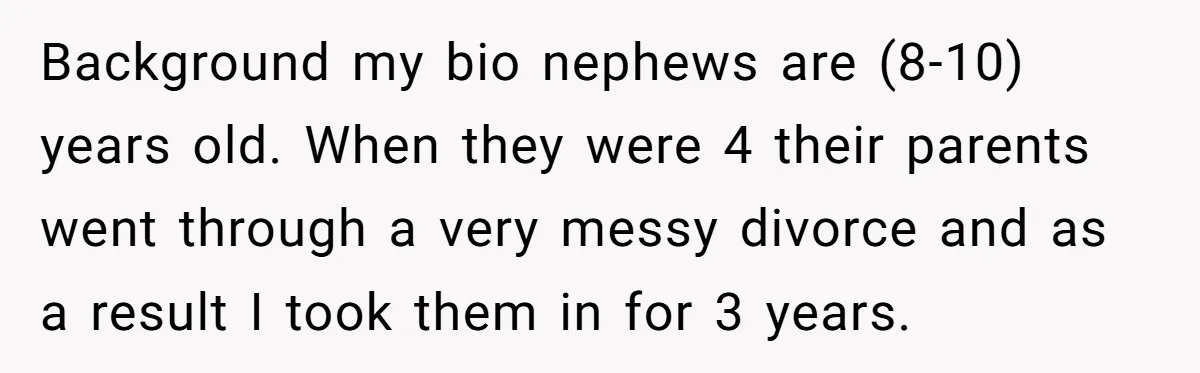
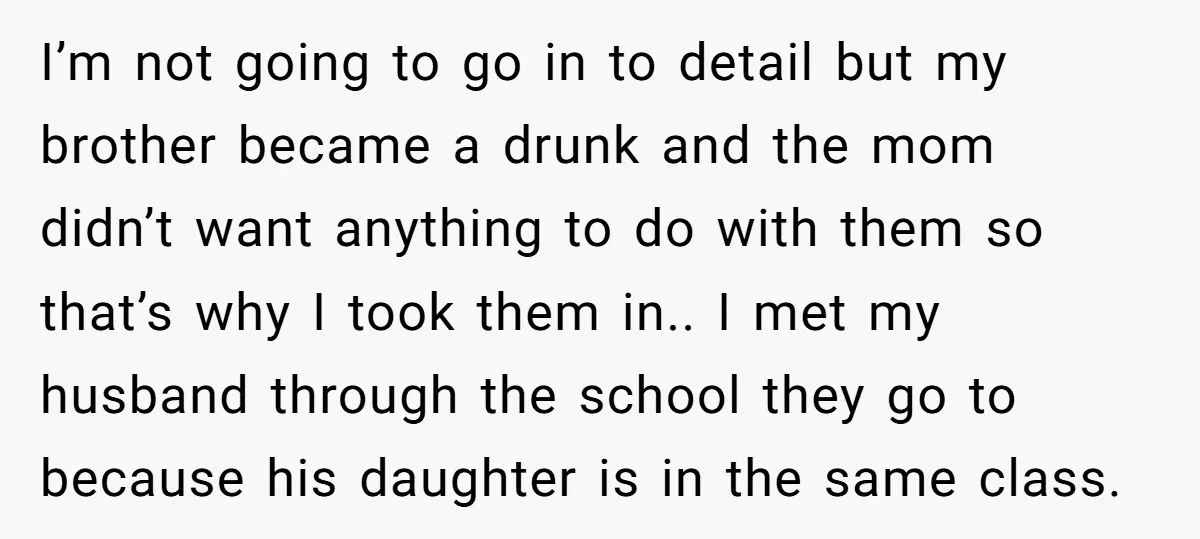
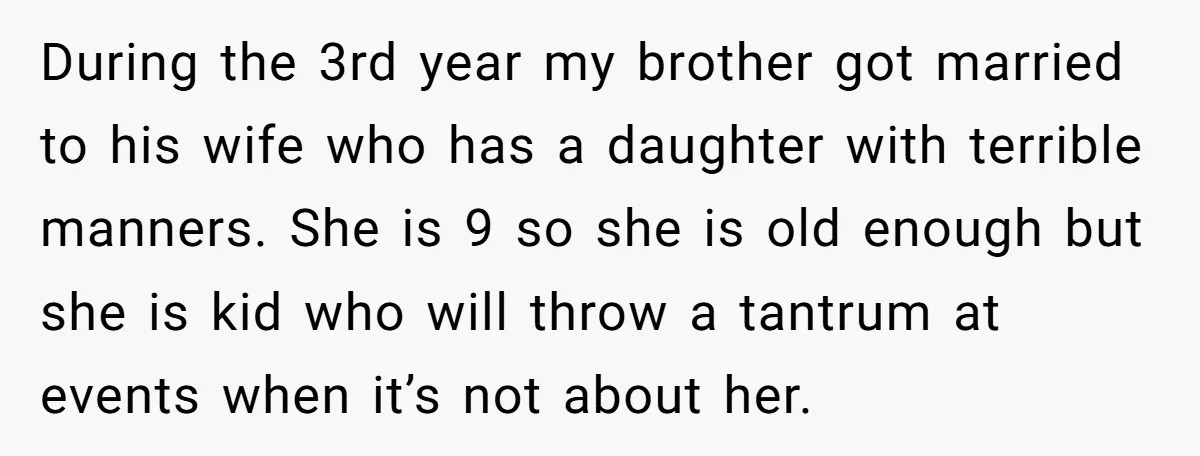
As the family dynamic shifted, new tensions quietly began to build around boundaries and behavior.

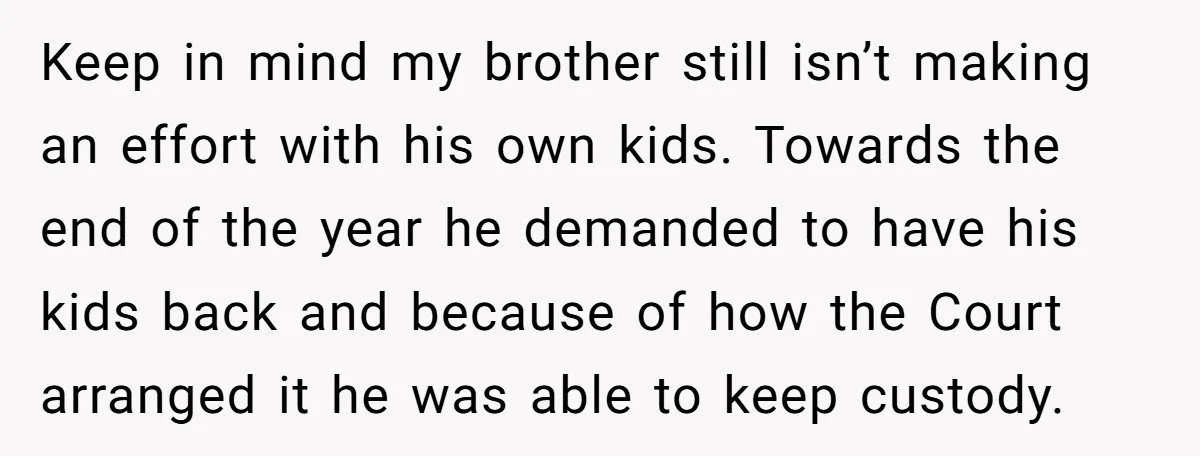
Custody changes didn’t lessen OP’s emotional involvement, even as relationships grew colder.


Wedding plans finally brought everything to a head, forcing OP to choose between peace and principle.
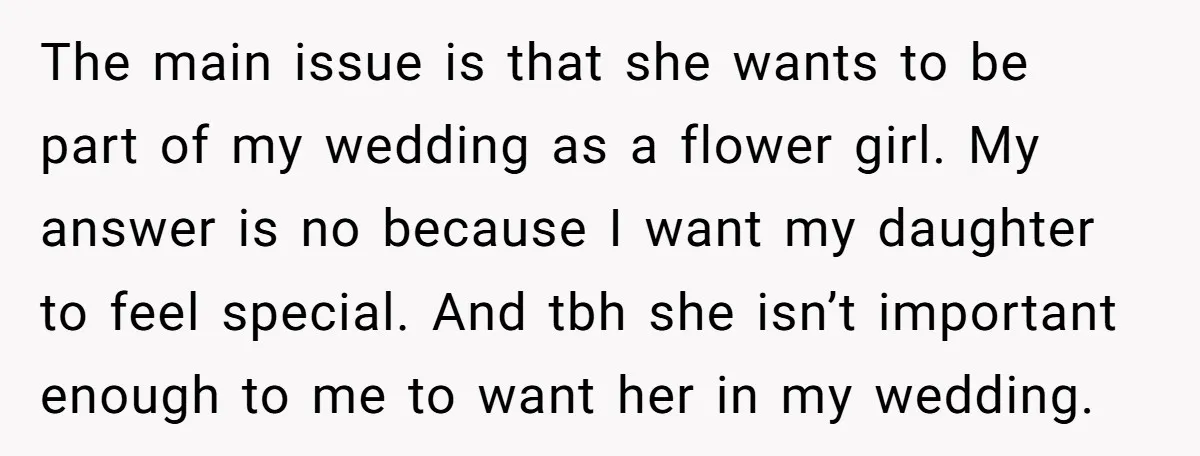
The disagreement escalated into threats, money, and emotional pressure from all sides.


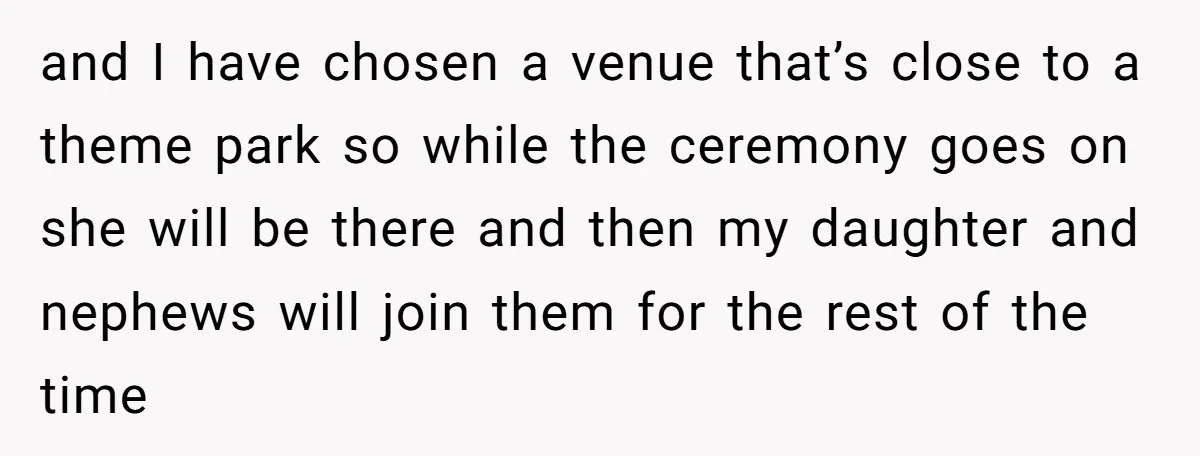
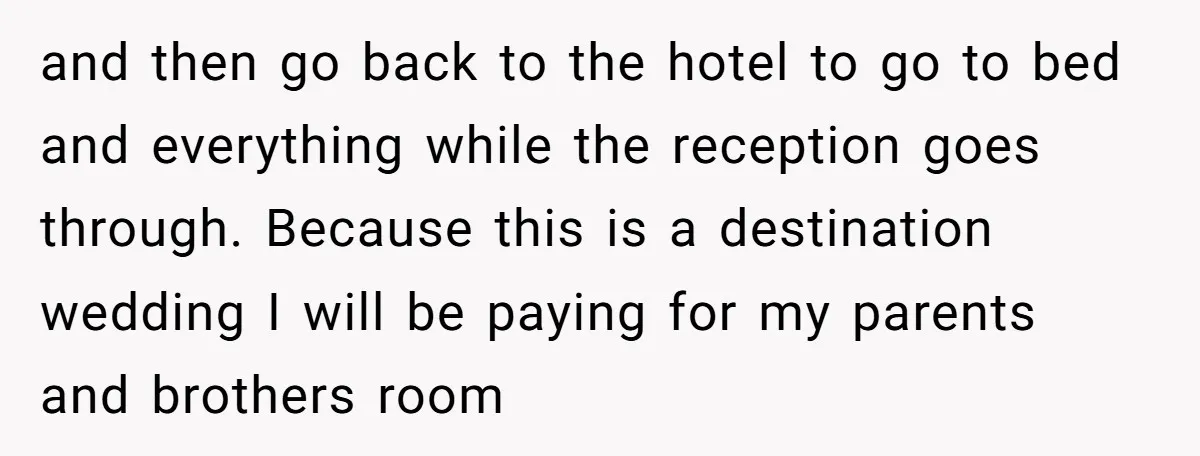
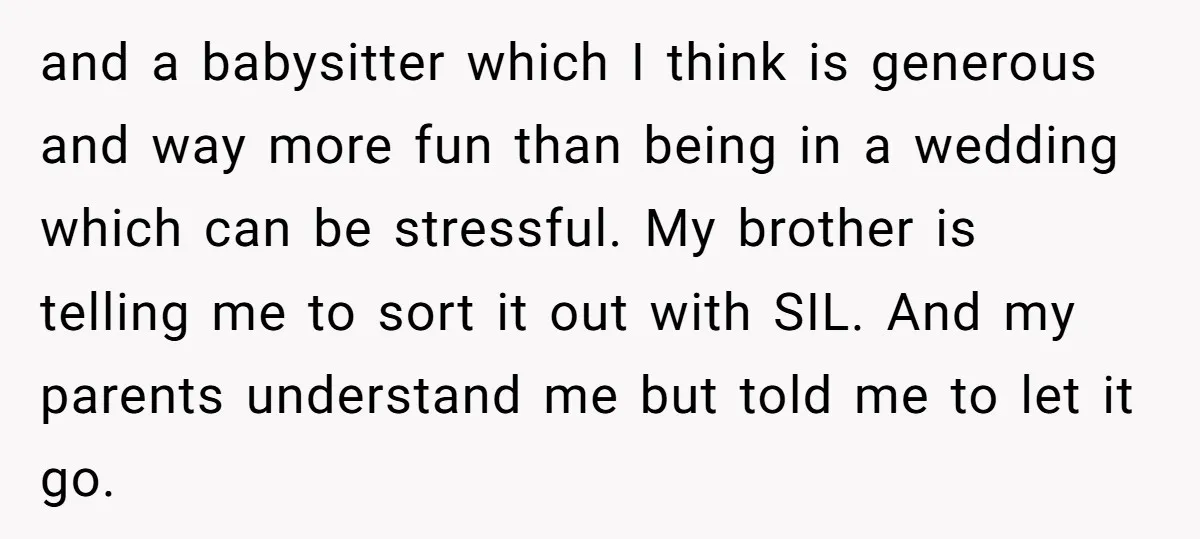
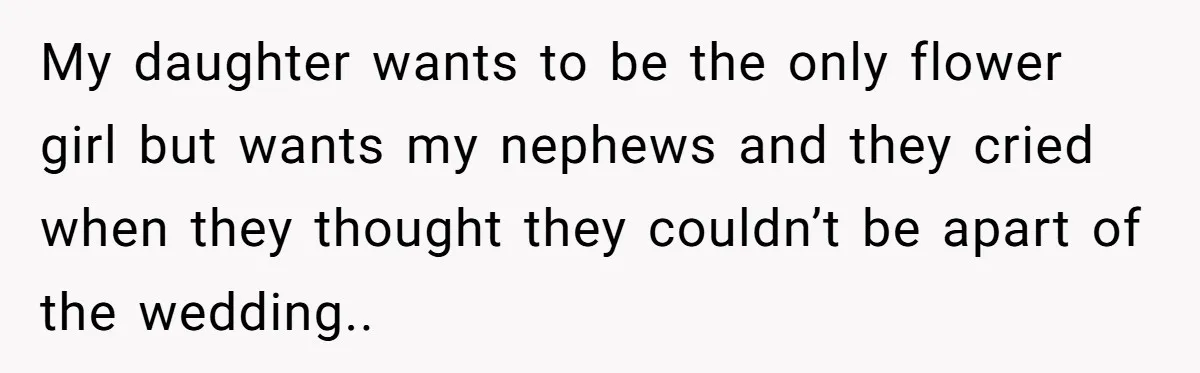



From a relational standpoint, this situation blends unresolved family trauma with the emotional weight of a major life event. The bride isn’t reacting to a single disagreement, but to years of caretaking, disappointment, and watching her nephews navigate instability. Wanting them included is less about aesthetics and more about honoring a bond that formed during a difficult chapter.
Looking at the brother and sister-in-law’s side, the demand appears driven by perceived fairness rather than context. In blended families, adults sometimes push for symbolic equality without acknowledging history. The stepdaughter’s behavior history and lack of emotional connection to the bride complicate that expectation, especially during a ceremony meant to feel personal.
Relationship expert Dr. John Gottman from The Gottman Institute once noted, “Conflict is not what harms relationships; it’s how conflict is handled that matters most.” In this case, ultimatums escalate tension rather than encouraging understanding. When children become leverage, the emotional cost often lands on them first.
A healthier approach would involve the brother stepping up as the mediator, acknowledging the bride’s boundaries, and protecting his sons from adult power struggles. Clear communication, firm limits, and separating financial support from emotional coercion could help reduce long-term damage. Weddings last a day, but the emotional aftermath of how this is handled could shape family relationships for years.
See what others had to share with OP:
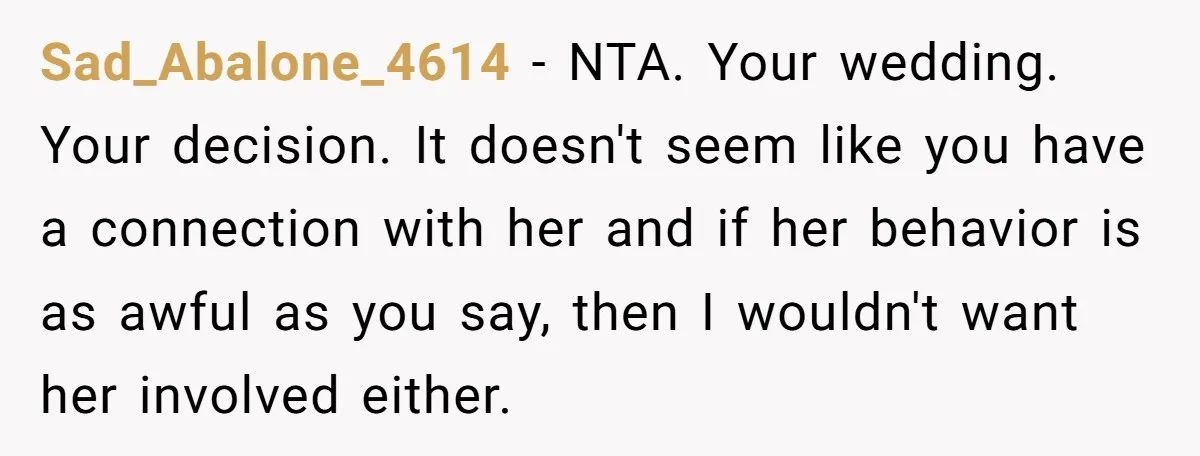
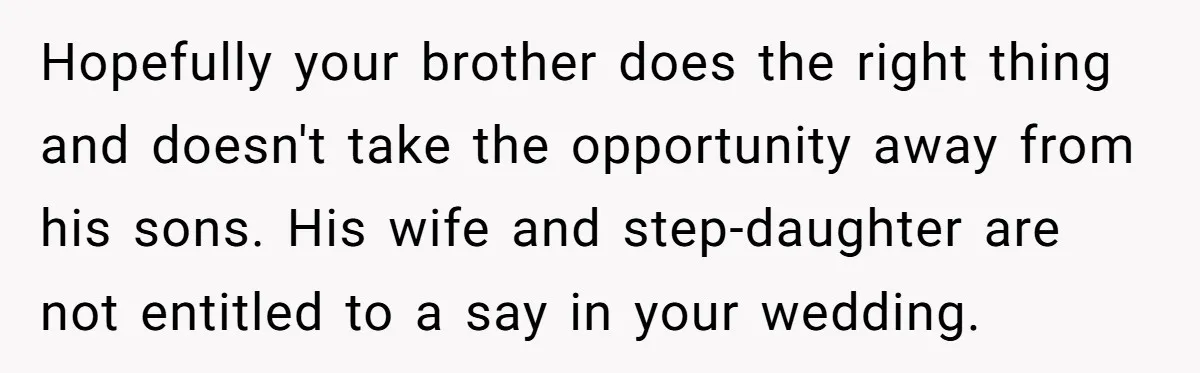
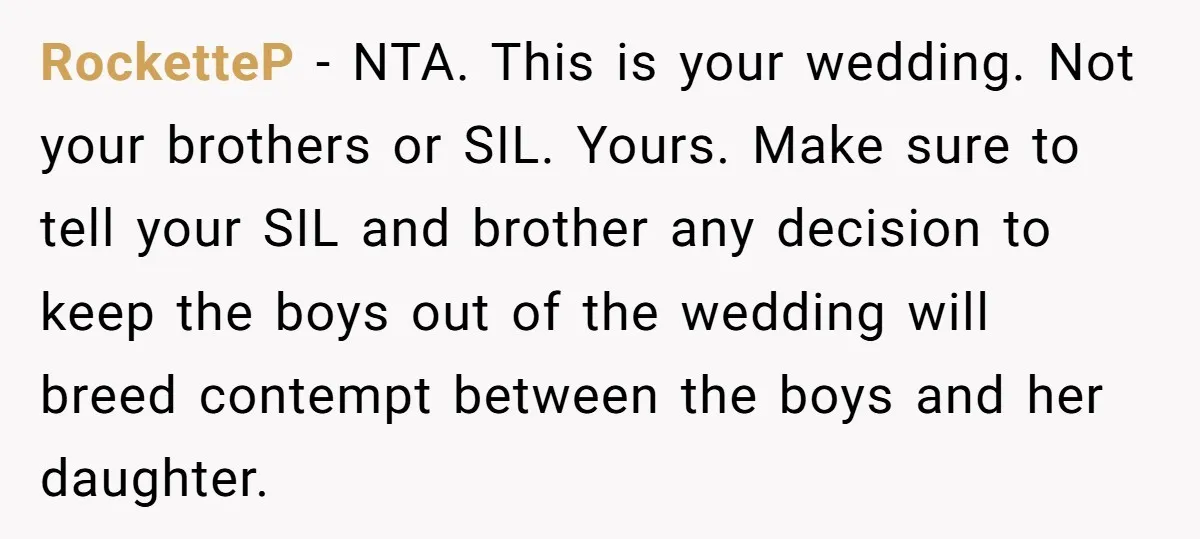
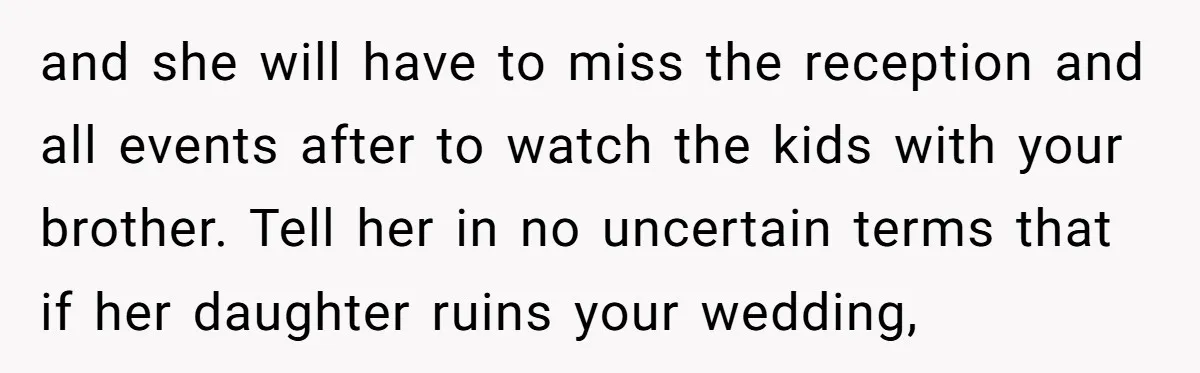
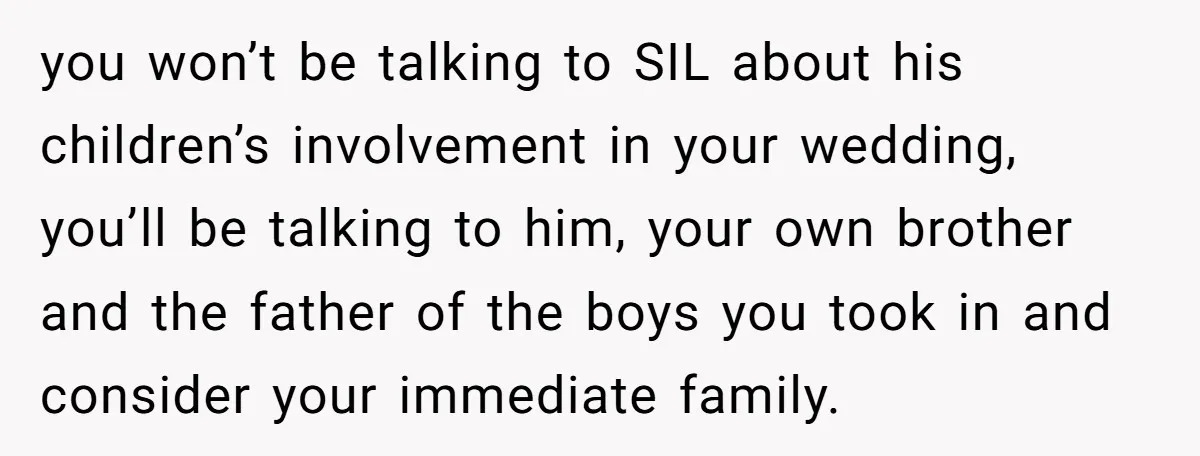
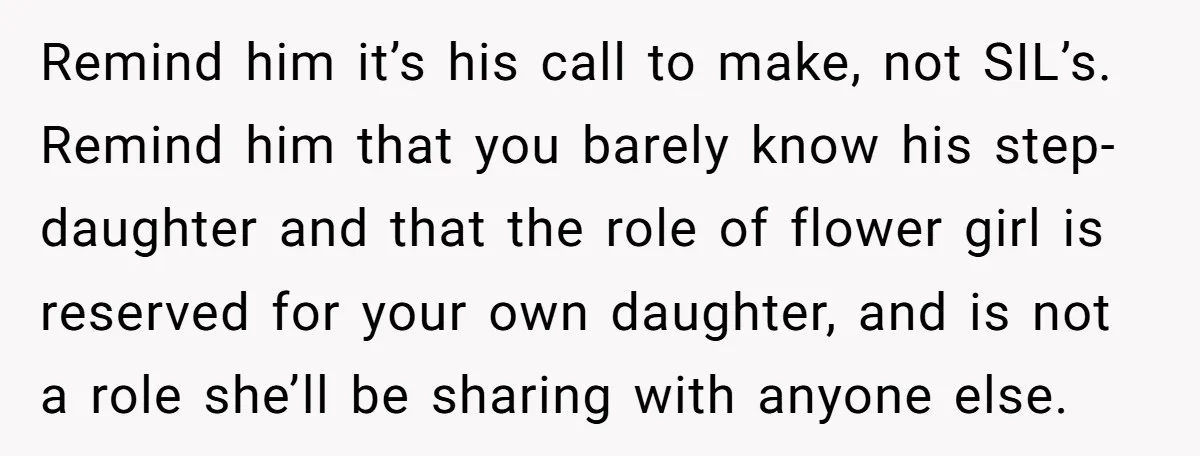
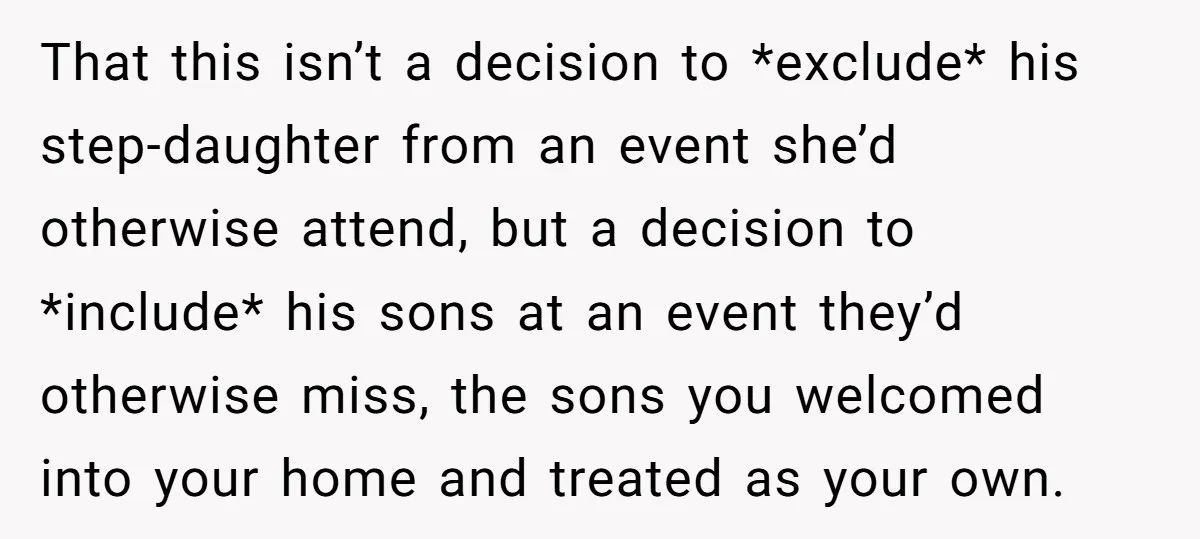
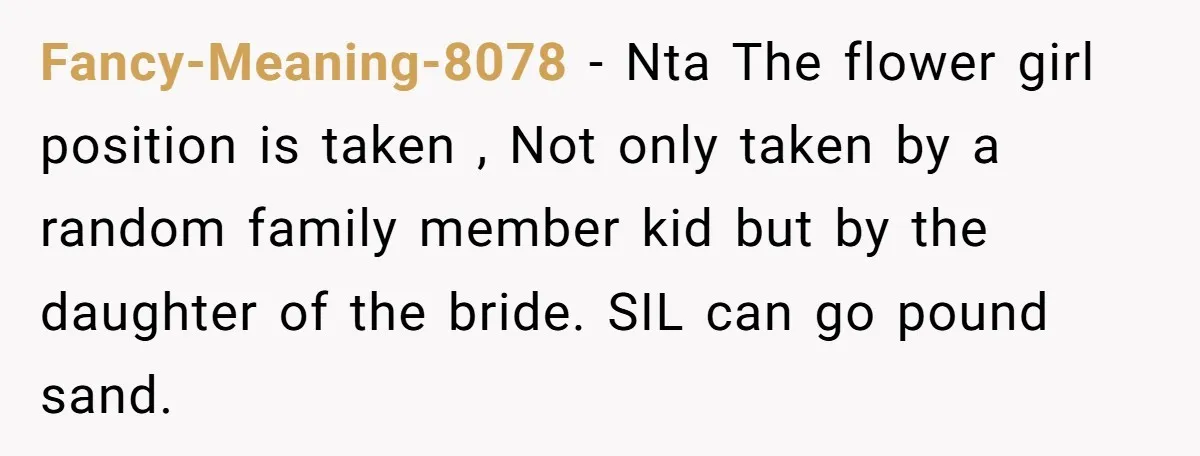
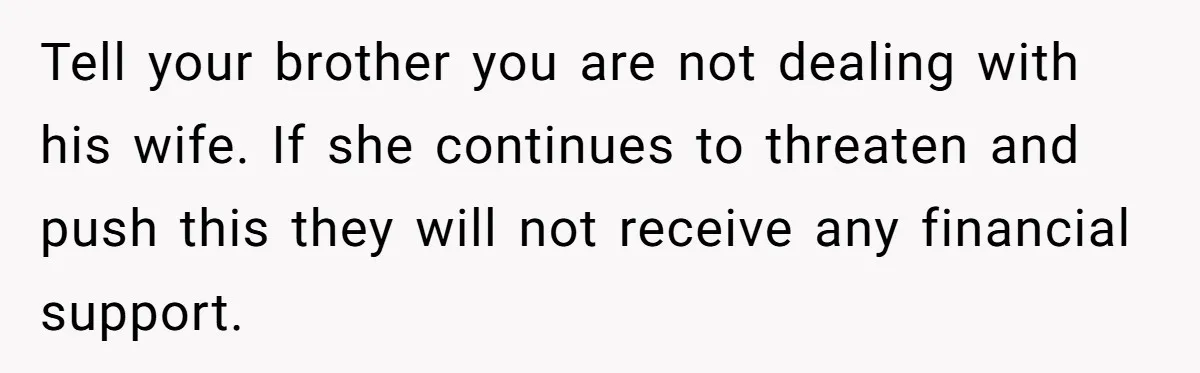
Many users supported the bride, praising her for protecting her children and nephews.
![[Reddit User] − NTA Your brother needs some spray starch for his spine and you have made it clear your "sister in law" isn't going to strong arm her child's...](https://loknam.com/aita/images/f8ae5bf16a/wp-editor-1770709082197-1.webp)






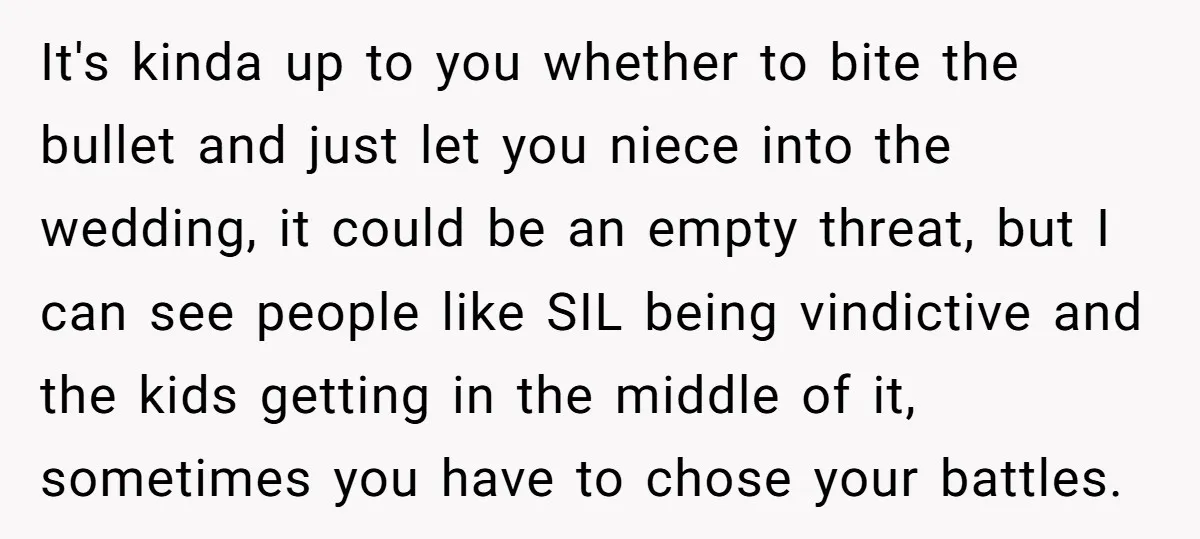
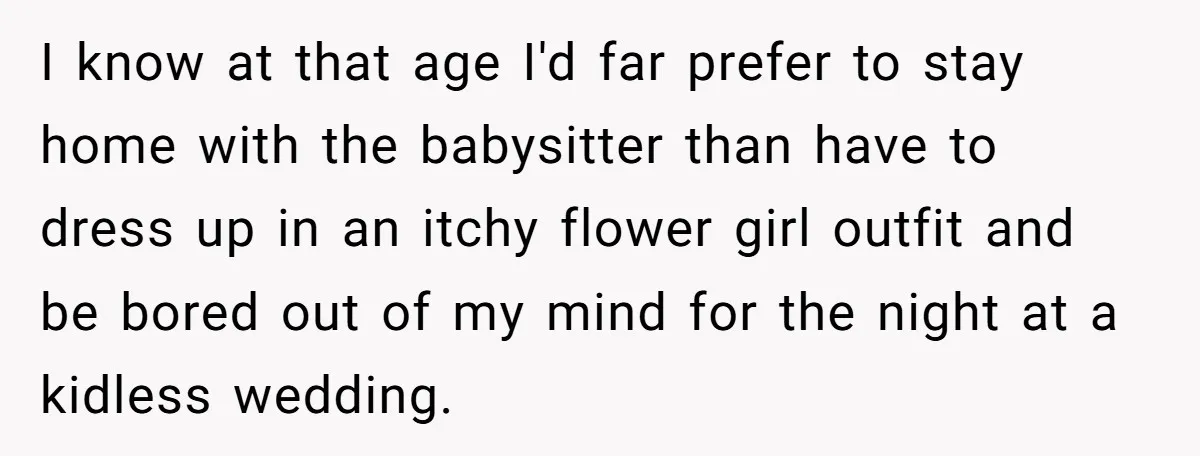
Others offered more measured takes, urging caution and long-term thinking.








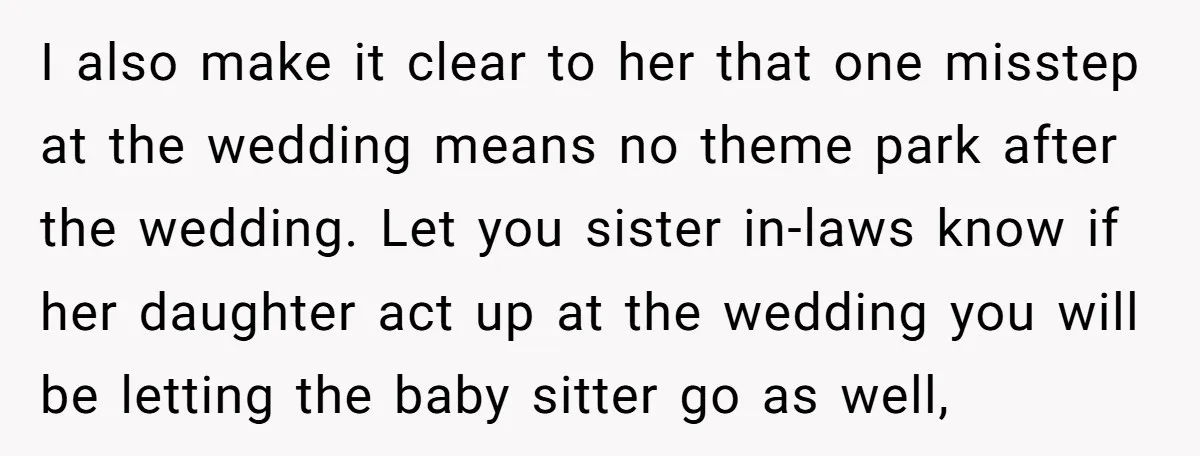






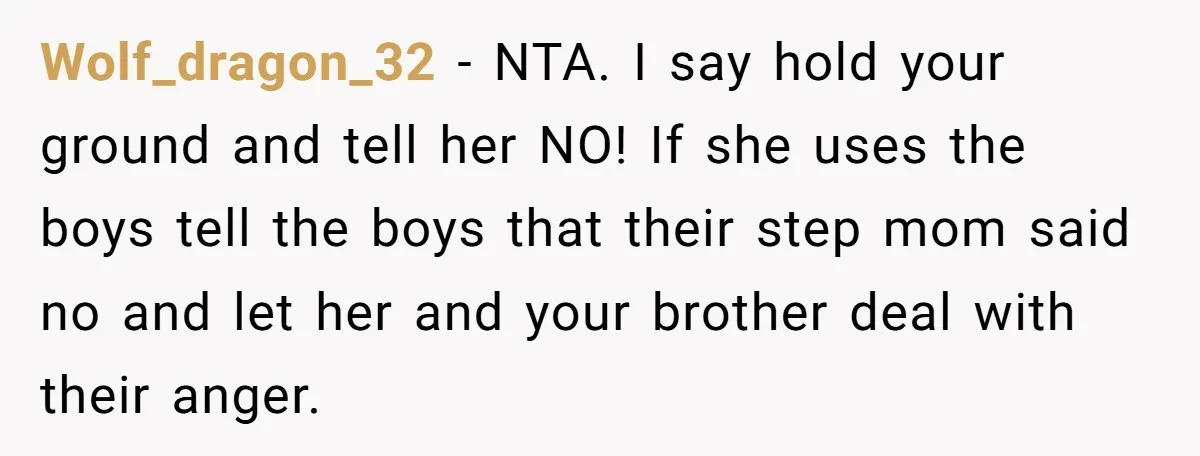
A few comments leaned into dark humor to lighten the mood.
![[Reddit User] − NTA. Cut them off no matter what happens. I have 0 doubt in my mind your money is going to niece.](https://loknam.com/aita/images/f8ae5bf16a/wp-editor-1770709027400-1.webp)






This story highlights how weddings can expose deeper family fractures, especially in blended families with unresolved history. The bride’s desire to protect her daughter and nephews clashes with her brother’s unwillingness to set boundaries at home. While emotions run high, the core issue remains respect, accountability, and prioritizing children’s well-being over power struggles. What would you do if your wedding plans became a battleground for family control?