
Sunday family dinners often serve as a cherished anchor in busy lives, a time to reconnect over shared food and stories. For one dedicated cook, these gatherings have long been a source of pride—until a new dietary preference turned preparation into a weekly burden. The host has welcomed their sister-in-law’s veganism by consistently offering vegan sides and desserts, ensuring she feels included.
Yet the request for a fully separate, complete vegan main course every week has pushed the limits of time and energy. What makes the situation more complicated is the host’s gentle suggestion that the sister-in-law occasionally bring her own dish, which sparked accusations of being unwelcoming from the brother and a plea for peace from the parents.
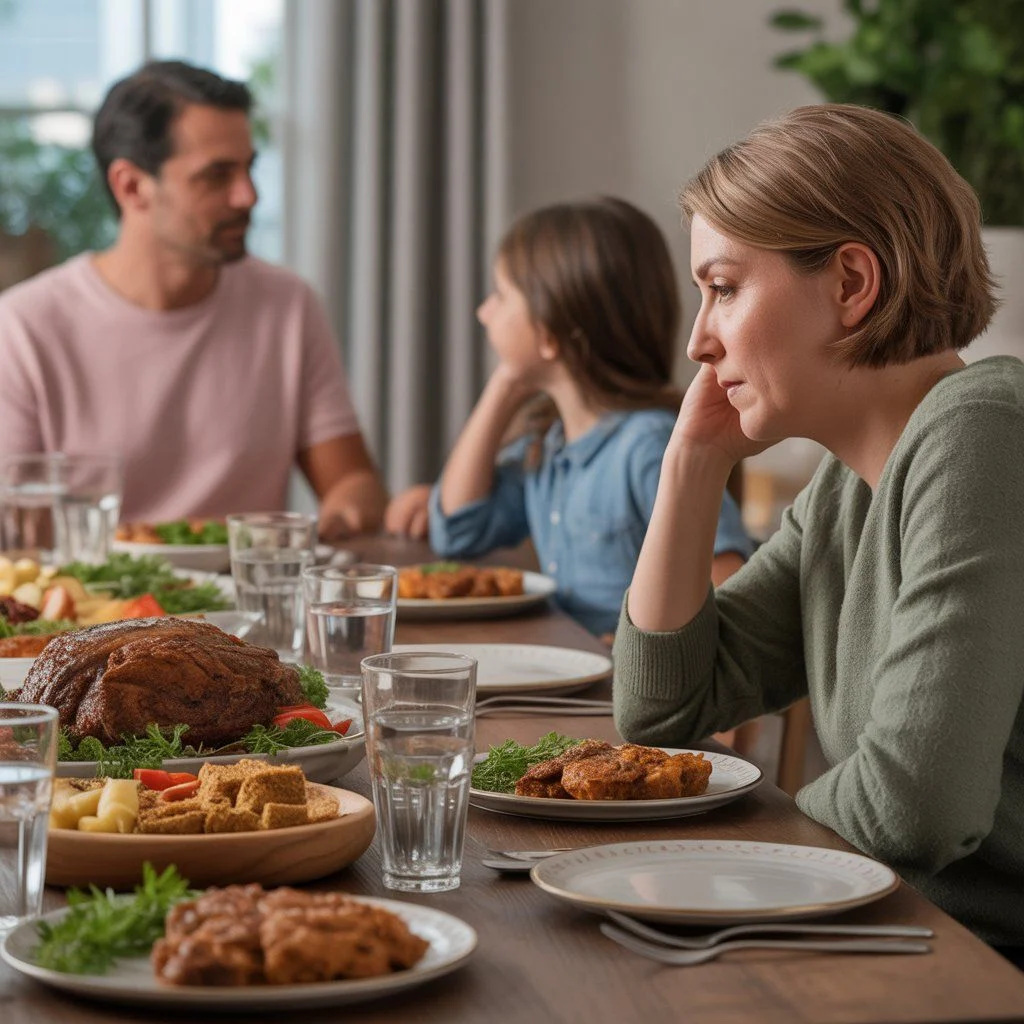
‘AITA for not wanting to cook separate vegan meals for my sister-in-law?’
Tradition meets new challenges as dietary needs evolve

A polite request for shared responsibility sparks tension

The host questions where boundaries should be drawn

Sunday dinners thrive on mutual appreciation, yet they can quietly become one-sided when one person shoulders all the planning, shopping, cooking, and hosting. The host has shown genuine goodwill by adapting the menu with consistent vegan options, accommodating Lily’s choice without complaint. Asking her to occasionally contribute a dish is a reasonable request for reciprocity, especially given the weekly commitment and the host’s other responsibilities.
Opposing views might frame the suggestion as exclusionary, arguing that true inclusion means the host should fully adjust to every need to preserve harmony. The brother’s defensiveness and the parents’ peacekeeping stance reflect a common family dynamic: protecting the newcomer while overlooking the long-term giver’s fatigue. However, expecting one person to produce two complete meals indefinitely ignores the emotional and physical toll. Lily’s preference is valid, but so is the host’s limit.
Broader family traditions often evolve—potlucks, rotations, or shared contributions keep them sustainable. Healthy gatherings require everyone to give a little; resentment builds when accommodation flows only one way. The host isn’t wrong to seek balance; open dialogue about shared effort could preserve the tradition without burnout.
Take a look at the comments from fellow users:
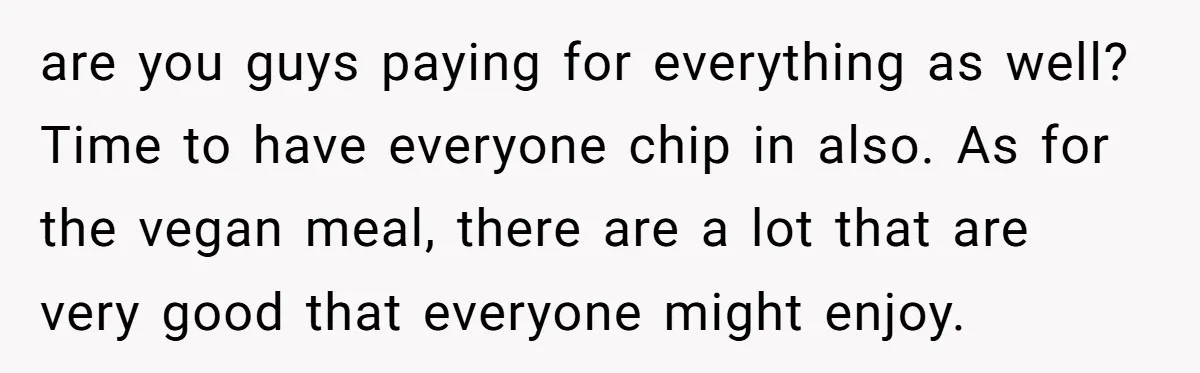
Most users firmly support the host, calling the expectation of separate full vegan meals every week unreasonable and praising the idea of shared responsibility.


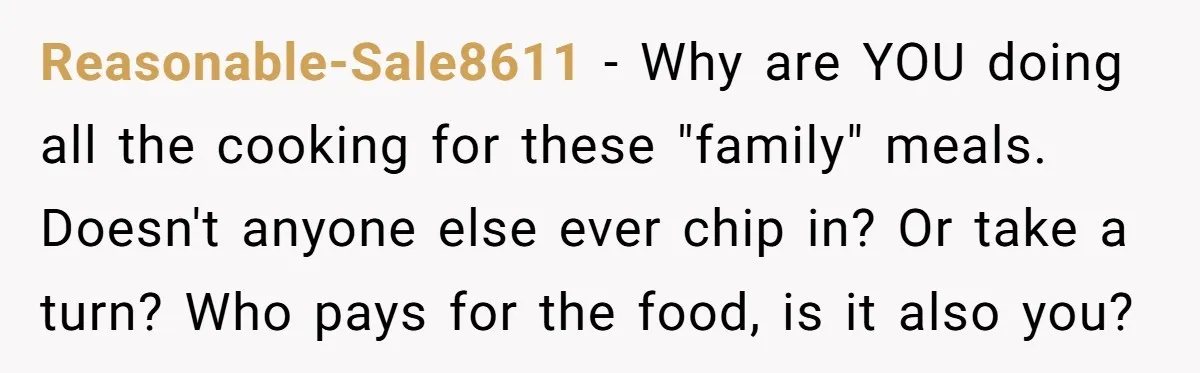




![[Reddit User] − Sorry every weekend YOU cook for everybody and now you also have to cook different menu? NTA She can bring her vegan meal to share with everybody.](https://loknam.com/aita/images/dced52359d/wp-editor-1768286055227-9.webp)


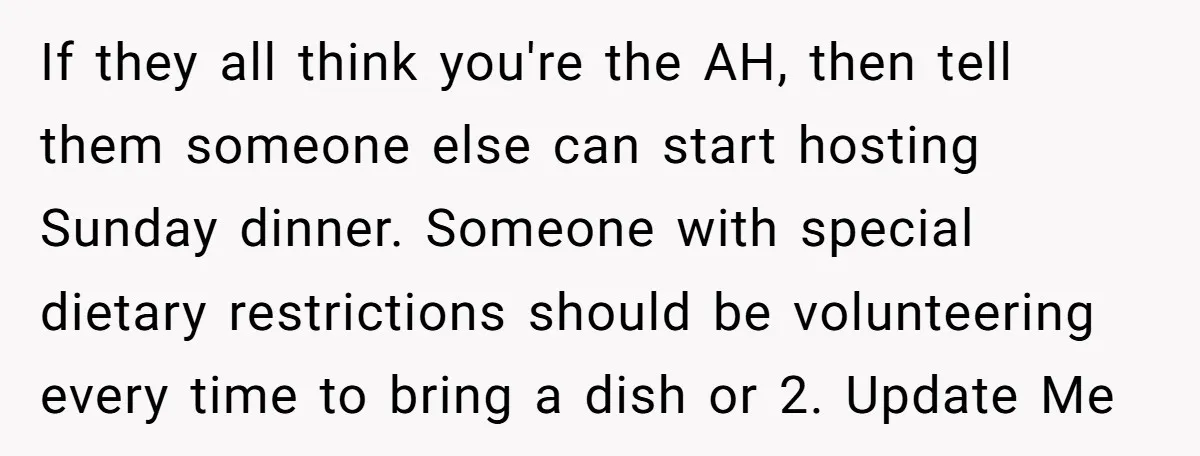
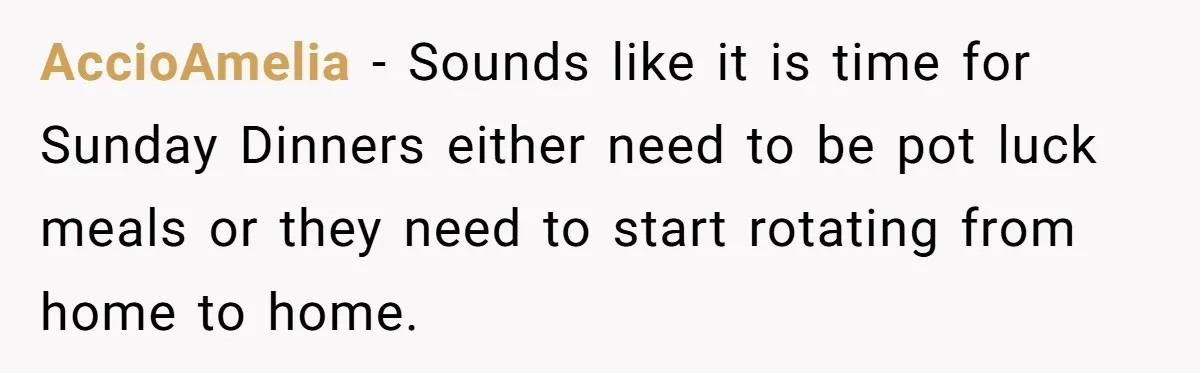
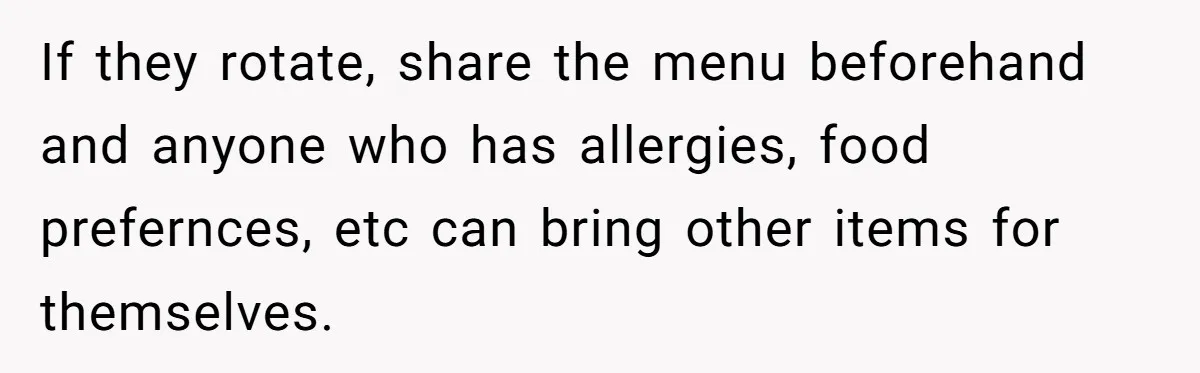
Others emphasize shifting to potluck or rotation formats to distribute the load fairly.



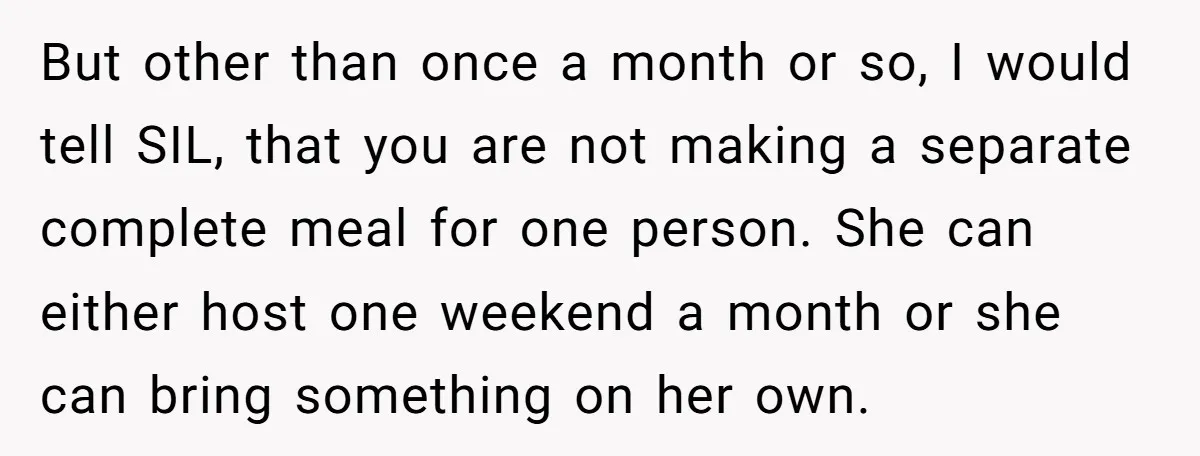
![[Reddit User] − Your brother was upset and your parents want you to keep the peace? All while YOU are hosting all this? Sounds like a great time to say...](https://loknam.com/aita/images/dced52359d/wp-editor-1768286110242-8.webp)


A few share personal perspectives as vegetarians or vegans, reinforcing that bringing your own dish is a common and fair expectation.
![[Reddit User] − NTA. It's A LOT to ask of you. I'm a vegetarian, and I usually bring my own stuff depending on the setting. If it's a potluck or...](https://loknam.com/aita/images/dced52359d/wp-editor-1768286127971-1.webp)




The host has already shown flexibility by providing vegan sides and desserts weekly, but expecting a full separate meal indefinitely overlooks the effort involved. Most agree that asking Lily to contribute occasionally is fair and sustainable. Shifting toward potluck or rotating hosting could preserve the tradition while preventing burnout. Family harmony improves when everyone shares the load.
How do you handle dietary requests at family gatherings? Should the host always accommodate fully, or is shared responsibility more realistic? Have you ever felt overwhelmed by hosting duties? Share your experiences below!