
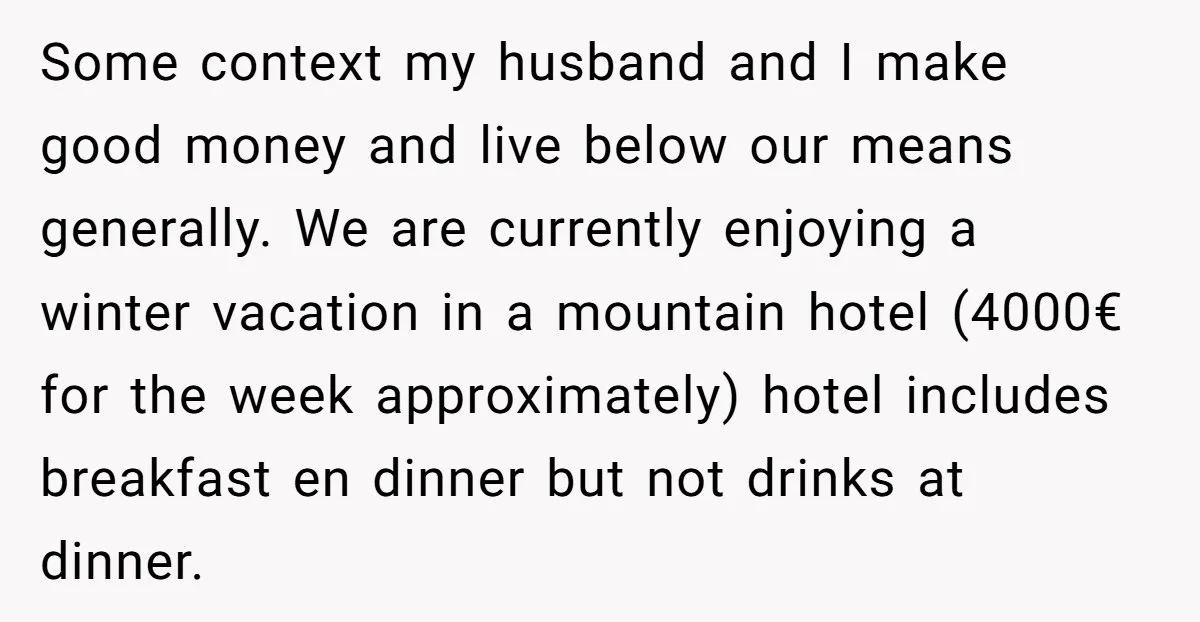
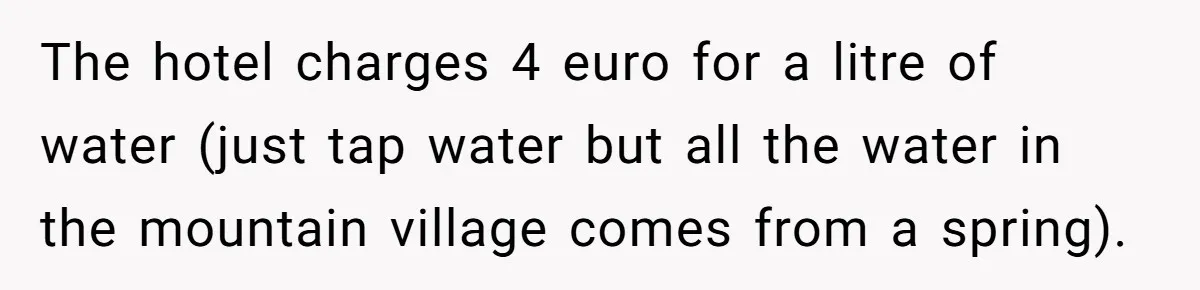
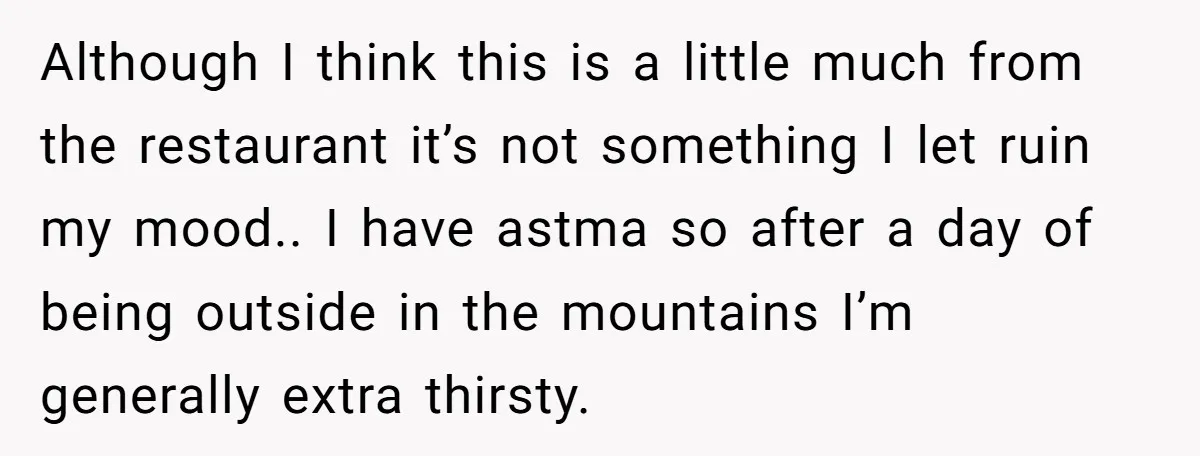
A couple is on a luxurious winter vacation at a mountain hotel costing around €4000 for the week — breakfast and dinner included, but drinks are extra. The hotel charges €4 for a liter of tap water sourced from the local spring. The wife, who has asthma and gets very thirsty after days outdoors, ordered water at dinner like the previous night.
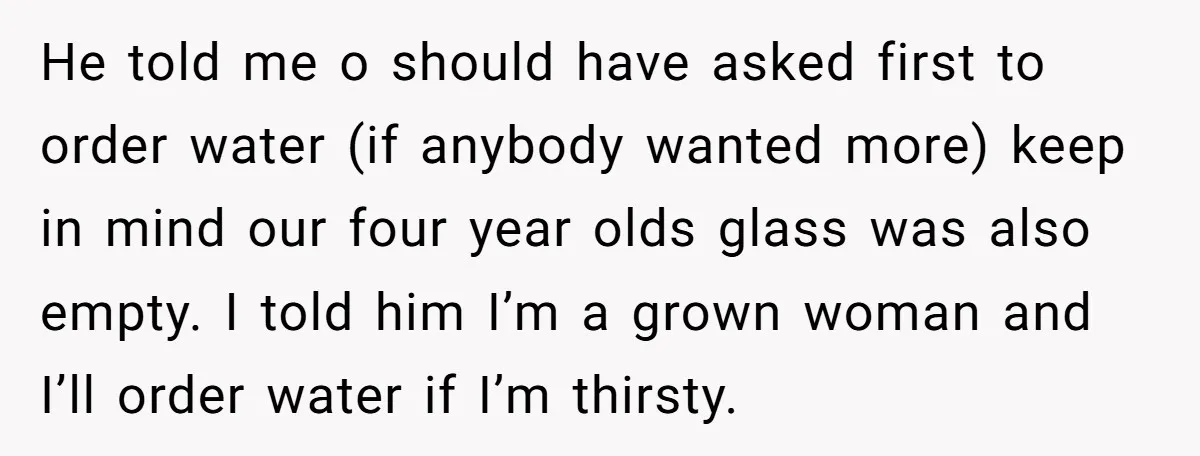
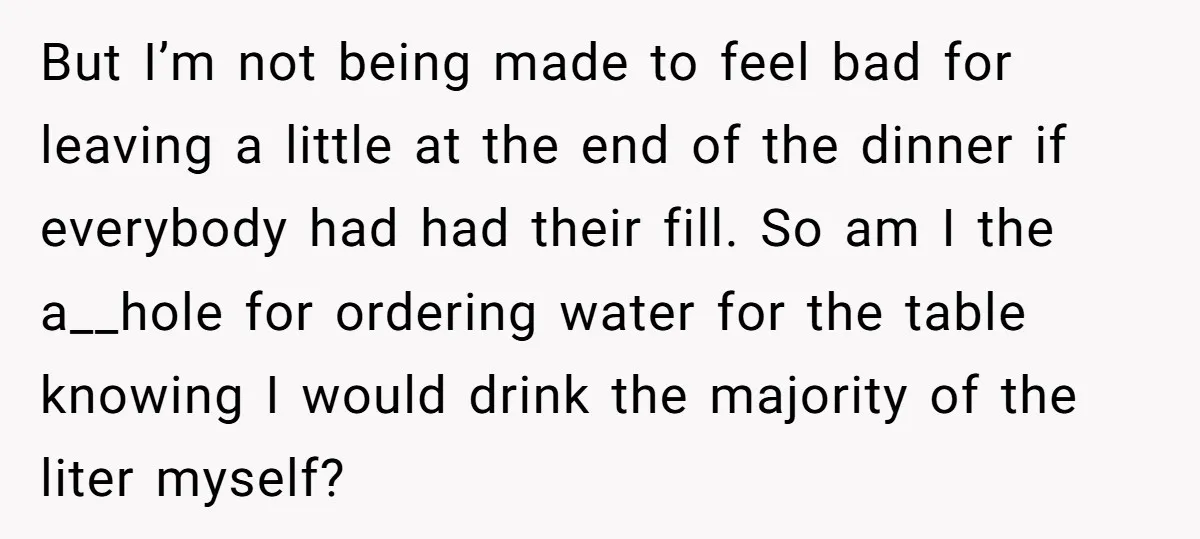
When a second bottle arrived, her husband became visibly upset, refused to drink any, and later scolded her for not finishing the jug after she was full from the five-course meal. He said she should have asked if anyone else wanted more before ordering, even though their 4-year-old’s glass was also empty. She called his reaction petty; he insisted it was wasteful. She’s wondering if she’s the asshole for ordering without consulting him first — especially since she drank most of it herself.

‘AITA for ordering water at a restaurant?’
The couple is enjoying a high-end winter getaway with everything included except drinks:
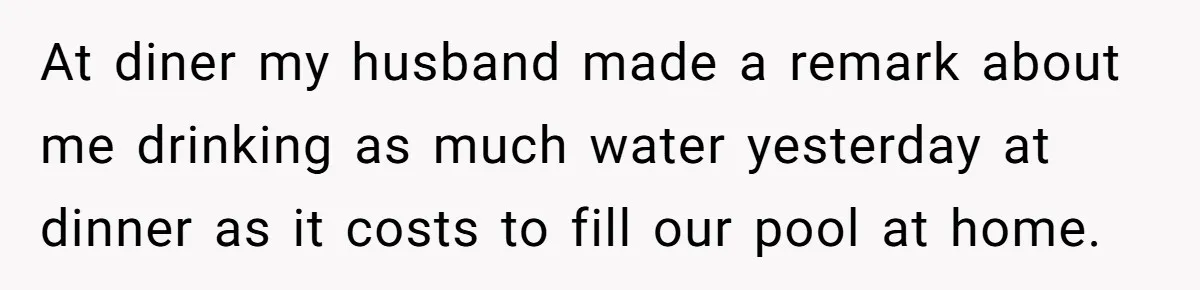
They ordered wine and water for the table as usual:
After dessert, she was full and left some water in the jug:
He argued she should have checked with everyone first:
Small money disagreements during vacations can reveal deeper patterns around control, values, or unspoken resentment. When one partner fixates on a tiny expense (€4 water) while happily spending thousands on the trip itself, it often isn’t really about the money — it’s about power, fairness, or feeling unheard in other areas. The wife’s asthma and legitimate thirst after physical activity are valid reasons to prioritize hydration; shaming someone for that, especially in a celebratory setting, tends to erode goodwill.
Relationship experts frequently point out that healthy partnerships allow adults to order what they need without prior committee approval — particularly for something as basic as water. The husband’s insistence on “asking first” (even though the child’s glass was empty anyway) can feel infantilizing rather than collaborative. Finishing everything on the table is a personal choice, not a moral obligation — restaurants expect leftovers, and no one gets a discount for leaving a sip.
The core issue here is emotional safety: if a €4 disagreement turns into public berating and sulking, it raises questions about how bigger conflicts are handled. Open communication about underlying feelings (stress, financial anxiety, feeling taken for granted) usually resolves these moments better than debating who should have asked permission for water.
These are the responses from Reddit users:
The Reddit community had almost zero patience for the husband’s reaction — the overwhelming consensus is that this is petty, controlling behavior over a trivial amount.
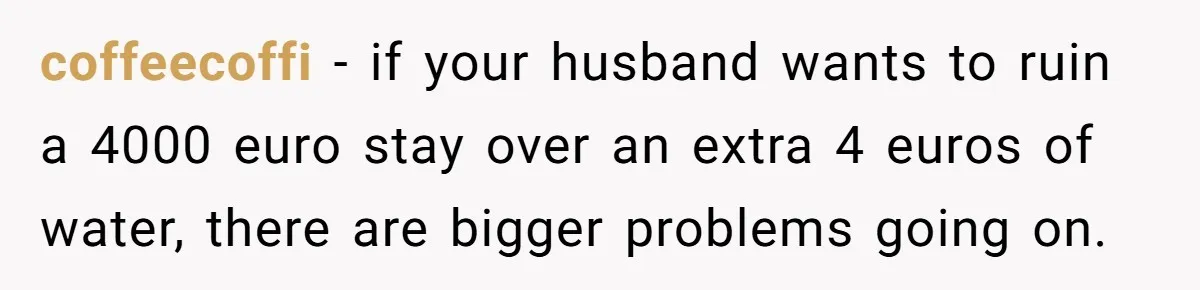
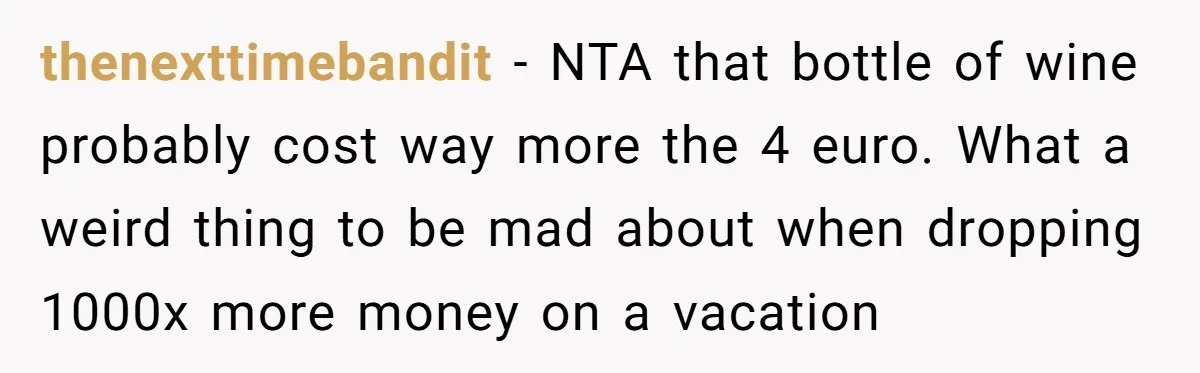
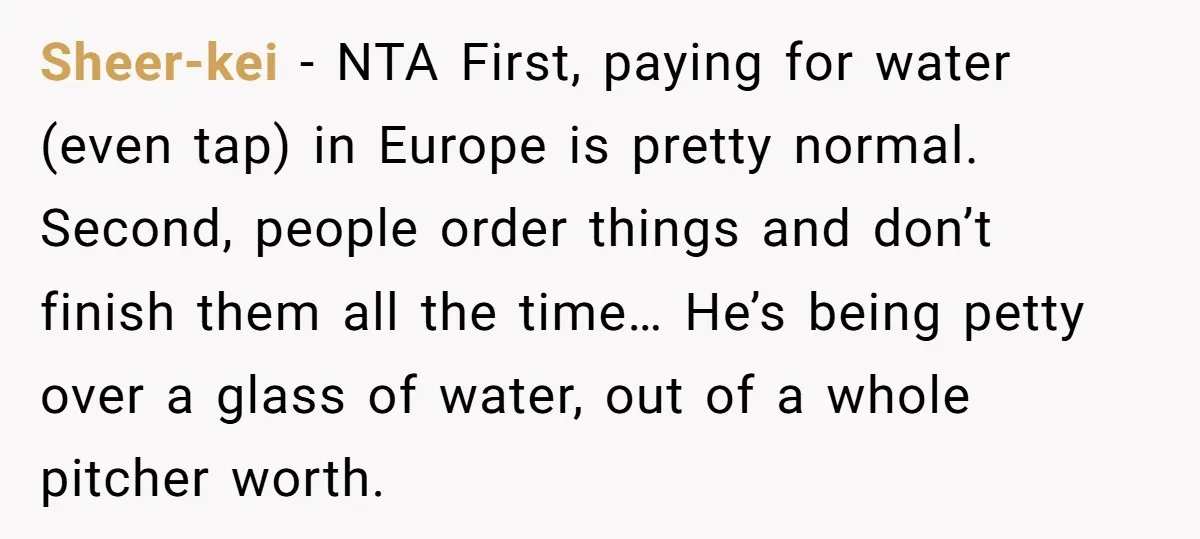
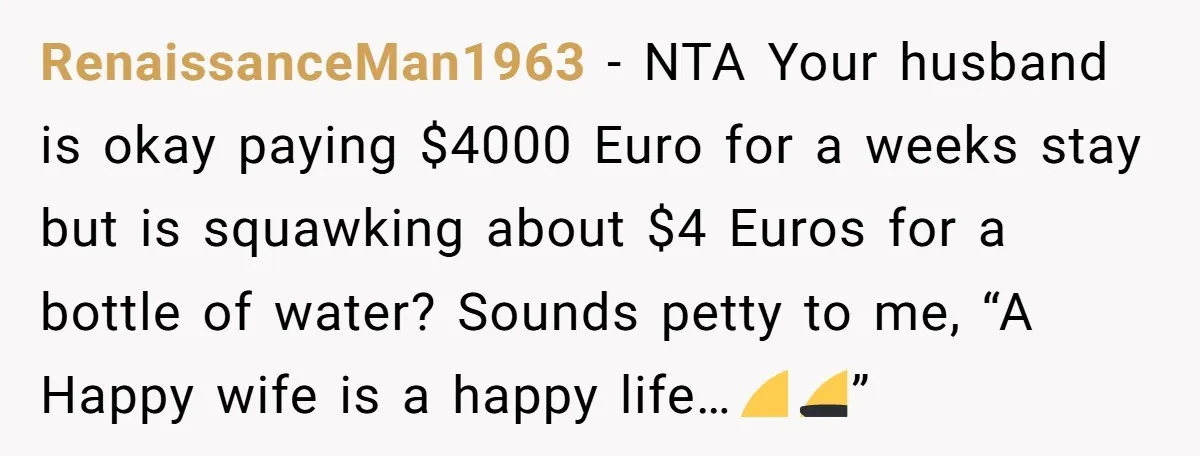
Most people called the husband out for making a mountain out of a €4 molehill, especially on a €4000 vacation.
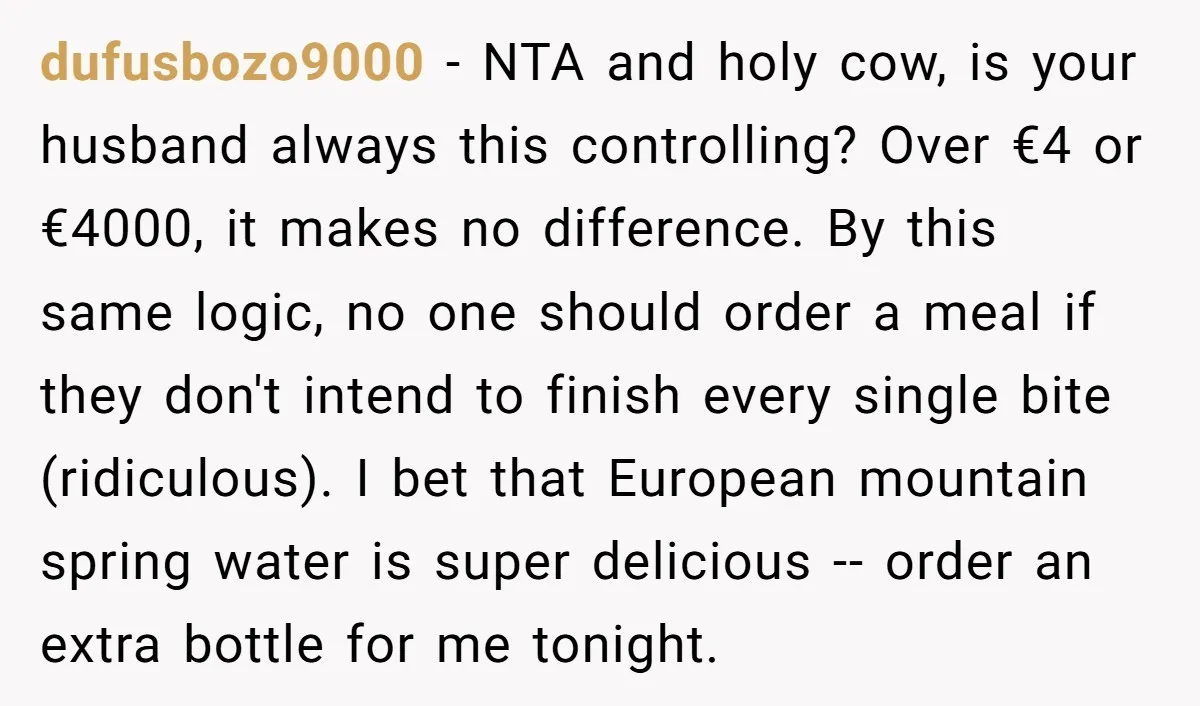

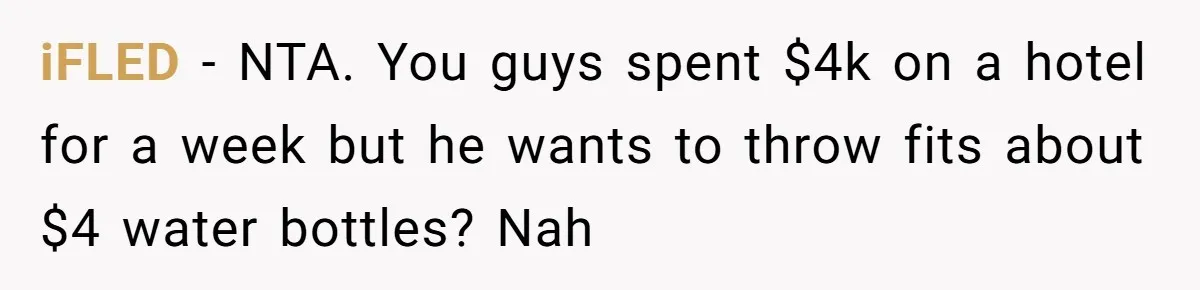
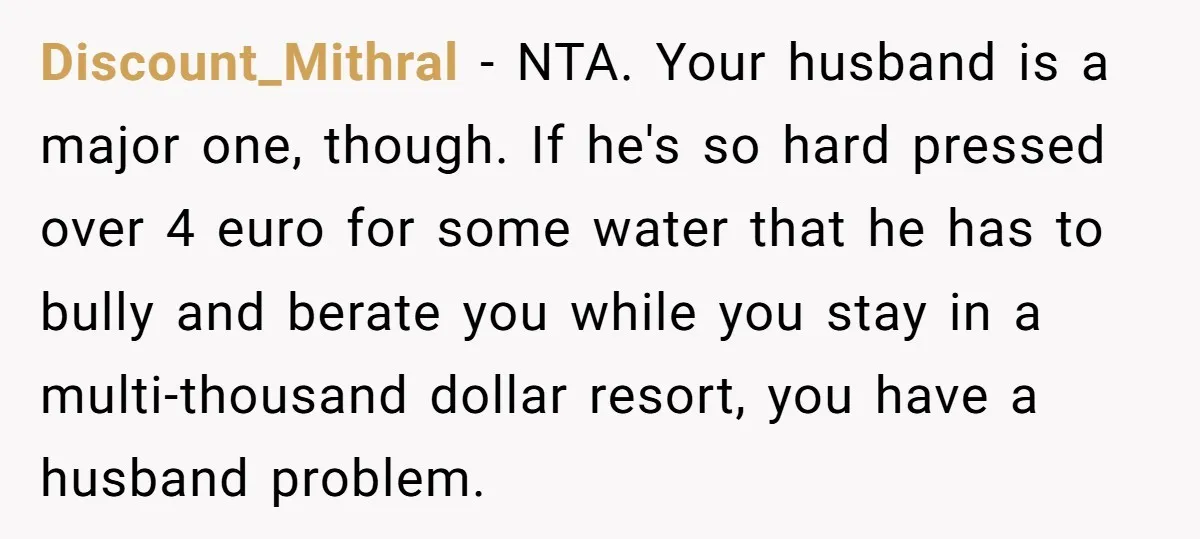
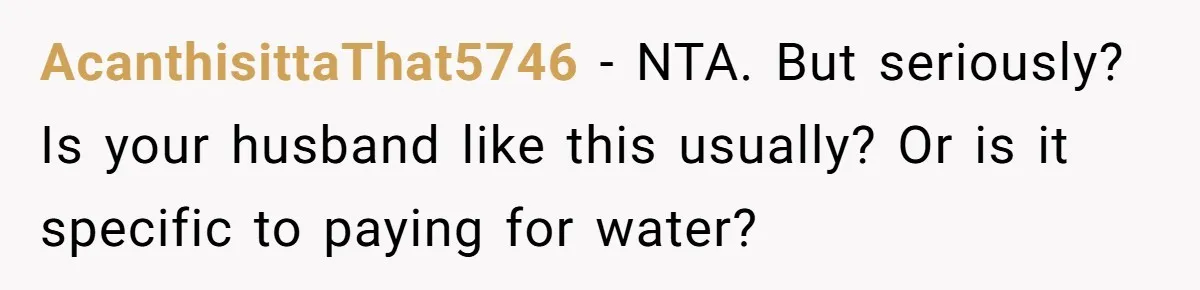
A few commenters highlighted the health aspect and questioned whether this is part of a larger pattern.
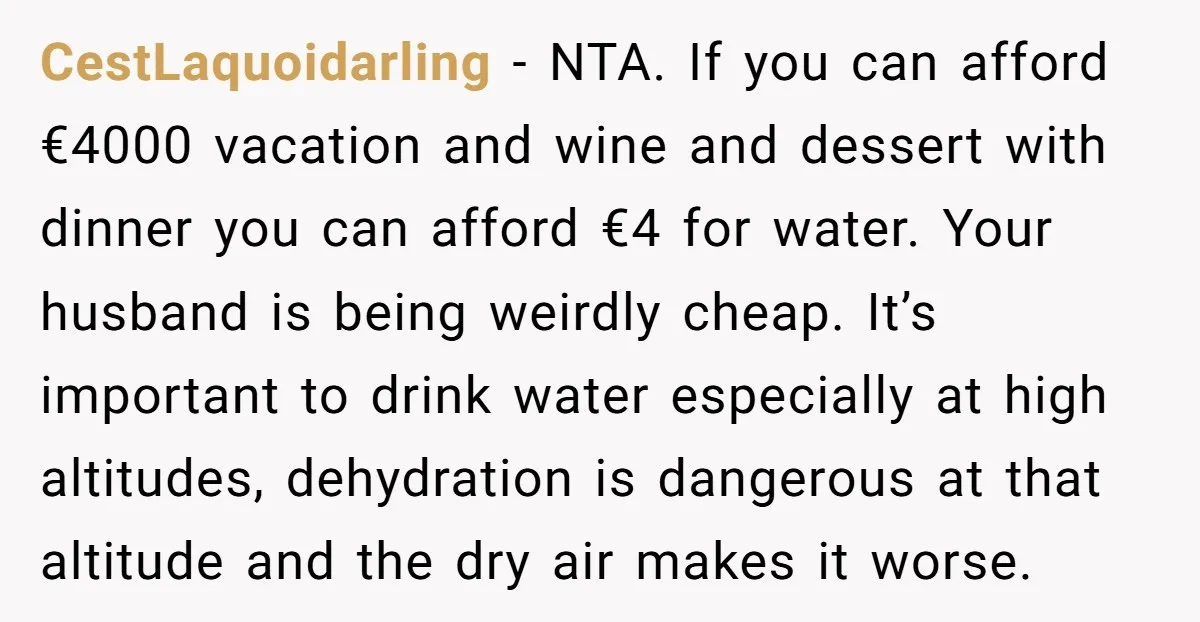

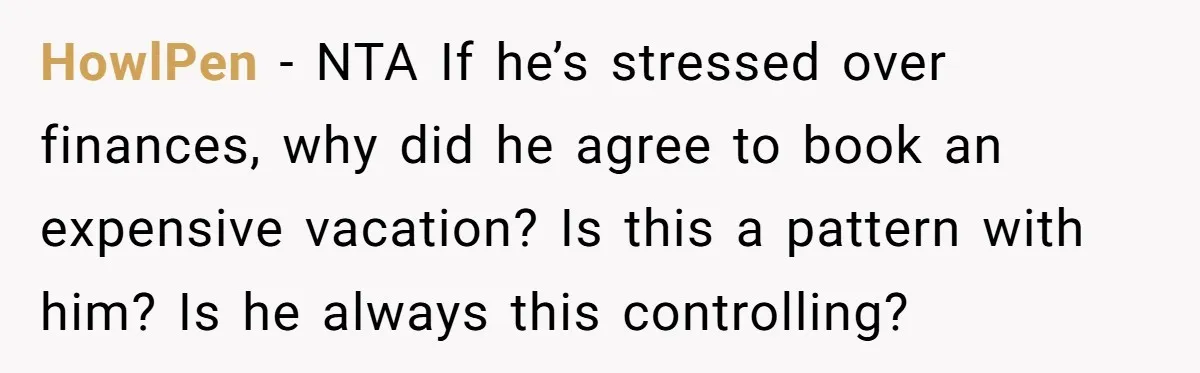
Others defended the normalcy of not finishing every last drop and called the reaction disproportionate.
This tiny €4 water disagreement somehow became the flashpoint for a tense vacation moment. The wife ordered what she needed for legitimate health reasons; the husband turned it into a lesson on wastefulness and consultation — despite the family comfortably affording far larger expenses. What started as hydration became a proxy for bigger questions about control, pettiness, and respect.
Small things like this rarely stay small when they reveal mismatched values or underlying stress. Whether it’s about water, money, or communication, the real cost is the emotional friction it creates. Do you think this is a one-off frustration or a sign of deeper issues? How would you have responded if your partner scolded you over something that cost €4 on a luxury trip?