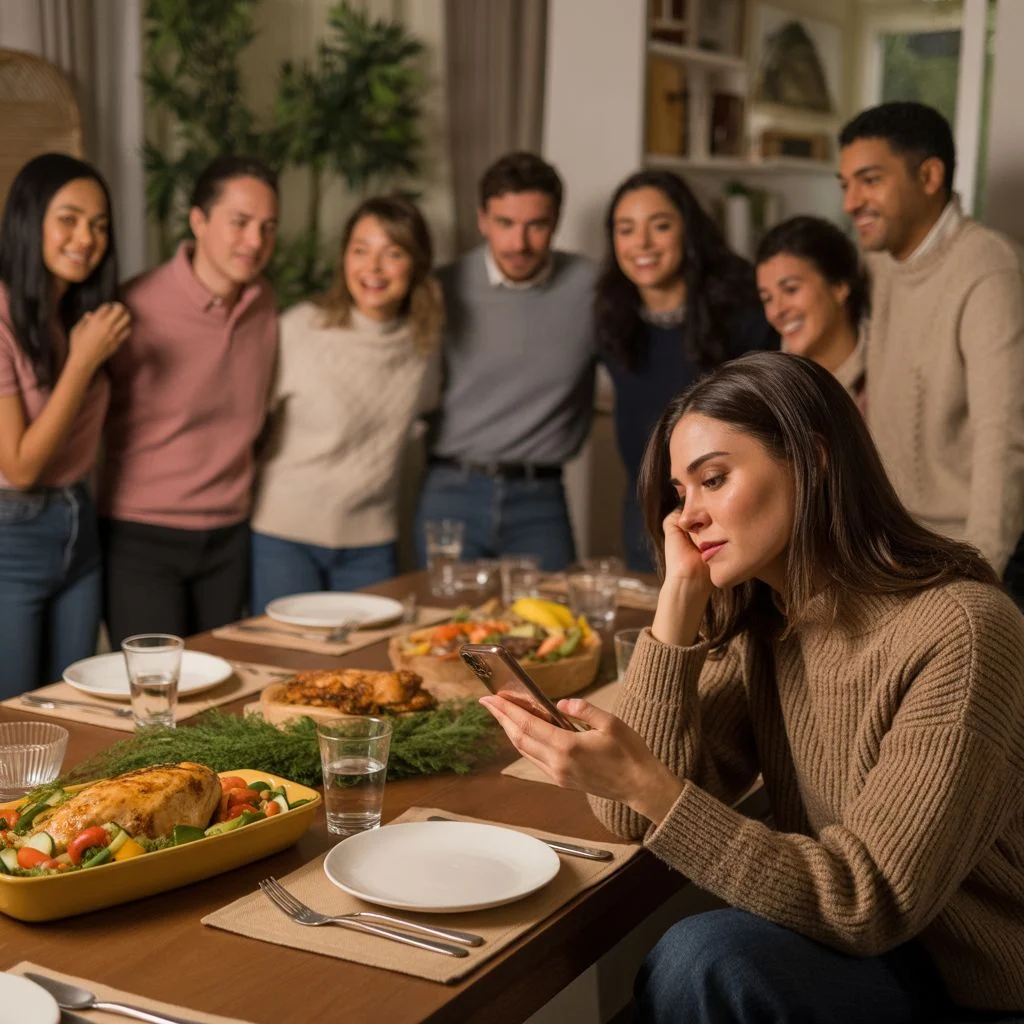
Holidays are supposed to feel magical, but for many families that magic hides a heavy load carried by just one person. Year after year, one woman quietly handled every detail — decorations, cooking, gifts, cleaning — while everyone else simply enjoyed the results. As a single mom already stretched thin, she finally hit her limit and decided to stop.
When she announced that holidays were cancelled until others stepped up, her sister reacted with anger, claiming the choice would ruin Christmas for her young son. The situation quickly turned into a painful clash over fairness, responsibility, and who truly creates the joyful memories children remember. Now the whole household is left wondering where the line should be drawn.
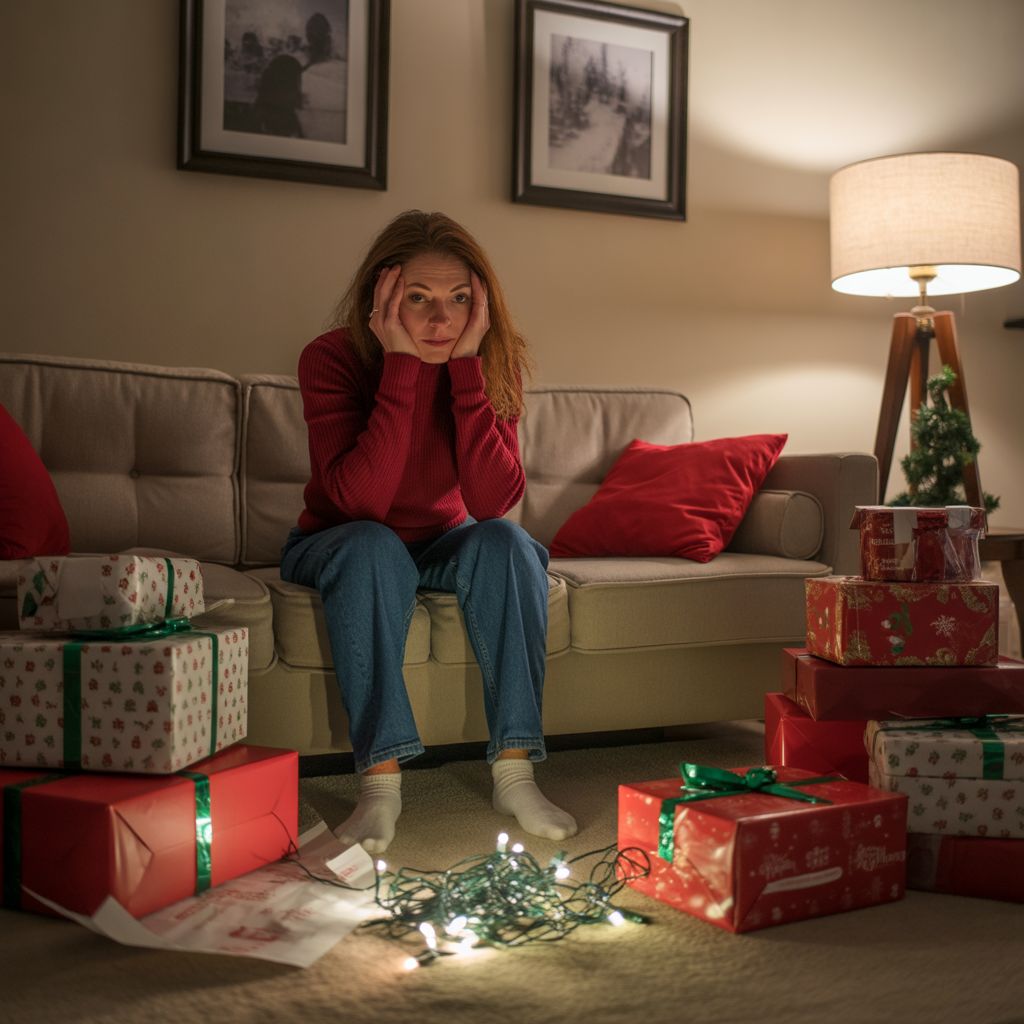
‘AITA for quitting holidays even though my sister and her kid live with me and contribute absolutely nothing?’
The story starts with a clear picture of how unbalanced things have become in this shared home.
Things get more frustrating when she describes the role — or lack of role — her sister and nephew play.
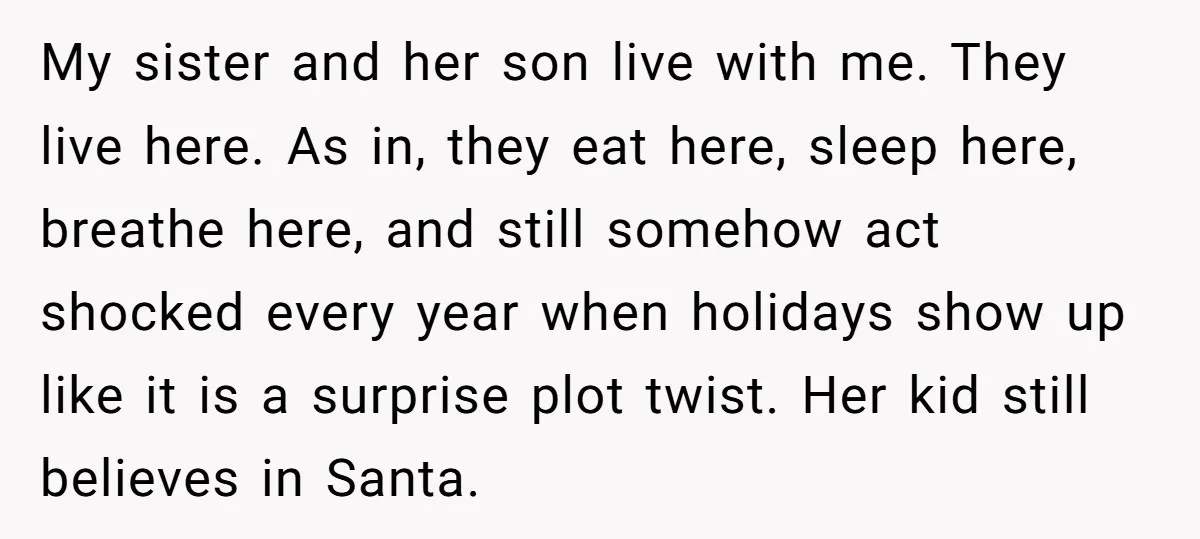
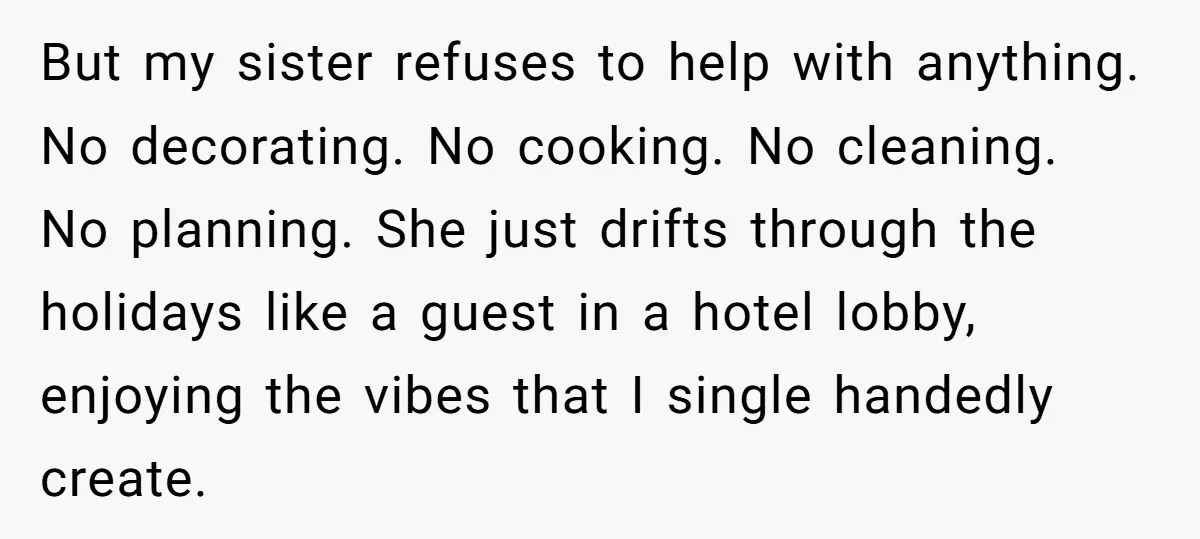
Finally, she explains the breaking point and the fallout that followed.
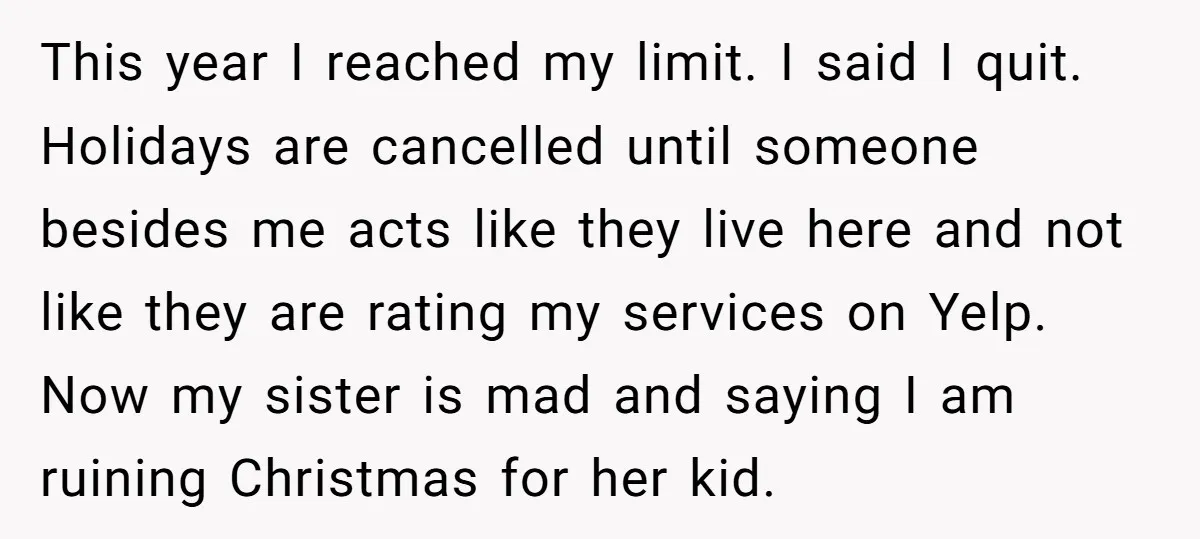
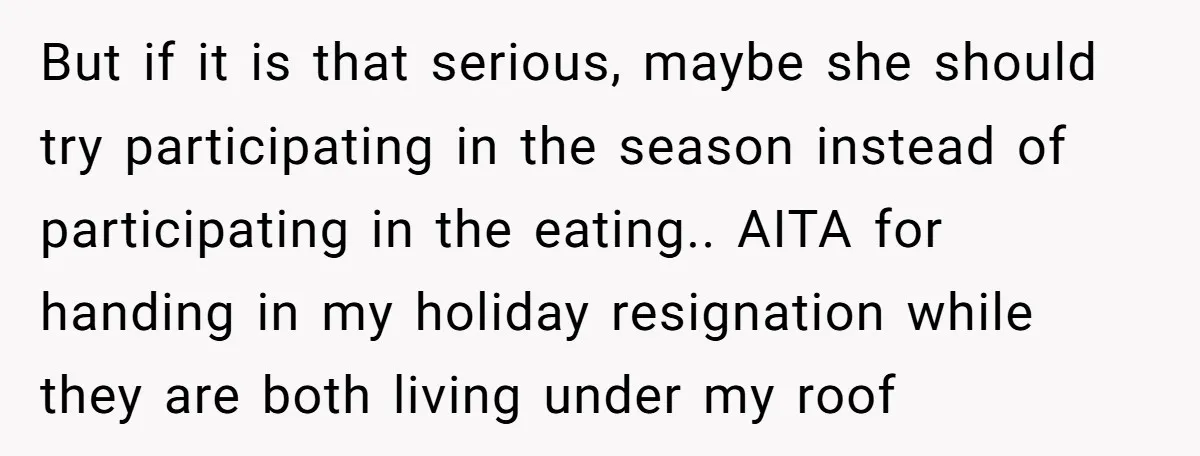
The core conflict centers on unequal emotional and physical labor during holidays. One person has carried the full weight of creating festive experiences for years, while another adult in the same household opts out completely. The disagreement exploded when the main organizer finally refused to continue alone, directly affecting a child who still believes in holiday magic. At its heart, this situation involves burnout, entitlement, and the question of shared responsibility in a multi-generational home.
The single mom feels exhausted and unappreciated after years of solo effort. Her resentment grew because the sister treats the holidays as something that simply appears, not something that requires work. On the other side, the sister appears defensive, possibly overwhelmed herself or simply accustomed to the current arrangement. The failure to communicate expectations earlier allowed frustration to build until it reached a breaking point.
Family therapist Dr. Laura Markham has written that “When one person consistently over-functions, resentment is inevitable — the system becomes unbalanced and eventually breaks.” (Peaceful Parent, Happy Kids, 2012) This dynamic is visible here: long-term over-functioning by one adult created a pattern the other never had to challenge.
A practical way forward starts with a calm, private conversation setting clear boundaries. The mom could say exactly what she needs (specific tasks, not vague “help”) if holidays are to continue. Weekly planning check-ins during November and December could prevent last-minute pressure. If the sister refuses to participate, scaling back to minimal traditions for her own children protects her energy while still allowing the sister to create something for her son.
Check out how the community responded:
The online community reacted strongly to this post, with opinions splitting mostly between strong support for the original poster and sharp criticism toward the sister’s behavior.
Many readers strongly sided with the woman and felt her decision was completely justified after years of carrying everything alone:


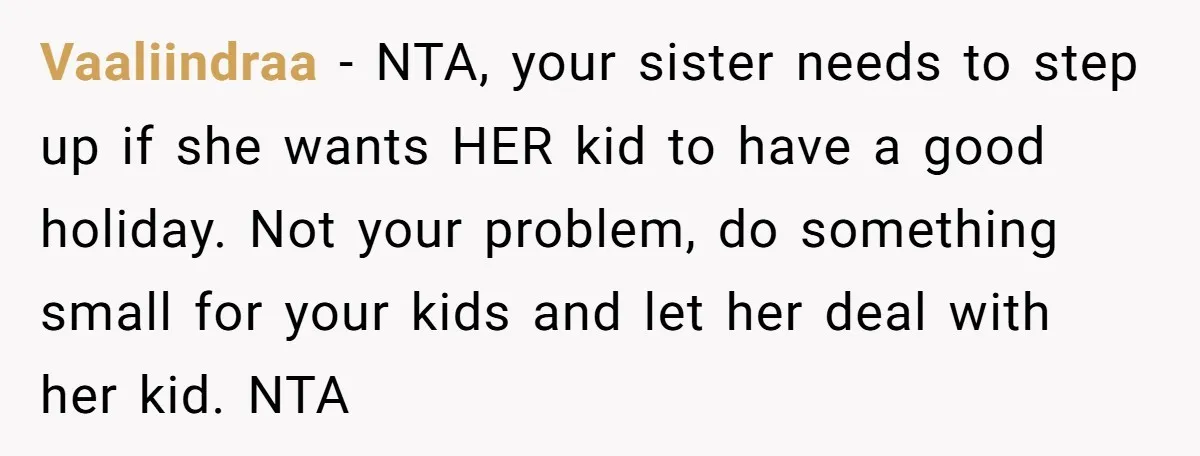

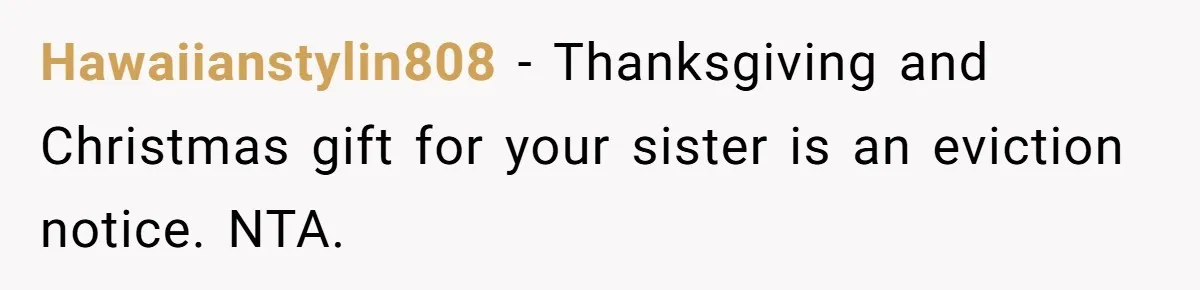
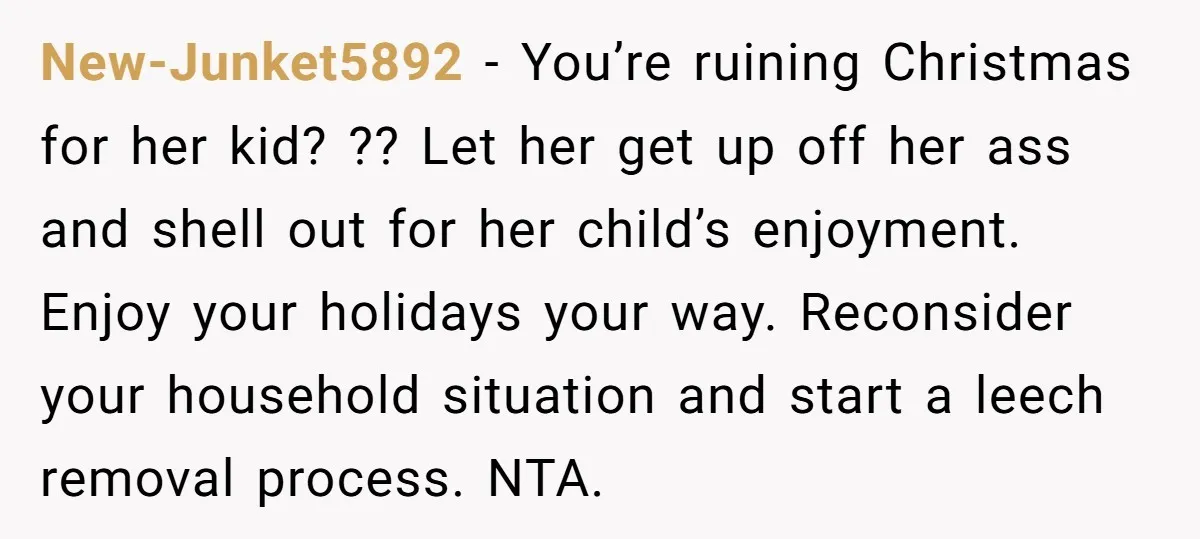
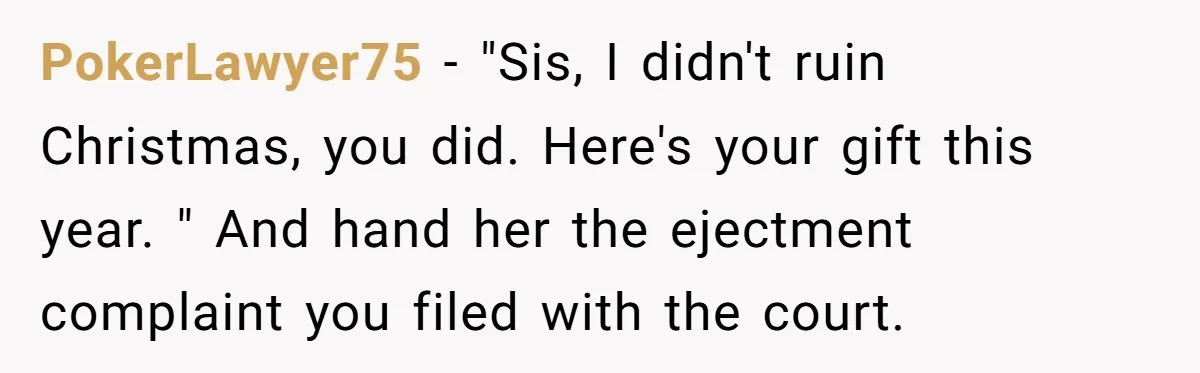
A large number went even further, questioning why the sister still lives there and suggesting serious changes to the living situation:


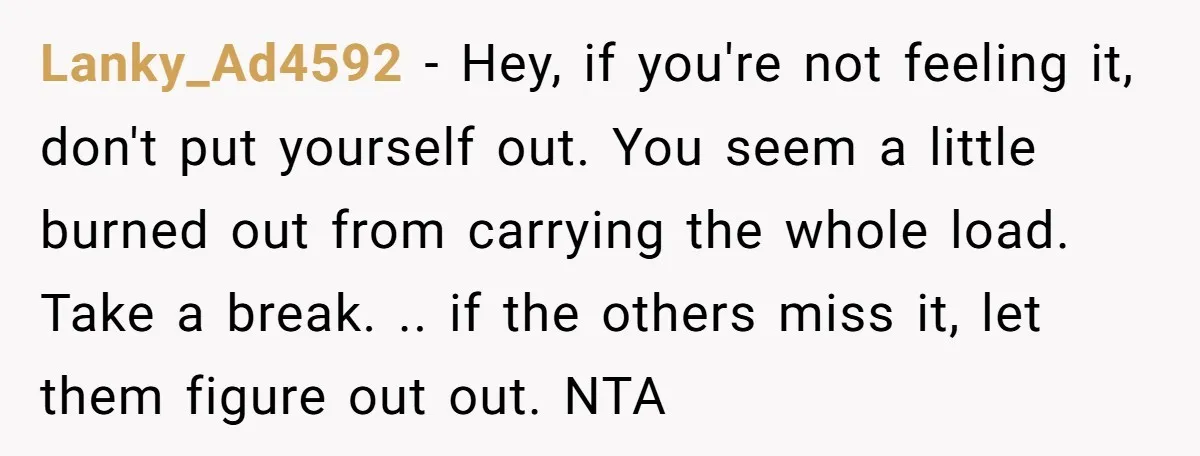
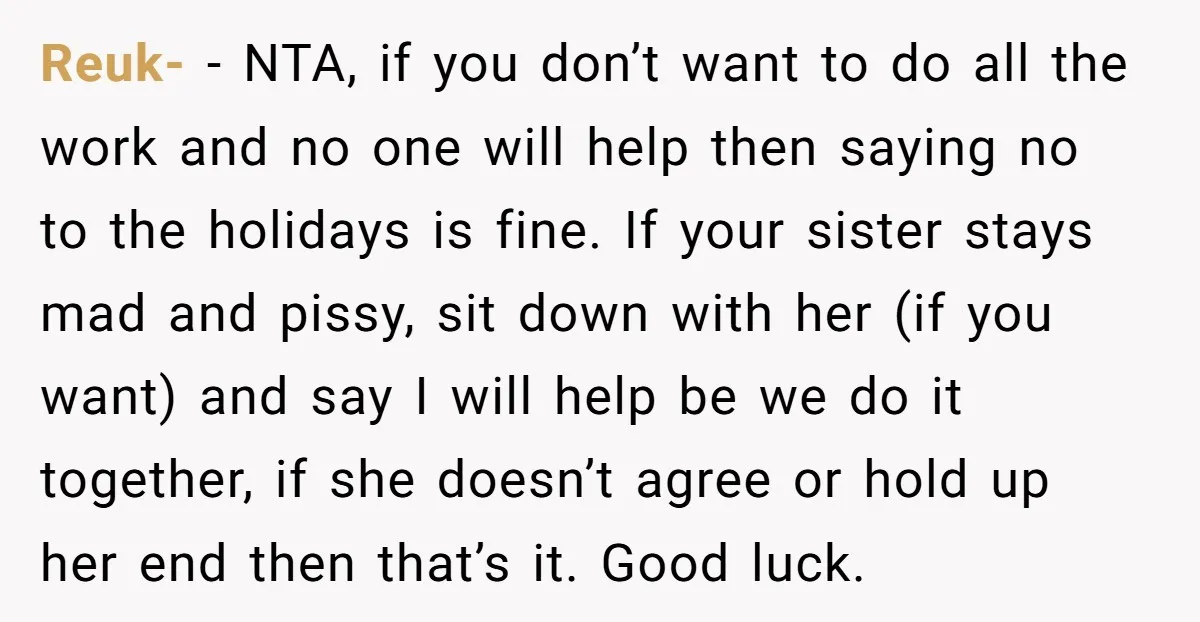
Others took a softer but still supportive tone, focusing on burnout and suggesting boundaries rather than drastic action:
This situation shows how quickly holiday “magic” can turn into resentment when one person does all the creating and others simply enjoy the results. It highlights an important truth: traditions only stay joyful when the effort is shared, especially in homes with multiple adults. Protecting your own mental energy is not selfish — it’s necessary.
What would you do in this position? Would you keep things small for your own kids and let your sister handle her son’s holiday, or would you insist on shared responsibility before any decorations go up again?