
Co-parenting often requires flexibility, patience, and a willingness to meet halfway for the sake of a child. But what happens when compromise only ever flows in one direction? For one mother navigating a shared custody arrangement, holidays slowly became a battleground she never intended to fight on.
After years of quietly giving up special days so her daughter could spend time with her father’s extended family, she asked for one small adjustment of her own. The answer she received changed everything. As reactions poured in across social media, many readers recognized a familiar pattern: cooperation when it’s convenient, rigidity when it’s not. The twist lies in how simply following the rules suddenly made her the villain in her ex-husband’s story.


The foundation of their co-parenting relationship was built after a painful and contentious split


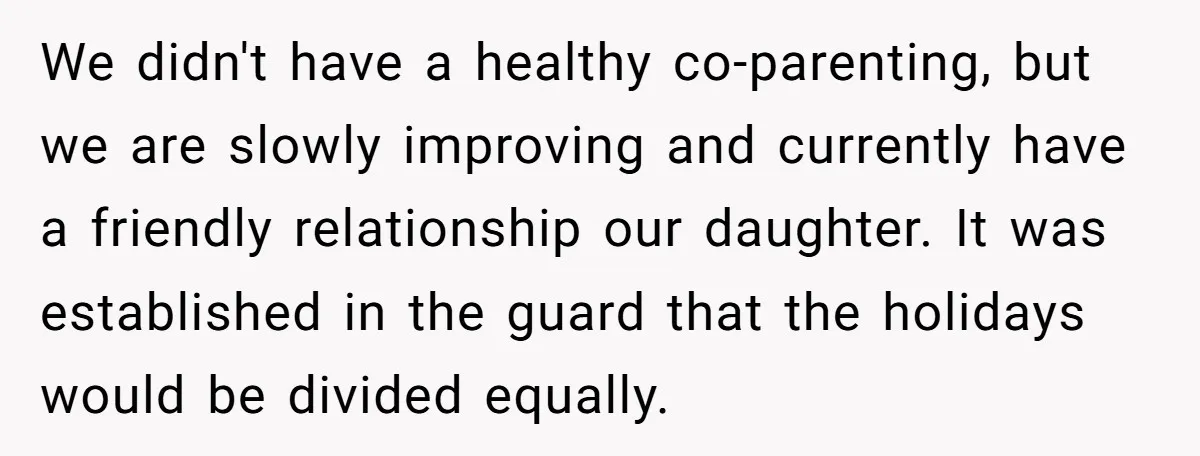
Despite tension, she made repeated efforts to be flexible when holidays came up

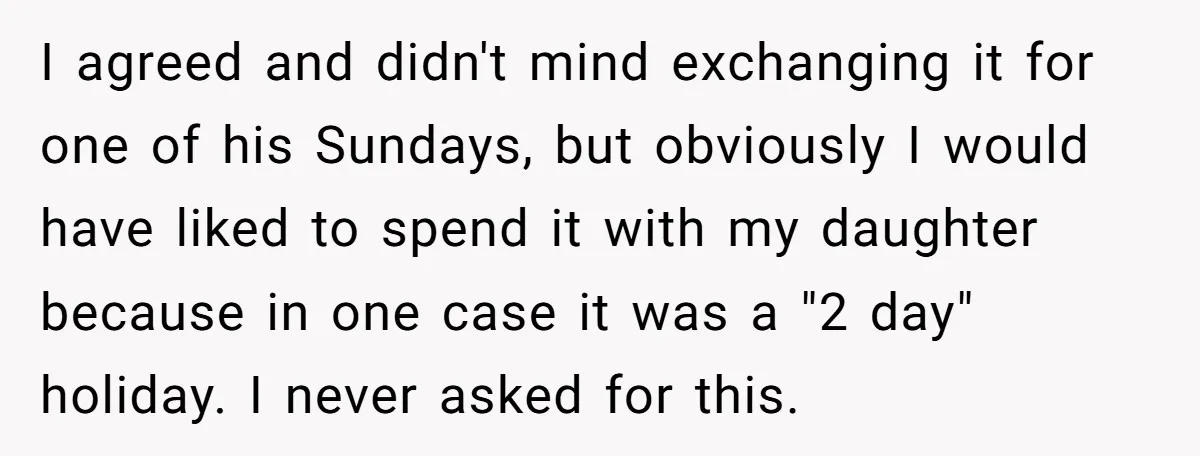

When she finally needed flexibility herself, the response was immediate and firm



So when the next request came, she stood her ground



The conflict escalated quickly, with accusations flying
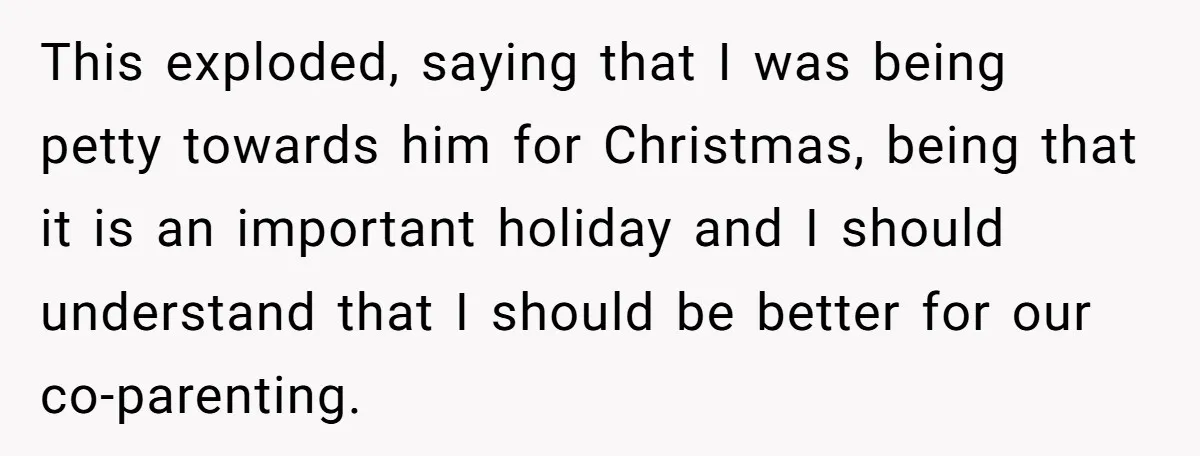




This situation highlights a common issue in co-parenting after conflict-heavy separations: imbalance disguised as cooperation. The mother demonstrated flexibility multiple times, setting a precedent of goodwill. However, flexibility only works when both sides are willing to return it. Once one parent insists on rigid adherence to the agreement, the informal system of favors collapses.
From the father’s perspective, holidays may feel emotionally charged, especially when extended family is involved. But emotional importance does not override fairness. When he refused her request and explicitly stated they should “follow the custody agreement,” he redefined the rules of engagement. Expecting continued exceptions afterward creates an uneven dynamic.
According to family therapist Dr. Janet Johnston, an expert on high-conflict co-parenting, “Consistency and predictability are essential for children, but so is reducing parental conflict.” Ironically, enforcing the written agreement often reduces conflict when informal negotiations become manipulative.
Practically, the mother’s decision protects her time and her mental health. If flexibility is reintroduced in the future, it should be documented, balanced, and mutual. Using structured communication tools or parenting apps can also help keep discussions factual and child-focused. Boundaries are not punishment. In co-parenting, they are often the only way forward when goodwill is repeatedly taken for granted.
Here’s the input from the Reddit crowd:
Many users strongly supported the mother, calling out the double standard
![[Reddit User] − Nta, when it's convenient for him. He says let's follow the custody agreement. When it's bad for him you're being petty. It might cost you a little...](https://loknam.com/aita/images/4c775f0fe0/wp-editor-1769069713392-1.webp)
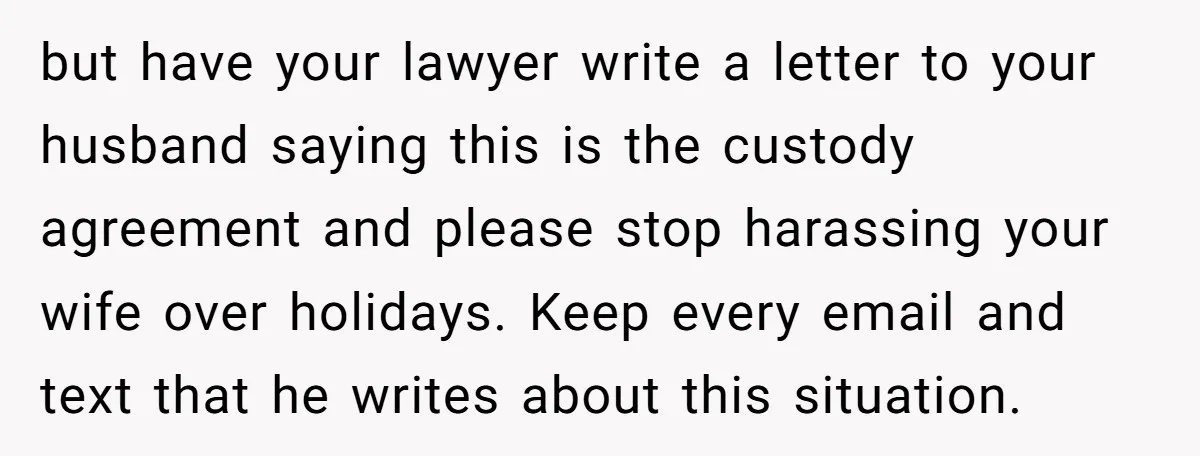





Others emphasized documentation and legal boundaries










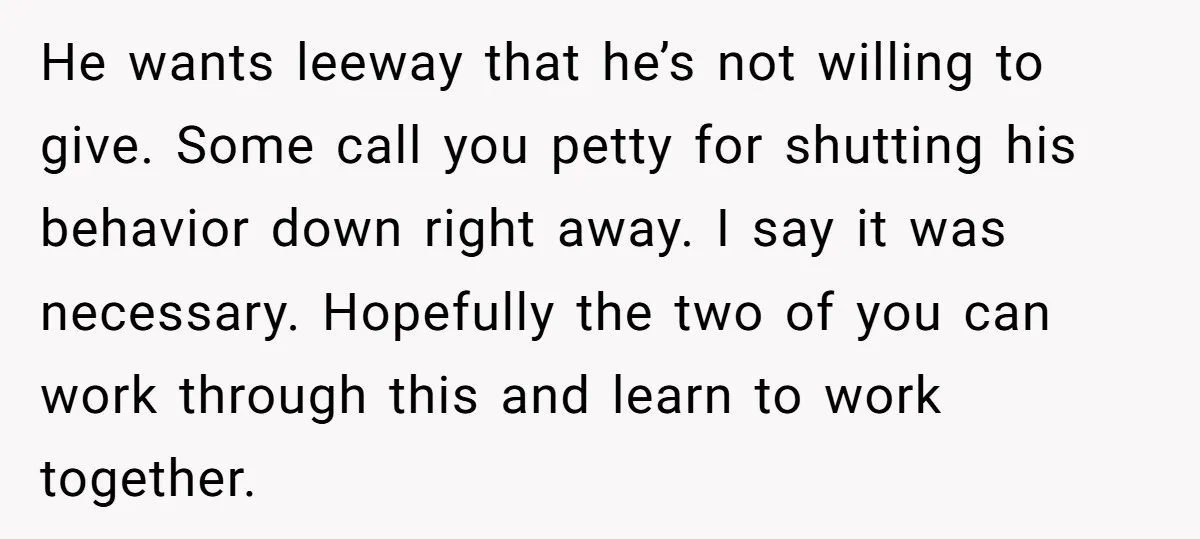
Some comments were blunt, using humor or sarcasm to make the point





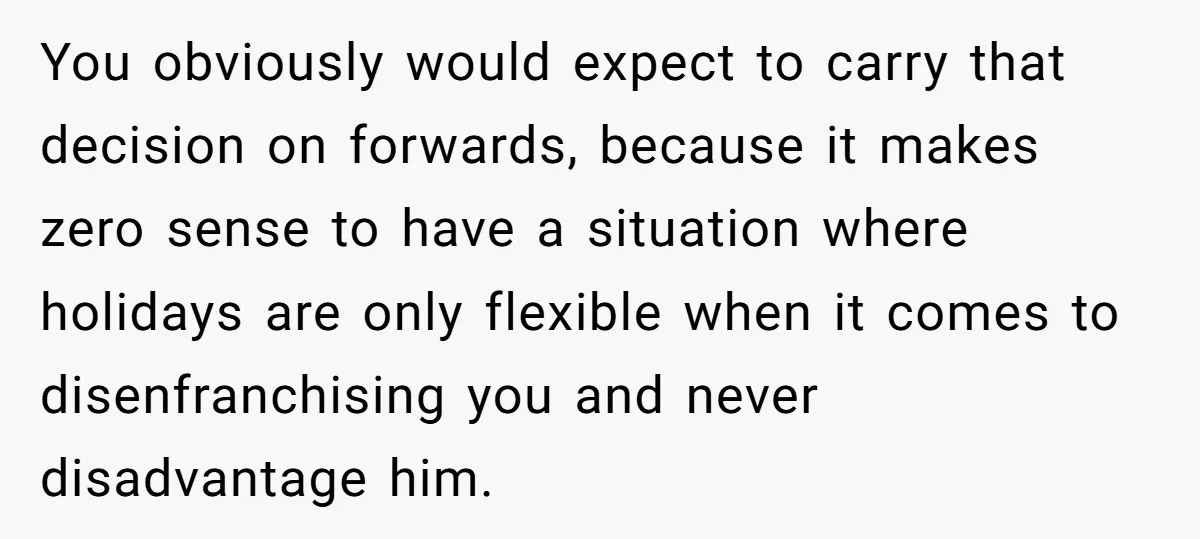







This conflict isn’t about Christmas, Carnival, or New Year’s. It’s about fairness and boundaries after years of uneven compromise. Once the ex-husband chose strict adherence to the custody agreement, it stopped being a flexible arrangement and became a rulebook for both parents. Following it isn’t petty—it’s consistent. The bigger question now is this: if compromise only works one way, is it really compromise at all?