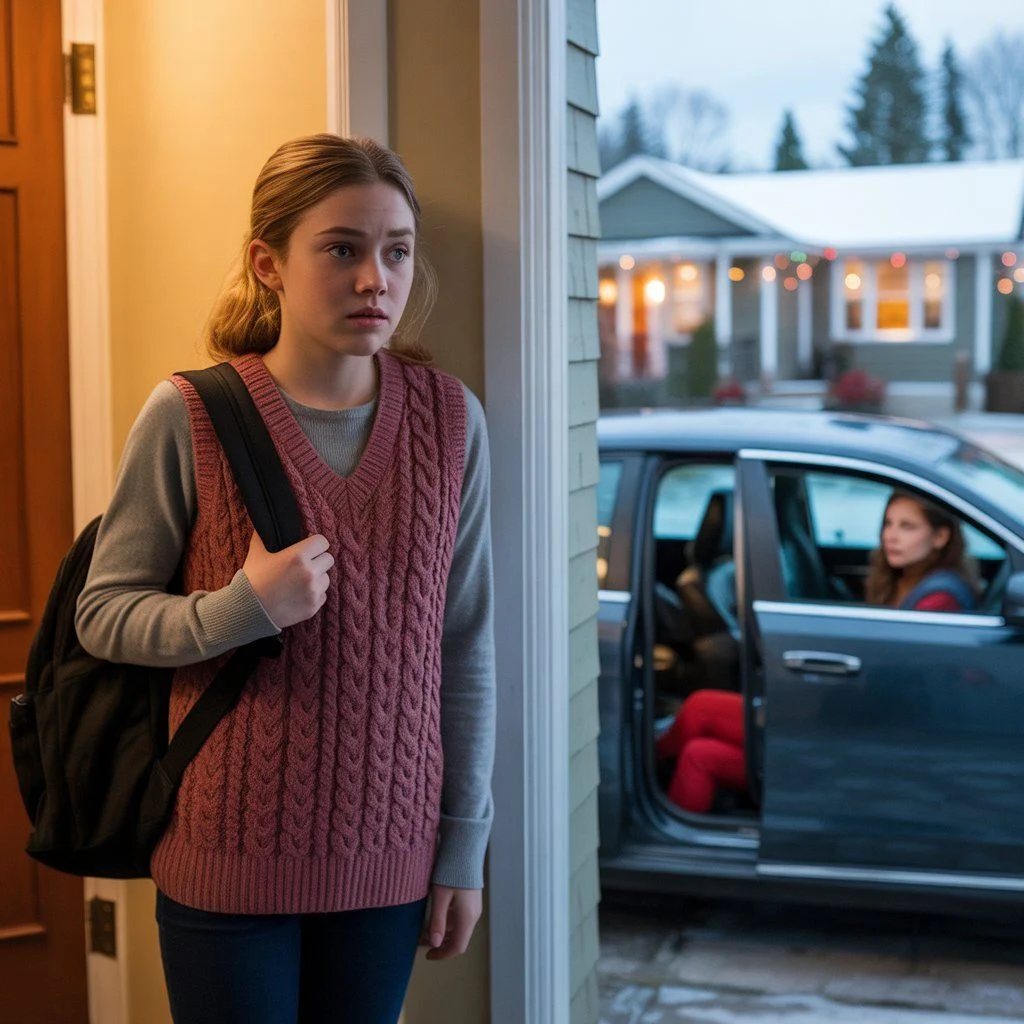
Milestone birthdays often come with big expectations, especially when someone decides to celebrate by gathering loved ones in a far-off destination. For one woman, however, an invitation to her sister’s overseas birthday party came with fear rather than excitement, turning what should have been a joyful occasion into a deeply emotional family conflict. Living with a spinal cord injury means her daily life already involves careful planning and constant awareness of medical risks.
When her sister announced plans to celebrate her 30th birthday abroad, those risks suddenly felt impossible to ignore. As the conversation unfolded on social media, readers found themselves weighing family loyalty against personal safety, and questioning where compromise should end. The discussion quickly became less about travel and more about autonomy, boundaries, and the realities of living with a disability in a world that often underestimates its impact.
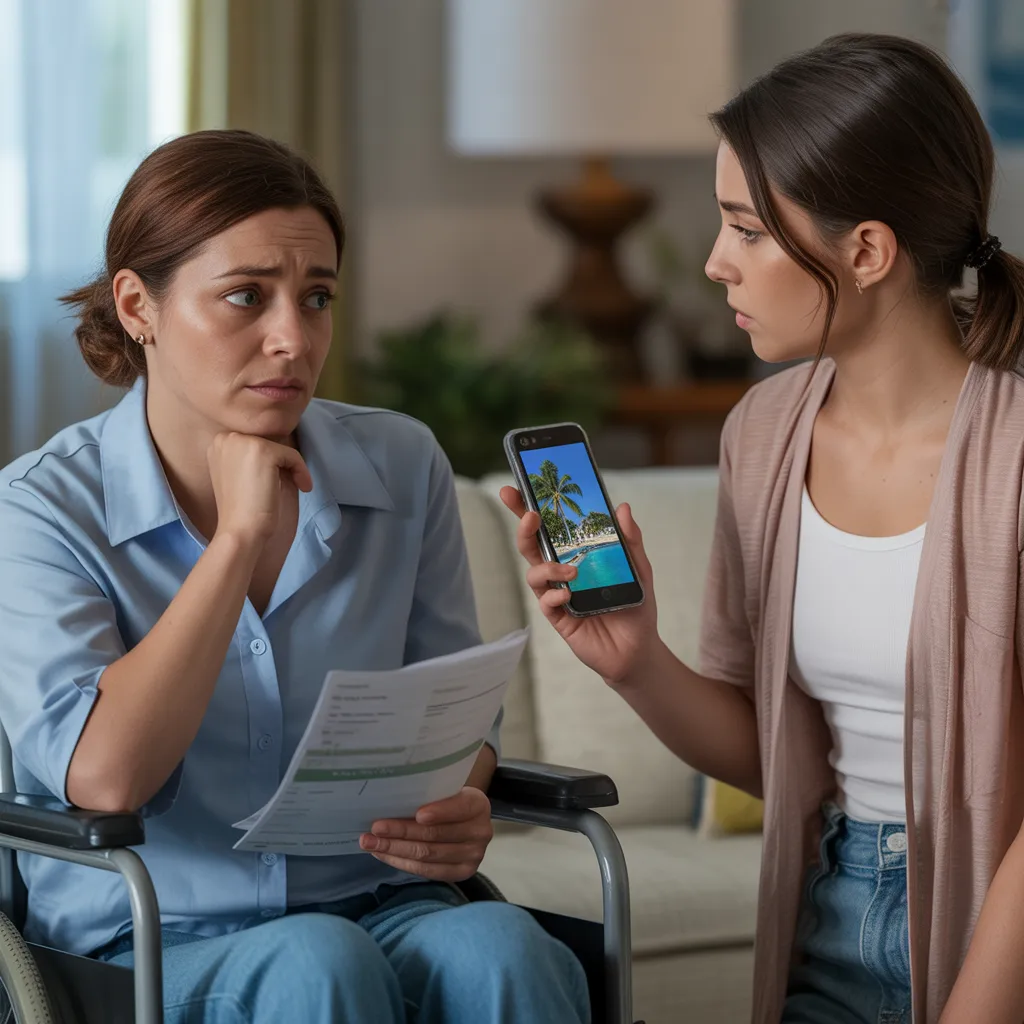
The disagreement surfaced as the sister announced a large celebration far from home
Health concerns quickly took center stage as the location became clear

Daily medical realities made the idea of international travel especially frightening
Despite reassurance, the pressure to attend continued to build
A proposed compromise failed to resolve the emotional divide
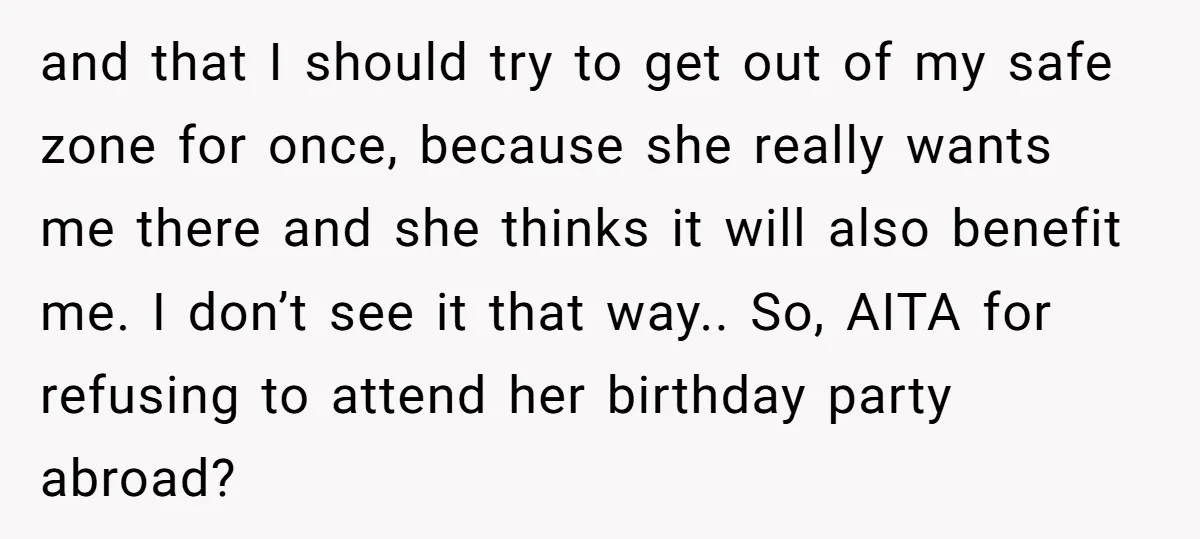
This conflict highlights a common disconnect between intention and lived reality. From the sister’s viewpoint, the invitation may feel loving and inclusive, driven by a desire to celebrate a milestone with everyone she cares about. For someone without chronic health concerns, the risks may seem abstract or manageable, making encouragement feel supportive rather than dismissive.
For the poster, however, the decision is grounded in years of experience navigating medical uncertainty. Chronic conditions often require constant vigilance, and even minor disruptions can escalate quickly. According to the World Health Organization, people with disabilities face significantly higher risks during travel due to accessibility gaps and limited emergency preparedness in unfamiliar environments.
Dr. Atul Gawande, a surgeon and public health researcher, has noted that “medicine is not just about survival, but about the ability to live with dignity and autonomy.” That autonomy includes the right to assess risk based on personal medical history, not optimism or external pressure. Practically, destination celebrations carry an unspoken understanding that not everyone will be able to attend. Travel distance, cost, accessibility, and health all play a role, and declining does not equate to a lack of love or support.
The poster’s offer to celebrate locally reflects willingness to participate within safe limits. Healthy family dynamics rely on respecting boundaries, even when disappointment follows. Encouraging someone to step outside their comfort zone can be positive, but doing so without acknowledging real medical constraints risks invalidating their experience. Ultimately, prioritizing health is not avoidance, it is self-preservation, and no celebration should require someone to gamble with their well-being.
Here’s the input from the Reddit crowd:
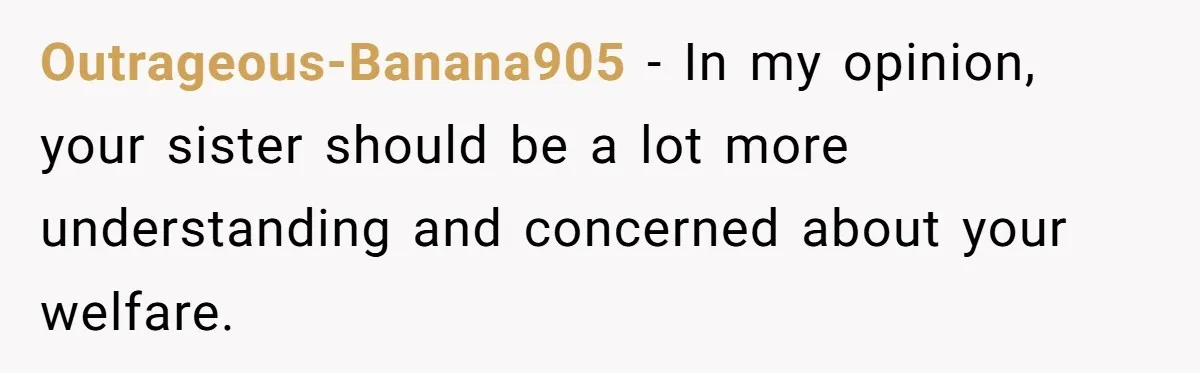
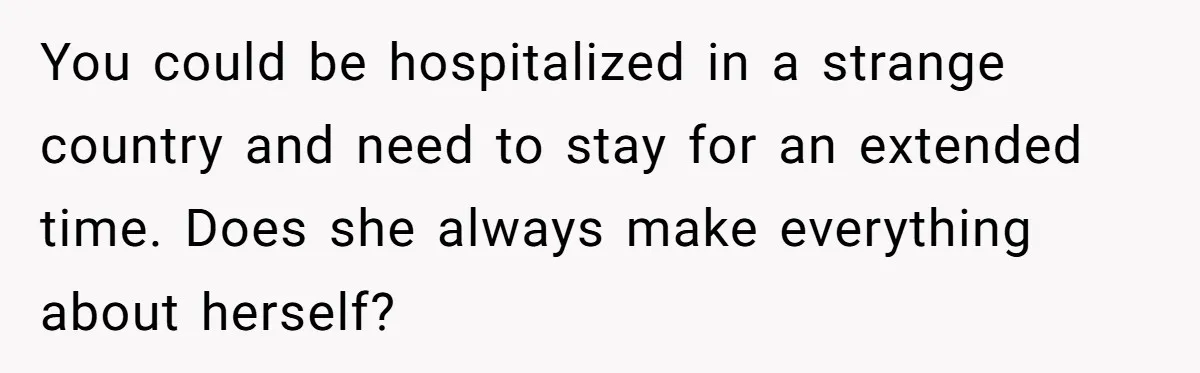
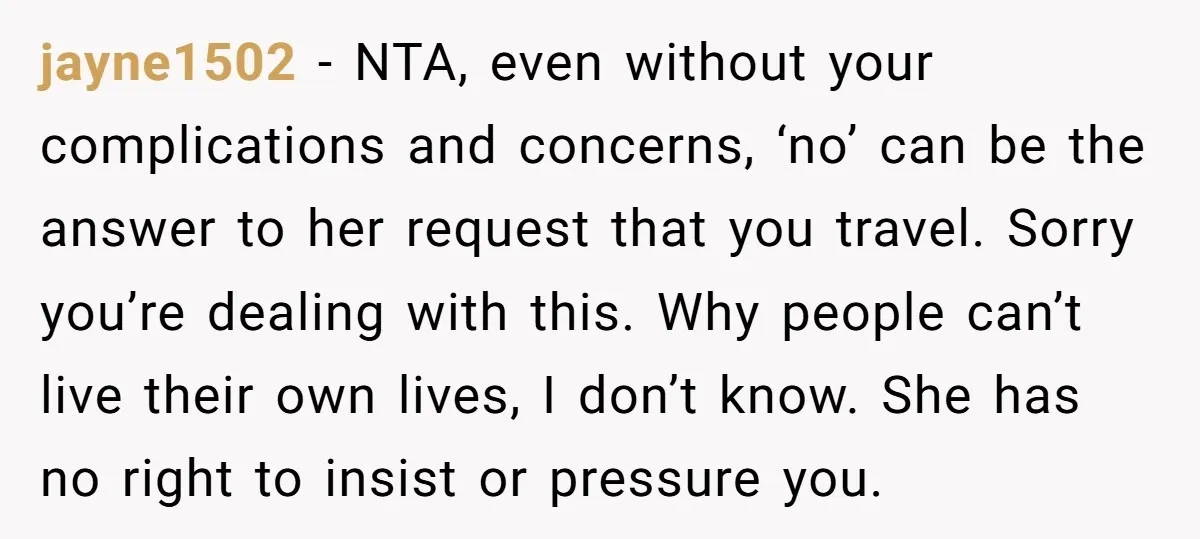
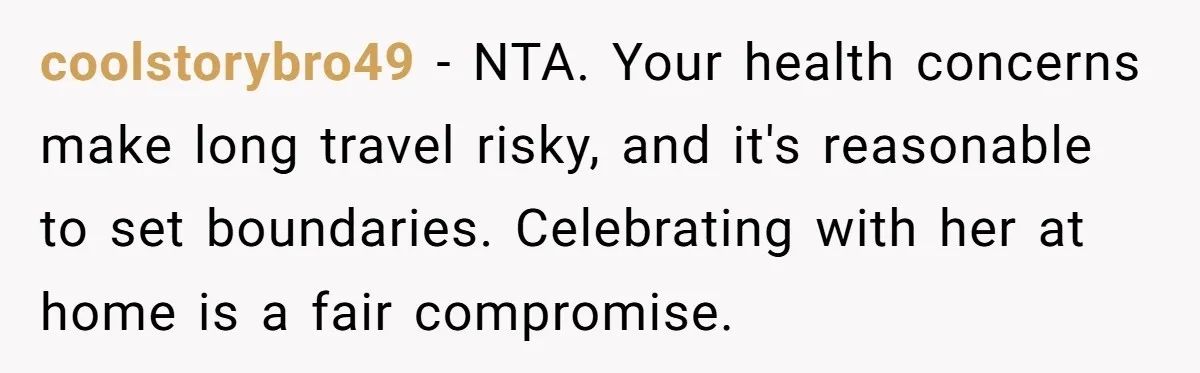
Many users firmly supported the decision, emphasizing safety and personal autonomy
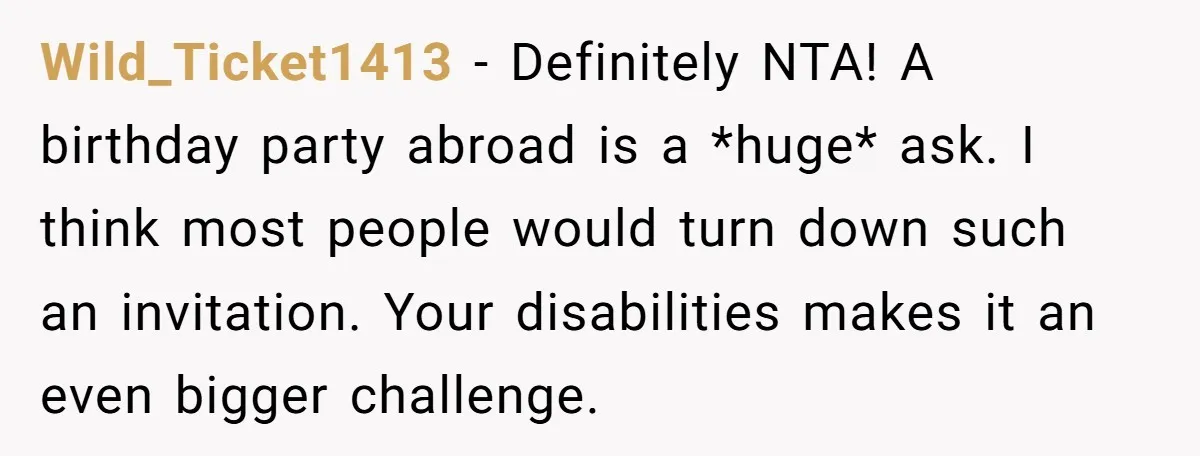


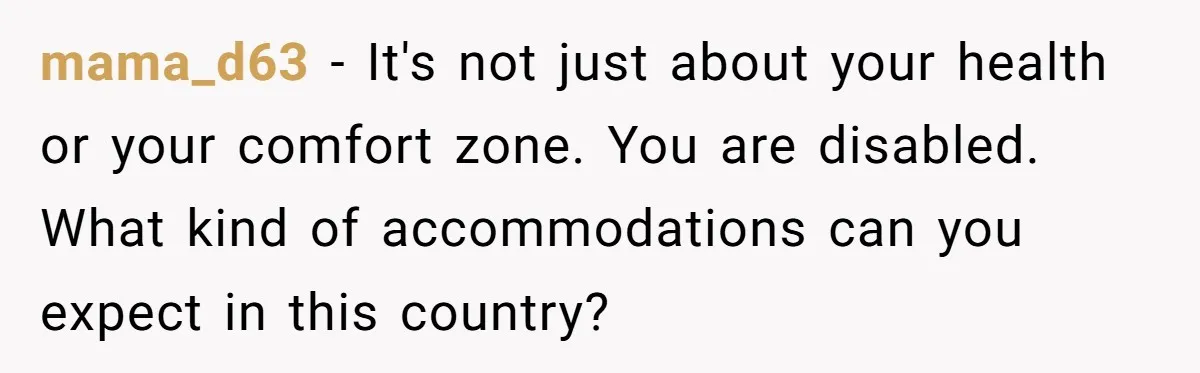
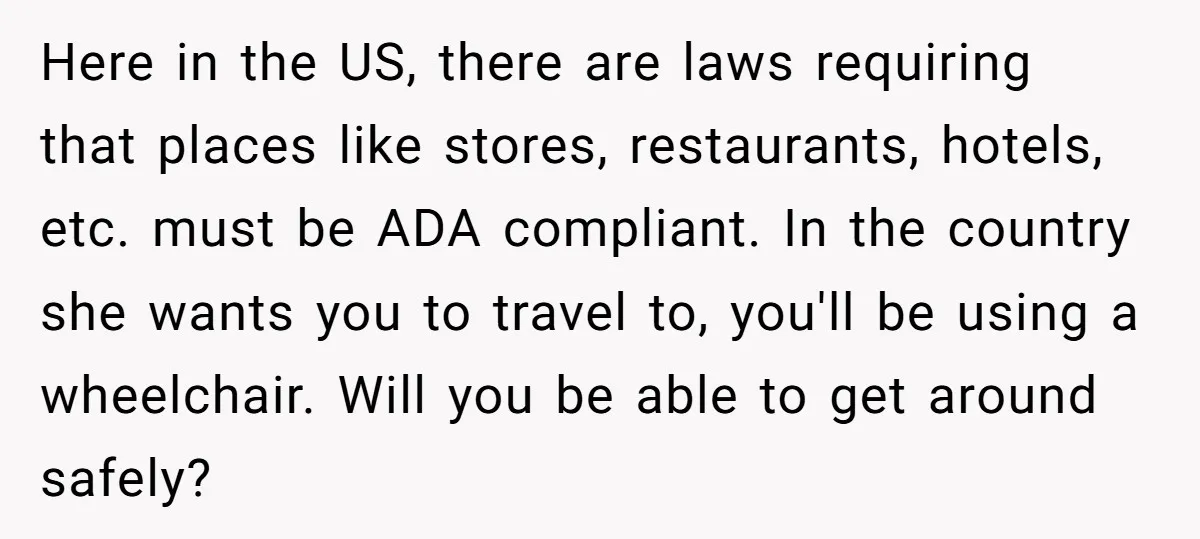
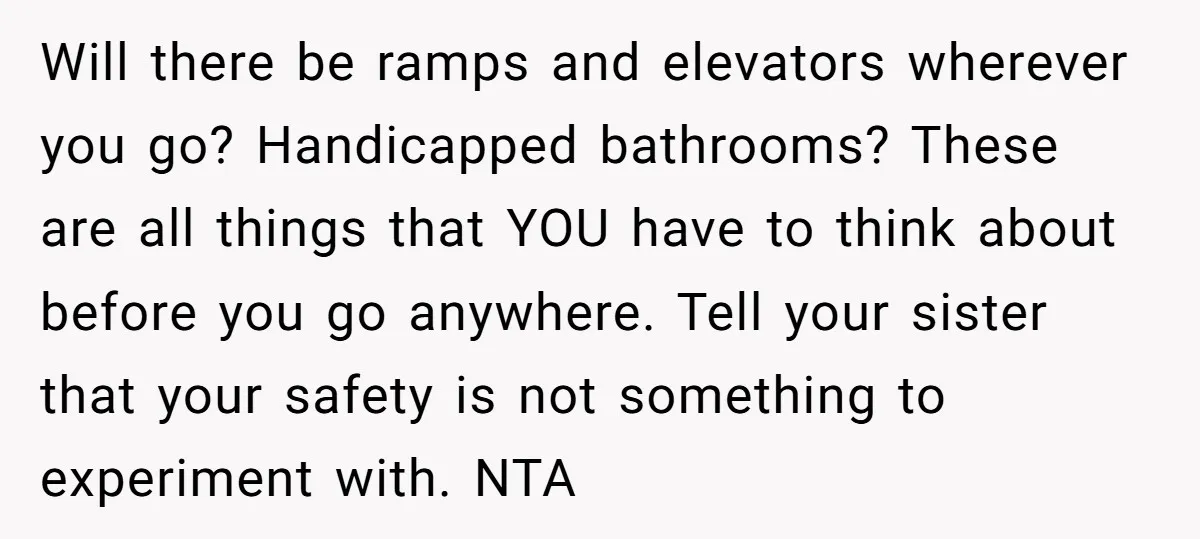
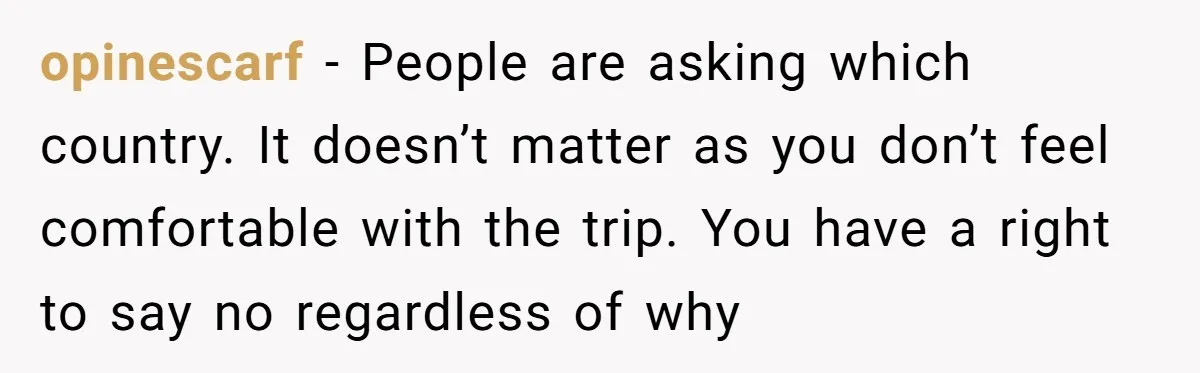
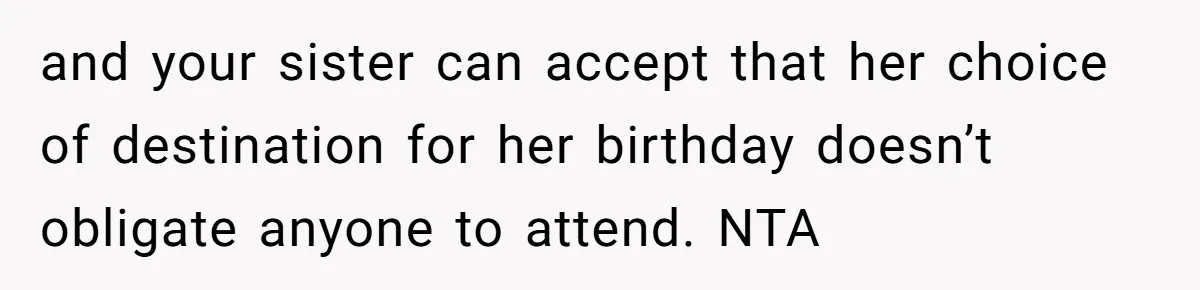
Others offered more nuanced or informational perspectives while still respecting the refusal
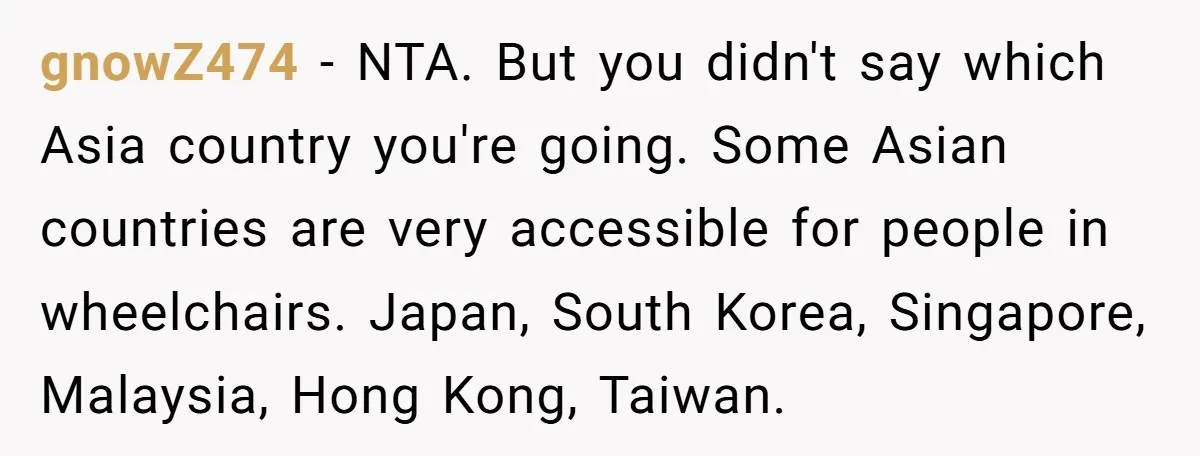
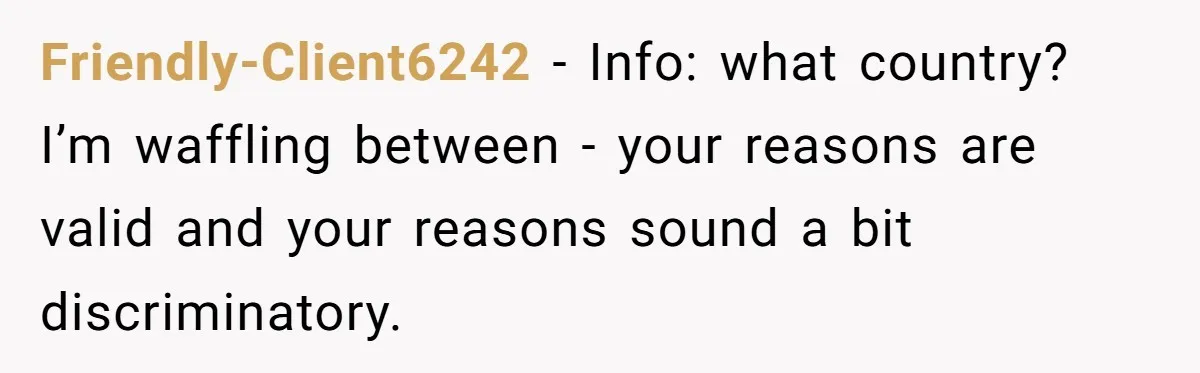
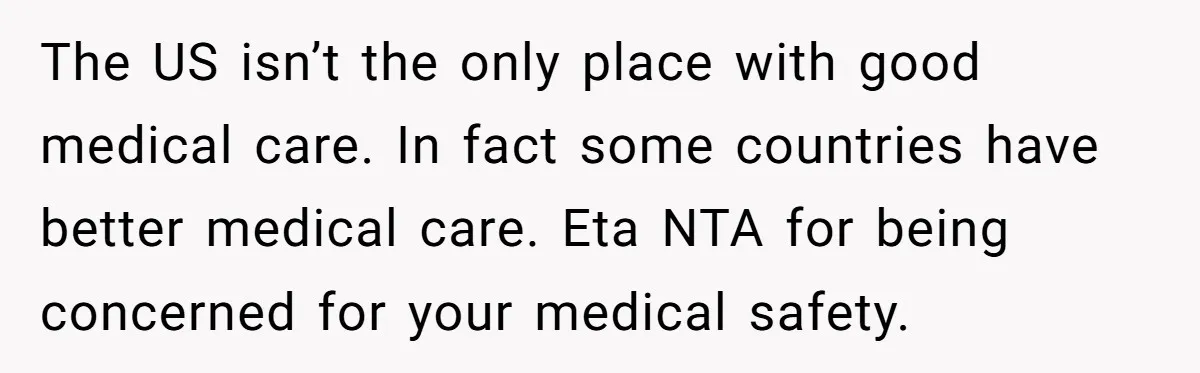
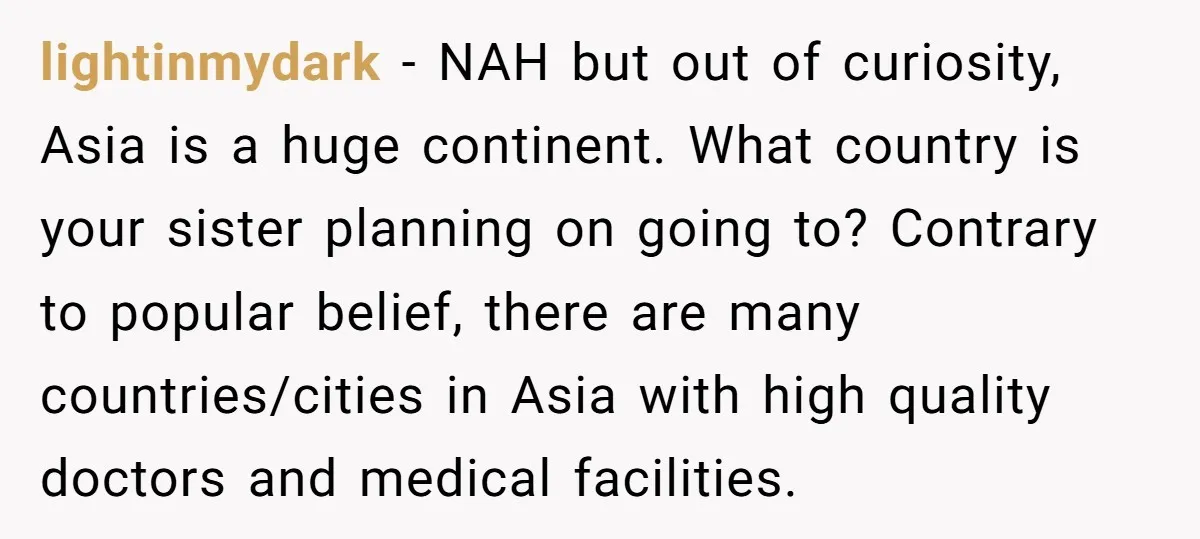
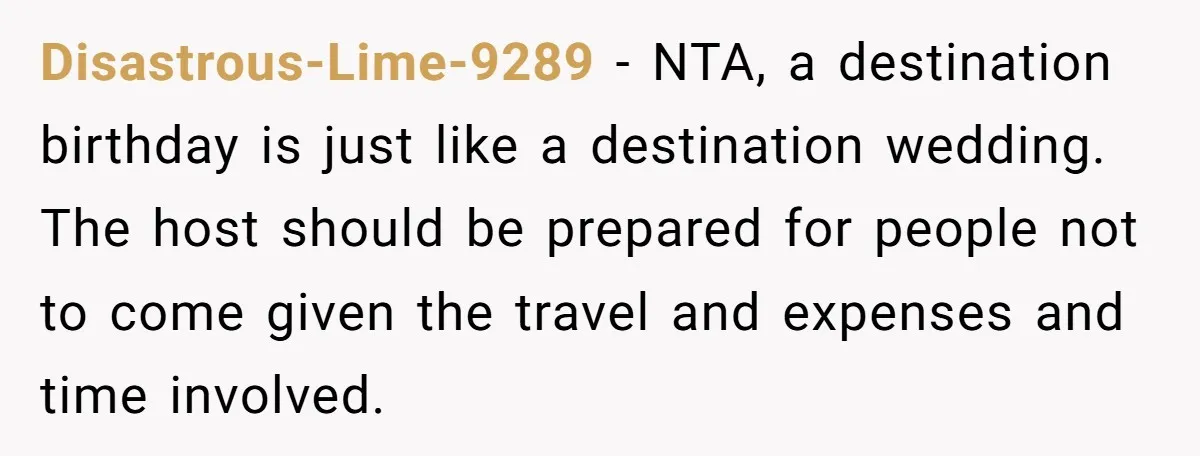
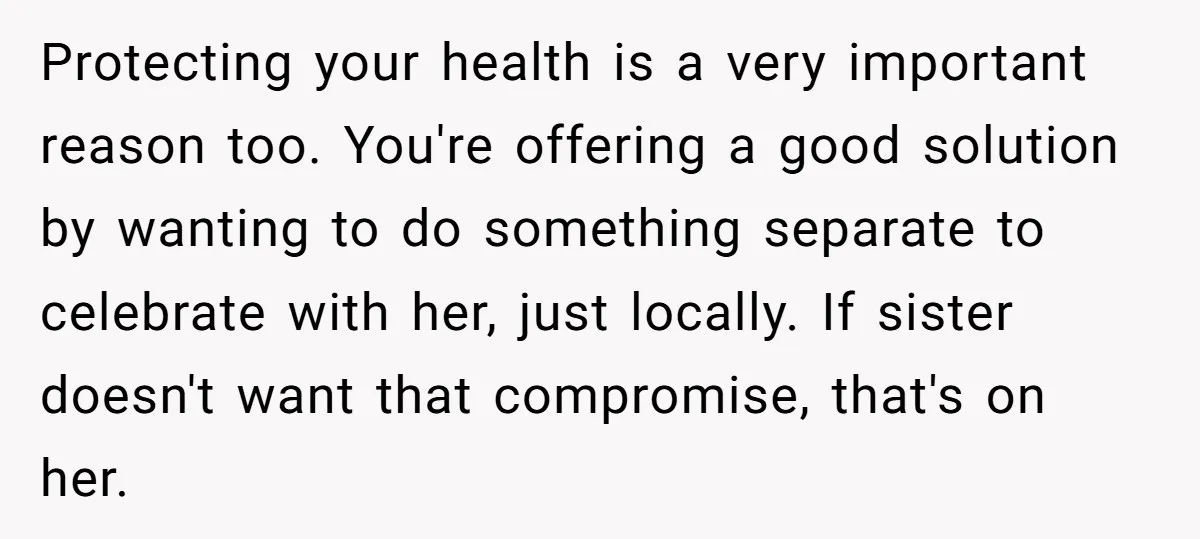
A few commenters leaned into blunt honesty or dry humor
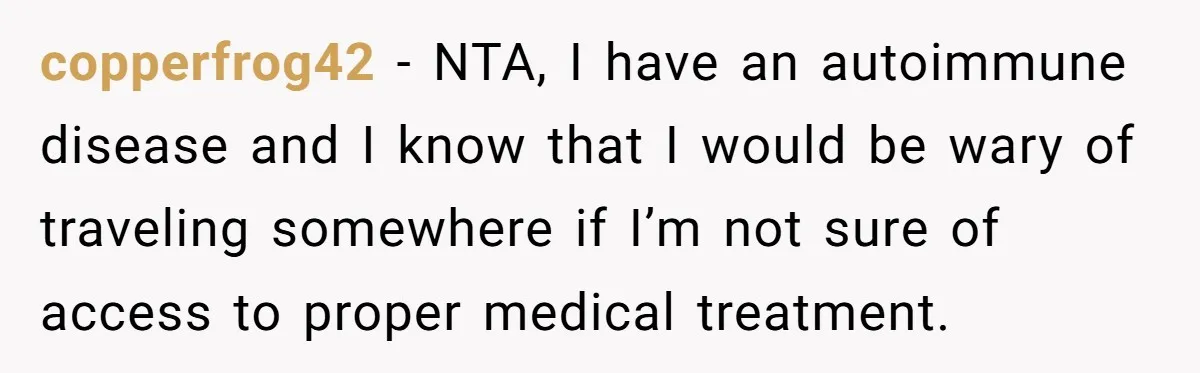
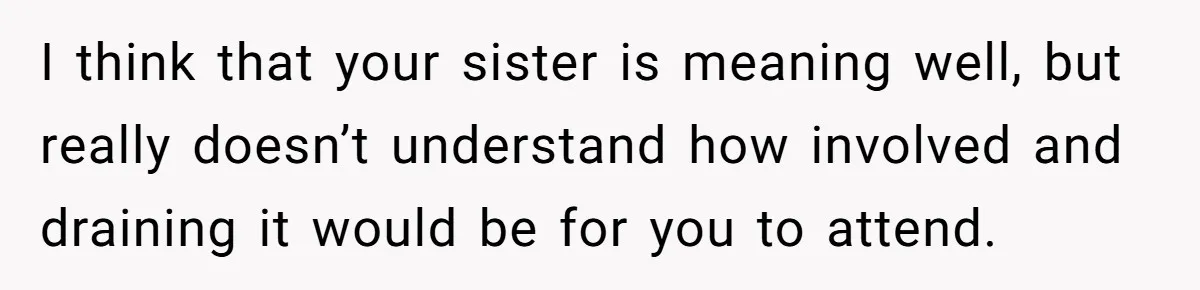
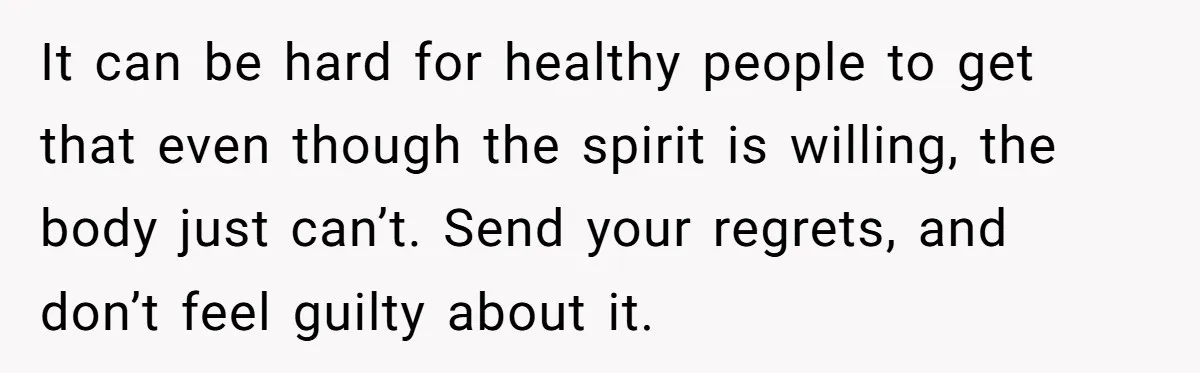


This situation underscores how destination celebrations can unintentionally exclude those with legitimate health or accessibility concerns. While the sister’s desire to celebrate abroad is understandable, expecting universal attendance overlooks individual realities. The poster’s refusal reflects careful self-assessment rather than fear or lack of support. As social media users largely agreed, boundaries around health deserve respect, even when emotions run high. In moments like this, should family expectations outweigh personal safety, or is saying no sometimes the healthiest choice?