
A 28-year-old man and his mother both declined an invitation from his 29-year-old sister to meet her new boyfriend, a man recently released from prison for selling methamphetamine. Despite being very close growing up—fighting like siblings but always best friends—the distance between their towns now means they don’t see each other as often. The sister met this man at church, insists he’s fully reformed and remorseful, and is deeply hurt that her family won’t even give him a chance.
The brother views the boyfriend’s past as unforgivable: someone who willingly destroyed lives and risked causing deaths for profit. He told his sister that if the man can stay clean and live honestly for the next two years, he’ll reconsider meeting him—and encourage their mom to do the same—but until then, he sees no reason to respect or engage with him. She’s furious, accusing him of being too judgmental and demanding.

‘AITA for refusing to meet my sister’s new boyfriend because he used to be a meth dealer?’
He and his sister grew up extremely close despite constant fights, only a year apart in age:

They now live a few towns apart due to life circumstances:




The sister is angry, arguing he served his time, is remorseful, and deserves a second chance:


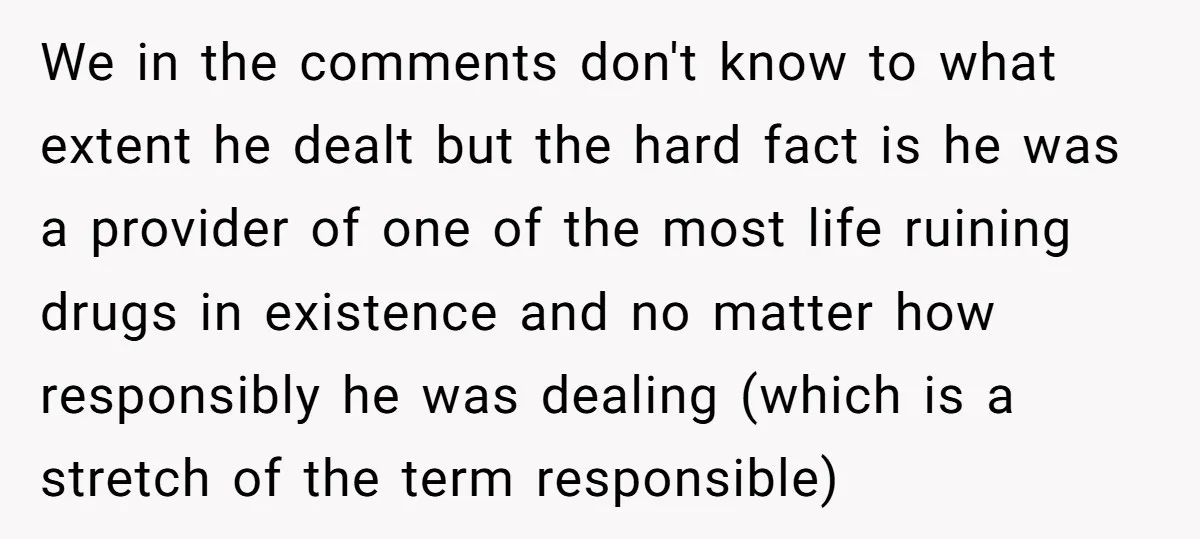
This conflict pits family loyalty and support against deep moral objections to a partner’s criminal history—specifically drug dealing, which carries heavy societal stigma due to its destructive impact. The brother isn’t wrong to feel protective or skeptical; meth dealing often involves direct harm to users and communities, and recidivism rates for drug offenders remain high (U.S. Sentencing Commission data shows over 75% of state drug offenders rearrested within five years). Fresh out of prison, without proven long-term change, caution is understandable—especially when the relationship formed in a church setting, where “reformed” claims can sometimes serve as cover.
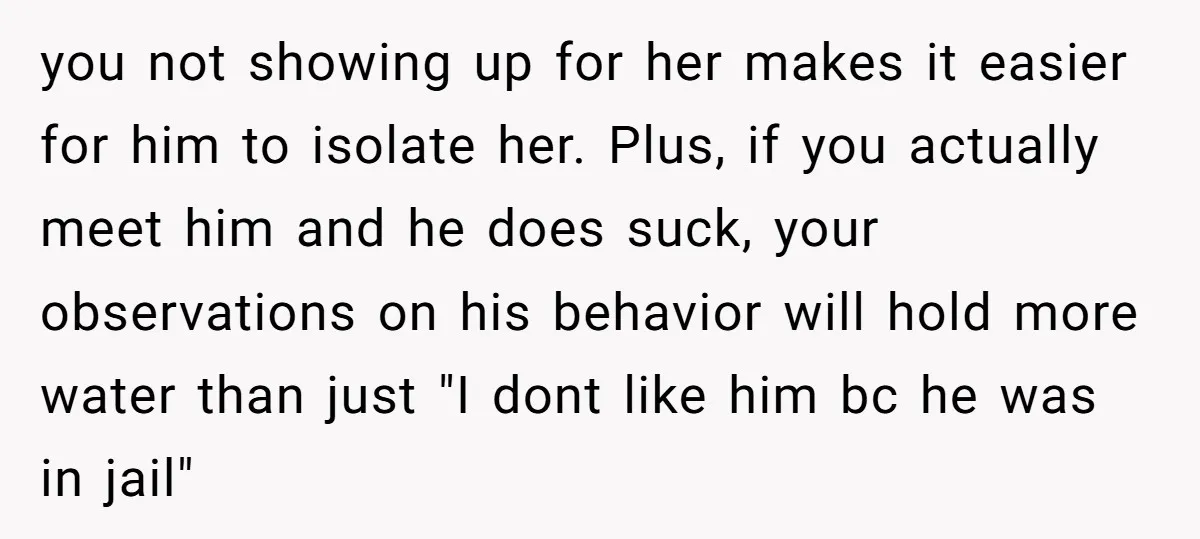
However, outright refusal to meet, combined with harsh language like “piece of garbage” and a rigid two-year ultimatum, risks isolating the sister at a vulnerable time. Domestic violence and abuse experts frequently note that isolation from family is a classic abuser tactic; refusing contact could unintentionally push her closer to someone potentially harmful. Meeting doesn’t mean approval—it means observing, asking questions, and staying connected so the sister knows she has a safety net.
Relationship therapist Esther Perel often discusses how judgment shuts down dialogue while curiosity opens it: “Understanding someone’s story doesn’t excuse their actions, but it humanizes them and informs safer choices.” The brother could meet once, remain civil, watch for red flags (respect toward sister, accountability for past, stable life), and keep lines open without endorsing the relationship. The two-year rule feels punitive rather than protective; a shorter initial meeting with ongoing boundaries might better balance concern and support.
Ultimately, he doesn’t owe the boyfriend anything, but he does owe his sister presence in her life. Skipping the meet entirely could fracture the sibling bond long-term. A middle path—meet briefly, stay watchful, withhold full trust until actions prove change—protects everyone better than a hard no.
Here’s the feedback from the Reddit community:
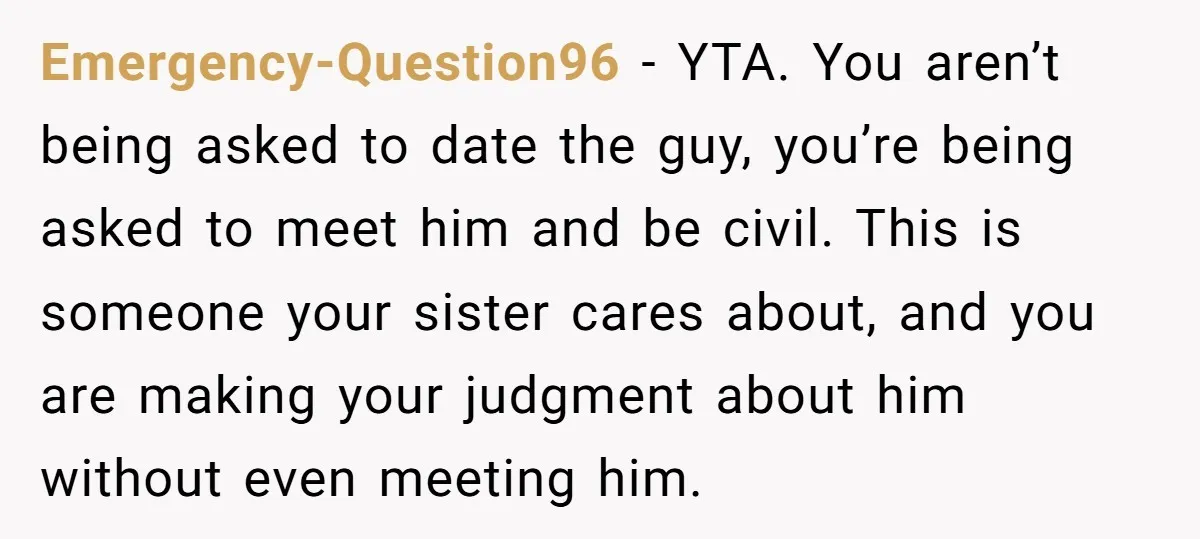
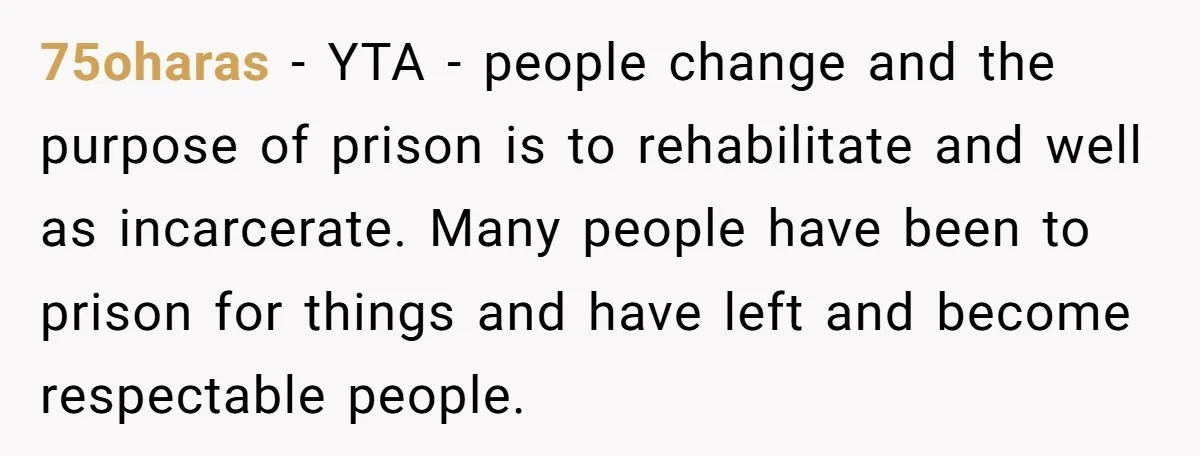
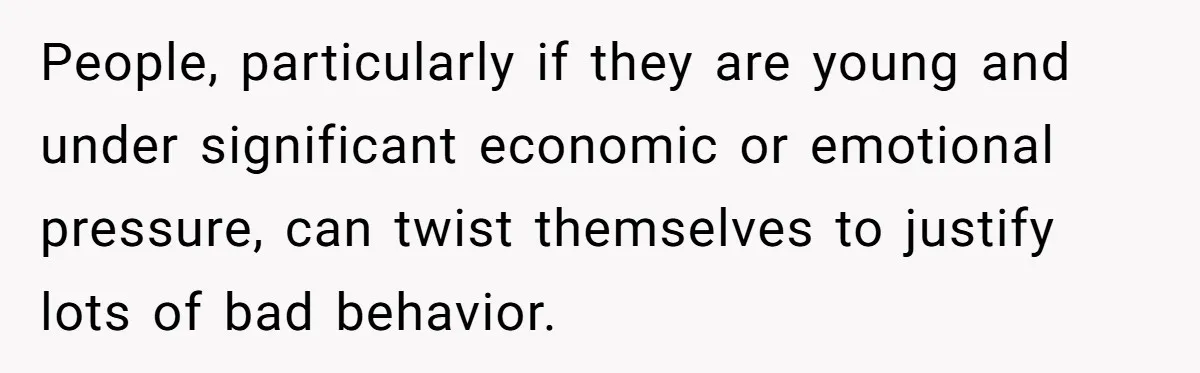
Reddit responses split sharply, with many calling YTA for refusing to meet and judging without firsthand knowledge, while others supported NTA for caution given the serious crime:
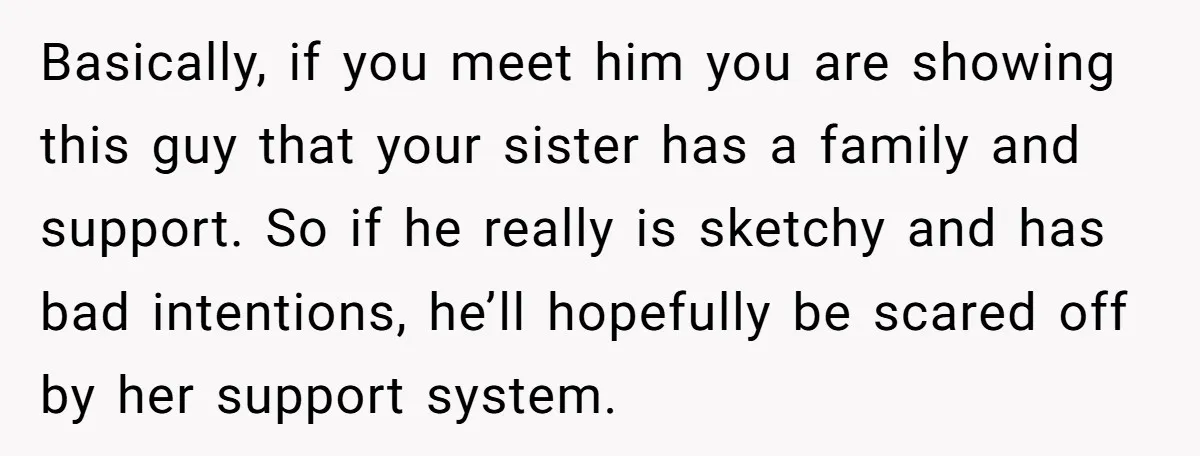
Many argued meeting shows support for the sister and could deter potential harm:



















![[Reddit User] − You & your Mom are free to make your own decisions however I can’t imagine your sister will be thrilled with your complete lack of trust of...](https://loknam.com/aita/images/dde8ccbb91/wp-editor-1768813568009-24.webp)











This dilemma exposes deep tensions between forgiveness, family duty, and personal boundaries when a loved one’s partner has a serious criminal history. Refusing to meet isn’t inherently wrong, but the hardline stance and long timeline risk damaging the sibling bond more than the boyfriend’s past might. A single cautious meeting could offer insight without compromising principles.
What do you think? Would you meet a sibling’s partner with this background, or hold firm like he did? How long would you need to see real change before trusting someone? Drop your thoughts below!