
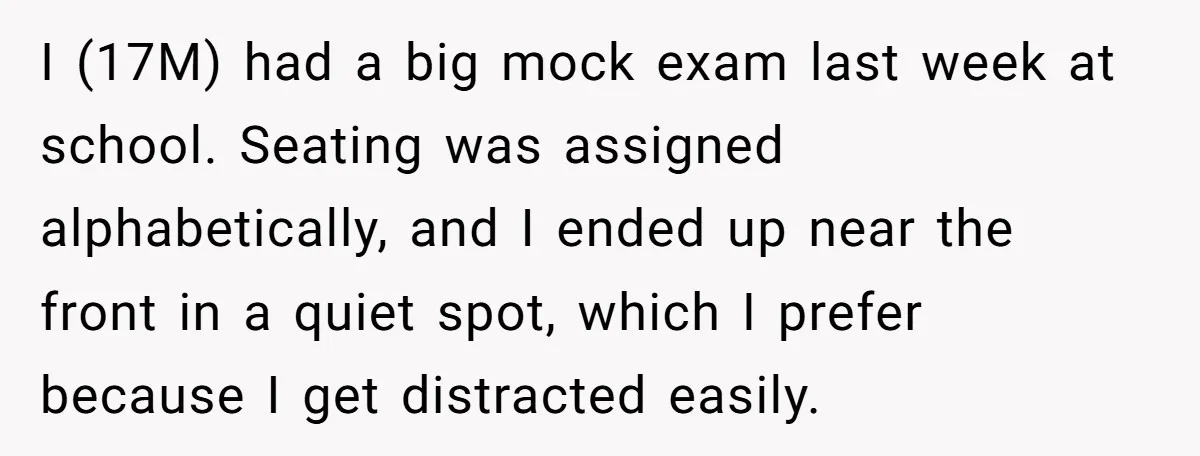
A 17-year-old student found himself at the center of classroom tension after refusing to swap seats during a mock exam. The seating arrangement had been assigned alphabetically, placing him near the front in a quiet spot that helped him focus.
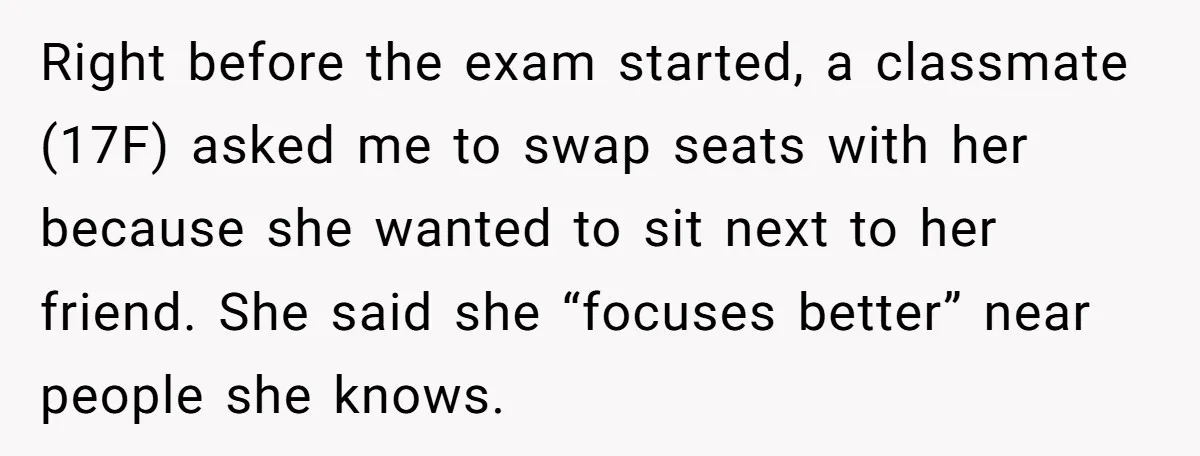
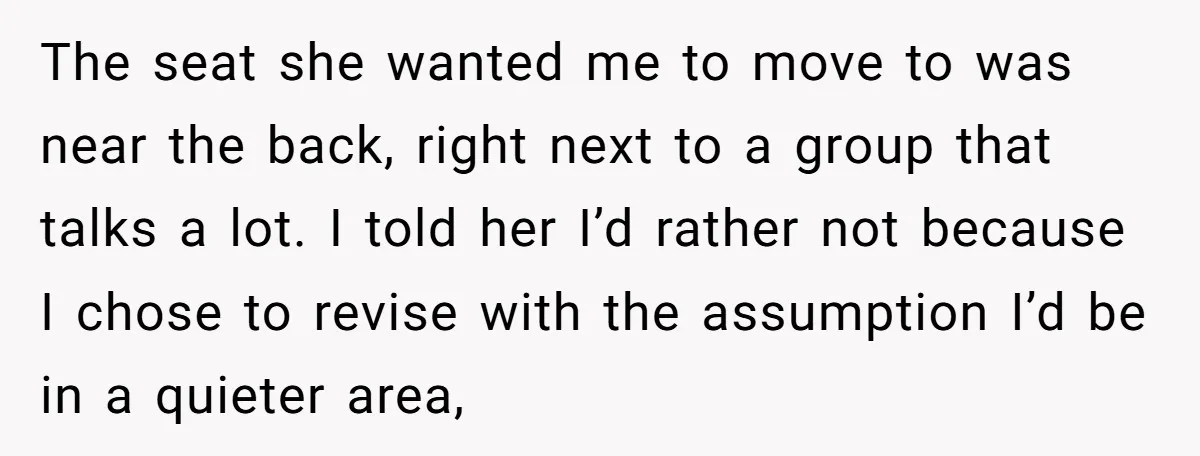
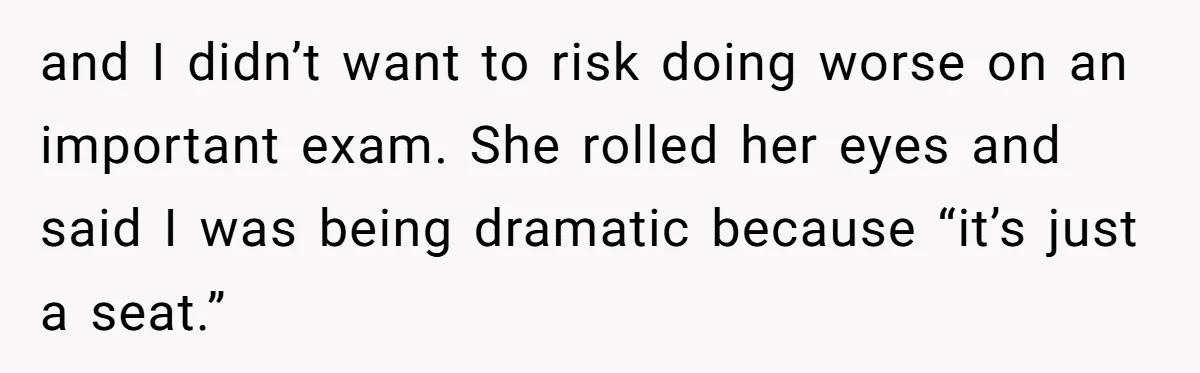
Moments before the test began, a classmate asked to trade places so she could sit beside her friend, claiming she concentrates better around people she knows. He declined, concerned about distractions in the back row. Although a teacher quickly confirmed that seats should not be changed, the social fallout lingered long after the exam ended.

‘AITA for refusing to swap exam seats with a classmate?’
The seating arrangement initially worked in his favor.
A last-minute request created unexpected pressure.
The teacher intervened, but the social tension continued.
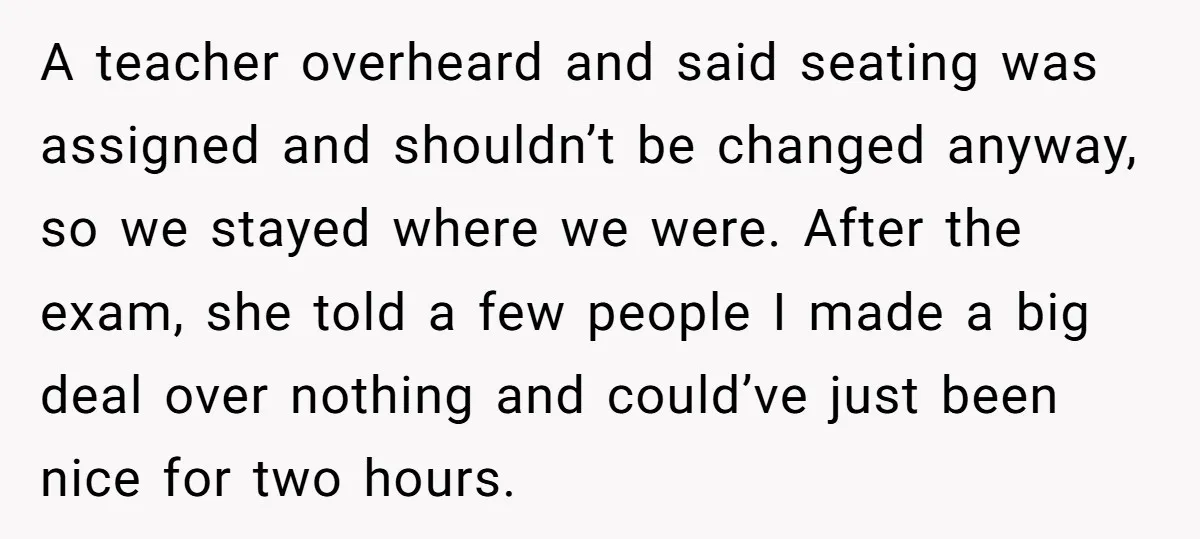
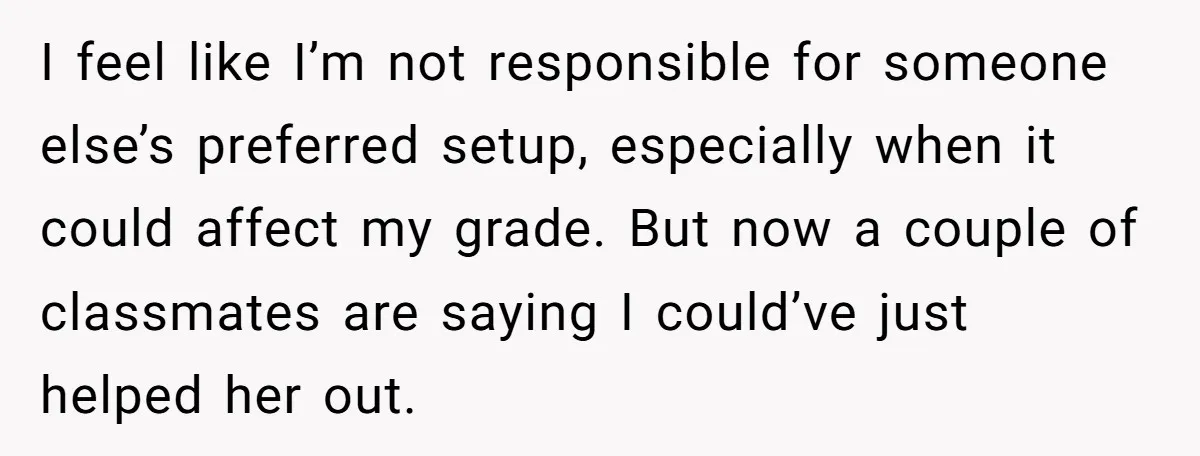
Academic settings often require structured seating arrangements to preserve fairness and reduce opportunities for misconduct. In this situation, the assigned seating system was clearly in place, and the teacher reinforced that rule. From a procedural standpoint, the student followed expectations by remaining in his designated seat.
From a psychological perspective, exam performance can be strongly influenced by environment. Students who are easily distracted may rely heavily on quieter seating to maintain focus. Asking someone to move to a noisier area moments before an important test places that individual at a disadvantage. While the classmate framed it as a small favor, the perceived impact on his grade made the request more significant.
On the other hand, social dynamics among peers often value flexibility and kindness. Some classmates may interpret refusal as unwillingness to compromise. However, prioritizing one’s academic outcome during a formal exam is reasonable. The broader issue highlights how individual needs can clash when fairness rules intersect with social expectations.
Check out how the community responded:
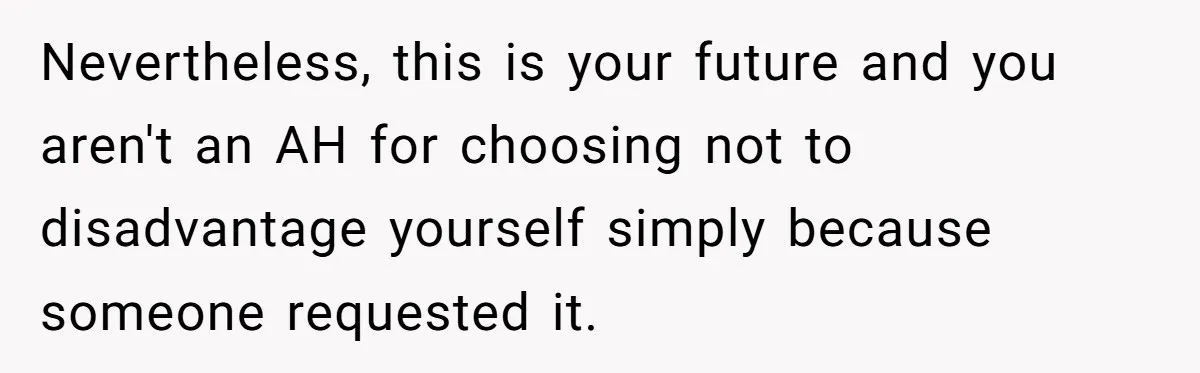
Many users strongly supported the student’s decision to stay put.




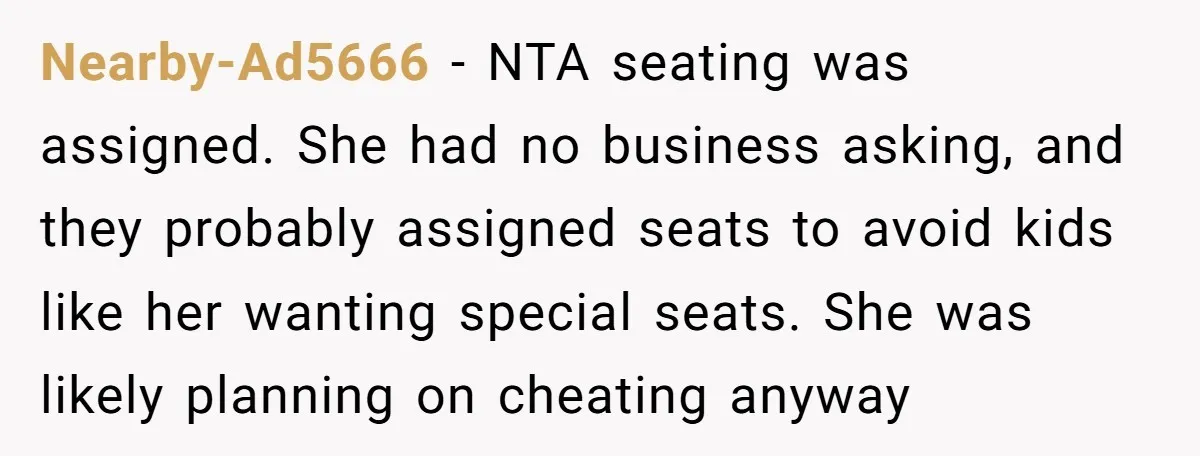

Others offered detailed reasoning and personal perspective.
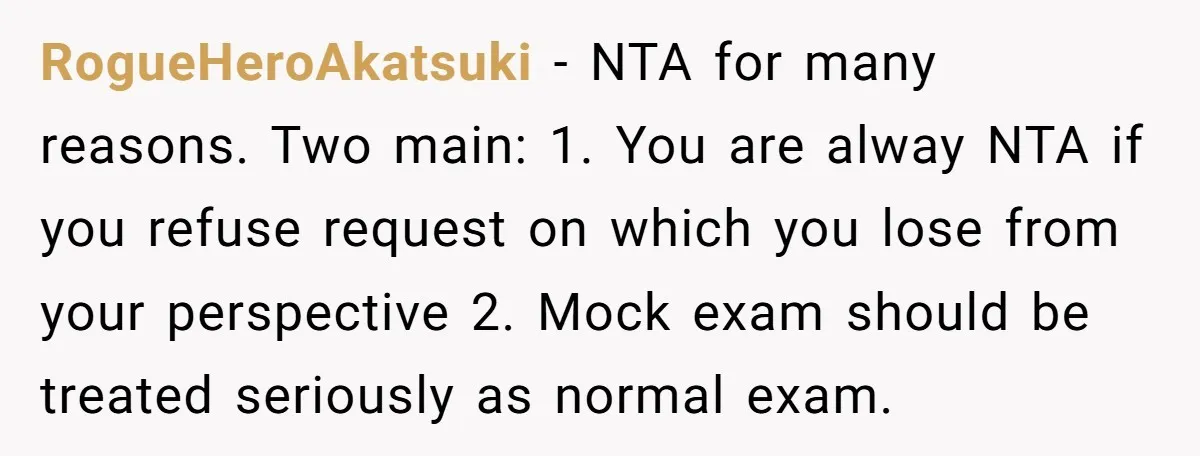
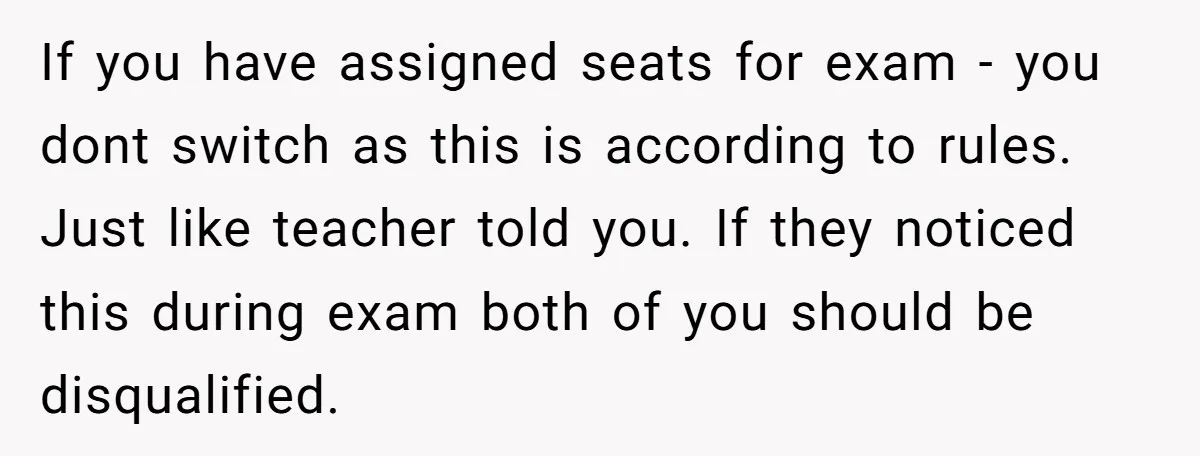

A few comments added blunt clarity to the situation.
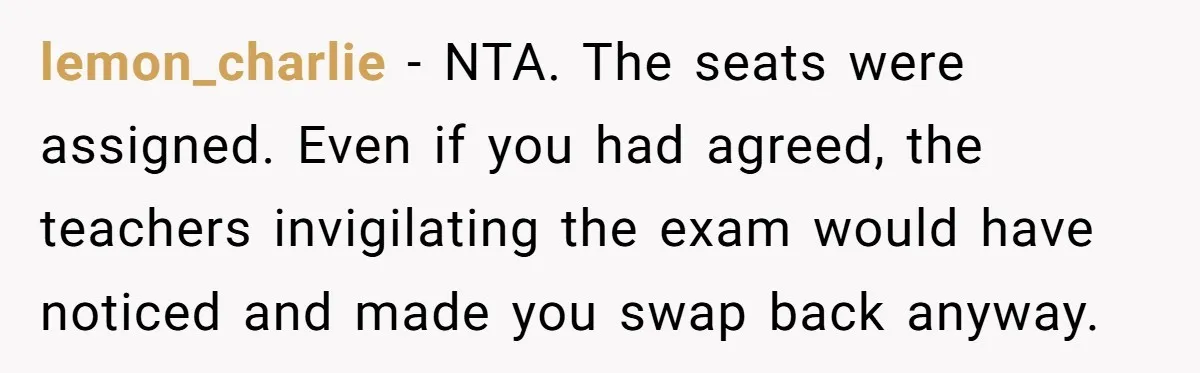
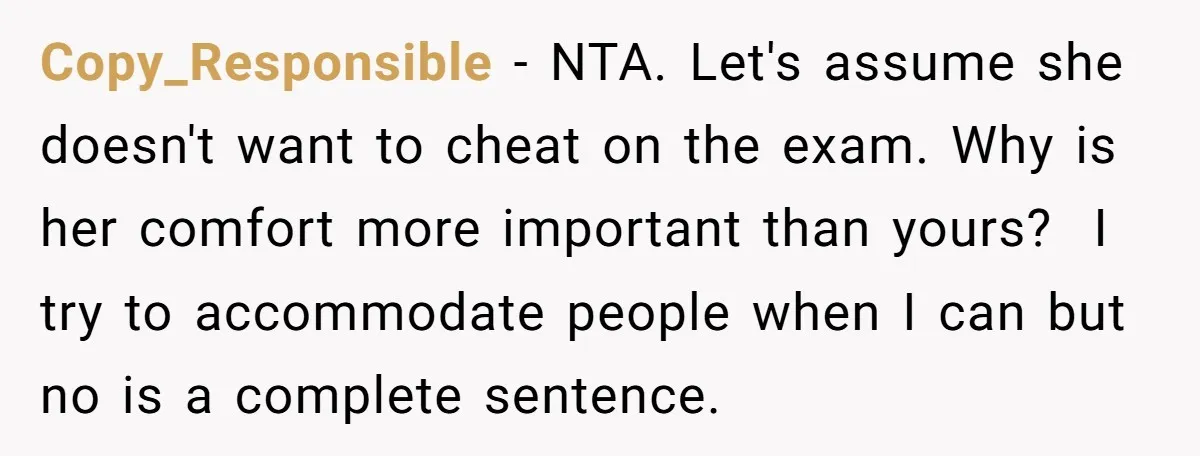

This story underscores how small classroom decisions can carry bigger implications when grades and fairness are involved. While swapping seats may appear harmless on the surface, it can affect concentration, perceived fairness, and even rule compliance.
Should students prioritize helping classmates in situations like this, or is protecting their own academic performance the right call? When rules are clearly established, is flexibility still appropriate? Share your perspective on where courtesy ends and self-advocacy begins.