
A woman and her husband are facing intense pressure from his mother to travel south for the holidays and start a “new tradition” at her house, where she’ll host about 20 people. The catch? The trip would leave the woman’s small family — just 6 adults and maybe 2 kids — and her widowed mother completely alone during what are already difficult, meaningful holidays for them.
Her dad passed away 5 years ago, and she took over cooking and hosting to keep traditions alive. Meanwhile, her mother-in-law moved south to be closer to her own parents, but now expects everyone else to adjust. The husband only gets the actual holiday off work, meaning he’d burn vacation days on travel, sleeping arrangements would be uncomfortable, and costs would add up. They’ve offered to host everyone at their place instead, but MIL isn’t having it — she’s calling them selfish and demanding sacrifices. Is the woman wrong for refusing to leave her mom alone?

‘AITA for refusing to travel to my in-law for the holidays because it would leave my small family and widowed mother alone?’
The in-laws’ move south changed everything, but not everyone is willing to adapt:

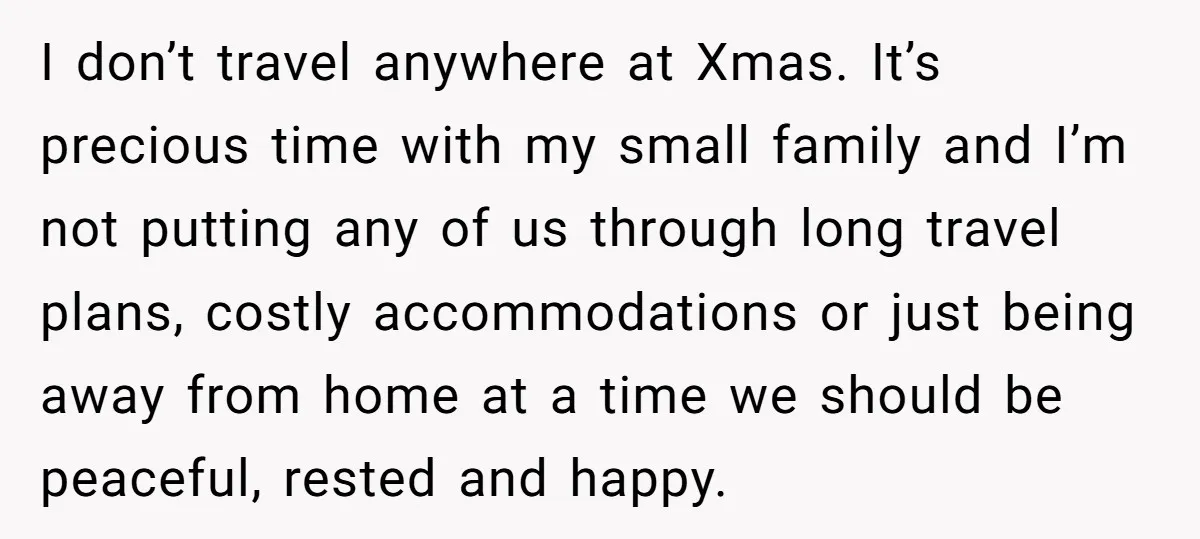
Holidays have become deeply personal and small since losing her dad:

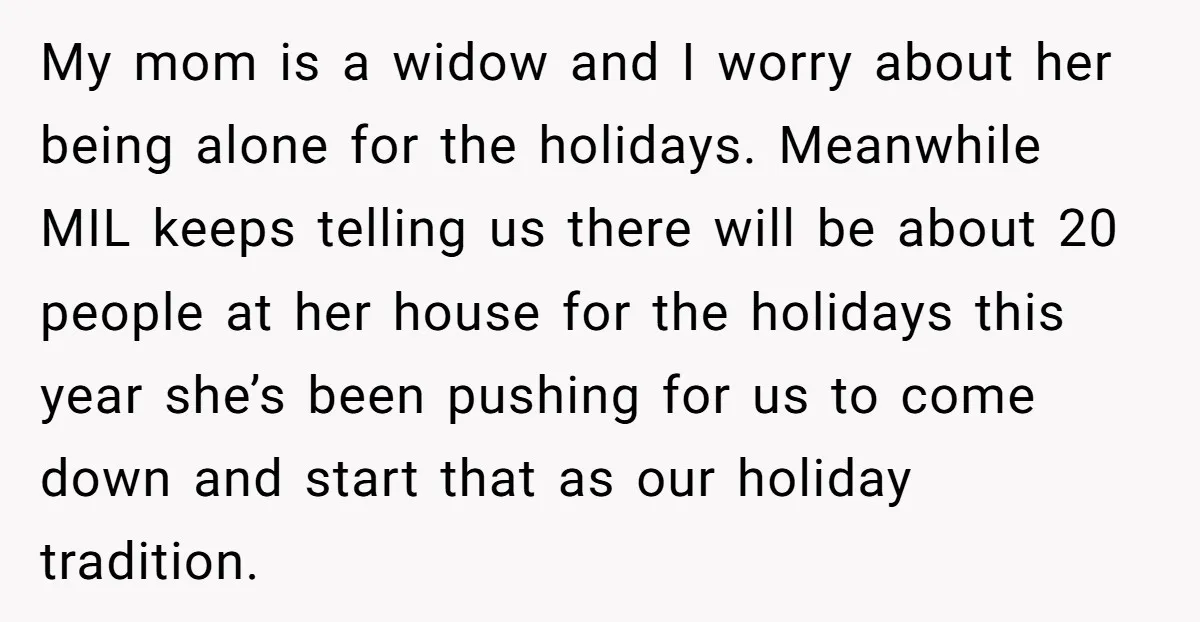
Logistics make the trip impractical:

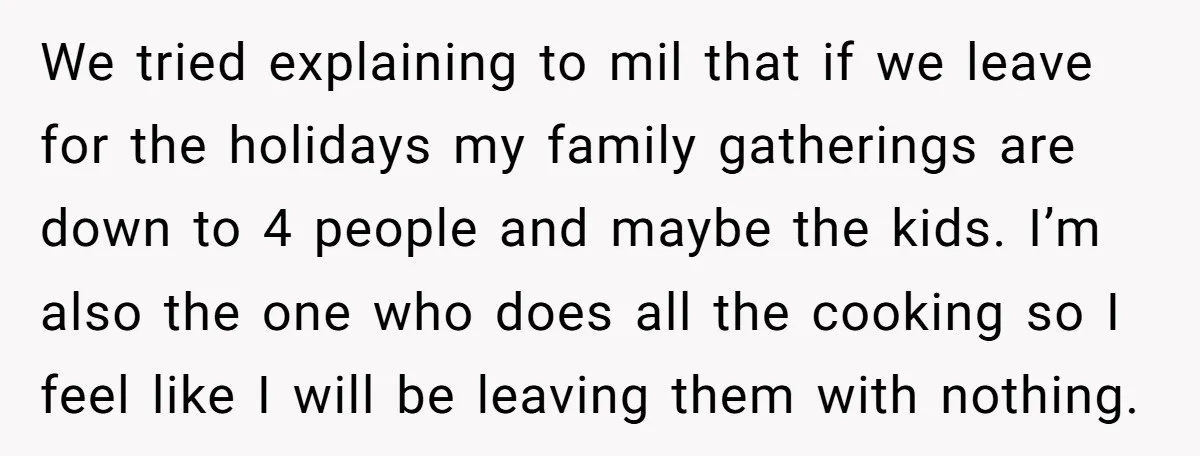
They offered a fair compromise:
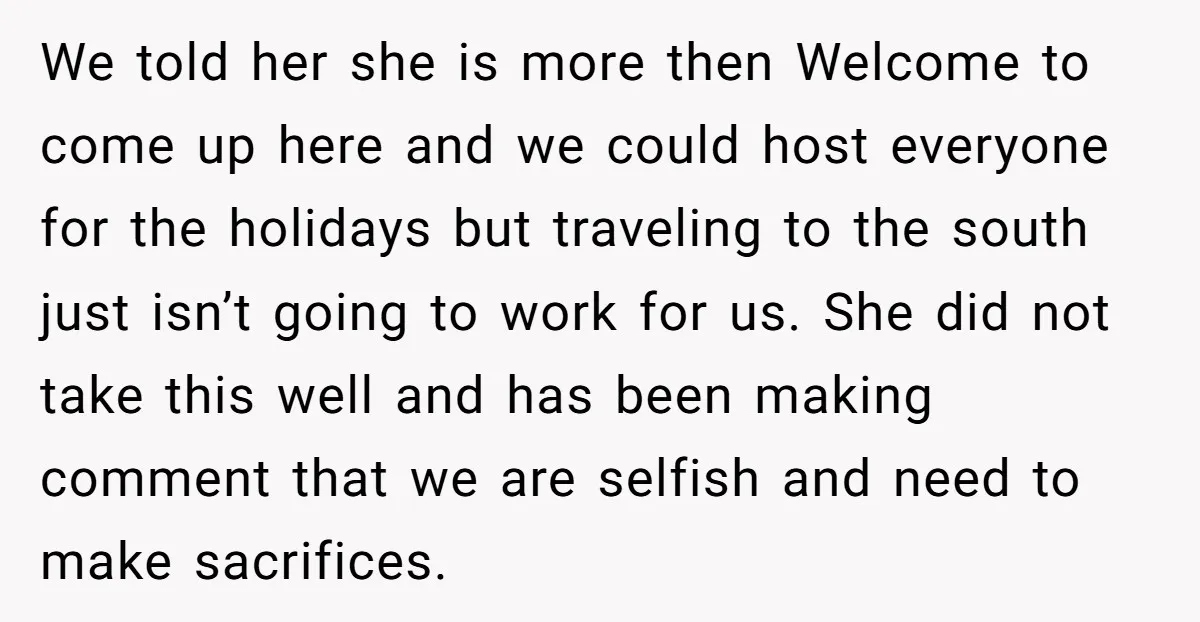


This situation is a classic holiday boundary clash: one side wants to impose a “new tradition” after their own life change (moving south), while the other prioritizes protecting small, meaningful family rituals — especially when grief and loss are involved. The MIL’s insistence that they “make sacrifices” ignores the real sacrifices the couple would be making: time, money, vacation days, and leaving a widowed mother alone.
From the other perspective, some in-laws feel hurt when adult children don’t prioritize their gatherings. However, experts stress that holidays should be about mutual respect, not unilateral demands. Family therapist Dr. John Gottman notes in his work on relationships: “Healthy families accommodate each other’s needs rather than demanding one side conform.” Here, the couple offered a generous alternative (hosting everyone), but the MIL’s guilt-tripping reveals control rather than care.
Practical advice: Stand firm — your holidays are valid, especially with grief involved. Let your husband handle communications with his mom to avoid triangulation. If guilt creeps in, remind yourself: choosing your mom’s company isn’t selfish; it’s compassionate. Suggest a separate visit later in the year when travel is easier. Holidays are hard enough without added pressure — protect your peace.
See what others had to share with OP:
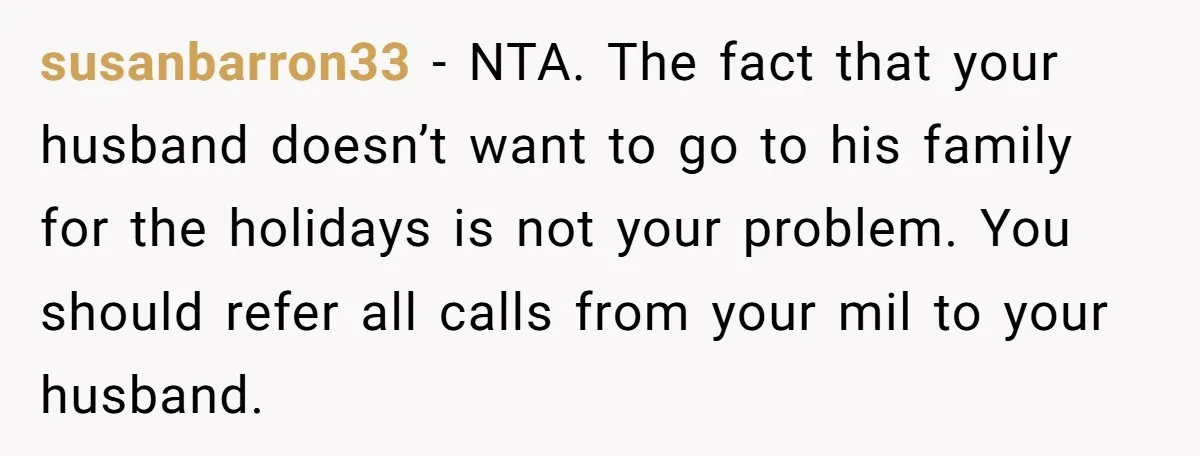
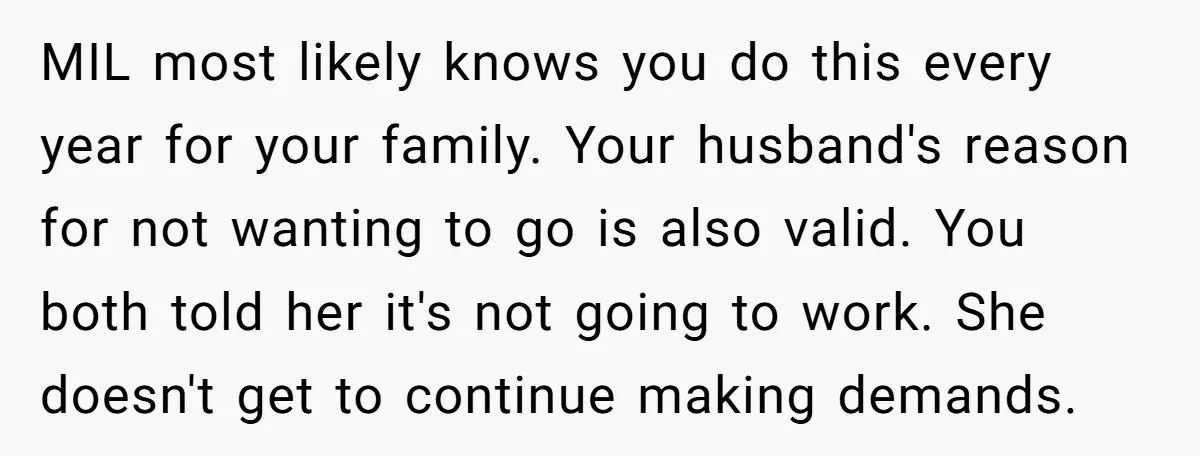
The online community overwhelmingly supported the couple, declaring them NTA and criticizing the MIL for her entitled demands and guilt-tripping:
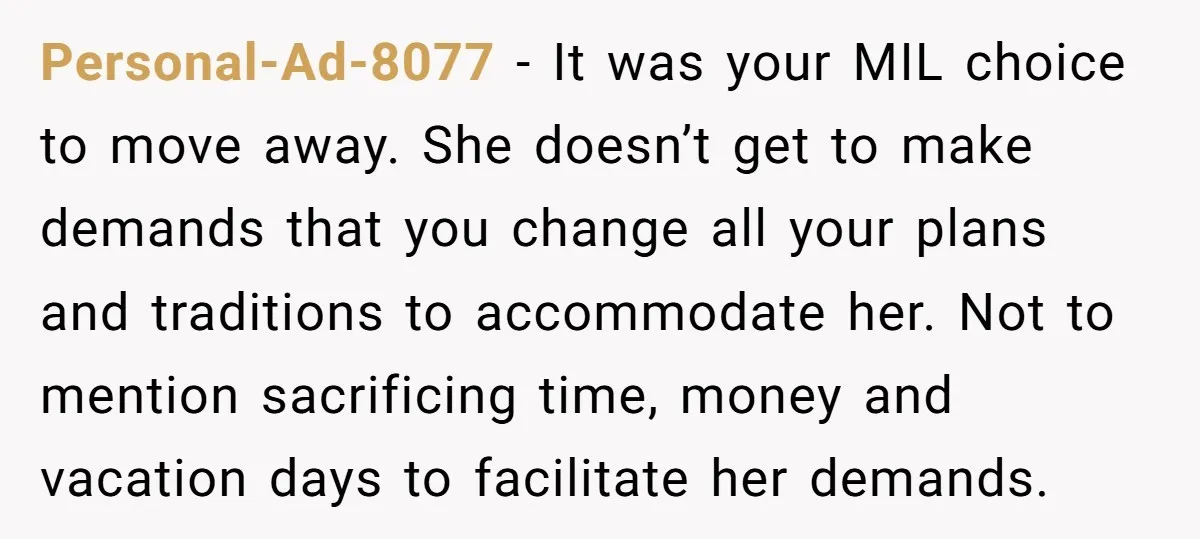
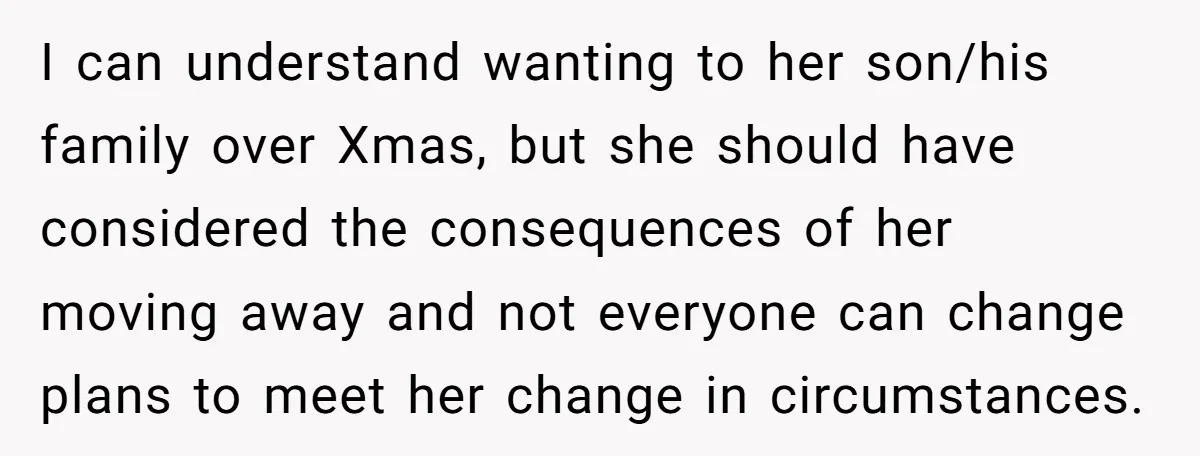
Most commenters emphasized that the MIL chose to move away, so she can’t force everyone else to uproot their traditions and leave loved ones behind:























Whether you side with the couple or think MIL has a point, this story shows how holiday expectations can turn into emotional battlegrounds — especially when grief, distance, and guilt are involved. The couple chose to protect their small, meaningful traditions and their widowed mom, but the MIL’s demands and guilt-tripping made it painful.
What do you think? Would you travel across the country for in-laws’ holidays if it meant leaving your own family alone? Or do you agree they should stand firm? Share your thoughts in the comments!