
A 27-year-old man walked into his 19-year-old cousin’s guest bedroom during a family visit and immediately felt uncomfortable with her casual outfit — a revealing tank top and basketball shorts. He told her he could see “too much skin,” which led to an awkward exchange, her throwing a pillow at the door as he left, and noticeable tension at dinner. Months later, she still hasn’t forgiven him, even rejecting his Christmas greeting with a request to be left alone.
This incident raises uncomfortable questions about family boundaries, personal comfort in shared homes, and how comments about clothing can be perceived — especially across generations and genders. What one person sees as innocent lounging wear, another might interpret as inappropriate, creating friction that lingers long after the moment passes.

‘AITA for telling my cousin that she was showing too much skin?’
The man entered the bedroom intending to hang out casually.


He immediately reacted to her outfit and voiced his discomfort.



The fallout continued through dinner and into the following months.
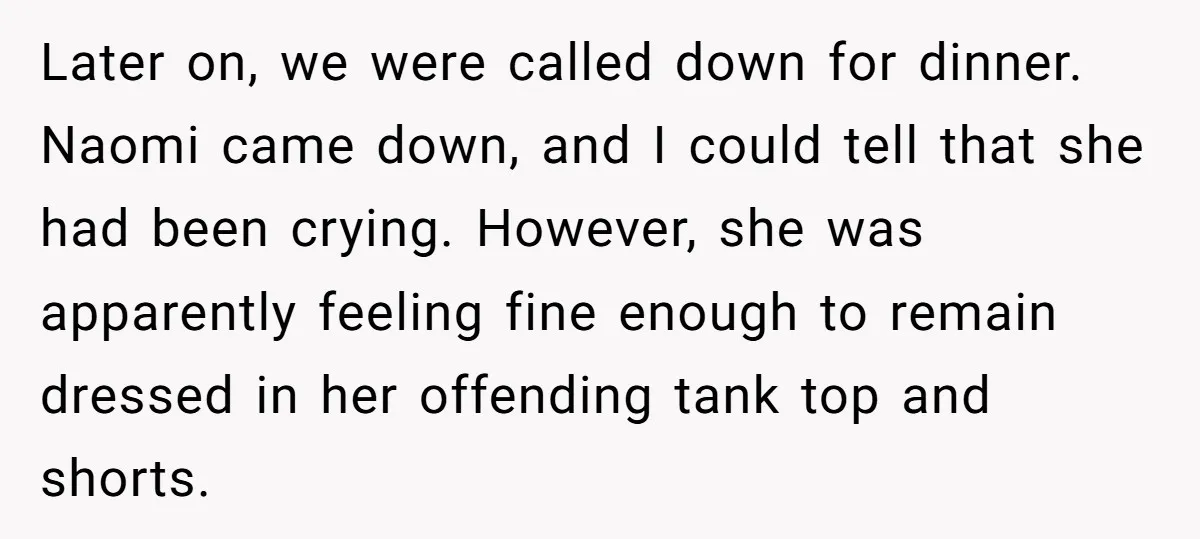


The core issue is the man’s choice to verbalize his unease about his cousin’s outfit in what she considered her temporary private space. What makes the story more complicated is the significant age and power difference: a 27-year-old man confronting a 19-year-old woman about her body, even “discreetly,” can easily feel like shaming or policing rather than innocent concern.
Many see this as projecting personal discomfort (or attraction) onto her, turning a normal summer lounging outfit into something sexualized. Opposing views might argue he was trying to set a modest boundary in a family home, but the overwhelming response frames it as unnecessary and creepy. In a wider context, this highlights evolving norms around bodily autonomy, consent to be seen, and family dynamics in shared spaces.
Younger generations often view casual, revealing home wear as normal and non-sexual, while older or more conservative family members may feel compelled to comment. When those comments land as judgment, they can damage trust and create lasting distance — especially if the younger person already feels vulnerable in someone else’s home.
Here’s the input from the Reddit crowd:
Many users firmly supported the cousin, calling out the comment as creepy, unnecessary, and a violation of her comfort in a private space.






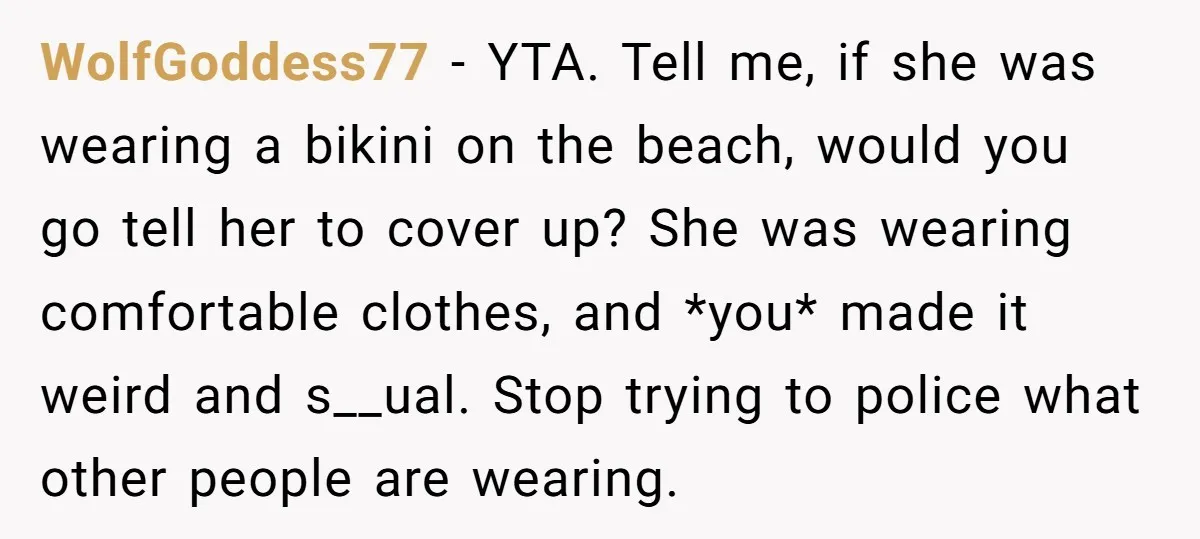

A smaller group offered slightly more tempered views, still judging the action but using sarcasm or brevity to highlight the misstep.


Finally, a couple of comments kept things sharp and light-hearted with direct wit, cutting through the tension without malice.

![[Reddit User] − YTA - ugh. Did you consider your cousin was crying because you’re an AH? Seriously, sir, you are not her parent. Maybe she’s not okay today because...](https://loknam.com/aita/images/9bb7e0664e/wp-editor-1768809878127-2.webp)
This family disagreement shows how a single offhand remark about clothing can create deep discomfort and damage trust, especially when one person feels judged in a private moment. While the man may have meant no harm, the impact on his cousin—leading to tears and ongoing distance—highlights the importance of considering how words land, particularly with younger relatives.
What do you think about commenting on family members’ outfits in casual home settings? Have you ever had a similar awkward moment over clothing choices, and how was it resolved? Share your experiences below.