
A young apartment owner thought they were doing a simple favor for family. When their cousin needed a temporary place to stay after losing her roommate, offering a couch for a few days seemed like the obvious thing to do. At first, everything went smoothly. The cousin helped with groceries, tidied up a bit, and settled in quietly. What began as helpful behavior soon started to cross a line.
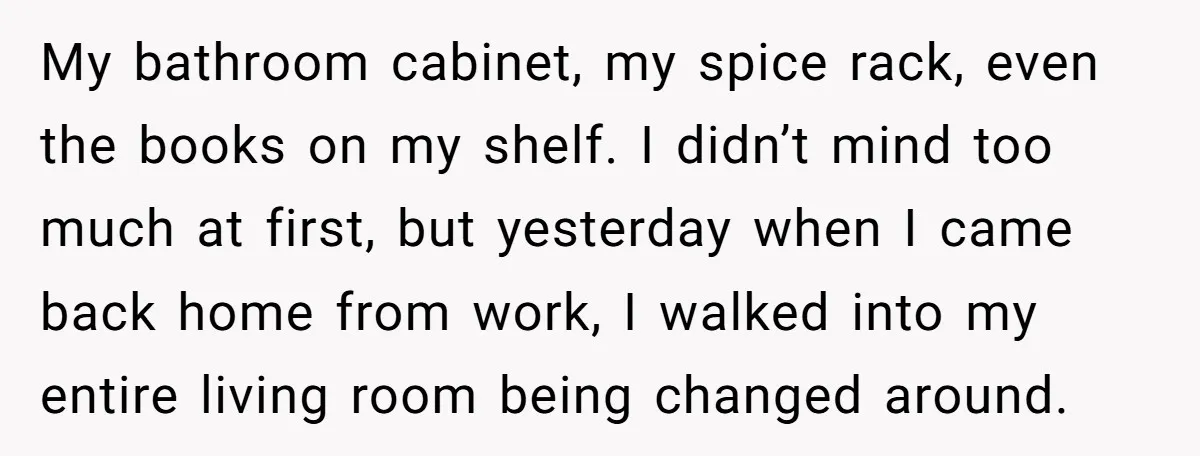
Small adjustments around the apartment turned into full rearrangements of furniture, shelves, and decorations. One evening, the poster came home from work to discover the entire living room had been reorganized without warning. While the cousin proudly presented her changes as an improvement, the host felt something very different: their own home suddenly didn’t feel like theirs anymore.

‘AITA for telling my cousin to stop rearranging my apartment after she moved in?’
The poster explains that their cousin asked to stay temporarily after a housing issue.
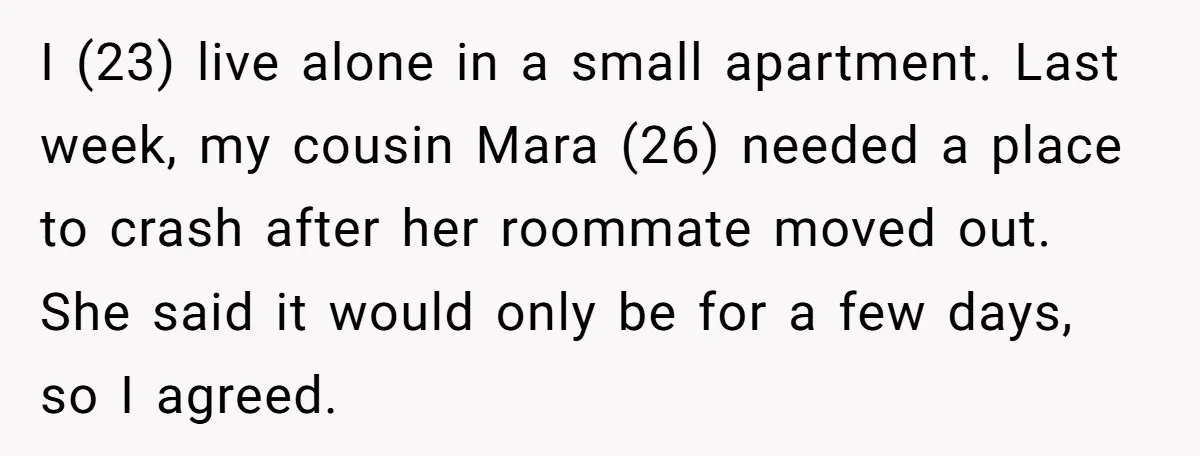
At first the arrangement seemed fine, but subtle changes around the apartment began appearing.


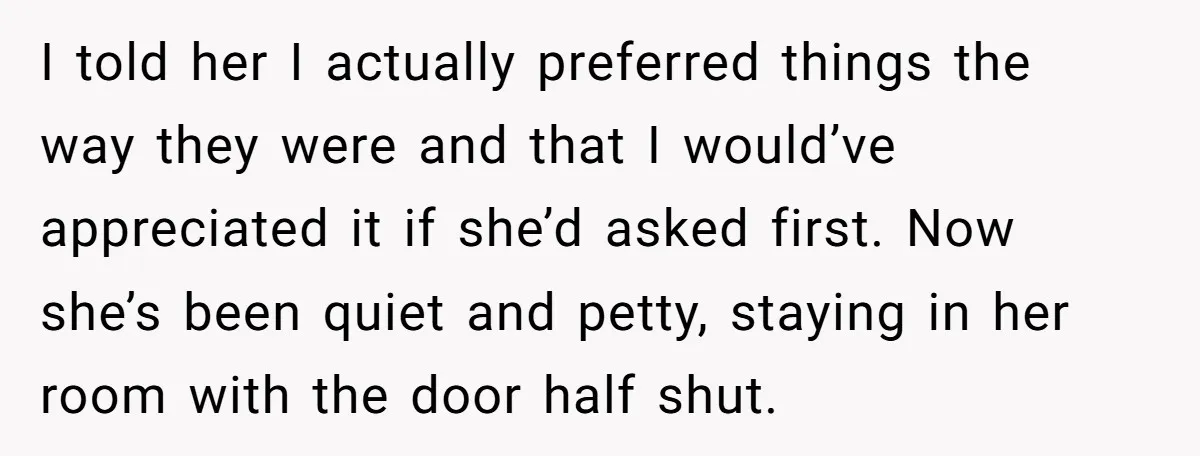
The moment led to an uncomfortable conversation between host and guest.



Living arrangements, even temporary ones, often require clear boundaries. When someone invites a relative or friend into their home as a short-term guest, there is typically an unspoken understanding: the guest should respect the host’s space and routines. Rearranging furniture or personal belongings without permission can easily be interpreted as crossing that boundary.
From the cousin’s perspective, she may have believed she was being helpful. Some people show appreciation by organizing or improving a space, particularly if they feel indebted to the person hosting them. However, the intention behind an action does not always align with how it is received. A home often reflects personal habits, comfort, and emotional attachment, so unexpected changes can make a host feel displaced in their own environment.
The broader issue centers on communication and respect. Guests should check with hosts before making changes to shared or personal areas, especially when their stay is temporary. At the same time, hosts benefit from setting expectations early when someone moves in, even briefly. Clear conversations about boundaries can prevent misunderstandings and keep short-term arrangements from becoming long-term conflicts.
Here’s the input from the Reddit crowd:
Many users strongly supported the poster, saying a guest should never rearrange someone else’s home.


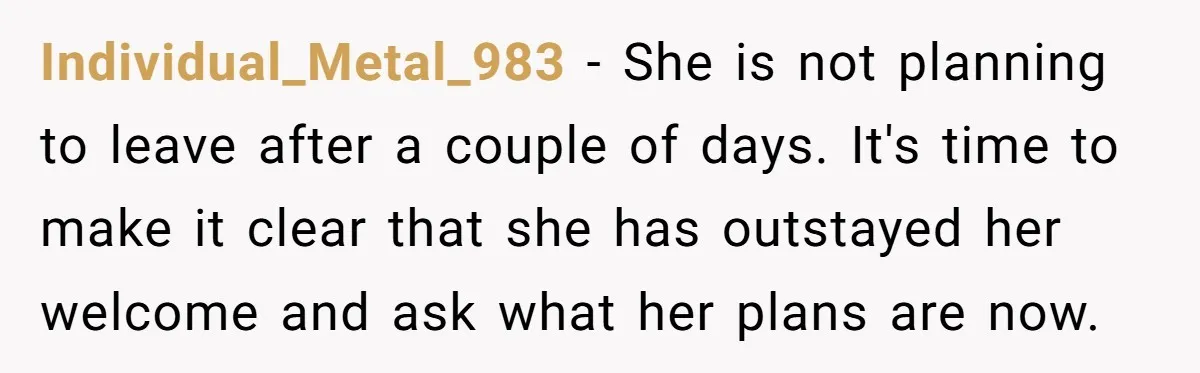






Others focused on the possibility that the cousin might be planning to stay longer.

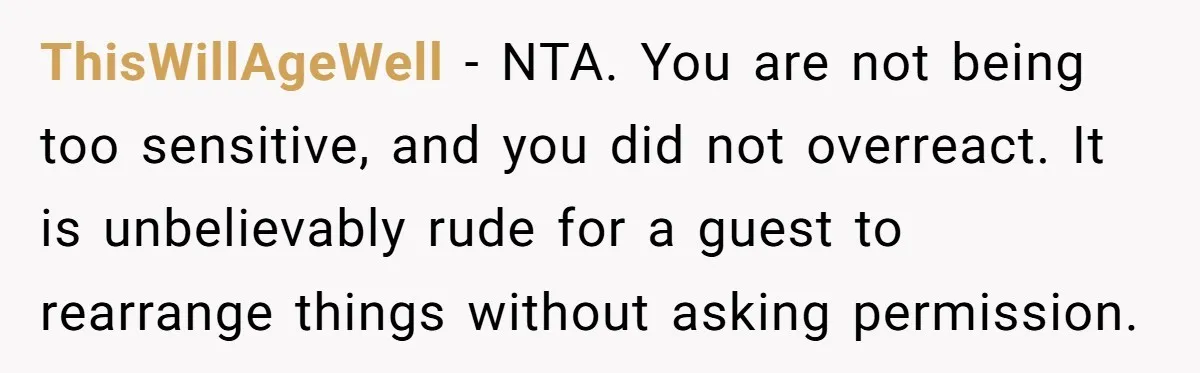




A few commenters added lighter reactions while still siding with the host.


This story highlights how quickly a small favor can turn into an uncomfortable living situation. While the cousin may have believed she was improving the apartment, the host experienced it as an invasion of their personal space. When expectations aren’t clearly discussed, even well-intentioned actions can lead to frustration.
Situations like this raise interesting questions about hospitality and boundaries. How much freedom should a guest have when staying in someone else’s home? And if a temporary stay begins to feel permanent, when is the right moment to speak up? What would you do if a guest started rearranging your living space without asking?