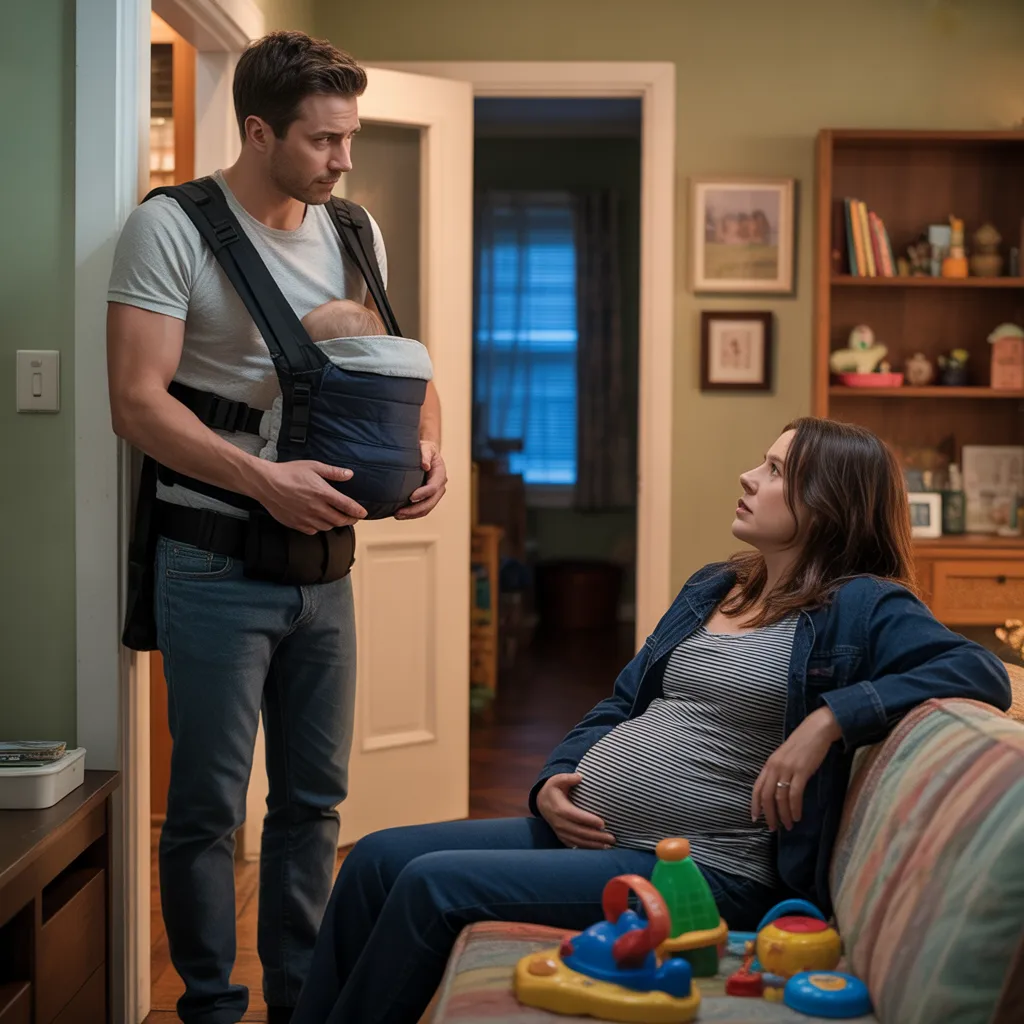
A couple who moved close to the husband’s parents initially enjoyed the proximity and even exchanged house keys for convenience and emergencies. But the father-in-law started letting himself in without any notice or call – sometimes while they were still in bed, just out of the shower, or had other plans. Despite repeated requests to text first, he ignored them, leading to awkward and invasive moments.
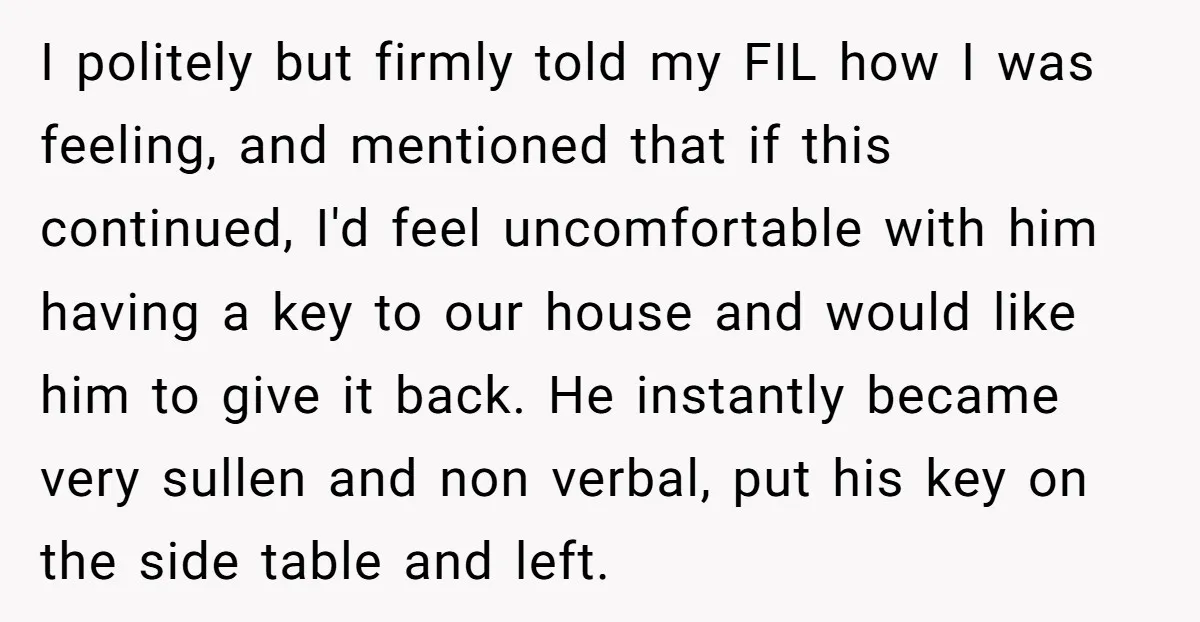
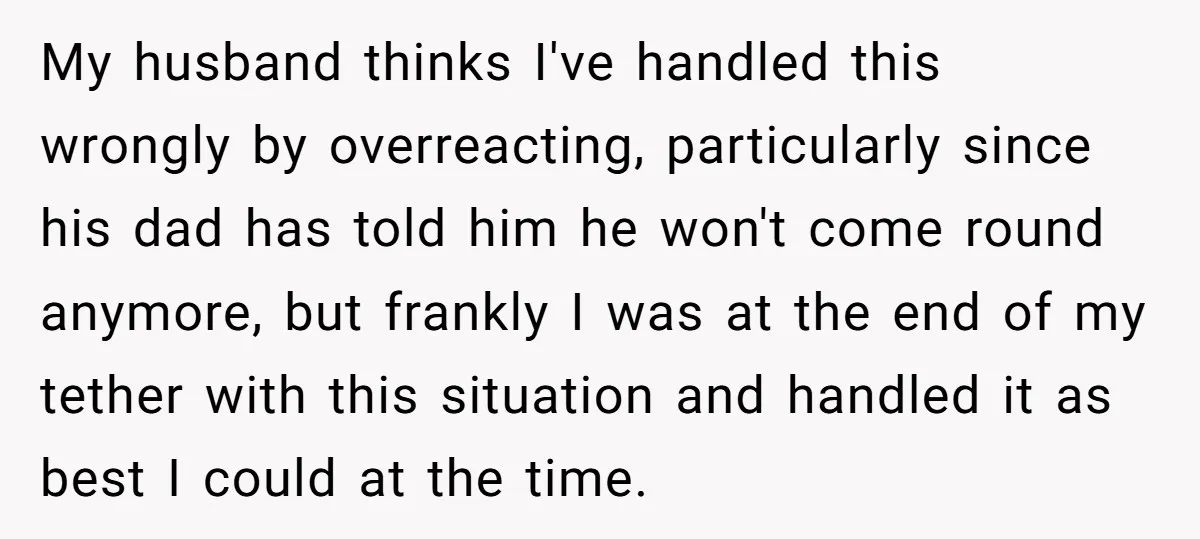
After one last unannounced entry (even when permission hadn’t been given), the wife calmly but firmly told him she’d feel uncomfortable if he kept the key and asked for it back. He left it sullenly and hasn’t returned. Now her husband thinks she overreacted, but she just wanted to feel safe and private in her own home.

‘AITA for telling my FIL to give back the key we gave him to our house?’
The arrangement started positively but quickly turned problematic:
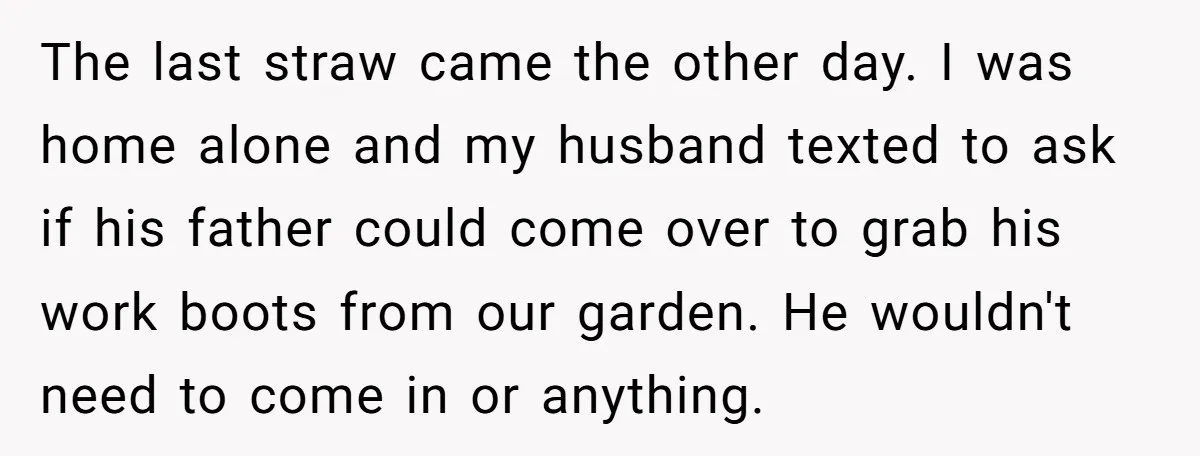
The unannounced entries became frequent and intrusive:


The husband delayed addressing it:
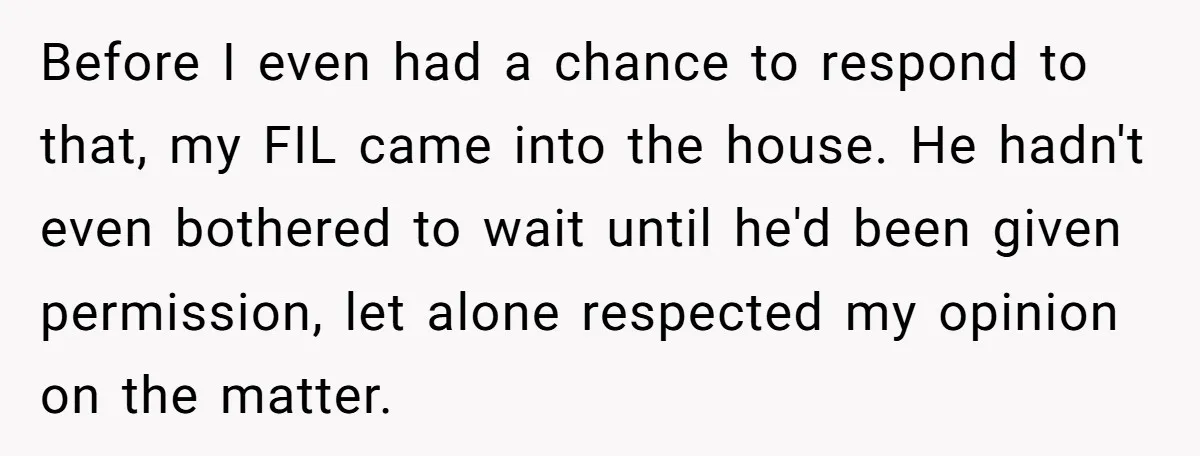
The final incident and confrontation:
Unannounced entries into someone’s home – even by family with a key – violate basic privacy and autonomy, turning a place of safety into a space of uncertainty. What starts as “helpful” visits can quickly feel invasive and controlling, especially when requests to communicate first are repeatedly ignored. Relationship experts emphasize that keys for emergencies don’t equal open access; they’re for crises, not convenience without consent.
The husband’s hesitation to confront his father (prioritizing free labor over his wife’s comfort) creates a classic “husband problem” layered on top of the FIL issue. By dragging his feet and hoping the problem resolves itself, he forces his wife into the uncomfortable role of enforcer, which breeds resentment and weakens marital teamwork. Healthy partnerships require united boundaries – especially with in-laws.
The FIL’s sullen reaction and threat to never return shows emotional manipulation rather than accountability. Adults who respond to reasonable requests with withdrawal or sulking often use guilt to maintain control. The wife’s direct but polite confrontation was assertive and necessary after repeated failures of indirect approaches.
Practical next steps include changing the locks (or upgrading to smart locks with codes/temporary access) to regain control, communicating as a couple that help is welcome only when invited, and calmly reinforcing that privacy isn’t negotiable. Therapy or mediation could help if the husband struggles to prioritize his wife’s feelings over his father’s ego. Boundaries protect relationships – ignoring them erodes them.
Here’s the input from the Reddit crowd:
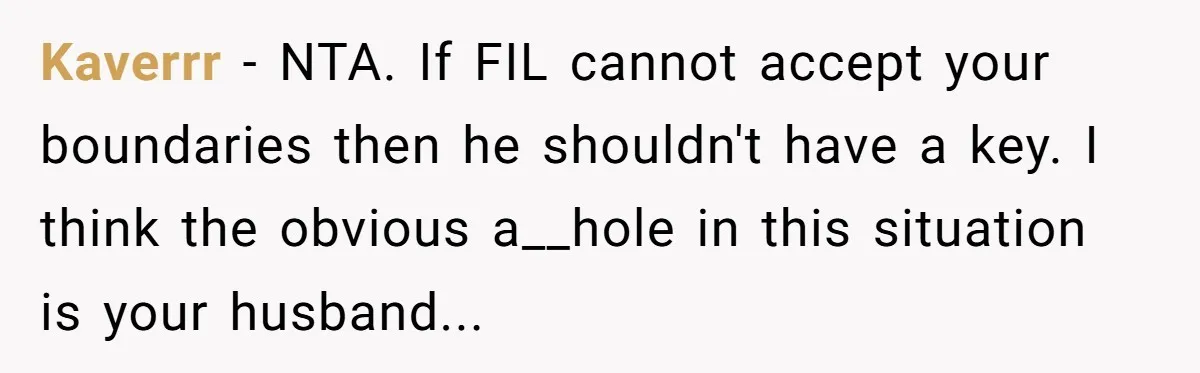
The Reddit crowd was strongly in support of the OP as NTA, viewing the FIL’s behavior as entitlement and the husband as the bigger issue for not stepping up:
Most emphasized privacy and the need to enforce boundaries:



![[Reddit User] − NTA. Change the locks, because I don't trust this guy to not just make a copy](https://loknam.com/aita/images/972b5fd599/wp-editor-1768547653778-5.webp)







![[Reddit User] − NTA, FIL being a massive f__king baby isn’t your problem...](https://loknam.com/aita/images/972b5fd599/wp-editor-1768547660323-13.webp)



Uninvited entries into your home – no matter who holds the key – erode your sense of safety and privacy, and it’s reasonable to reclaim that by asking for the key back after repeated ignored requests. The husband’s reluctance to address it sooner put his wife in a tough spot, but her direct (and polite) confrontation was a necessary step to protect her comfort.
Do you think she should have waited for her husband to handle it, or was confronting the FIL herself the right call? Would you change the locks immediately in her position? Have you dealt with in-laws who overstep boundaries? Drop your thoughts below.