
A 21-year-old woman stood up for what she sees as basic accountability after her uncle’s long pattern of infidelity finally caught up with him in a dramatic way. Her uncle, married with two young daughters at home, has fathered at least five more children outside his marriage in recent years, including one with a former high school classmate of the woman when she was still in school. When that woman grew tired of his absence and lack of support, she dropped the child off at his house with a few clothes and left him to handle his responsibility.
What makes the situation more complicated is the family’s reaction. Instead of holding the uncle accountable for years of reckless behavior, many relatives turned their criticism toward the mother, calling her irresponsible and a bad parent for “abandoning” the child. The young woman defended the other woman’s actions to her own mother, bluntly stating that her uncle deserved the consequences and couldn’t keep fathering children carelessly without facing fallout.

‘AITA For telling my mom that my uncle deserved what he got?’
The uncle’s history of infidelity created a trail of children he refused to fully support.

The situation reached a breaking point when one of the mothers took decisive action.
The family’s backlash targeted the mother instead, prompting the niece to speak out.


At its center is a man who has fathered multiple children through infidelity without providing consistent care or support, yet the outrage focuses on one mother’s desperate attempt to force him to step up. The young woman’s statement—that her uncle “deserved what he got”—reflects a straightforward principle: actions have consequences, and protecting vulnerable children should take priority over shielding an adult from discomfort. Family dynamics experts often note that when relatives defend chronic wrongdoers while condemning victims or whistleblowers, it perpetuates cycles of dysfunction and enables further harm.
Her willingness to call out the double standard shows healthy boundary-setting and moral clarity. Some family members may argue that publicly shaming the uncle or supporting the mother’s drastic action disrupts family harmony or burdens the children further. They might view the drop-off as abandonment rather than a last-resort plea for responsibility.
However, this perspective conveniently ignores the years of neglect and the legal and ethical obligations of parenthood. On a wider scale, cases like this highlight how society sometimes excuses men’s sexual irresponsibility while harshly judging women in similar situations, reinforcing unequal standards around reproduction, fidelity, and child-rearing.
Here’s the input from the Reddit crowd:
The vast majority of users sided firmly with the young woman, condemning the uncle’s behavior and questioning why he hasn’t faced serious consequences.




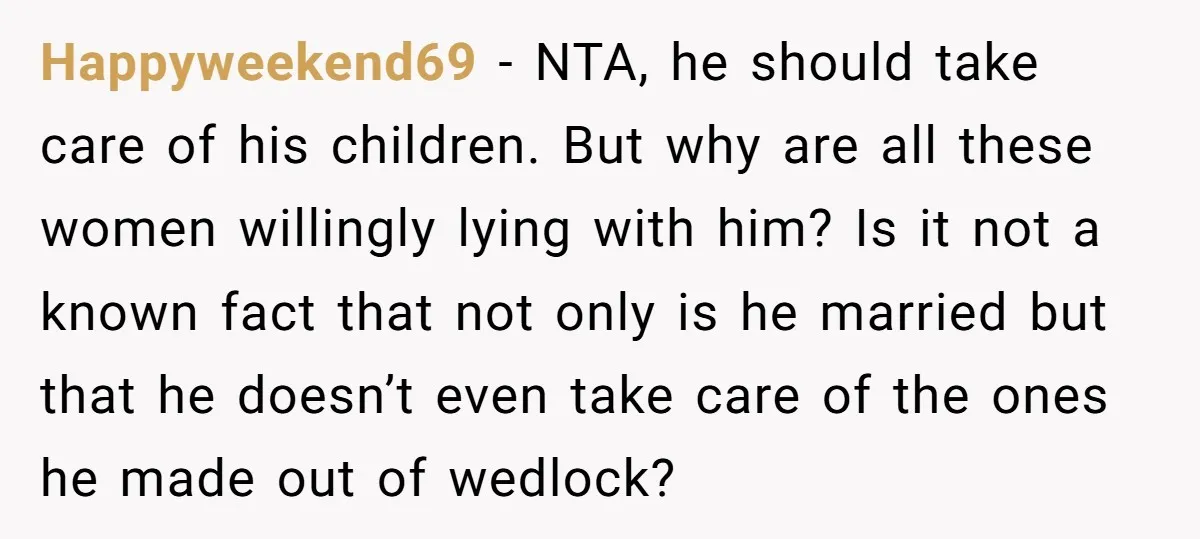
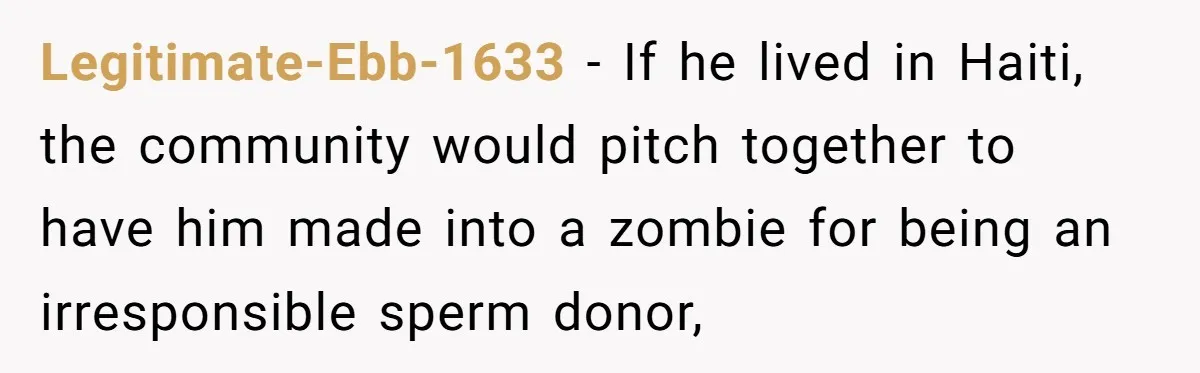
A smaller number of comments emphasized legal and moral urgency, urging action against the uncle.

![[Reddit User] − Jesus this is wrong on so many levels. Your uncle needs to be reported for having s__ and impregnating a minor. T](https://loknam.com/aita/images/bd53c2eb20/wp-editor-1768980782459-3.webp)
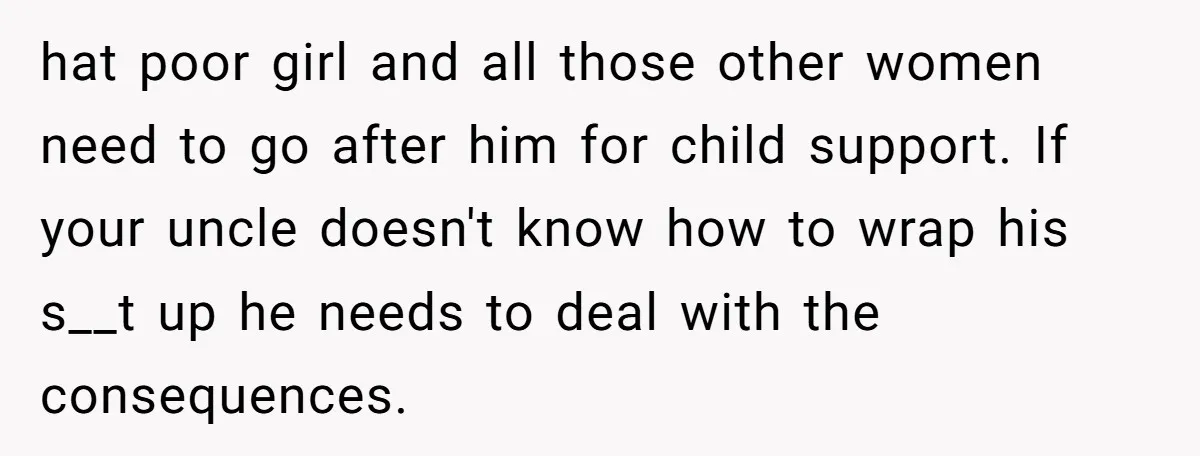
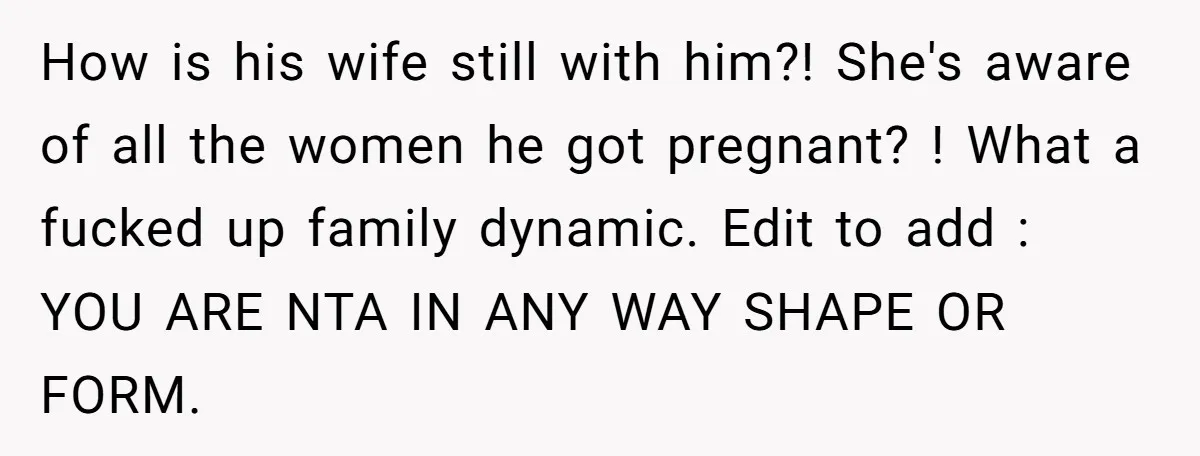

A couple of lighter or sarcastic remarks highlighted the absurdity while reinforcing support.


The 21-year-old simply stated an uncomfortable truth: her uncle’s repeated infidelity and refusal to support his children eventually led to someone forcing accountability. While the family prefers to blame the mother who reached her limit, the young woman’s defense of her highlights a refusal to enable harmful patterns any longer.
What do you think about situations where family members defend someone’s chronic bad behavior instead of addressing it? Would you speak up like this young woman did, or stay quiet to keep the peace? How should families handle repeated irresponsibility when children are involved? Share your thoughts in the comments below.