
What happens when your own home stops feeling like a safe place to hang out with friends? For many teenagers, inviting people over is one of the simplest ways to spend time together – until family dynamics quietly make it impossible.
One 16-year-old boy recently reached his limit after more than a year of watching his friends grow uncomfortable and eventually stop coming over completely. The reason wasn’t drama or mess. It was the constant, unstoppable talking from his 12-year-old autistic sister – and the expectation that he and his friends should simply endure it so his parents could have a break. When he finally explained why he refused to invite anyone anymore, the conversation turned into a major family conflict.
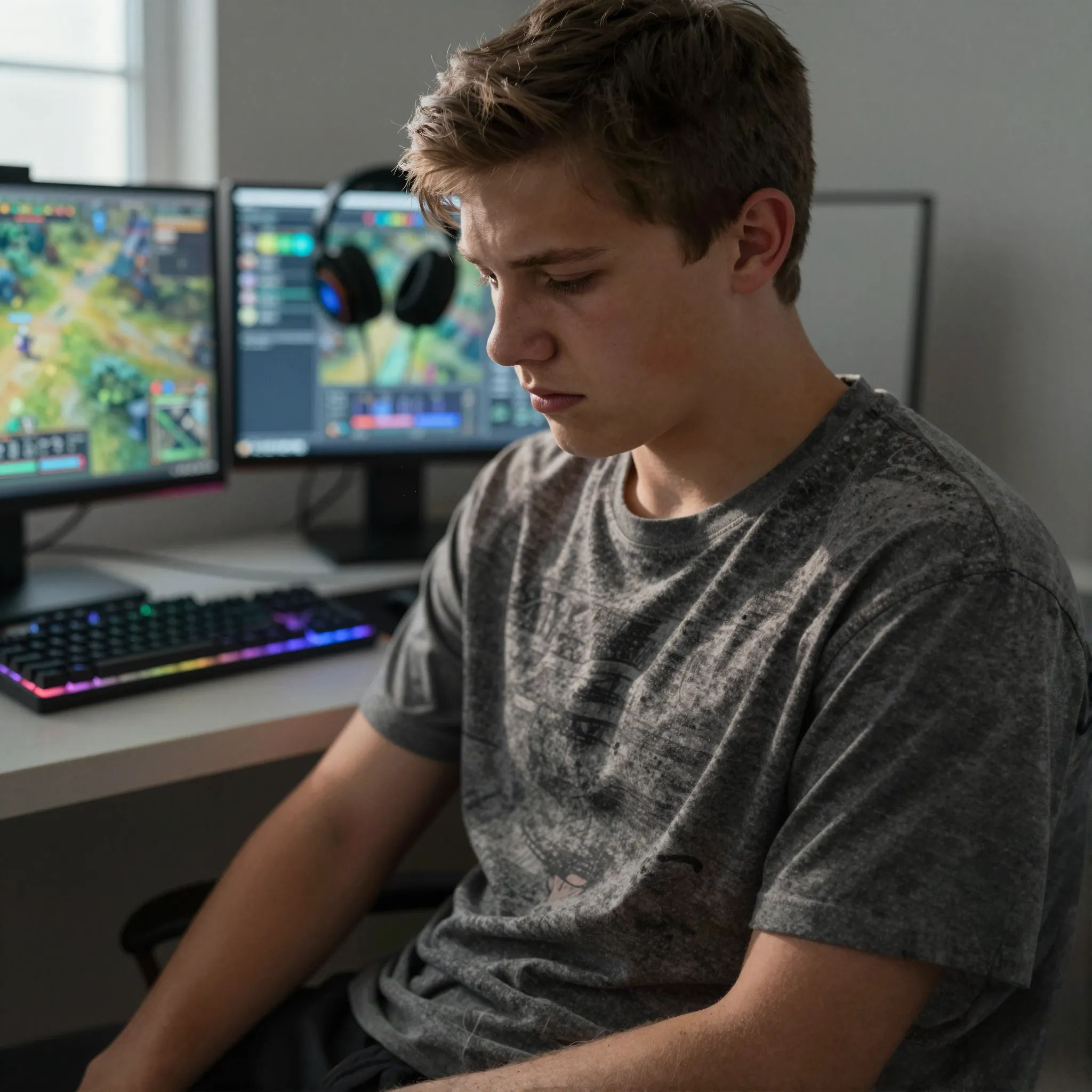
‘AITA for telling my parents they can’t make me invite friends over?’
The situation had been building quietly for over a year.

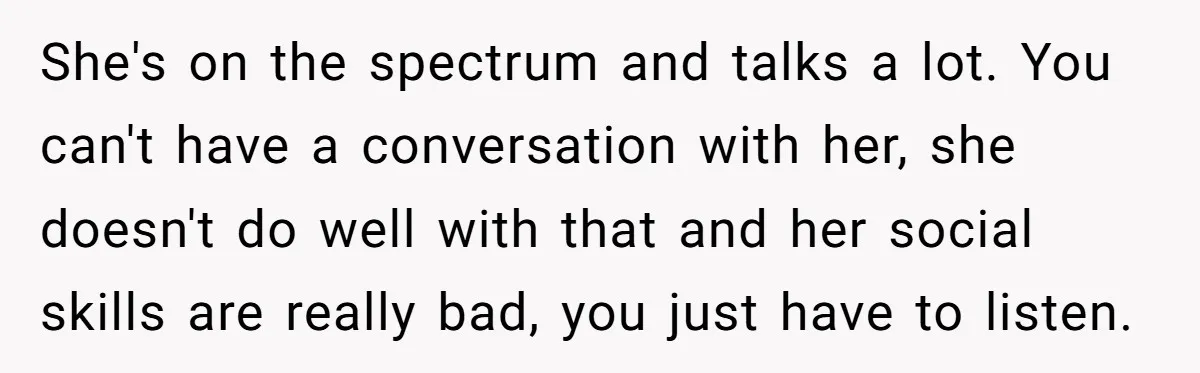

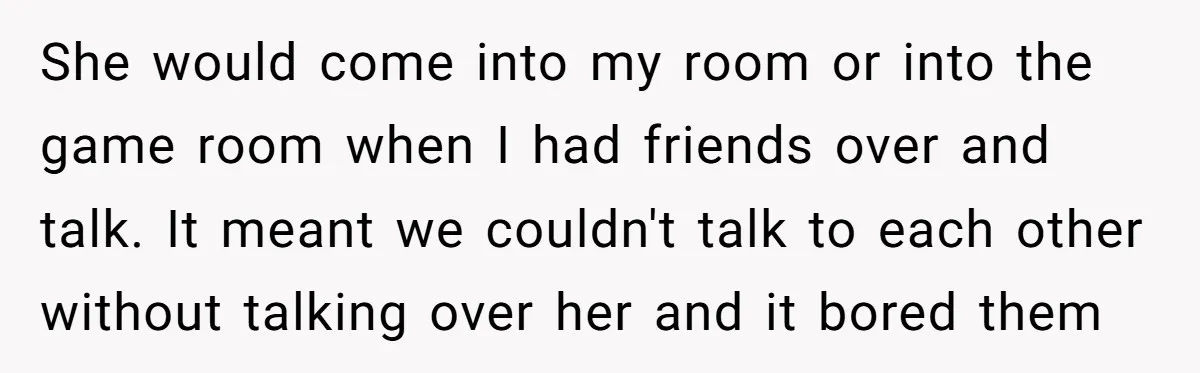

Things became even harder as he grew older and his patience wore thinner.
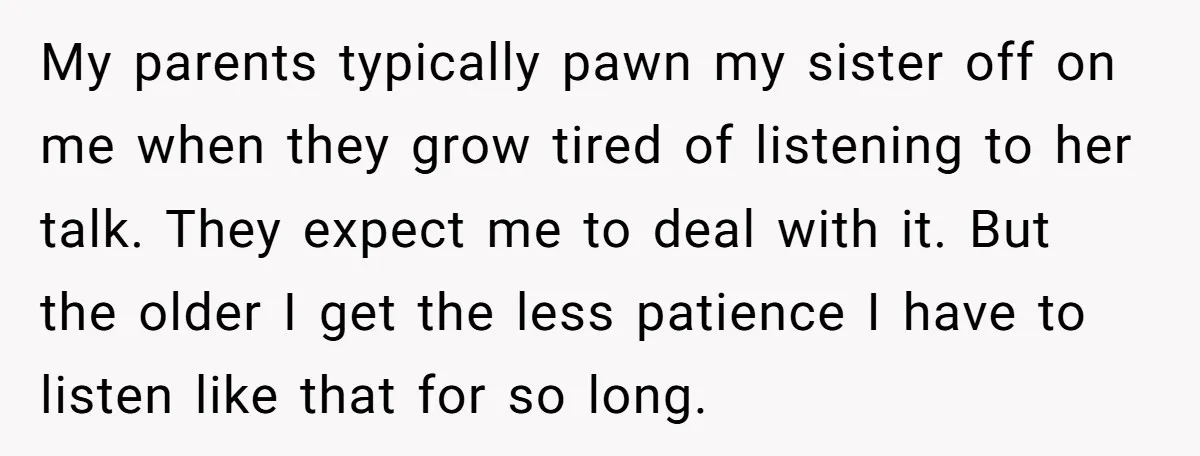
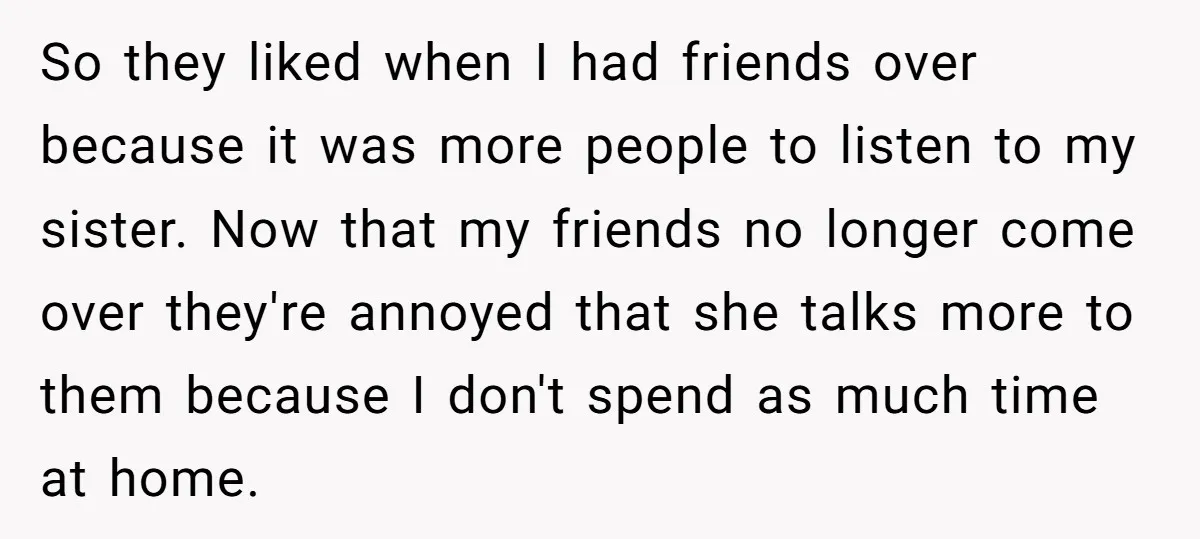
The breaking point came during a direct confrontation last Saturday.
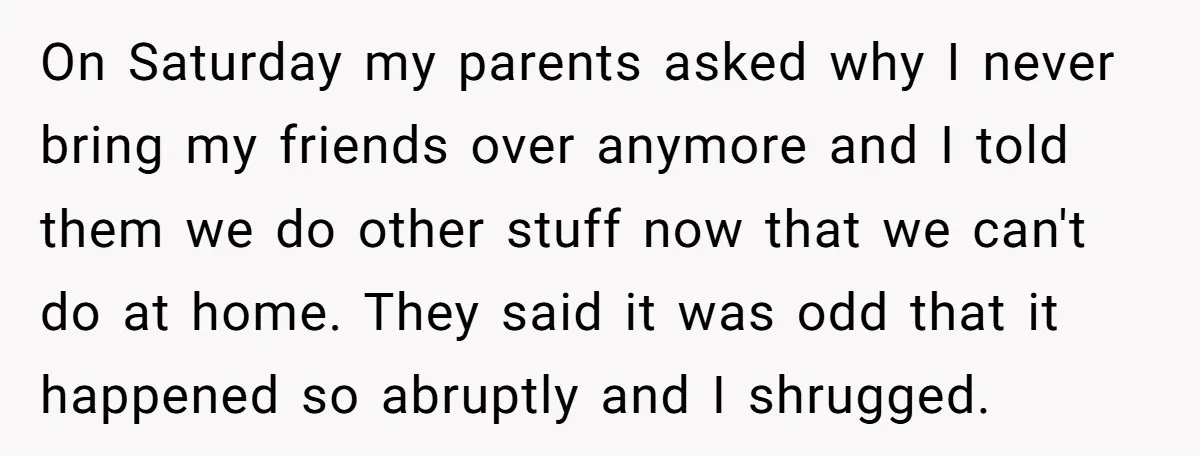
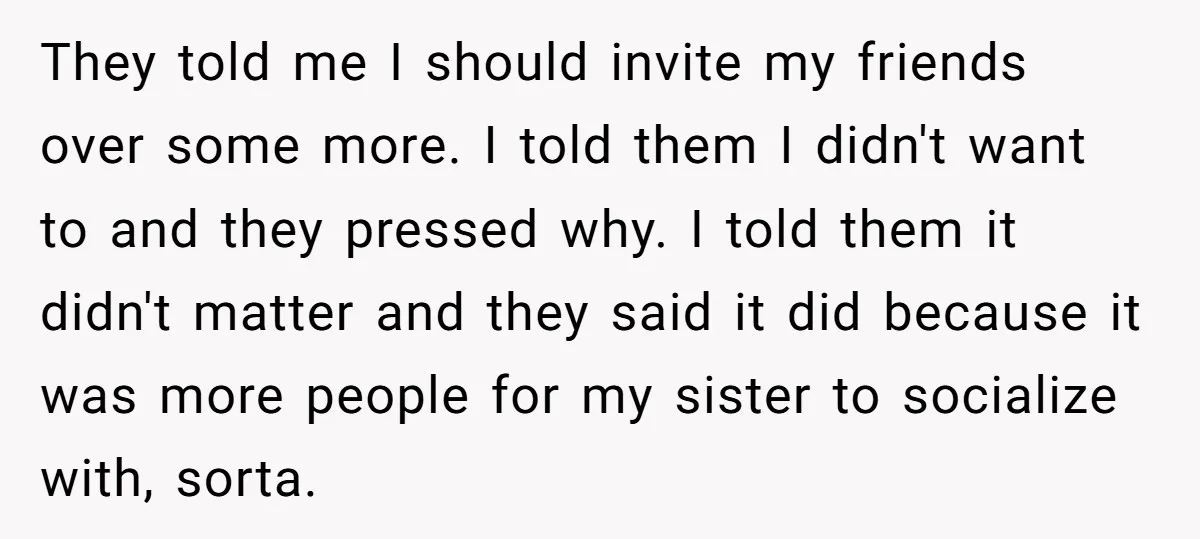
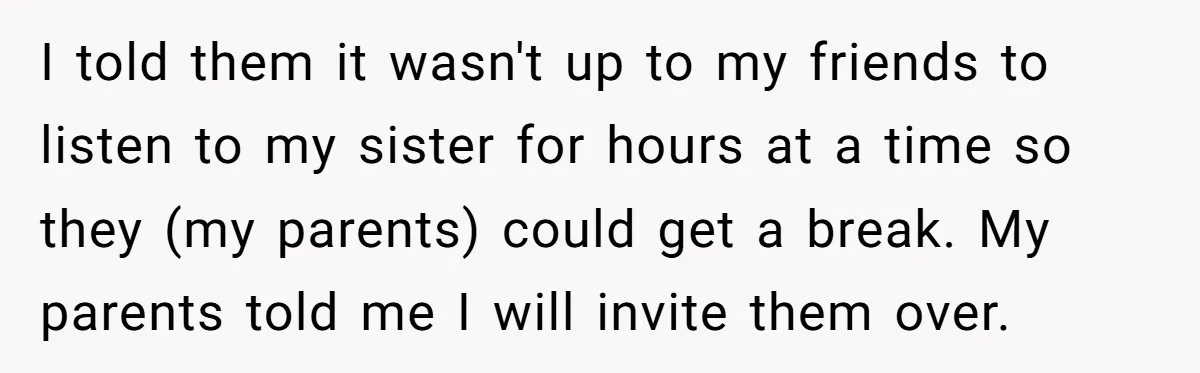
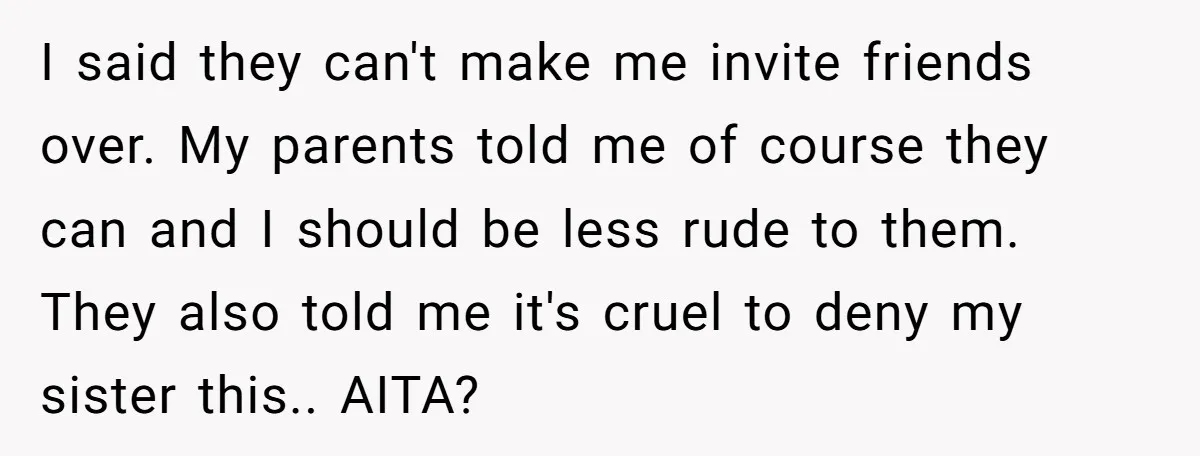
This conflict arises when a teenager sets a clear boundary around his social life, while his parents see the home as a shared space where his friends should help accommodate his younger autistic sister. The disagreement grew when they tried to force invitations, thinking it would benefit her social skills. Different needs are clashing: one child’s need for privacy and normal friendships against the parents’ challenge of handling their daughter’s intense talking style.
The 16-year-old feels used as a built-in listener and social stand-in. Years of constant demands have worn down his patience, so he now guards his time with friends carefully. His parents seem overwhelmed and may not fully accept the specialized support their daughter actually needs, shifting the load onto him instead. When he explained honestly, they called it rude rather than addressing the real issue.
Autism expert Dr. Temple Grandin has written that “many autistic individuals benefit enormously from explicit teaching of social rules and turn-taking in conversation, rather than simply being exposed to social situations without guidance.” (Thinking in Pictures, 2006) This shows why unstructured exposure alone is rarely enough to teach these skills. Without proper help, the sister’s communication style stays the same, and her brother’s frustration keeps growing.
The best way forward starts with small changes. Parents should talk privately with their son, hear him out without getting defensive, and look into suitable social skills programs or therapy for their daughter. They must stop relying on his friends as stand-ins. The teenager should keep spending time at friends’ houses and calmly restate his boundary when needed. Everyone in the family deserves breathing room.
See what others had to share with OP:
The online community responded strongly to this post, with opinions landing heavily on one side but still showing thoughtful nuance.
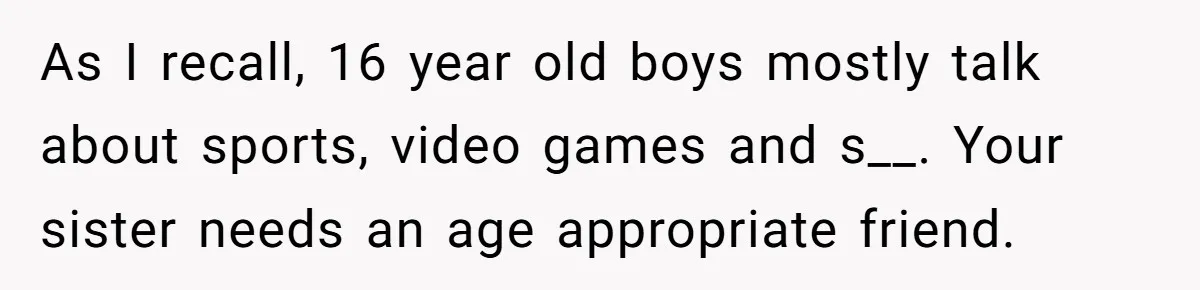
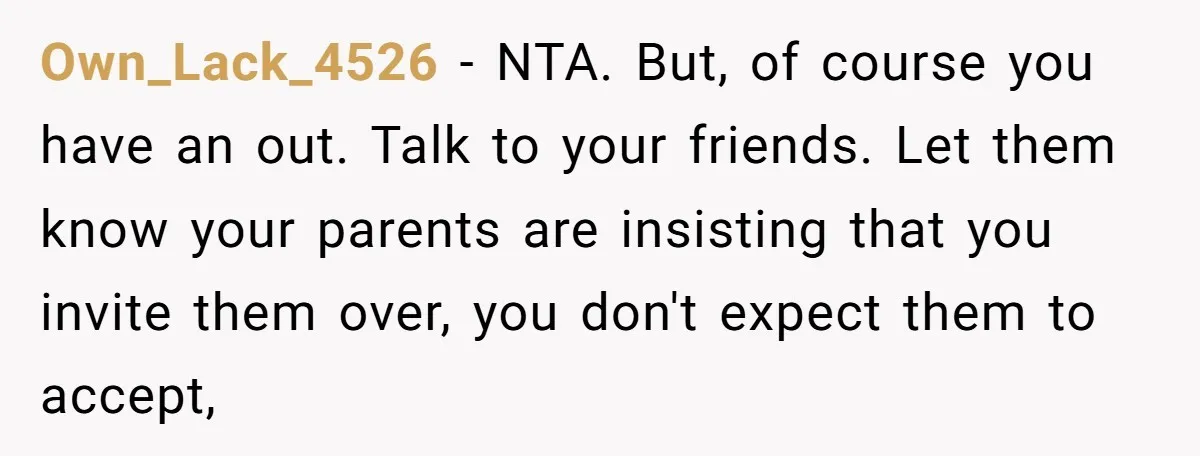
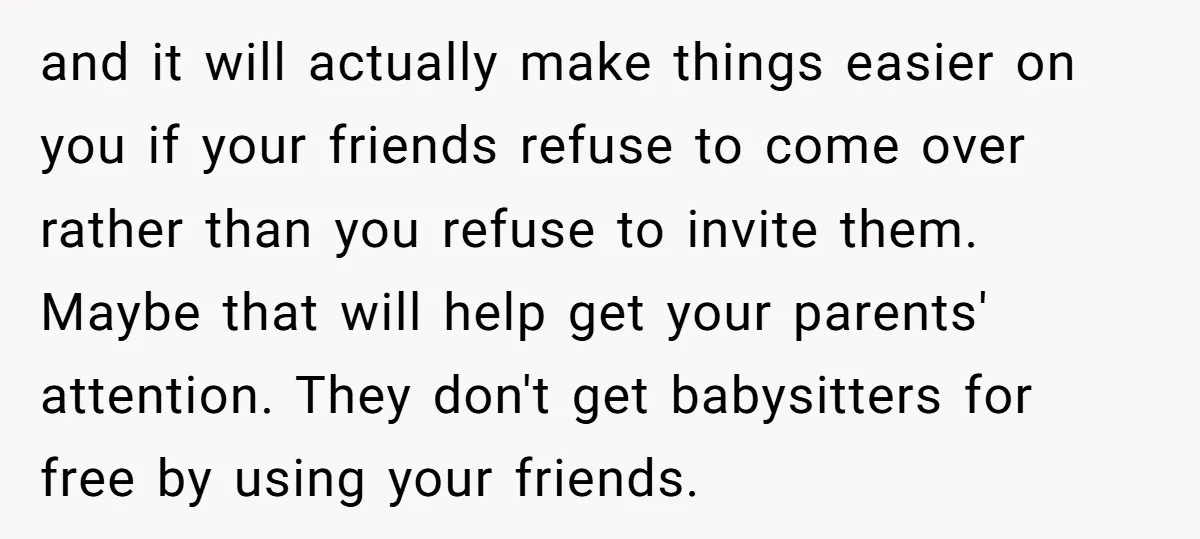
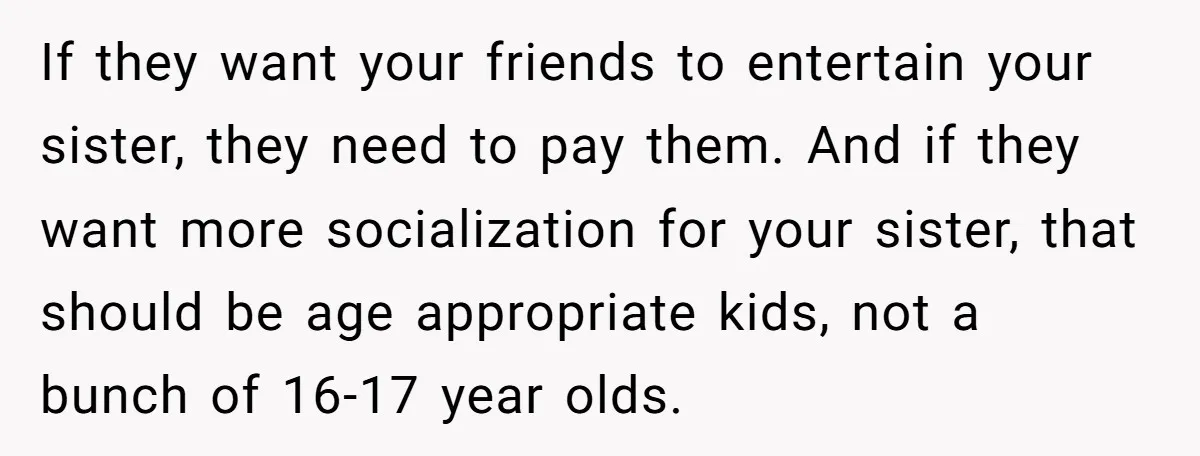
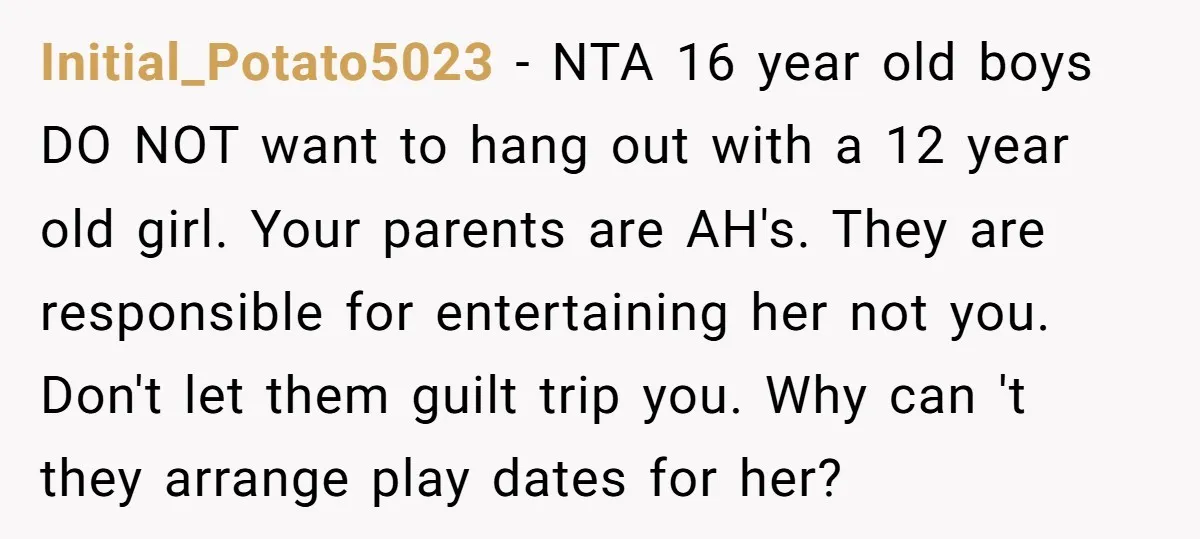
Many readers sided firmly with the teenager and viewed the parents’ behavior as unfair parenting.

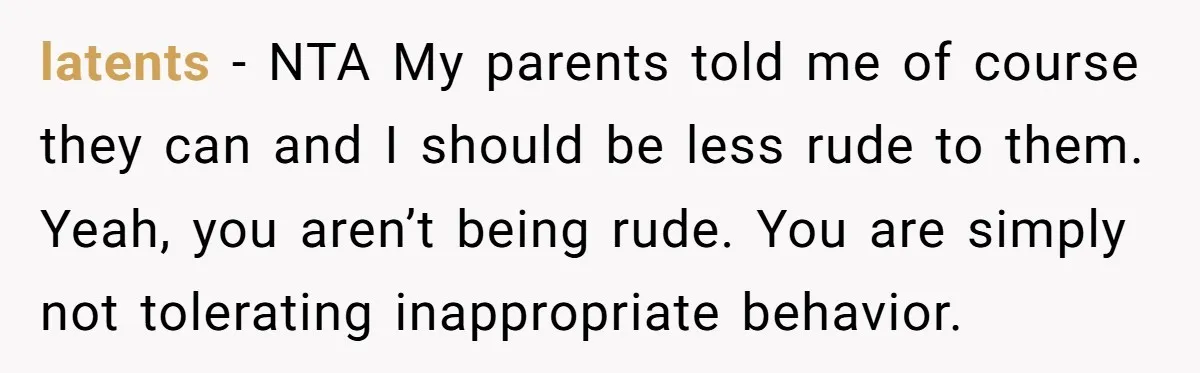
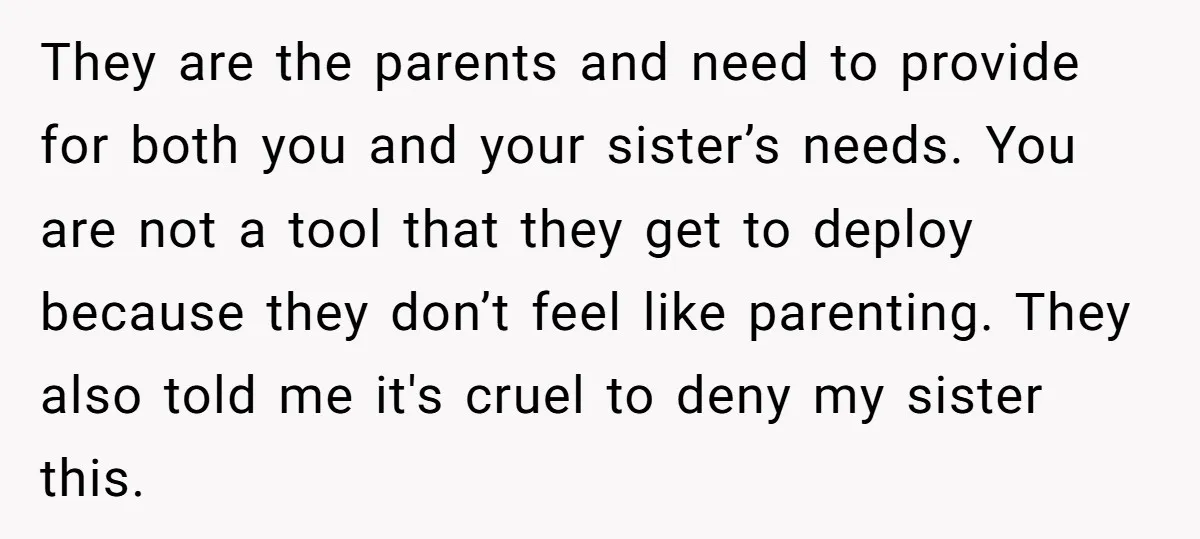
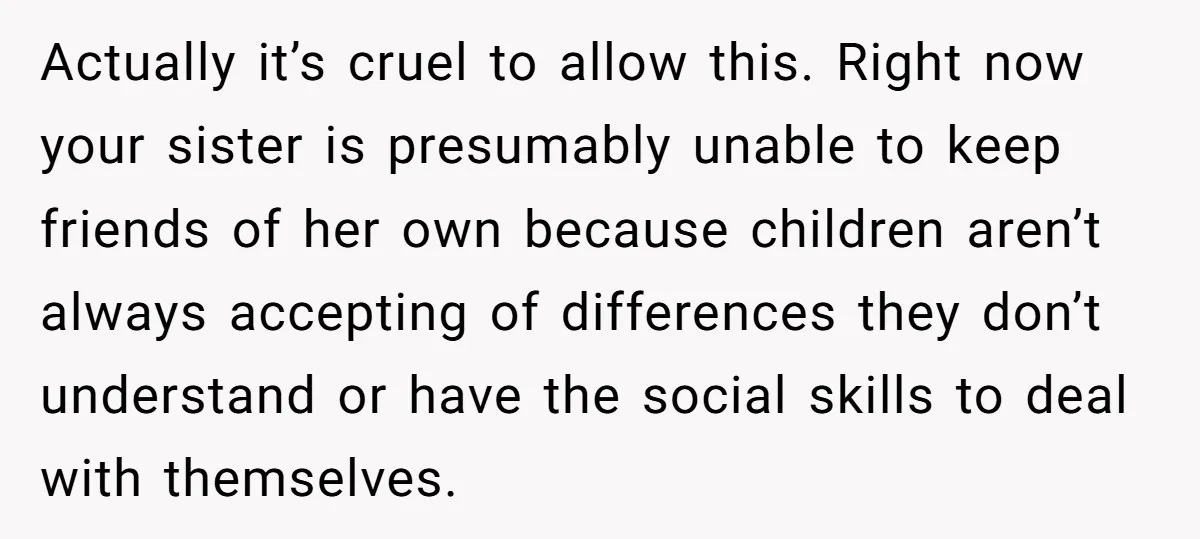
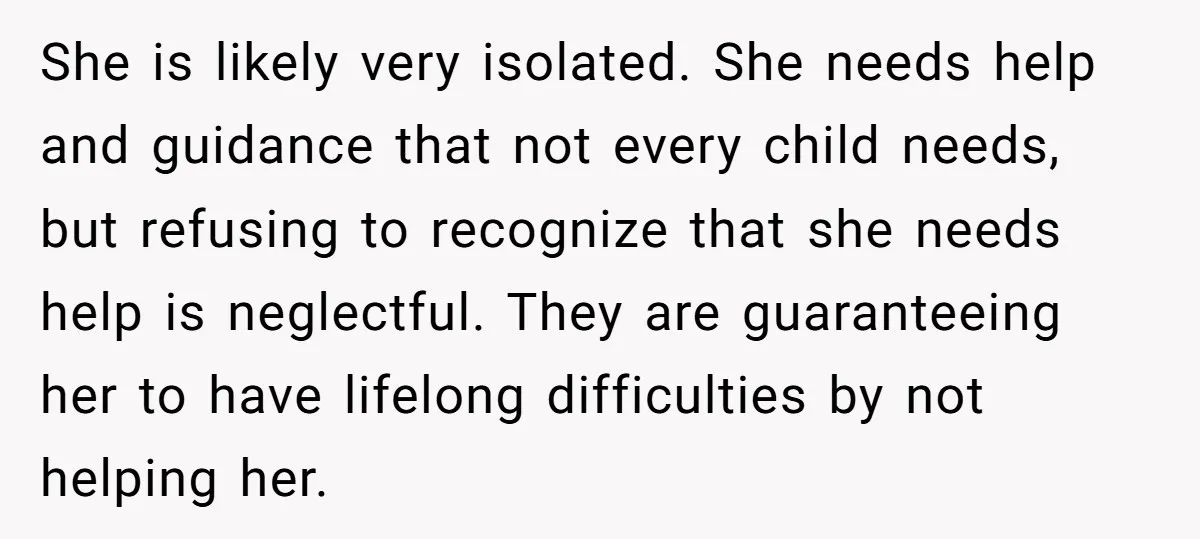
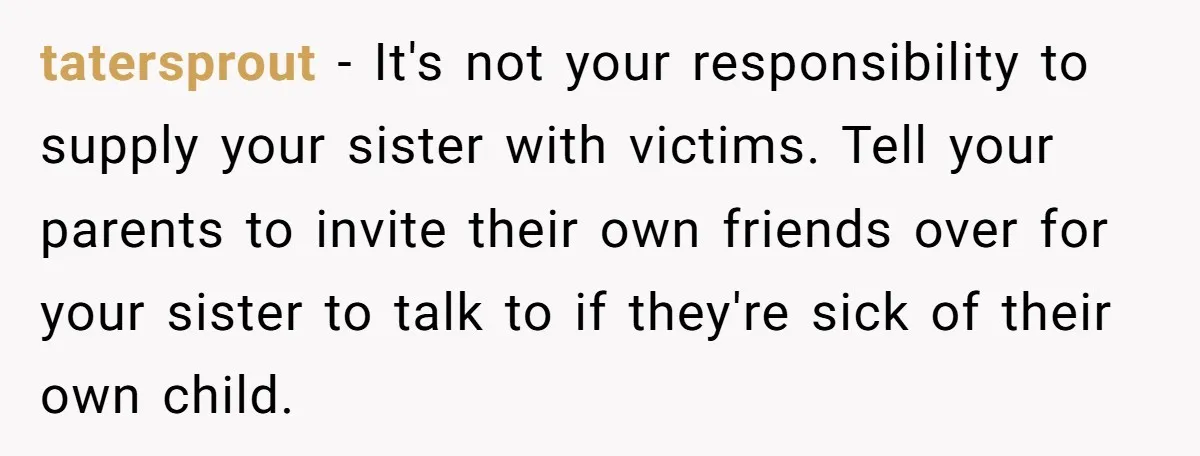
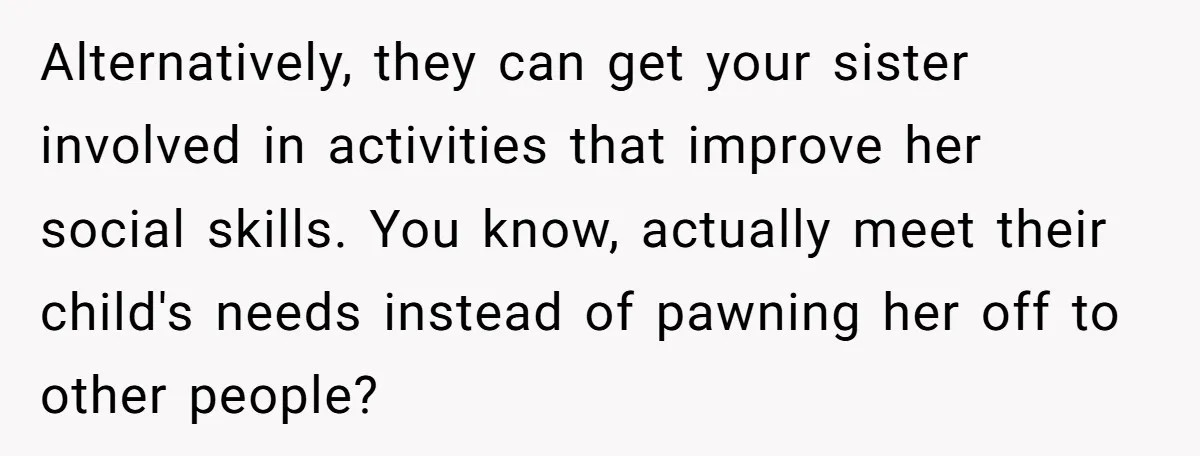
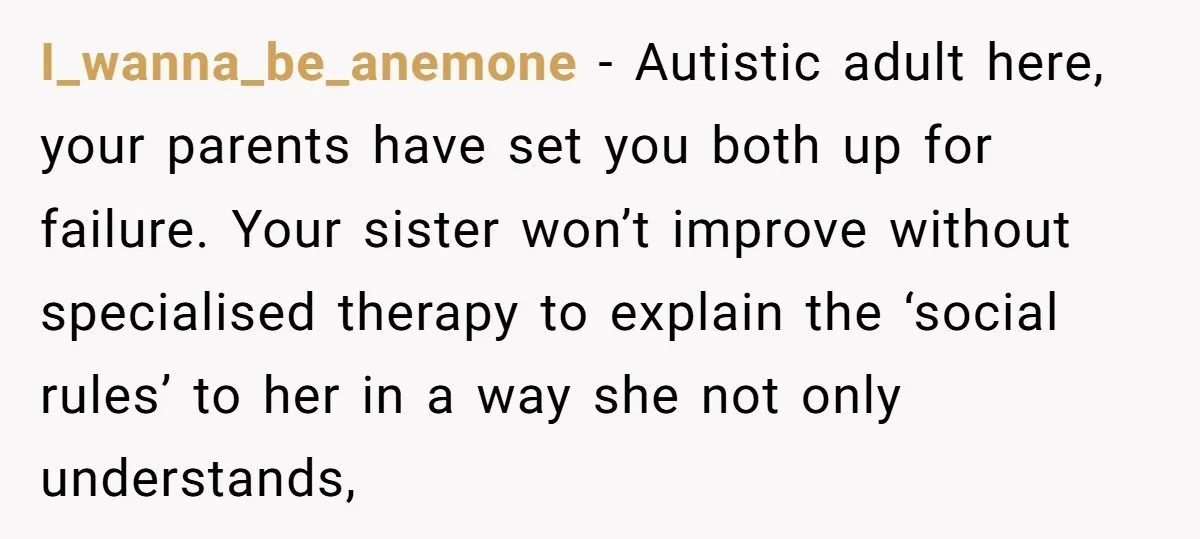
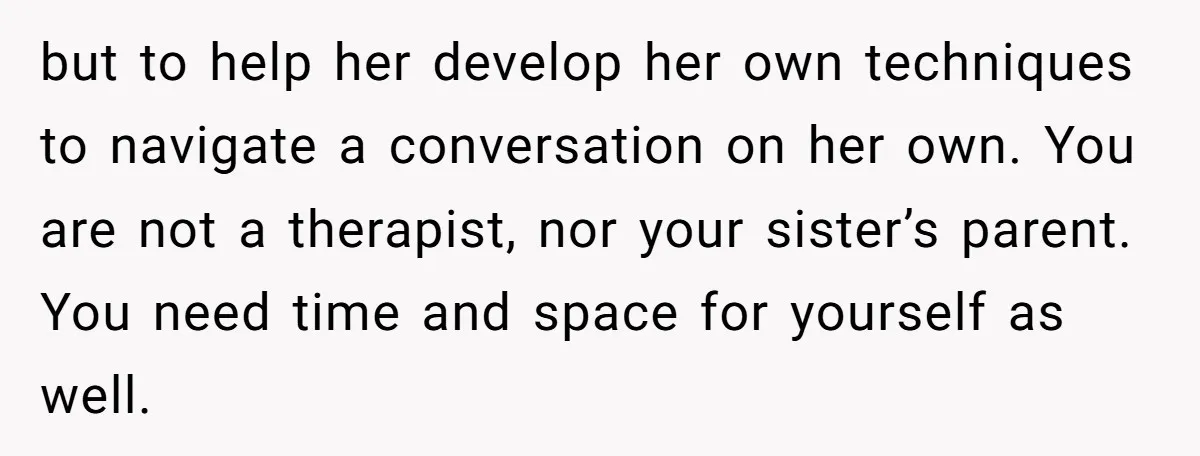
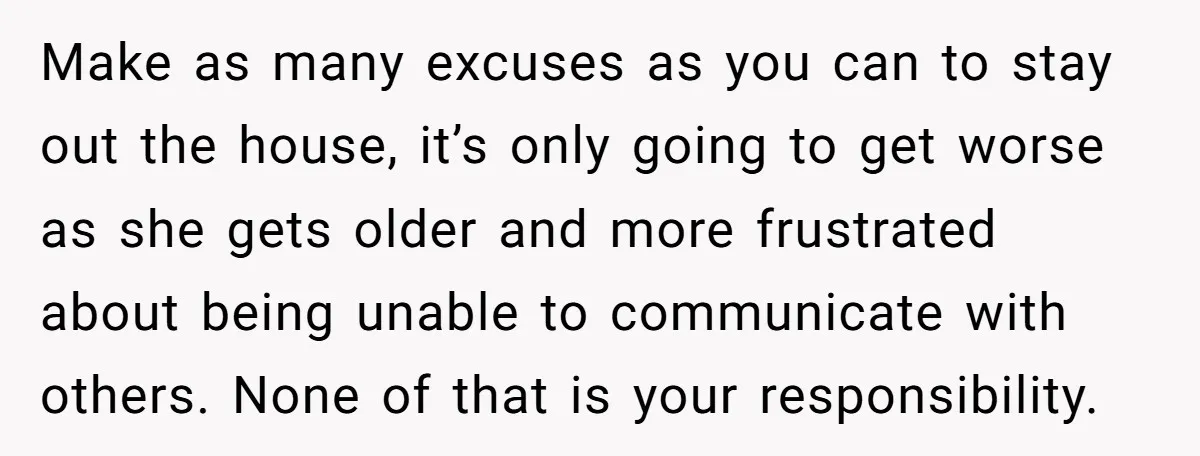


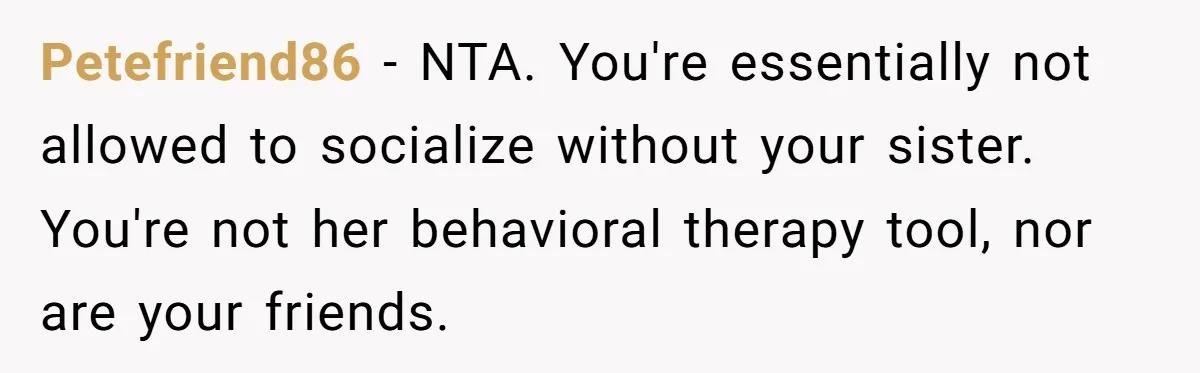
A large number of people focused on the long-term consequences for both children and called out the parents for poor responsibility.
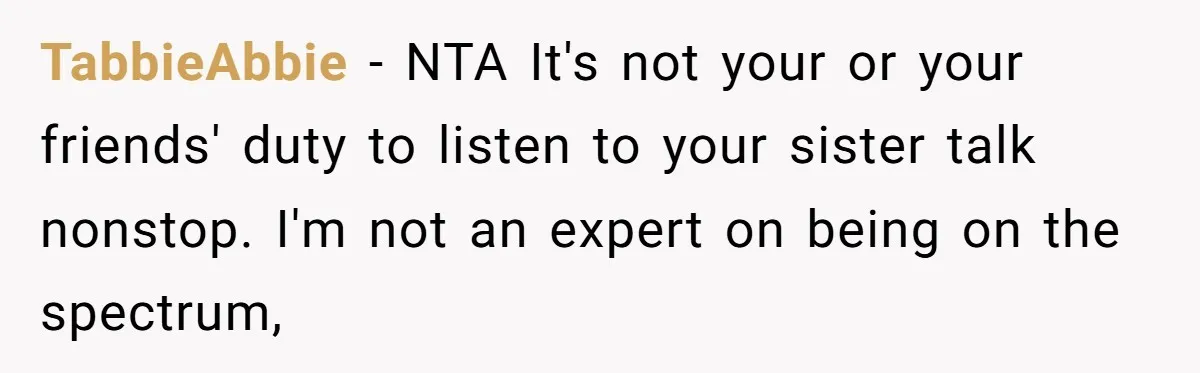

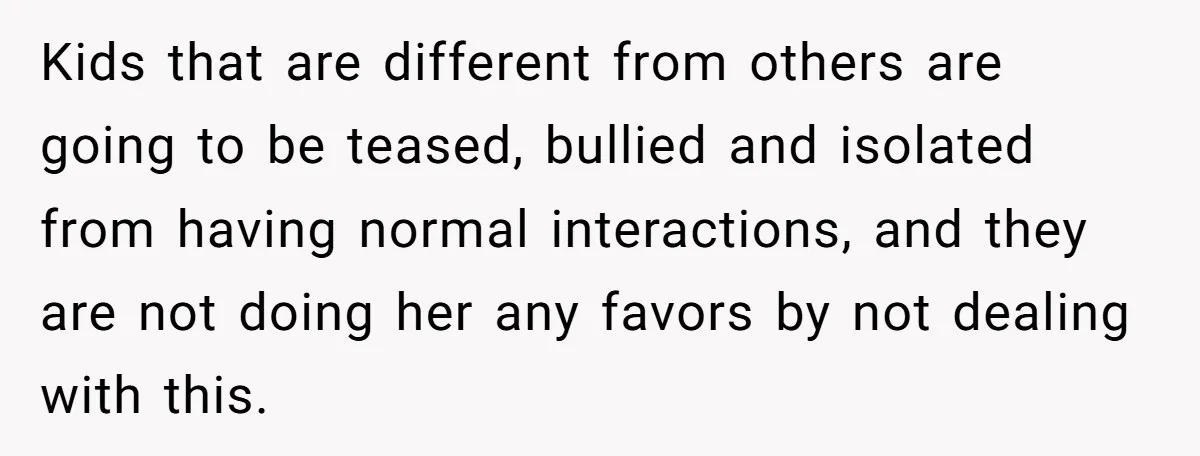



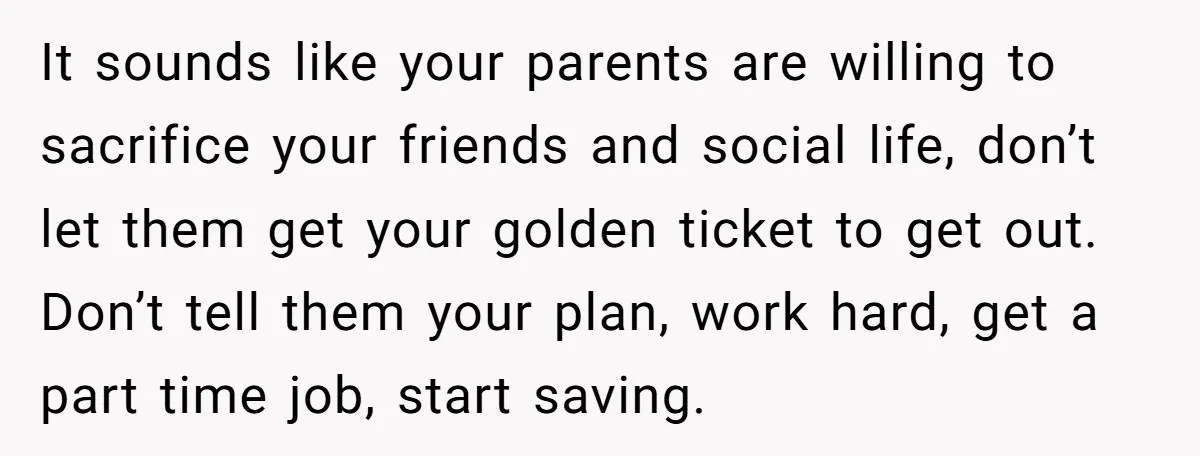
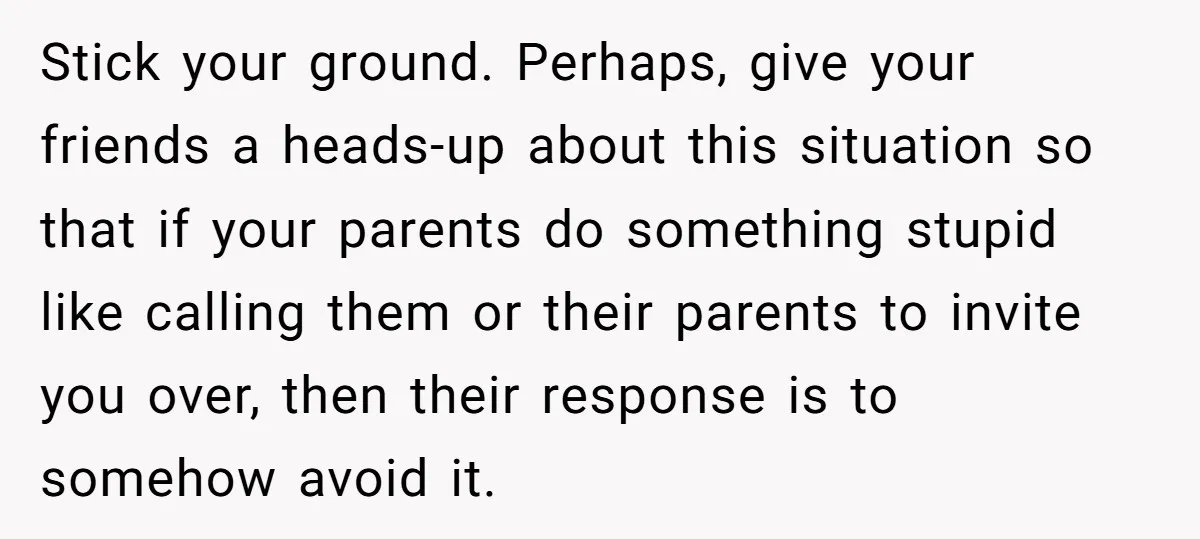
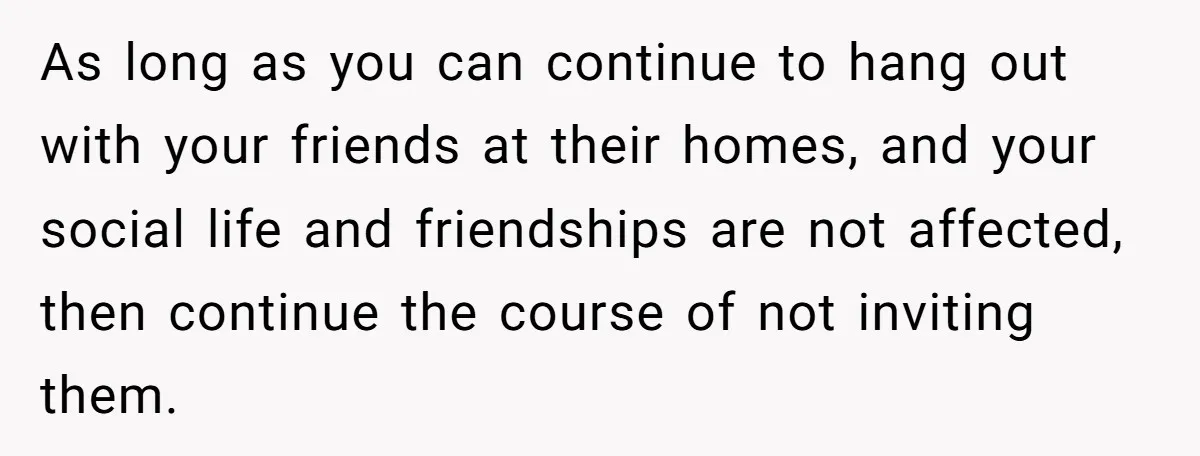
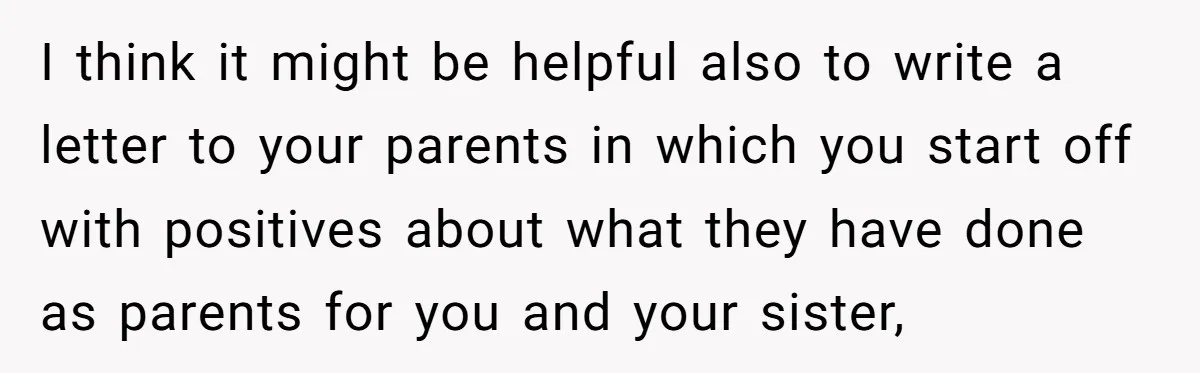
Others added practical ideas or extra perspective, still overwhelmingly supportive.
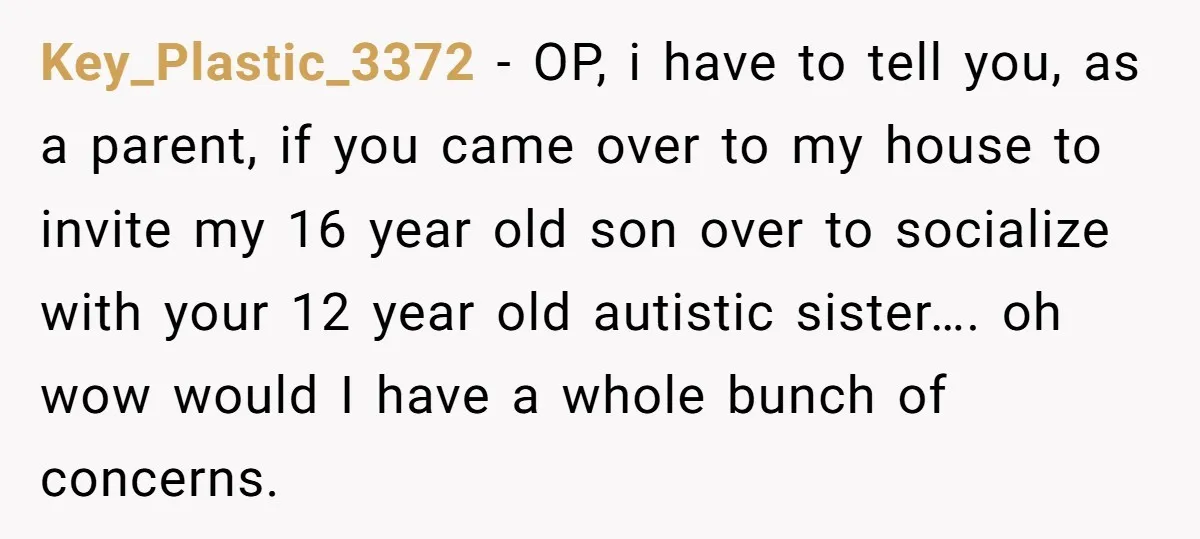
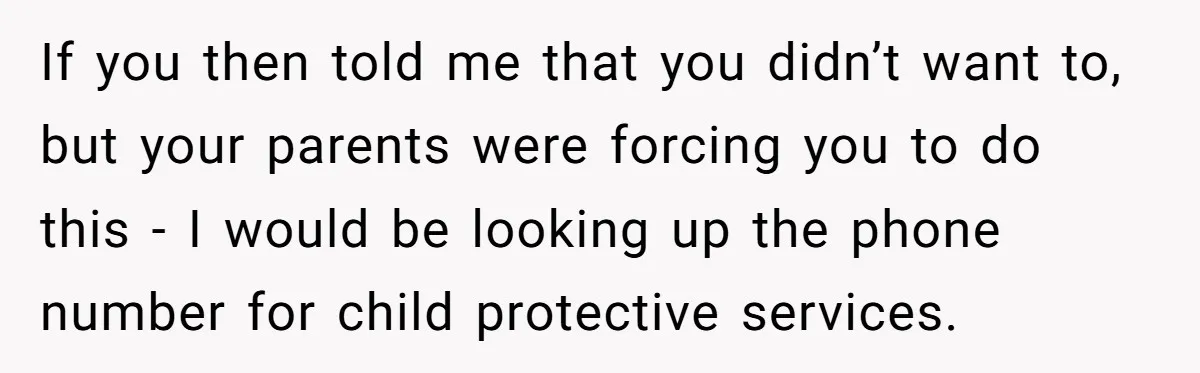
![[Reddit User] − Your parents are absolutely wrong. You are not the stand-in parent, or therapist, or social organizer for your sister. It is up to them to help your...](https://loknam.com/aita/images/d5a130df9b/wp-editor-1767845749654-8.webp)



This situation shows how quickly unspoken family expectations can damage relationships between siblings and parents. The teenager isn’t refusing to love or help his sister; he’s protecting his own mental space and friendships after being asked to carry an unfair load for too long. The real lesson lies in recognizing that good intentions don’t automatically make an arrangement fair – especially when one child is quietly sacrificing their teenage years.
When parents place caregiving duties on a sibling without professional support, resentment builds and nobody truly wins. Healthy families find ways to meet everyone’s needs without turning one child into the default solution. If you were in this teenager’s position, would you have answered the same way when your parents pressed you? And how do you think parents should balance supporting an autistic child while still giving their other children room to live normal teenage lives?