
A married couple purchased a home with long-term plans that included space for extended family, but those plans have stalled. The husband now finds himself facing pressure to allow his mother-in-law to move in sooner than expected, despite serious reservations about how that would affect his household and marriage.
As his wife struggles with guilt over her mother feeling lonely, he worries that sacrificing comfort and boundaries could create lasting resentment. With children in the home, limited space, and a living arrangement that already feels overwhelming, the disagreement has turned into a question of responsibility versus self-preservation. The situation has sparked strong reactions online, with many weighing in on whether protecting a marriage should outweigh accommodating family.

‘AITA For Telling My Wife My MIL Can’t Move In?’
A long-term housing plan suddenly became urgent after an unexpected rule change.
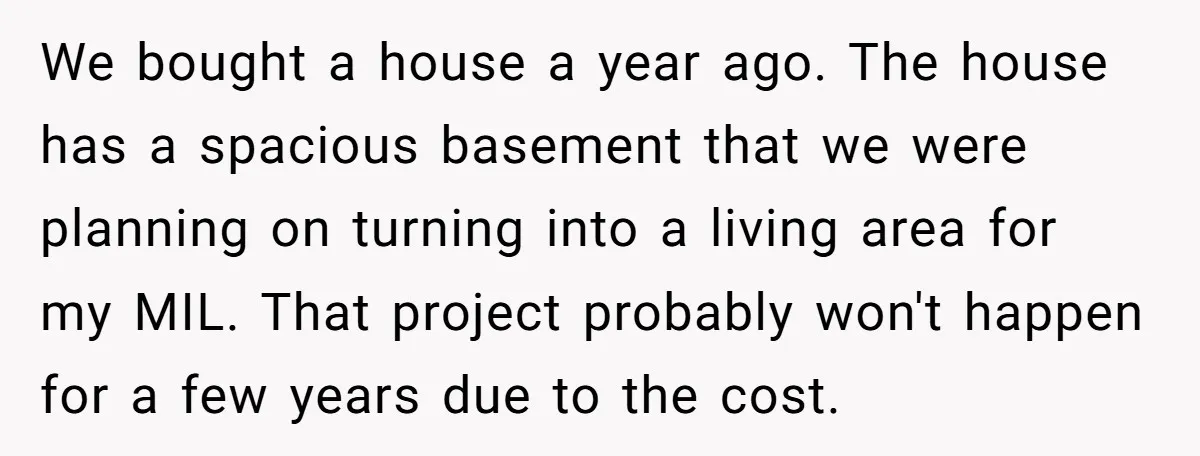
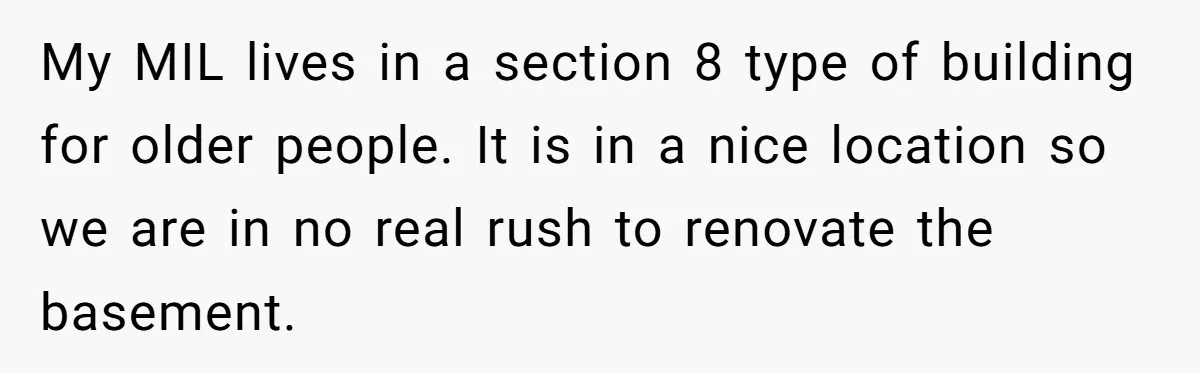
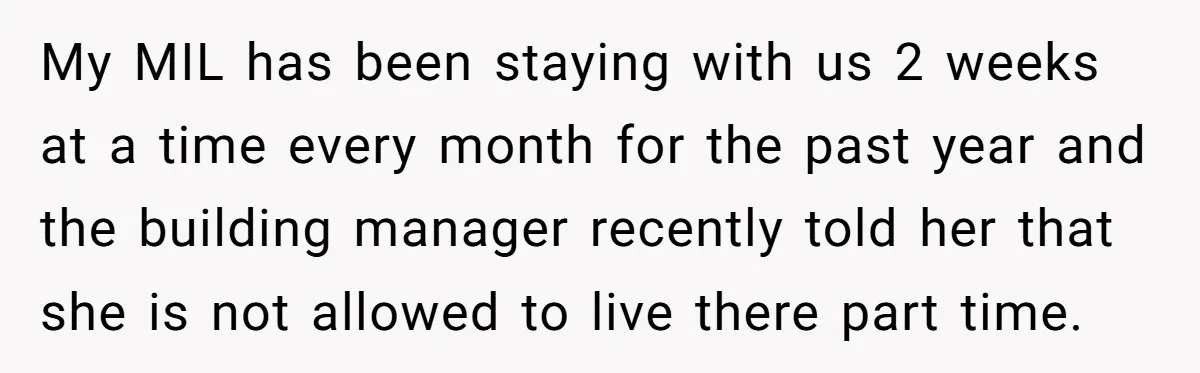
Tension grew when shared spaces and personal limits started clashing.
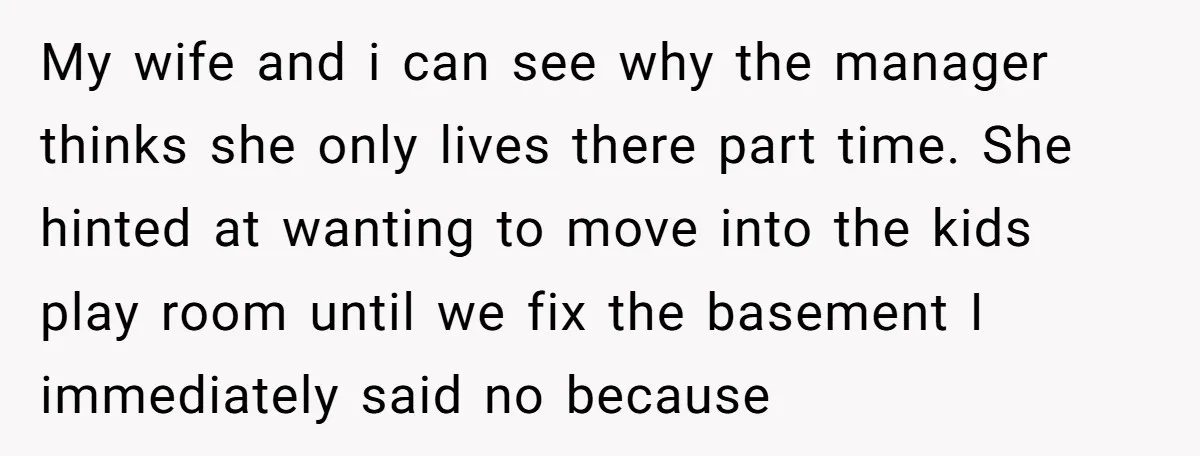
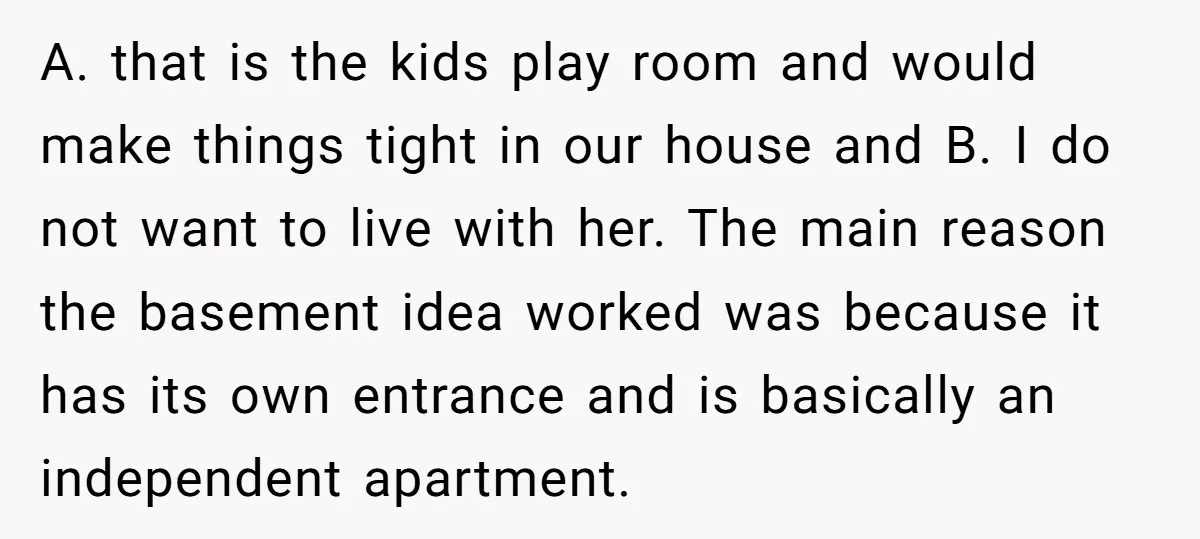
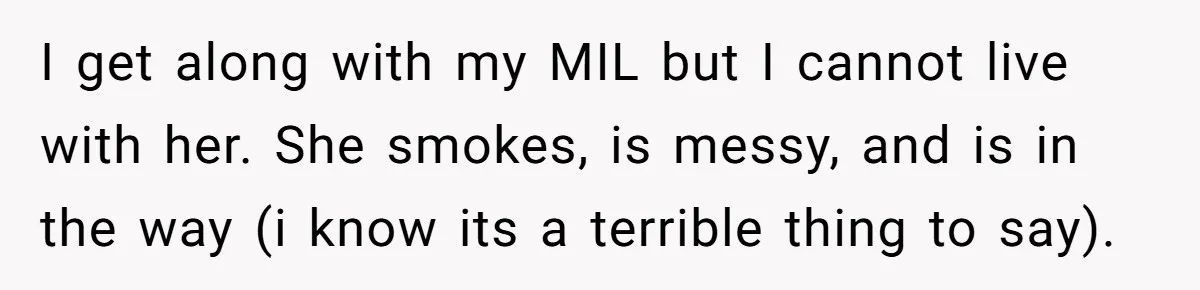
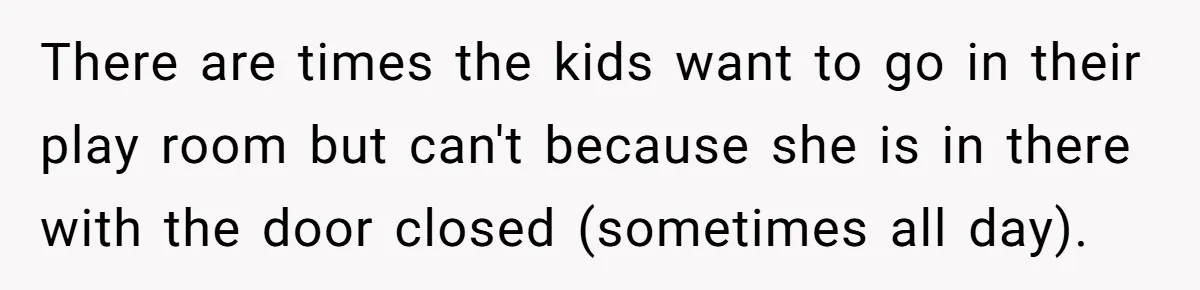

Concerns about marriage, comfort, and fairness came to the forefront.
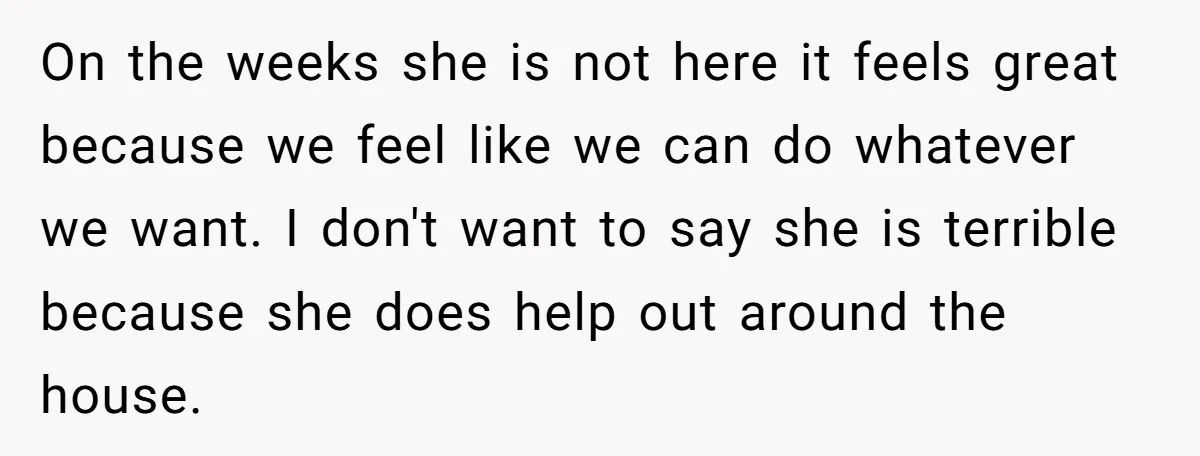
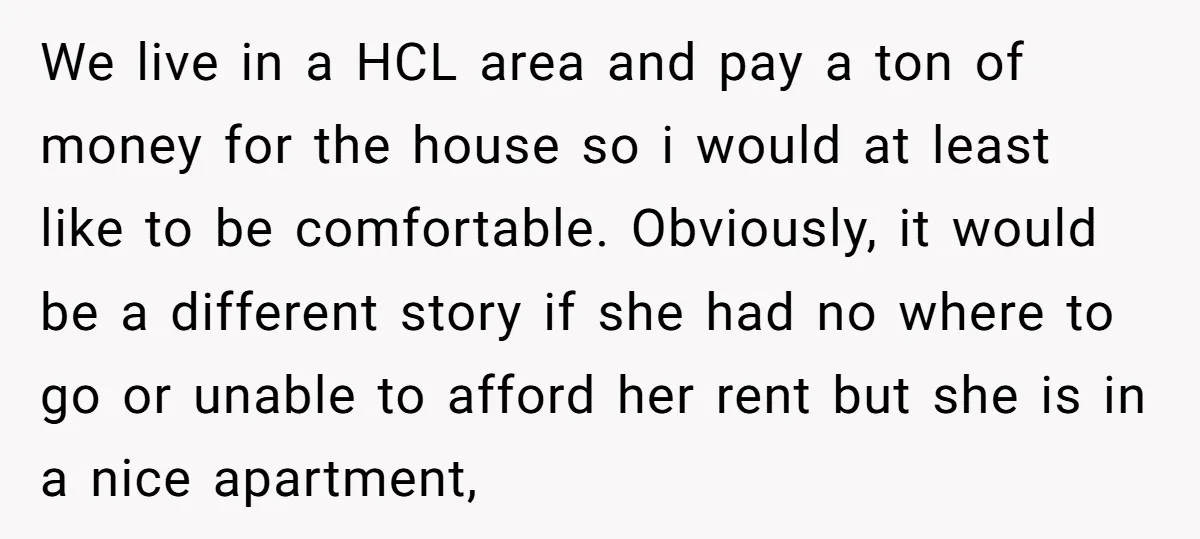
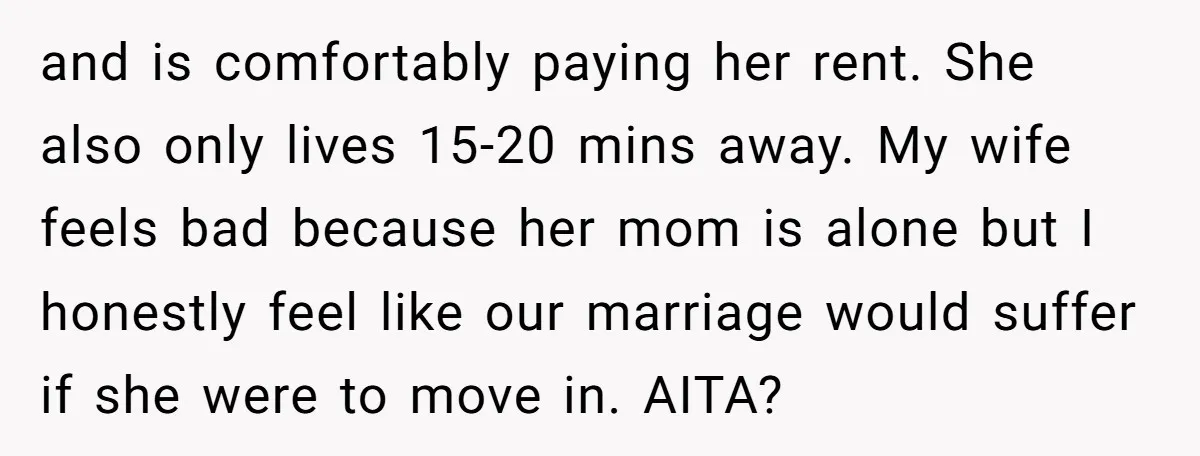
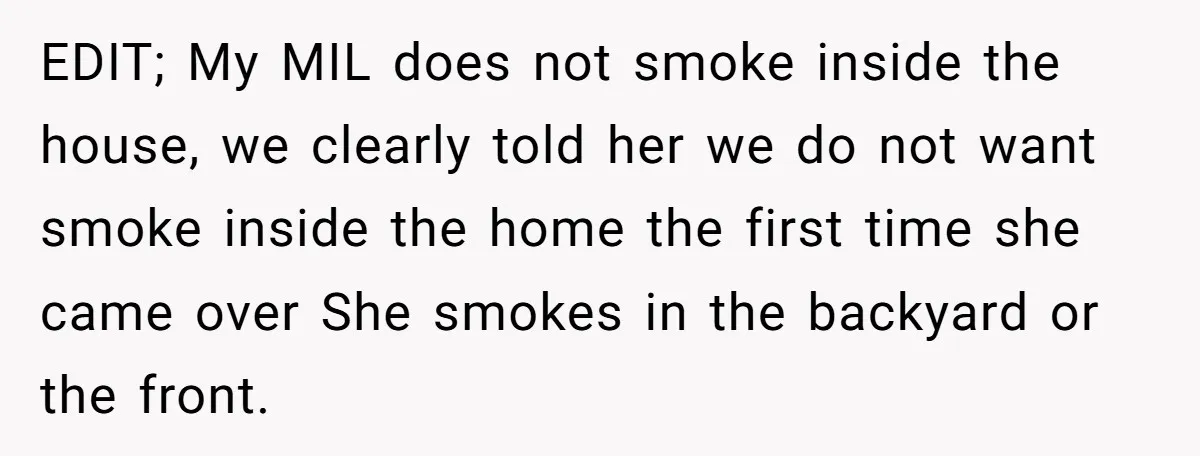
At the heart of the issue is a mismatch between expectations and reality. The couple originally agreed to a future arrangement that allowed privacy and independence, but circumstances shifted before those conditions could be met. The husband’s resistance is rooted less in dislike and more in lived experience; even temporary visits already disrupt family routines, children’s access to shared spaces, and his sense of comfort in his own home.
On the other side, the wife’s feelings stem from empathy and fear of abandonment for her mother. Loneliness in older age can be painful, and guilt often drives adult children to overextend themselves. However, emotional responsibility does not automatically require cohabitation, especially when alternative housing is stable, affordable, and nearby.
From a broader perspective, this conflict reflects the importance of consent and timing in multigenerational living. Good intentions cannot compensate for inadequate space, unresolved lifestyle differences, or a lack of mutual enthusiasm. When one partner feels forced into a living arrangement, resentment can quietly erode the relationship. Protecting a marriage does not mean rejecting family, but it does require honest limits that both partners acknowledge and respect.
Here’s what people had to say to OP:
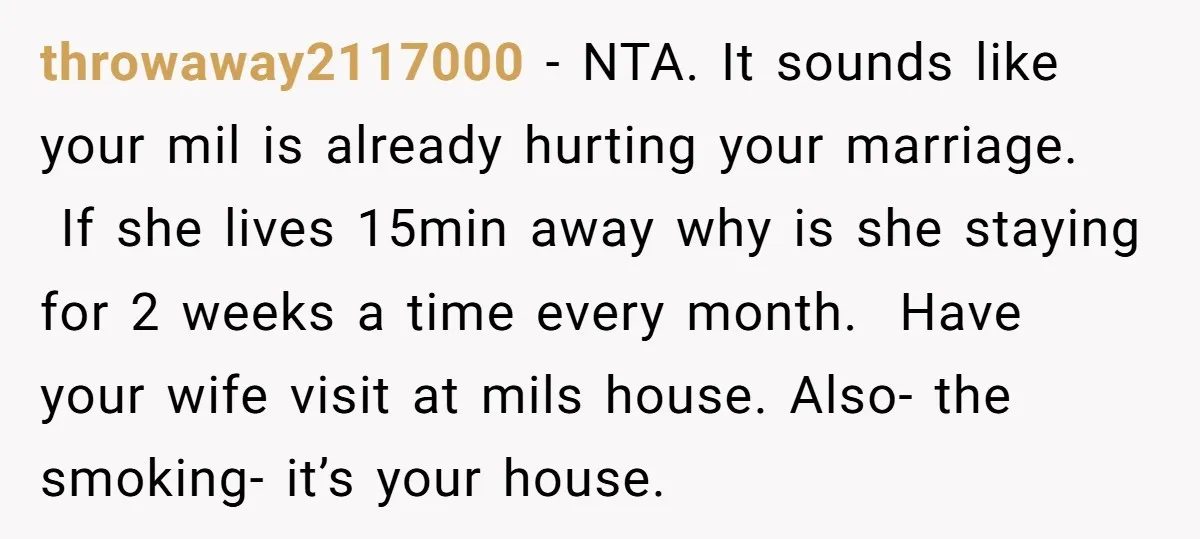
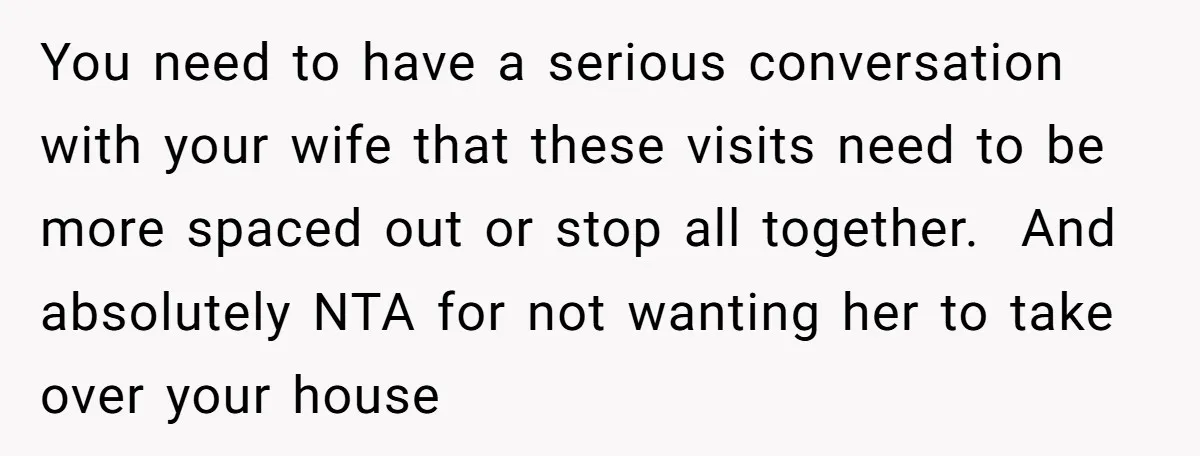
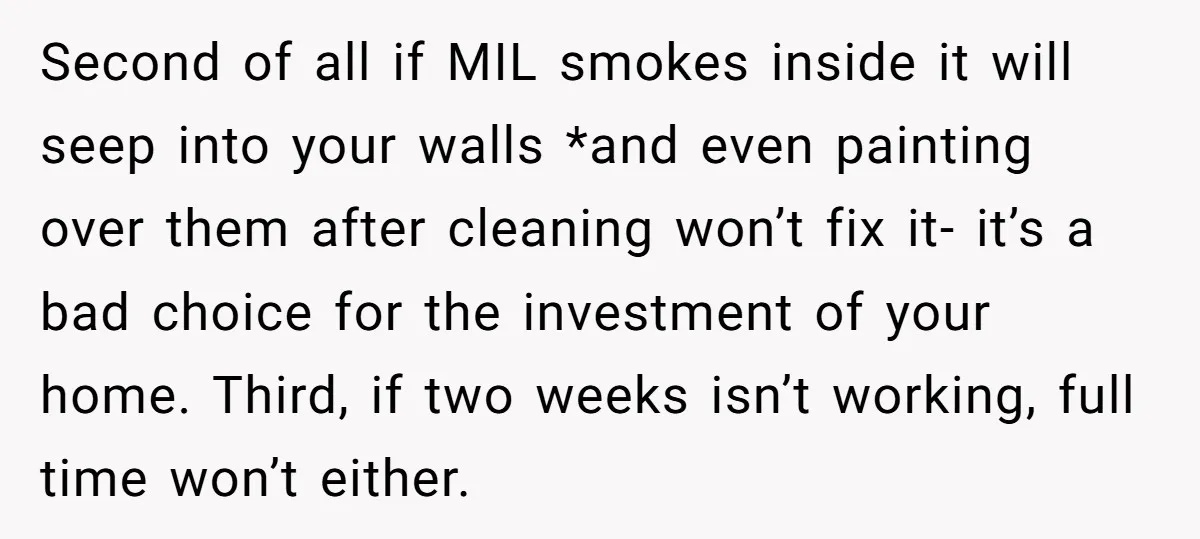
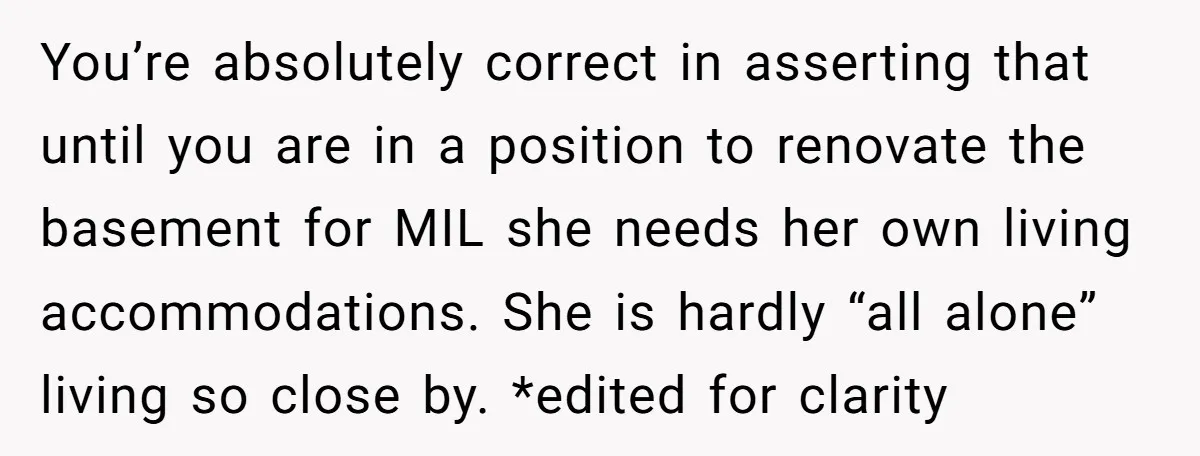
Many users supported the poster, emphasizing marriage stability and household boundaries first.
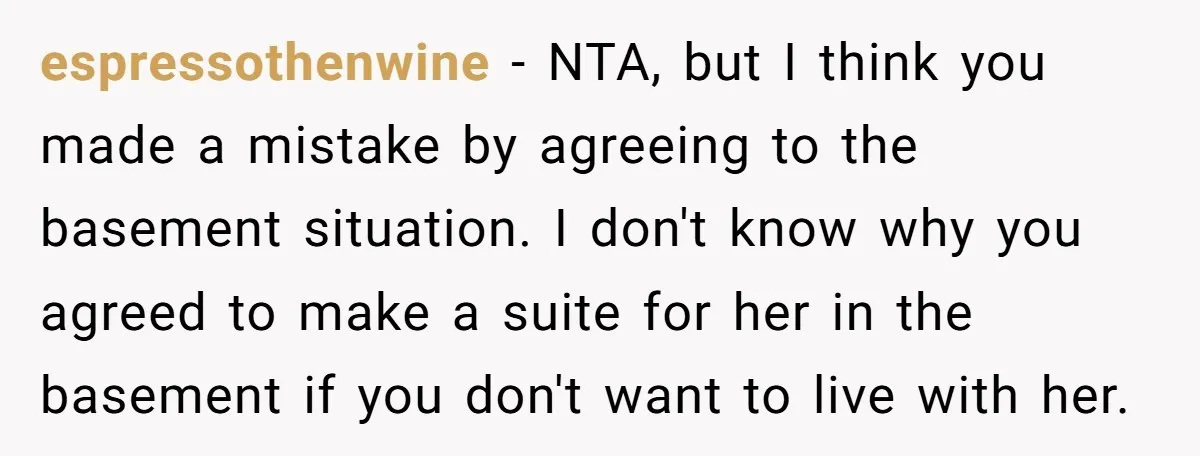
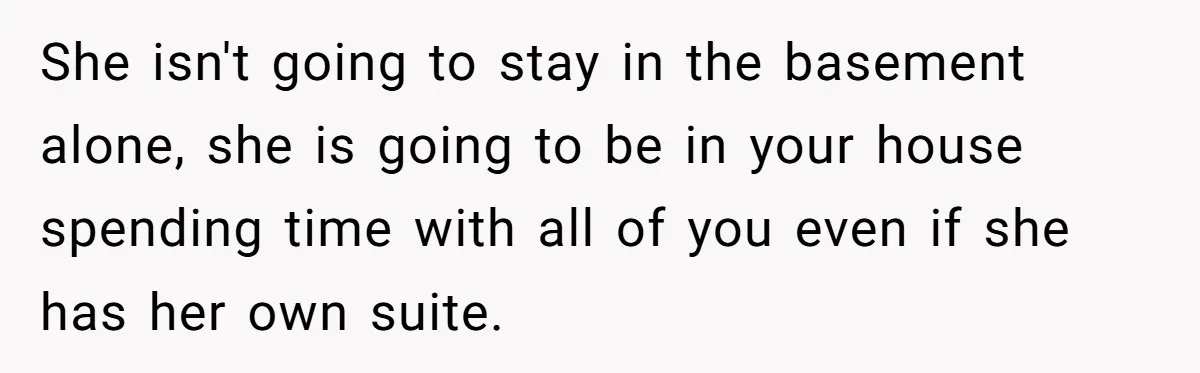
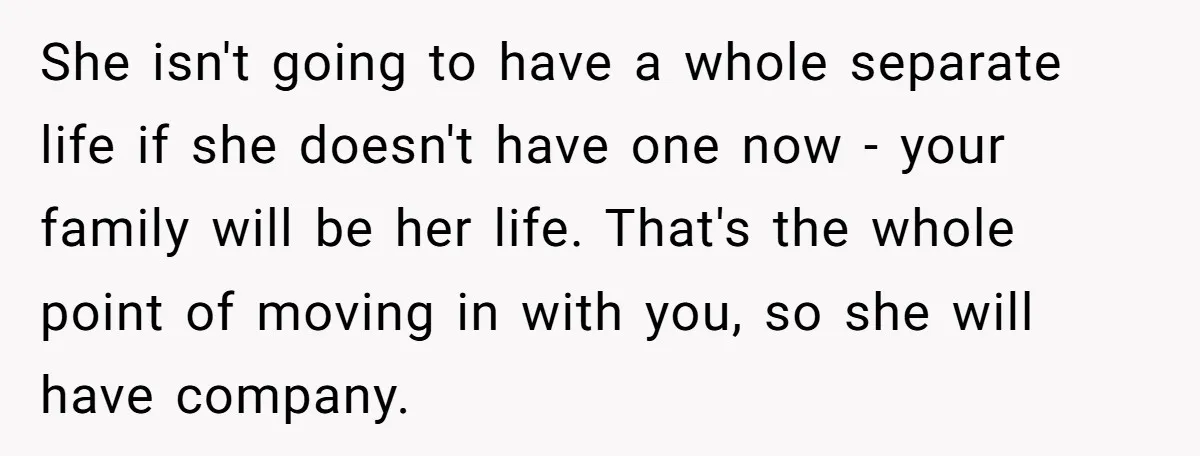


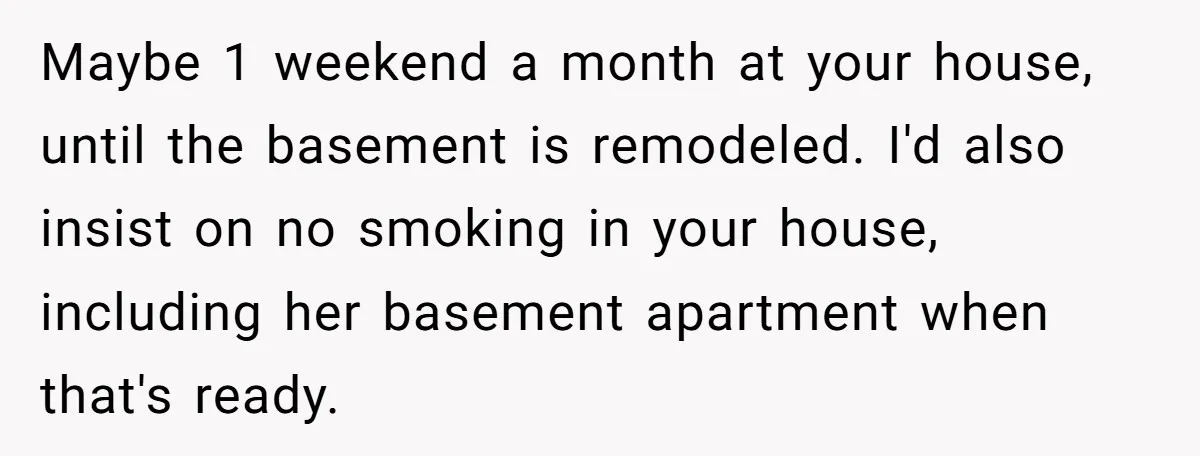



Others offered balanced takes, questioning logistics while acknowledging his concerns.



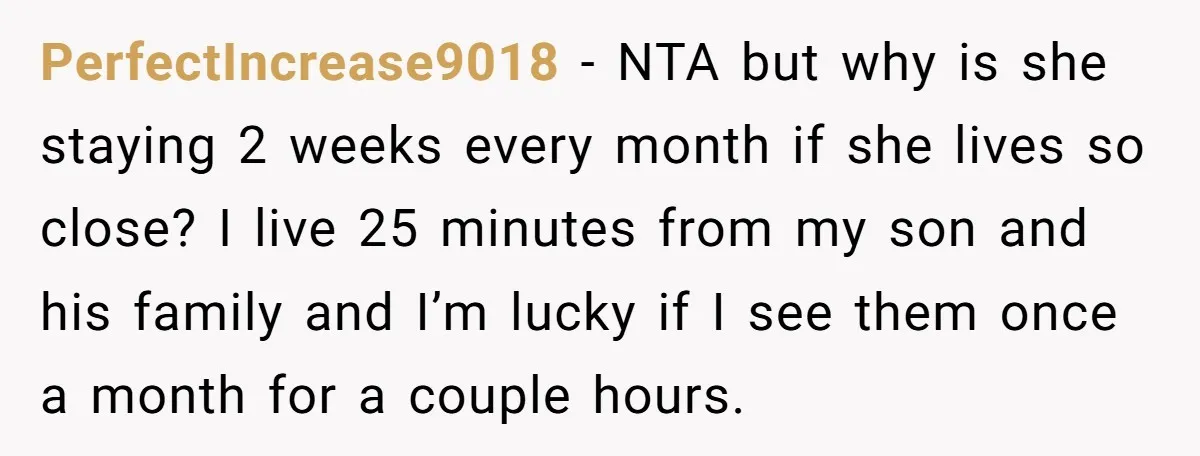
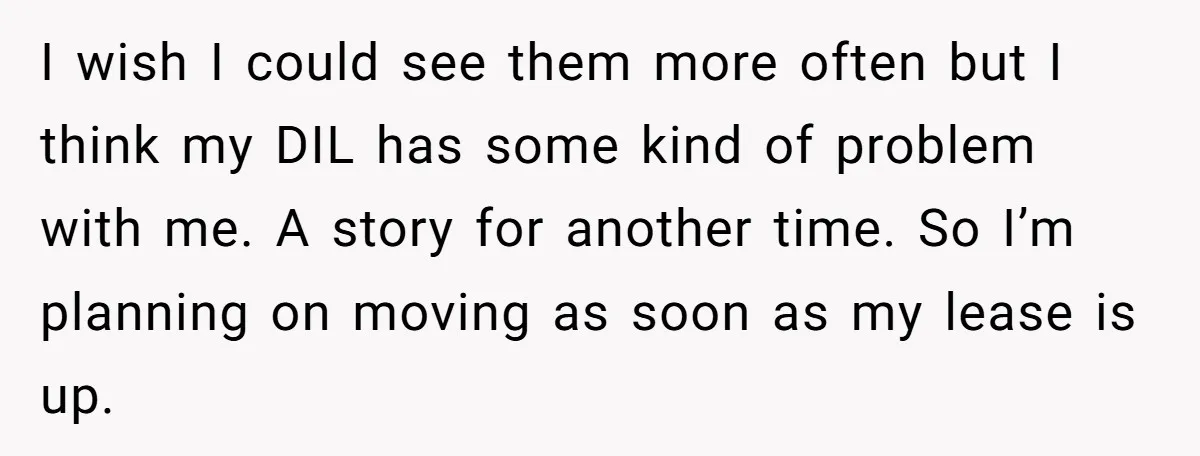
A few comments leaned lighter, highlighting odd details with subtle humor.
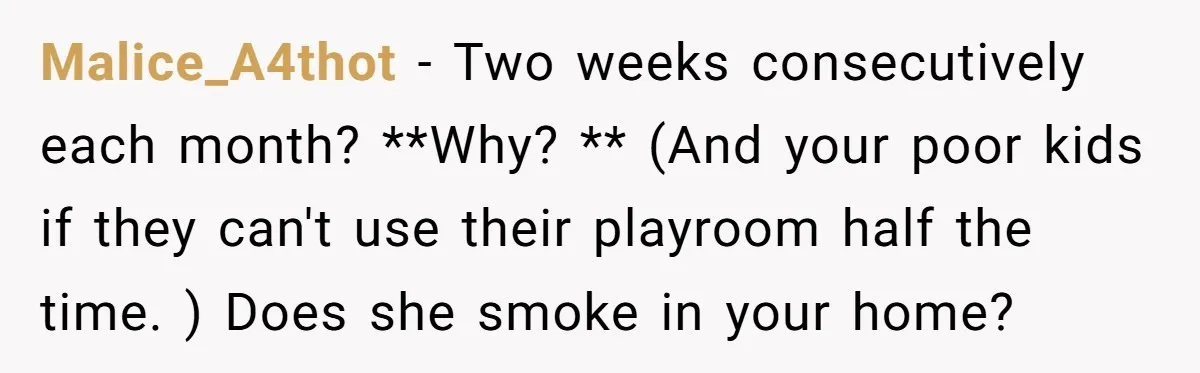

This conflict centers on competing values: compassion for an aging parent versus the need to preserve space, comfort, and marital stability. While the mother-in-law has housing and lives nearby, her extended stays have already created tension that raises concerns about a permanent arrangement.
Situations like this often force couples to confront uncomfortable truths about boundaries and expectations. How much support is reasonable when it begins to impact daily life? Should emotional guilt outweigh practical realities? Readers may find themselves reflecting on where they would draw the line, and how they would navigate a similar crossroads within their own families.