
A husband and wife found themselves at odds over money just weeks after celebrating a major milestone: paying off their mortgage. While he saw it as an opportunity to strengthen their retirement and college savings, she saw it as the perfect time to upgrade their car.
The disagreement quickly became about more than just a vehicle. It exposed deeper differences in how they view spending, saving, and shared responsibility. When he suggested she get a job before they purchase a new car, she called him a cheapskate. Now, with the silent treatment in full swing, he’s left wondering if he’s being responsible or simply unreasonable.

‘AITA for telling my wife we aren’t getting a new car until she gets a job?’
Paying off the mortgage felt like a major victory.



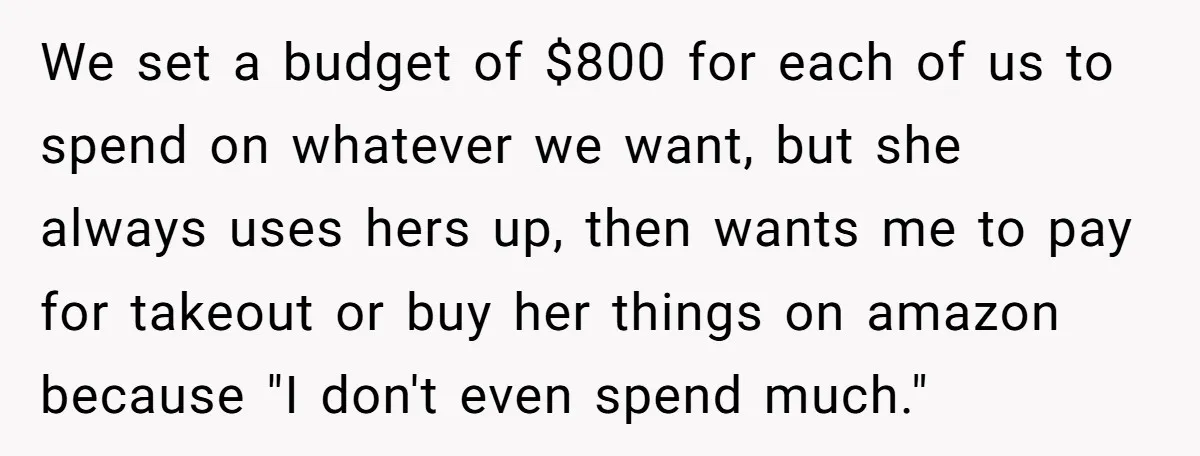

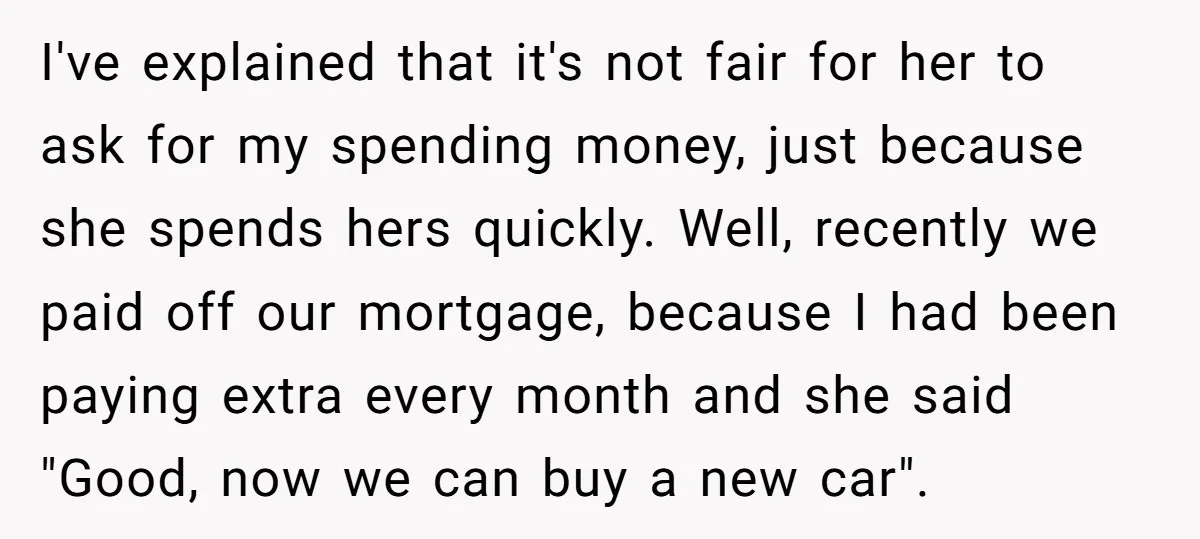
He had very different plans for the extra money.



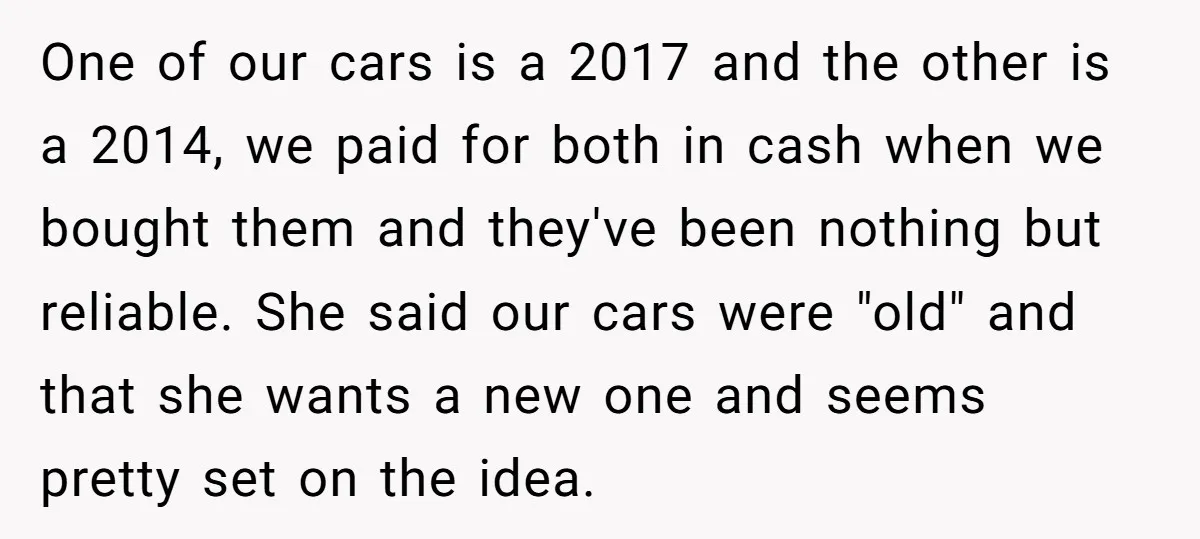

The argument escalated into an ultimatum.


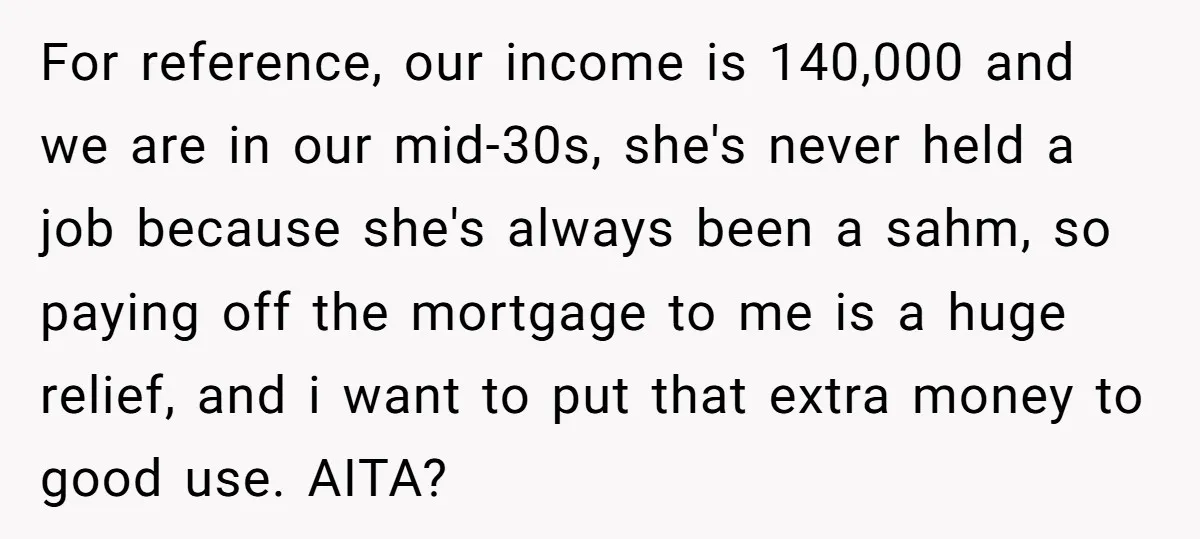
Financial disagreements are one of the most common stressors in long-term relationships. In this case, the issue is less about a car and more about differing philosophies toward security and lifestyle. The husband appears future-oriented, prioritizing retirement accounts and college savings. Paying off a mortgage early often represents stability and discipline. His reluctance to add a new expense reflects risk awareness, especially as the sole income earner.
Concerns about job security, economic uncertainty, and upcoming tuition costs are realistic considerations for a family in their mid-30s. The wife’s perspective may stem from a desire to enjoy present rewards after years of financial discipline. Her “we can die tomorrow” comment suggests a focus on immediate quality of life rather than long-term planning.
However, when one partner earns the income and shoulders financial pressure, perceived imbalances in spending priorities can breed resentment. The suggestion that she work before upgrading the car may feel punitive to her, yet it also reflects a call for shared financial contribution now that the children are teenagers. Ultimately, this conflict signals a mismatch in financial values that likely requires open communication or professional guidance.
Check out how the community responded:
Many commenters supported his cautious financial approach.




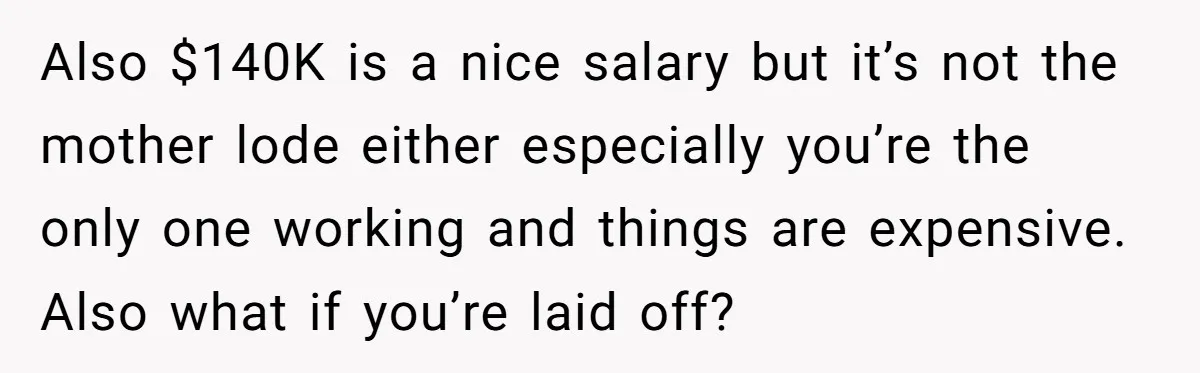




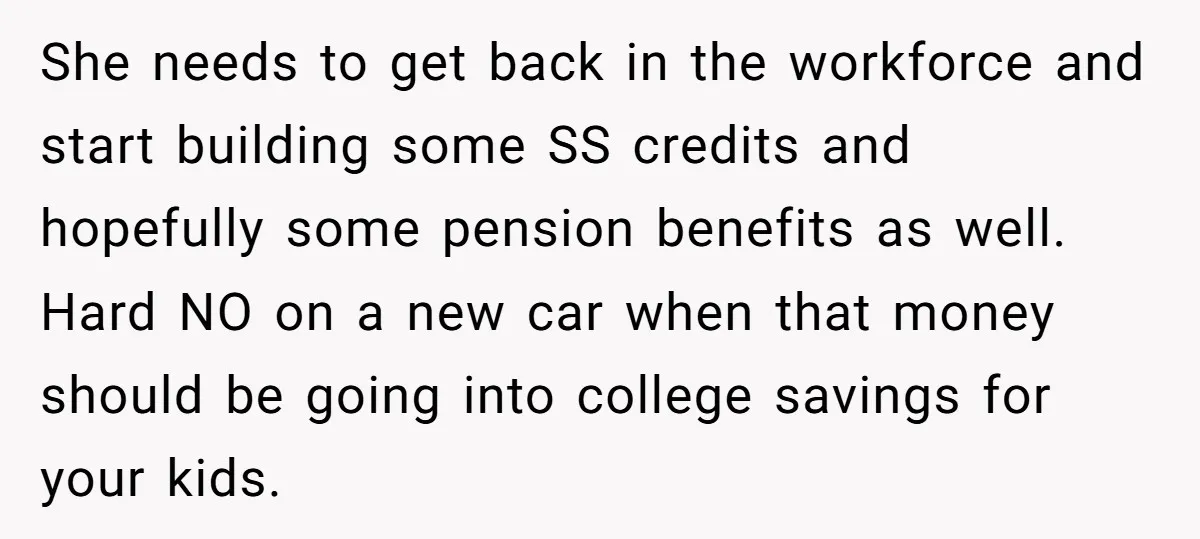
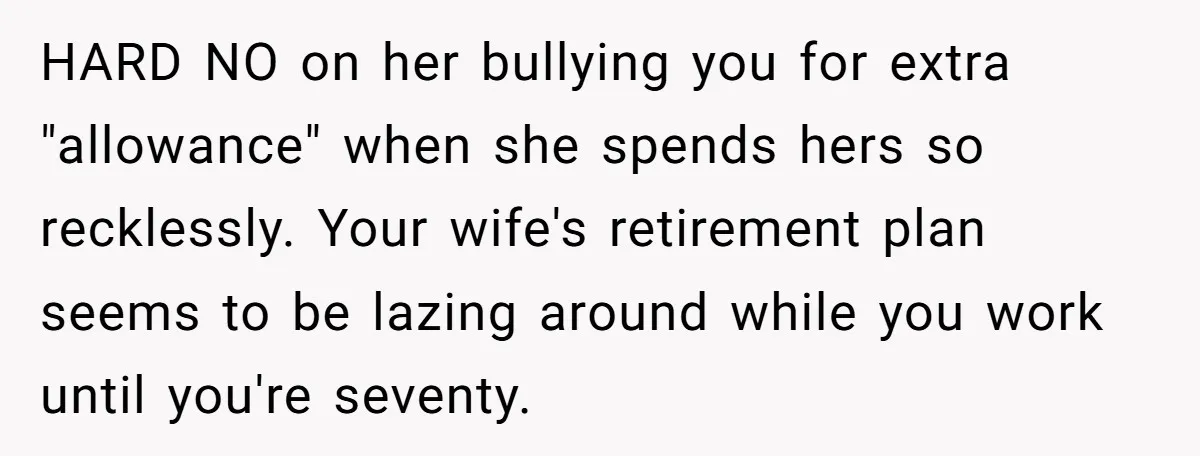
![[Reddit User] − NTA But ive no idea why you keep enabling her behaviour? She's not a sahm, she's unemployed. Start there Stop giving her money when she runs through...](https://loknam.com/aita/images/8c6700c48f/wp-editor-1772159204374-12.webp)
Some pointed out deeper relationship concerns.


Others offered practical or blunt solutions.





This disagreement reflects two different financial mindsets colliding at a pivotal moment. Paying off a mortgage can feel like freedom, yet it can also open the door to new debates about what comes next. Security versus lifestyle is a balance many couples struggle to maintain.
Was his suggestion fair given that he is the sole earner? Or did tying the car purchase to her employment cross into ultimatum territory? How should couples handle long-term financial goals when one partner prefers enjoying the present? Share your perspective below.