
Breaking up is rarely easy, but sometimes it’s the way it happens that leaves the deepest sting. For one young woman, the end of a two-year relationship came suddenly and without warning, delivered through a short, polite text that offered no explanation and no chance for real closure. Still processing the shock, she made a quick decision that felt natural to her: she unfollowed her ex on social media and moved on.
What happened next caught her completely off guard. Instead of letting things fade quietly, her ex reacted with unexpected anger, turning a simple unfollow into a months-long source of resentment. Friends began reporting back that he was still upset, calling her action disrespectful and acting as if that single click mattered more than the breakup itself. The reaction left many people wondering what was really going on beneath the surface, and whether unfollowing an ex can truly hurt that much.


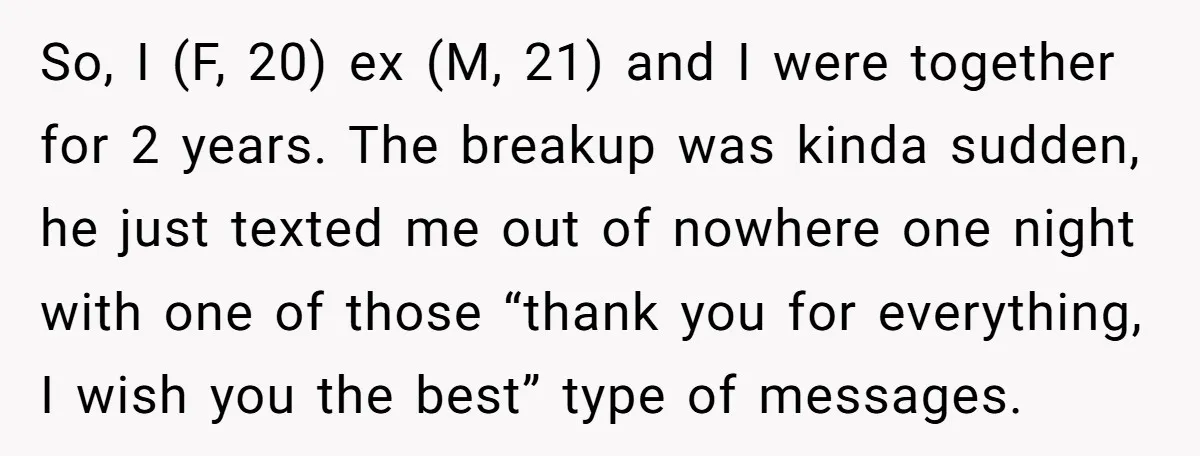
Everything started with a breakup that arrived suddenly and without warning, leaving OP stunned and confused.
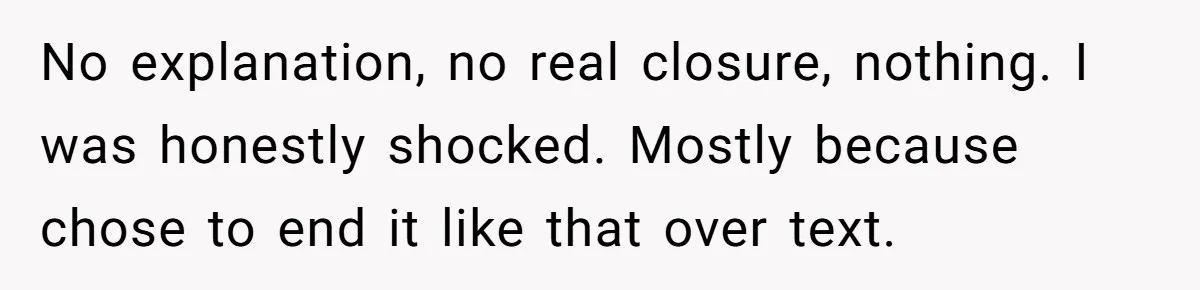
Her reaction was immediate and consistent with how she handles emotional boundaries.
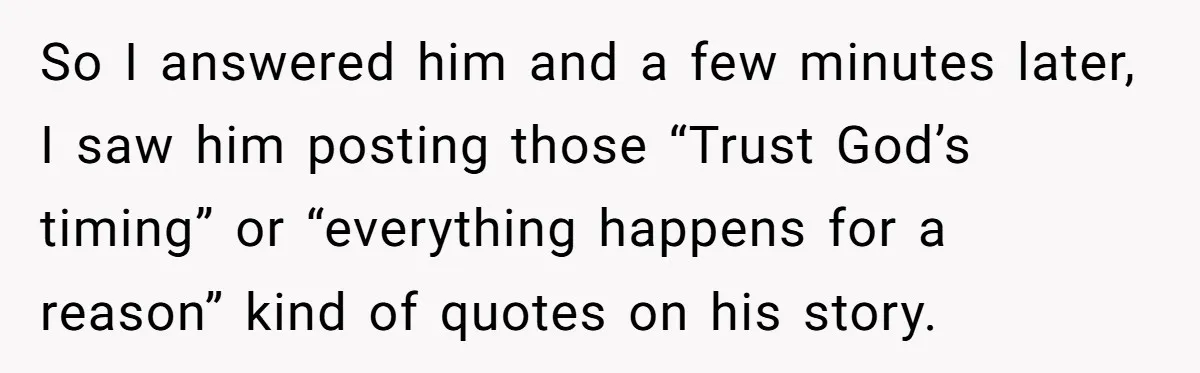
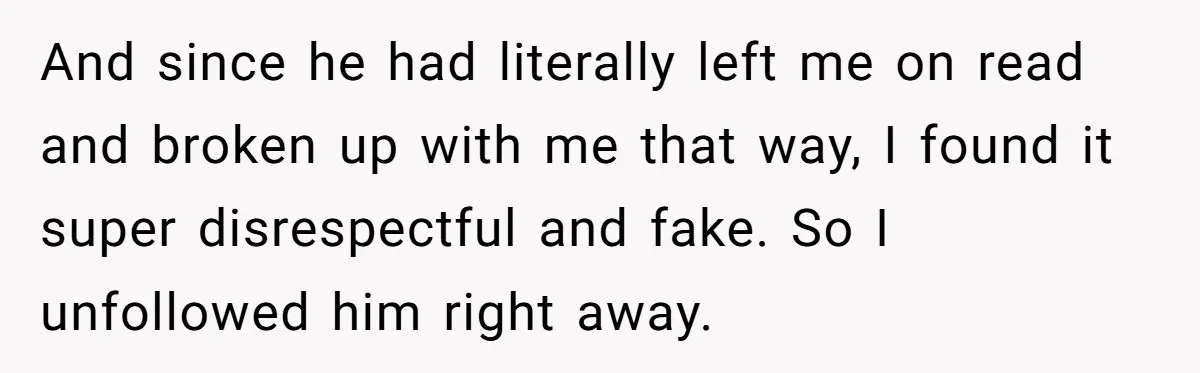
What surprised her most was how strongly he reacted afterward.

Even months later, the issue refused to die down.
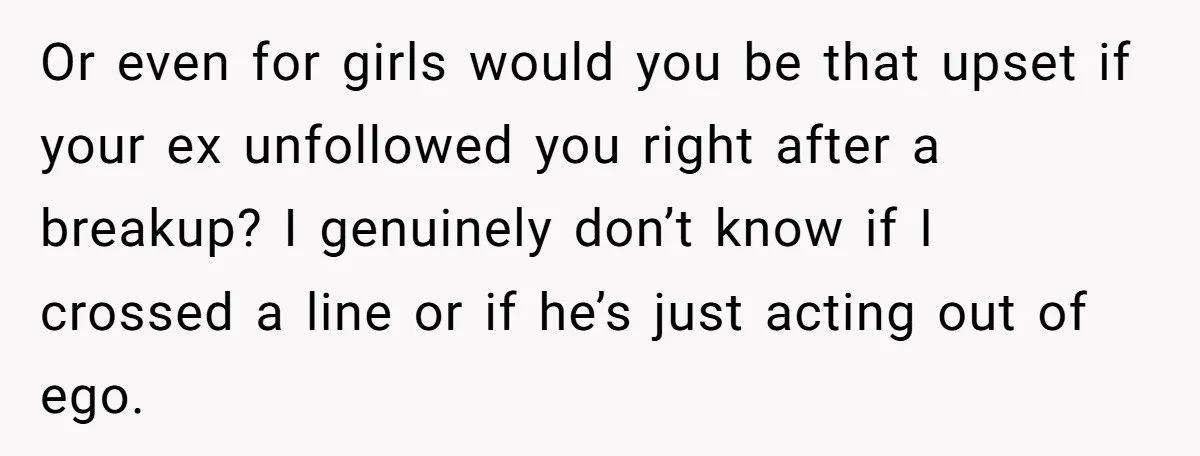
At its core, this situation isn’t about an unfollow. It’s about control, validation, and how some people handle rejection. The poster chose a clean break after being dumped abruptly, while her ex seemed to expect continued emotional access. That mismatch often creates tension, especially when one person believes they still deserve attention after ending the relationship on their own terms.
From the ex’s perspective, unfollowing may have felt like a loss of power. Ending a relationship can give someone a sense of control, particularly if they expect the other person to remain visibly affected. When that reaction doesn’t happen, frustration can surface fast. The anger isn’t about disrespect, it’s about not getting the response they imagined.
According to Dr. John Gottman of The Gottman Institute, “One of the most important signals in relationships is whether someone respects emotional boundaries, especially during conflict.” When boundaries are ignored, resentment tends to grow. In this case, OP clearly communicated her boundary through action, while her ex reacted as if that boundary was an offense.
The healthiest path forward in situations like this is consistency. Experts often suggest limiting post-breakup contact, avoiding mixed signals, and refusing to engage in circular arguments fueled by ego. OP did exactly that. While the unfollow may seem small, it served as a clear message: the relationship was over, and healing required distance. That clarity often feels uncomfortable to the person who wasn’t ready to let go.
Take a look at the comments from fellow users:
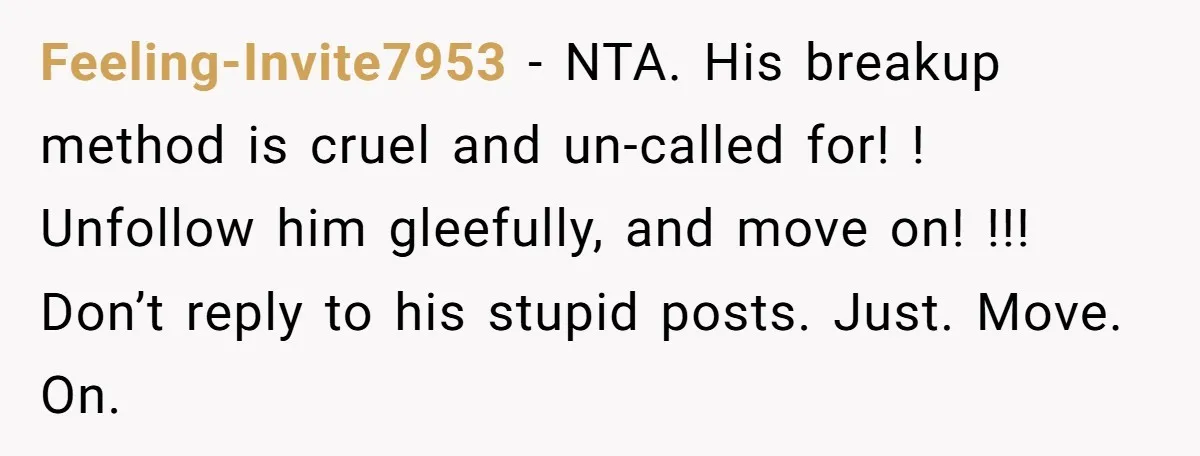
Many users immediately sided with OP, praising her response and calling out the ex’s behavior.

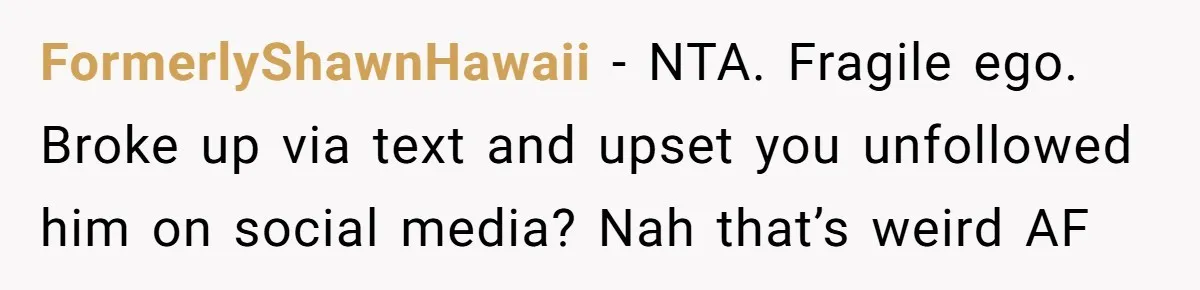
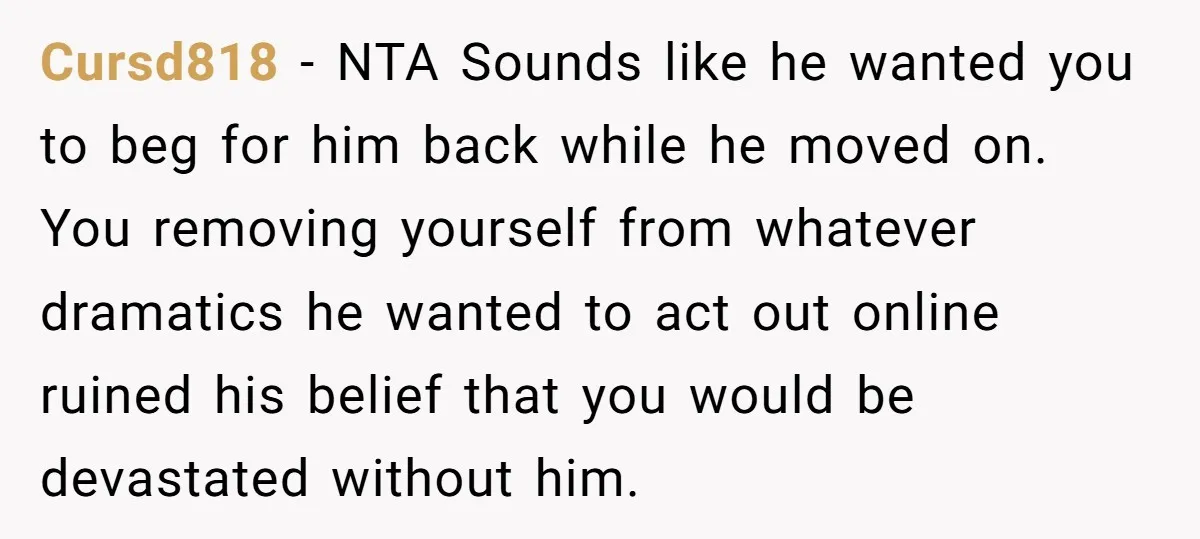


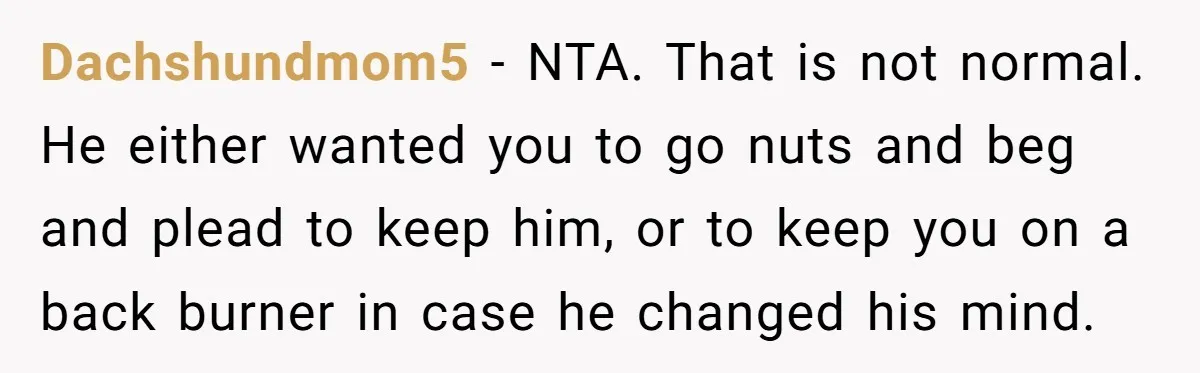
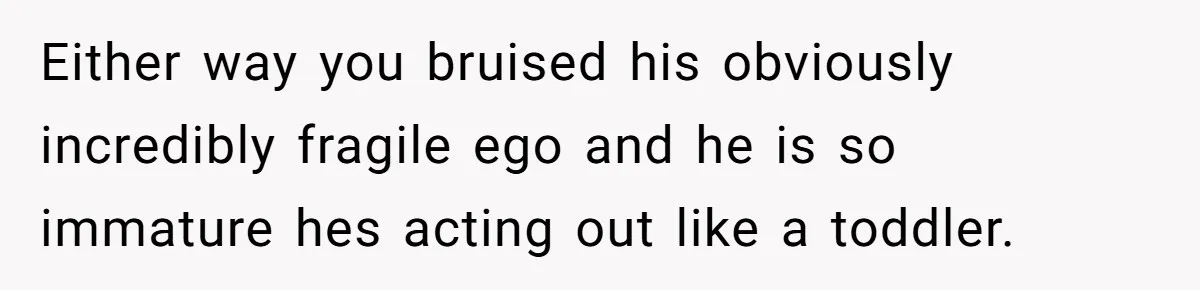
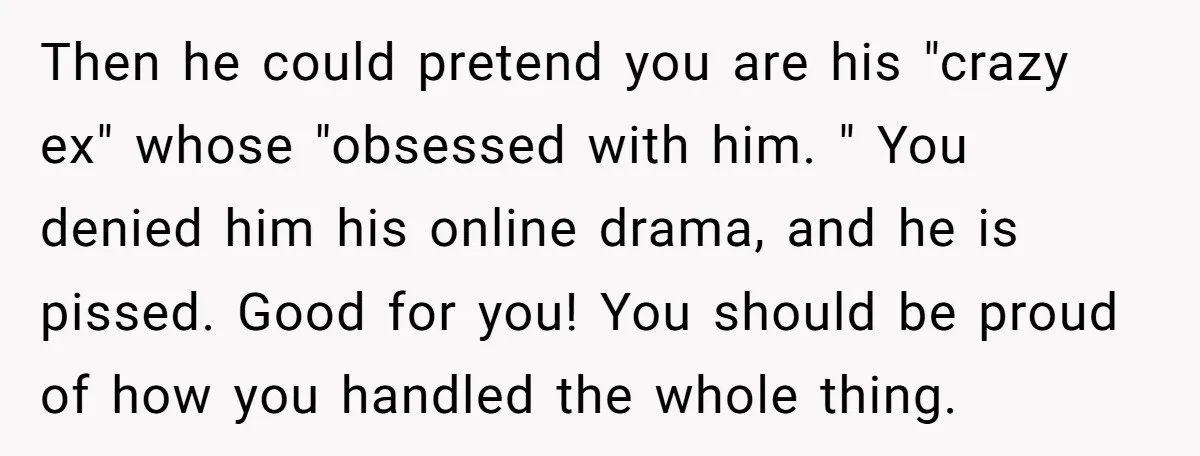
Others offered more pointed interpretations of his lingering anger.
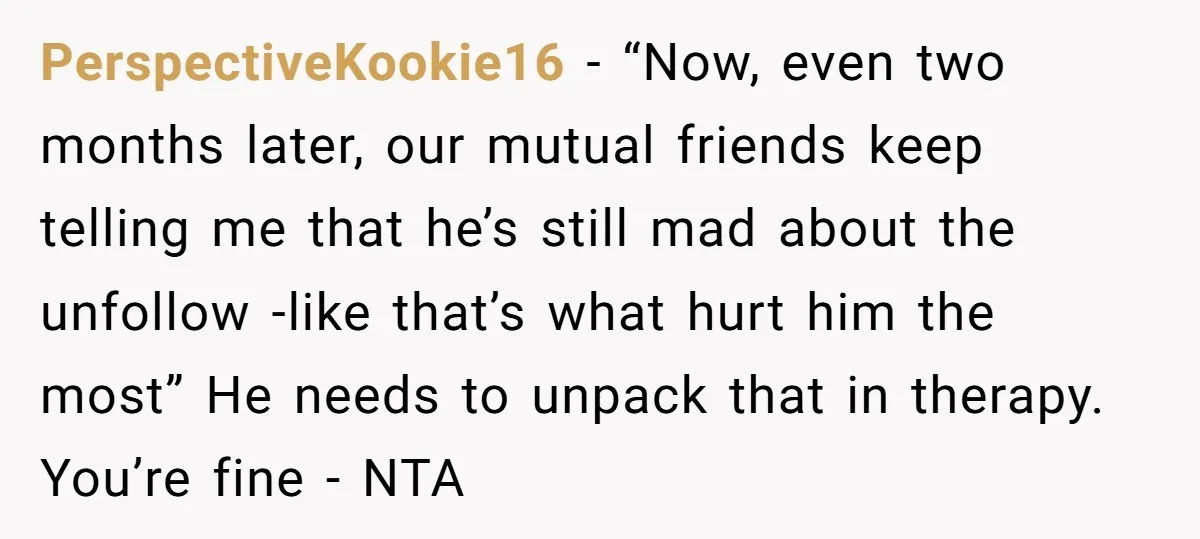
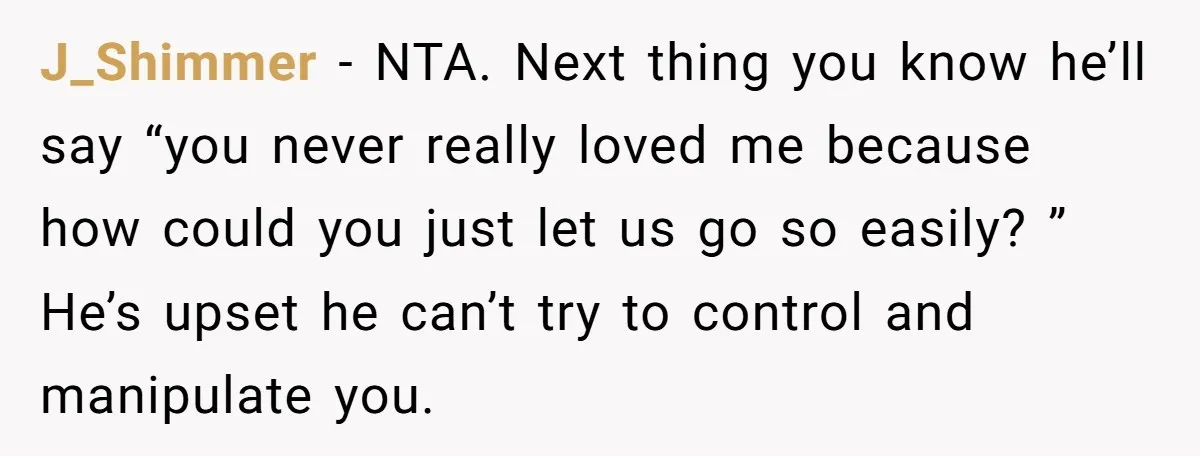

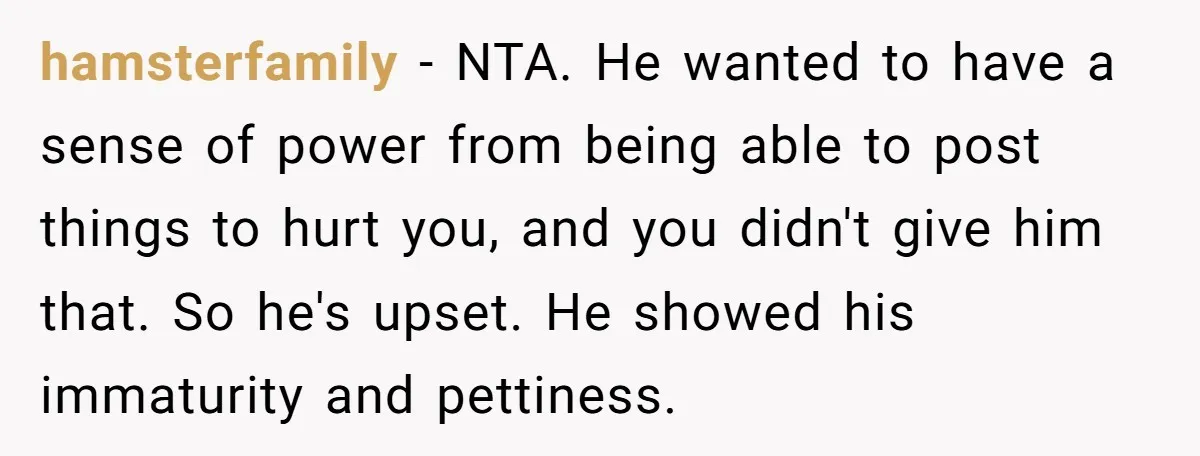
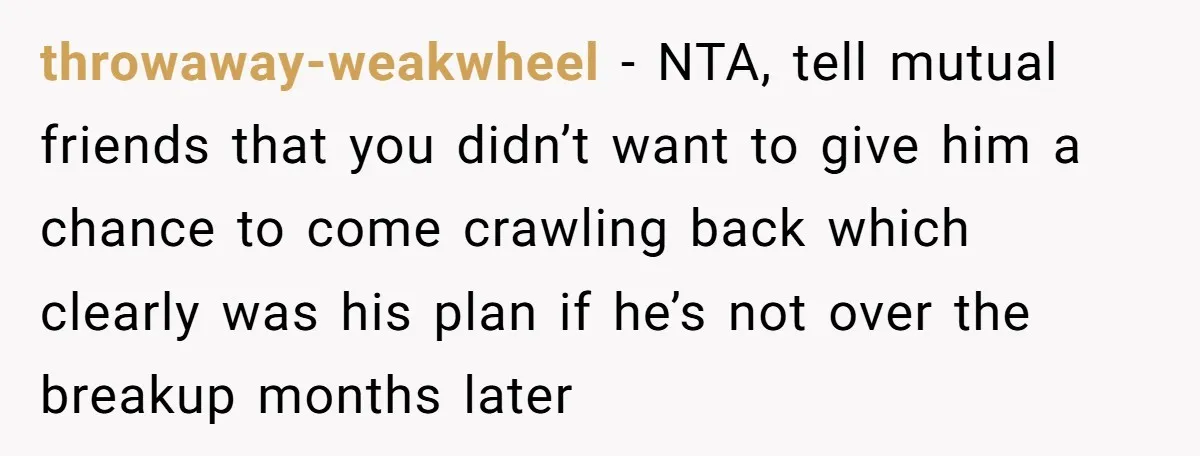

A few commenters leaned into humor to underline how absurd the situation felt.
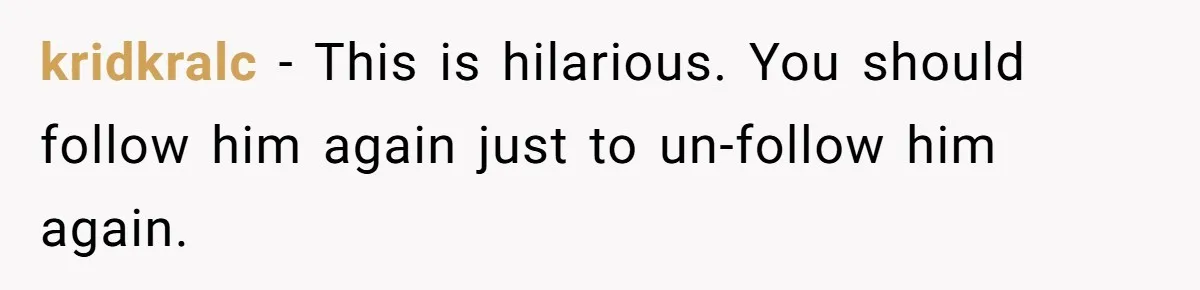
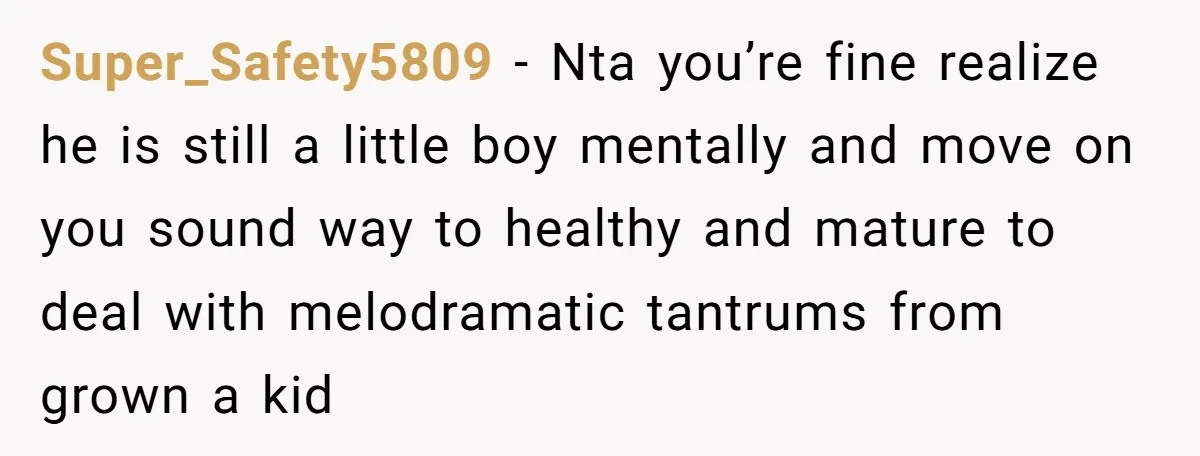

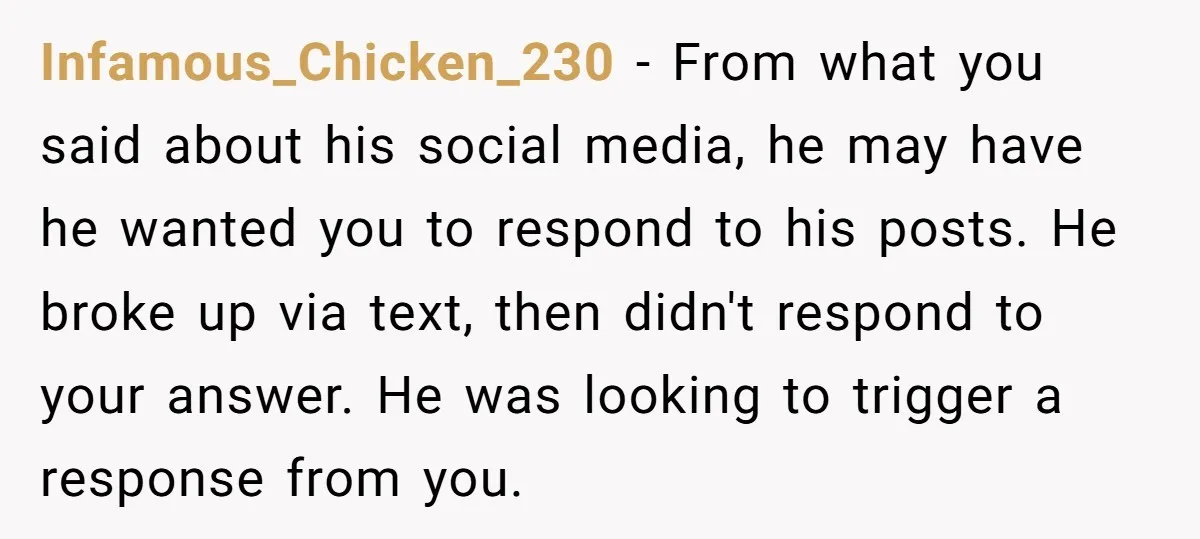
What stands out most in this story isn’t the unfollow itself, but the imbalance in expectations after the breakup. OP chose distance and healing, while her ex seemed stuck on maintaining influence and validation. Social media often magnifies these moments, turning small actions into symbolic battles over pride and control. In the end, unfollowing wasn’t an attack, it was a boundary. The real question is whether holding onto anger months later says more about him than it ever did about her. What would you do if your ex reacted this way?