
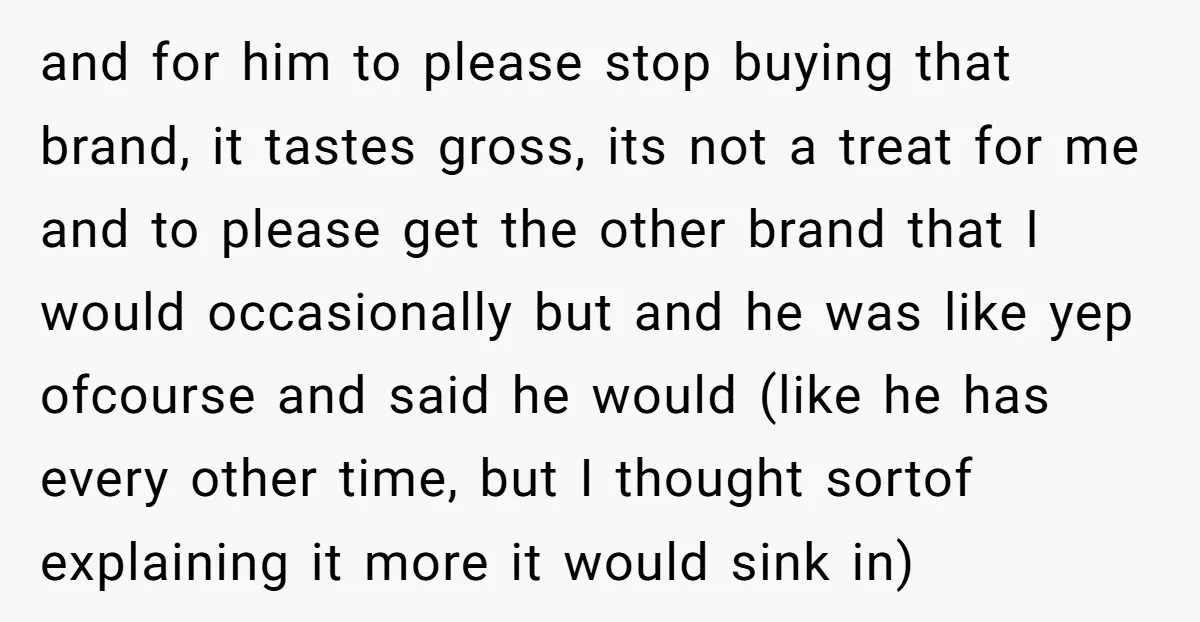
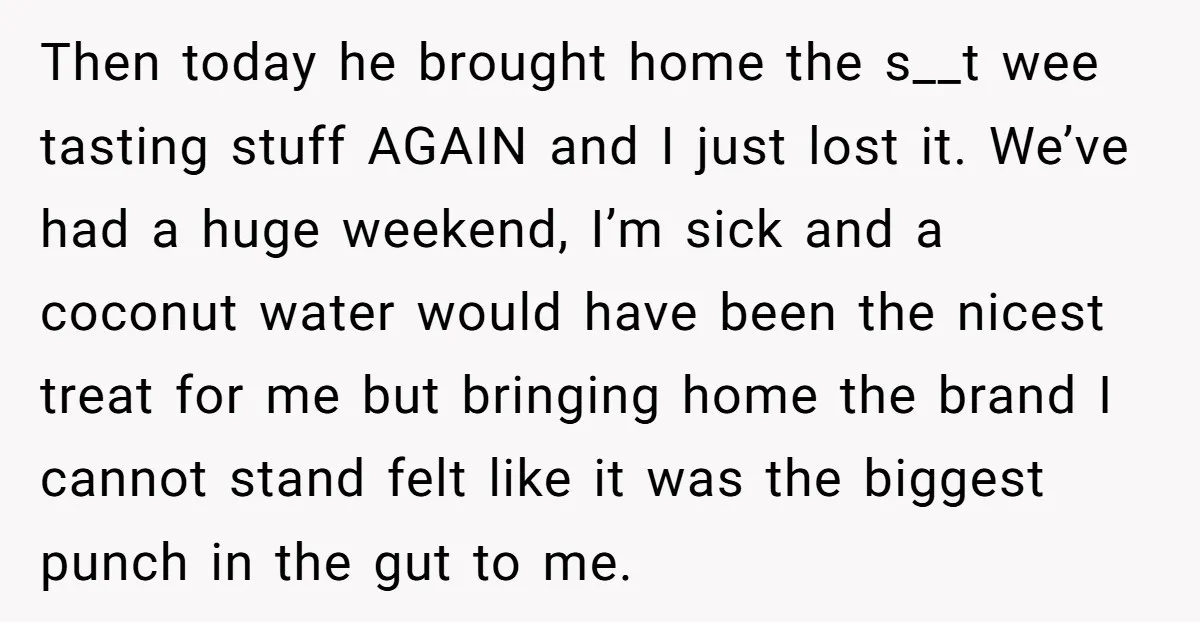
What happens when a small daily treat becomes a source of major frustration in an already exhausting phase of life? A mom with a newborn and a toddler relies on one specific brand of coconut water for a rare moment of comfort amid sleepless nights and chaos. She has clearly asked her partner—multiple times and calmly—to buy only that brand because the cheap alternative tastes terrible to her.
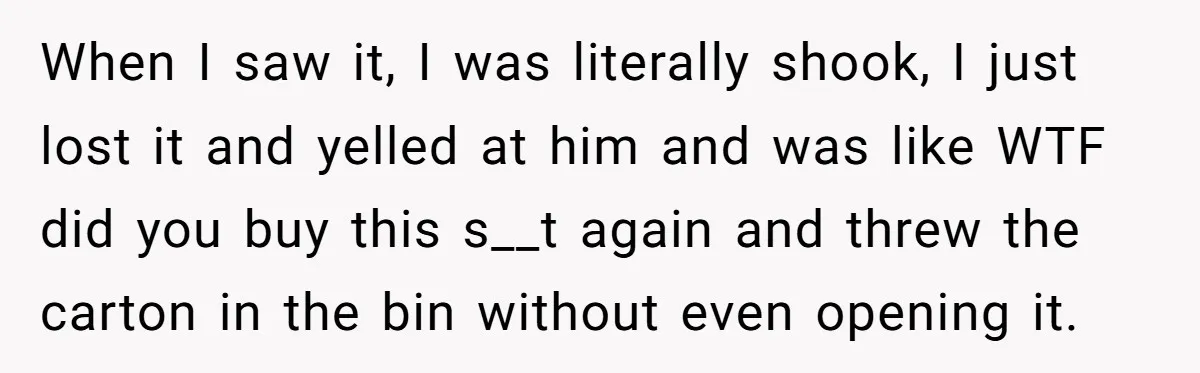
He continues bringing home the wrong one, claiming it’s accidental. After patient explanations and reminders, the latest wrong purchase pushed her over the edge. She yelled, threw the carton away, and the argument left both hurt—him in tears, their toddler scared. Now she questions if her outburst makes her the asshole, or if the repeated disregard crossed a line.

‘AITA for yelling at my partner who keeps buying crappy branded food when I’ve asked him not too?’
With two young children and a newborn keeping them constantly exhausted, the couple barely had a moment to themselves. Their daily routine had completely fallen apart, leaving little time for anything beyond basic survival.

The kind gesture quickly turned frustrating when he consistently chose the wrong item despite repeated requests.


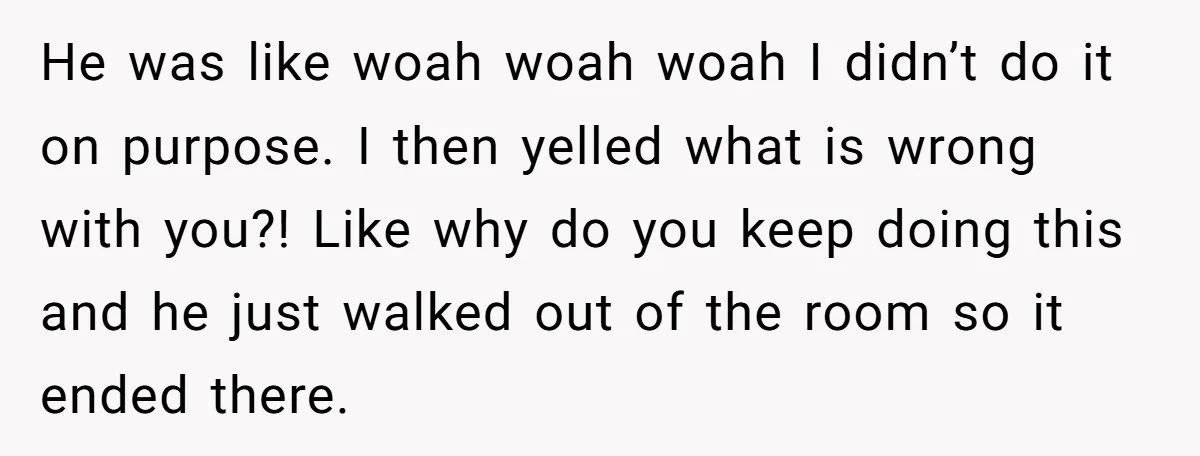
The argument left deep hurt on both sides and raised questions about respect, intent, and how small things can build into major conflicts.
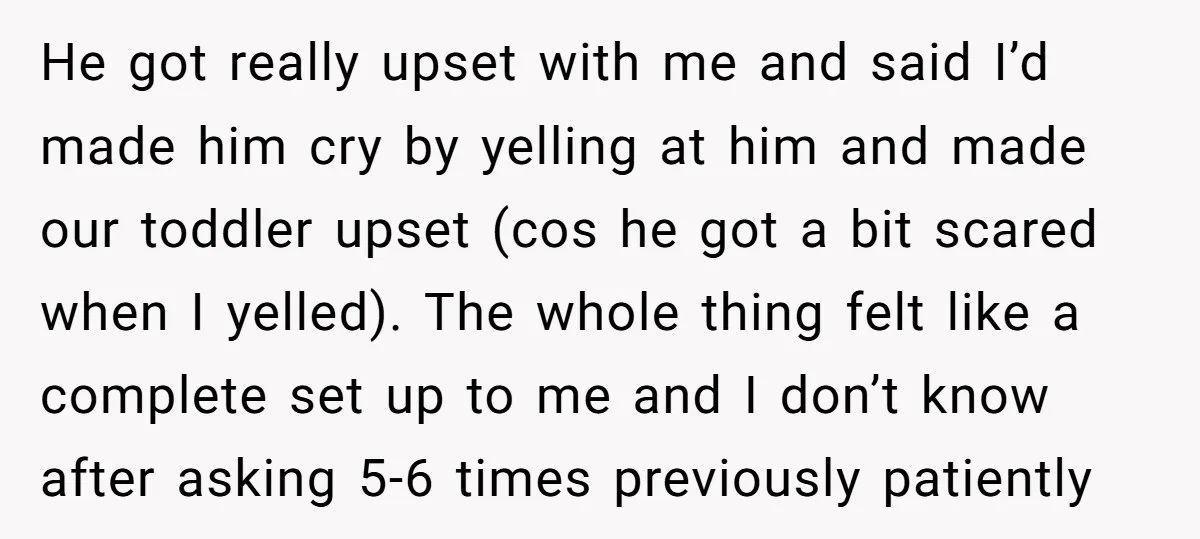
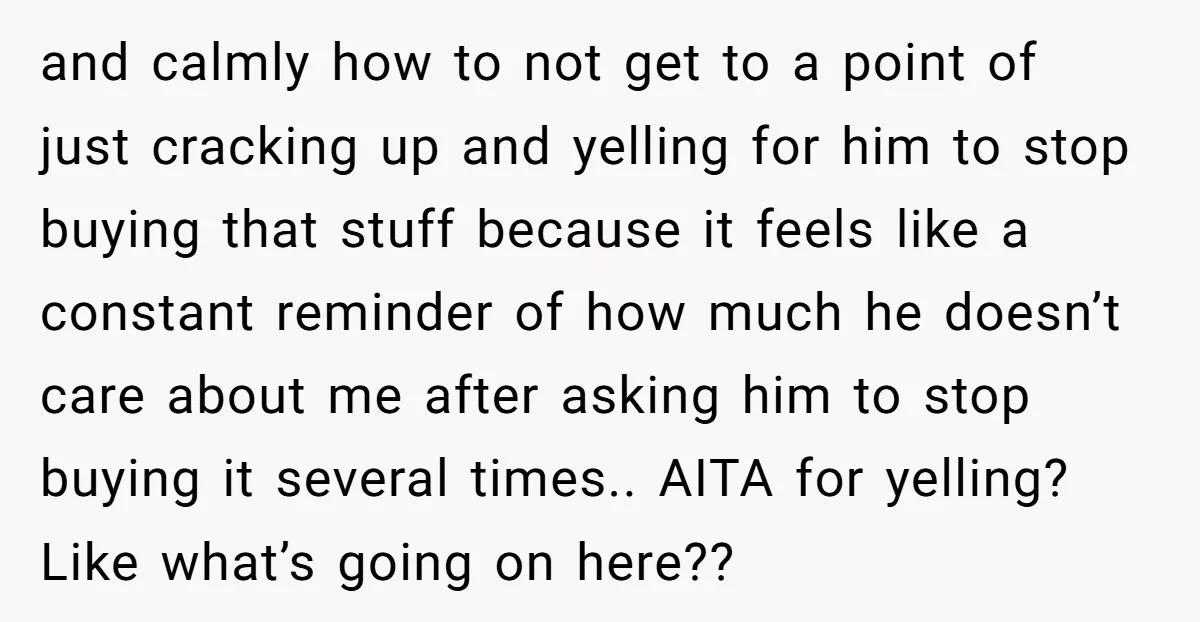
This situation highlights a buildup of small frustrations in a high-stress parenting phase. The core issue is repeated disregard for a clear, simple request about a personal treat. The mom feels unheard after multiple calm explanations, while the partner sees his actions as accidental and reacts strongly to the yelling. Sleep deprivation and newborn demands amplify emotions, turning a minor grocery choice into a symbol of care or neglect.
The mom’s patience wore thin from feeling her preferences are ignored despite no financial barrier. Her husband’s extreme frugality drives the pattern, but repeating the mistake suggests either genuine absent-mindedness or subtle resistance. He may feel attacked when confronted, leading to tears and withdrawal. The yelling stemmed from accumulated resentment, but it shifted focus to her reaction rather than the pattern. Communication failed when requests stayed surface-level instead of addressing the underlying stinginess or dismissal.
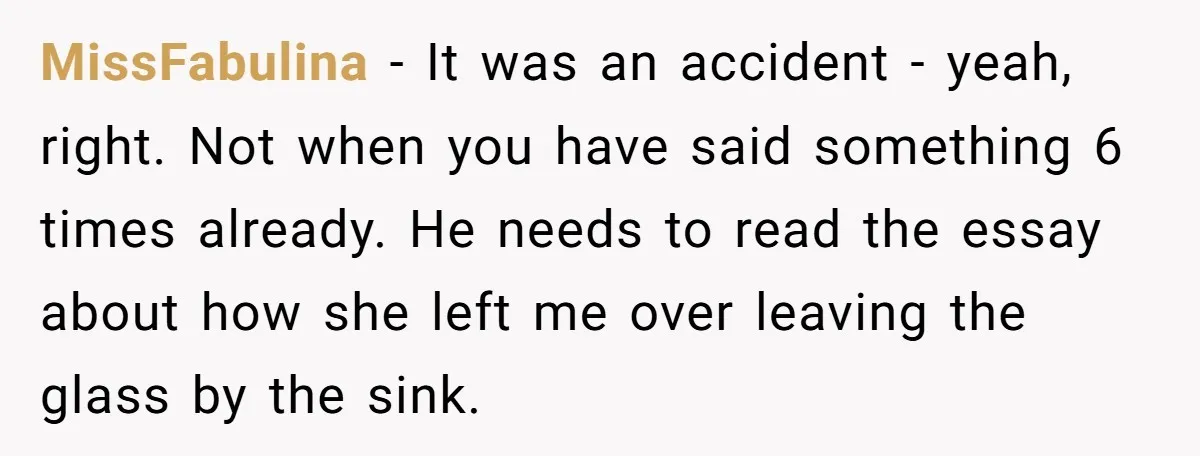
Relationship expert Matthew Fray, in his widely discussed piece “She Divorced Me Because I Left Dishes By the Sink,” explained that small repeated behaviors signal deeper disrespect: “The glass by the sink did matter to my wife — she hated it sitting there — but it wasn’t just about the glass.” This applies here, where the wrong coconut water represents feeling undervalued amid the mental load of parenting.
Practical steps include a calm follow-up talk away from kids, where she states the impact: “When you buy the wrong brand after I’ve asked, it makes me feel like my needs don’t matter.” Suggest he sets a phone reminder for the exact brand or shops with a list. She could order her preferred brand online occasionally to reduce tension. Both benefit from acknowledging the newborn stress and sharing one small weekly “appreciation check-in” to rebuild empathy and prevent future blowups.
Here’s what people had to say to OP:
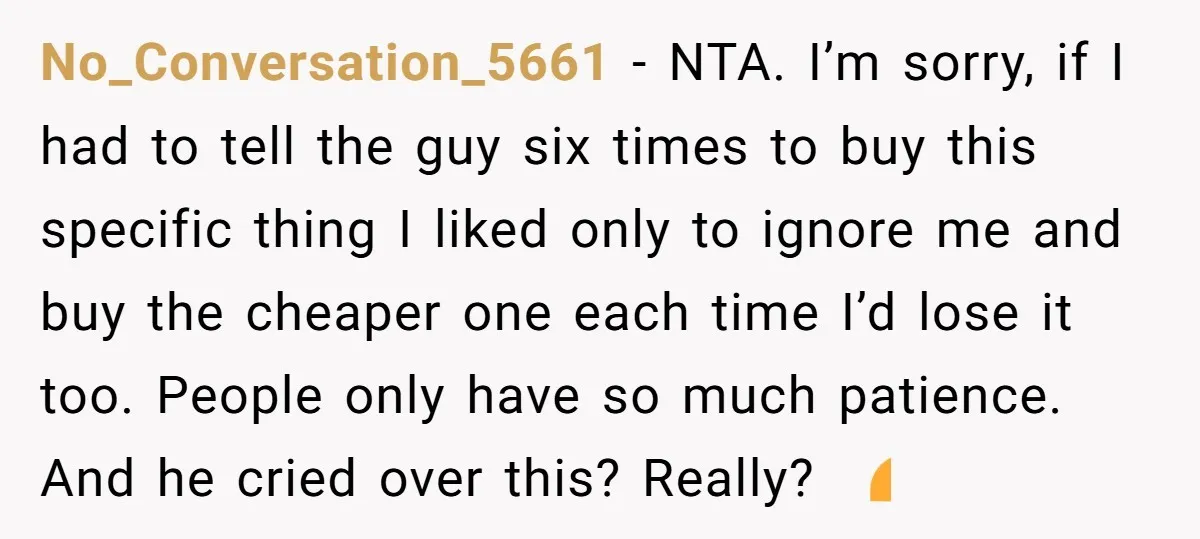
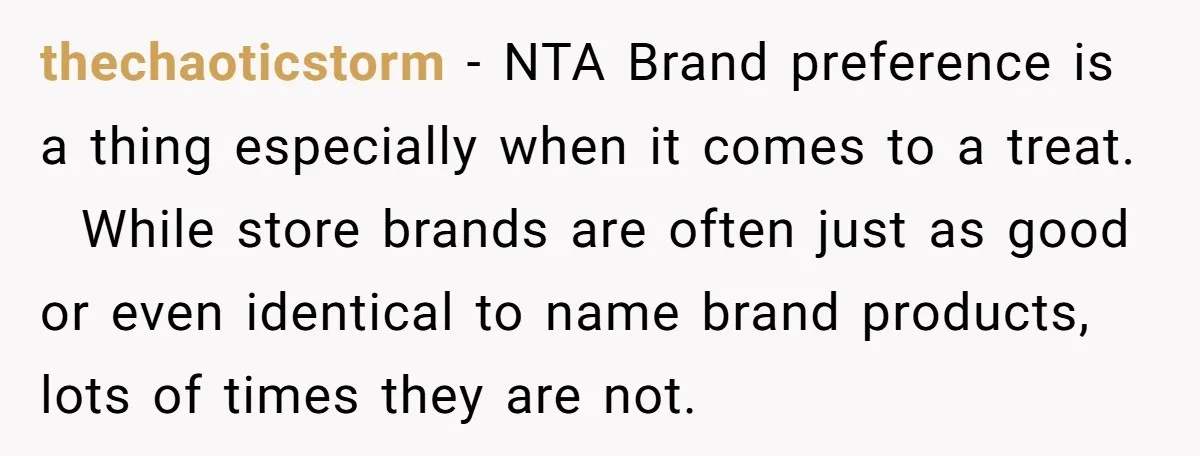
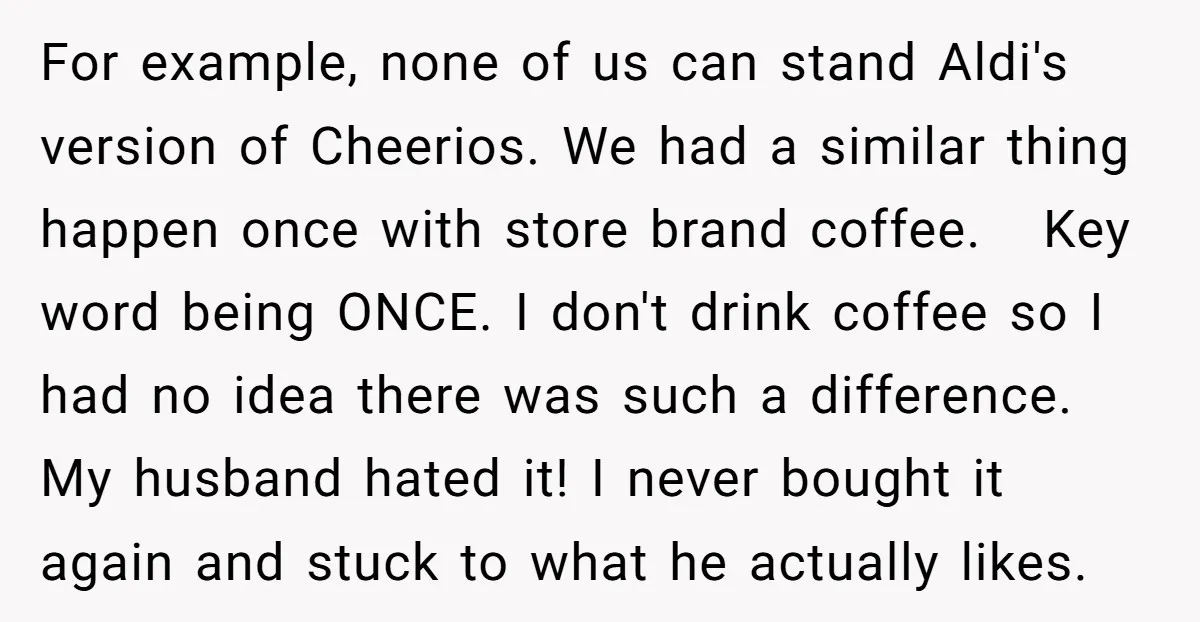
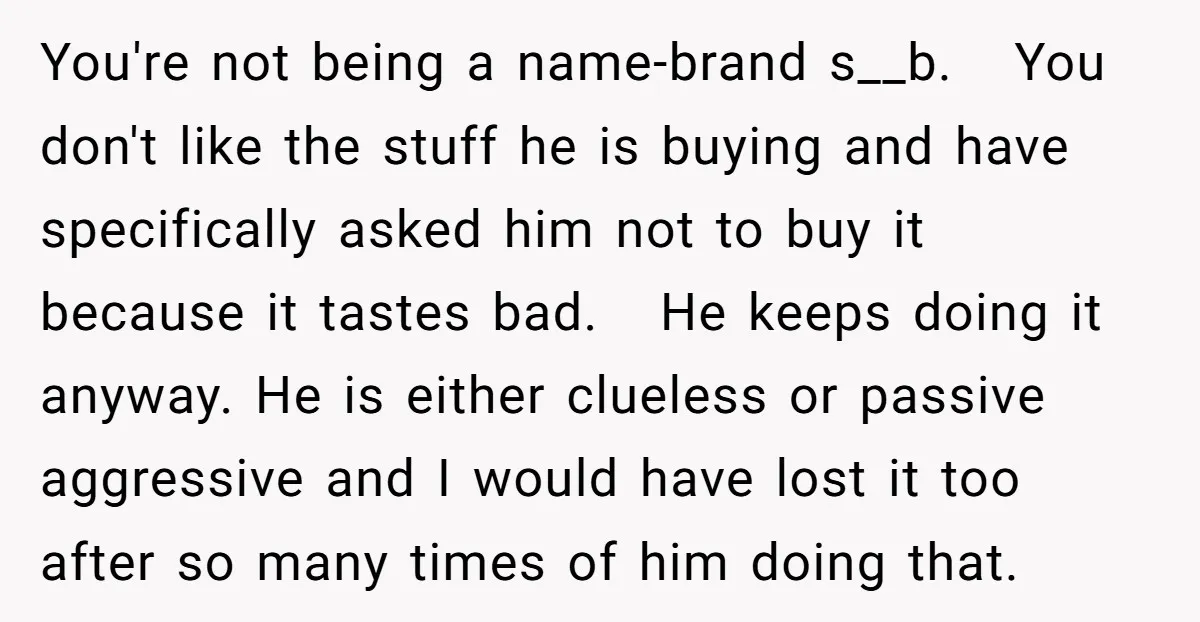
The online community overwhelmingly sided with the original poster, labeling the husband’s repeated mistake as intentional or weaponized incompetence. Most urged her not to apologize and suggested ways to make the financial waste hit home.
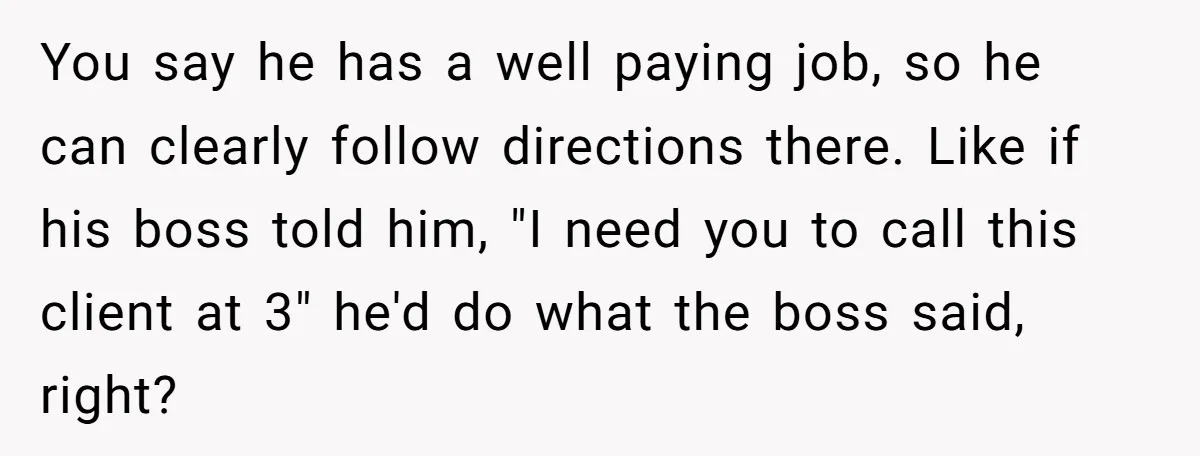
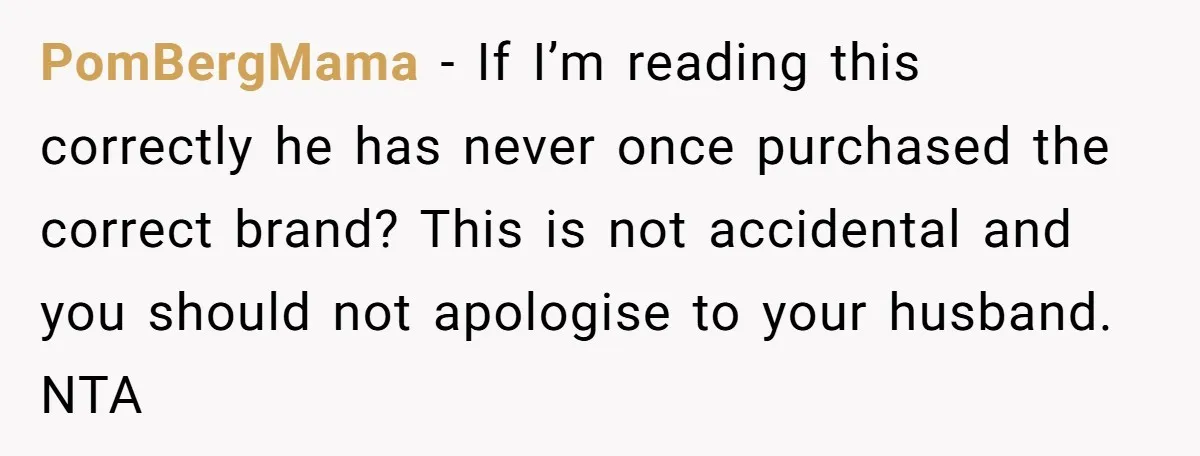
Many readers called it deliberate disregard and backed her frustration after so many reminders:
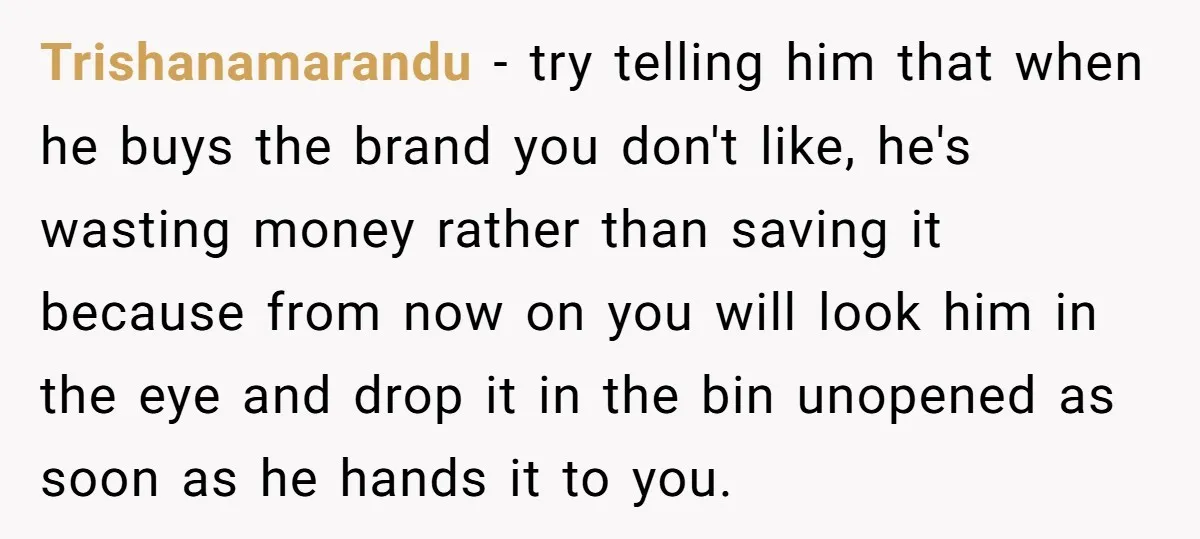
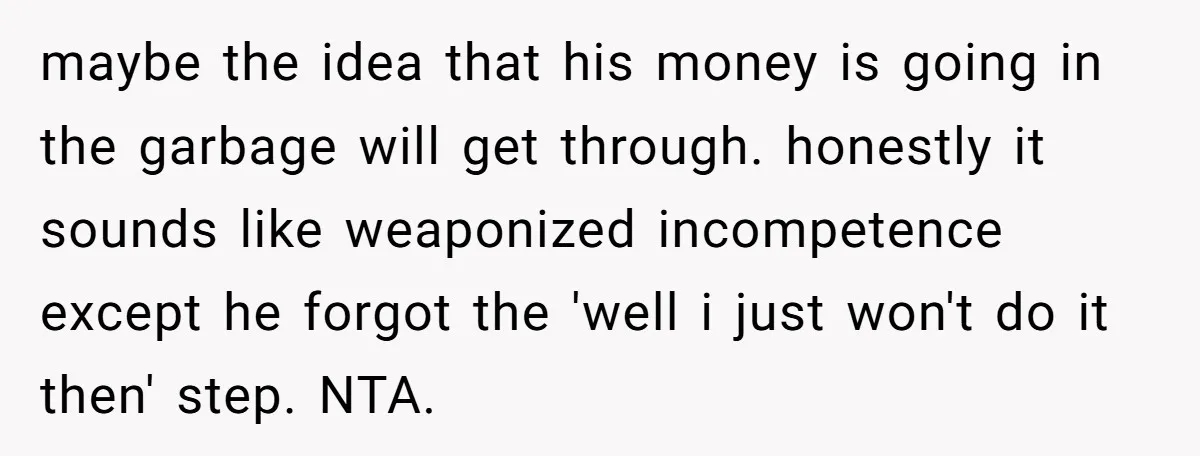

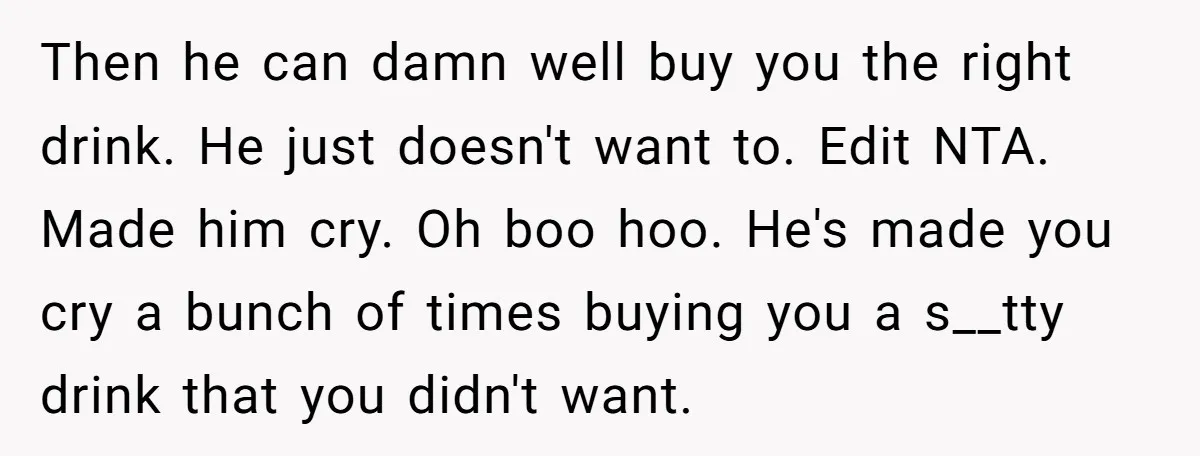


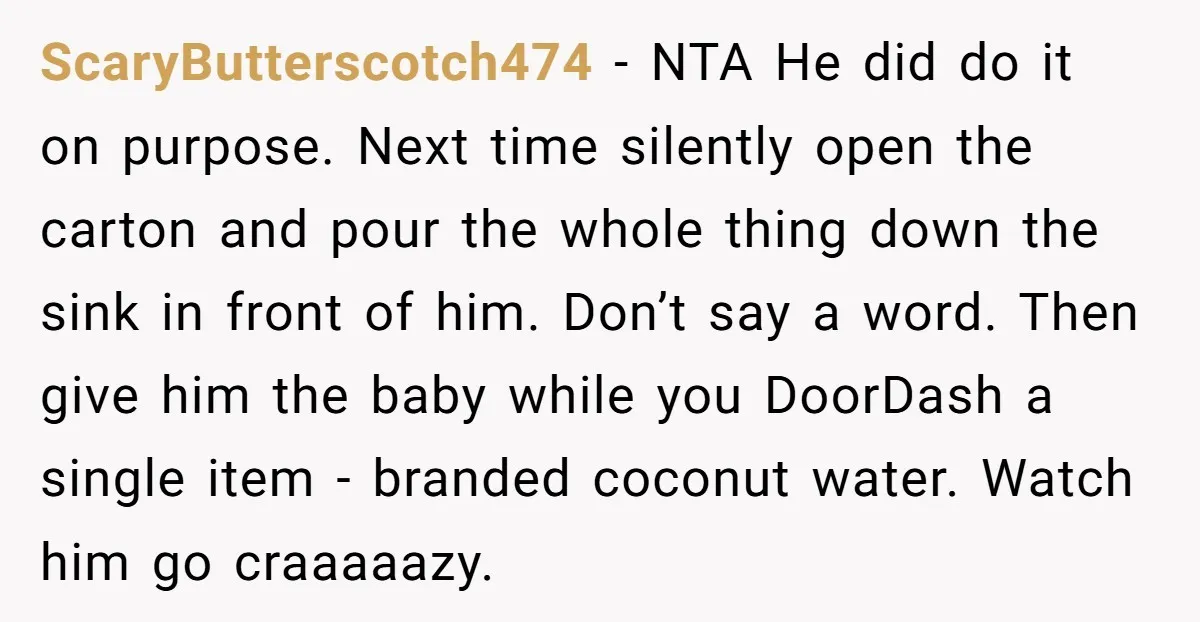
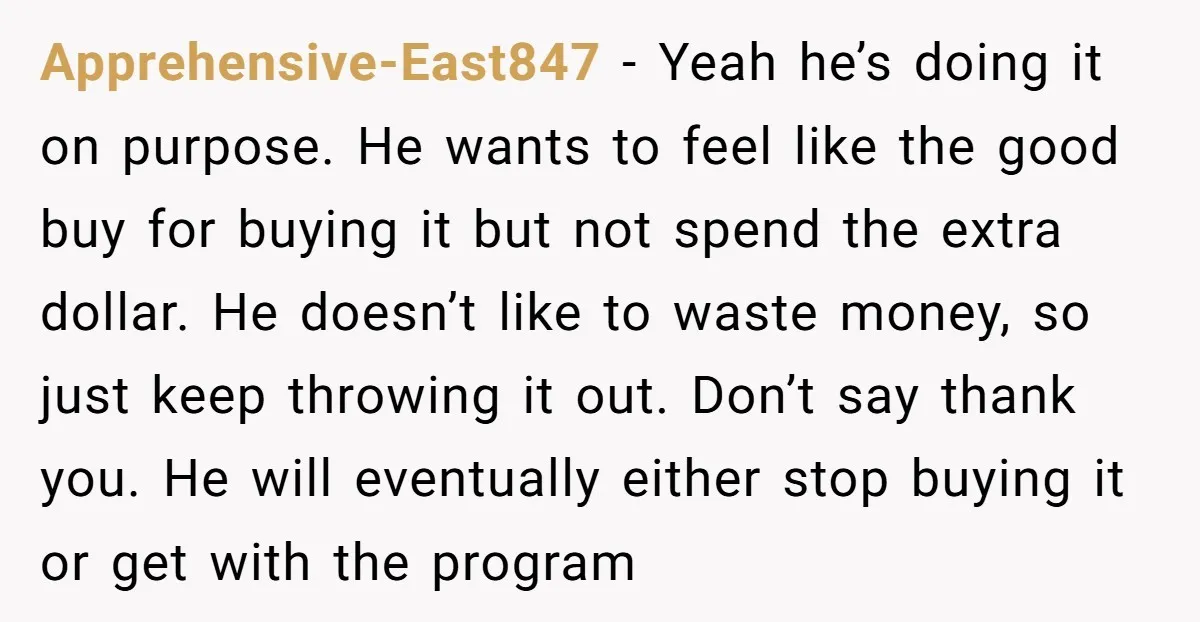
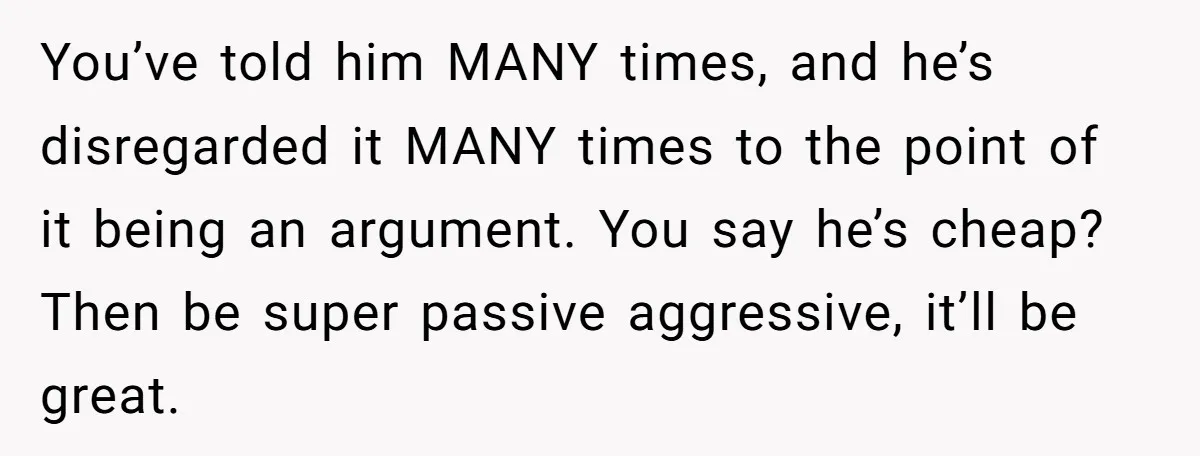
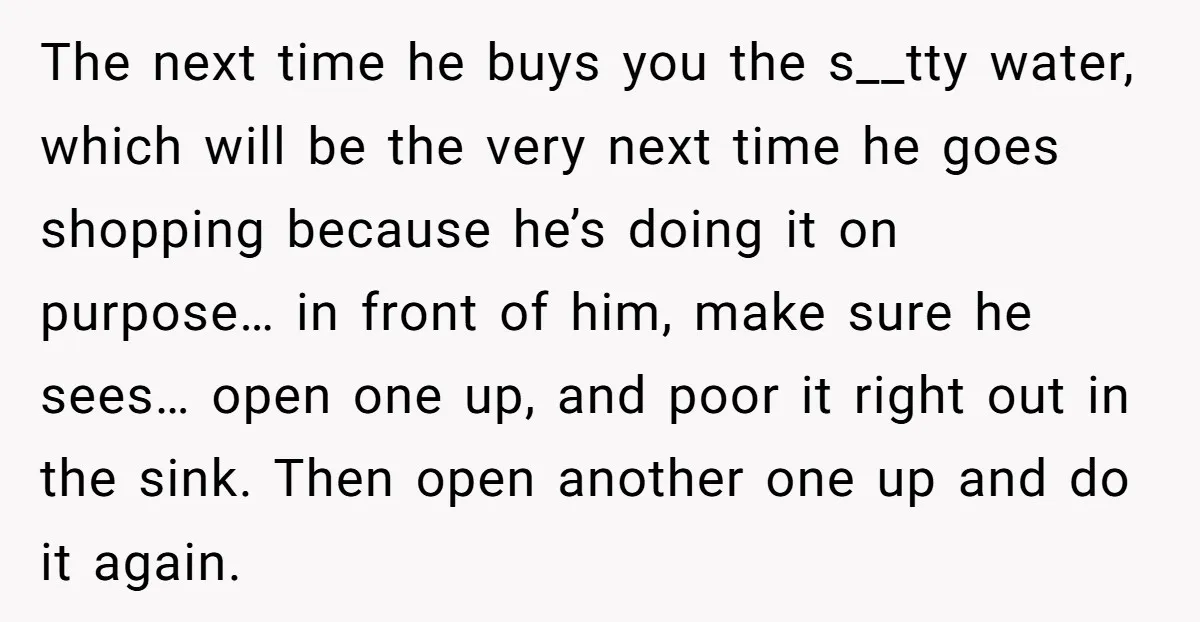
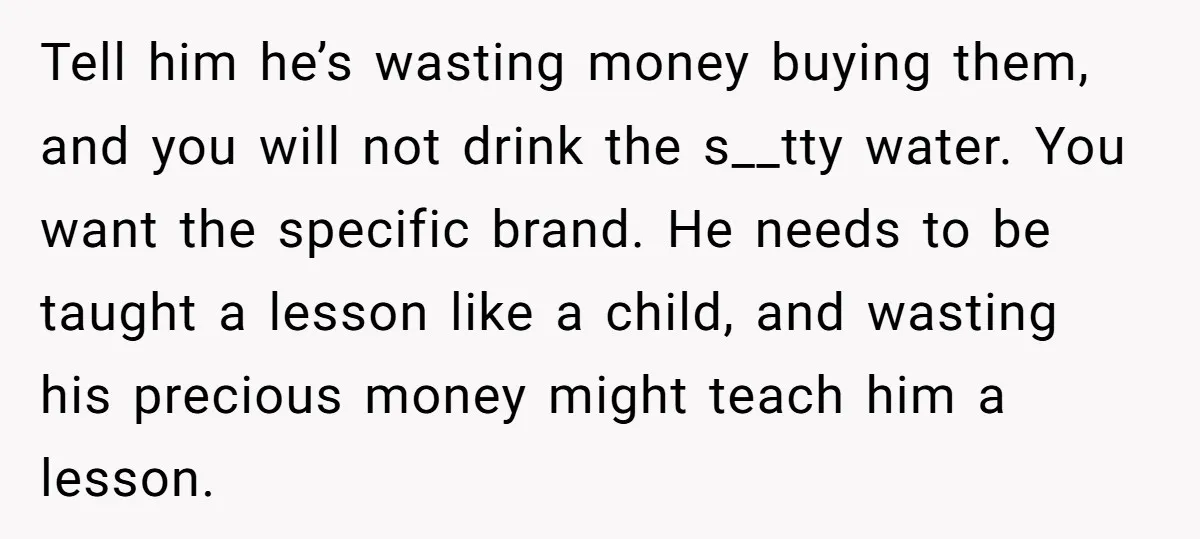
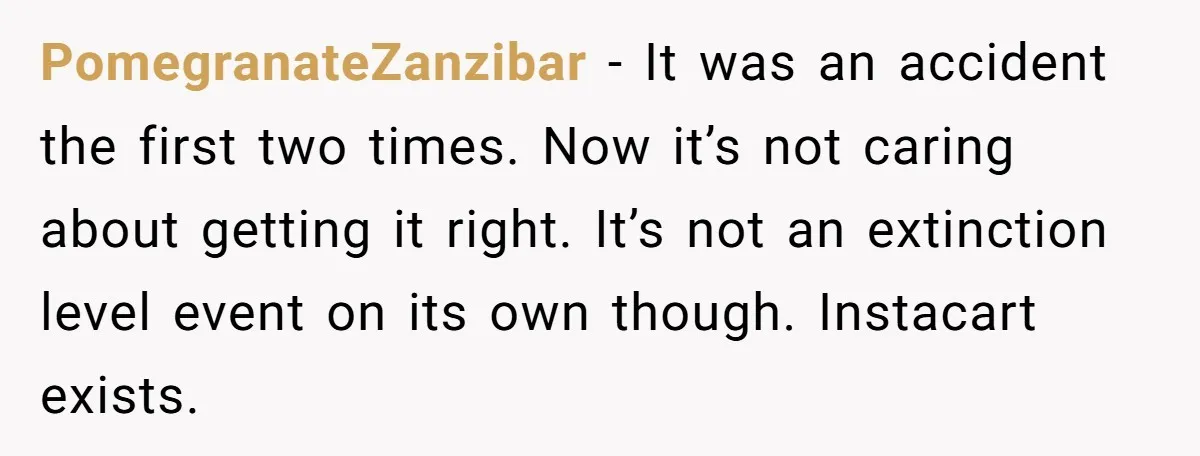
A strong group focused on his cheapness as the root issue, recommending passive-aggressive responses to force change:



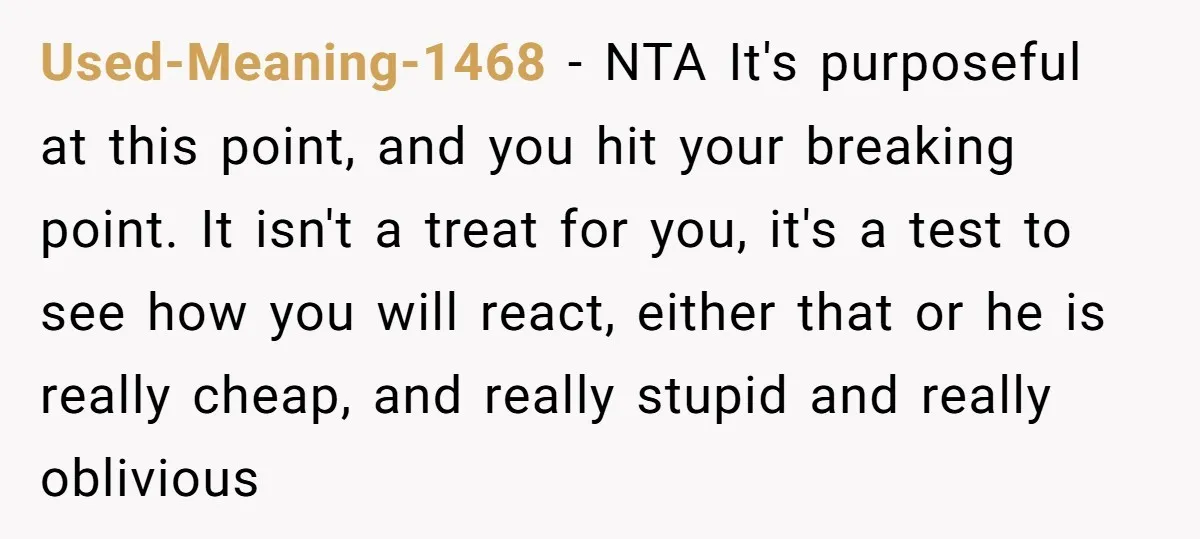
Others emphasized the emotional toll and mental load, agreeing she reached a breaking point fairly:

This story shows how tiny repeated oversights can erode trust and spark big reactions, especially under newborn exhaustion. Small acts of consideration matter deeply when someone feels stretched thin. The yelling came from built-up hurt, but it also highlights the need for both partners to address patterns before they explode.
Would you have stayed calm after the sixth wrong purchase, or would frustration boil over too? How do you handle when a partner’s “harmless” habit feels disrespectful in a busy family life?