
A father made the difficult decision to cut off contact with his adult daughter after years of ongoing conflict involving his wife. According to him, the tension began long before the wedding ultimatum and included repeated attempts by his daughter to provoke, undermine, and discredit his spouse.
The situation reached a breaking point when the daughter allegedly fabricated evidence of an affair by impersonating someone else and using his wife’s phone. Despite this, the wife chose not to escalate the situation and simply asked to disengage from the daughter. When the daughter later demanded her father attend her wedding without his wife, he chose to stand by his marriage. The decision has since sparked debate over loyalty, boundaries, and parental responsibility.

‘Aitah for going NC with my daughter due to my wife?’
The conflict began with long-standing resentment and repeated attempts to provoke tension.


Things escalated after a serious act of deception aimed at destroying the marriage.



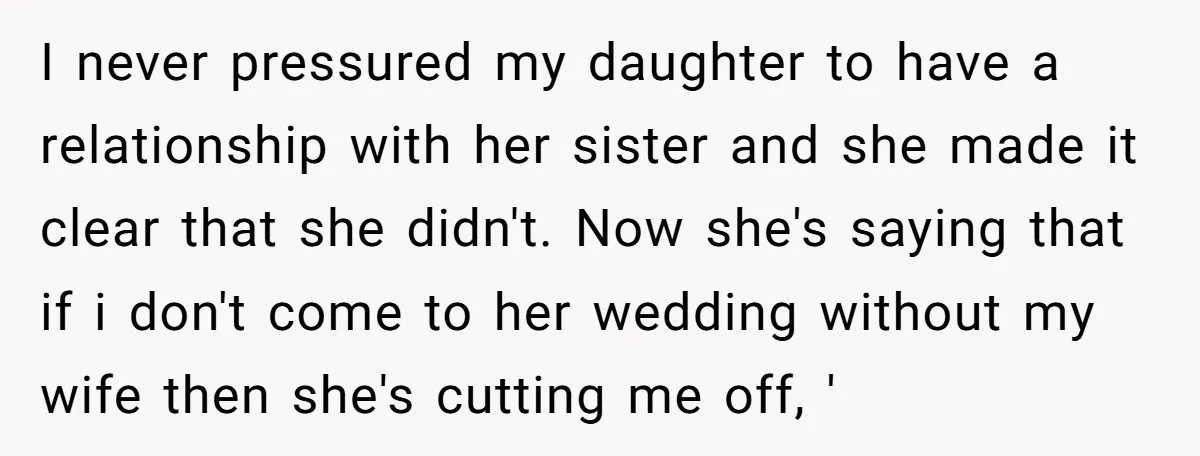
The final break came over a wedding invitation and an ultimatum.




In this situation, the father describes a pattern of behavior that includes provocation, manipulation, and deliberate deception. The act of impersonating another person and fabricating an affair goes beyond interpersonal disagreement and moves into intentional sabotage. From a relational standpoint, his wife’s response was restrained, choosing disengagement rather than escalation, which suggests the boundary was not reactionary but protective.
Opposing perspectives may argue that cutting off a child, regardless of age, should be a last resort and that mental health struggles complicate accountability. Some may see multiple family members labeling the daughter as narcissistic without a formal diagnosis as concerning. However, what makes the situation more complicated is that therapy had already been ongoing for years, and multiple relatives independently reached similar conclusions after sustained exposure to the behavior.
From a broader social perspective, the father’s decision reflects shifting expectations around marriage and parental loyalty. When adult children demand exclusivity that undermines a parent’s spouse, the conflict becomes a choice between enabling harm or enforcing limits. His decision suggests prioritizing the emotional safety of his household, including a young child, over maintaining contact at any cost.
Check out how the community responded:
Many users supported the decision, pointing to consistent patterns and shared concern across family members.












Some commenters raised concerns while still acknowledging the difficulty of the situation.
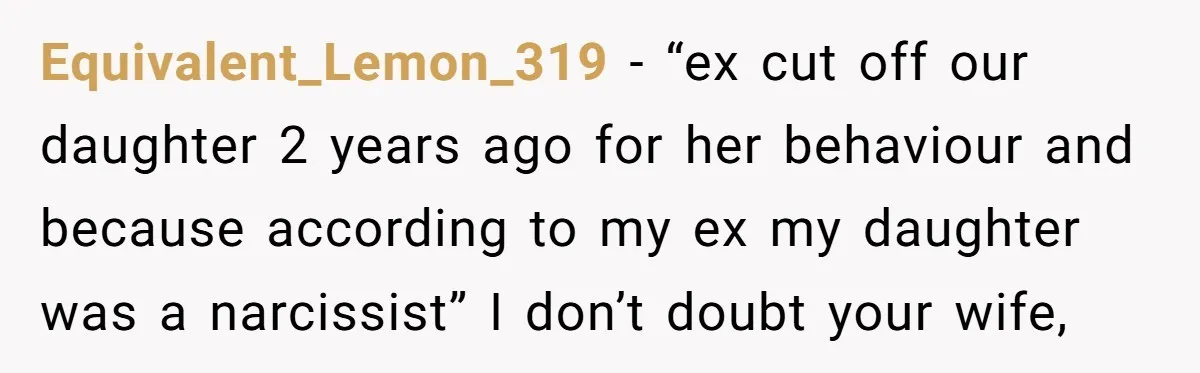
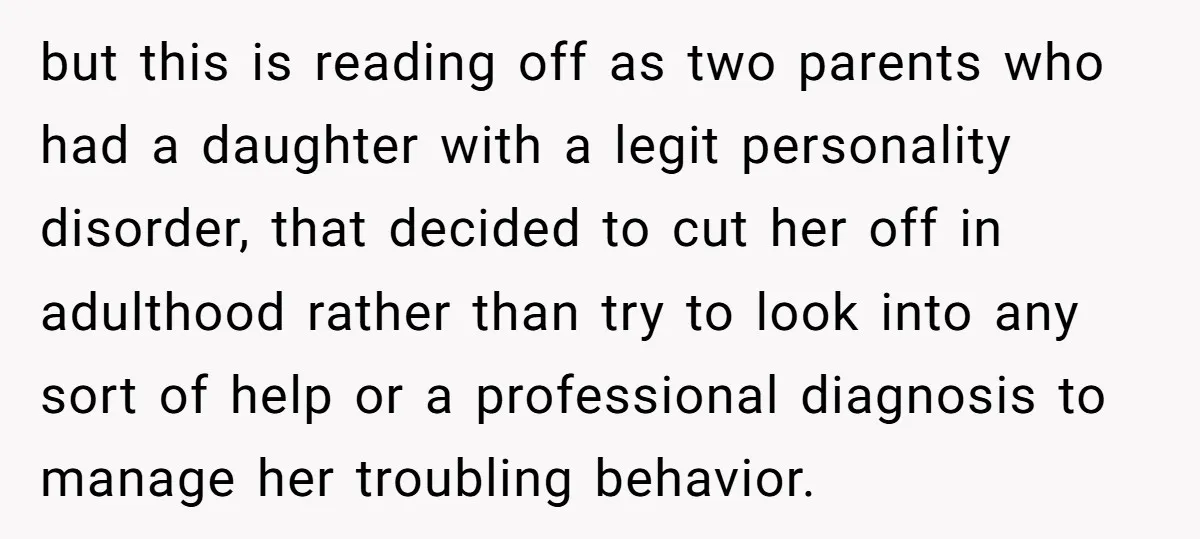

Others reacted bluntly, emphasizing protection of the immediate family.







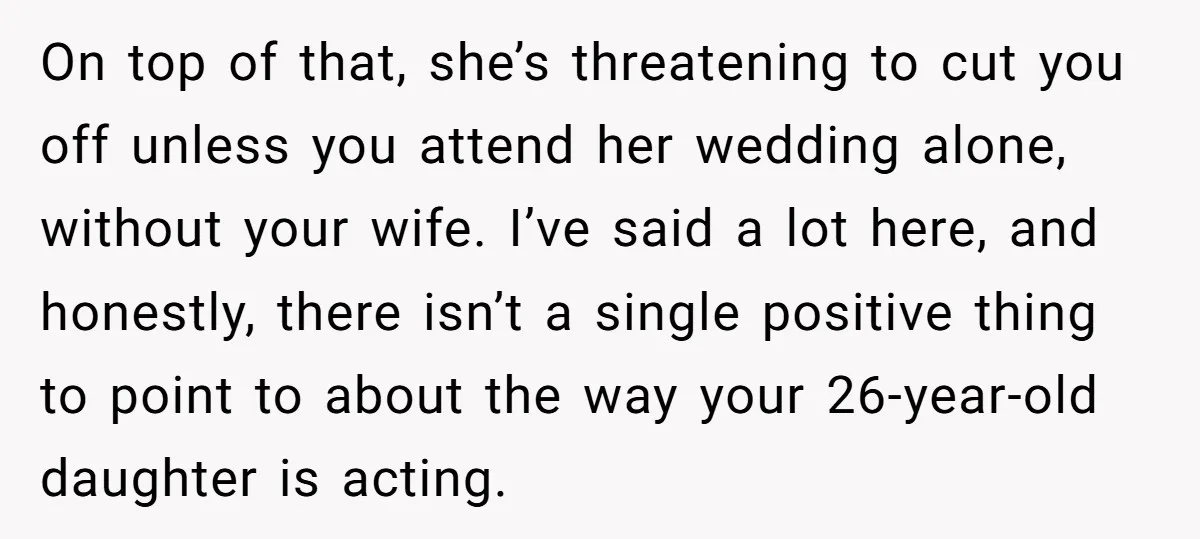


This story presents a painful example of how long-term family conflict can culminate in permanent distance. After years of escalating behavior and a final ultimatum, the father chose to protect his marriage and younger child rather than continue exposing his household to hostility. The decision reflects a belief that boundaries still apply, even between parents and adult children.
Is cutting off an adult child ever justified when harmful behavior persists? Should parents prioritize reconciliation at all costs, or is there a point where disengagement becomes necessary? Readers are invited to share how they would navigate loyalty, responsibility, and self-protection in a similar situation.