
She thought she was dying on the waiting room floor just after midnight. A few days later, safely home after emergency surgery for appendicitis, the thing haunting her isn’t the pain—it’s the way she acted.
The 62-year-old woman had endured hours of abdominal pain and vomiting before finally waking her son to drive her to the ER. By the time she arrived, she was dehydrated and in agony. Every breath triggered sharp peritonitis pain. She began hyperventilating, her face tingling, her legs going numb. Afraid she might faint, she curled onto her side on the floor. What she can’t stop replaying now is the moaning and crying she couldn’t control—and the triage nurse who seemed utterly unimpressed.
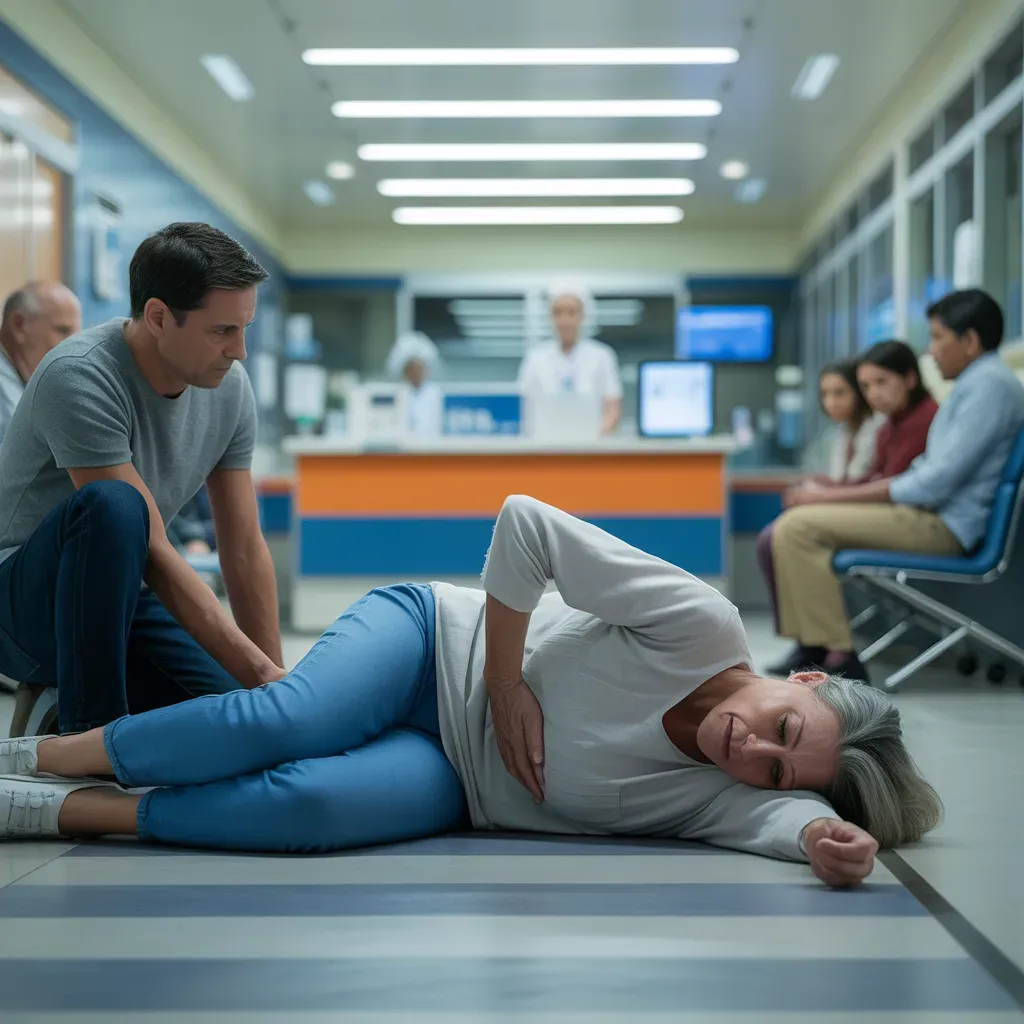
‘AITAH for how I acted in the ER?’
After returning home, she found herself stuck replaying the moment over and over:
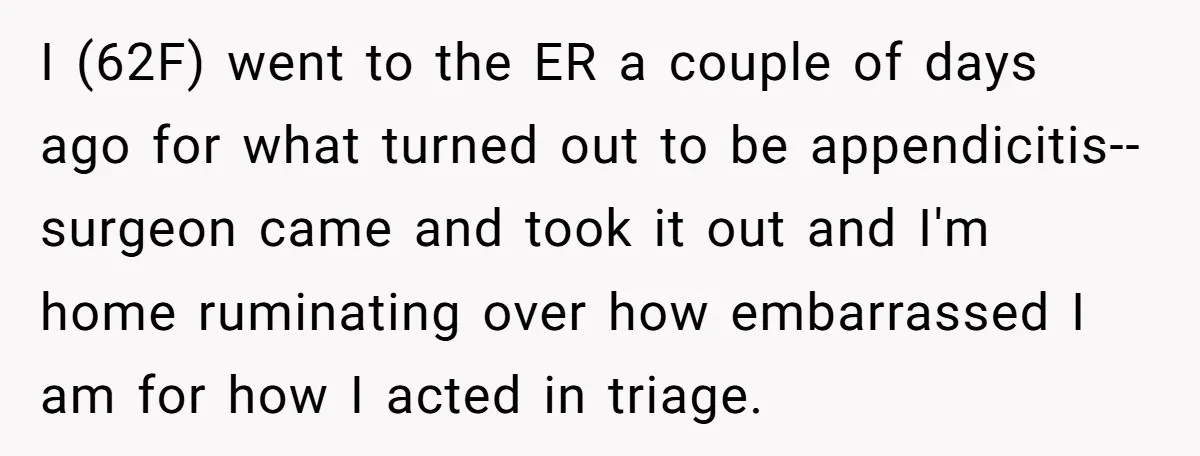
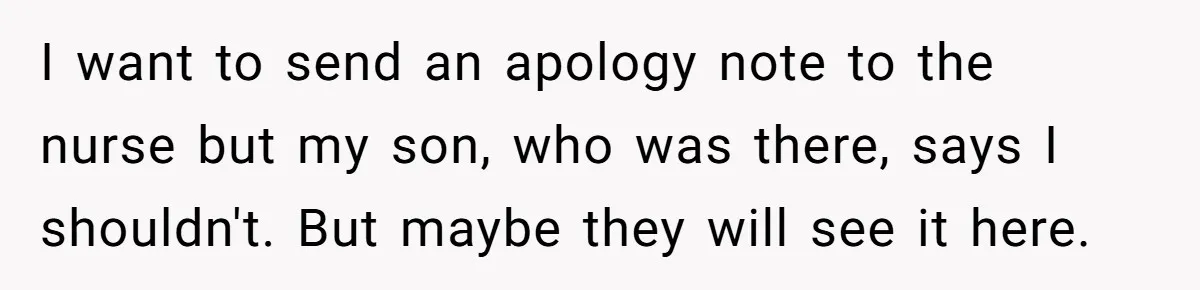
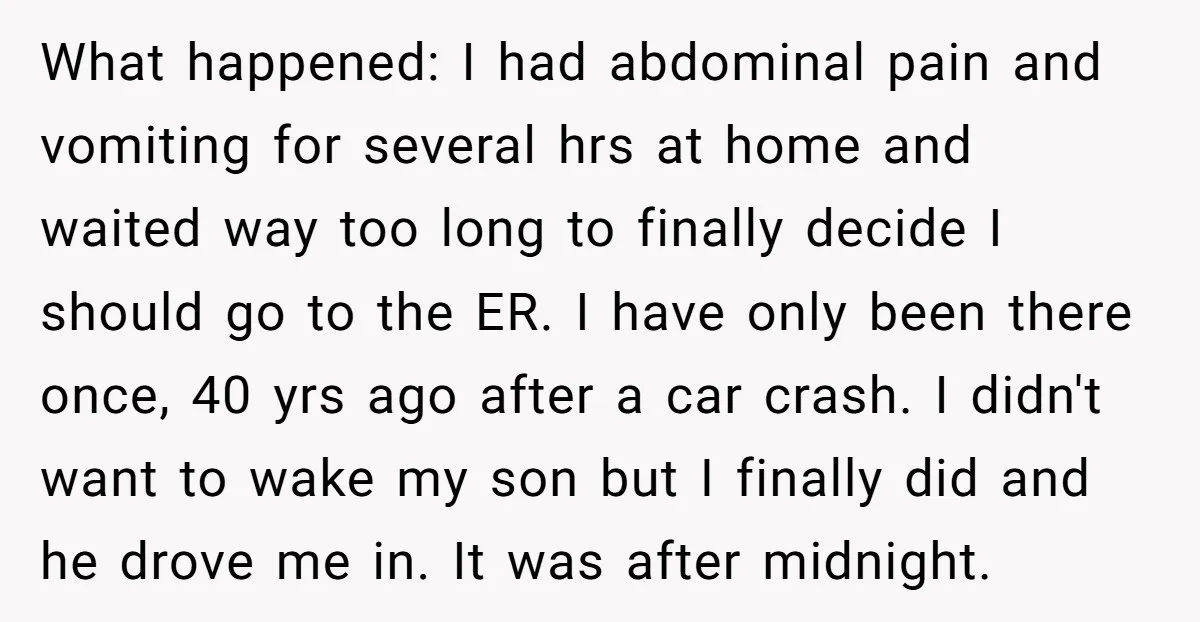
By the time she reached the hospital, things spiraled quickly:
What embarrasses her most is what happened next:
She always believed she was a tough person—until that moment:
Eventually, she was taken back and treated:
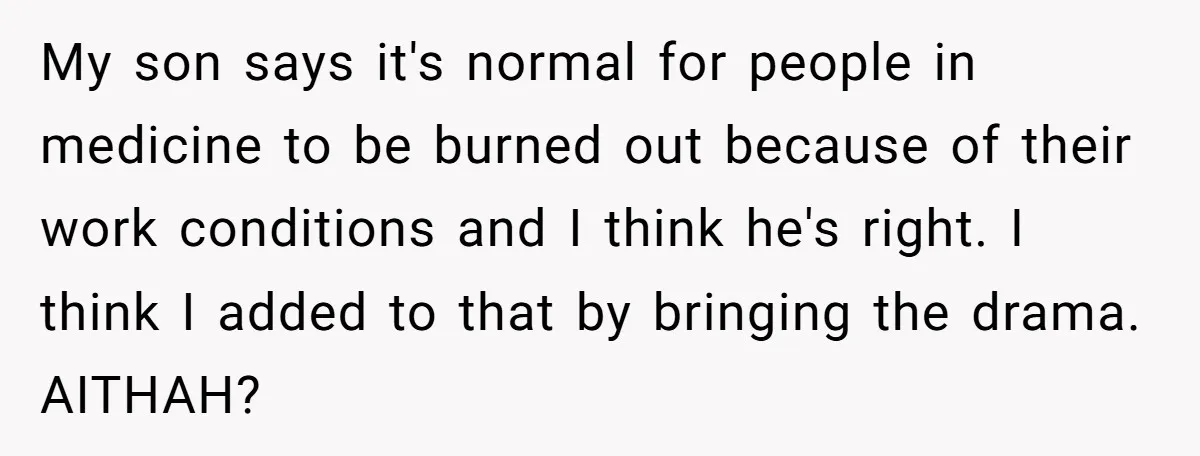
When the human body experiences intense pain and fear, it reacts automatically. Hyperventilating, curling into a protective position, crying, moaning—these are physiological responses, not character flaws. Severe appendicitis, especially when it progresses toward peritonitis, can produce overwhelming pain. According to the Cleveland Clinic, untreated appendicitis can escalate rapidly and become life-threatening. Her body was sounding an alarm.
The fact that she stopped moaning almost immediately after receiving pain medication is telling. It suggests her reaction was directly tied to acute distress, not theatrics. People exaggerating for attention don’t typically calm down the moment they’re stabilized. Her system was in crisis—and then it wasn’t.
There’s also a psychological layer here. Researcher Brené Brown, known for her work on shame and vulnerability, writes in Daring Greatly: “Shame derives its power from being unspeakable.” When we replay moments of perceived humiliation in isolation, they grow heavier. This woman isn’t just remembering the pain; she’s confronting a version of herself that didn’t match her identity as stoic and resilient.
Rumination after medical emergencies is common. Once the adrenaline fades, the brain searches for meaning. It latches onto the most emotionally charged detail—in this case, her crying on the floor—and magnifies it. Meanwhile, emergency staff see people at their most vulnerable every day. A patient in genuine distress who turned out to need surgery is unlikely to stand out as “dramatic.”
If she feels compelled to write something, a note thanking the surgical team for their care could be healing. But apologizing for being in pain? That isn’t necessary. Illness strips away composure. It doesn’t define character.
Here’s what the community had to contribute:
The online community responded quickly—and overwhelmingly in her favor, many felt the nurse’s response crossed a line:
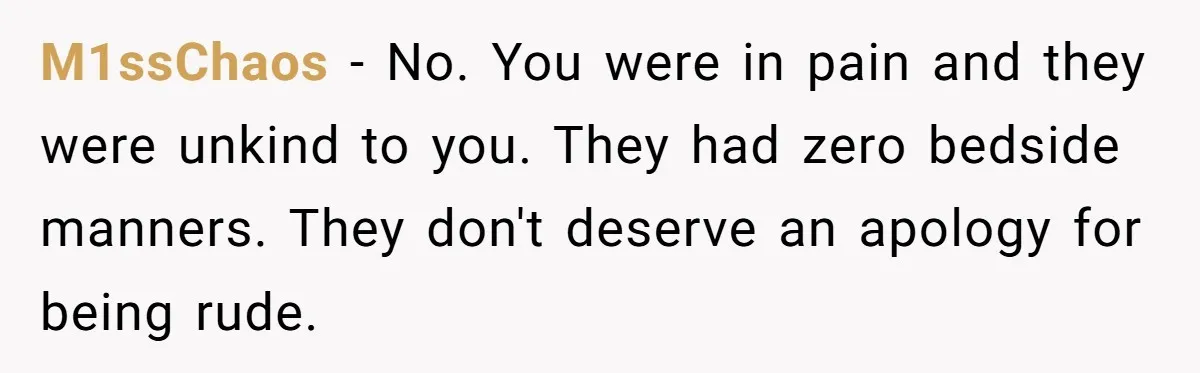
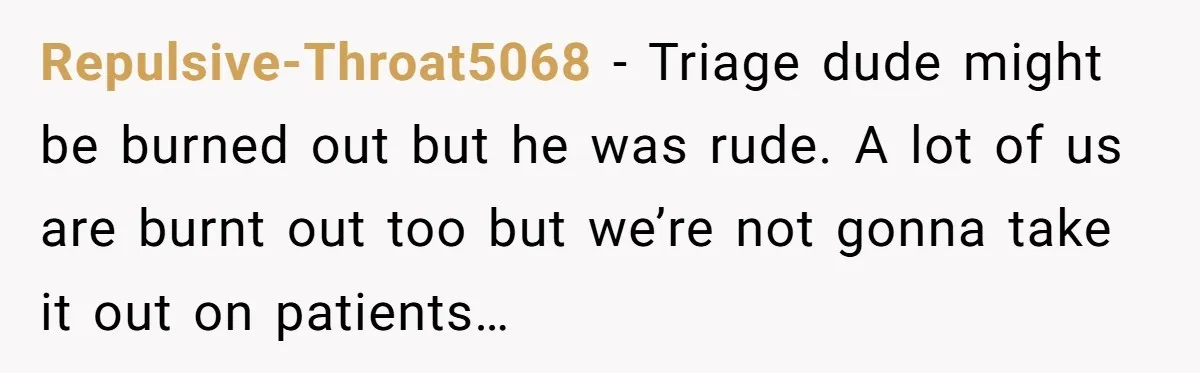
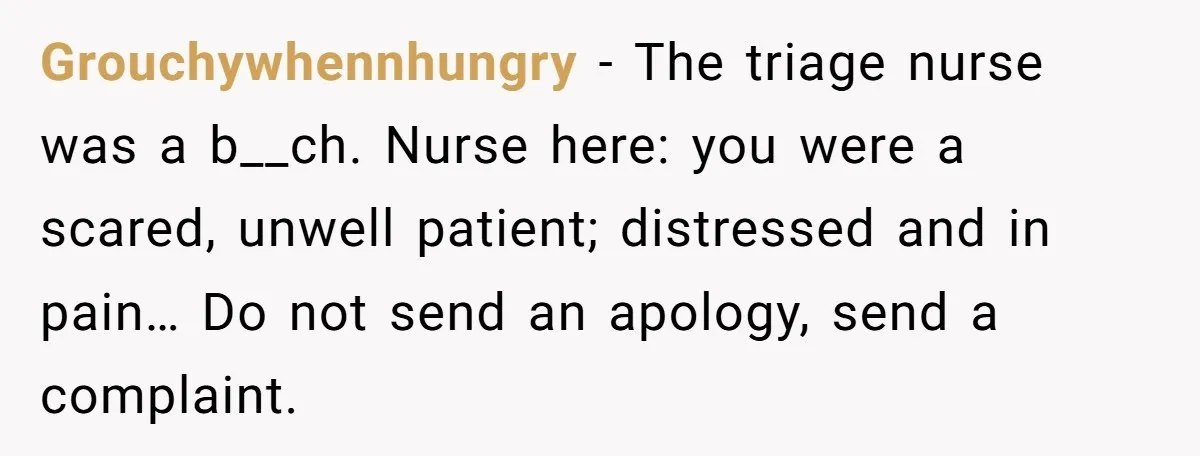
Several healthcare workers weighed in to reassure her:
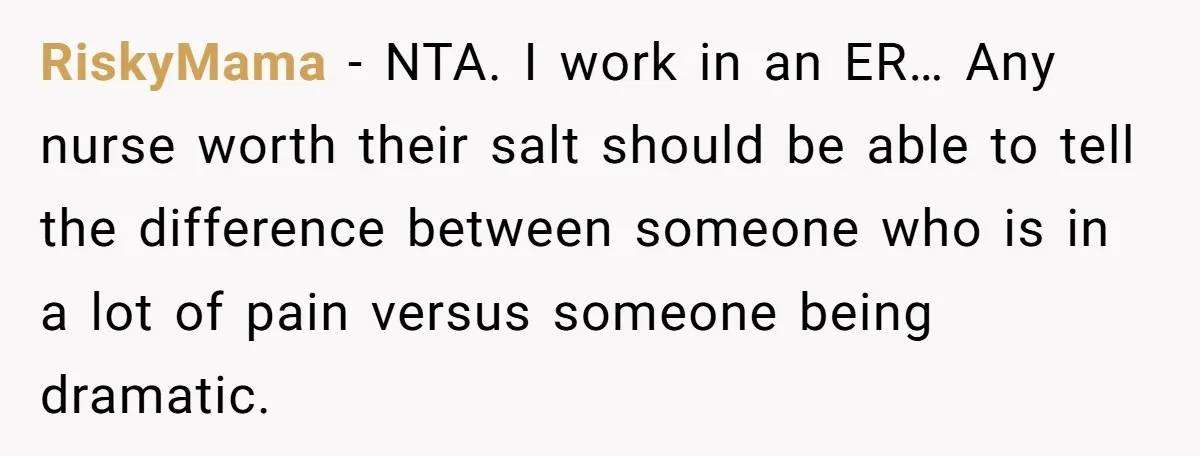

Others shared similar experiences of being dismissed in extreme pain:

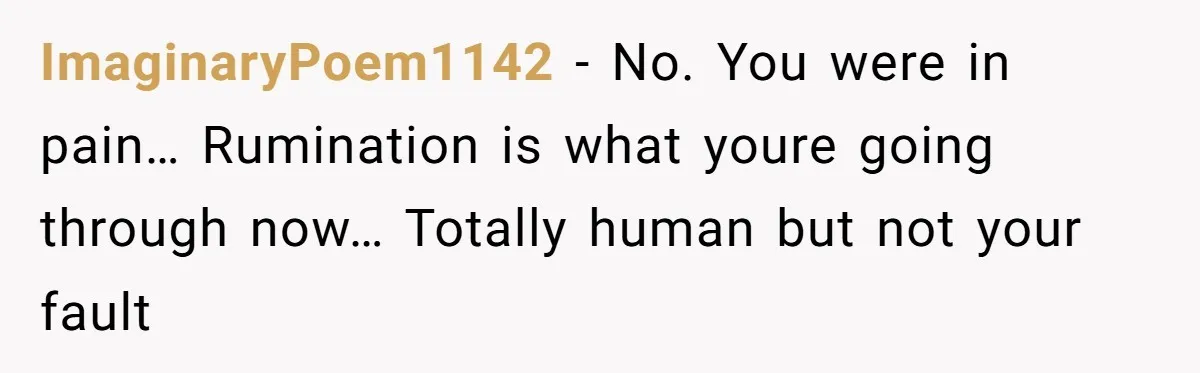
And one commenter offered a particularly thoughtful reflection:
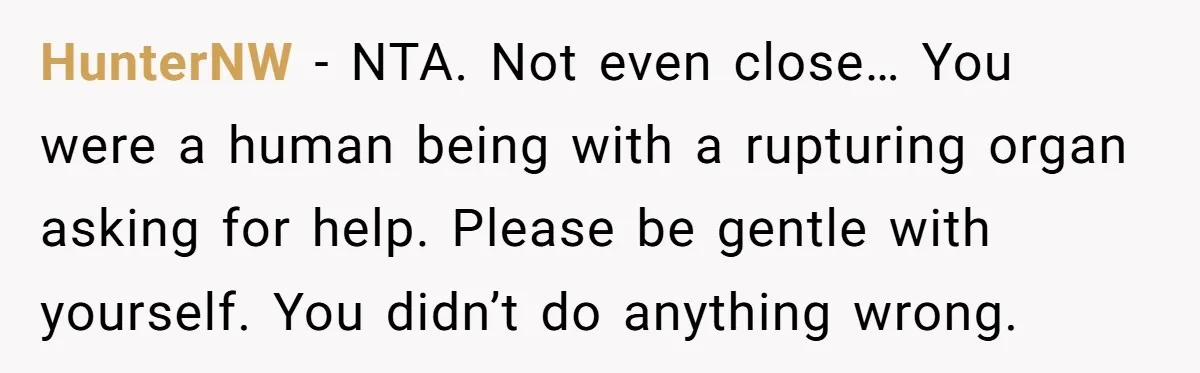
The physical pain is gone, but the embarrassment lingers. When someone sees themselves as strong and unflinching, a moment of visible vulnerability can feel like a personal failure.
But was it really? Or was it simply a human body in crisis responding exactly as it was built to respond? If you’ve ever found yourself unraveling under pressure, would you judge yourself as harshly—or offer the same compassion you’d give someone else?