
A 17-year-old found themselves caught in an uncomfortable family dilemma after being given the chance to bring a friend on a Disney World vacation. While the opportunity was meant to ensure they could enjoy age-appropriate fun, the situation quickly became complicated when another family member expected to be included.
The disagreement raised questions about fairness, obligation, and blended family boundaries. As emotions flared and expectations clashed, the teen turned to a social network to ask whether prioritizing personal enjoyment over a stepsibling’s dream crossed a line. The responses poured in, revealing how divided people can be when family roles, responsibility, and once-in-a-lifetime trips collide.

‘AITAH for not inviting my stepsister on our trip to Disney World?’
The situation began with a family vacation planned around younger children and compromise.
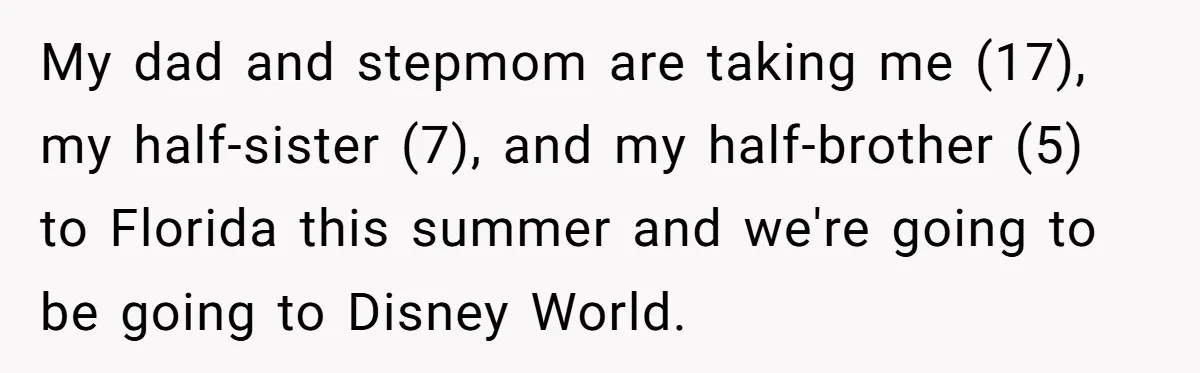
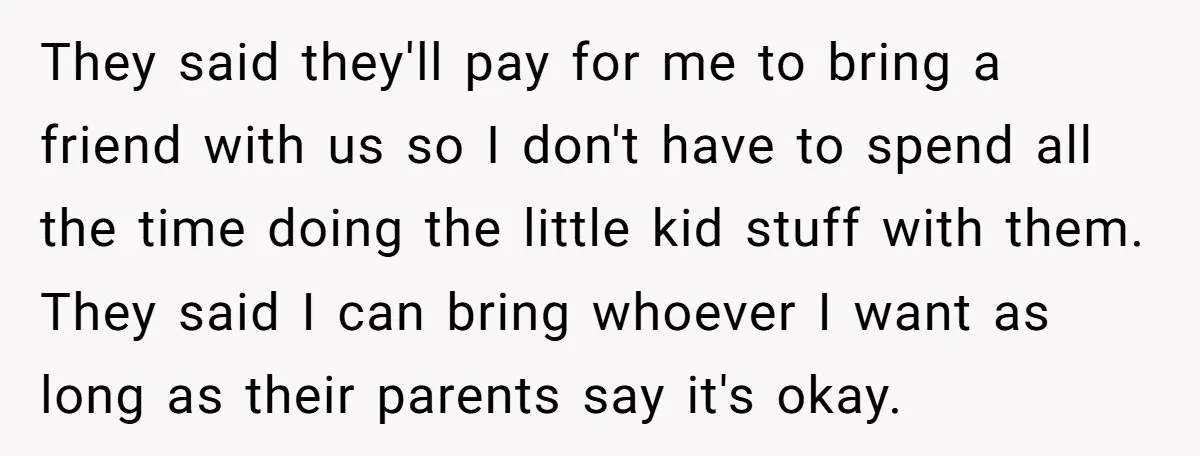
Things became tense once another sibling learned about the open invitation.
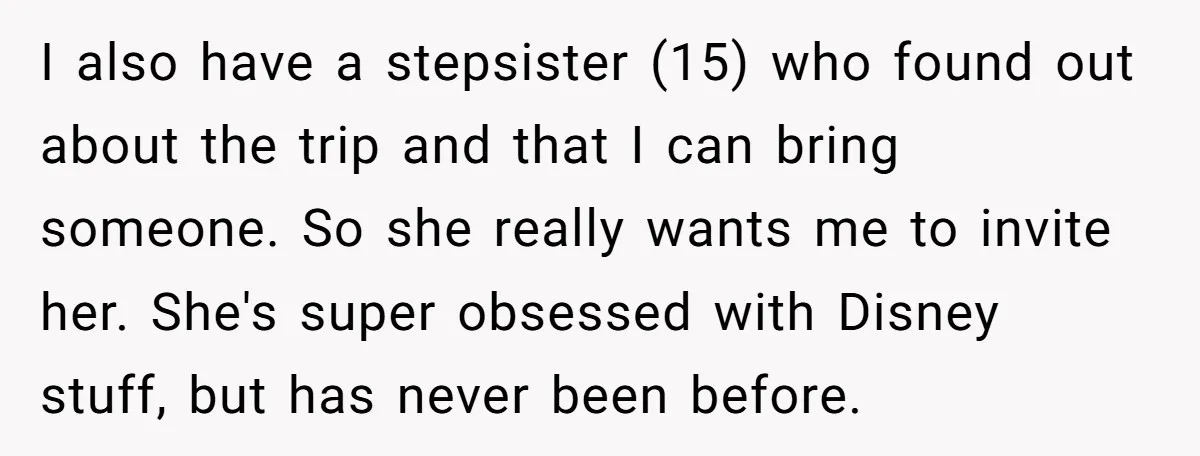

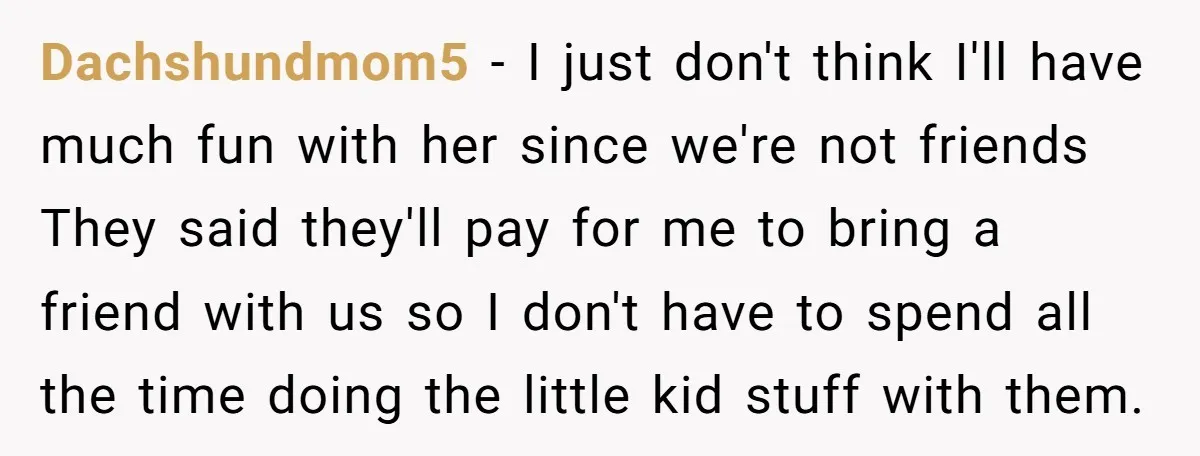
The disagreement escalated after accusations of unfairness and a clarification.


In this case, the central issue is intent versus perception. The parents’ offer was designed to give their teenager autonomy and comfort during a trip focused on much younger children. From that perspective, the invitation was never meant as a chance to fulfill another child’s long-held dream, but as a way to balance everyone’s experience. The teen’s reluctance stems from emotional honesty rather than malice, acknowledging a lack of closeness and concern that the trip would become uncomfortable.
On the other hand, the stepsister’s reaction reflects disappointment and envy, emotions that are understandable given her age and enthusiasm. Seeing other children attend a place she idolizes naturally intensifies those feelings. However, responsibility for managing that disappointment falls on the adults involved, not on another minor. Expecting a teenager to sacrifice their own enjoyment to compensate for broader family circumstances places an unfair burden on them.
More broadly, this situation highlights the importance of clear communication in blended families. When details are shared without context, it can create false expectations and resentment. Adults play a crucial role in setting boundaries, explaining decisions, and ensuring that children are not put in positions where any choice leads to conflict or guilt.
Let’s dive into the reactions from Reddit:
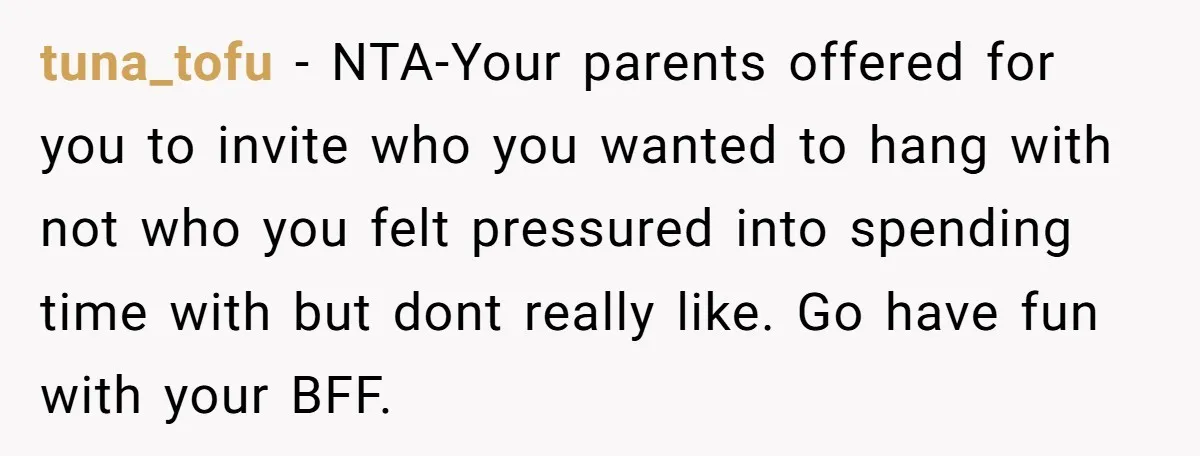
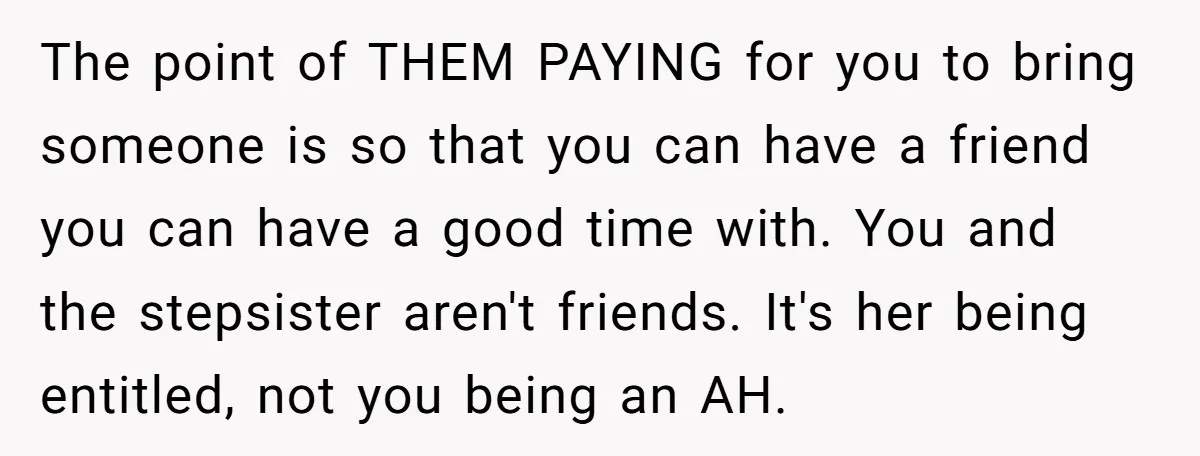
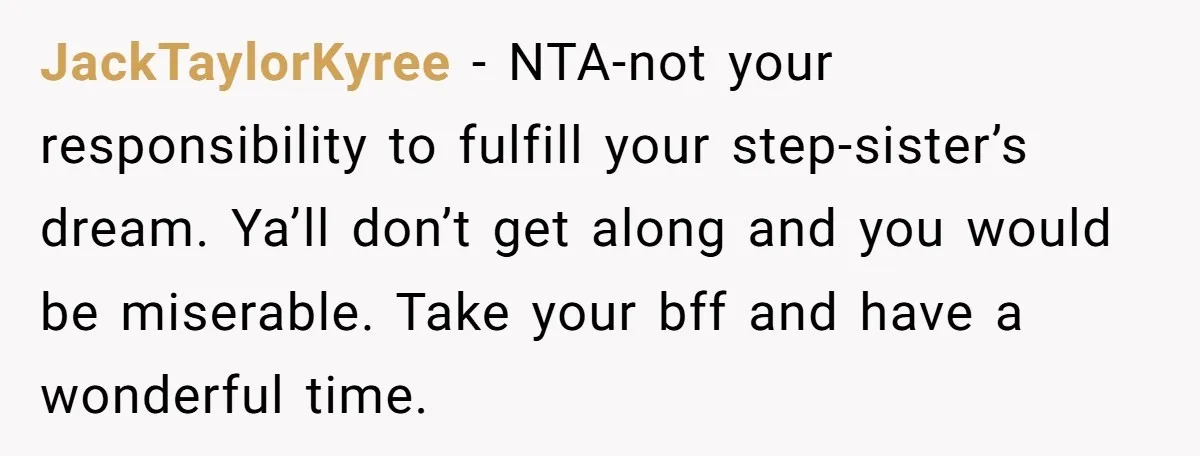
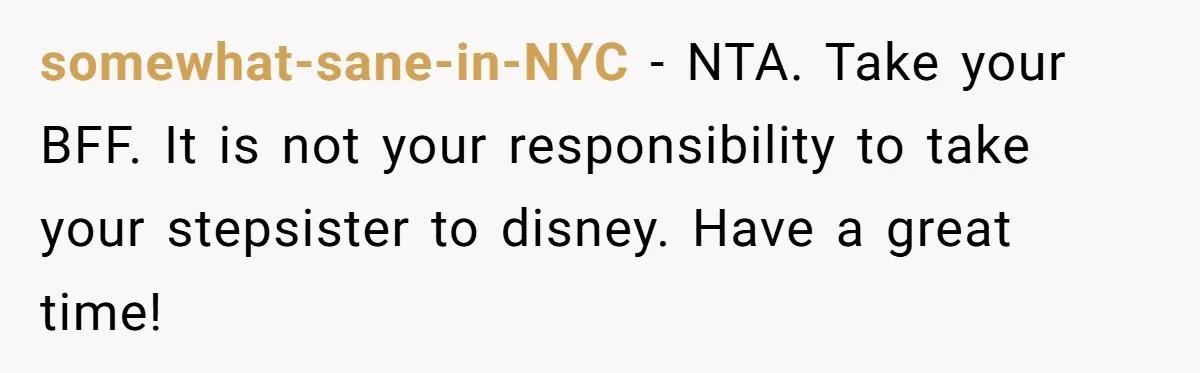
Many users supported the poster, emphasizing choice and personal enjoyment during the trip.

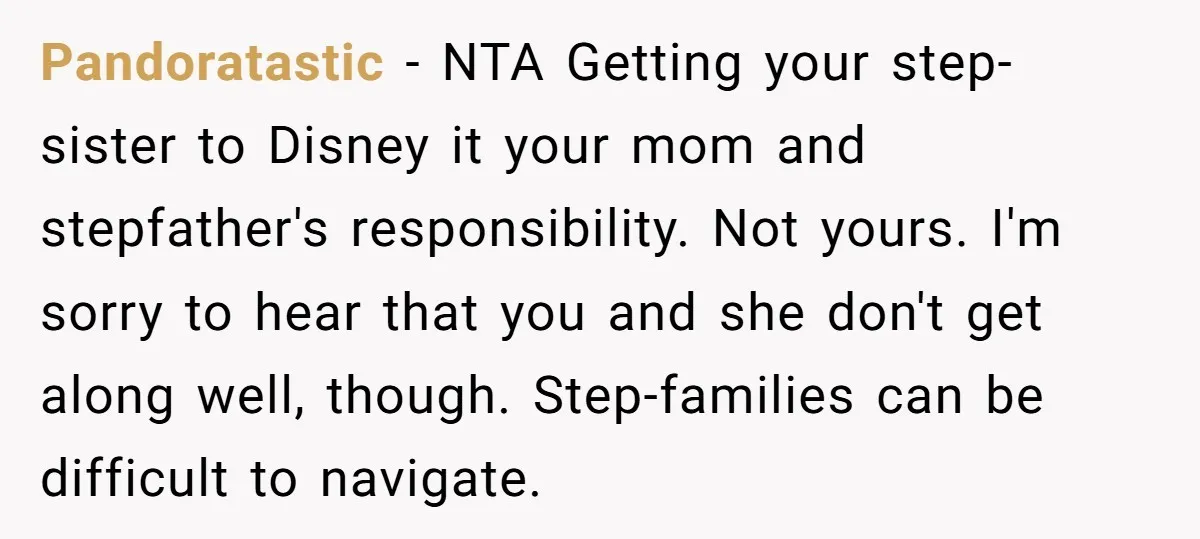
![[Reddit User] − NTA … invite your BFF and have a blast. You’re not responsible for managing her Disney addiction. Her parents can do that.](https://loknam.com/aita/images/41fd1606bc/wp-editor-1769997874421-3.webp)
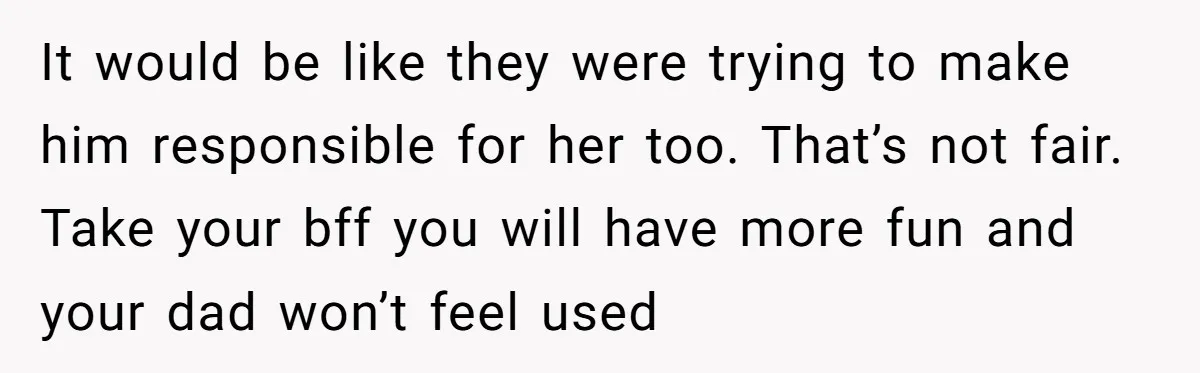
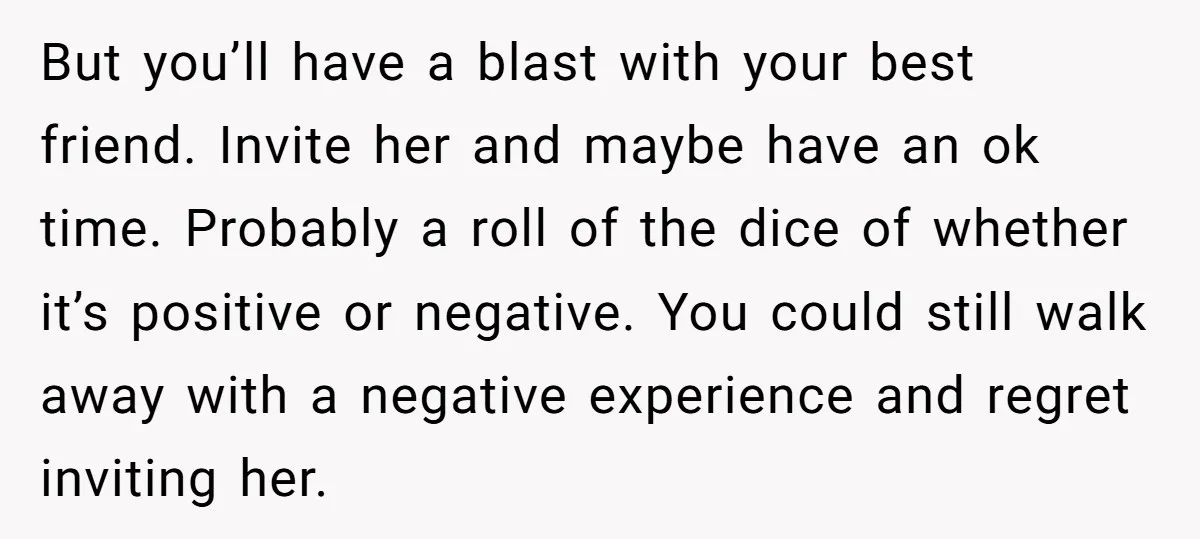
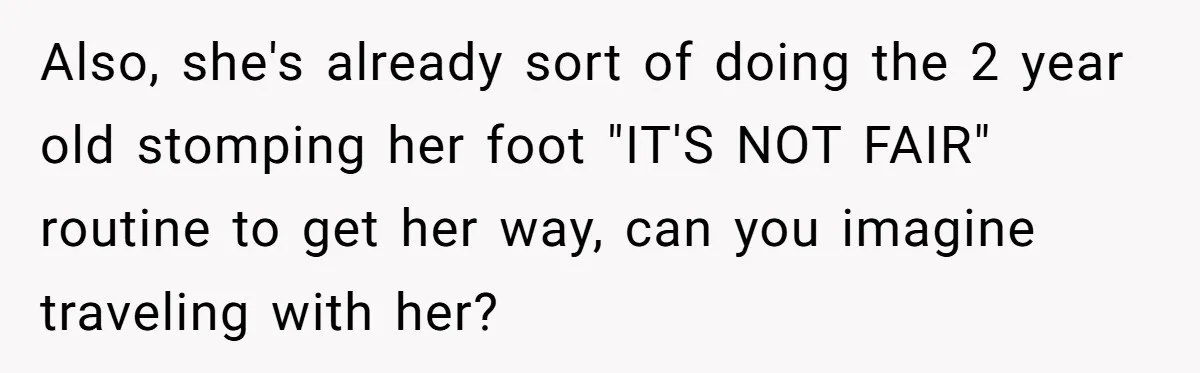
Others acknowledged both sides while still respecting the poster’s position.



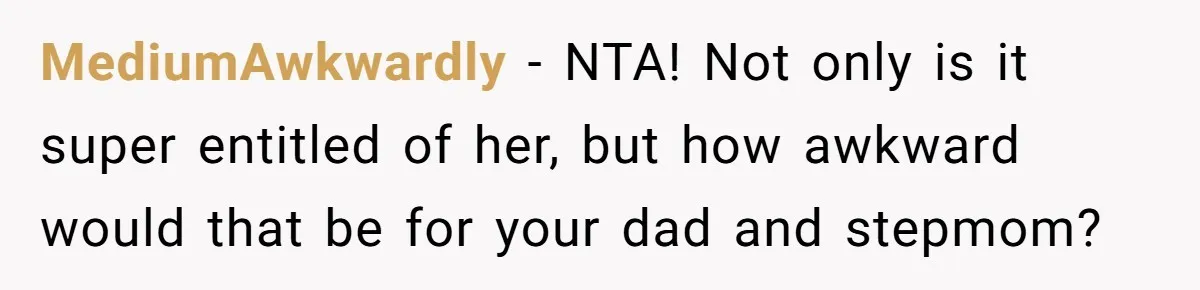
A few comments tried to lighten the mood with blunt or humorous takes.
This situation reflects a common challenge in blended families, where good intentions can unintentionally create pressure and resentment. The teen was offered a choice meant to improve their experience, yet that choice became a source of conflict when expectations were misaligned. Ultimately, the responsibility for managing fairness and disappointment rests with the adults, not the children involved.
What would you have done in this position? Should personal enjoyment outweigh family expectations on shared trips, or is compromise always the better option? How should parents handle invitations like this to avoid putting kids in impossible situations?