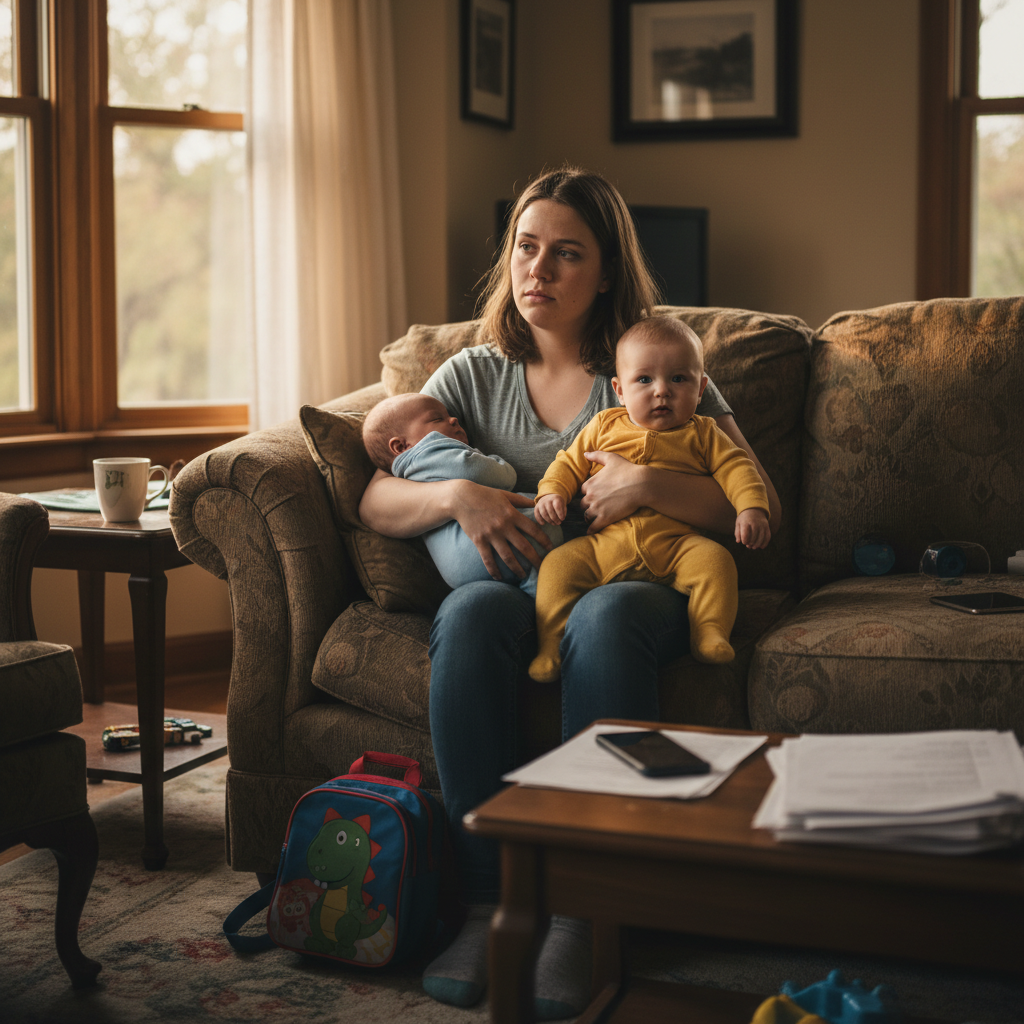
A homeowner hosted a relaxed weekend barbecue, inviting friends and nearby neighbors to enjoy good weather, food, and drinks. What was meant to be an easygoing gathering quickly turned awkward when a young child helped himself to a drink that was clearly not meant for him. The host intervened immediately, but instead of the situation ending there, it sparked tension between adults.
As conversations spread beyond the patio, whispers among neighbors followed, leaving the host questioning whether they had crossed an unspoken line. While the intention was never to make anyone uncomfortable, the disagreement raised a broader question about responsibility at social gatherings. When parents are present, how much effort should a host make to adjust their home for children, and where does personal accountability begin?

‘AITAH for not seperating drinks in a cooler?’
The gathering began as a casual barbecue with neighbors, friends, and shared food.
Tension arose when the parent reacted strongly to the host’s intervention.
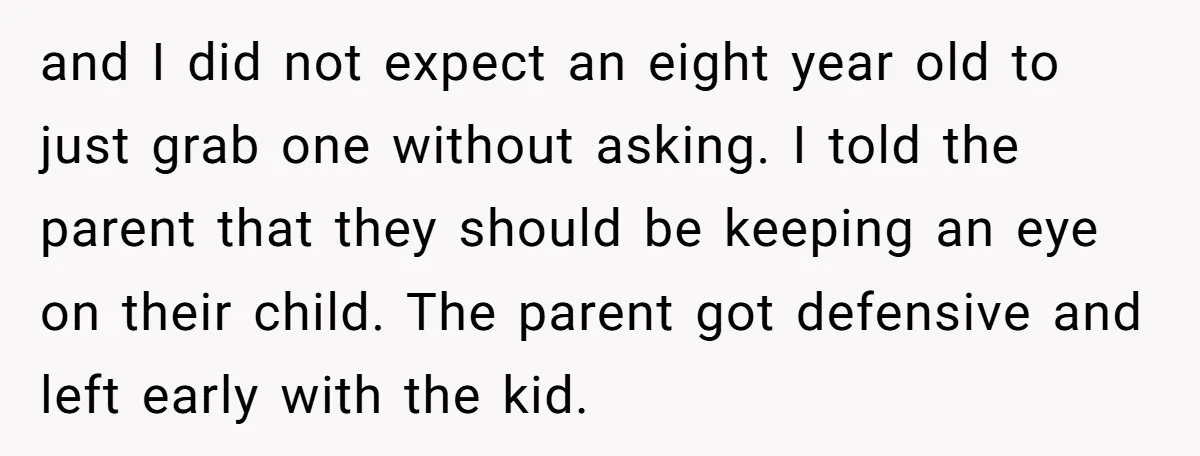
Afterward, lingering gossip made the host question their responsibility.

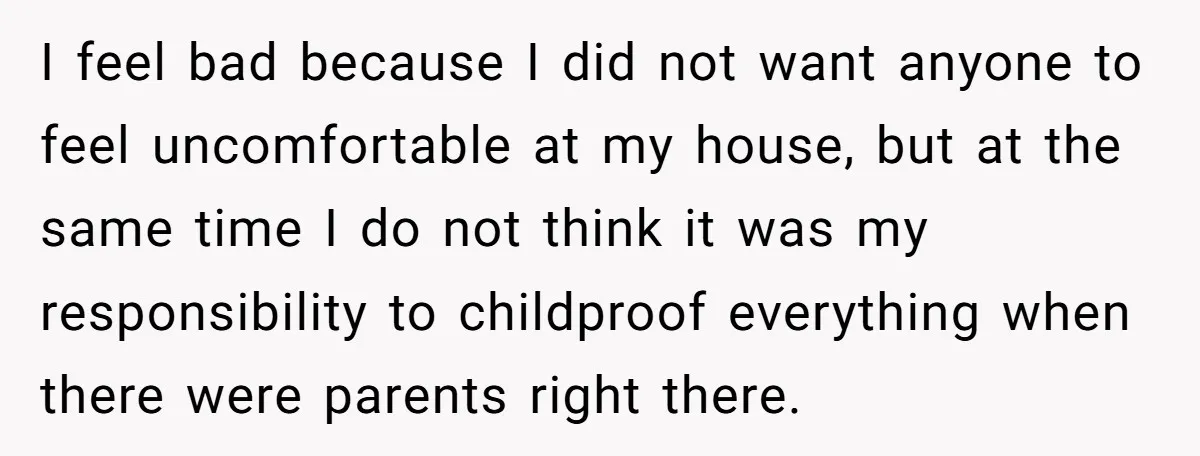
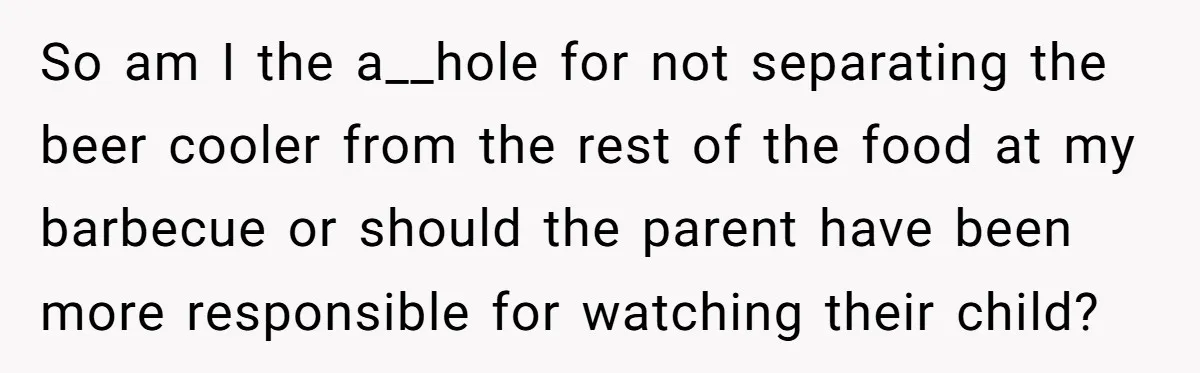
At the core of the issue is a mismatch in expectations. The host viewed the barbecue as a shared adult space where parents remained responsible for supervising their own children. From that perspective, placing beer and soda together in a clearly visible cooler does not automatically imply negligence. The host also acted promptly once the issue was noticed, preventing any real harm.
On the other hand, some parents expect environments with children present to be adjusted accordingly, even if the event is not specifically designed for kids. This can include separating alcohol, labeling items more clearly, or placing certain things out of reach. These expectations, however, vary widely depending on culture, neighborhood norms, and personal parenting styles.
From a broader social standpoint, the situation highlights how quickly embarrassment can turn into blame. Instead of acknowledging a lapse in supervision, the parent shifted responsibility onto the host, escalating what could have been a brief correction into a lingering conflict. The incident underscores the importance of clear communication and realistic expectations when adults and children share social spaces.
Here’s the feedback from the Reddit community:
Many users support the host, emphasizing parental responsibility at social gatherings.
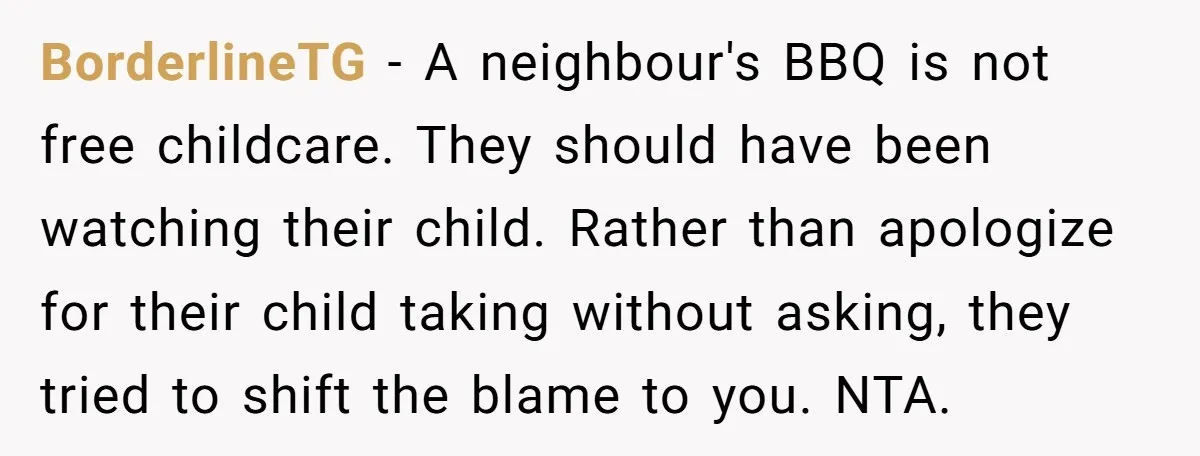



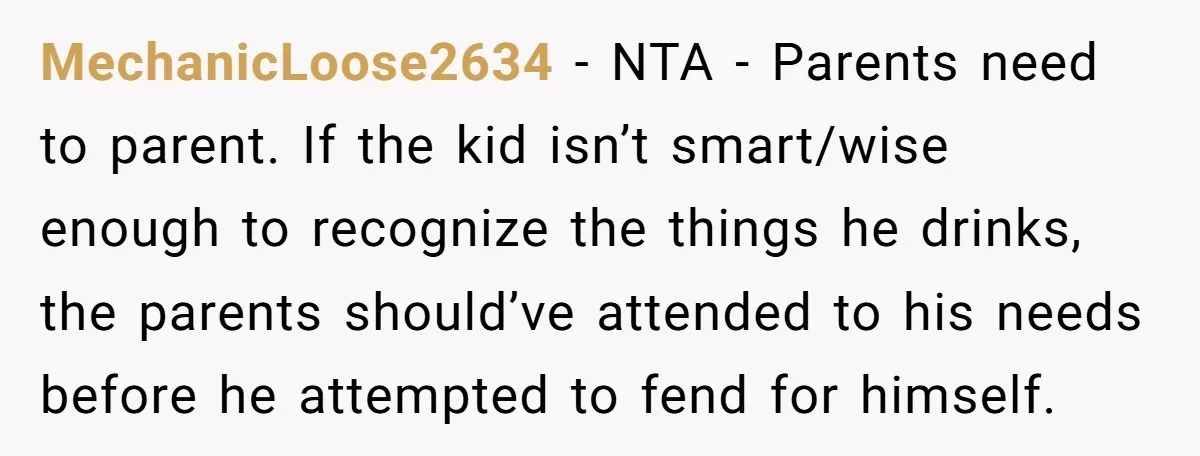

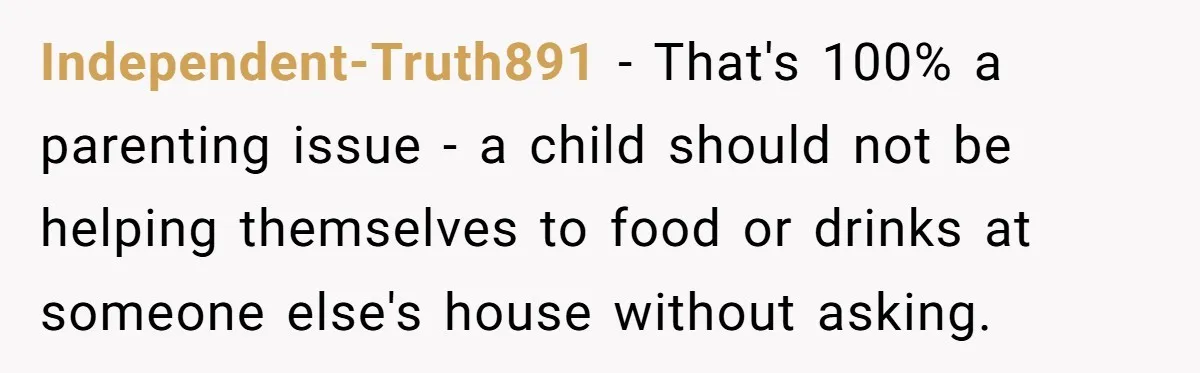
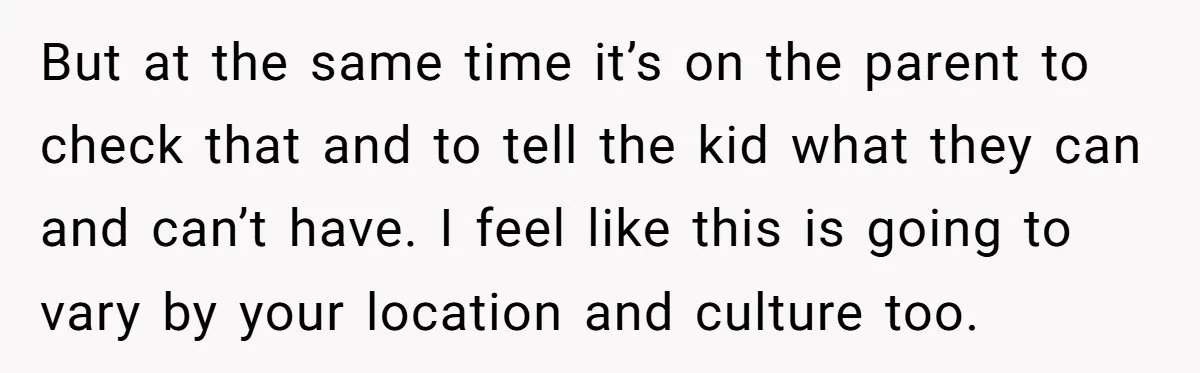
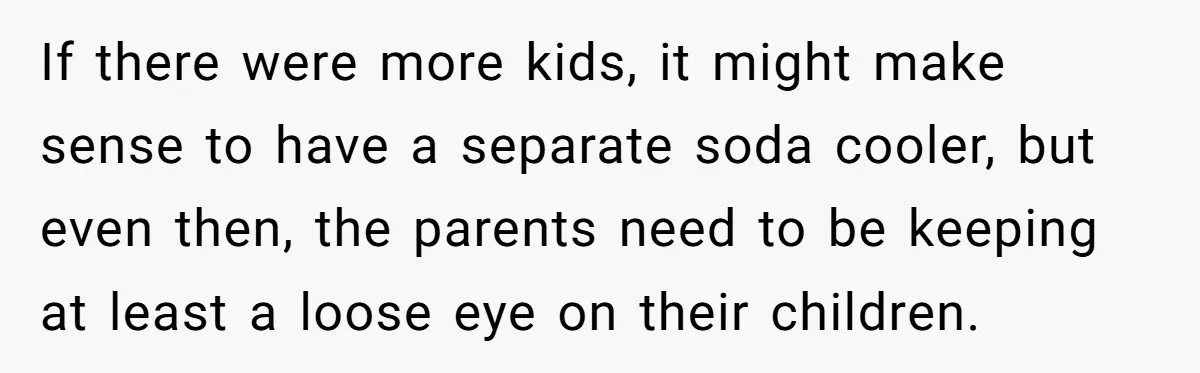
Others offered more balanced takes, acknowledging both sides of the argument.




A few commenters added humor to lighten the mood.
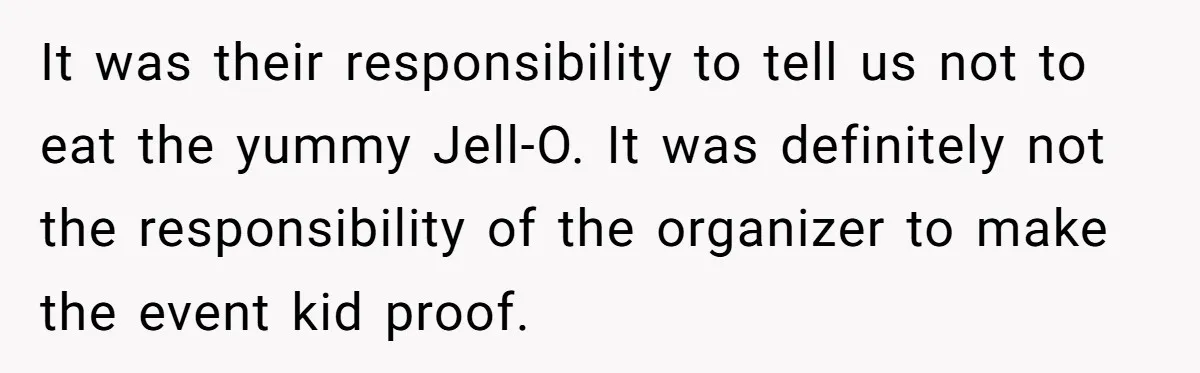
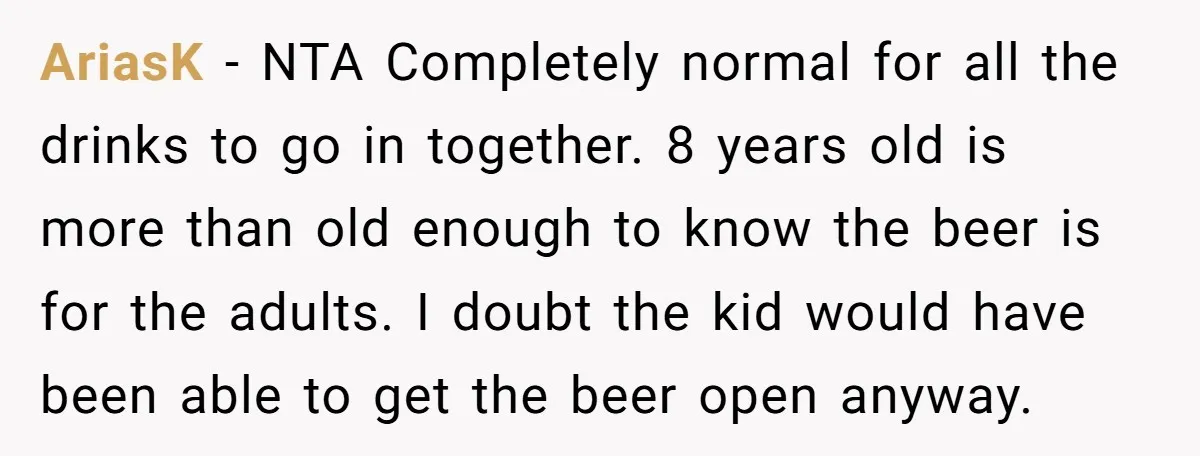
The situation reflects a common social gray area where assumptions collide. While the host felt they acted reasonably and responsibly, the parent perceived the setup as careless. Both reactions stem from differing expectations about supervision and shared responsibility in informal settings.
Should hosts anticipate every possible risk when children are present, or does that burden remain with parents? How much should social norms adapt depending on who attends an event? Readers may find themselves divided, depending on their own experiences and cultural background.