
Money habits often reveal deeper family dynamics, especially when expectations clash over financial responsibility. In this situation, a young man who prides himself on saving finds himself at odds with his sister, whose spending habits have long caused tension. What seemed like a harmless joke at a family dinner quickly escalated into a serious disagreement about money, respect, and obligation.
What makes the story more complicated is how quickly the roles of “responsible” and “petty” were assigned once real financial need entered the picture. With parents weighing in and emotions running high, the situation raises a familiar question: where should the line be drawn between helping family and protecting one’s own values?

‘AITAH for refusing to lend my sister money after she mocked me for saving?’
It all started with long-standing differences in how two siblings handle money.
Things became more tense after a public comment turned saving into a punchline.
The conflict reached a breaking point when a request for help was denied.

Situations like this often highlight long-standing family patterns around money, responsibility, and expectations. In this case, the poster has clearly adopted the role of the saver, while the sister has relied on others to fill the gaps created by her spending habits.
What makes the story more complicated is the emotional layer added by public mockery. Being criticized for financial discipline can feel dismissive, especially when the same behavior later becomes the reason someone is asked for help. From one perspective, refusing the loan appears to be a boundary-setting moment meant to encourage accountability. From another, it can be interpreted as withholding support during a moment of genuine need.
There are also opposing views centered on family obligation. Some believe financial help should be given regardless of past comments, especially when housing is at stake. Others argue that repeated bailouts enable irresponsible behavior and strain relationships in the long run. From a broader social perspective, the issue reflects a common tension in families where financial values differ. The poster’s decision may feel harsh in the moment, but it also signals a desire for mutual respect and long-term change rather than continuing a cycle that has already caused resentment.
Here’s the input from the Reddit crowd:
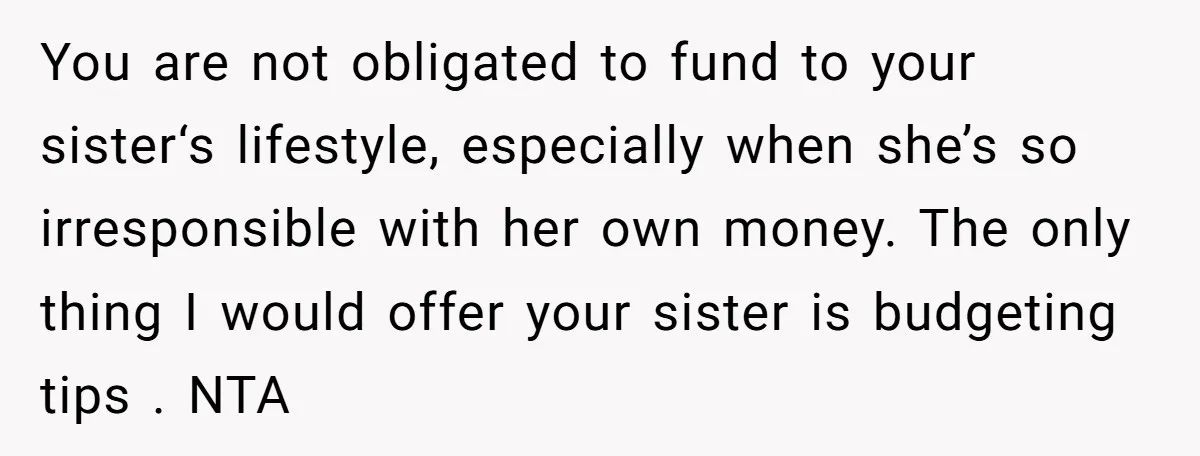
Many users support the poster, emphasizing responsibility and the importance of financial discipline.





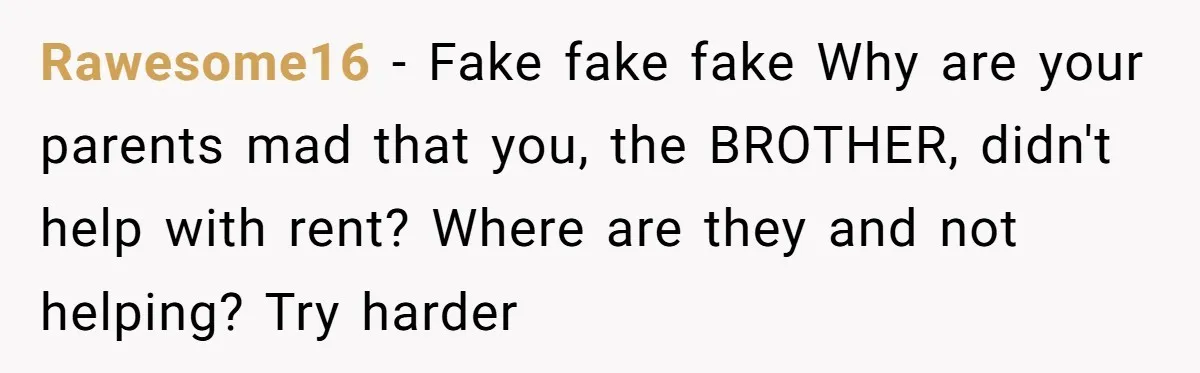
Others push back or question the situation while still acknowledging the poster’s stance.



A few comments use humor or sarcasm to lighten the mood and express skepticism.

This situation reflects a familiar family dilemma where financial responsibility, respect, and emotional reactions collide. While the poster believes he is finally standing up for himself, others see the refusal as unnecessary or even unkind. The divide shows how differently people interpret obligation when money and family are involved.
Should family support always come first, or is it reasonable to say no after repeated patterns? How much should past behavior influence decisions in moments of need? Readers are invited to share how they would handle a similar situation and where they personally draw the line.