
Breakups are rarely clean, but things get even messier when former couples share the same daily spaces. For one man, moving on meant returning to his normal routine, including a gym membership he had no intention of giving up. He thought changing his schedule and keeping his distance would be enough to avoid conflict.
Instead, a brief encounter at the gym reopened old wounds and sparked a new argument about comfort, boundaries, and who should be the one to compromise. Once he shared the situation on social media, readers quickly weighed in, debating whether keeping the peace means giving up something you enjoy or standing your ground when an ex makes an unreasonable demand.


The breakup itself was recent, emotional, and ended with a firm demand for distance

Even so, completely avoiding each other wasn’t possible because of one shared space



Her response immediately shifted the tone of the encounter



Outside opinions only made him question himself more

He later clarified why switching gyms wasn’t a simple solution


This situation highlights how unresolved emotions can spill into shared public spaces after a breakup. The poster made clear efforts to respect boundaries by honoring the no-contact request, changing his schedule, and avoiding engagement. From a behavioral standpoint, those actions show an attempt to de-escalate, even if the emotional tone of the breakup remained raw.
From the ex-girlfriend’s perspective, discomfort after a breakup is understandable. Seeing a former partner can reopen emotional wounds, especially when the separation was heated. That said, discomfort alone does not grant control over shared or public environments. Expecting someone else to abandon a routine or paid membership shifts responsibility outward rather than managing one’s own triggers.
According to Dr. John Gottman of The Gottman Institute, “Conflict is inevitable, but it’s how couples—and ex-couples—manage it that predicts long-term outcomes.” In post-relationship dynamics, management often means disengagement rather than negotiation.
The most practical advice here centers on neutrality. Avoiding conversation, documenting interactions, and involving gym management only if harassment continues can protect both parties. For the poster, the lesson lies in firm boundaries delivered calmly. Refusing to sacrifice personal routines does not equal forcing a connection, especially when avoidance has already been demonstrated.
Here’s what people had to say to OP:
Many users immediately supported the poster’s right to keep his routine intact





Others focused on strategy and protecting himself from escalation












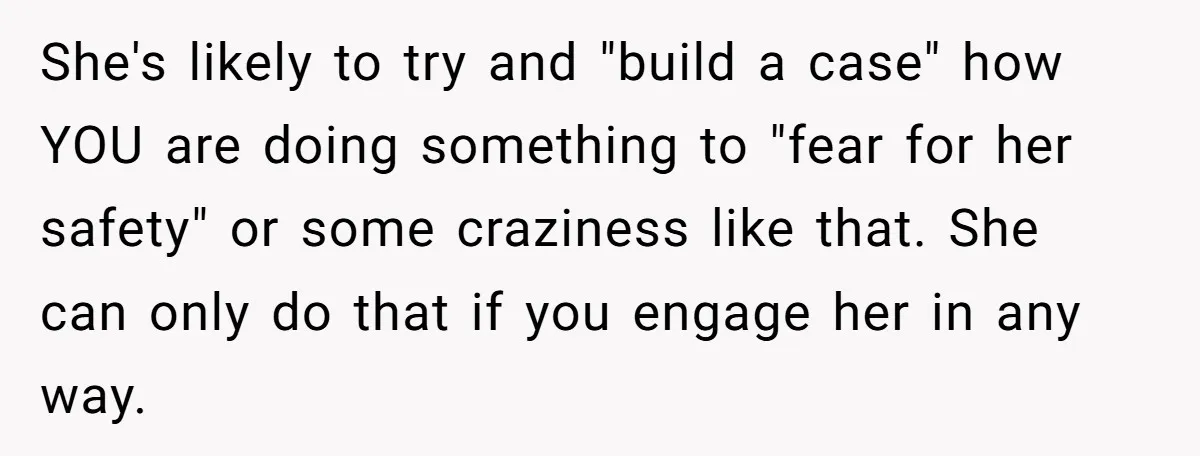

A few commenters added blunt or humorous takes to cut through the tension
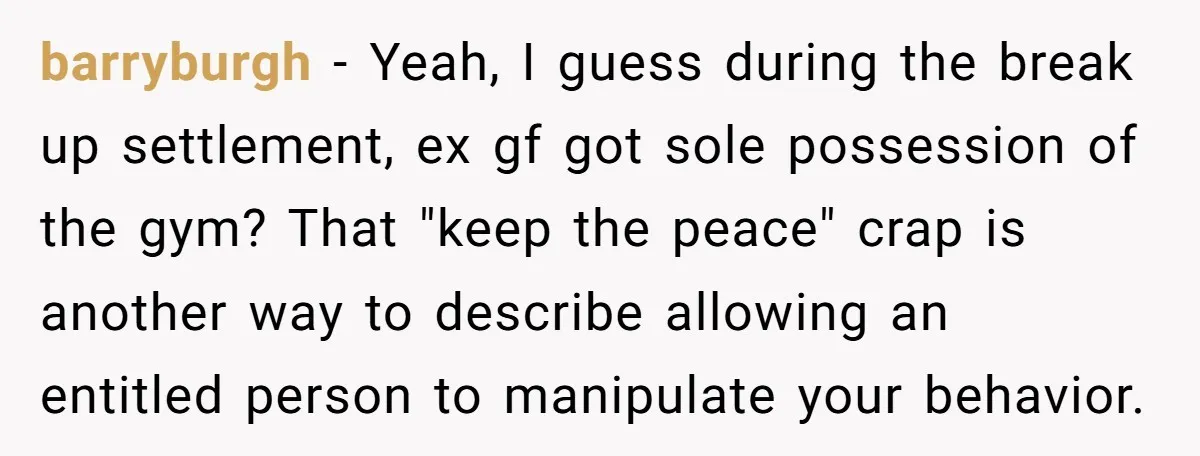






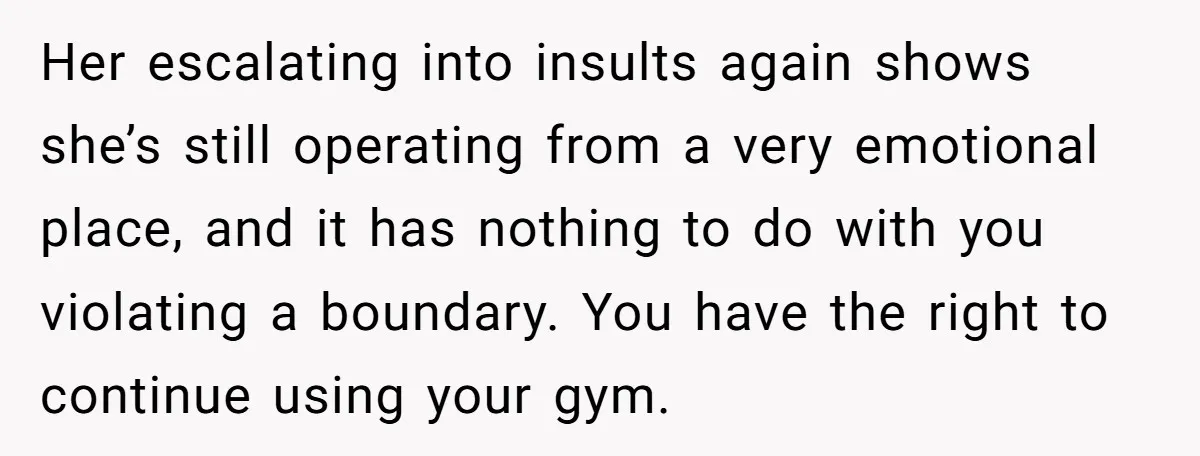
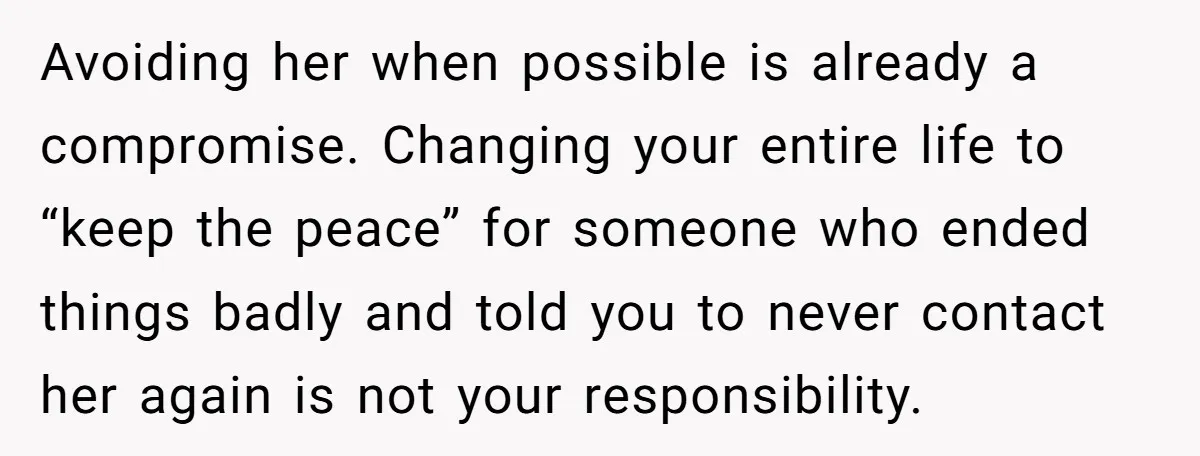

For most readers, this conflict came down to responsibility and boundaries. Breakups don’t grant ownership over shared spaces, and discomfort doesn’t automatically mean someone else must uproot their routine. While the comment about not caring may have added fuel to the fire, the broader picture shows consistent effort to disengage. In situations like this, standing firm without engaging emotionally often speaks loudest. What would you do if an ex asked you to give up a space you love just to keep things quiet?