A disagreement over inheritance left one family deeply divided after a grandmother’s death. One grandchild inherited her house after spending years as her full-time caregiver, while two siblings who were largely absent are now demanding a share of the property’s value.
The conflict quickly escalated as the siblings framed their financial struggles as a moral obligation for the inheritor to help. Accusations of selfishness and disrespect toward their grandmother’s memory followed, despite her wishes being clearly outlined. As emotions ran high, the inheritor questioned whether honoring the will meant betraying family ties, or whether the real betrayal happened long before, when their grandmother needed support the most.
‘AITAH for refusing to share my inheritance with my “struggling” siblings?’
The disagreement began after a grandmother’s passing and a contested inheritance.
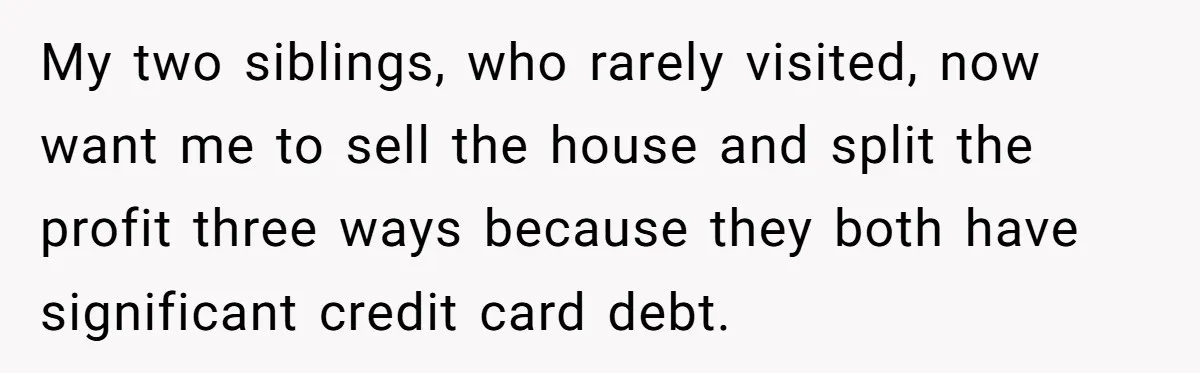
Tensions grew as old sacrifices and past absences were brought into focus.
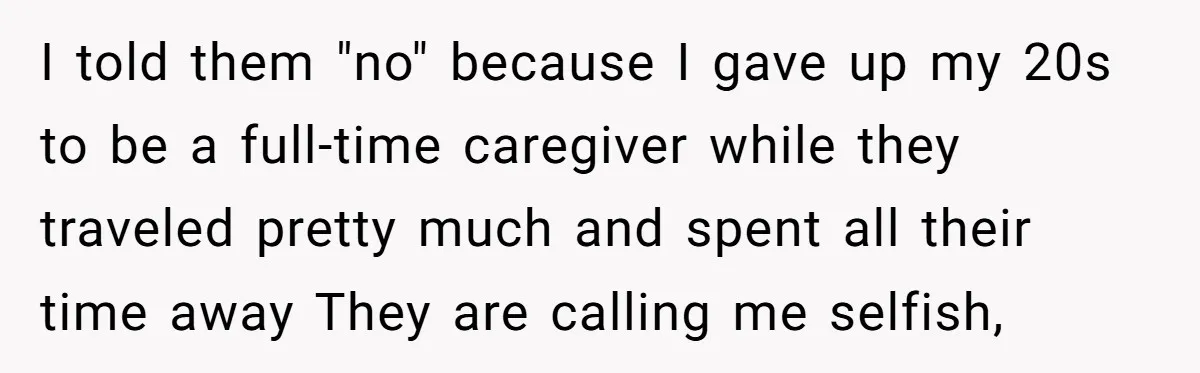
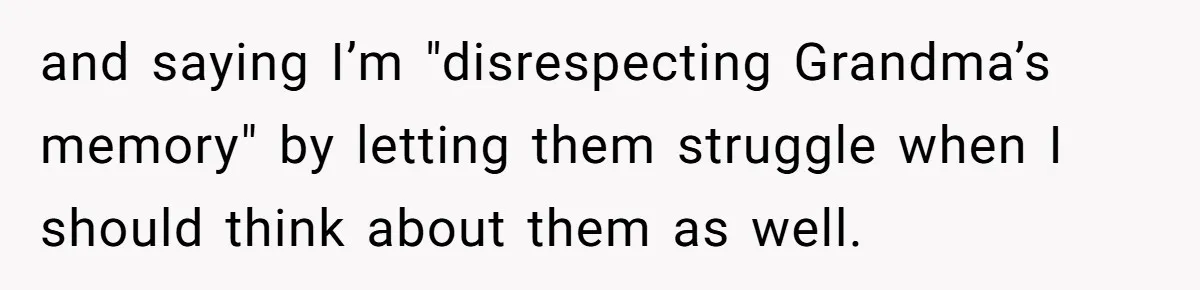
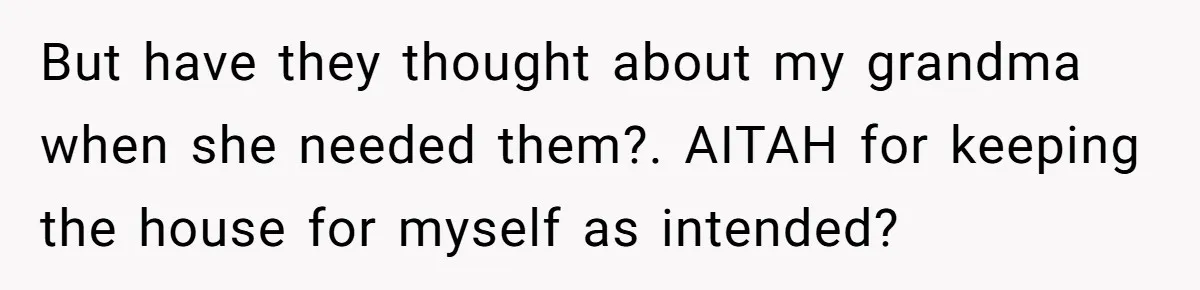
Inheritance conflicts often expose unresolved family dynamics that existed long before a will is read. In this case, the grandmother’s decision appears directly tied to consistent caregiving rather than equal distribution. The poster’s role as a live-in caregiver for five years represents a significant emotional, physical, and financial contribution that siblings did not share.
From the siblings’ perspective, financial stress can amplify feelings of resentment and exclusion. Credit card debt and perceived inequality may lead them to reinterpret the grandmother’s wishes as unfair or emotionally driven. Accusations about “disrespecting her memory” often emerge when people struggle to accept outcomes they dislike.
From a broader viewpoint, honoring a will is about respecting autonomy, not redistributing assets to ease discomfort. The poster is facing pressure to compensate for choices their siblings made independently. Socially, this situation highlights how caregiving labor is frequently undervalued until it becomes tangible through inheritance. The conflict is less about property and more about recognition, responsibility, and the consequences of being present versus absent when it mattered most.
Here’s what Redditors had to say:
Many users supported the poster, emphasizing fairness and honoring the grandmother’s wishes.
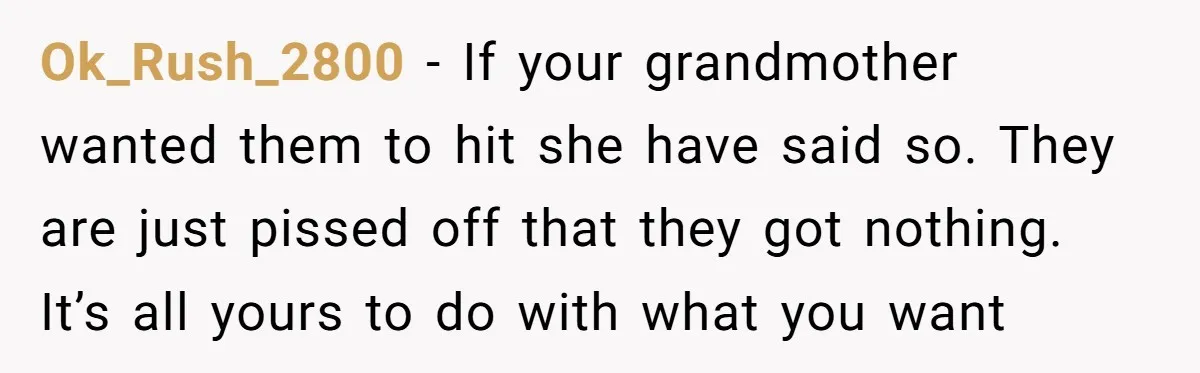
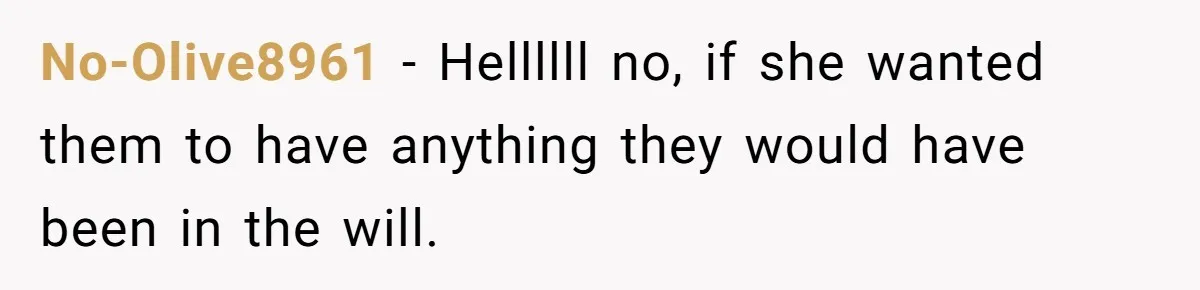
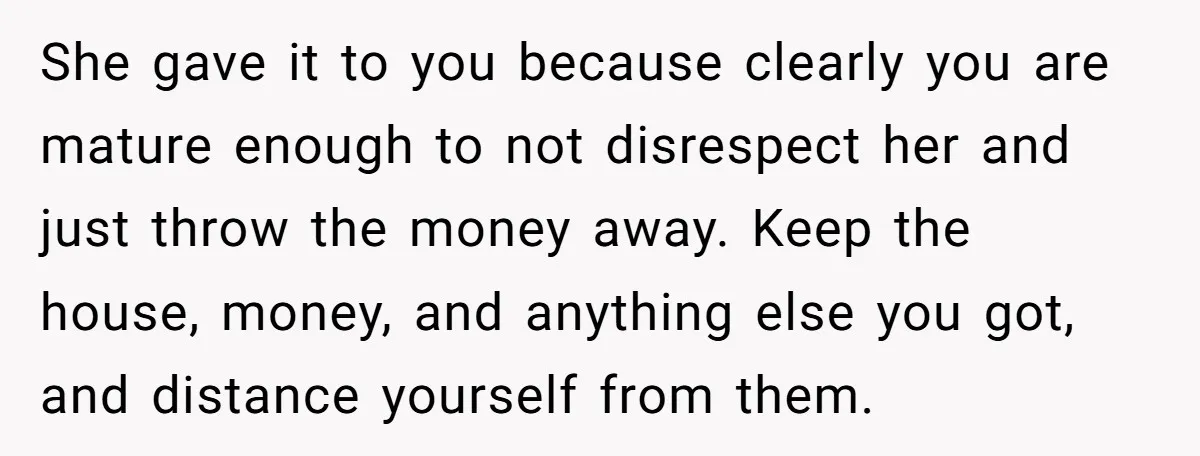
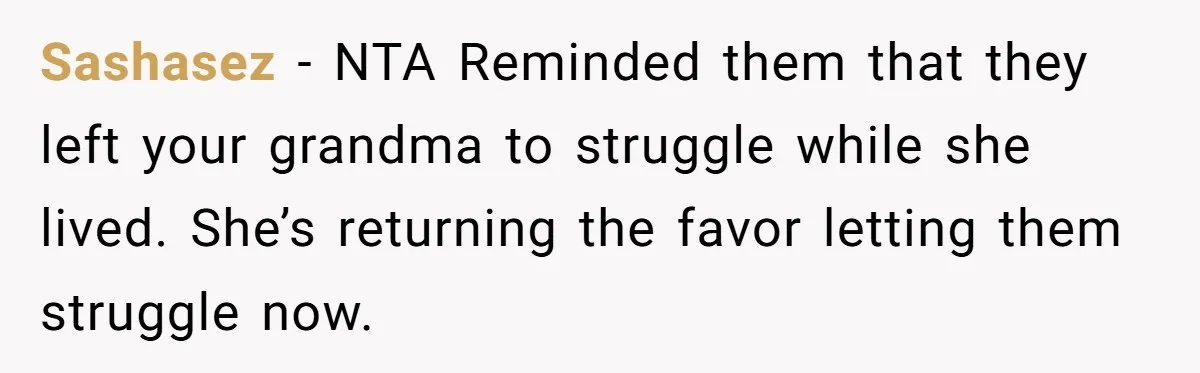

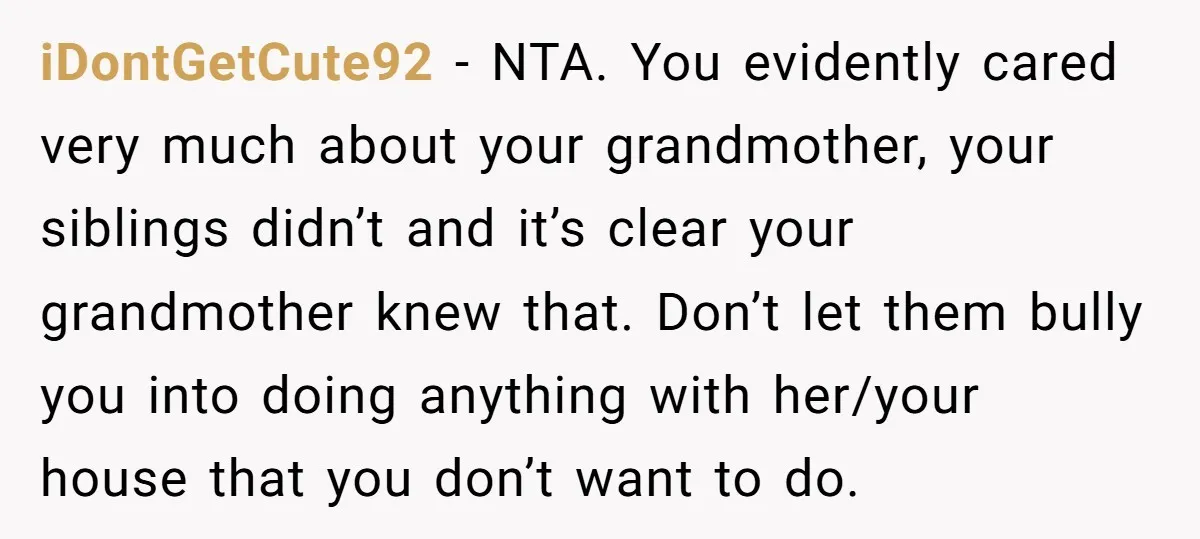
Some commenters acknowledged the family tension while reinforcing the poster’s stance.
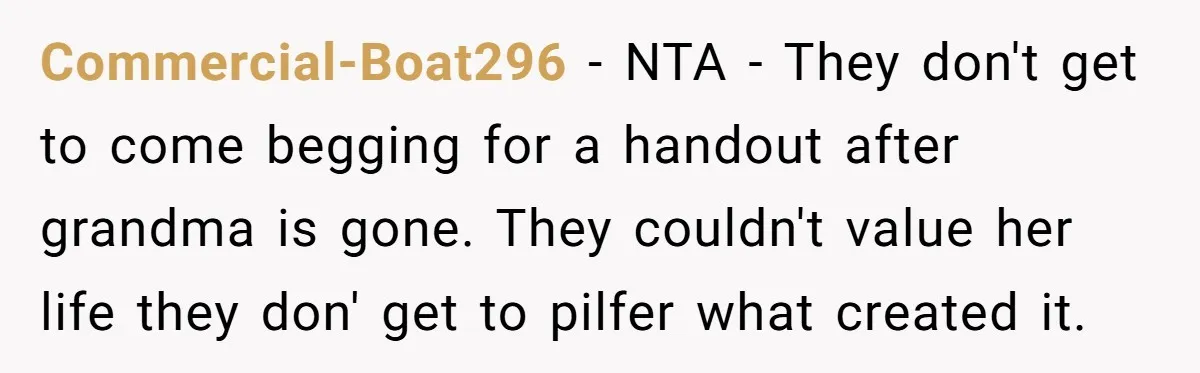

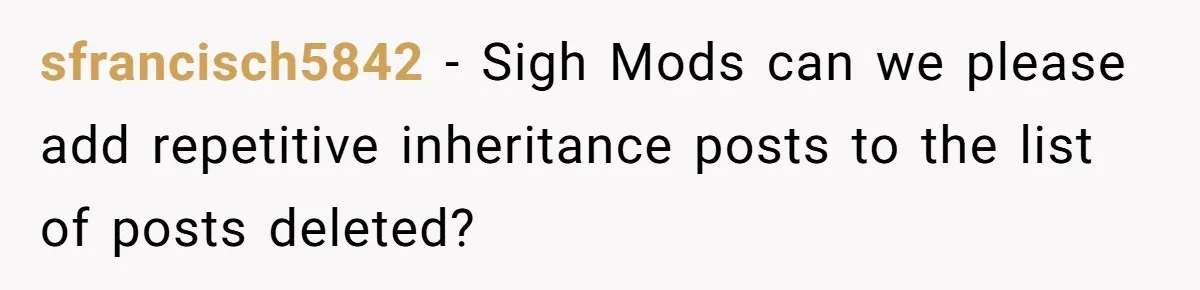
A few responses leaned humorous or blunt to lighten the mood.

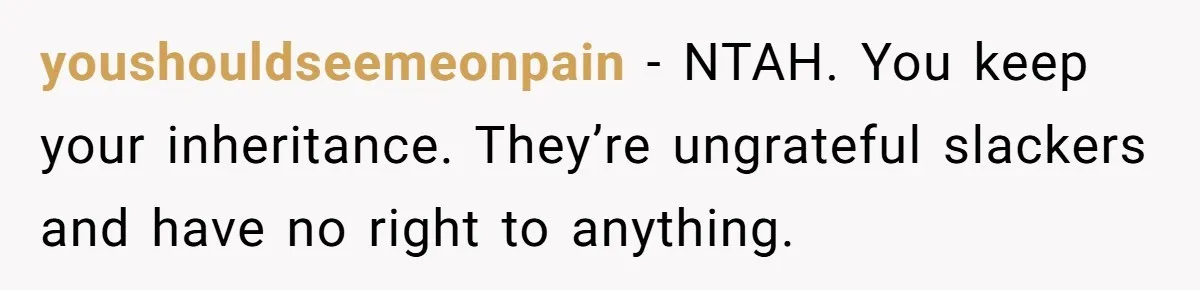
This situation underscores how grief, money, and unresolved family roles can collide after a loved one’s death. The poster chose to honor their grandmother’s explicit wishes, even when doing so strained sibling relationships and invited harsh criticism.
Should inheritance reflect equal shares or unequal contributions? How should families acknowledge caregiving sacrifices that happen quietly over years? Readers are encouraged to share how they believe responsibility, presence, and intent should factor into decisions like these.