A woman found herself abruptly asked to leave her husband’s cousin’s wedding over her hairstyle choice. She had opted for Dutch braids the day before the event and believed her look was appropriate, especially since no one raised concerns beforehand. What complicated the situation is that the confrontation did not come from the bride herself but from another family member during the reception.
After quietly leaving, the woman later learned that her husband also felt her overall appearance was out of place. The incident sparked intense debate on a social network, with many users questioning whether the issue was really about her hair or something else entirely.
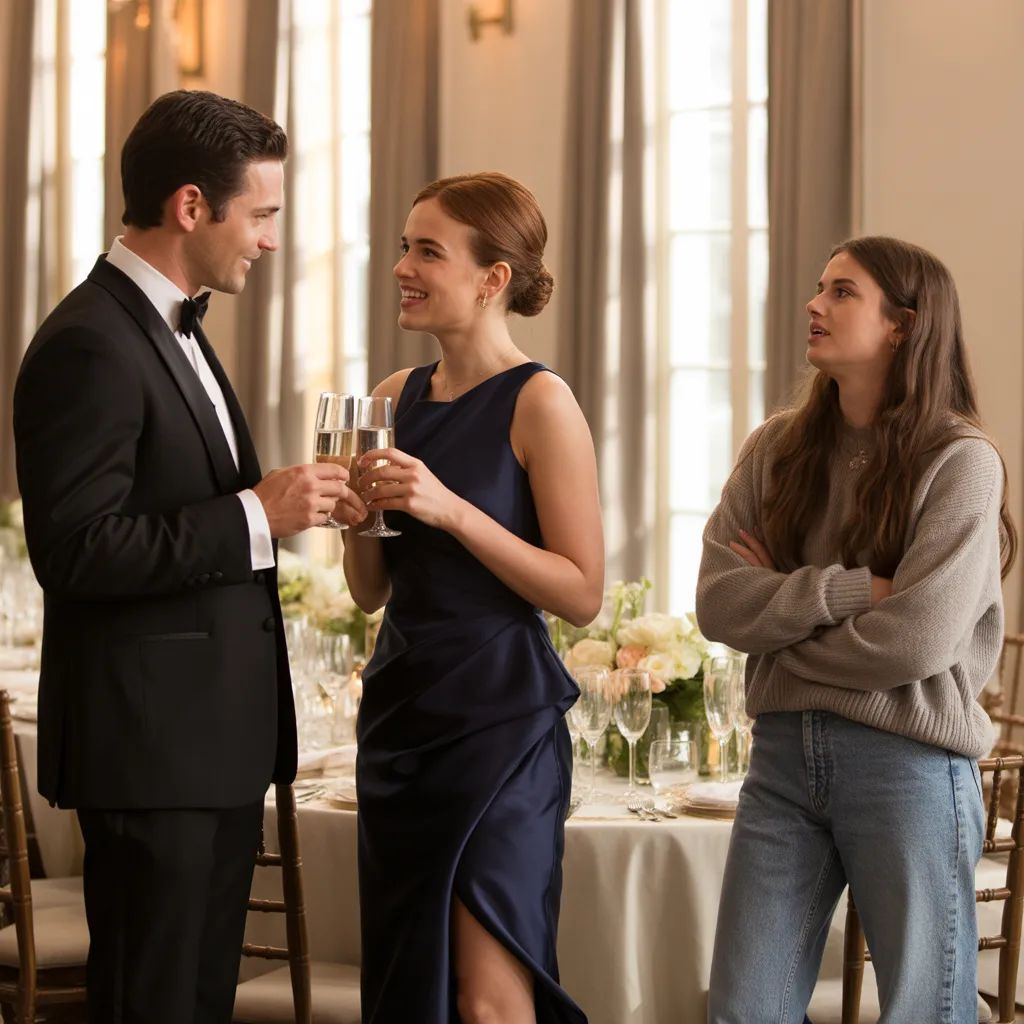
‘AITAH for wearing Dutch braids to my husband’s cousin’s wedding ?’
The poster prepared for the wedding without expecting any issues or objections.
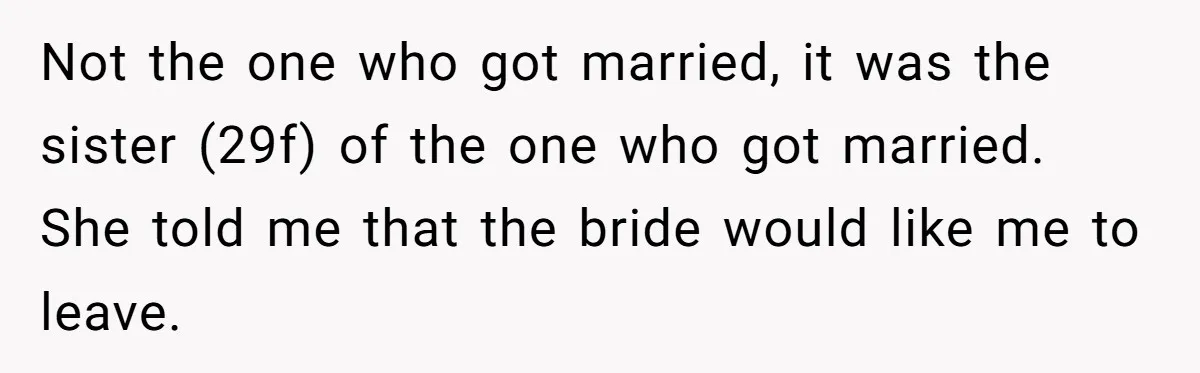
The confrontation happened unexpectedly during the wedding reception.
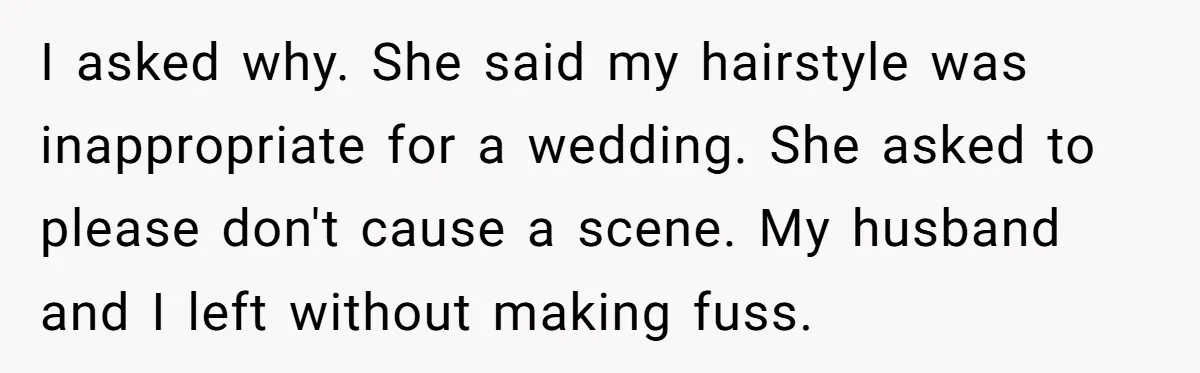
After leaving, the poster received painful feedback from her husband.
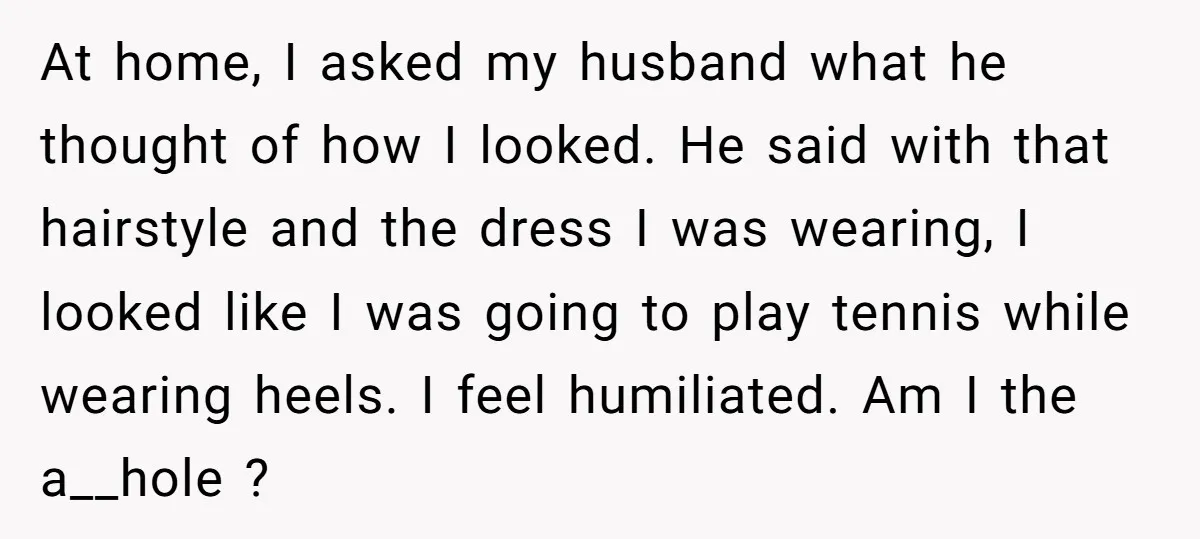
In this case, the disagreement appears less about a single hairstyle and more about alignment with the event’s formality. Weddings, especially formal or black-tie ones, carry implicit dress codes that guests are often expected to intuit. When attire falls outside those norms, it can draw attention that hosts may view as disruptive, even if unintentional.
Another issue is communication. The poster was not warned ahead of time, and her husband’s silence before the event removed an opportunity to course-correct. Being asked to leave mid-reception is an extreme response, but it often reflects accumulated frustration rather than a sudden offense.
From a broader perspective, public judgment on social platforms tends to fill in missing context aggressively. Once commenters believe key details were omitted, sympathy can quickly evaporate. The situation highlights how incomplete information, combined with emotionally charged events like weddings, can escalate misunderstandings into lasting embarrassment.
Here’s how people reacted to the post:
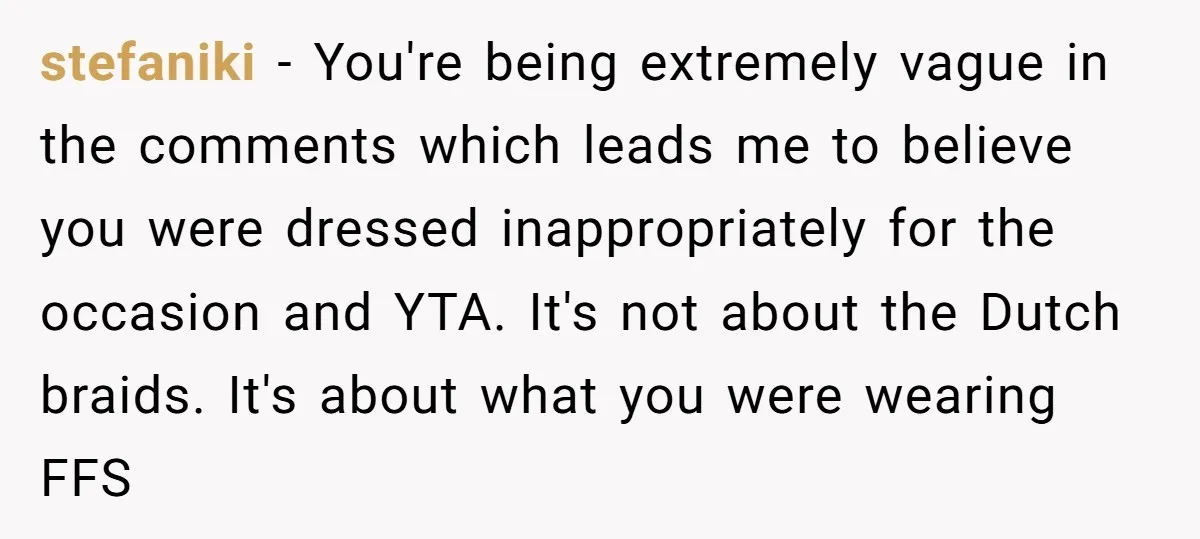
Some users focused on missing context and questioned whether all details were shared.

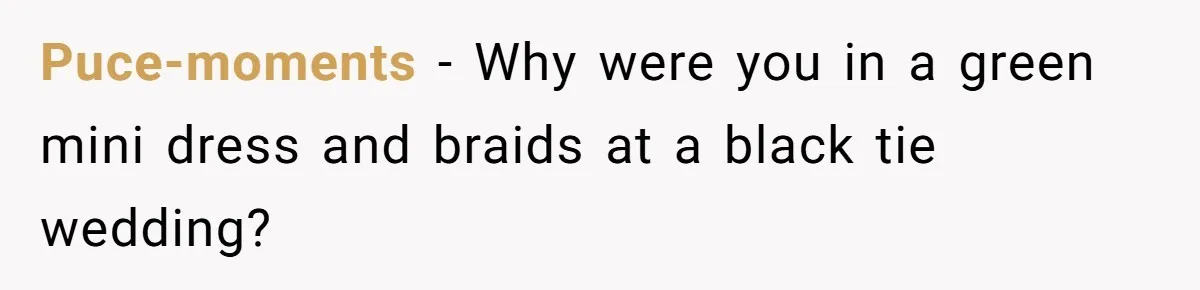
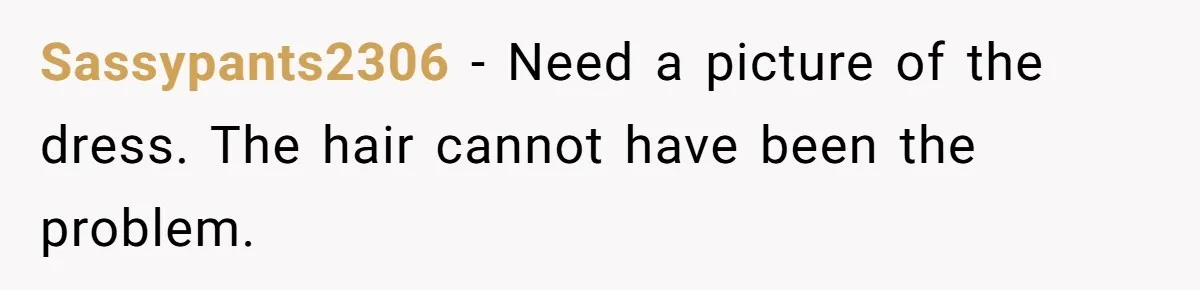
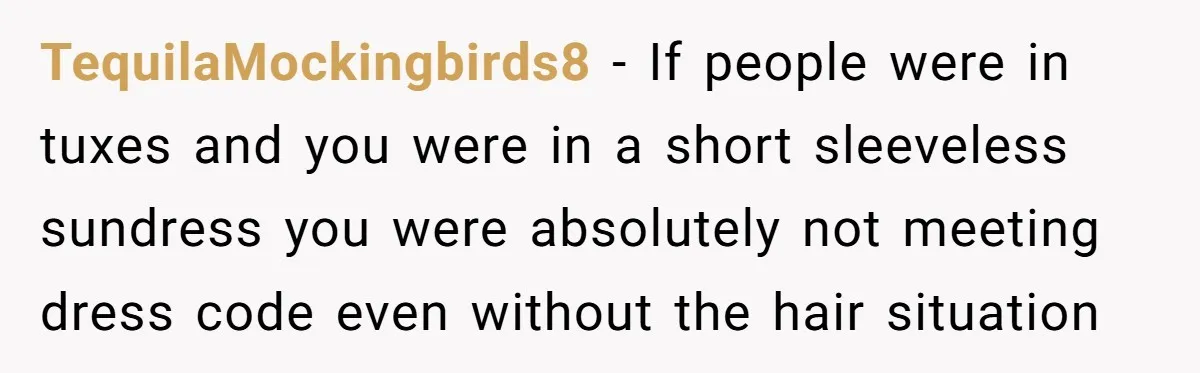

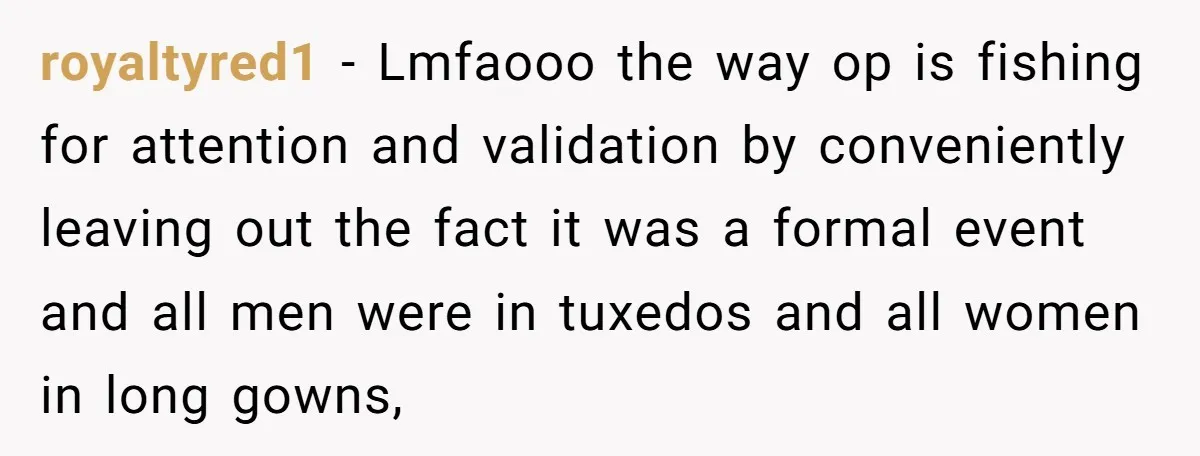
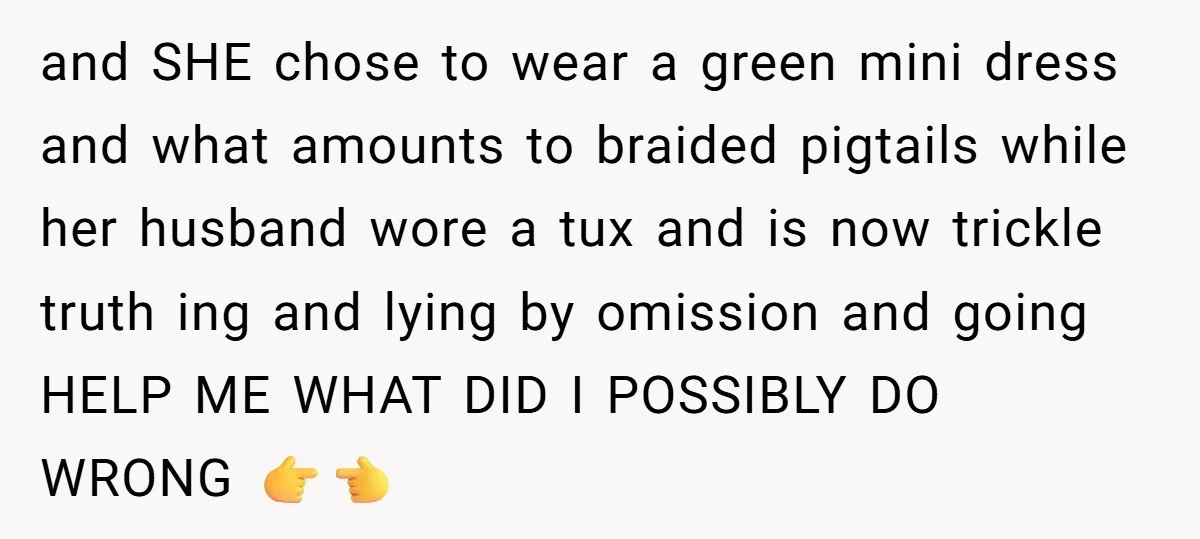
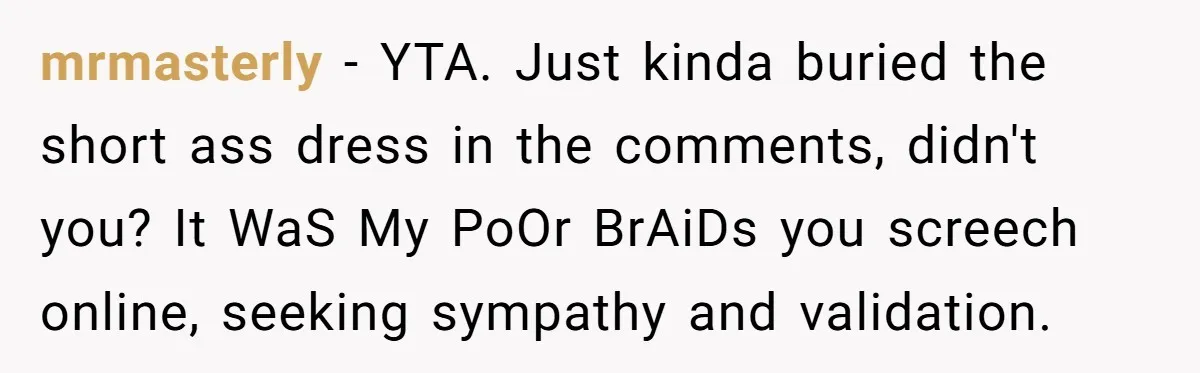
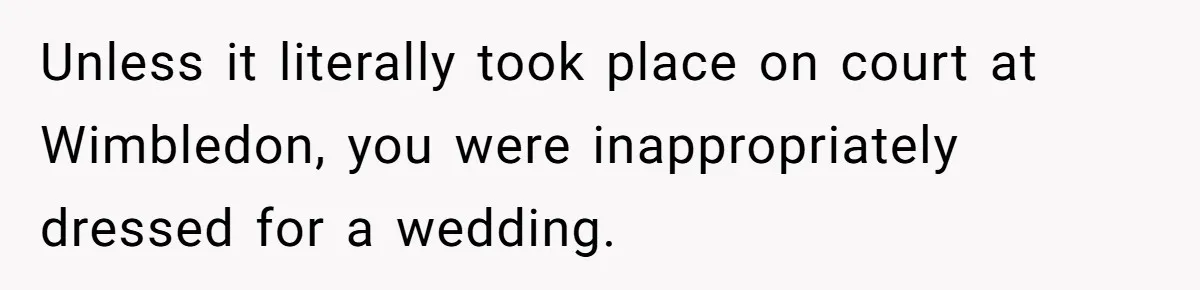
Others were more critical and argued the outfit, not the hairstyle, caused the issue.
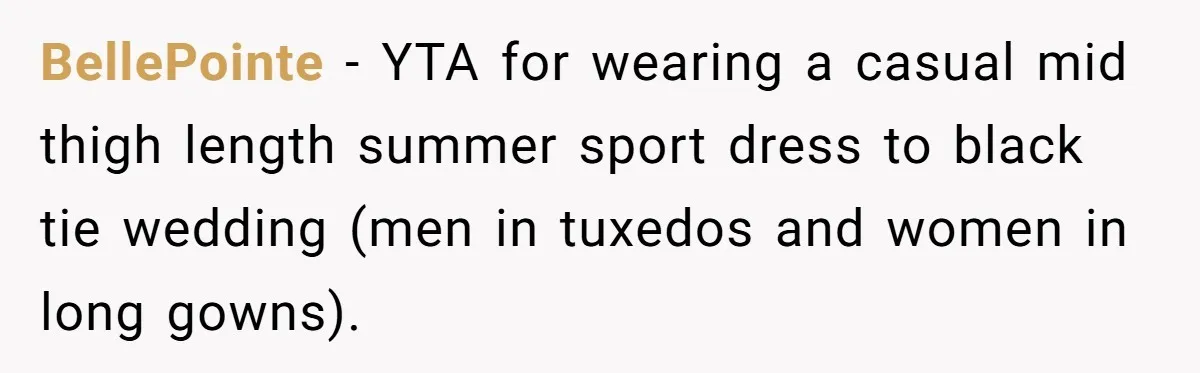
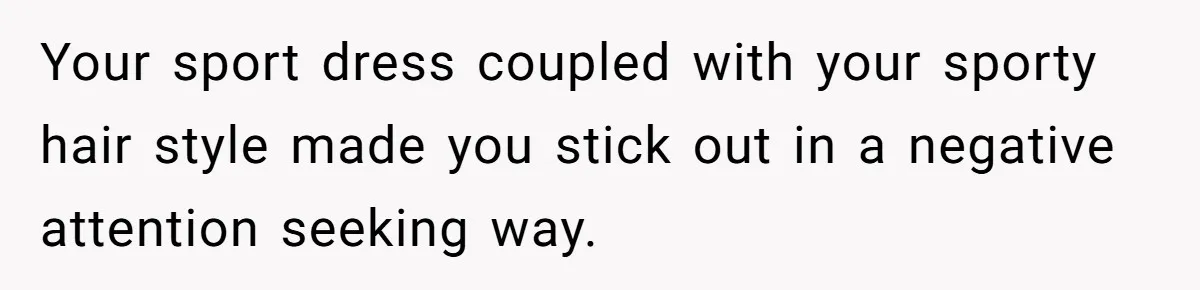
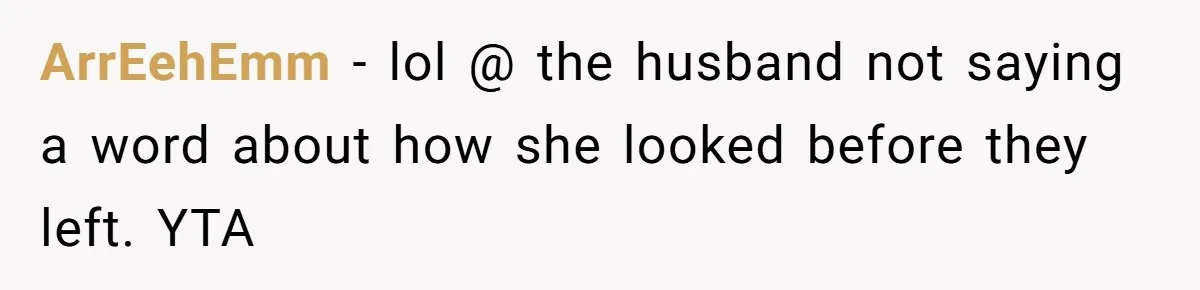
A few commenters used humor or blunt language to underscore their point.
This situation shows how quickly misunderstandings can escalate when expectations around formal events are not clearly communicated. While being asked to leave a wedding is humiliating, many felt the conflict stemmed from attire choices rather than a single hairstyle.
Should guests rely on explicit dress codes, or are unwritten rules part of attending formal events? How much responsibility do partners have to speak up before situations turn uncomfortable? Readers are encouraged to share how they would have handled this scenario.