
We all know that moment when a hard-earned reward backfires spectacularly. For one thirty-year-old guardian, a well-intentioned gift turned into a daily nightmare of deception and reckless behavior. She had stepped up to raise her seventeen-year-old nephew, offering him a 1998 Toyota Camry as a prize for pulling his grades up.
It was supposed to be a tool for his independence and a way to ease her own heavy daily burdens. Instead, the worn-down sedan became a getaway vehicle for a three-month truancy streak and a bumper car for irresponsible driving, pushing the stressed aunt to her absolute limit.
Now, she is spending hours waiting in town just to make sure he actually attends class, leaving her questioning every choice she has made. Curious how it all unfolded? The full story is right below.
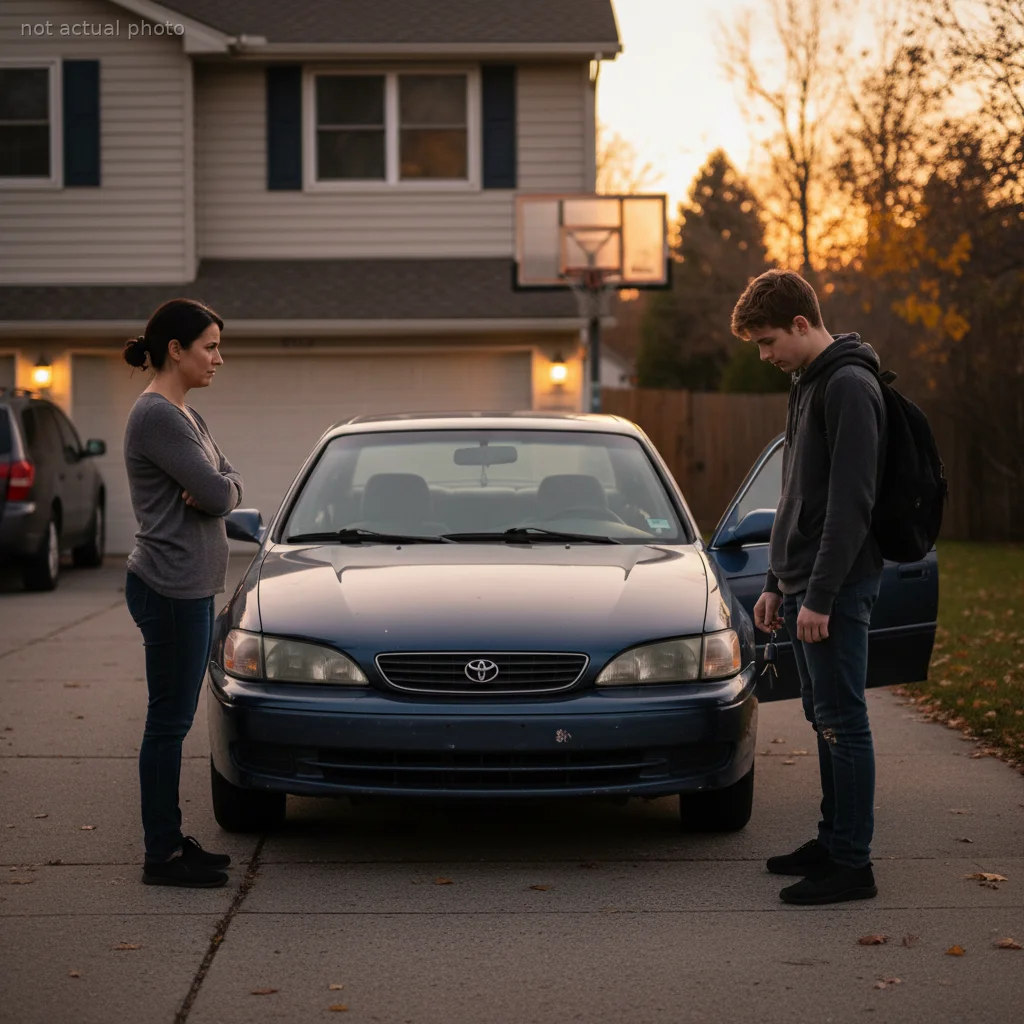

The promise of the open road was meant to be a reward, but the keys to the aging sedan quickly unlocked a series of escalating headaches.














The physical damage to the car was one thing, but the absolute betrayal of trust pushed the exhausted guardian to take drastic action.















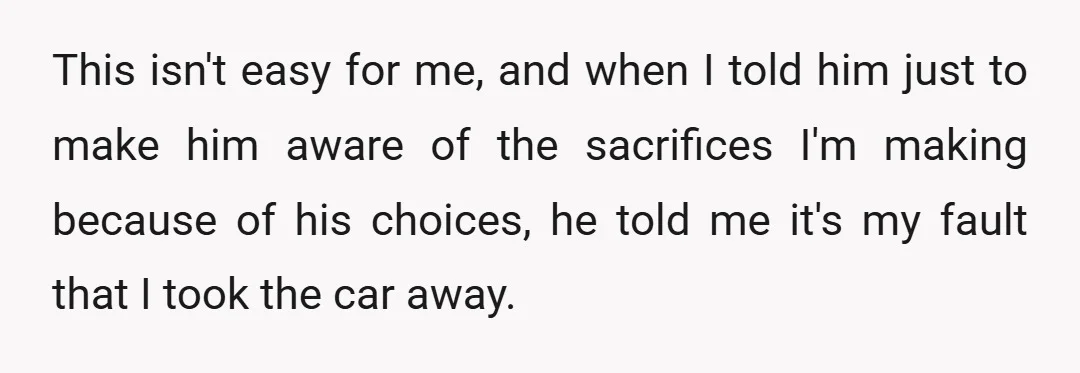


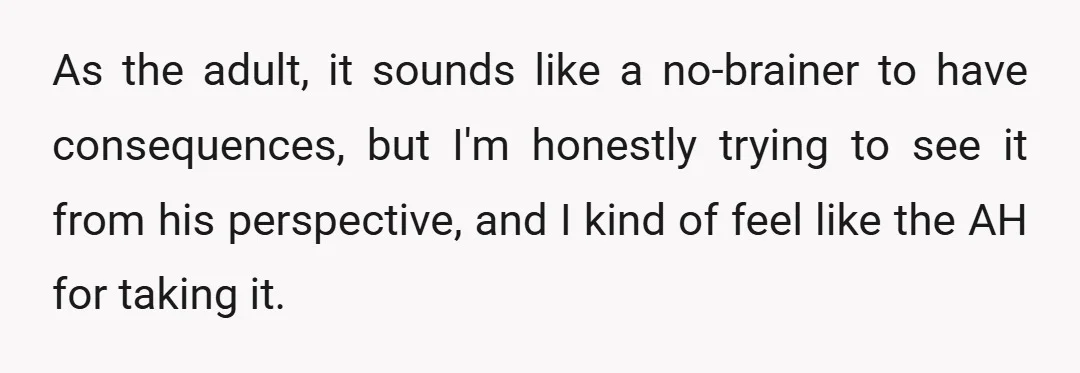
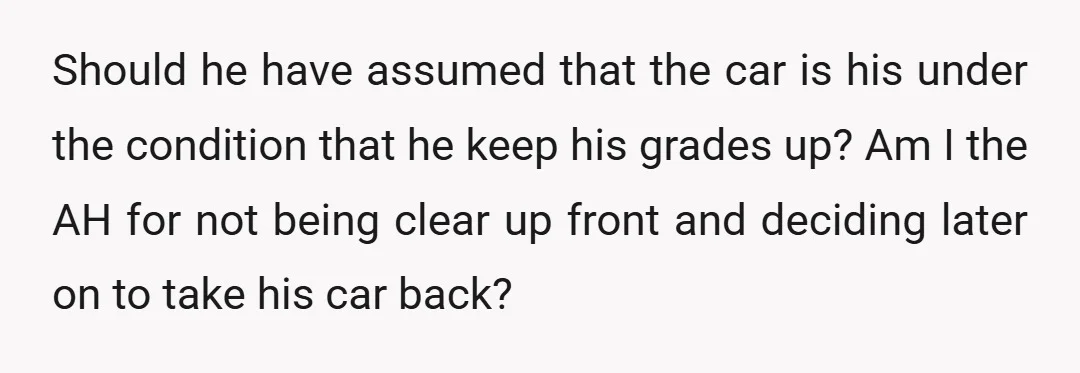
This guardian’s struggle with her nephew’s truancy perfectly illustrates the tricky reality of gifting major assets to teenagers without ongoing behavioral contracts. When a guardian hands over the keys, it often feels like the finish line of a behavioral goal, but experts in adolescent development agree that it is actually just the starting line.
General professional consensus emphasizes that driving privileges should always be tied to a clear set of ongoing responsibilities. Rather than treating the car as a permanent gift, guardians are advised to frame it as a conditional lease. This means laying out specific rules regarding school attendance, safe driving, and financial contributions.
To repair this dynamic, the guardian could introduce a structured path for the nephew to earn back his driving privileges. A behavioral contract outlining daily attendance requirements could shift the burden of responsibility back onto his shoulders. Ultimately, setting these firm boundaries now is a crucial step in preparing him for adulthood.
Navigating the turbulent waters of teenage discipline is never easy, especially when trying to balance hard-earned rewards with necessary accountability. The guardian stepped up to provide for her nephew, but the resulting clash over the car privileges has left both of them frustrated and completely exhausted.
Do you think the aunt was right to revoke the car after his truancy, or should she have set clearer conditions from the very beginning? And how can they rebuild trust moving forward? Share your thoughts below!
Community Opinions
Reddit came in hot, nearly unanimous in their support for the aunt, though a handful pointed out that her punishment was inadvertently punishing her own schedule.

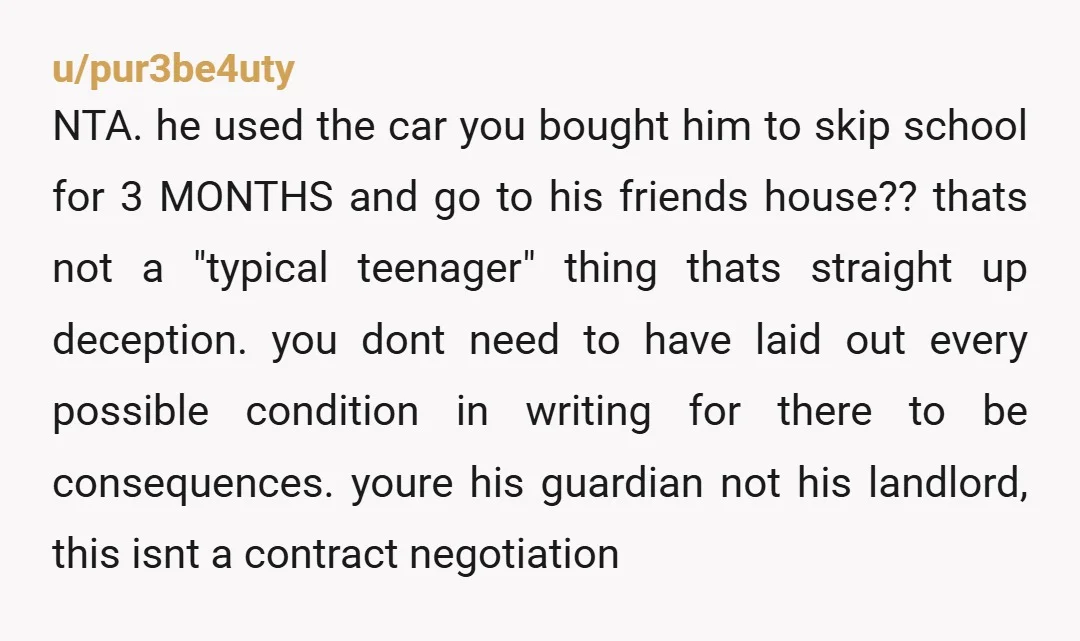
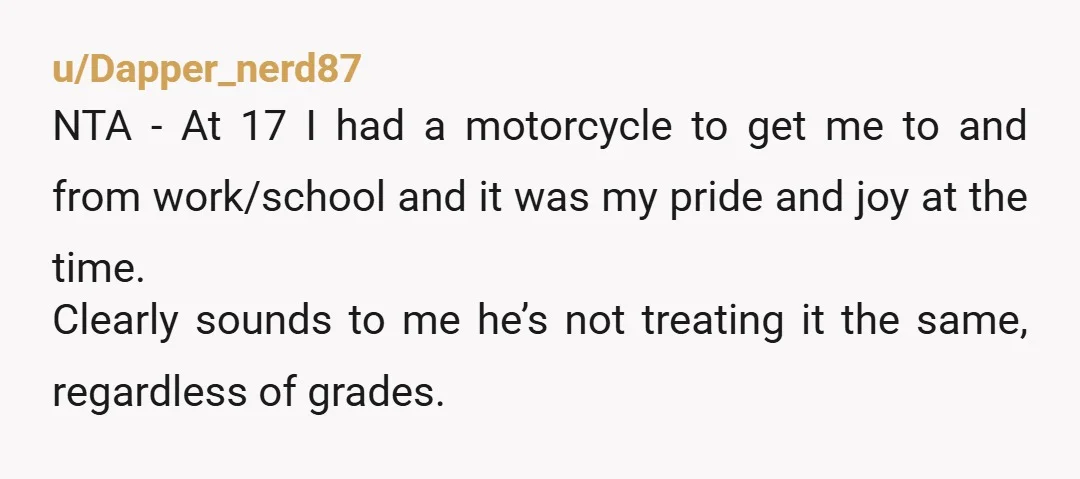
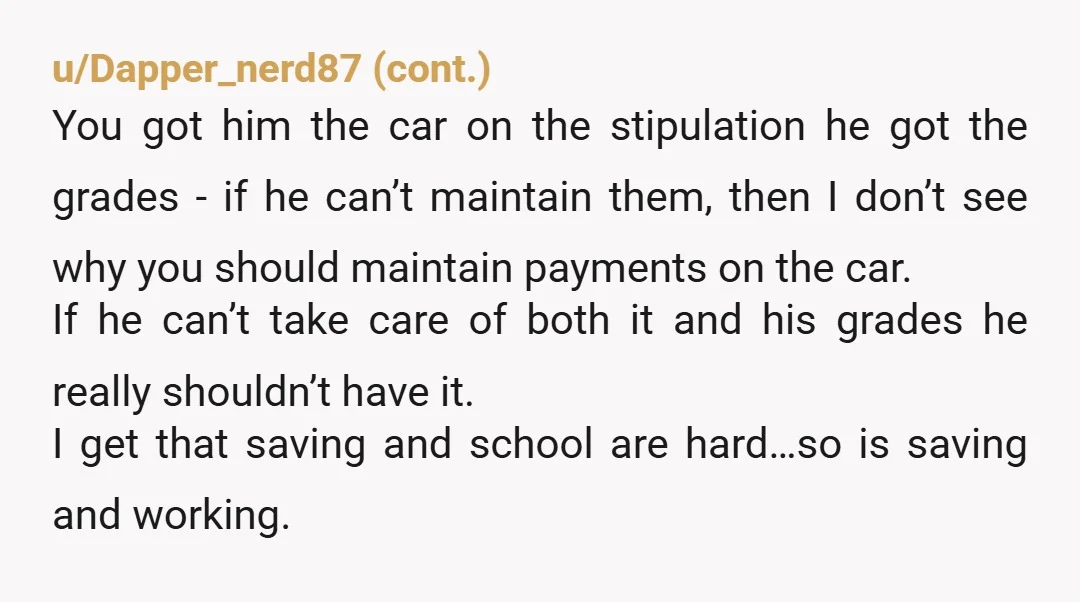

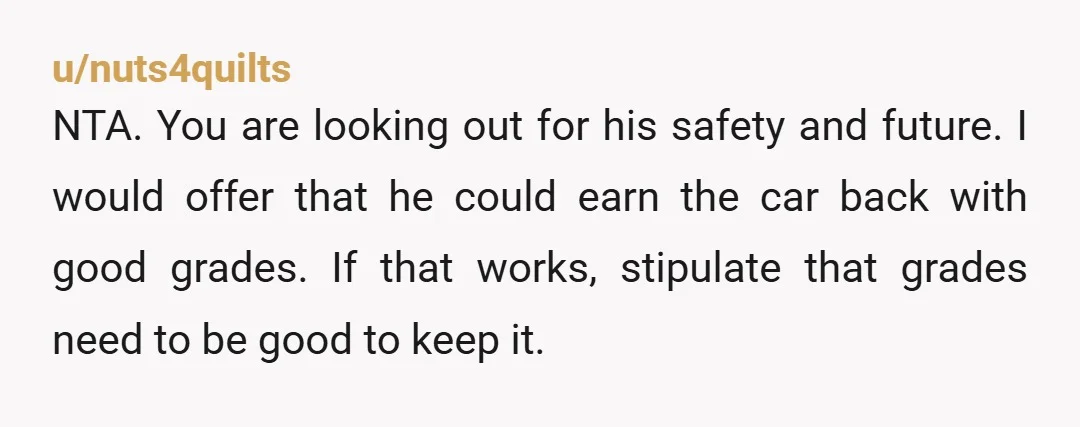





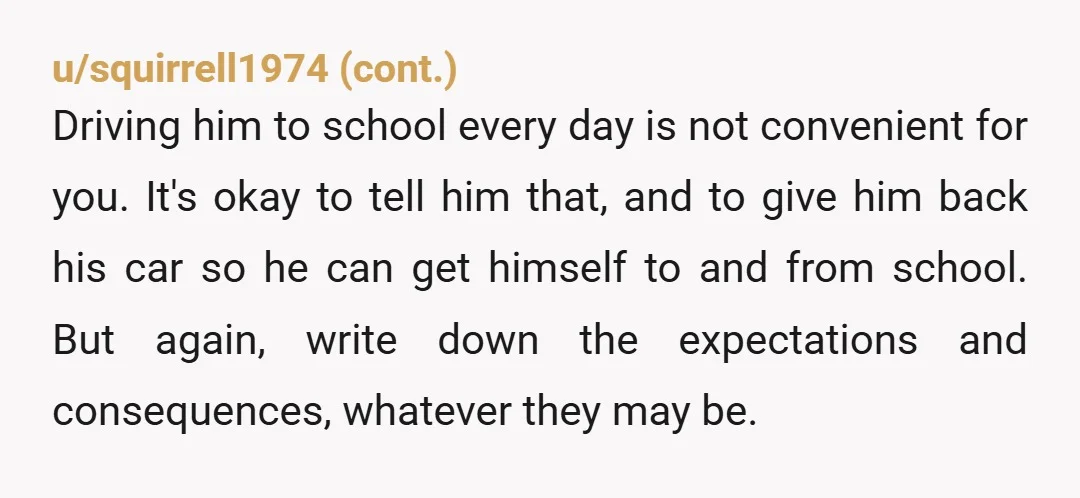
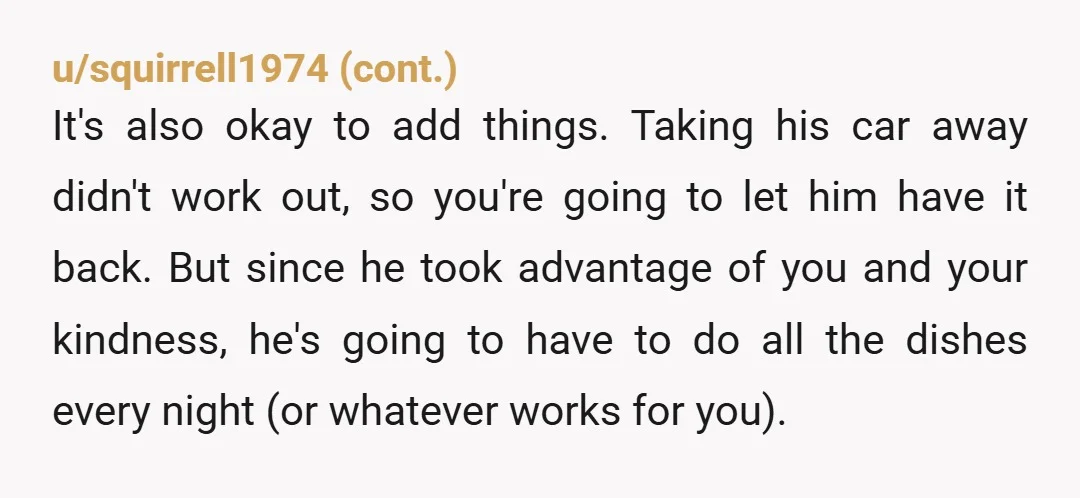


A few empathetic commenters reminded everyone that raising a traumatized teenager is a monumental task that requires immense patience and grace.
Navigating the turbulent waters of teenage rebellion is never a straightforward journey, especially when hard-earned privileges are abused. The clash between a guardian's desperate need for accountability and a teenager's push for unearned freedom highlights the messy reality of setting boundaries.
Do you think the aunt was right to confiscate the vehicle entirely, or did the lack of clear, ongoing stipulations make the punishment unfair? And how would you structure a plan to let the teenager earn his freedom back? Share your hot take below!