
We all know that moment when a relationship ends and the terrifying reality of untangling a shared life sets in. For one woman, a difficult split recently escalated from an emotional struggle into a high-stakes financial battle over a house she doesn’t legally own.
She believed her years of steady financial contributions to her ex-boyfriend’s mortgage earned her a right to the equity, or at least a hefty refund to help pay off her student loans. He saw things very differently, insisting she had essentially just been paying rent.
Now, she is turning to the internet to find out if she has any right to demand her money back, or if her financial safety net was an illusion all along. Curious how it all unfolded? The full story is right below.


The financial dynamic between the couple shifted significantly over their five years together, setting the stage for a messy entanglement.
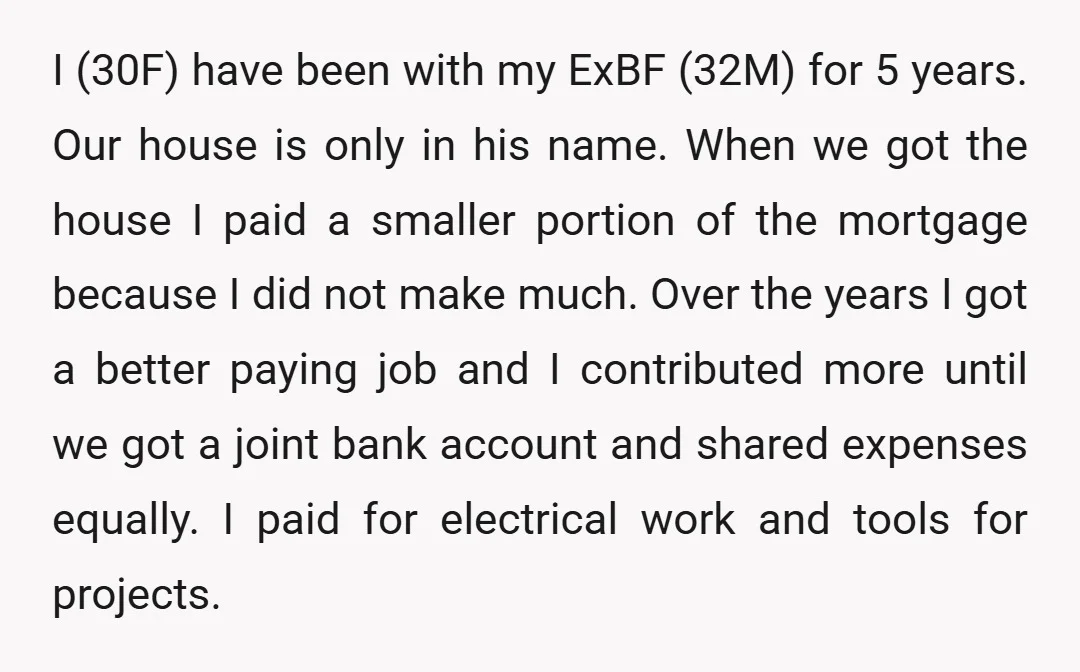
As the reality of the split set in, the conversation quickly pivoted from closure to a tense negotiation over cold, hard cash.
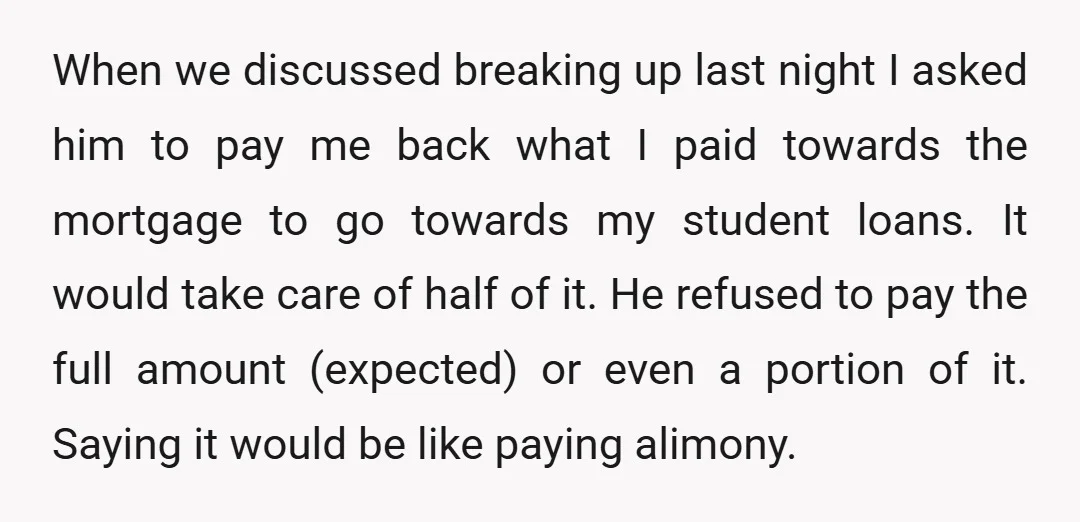
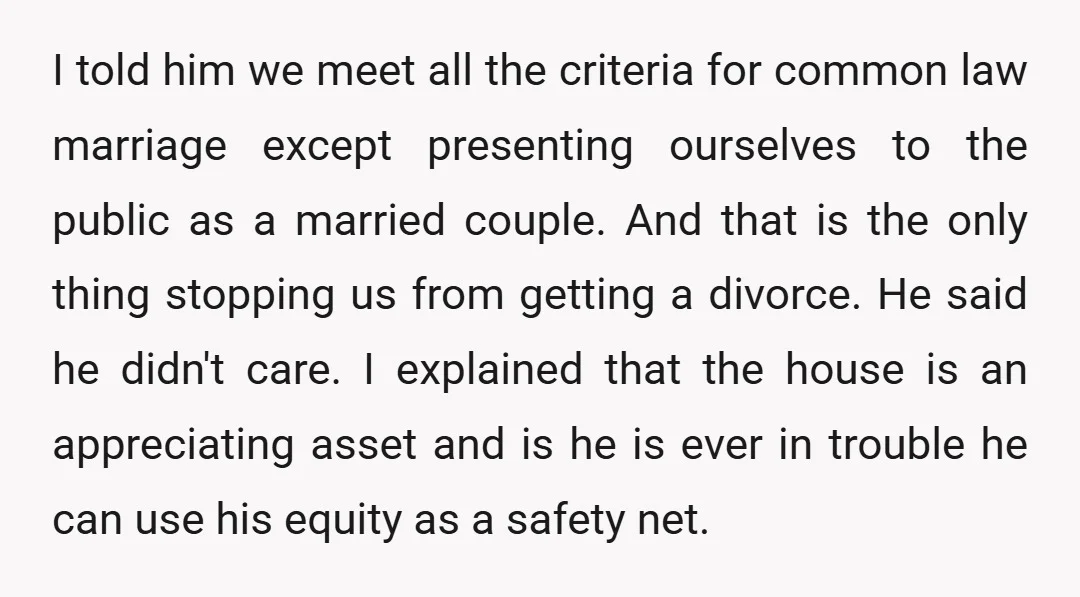

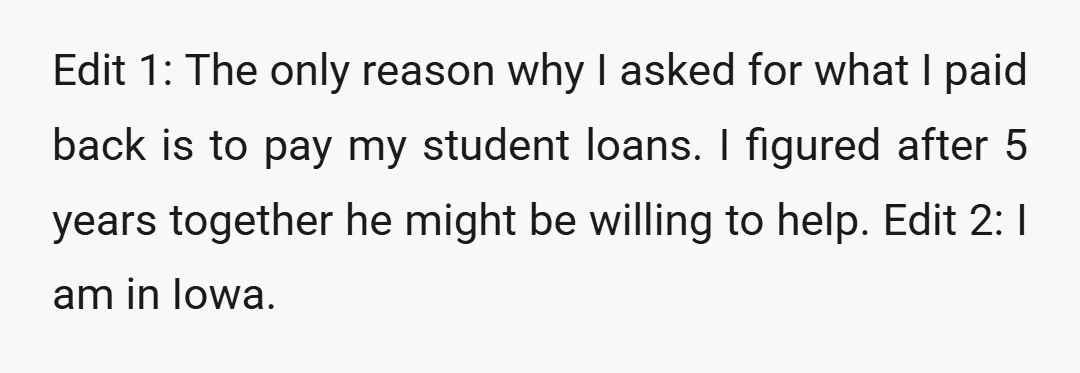
The harsh reality of this breakup highlights a common financial pitfall for unmarried couples, often referred to as the “cohabitation trap.” When partners share a home but only one name is on the deed, the legal and financial boundaries can easily blur over time.
According to legal experts, property laws generally treat unmarried couples as separate individuals with no shared legal rights, regardless of how long they have lived together. Unless there is a written agreement or both names are on the title, the non-owning partner is legally viewed as a tenant, and their mortgage contributions are classified as rent.
While the concept of common law marriage might seem like a loophole, it only applies in a handful of states and requires the couple to publicly present themselves as married—a criterion this author admittedly did not meet. Navigating property splits without prior written agreements usually leaves the non-titled partner with zero leverage.
For anyone moving into a partner’s home, it is crucial to sign a formal cohabitation agreement or keep finances strictly separate. Unfortunately for this woman, her best course of action now is to consult a local attorney to see if she can recoup the costs of the electrical work and tools, and focus on rebuilding her own independent safety net.
Navigating the financial fallout of a long-term relationship is rarely straightforward, especially when legal boundaries clash with emotional expectations. Without formal agreements, what feels like a shared investment often dissolves into a painful lesson in protecting one’s personal assets.
Do you think she is entitled to a partial refund for her contributions, or was she simply paying rent for five years? And should the ex-boyfriend offer help out of moral obligation, even if he isn’t legally required to? Share your thoughts below!
Community Opinions
Reddit came in hot—nearly unanimous in their verdict, with most users blunt about the legal realities of her situation.
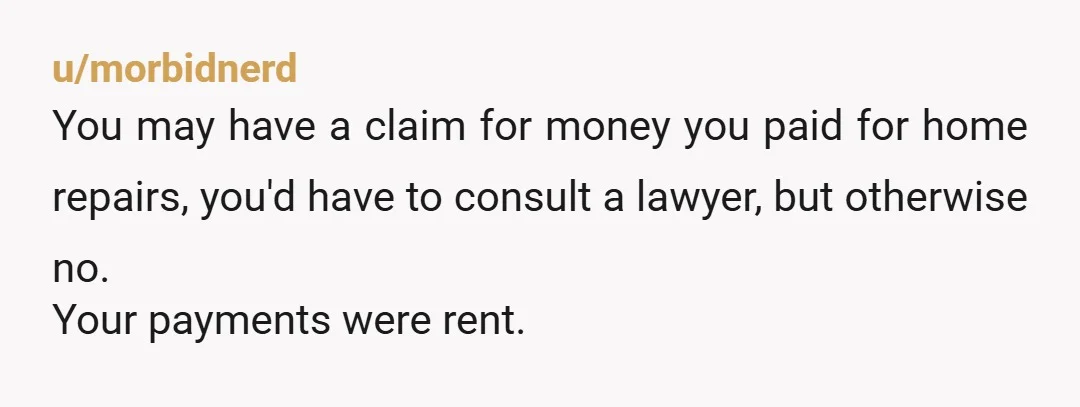
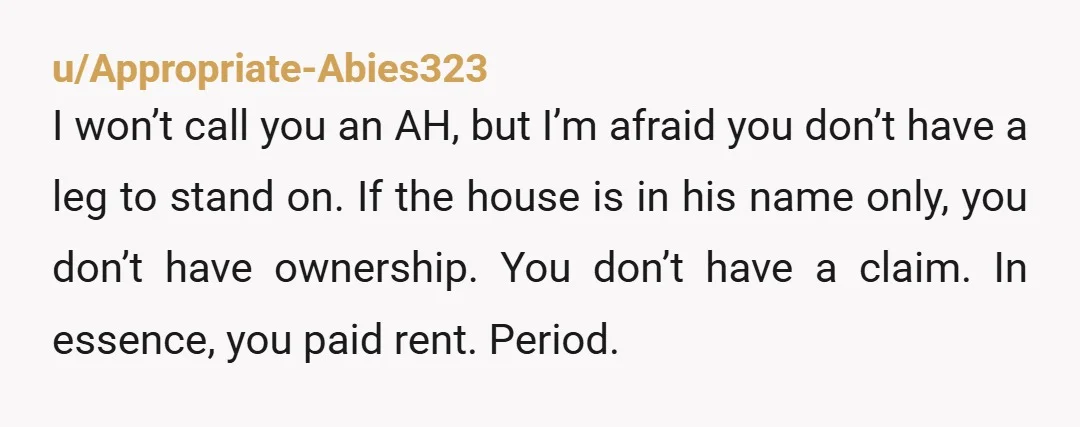
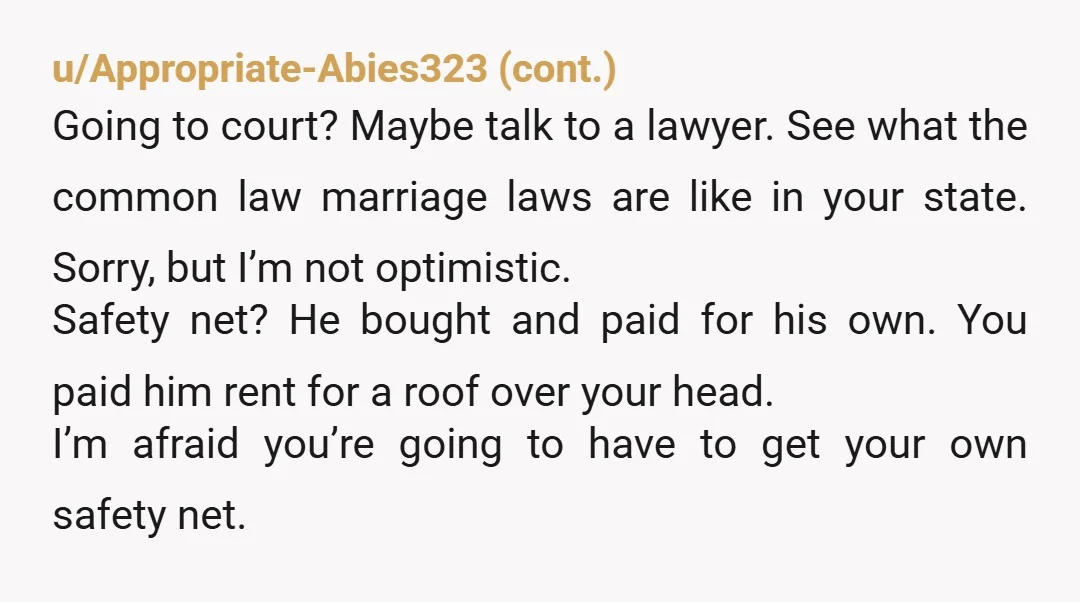
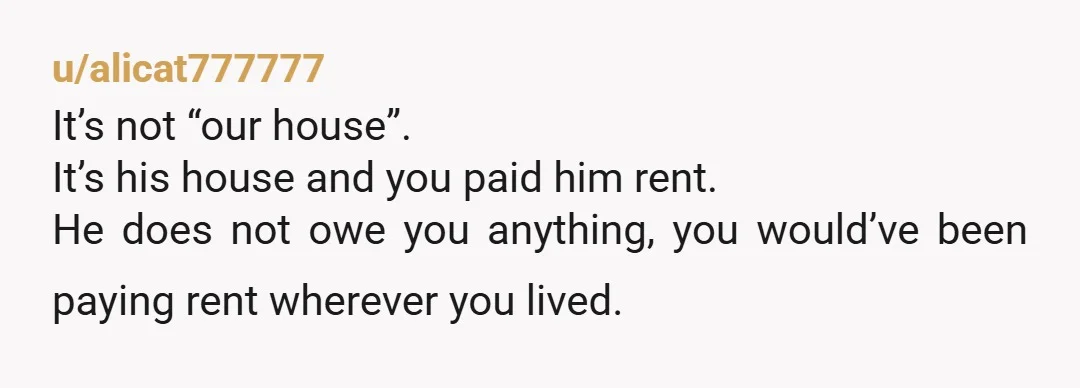
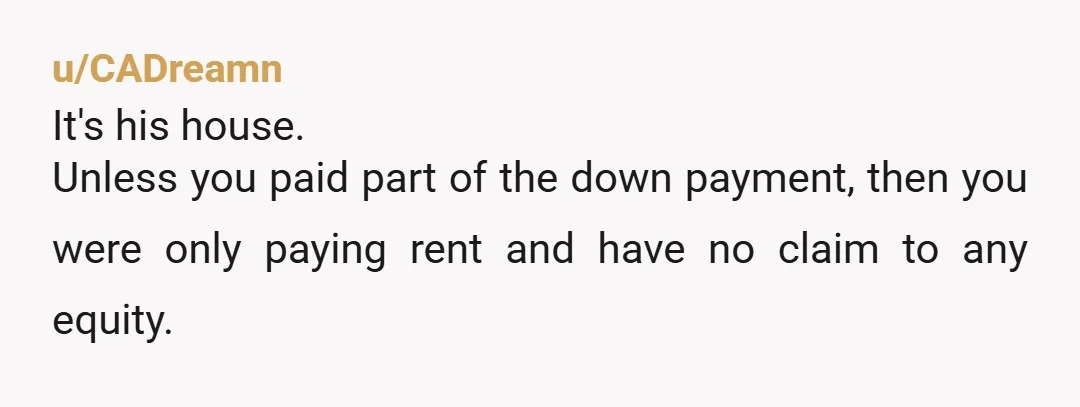
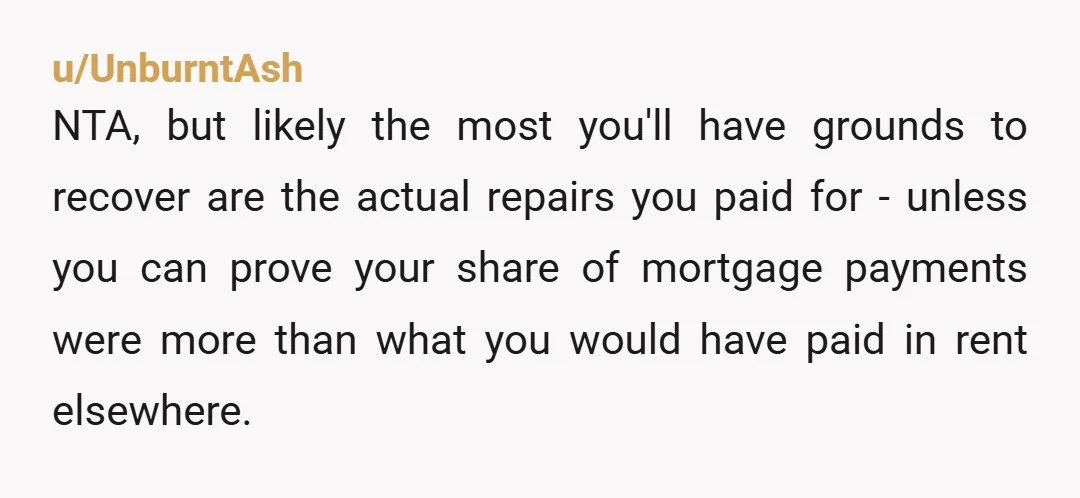
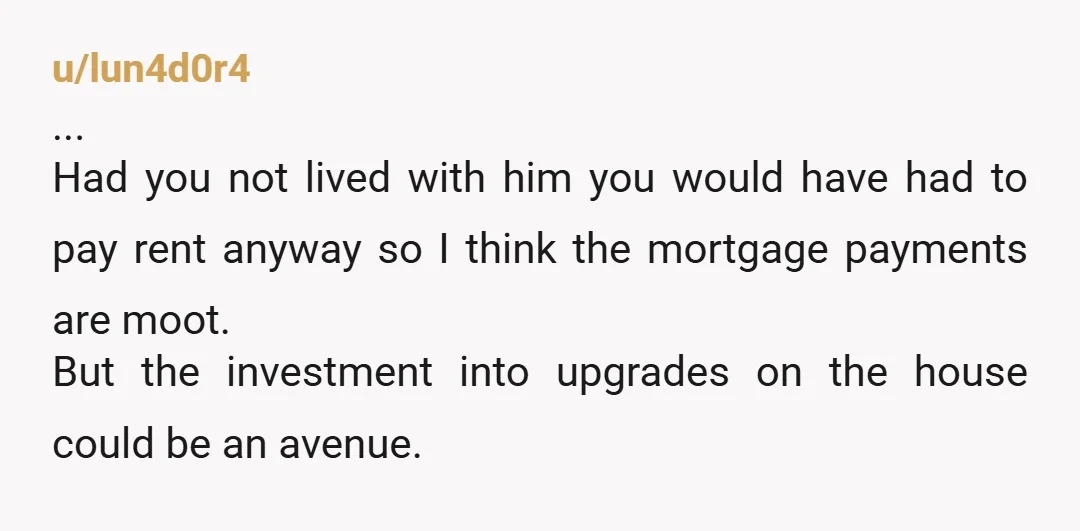

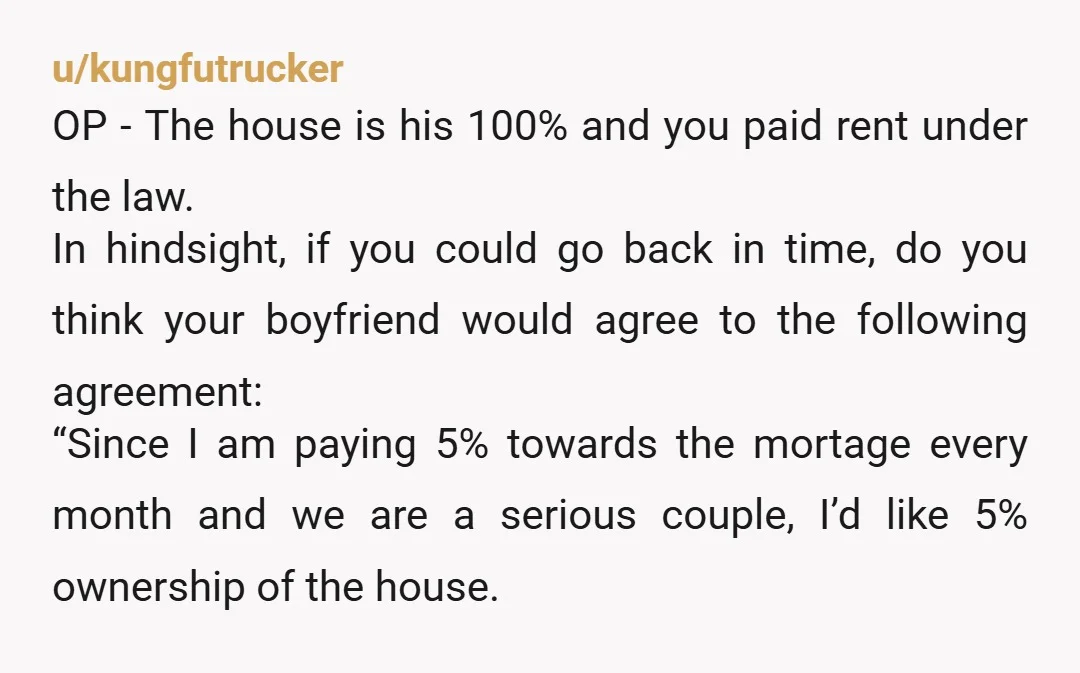
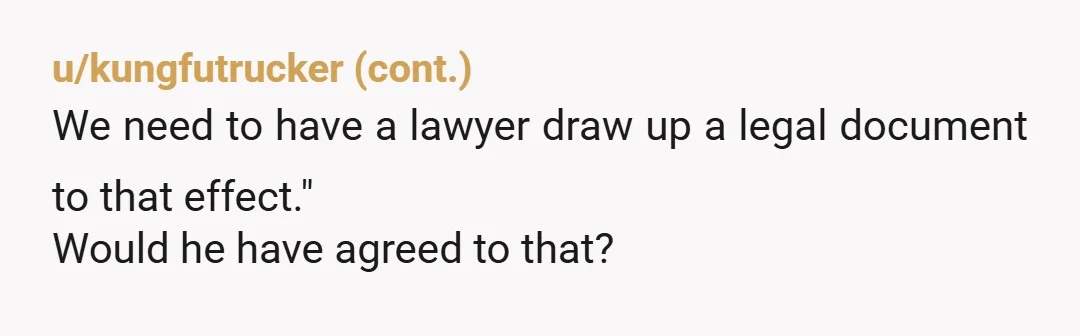


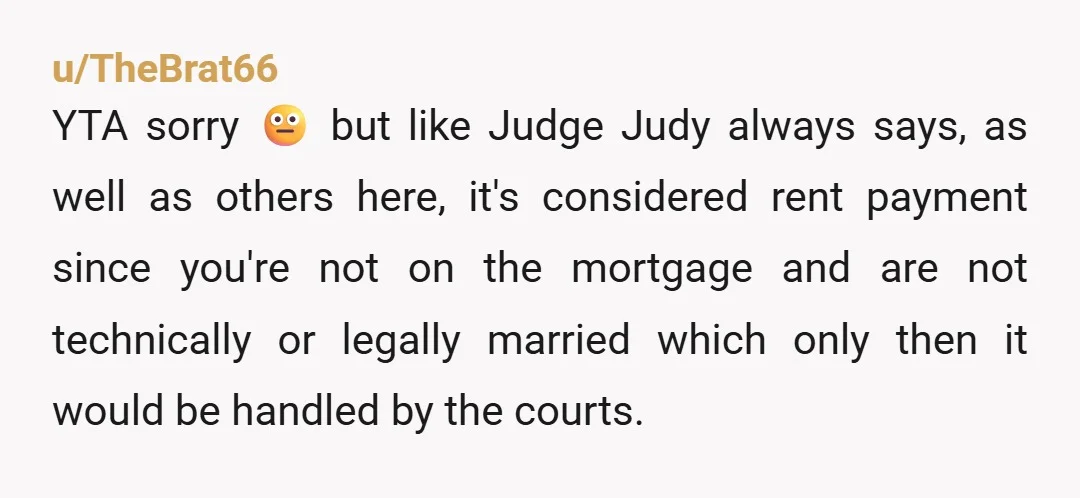
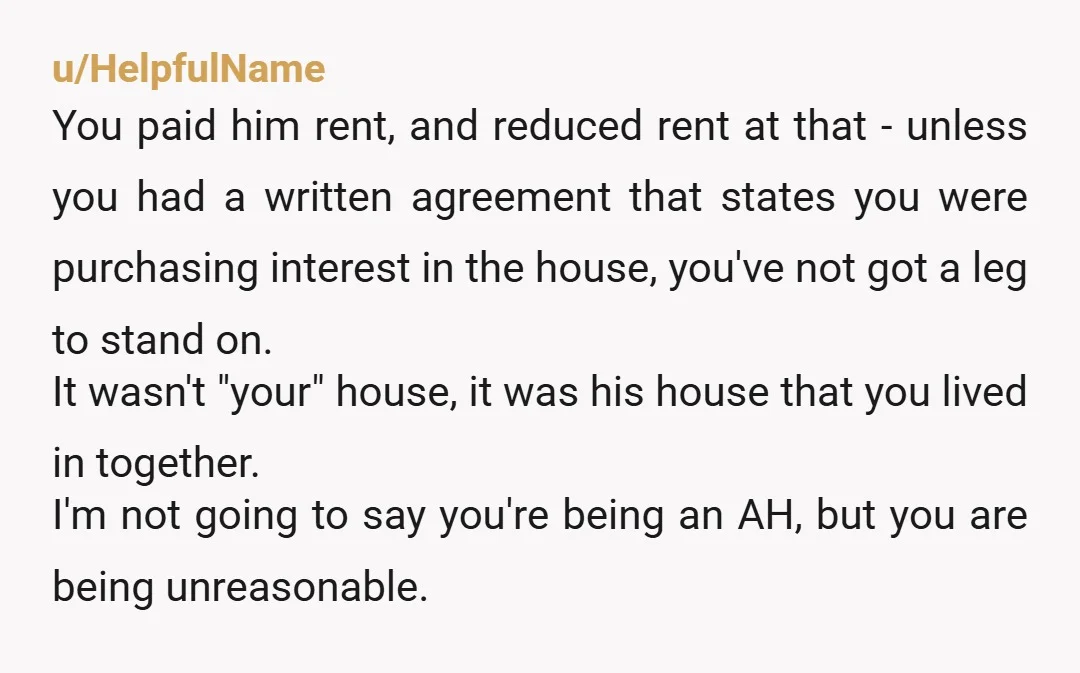

A few commentators gently reminded her that while the situation feels unfair, it is an expensive but valuable lesson in protecting her assets.
Navigating the end of a long-term relationship is devastating enough without realizing your financial safety net belongs entirely to your ex. While her desire to recoup her investment makes emotional sense, the legal reality of property rights paints a much colder picture.
Do you think she has a moral right to get her money back, or was she simply paying rent for five years? And how would you handle shared expenses if you moved into a home your partner owned? Share your hot take below!