
We all know that moment when the sheer volume of tasks on our plate makes us want to scream. For one young data entry clerk handling a relentless wave of newspaper advertisements, that breaking point arrived when her manager demanded the impossible.
Working as the sole administrator for an ever-expanding media company, the twenty-year-old was already drowning in daily deadlines while acting as the office scapegoat for her superior’s frequent errors. When she was suddenly tasked with drafting time-sensitive legal documents on top of her crushing workload, she clearly communicated that she didn’t have the capacity.
Instead of offering support, her boss simply laughed and told her to figure it out. What followed was a masterclass in malicious compliance and the sudden discovery of a perfectly timed, terrifying glare. Curious how the deadline disaster ultimately unfolded? The full story is right below.


Setting the stage in a rapidly expanding media office, this young employee quickly found herself shouldering the operational weight of multiple regional branches. Managing the influx of data for a growing number of acquisitions meant her daily responsibilities were already stretched to their absolute limit.
The stark contrast between a desperate plea for workload management and a dismissive chuckle laid the foundation for an inevitable clash. When leadership ignores clear communication about capacity limits, it forces employees to prioritize their core responsibilities over sudden, unmanageable demands.
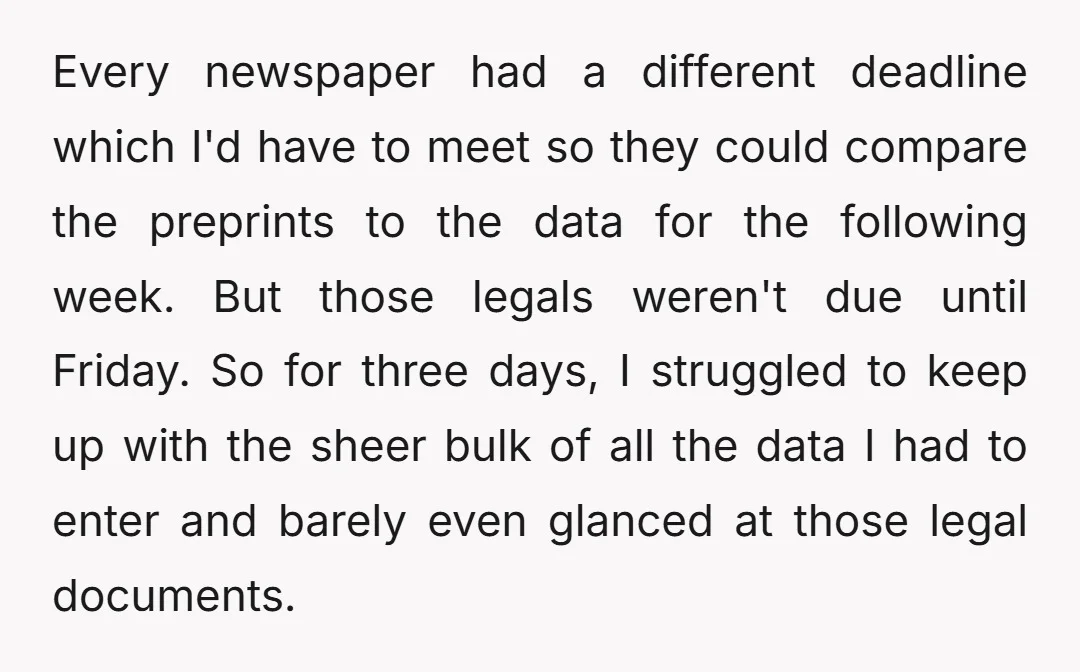
With the clock ticking past the notary’s operating hours, the consequences of ignoring an employee’s boundary finally materialized in the middle of the office. A missed deadline transformed a routine Friday afternoon into a frantic scramble for the manager who refused to listen.
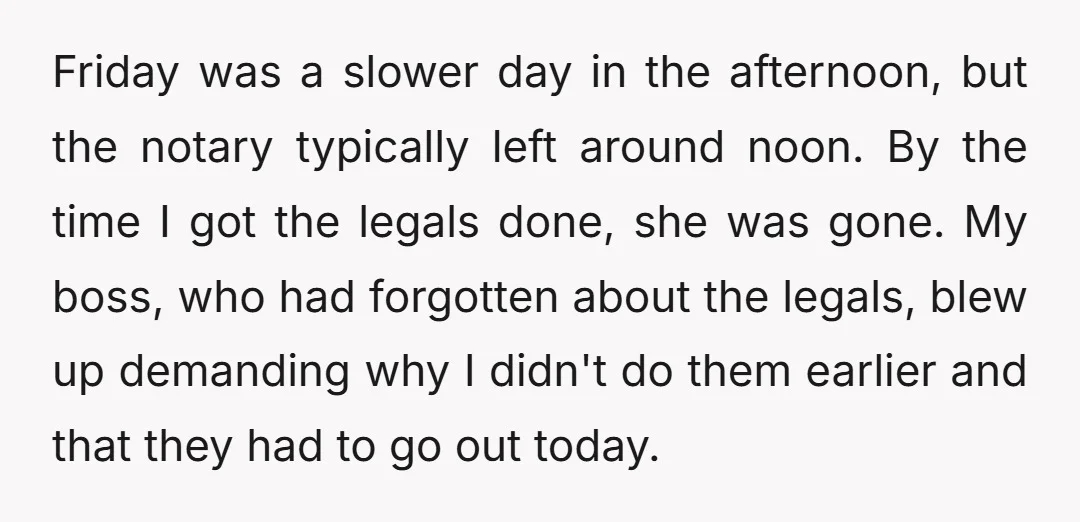
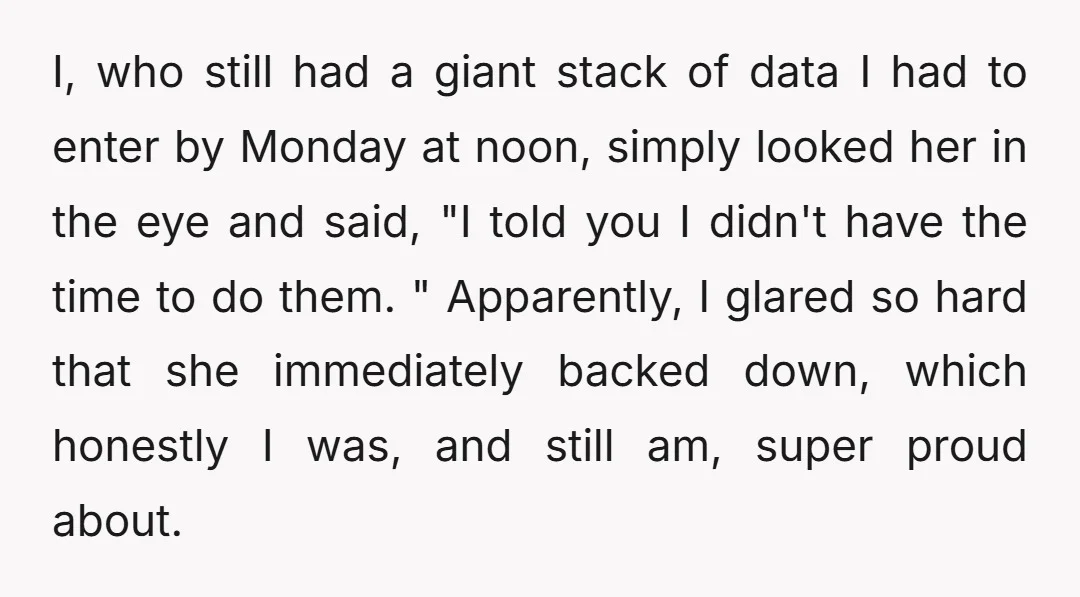

It is easy to cheer for a perfectly timed glare, but beneath this satisfying moment of defiance lies a profound story of employee exhaustion. For a twenty-year-old carrying the operational weight of multiple regional offices, the emotional toll of being the constant scapegoat is staggering.
When an employee clearly communicates that they are drowning, and leadership responds with a dismissive laugh, it shatters any sense of psychological safety. The boss, likely feeling the pressure of a rapidly expanding company, chose to deflect her own stress onto her youngest subordinate instead of managing the workload. Workplace psychology research consistently shows that employees who establish clear workplace boundaries are significantly less likely to experience burnout.
For young professionals caught in similar traps, documenting your capacity in writing rather than just verbally can force management to acknowledge the reality of the situation. For leaders, the lesson is simple: when your team says they are out of time, listen before you laugh. Check out this similar story about enforcing boundaries if you want to see how other employees handle toxic management.
Community Opinions
Reddit came in hot, nearly unanimous in their applause for the young assistant, with many sharing their own tales of surviving unreasonable management.









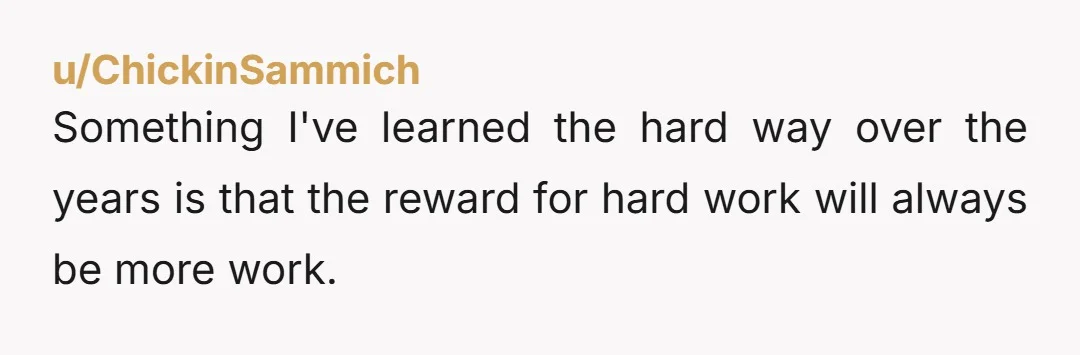
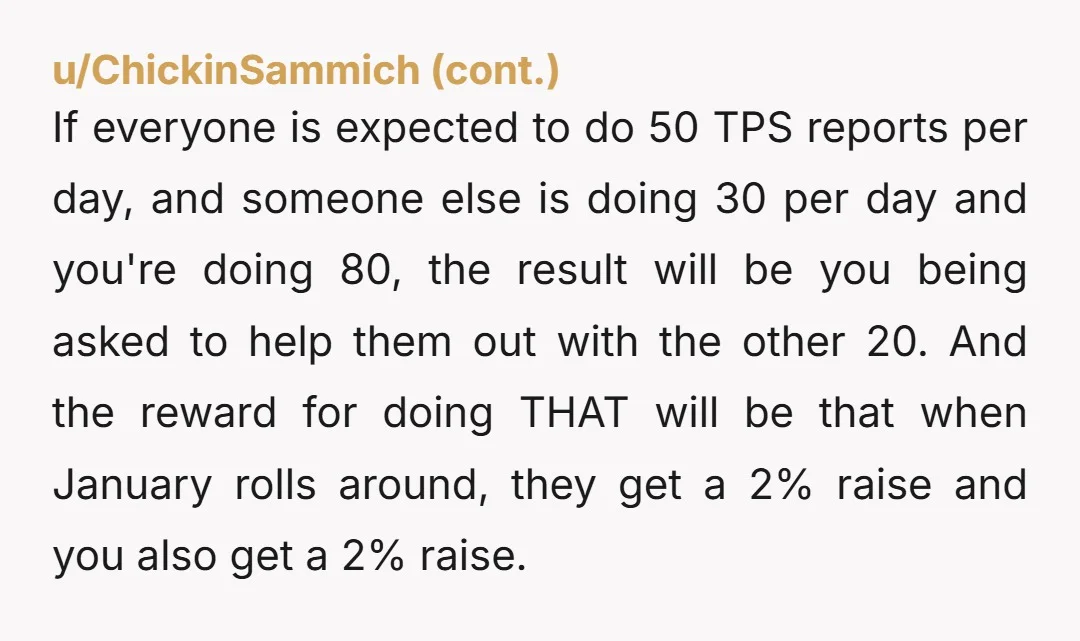
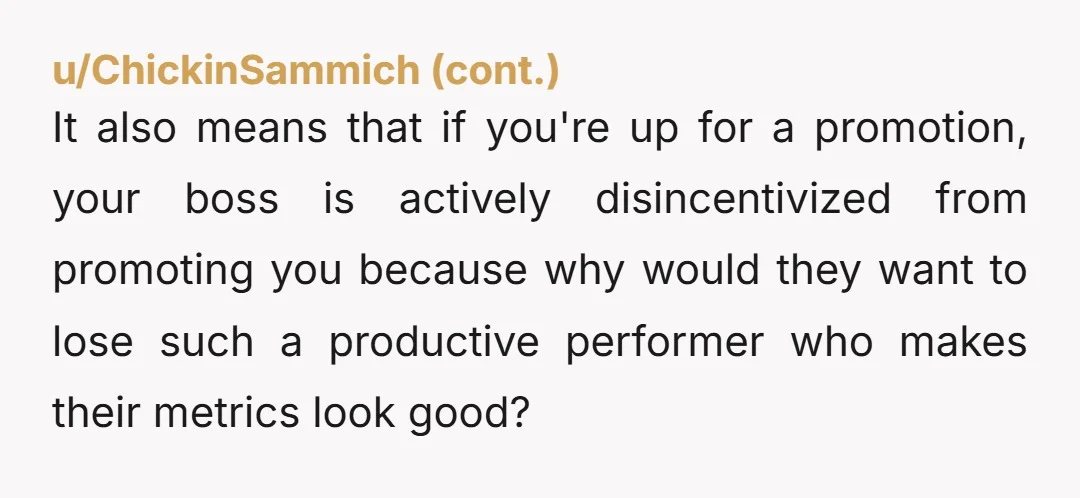



A few seasoned professionals even pointed out that learning to say no early in your career is a superpower that takes most adults decades to master.
When the dust settles on a Friday afternoon, sometimes the only thing left to do is let the chips fall where they may. Setting firm professional boundaries is rarely easy, especially when you are the youngest person in the room facing down a seasoned manager.
Do you think the assistant was right to let the deadline pass, or did her boss deserve a little more grace during the company’s rapid expansion? And if you were handed an impossible task with a dismissive laugh, how would you handle it? Drop your thoughts in the comments.