
We all know that moment when the prospect of family holiday drama feels more exhausting than the event itself. For one woman, the annual tradition of forced cheer, repetitive meals, and mildly awkward conversations took a sharp and completely bizarre detour when she received an unexpected phone call.
She had always assumed her partner of four years was a welcomed, established guest at their parents’ dining table. After all, they had attended these gatherings for years without a single complaint ever being voiced to her face. But a sudden, last-minute request from her sibling threw a massive wrench into the seasonal festivities, putting her relationship squarely on the chopping block.
What started as a vague complaint about the vibe quickly unraveled into a secret grudge held over a deeply trivial interaction from months ago. Instead of celebrating, she found herself fending off accusations of ruining the holidays simply because she refused to leave her partner behind. Curious how this tense family standoff actually unfolded? The full story is right below.


The stage was perfectly set for yet another completely ordinary, mildly uncomfortable family gathering.
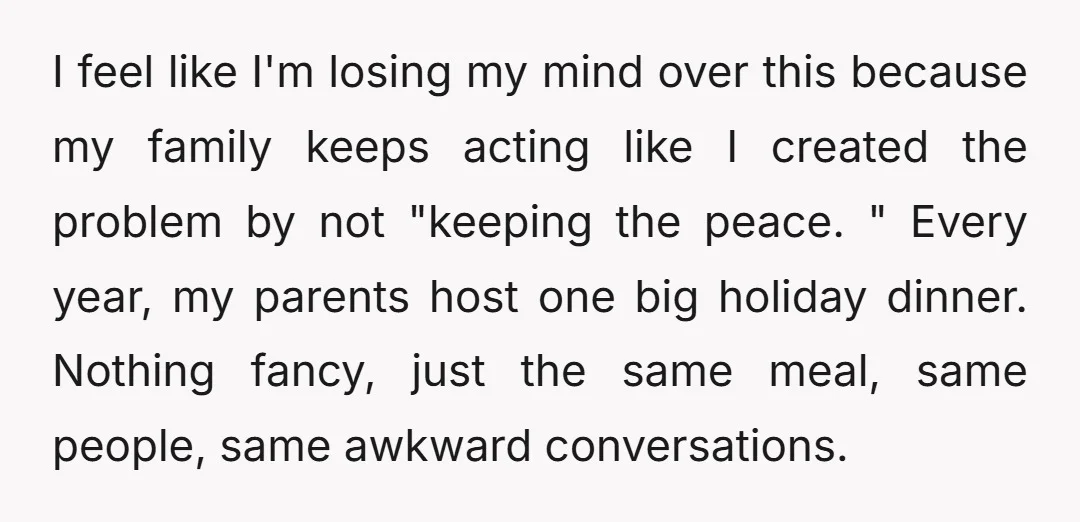
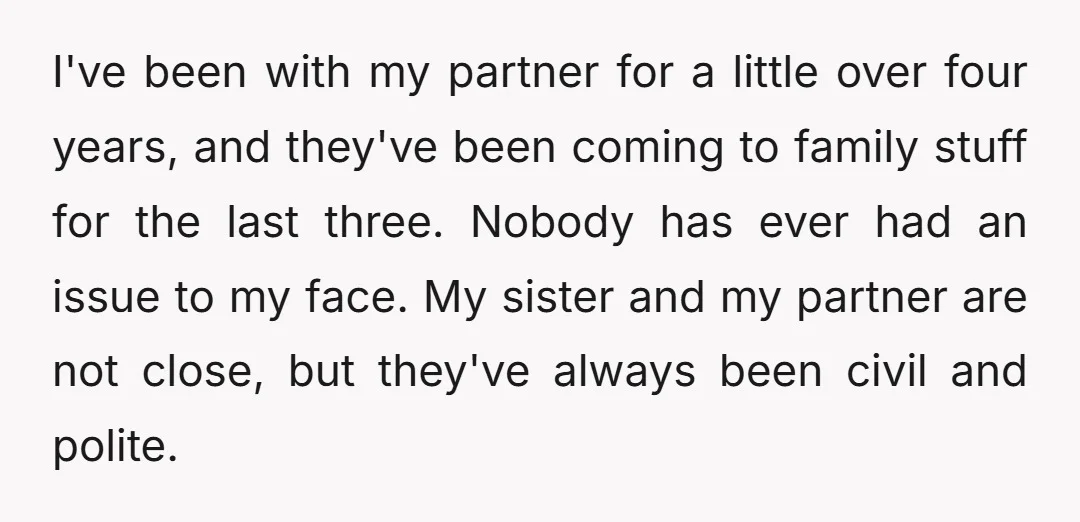
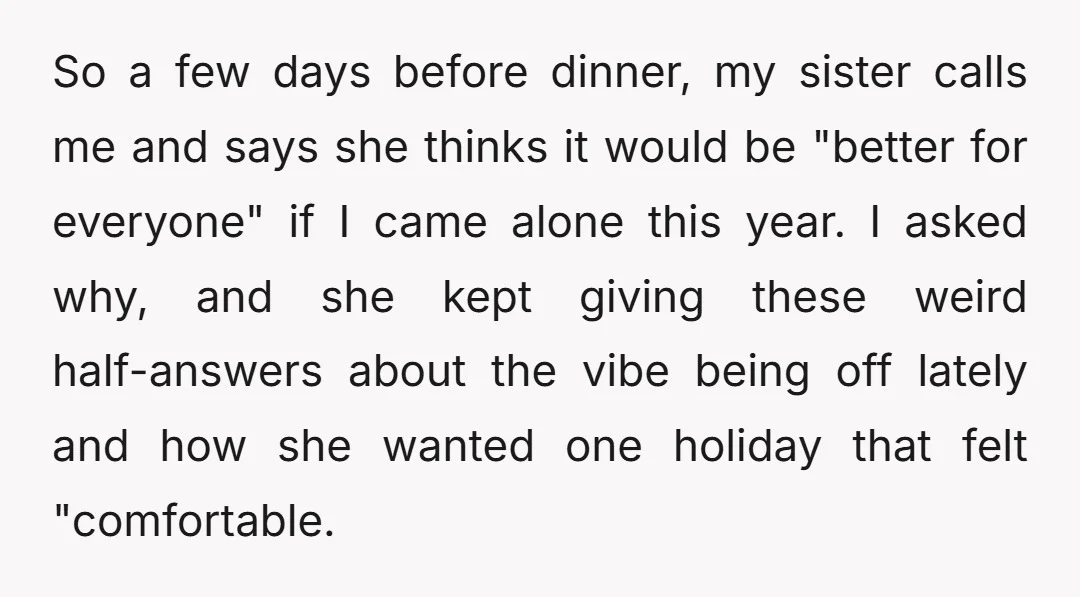
What was supposed to be a minor bump in the road had secretly festered into a full-blown sibling vendetta.
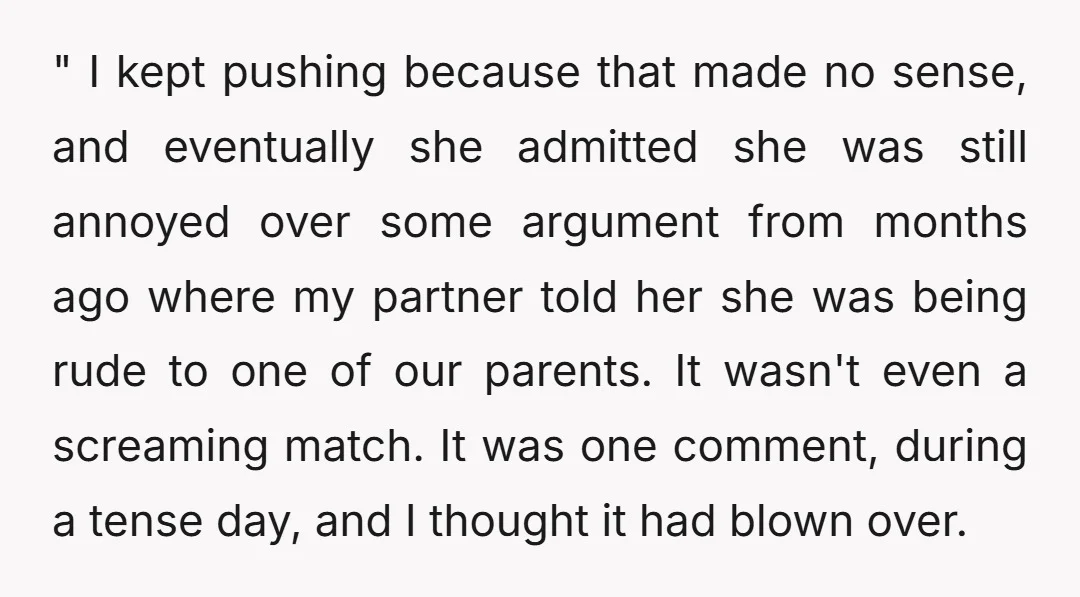
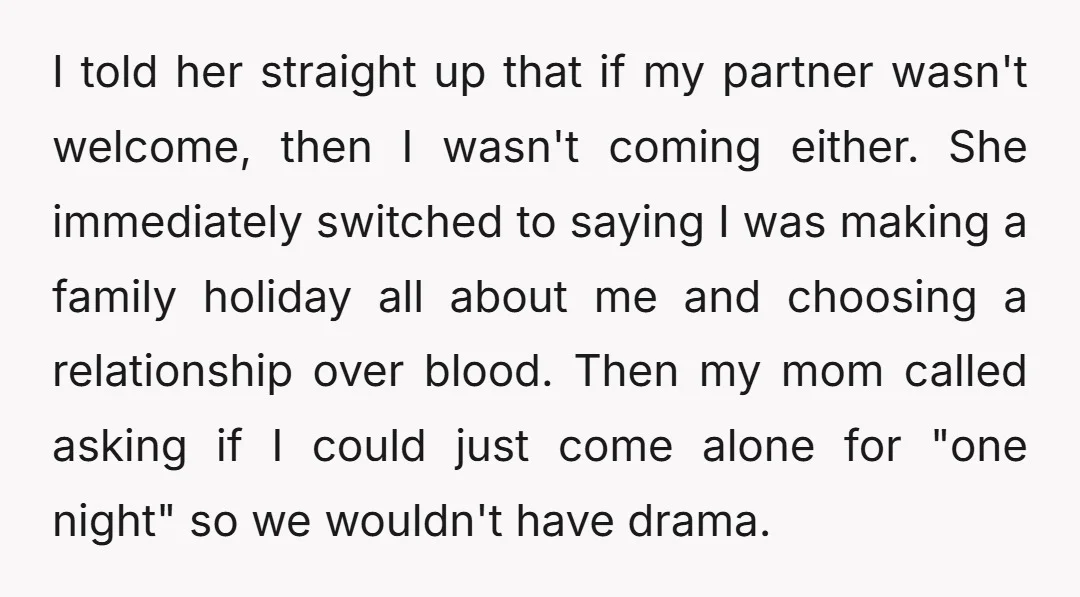
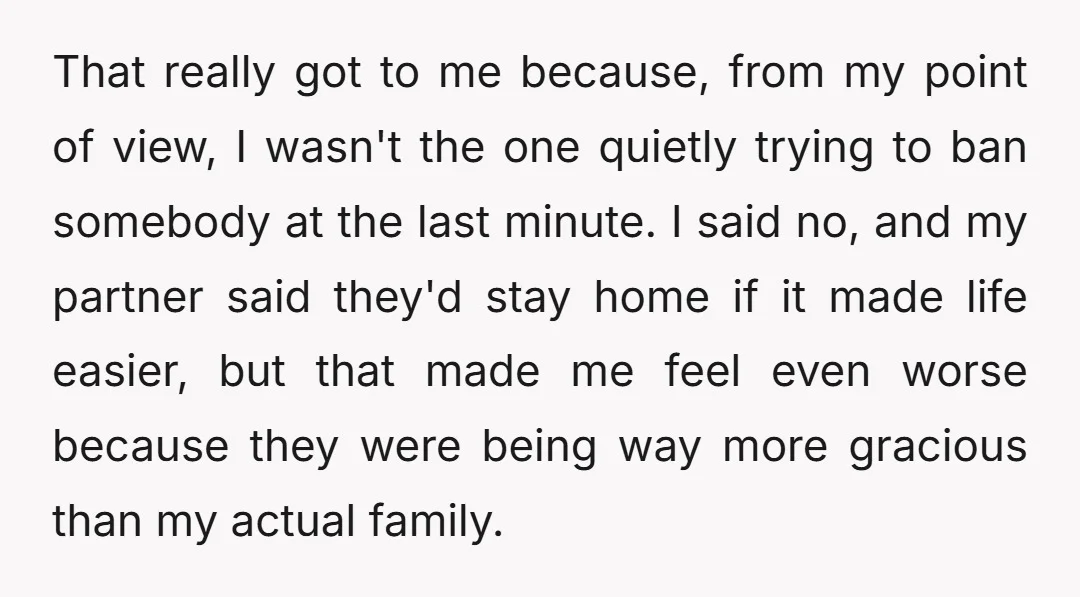
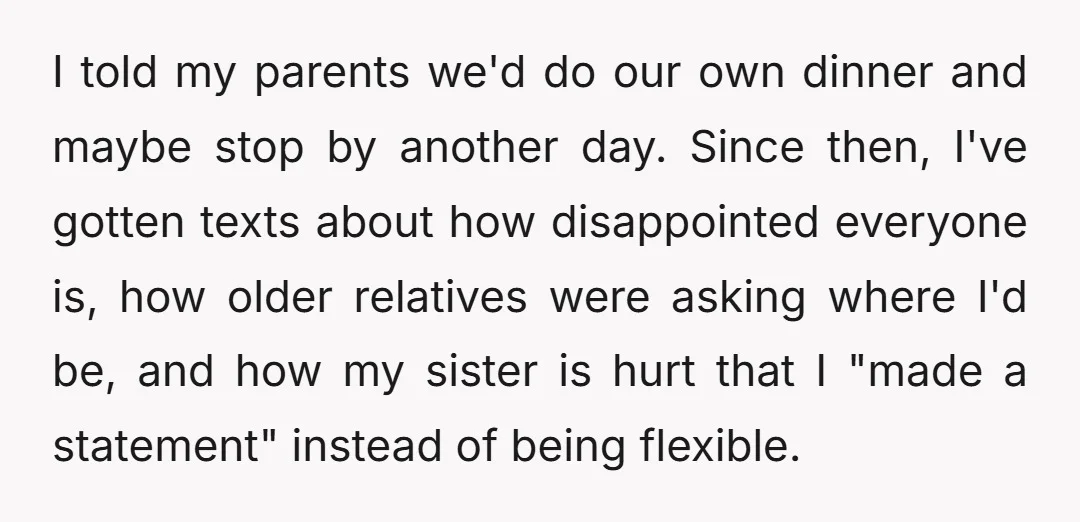
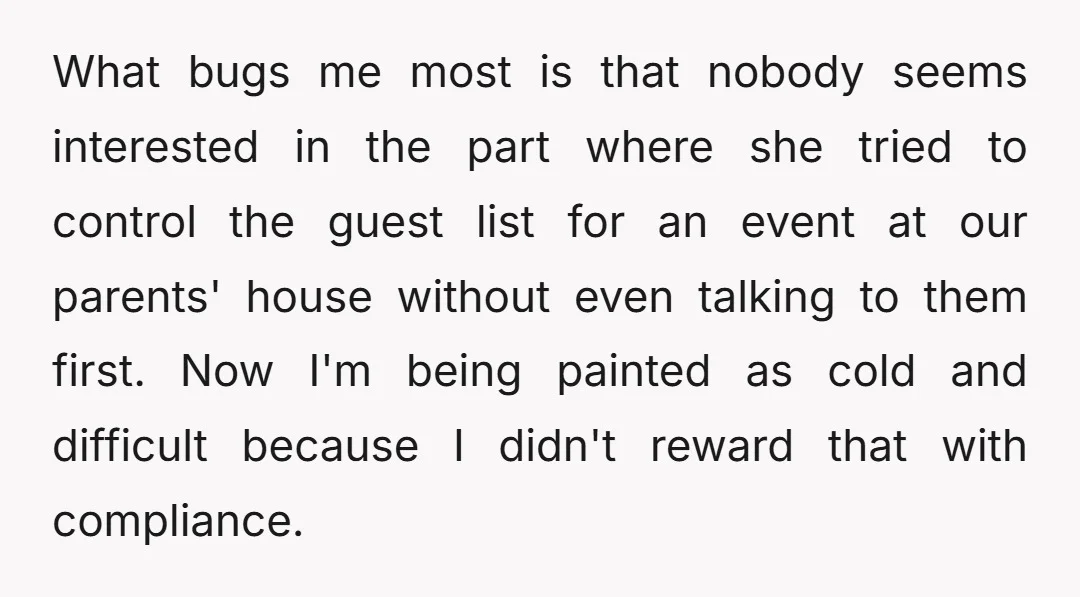
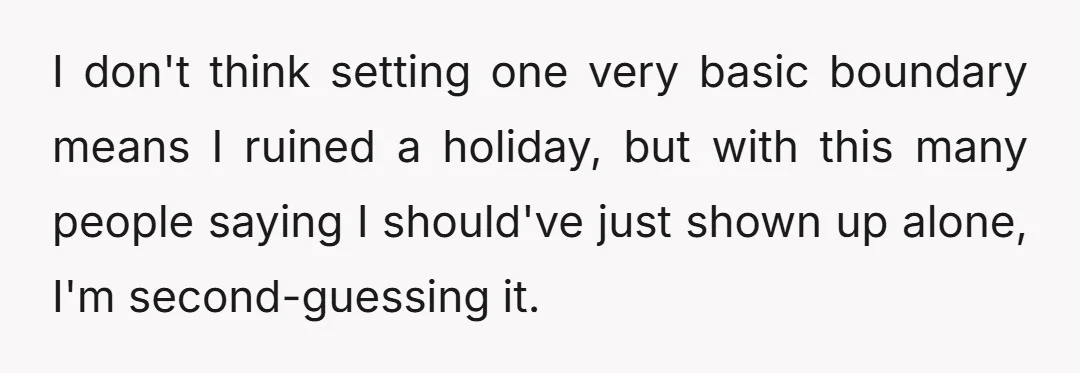
It is incredibly common to feel like the villain when disrupting a long-standing family ecosystem, especially during the holidays. This scenario perfectly illustrates the pressure of the toxic peacekeeper dynamic, a pattern where families unconsciously protect the most volatile member at the expense of the most reasonable one.
Instead of addressing the sibling’s inappropriate and highly unusual gatekeeping, the parents instinctively lean on the author to bend. According to the general consensus among licensed family therapists, when families demand that a member abandon their personal boundaries simply to avoid a tantrum, they are prioritizing superficial comfort over genuine, healthy connection.
The sister’s attempt to orchestrate the guest list for a house she doesn’t even own is a classic control tactic, cleverly masked as a plea for a comfortable vibe. By asking the author to show up alone, the parents are essentially asking her to validate her sister’s grudge, rather than mediating the conflict like objective hosts.
Furthermore, accommodating this kind of exclusion rarely stops at just one dinner. If the boundary isn’t held now, it establishes a precedent that the partner is an optional accessory rather than an integrated family member. For anyone caught in this complicated web, the healthiest path forward is exactly what was demonstrated here: holding firm.
Experts routinely suggest calmly reiterating to the parents that enabling bad behavior only guarantees its repetition at future milestones. The author could simply communicate that they will not participate in excluding a loved one to appease an unresolved grudge.
Navigating family expectations during the holidays is rarely simple, especially when old resentments bubble to the surface. Setting a firm line in the sand often forces everyone to confront uncomfortable truths about how they manage conflict.
Community Opinions
Reddit came in hot with a nearly unanimous verdict supporting the original poster, as many praised her refusal to bow to emotional blackmail.
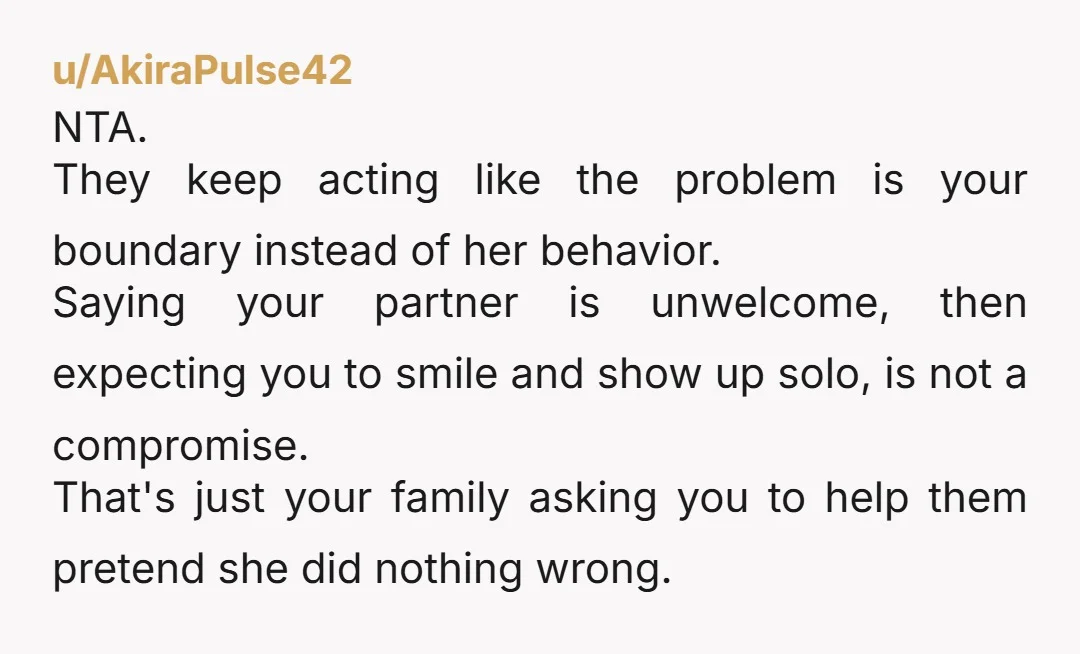
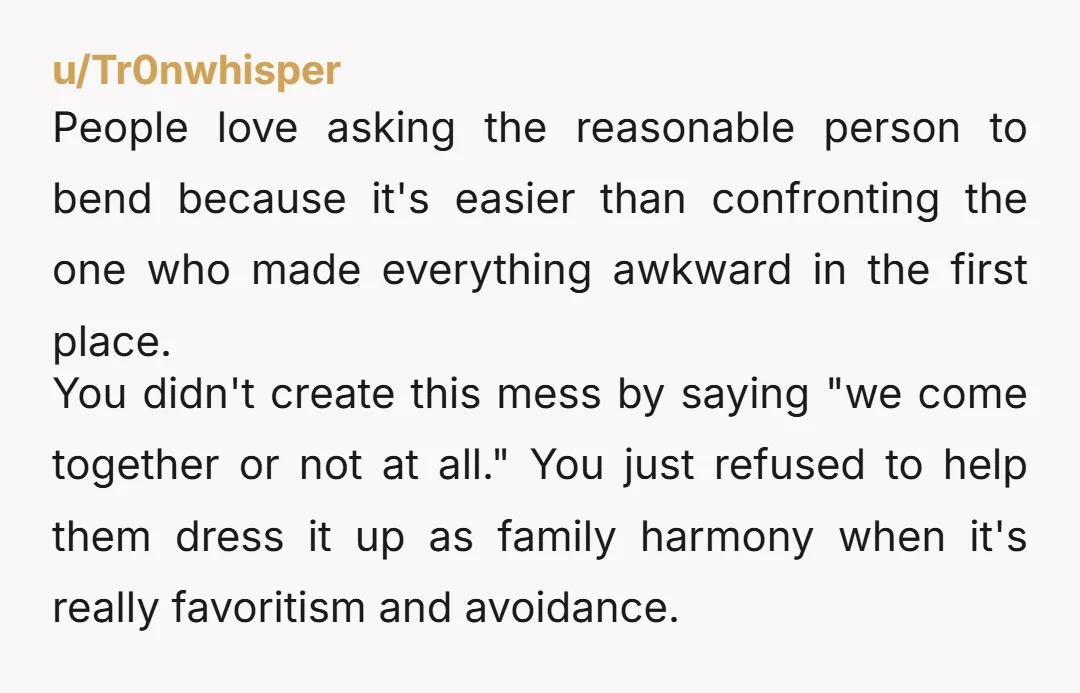
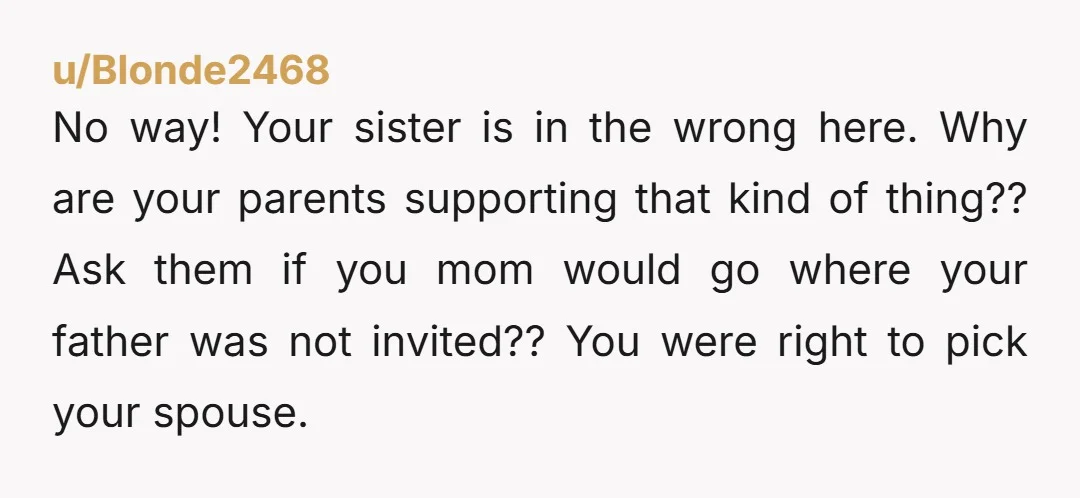
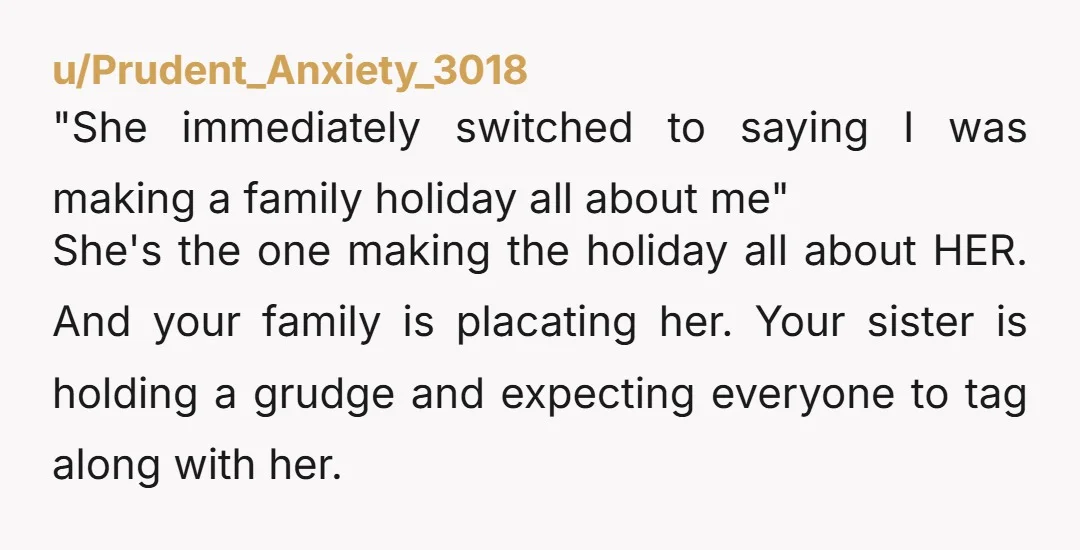
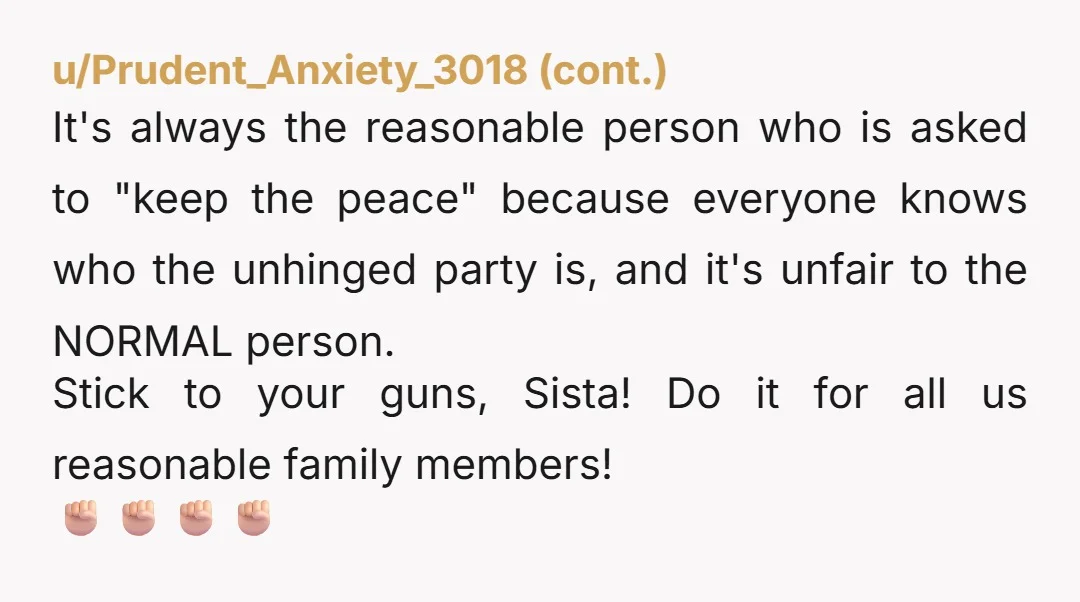
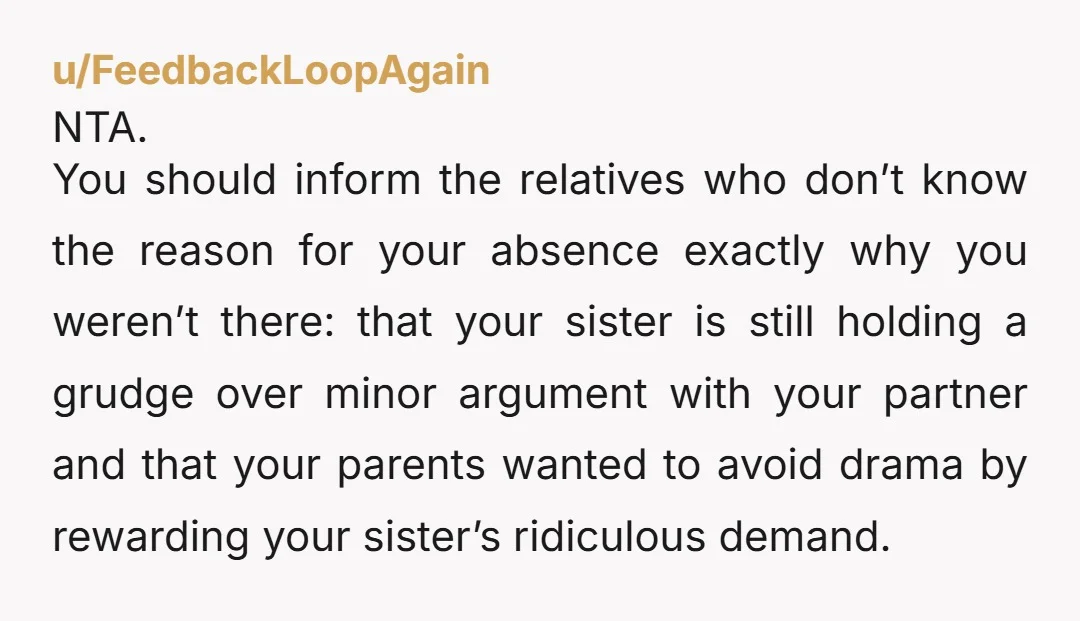
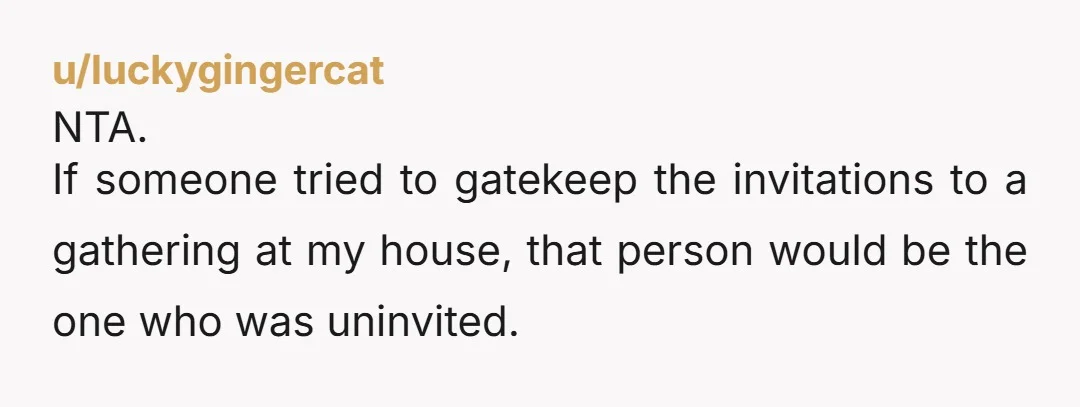


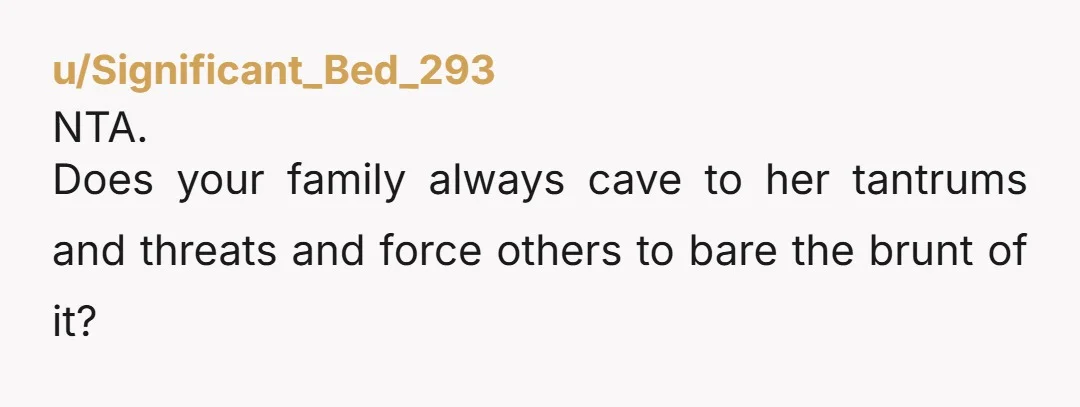
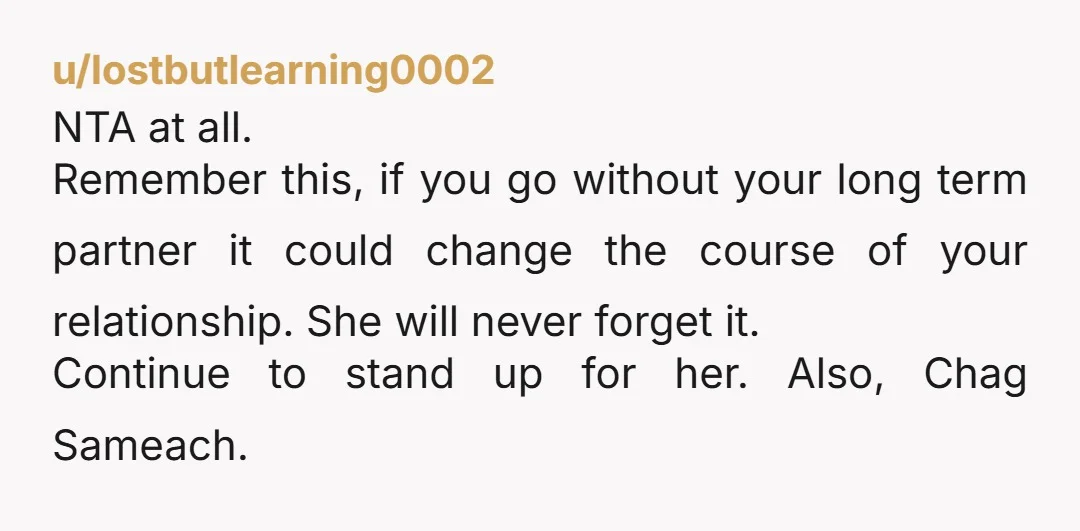

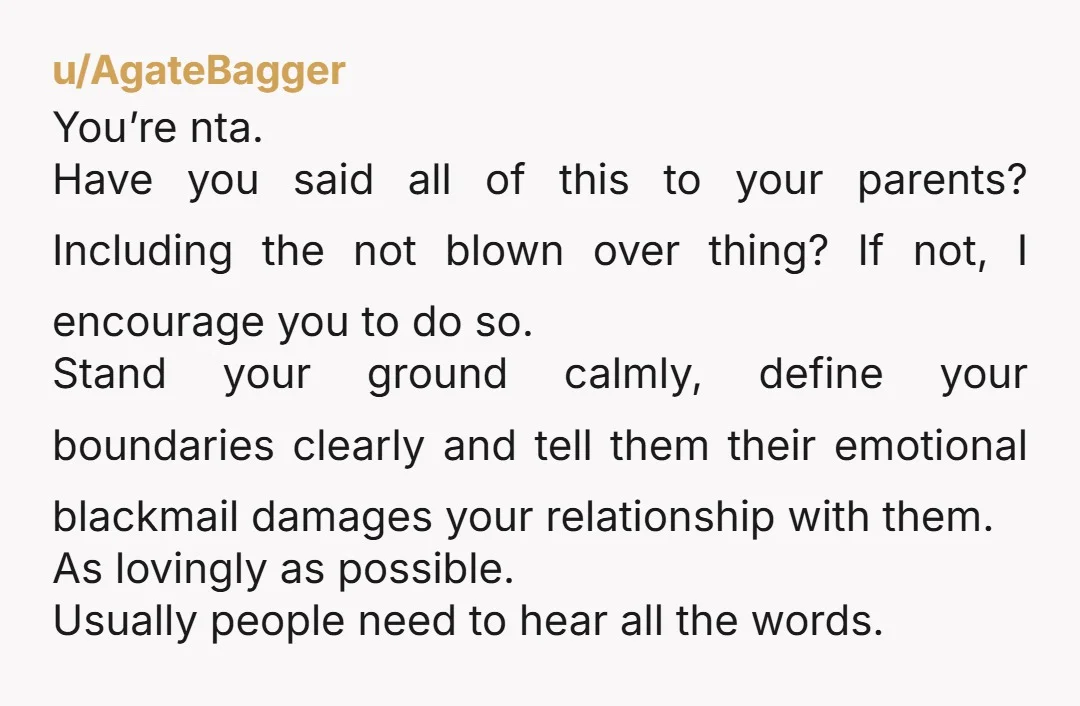
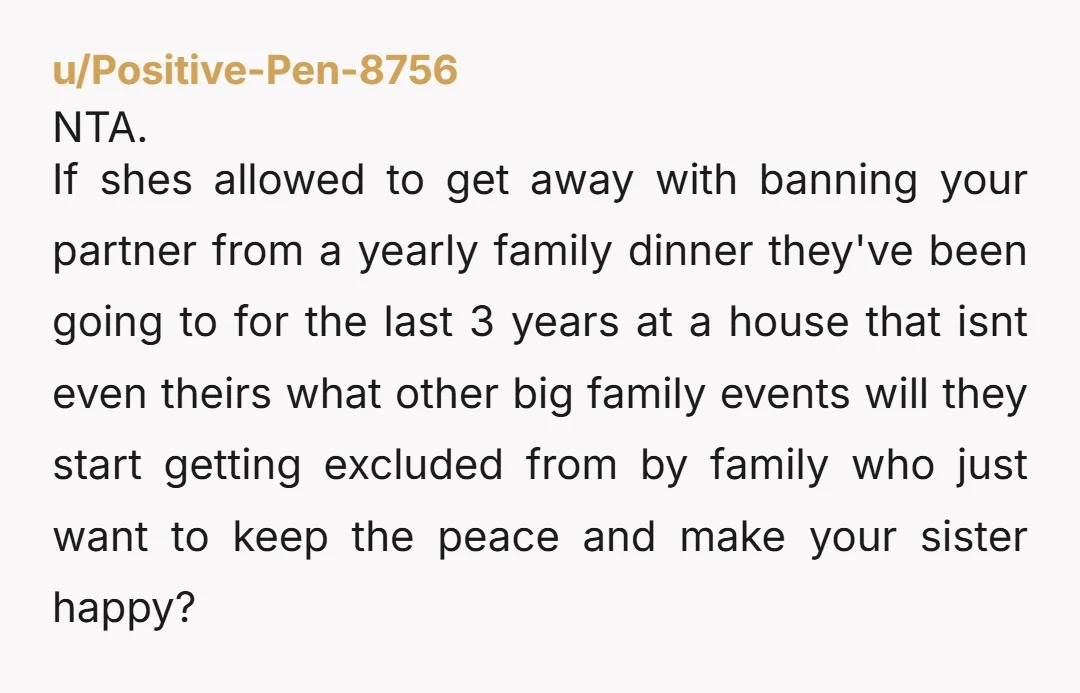
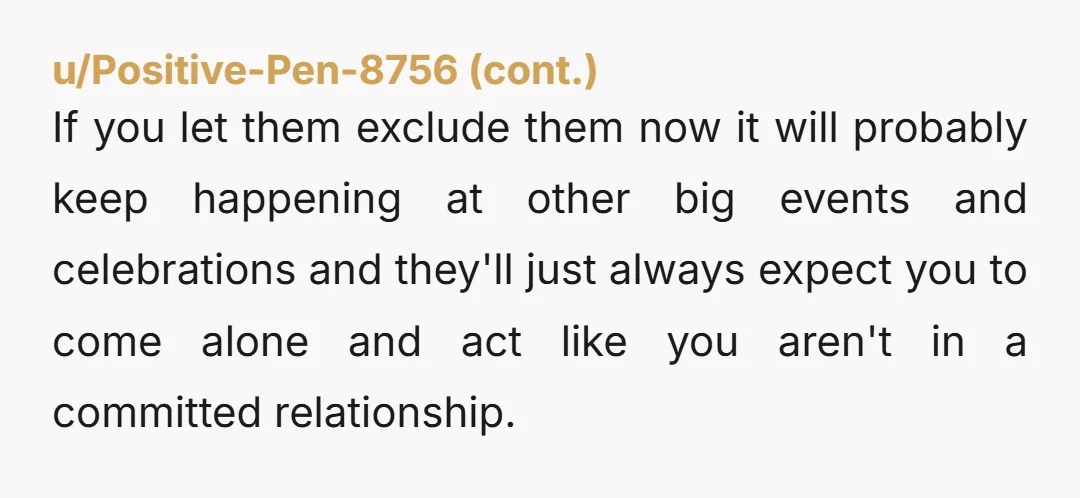
A few commenters even noted the grim reality that caving to these demands often causes irreparable damage to the romantic relationship itself.
Navigating the delicate, often frustrating balance between childhood ties and adult relationships is never a simple task. While some individuals might argue that compromising for just one night is a relatively small price to pay for temporary family harmony, others firmly believe that entertaining unreasonable demands only sets a dangerous and exhausting precedent for the future.
The pressure to conform to expectations can be immense, but self-respect often requires drawing a hard line in the sand. Do you think the author was completely right to stand her ground and protect her partner, or did she escalate the situation unnecessarily by refusing to attend at all? And how would you handle a sibling trying to secretly ban your significant other from a major family event? Drop your thoughts in the comments!