
We all know that moment when a generous offer is stretched far beyond its breaking point. For one woman who traded the Canadian cold for the romantic streets of Paris, an open invitation to family was meant to be a gesture of hospitality, not a career change into full-time parenting. She thought she was offering a vacation spot; her cousin saw a permanent solution to her own parental fatigue.
The situation shifted from a pleasant family visit to a high-stakes international conflict when the cousin proposed moving her thirteen-year-old son across the ocean. What started as a vague hint soon ballooned into a demand for legal guardianship, sparking a battle over personal boundaries, lifestyle choices, and the definition of family duty. Want the juicy details? The original post tells it all.


Living the dream in the City of Light, the author set a boundary for adults only that was about to be tested by an unexpected request.






The plot thickens when the dream of a Parisian education turns out to be a one-sided fantasy fueled by the mother’s own agenda.







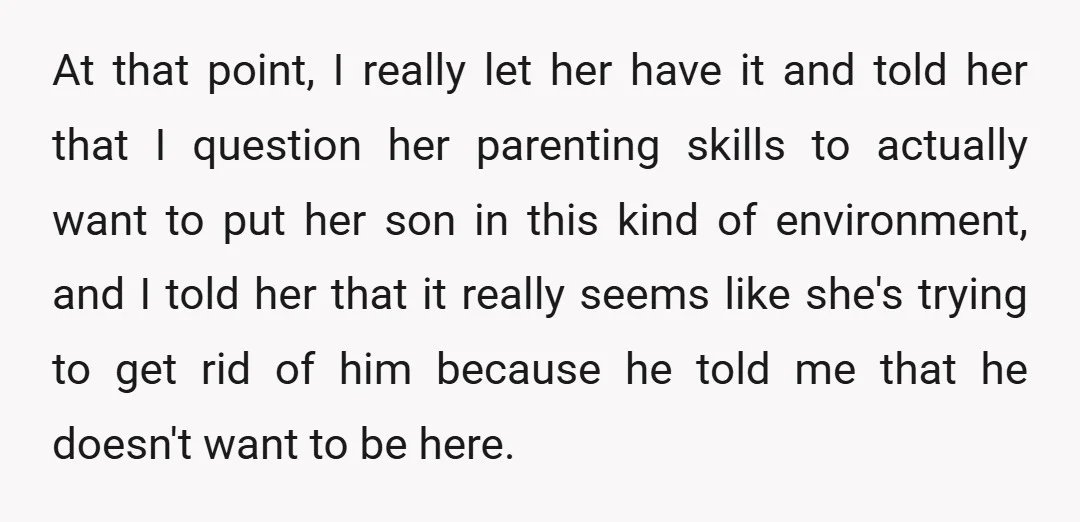
A polite refusal transforms into a blistering critique of parental motives, leaving the family dynamic in tatters as accusations of selfishness fly.



Letting family blur boundaries can get messy—especially when “a favor” quietly turns into full-time parenting.
The OP’s situation is fairly clear: a cousin floated the idea of sending her 13-year-old son to live in Paris for school, which would effectively make OP his guardian. OP initially declined politely, then firmly refused once the request became serious. Meanwhile, the cousin frames this as “help,” while OP sees it as an unreasonable, long-term responsibility. The twist? The child himself has already said he doesn’t even want to go—undermining the cousin’s narrative entirely.
What’s really clashing here is expectation versus autonomy. The cousin appears to view family as a built-in support system for major life decisions, while OP views adulthood as maintaining personal boundaries. There’s also a broader issue: parents outsourcing caregiving for convenience or opportunity. According to a report by UNICEF on child well-being and family environments (https://www.unicef.org/reports), stability and parental presence are key factors in adolescent development—something this plan would clearly disrupt.
As psychologist Dr. Carl Pickhardt writes, “Adolescence is a time when young people need consistent adult presence and emotional availability, not displacement” (Psychology Today, https://www.psychologytoday.com). Applied here, sending a reluctant teenager abroad to live with a busy, non-parent relative doesn’t just shift logistics—it risks emotional neglect or instability.
From a practical standpoint, OP’s refusal is grounded: frequent travel, lifestyle choices, and lack of desire to parent are all valid reasons. A more constructive path forward would be for the cousin to explore schooling options that align with her son’s wishes or consider short-term exchange programs rather than permanent relocation. Open communication with the child should come first—not last.
Ultimately, this isn’t about selfishness—it’s about consent, responsibility, and recognizing that raising a child isn’t a casual favor you assign to someone else.
Community Opinions
The Reddit community was nearly unanimous in their support, with many commenters expressing shock at the cousin’s ‘audacity’ to ask for such a life-altering favor.

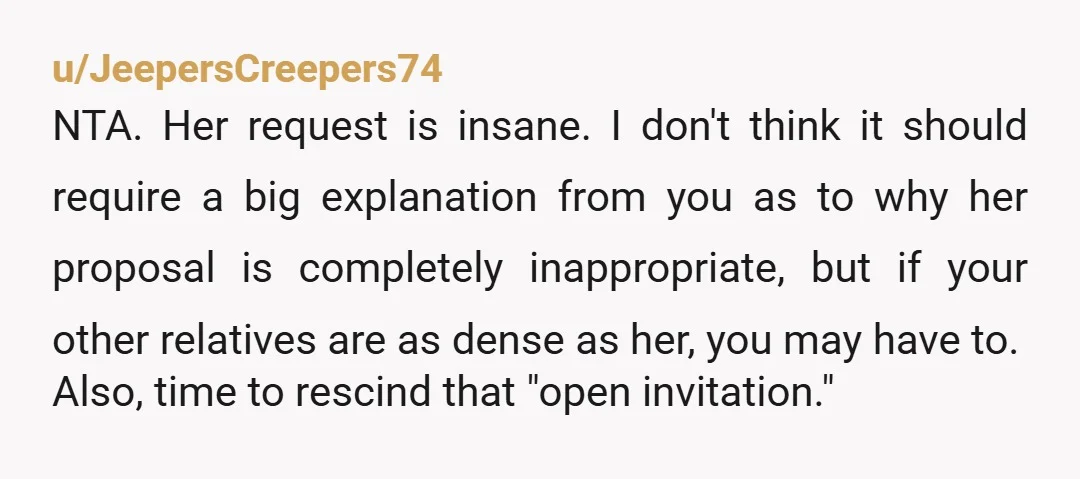
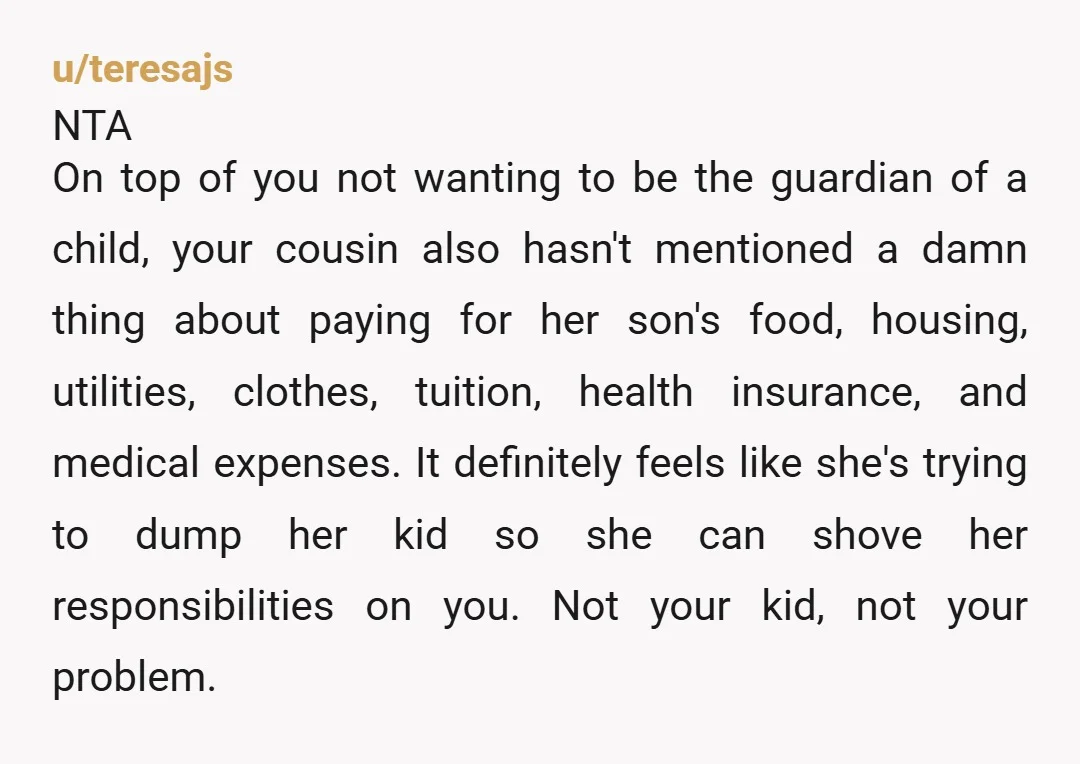












While the verdict was clear, a few users cautioned the author against engaging in a smear campaign, suggesting that silence might be the most powerful response.
The transition from a fun vacation host to a potential surrogate parent is a leap most people aren’t willing to take, especially when the child involved hasn’t even expressed interest in the move. This story highlights the importance of setting firm boundaries early on, even when it feels uncomfortable to be ‘blunt’ with family. Protecting one’s lifestyle isn’t selfish; it’s an act of self-preservation that ultimately prevents a child from being placed in an unstable or unwanted living situation.
Do you think the author was right to be brutally honest about her lifestyle to shut the idea down, or did she go too far by attacking her cousin’s parenting? How would you handle a relative who tried to ‘dump’ their responsibilities on you? Share your hot take below!
Drop your thoughts in the comments below.