
Living with extended family can feel like a generous act, especially during difficult life transitions like divorce. For one couple, opening their home to a mother-in-law seemed like the right thing to do, offering her stability while she rebuilt her life. She paid rent, contributed to rising household costs, and treated the space as her own for nearly two years.
But once she moved out, a disagreement over worn carpet quietly exploded into a full-blown family conflict. What started as a home renovation plan quickly turned into questions about responsibility, fairness, and whether family should ever be treated like tenants. The community reaction was swift and intense, with readers sharply divided on where generosity ends and obligation begins. The twist lies in how a seemingly practical request managed to leave emotional damage far deeper than any carpet wear.


The arrangement began as a temporary solution during a stressful life transition


Over time, daily use of the space began to factor into renovation plans
Trying to be fair, the couple explored what they believed was a compromise
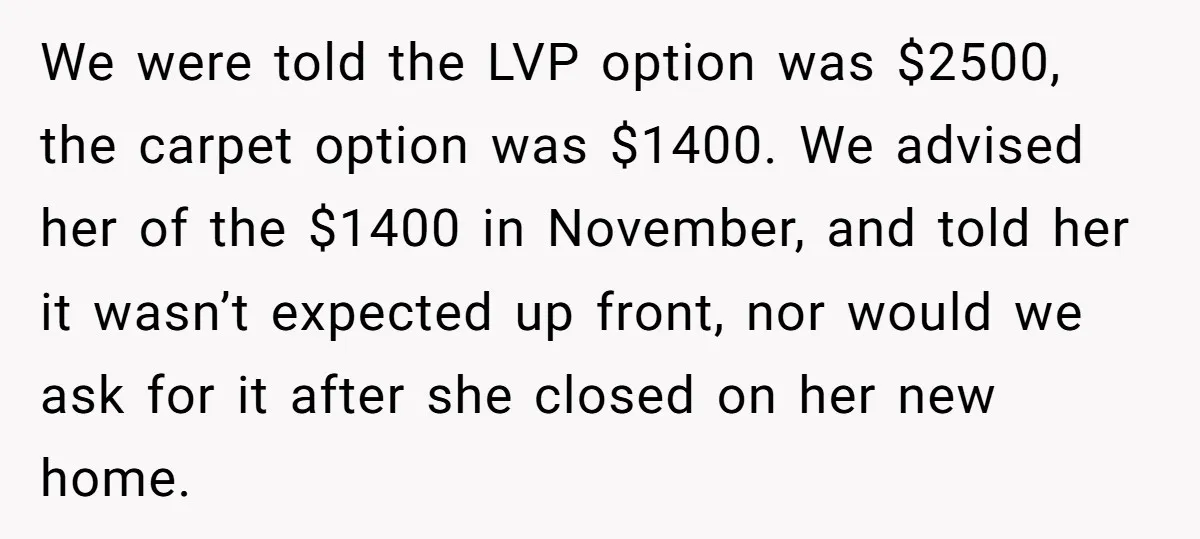

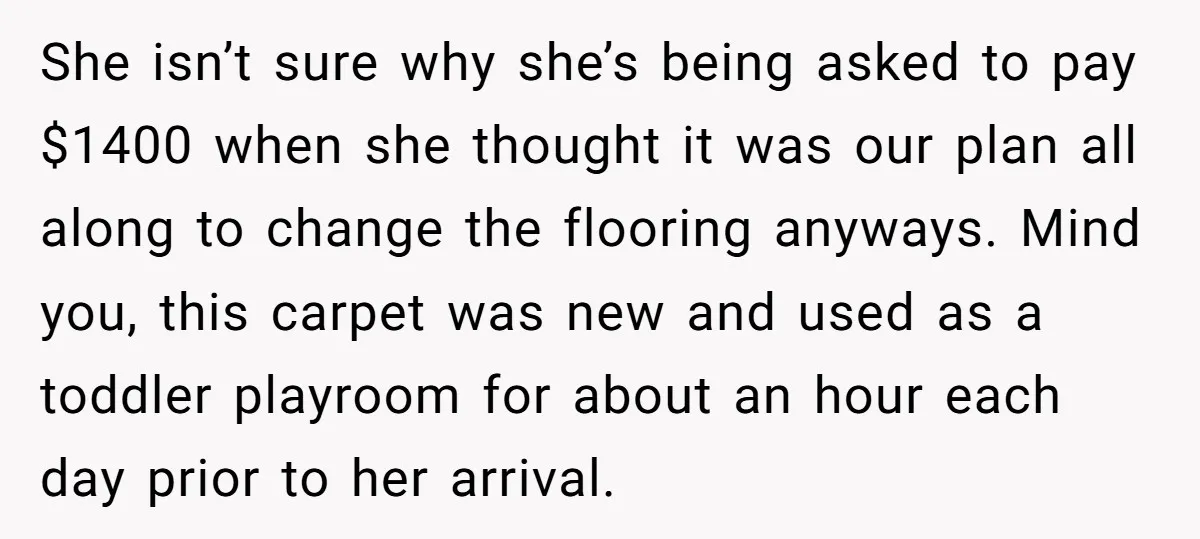
Attempts to settle the matter only made things more complicated



Family emotions escalated once the wife became involved




At the heart of this conflict is a blurred line between family support and a landlord-tenant relationship. The poster clearly viewed the situation as partially transactional, pointing to rent payments, utility contributions, and negotiated costs. From that angle, asking for compensation felt logical, especially when the carpet had seen constant use for two full years.
However, many readers focused on a key detail: rent. Once money changes hands for living space, expectations shift. According to general housing norms, regular wear and tear is typically covered by rent itself. Dr. John Gottman of The Gottman Institute has noted, “Conflict isn’t about the issue itself, it’s about how people feel treated when the issue comes up.” In this case, the mother-in-law may have felt she was being retroactively charged for simply existing in a space she paid to use.
From the mother-in-law’s perspective, she paid consistent rent, voluntarily increased her contribution, and expected the homeowners to handle maintenance decisions. She even suggested carpet cleaning as a middle ground, which is commonly expected at move-out. The request for replacement likely felt sudden and unfair, especially given the family’s prior renovation plans.
Practically speaking, situations like this benefit from clear agreements upfront. Written expectations about cleaning, pet-related wear, or end-of-stay costs can prevent emotional blowups later. Going forward, repairing trust may matter more than recouping money. A direct conversation acknowledging hurt feelings, rather than debating dollars, could help reset the relationship. In family dynamics, feeling respected often matters far more than being technically right.
Here’s what the community had to contribute:
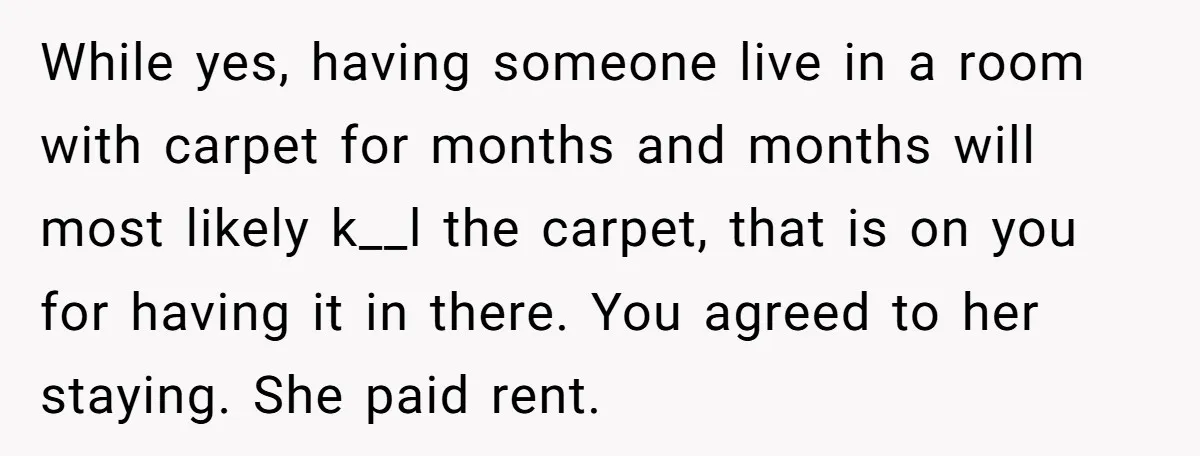
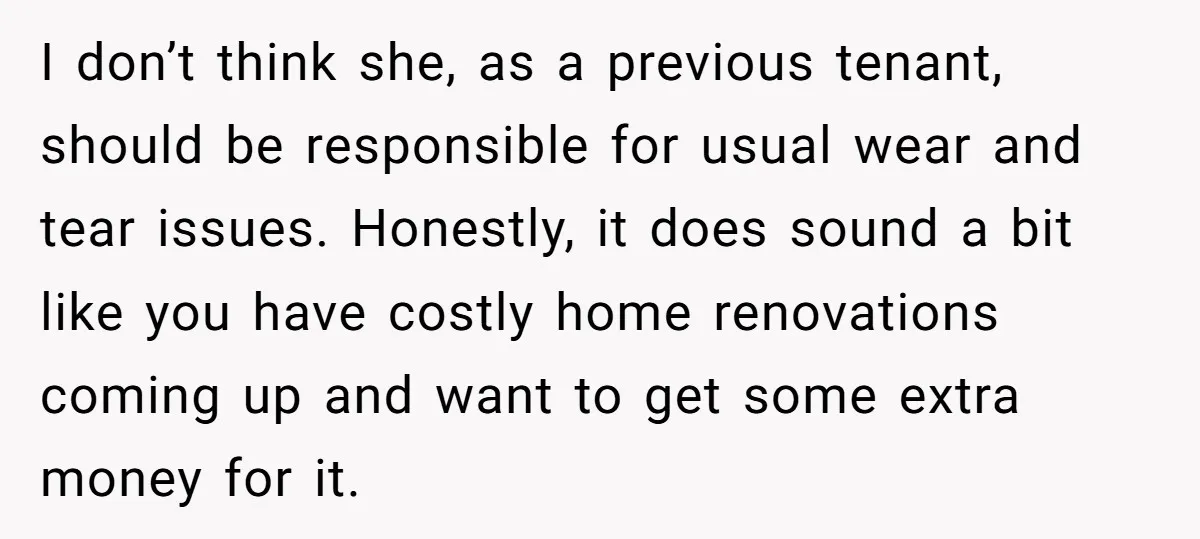
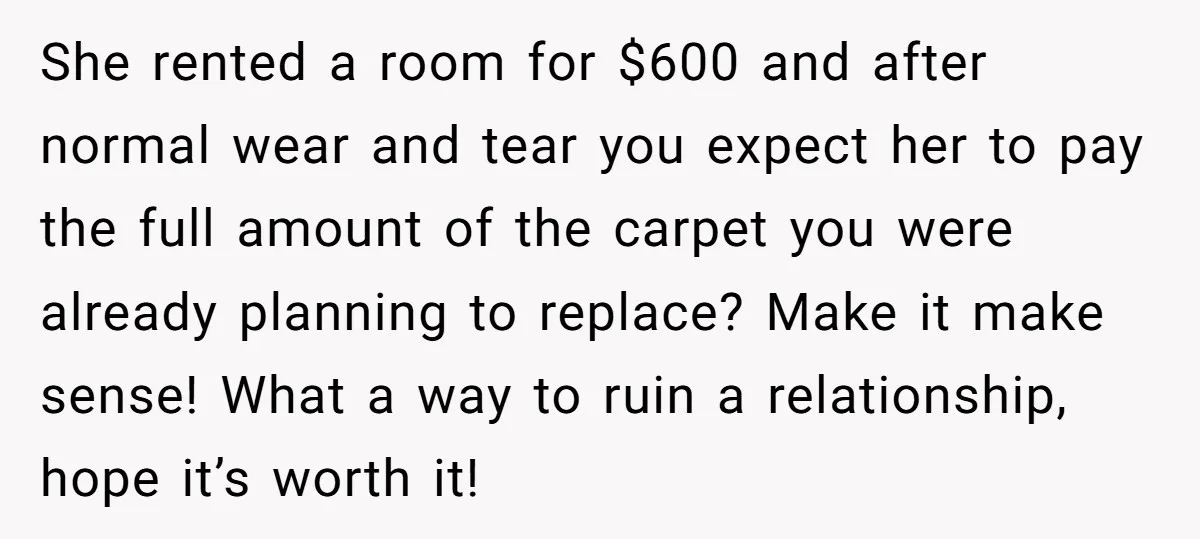
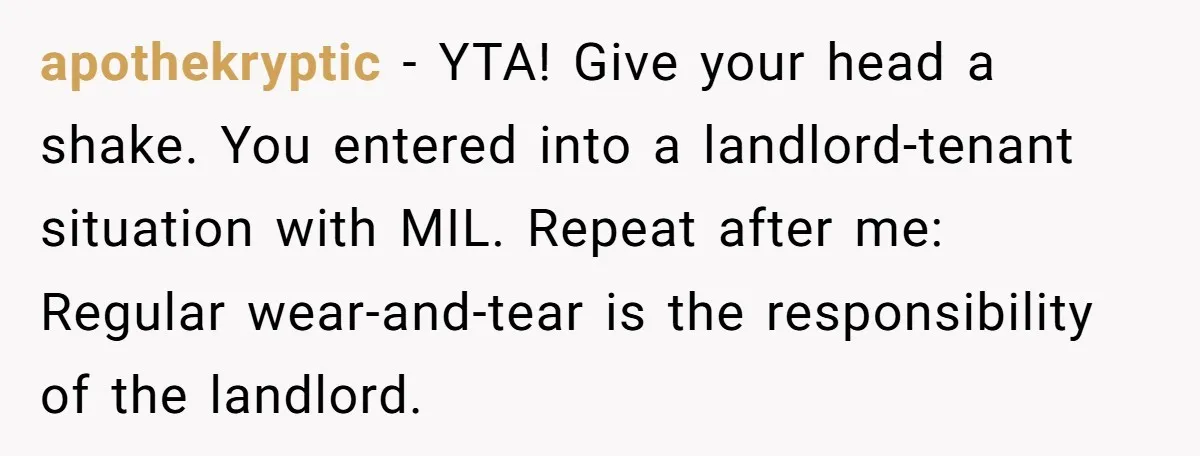
Many users strongly criticized the homeowner, emphasizing rental norms and fairness


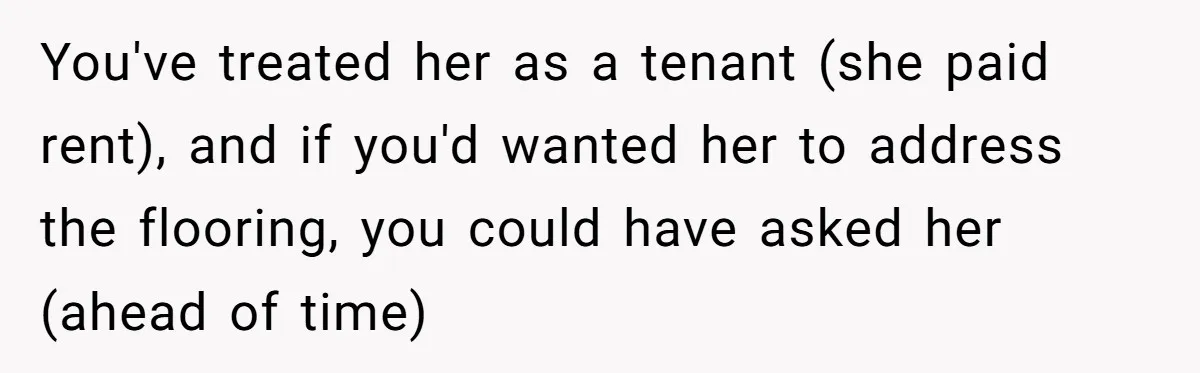
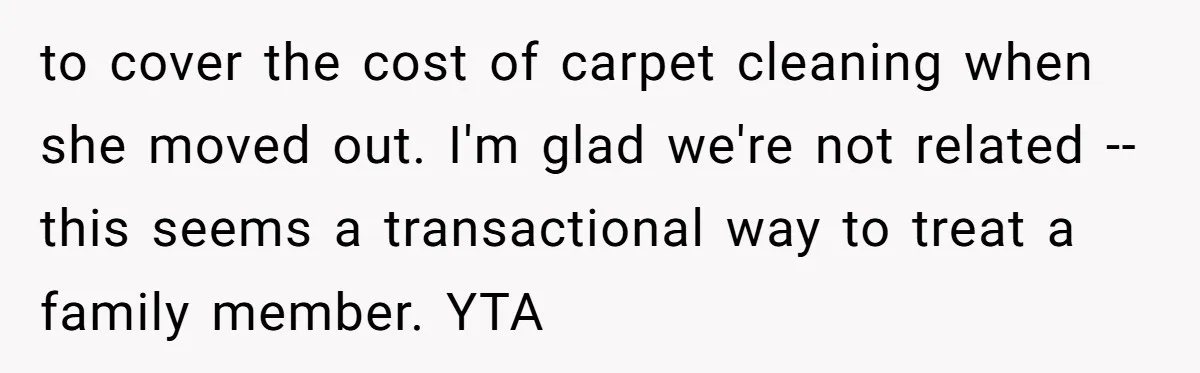







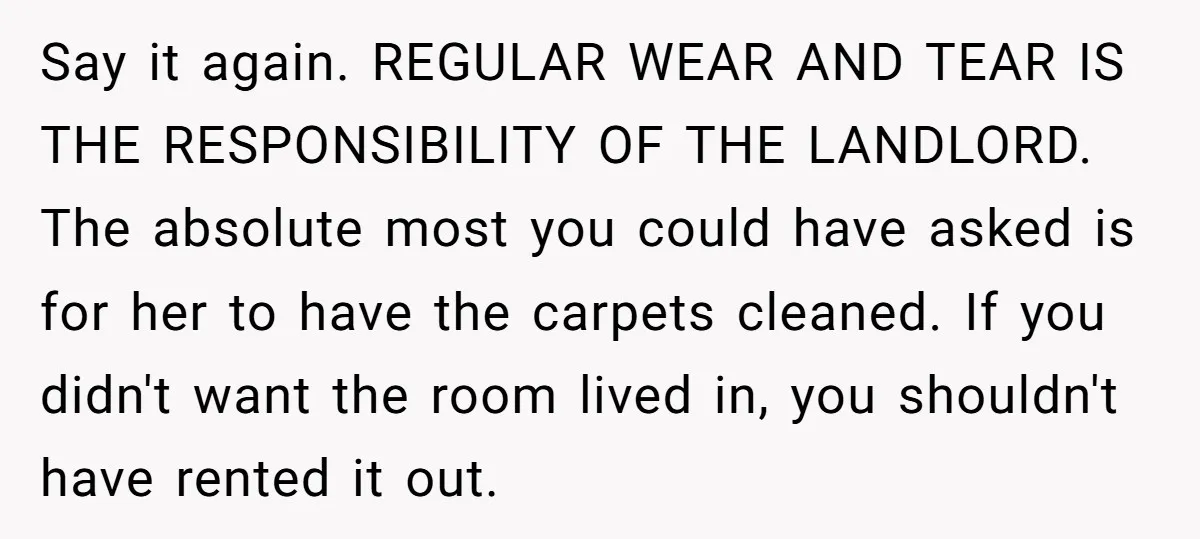

Others took a critical but more measured tone, pointing out missed opportunities for clarity

![[Reddit User] − YTA. You're already replacing the flooring. If she didn't damage the existing carpet at all, she doesn't need to pay for your upgrade.](https://loknam.com/aita/images/bc414a5579/wp-editor-1770024079208-2.webp)





Some commenters used humor or blunt honesty to underline their frustration
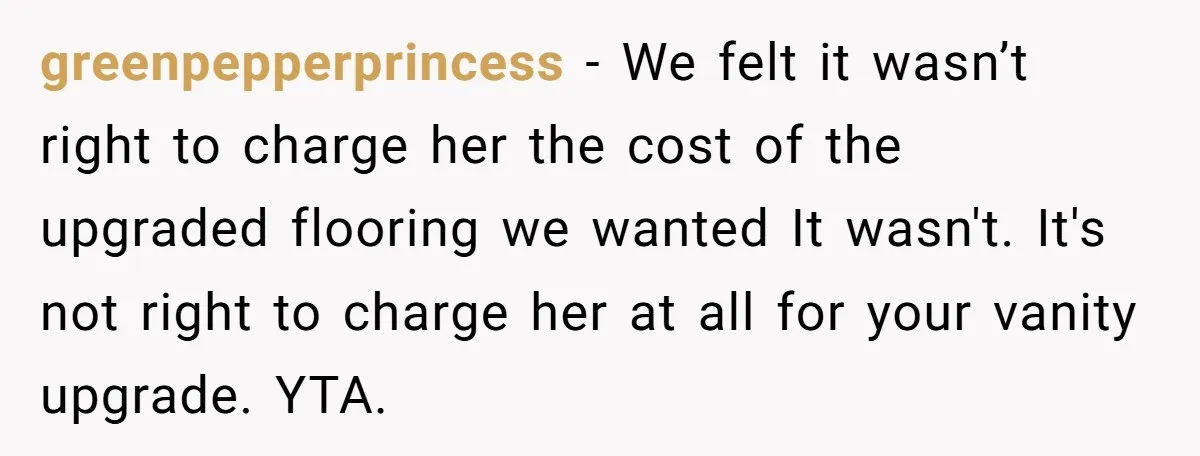





This situation highlights how quickly good intentions can unravel when expectations aren’t clearly aligned. While the homeowners felt justified in asking for help covering worn carpet, the community overwhelmingly saw it as an unfair charge for normal use already paid for through rent. Family relationships add emotional weight that simple transactions can’t handle well. In the end, the lingering bitterness suggests the real cost wasn’t financial at all. What would you do if a family member lived with you and left visible wear behind?