
At a big family reunion in a rural German house surrounded by open fields, a 17-year-old girl expected to finally join the adults in their drinking tradition. Instead, she faced a harsh double standard that left her feeling singled out and unfairly treated. What started as an assumption of ongoing responsibility quickly turned into conflict when she decided to enjoy the night like her older cousins had.
The situation escalated when the kids were sent her way anyway, leading to accusations of neglect despite her walking them straight back to their parents. Now the family has shifted the duty to even younger relatives while giving alcohol to a 13-year-old, highlighting what many see as blatant hypocrisy.

‘AITA for getting drunk instead of babysitting my cousins?’
It all began with a long-standing family custom at these annual reunions.
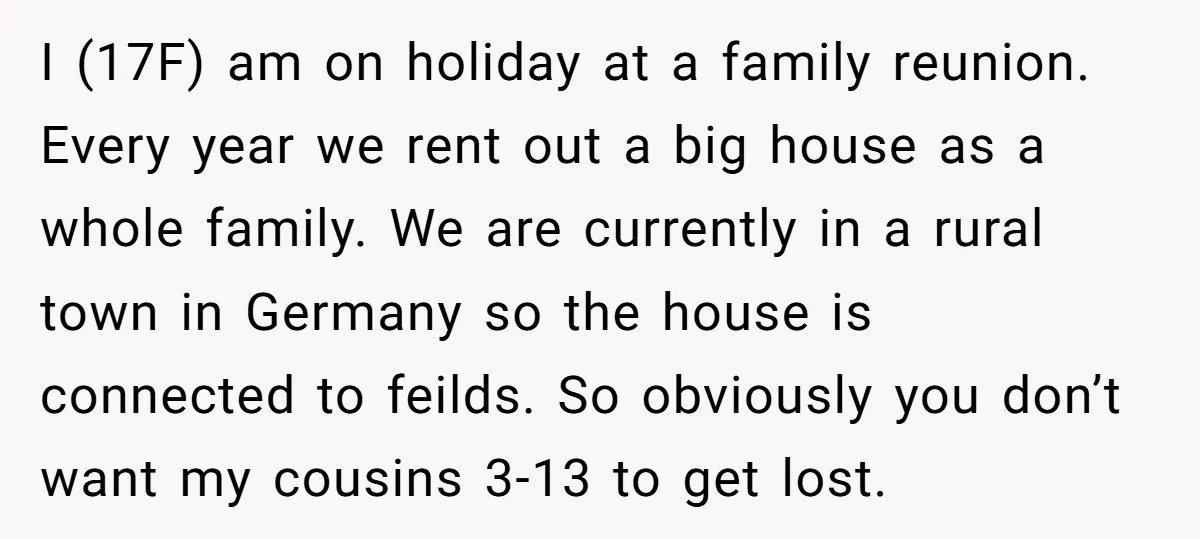
For years, she carried the load without complaint.
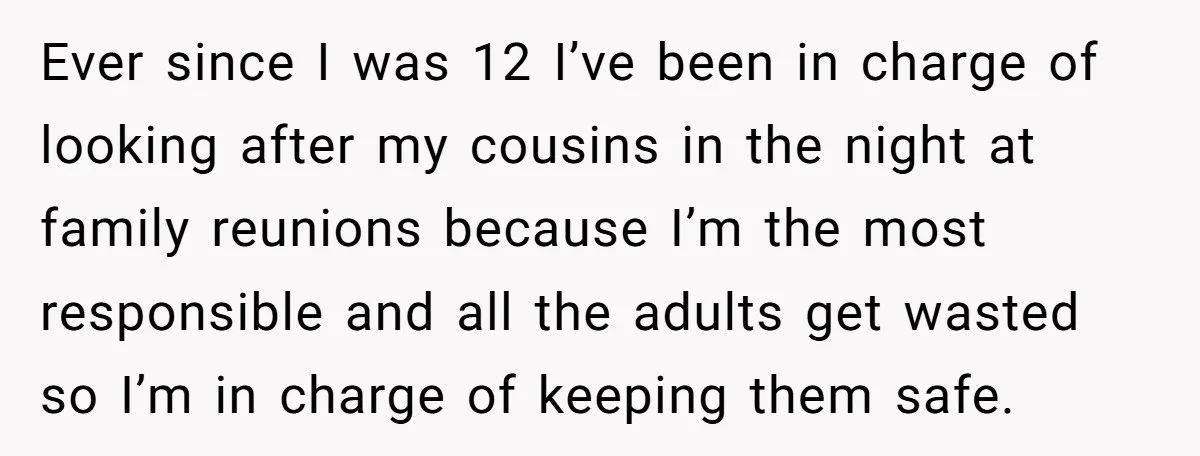
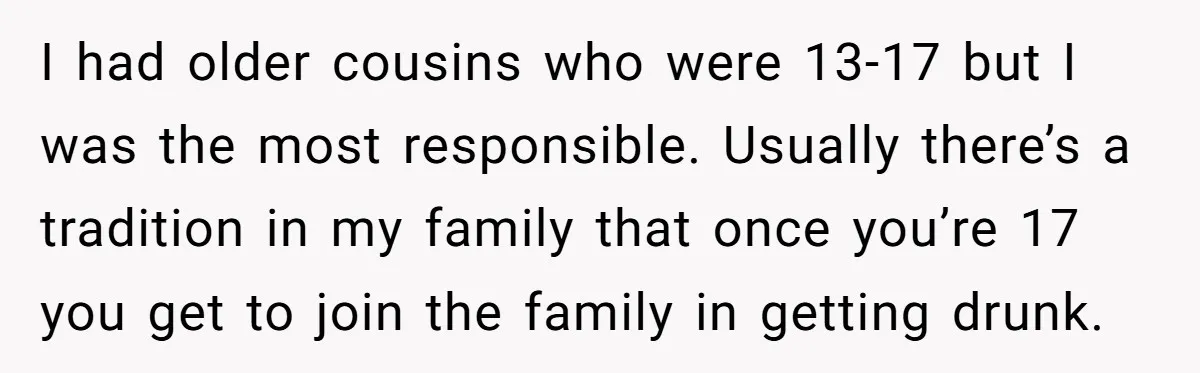
When her turn came, the rules suddenly changed.
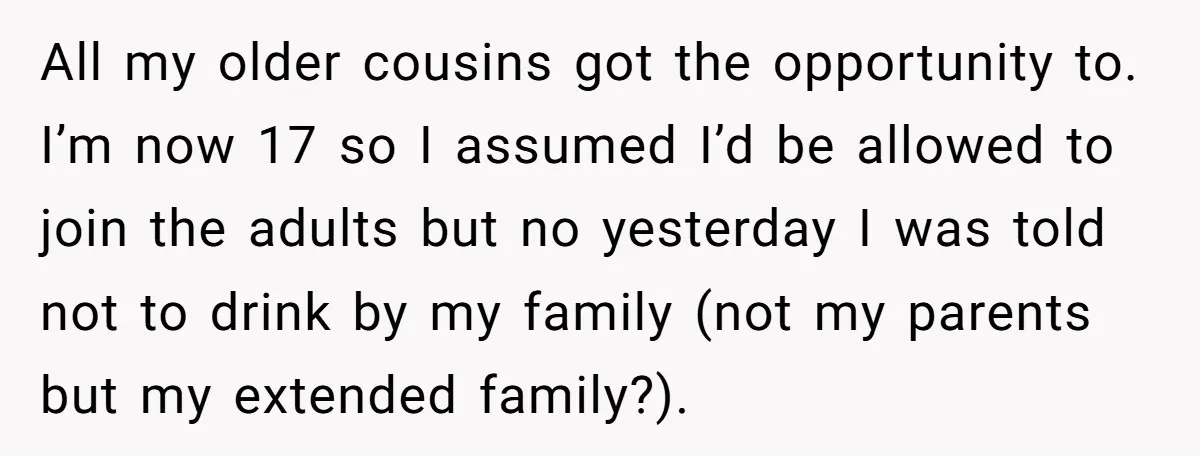

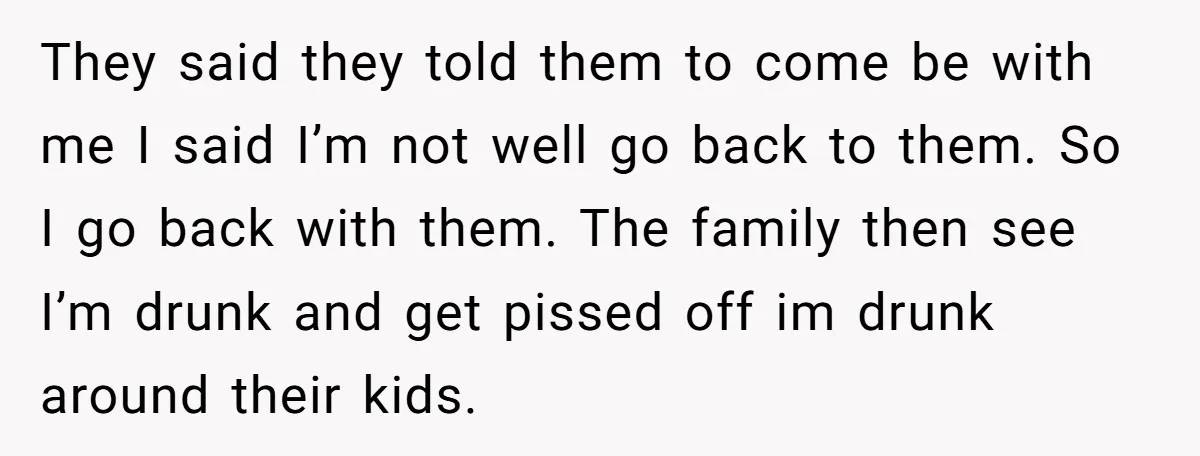
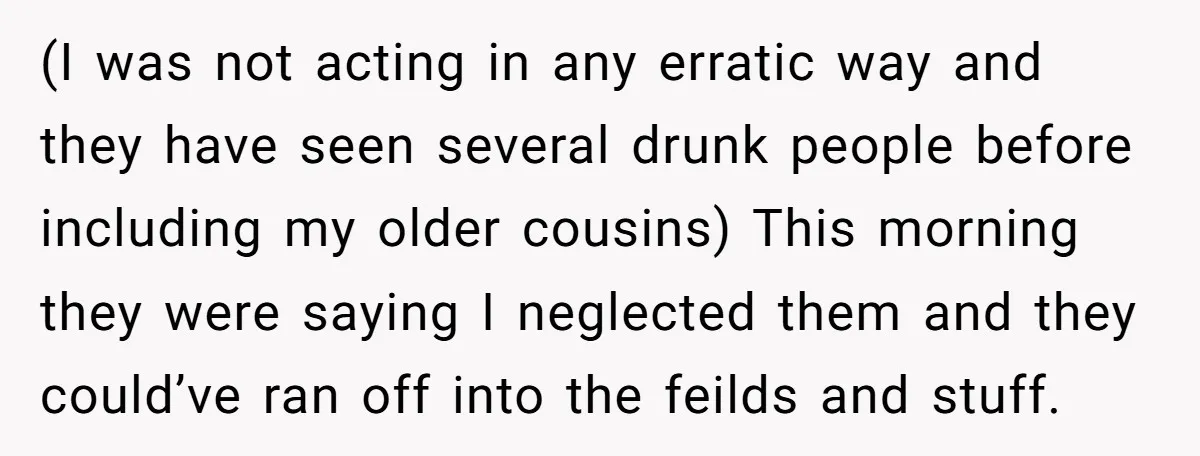
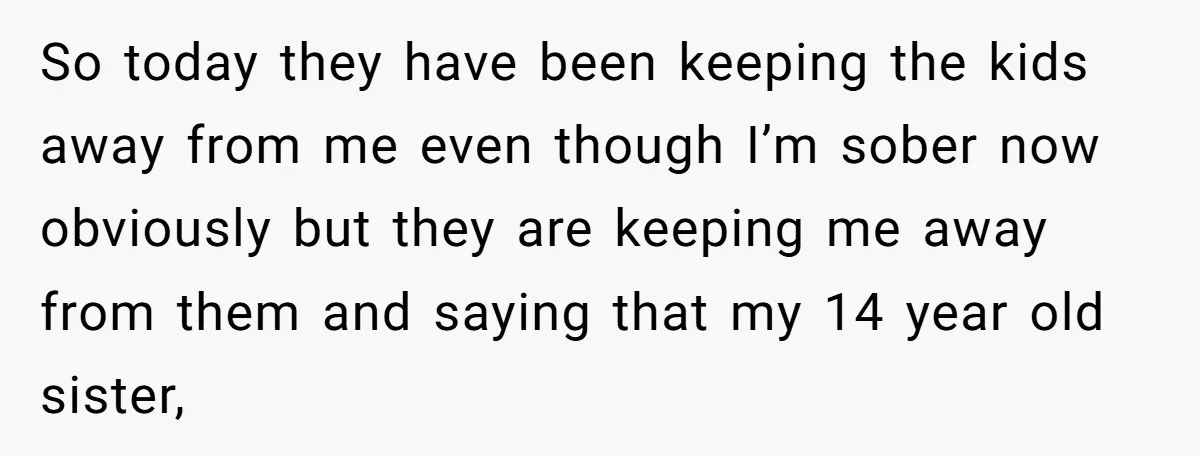
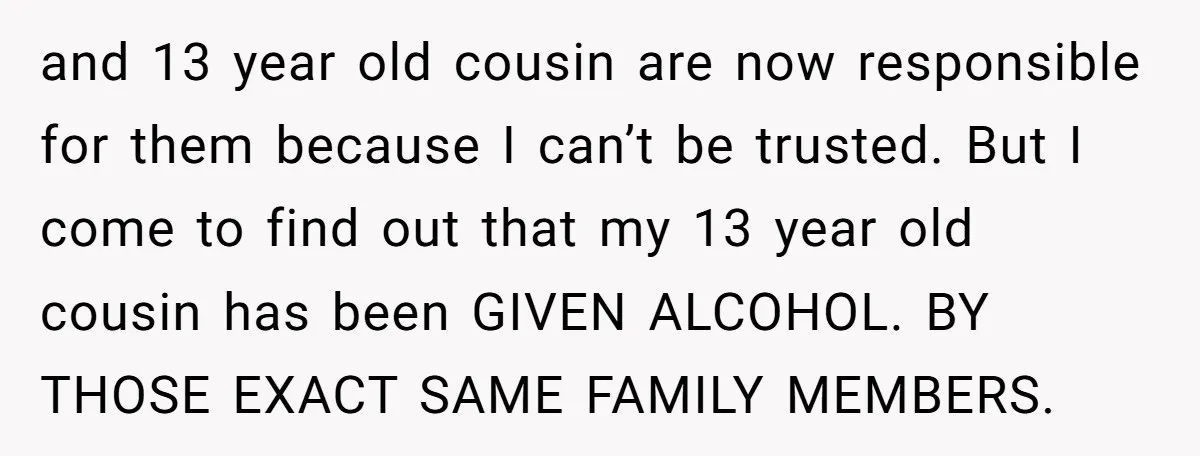
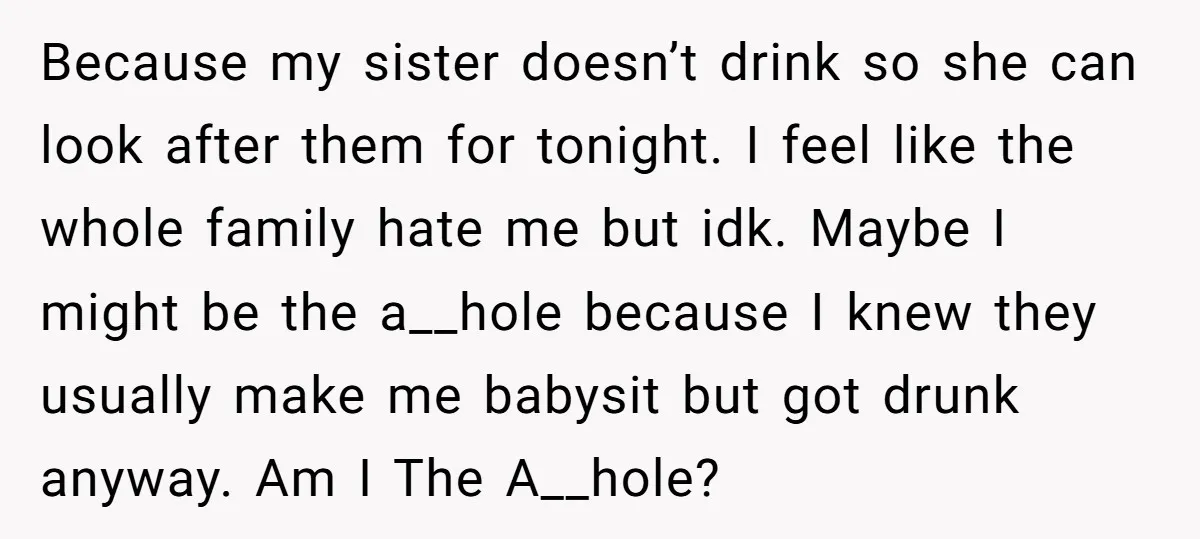

This situation reveals a classic case of uneven expectations within a large extended family. The 17-year-old has shouldered unsupervised childcare since age 12 during these reunions, stepping up while adults indulged freely. When she reached the age for the drinking tradition, the family blocked her participation, likely to keep her available as the reliable sitter, even without asking her directly.
What makes the story more complicated is the glaring inconsistency: the same relatives who condemned her drinking handed alcohol to a 13-year-old cousin to enable the 14-year-old sister to take over supervision. In Germany, beer and wine are legally accessible from 16 without parental supervision, and even younger with permission in some cases, so the 17-year-old’s actions aligned with both family tradition and local norms. The outrage seems less about child safety and more about losing a convenient free service.
Opposing views might argue that knowing the pattern, she could have communicated her refusal clearly upfront or stayed sober to avoid any risk. However, the broader perspective shows a young woman asserting her right to enjoy a milestone others received, exposing how gender and reliability often lead to disproportionate burdens on one family member. Families thrive on mutual respect, not one-sided sacrifices.
See what others had to share with OP:
Many users fully supported the poster, highlighting how unfair it was to keep expecting her to babysit after she finally reached the drinking age in family tradition.
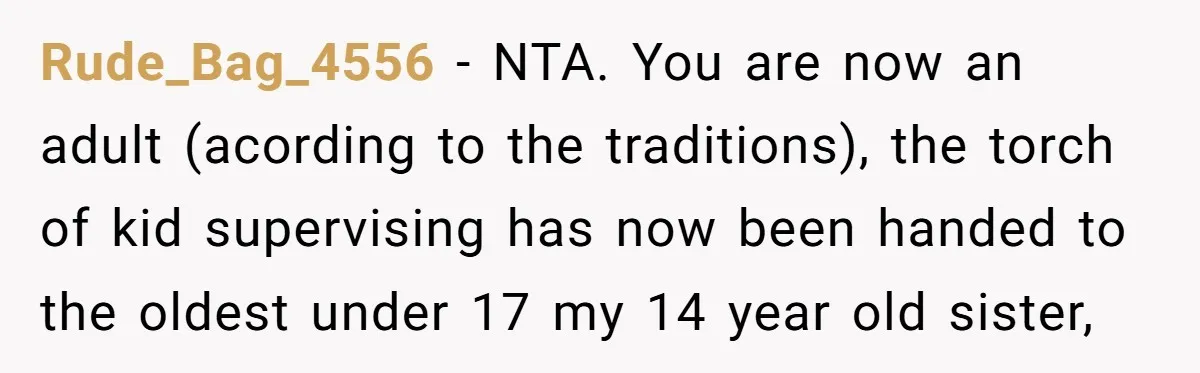
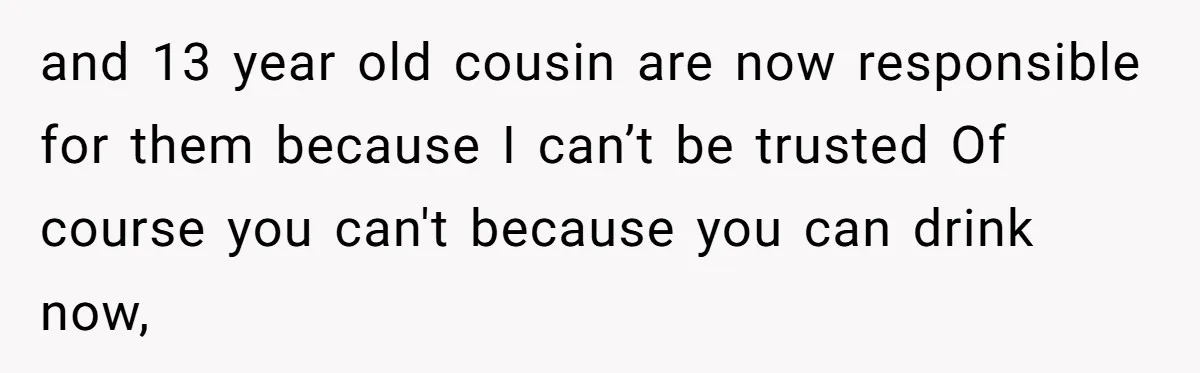

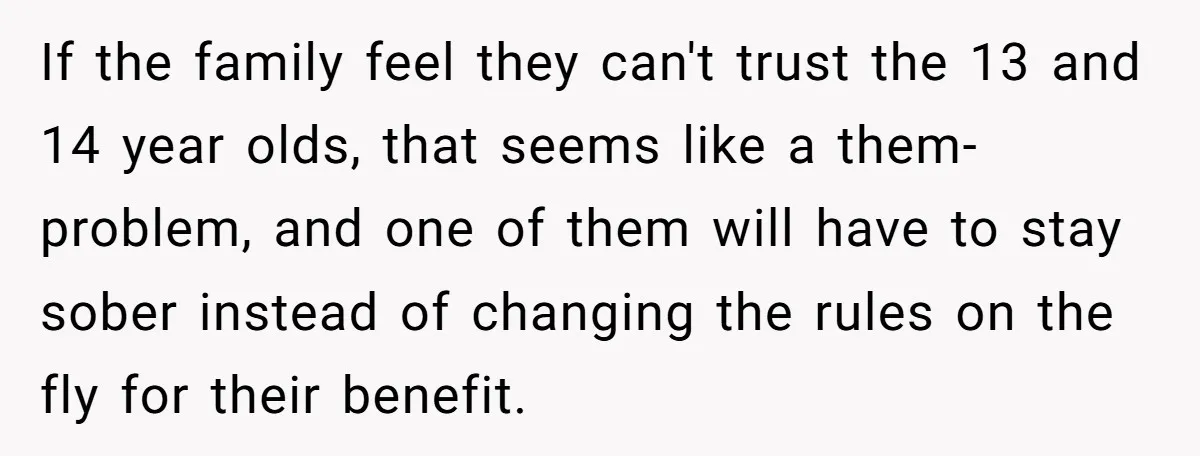

![[Reddit User] − NTA. You followed the tradition and can legally buy and consume certain types of alcohol at that age in Germany without any parental consent.](https://loknam.com/aita/images/42e3bfbfd8/wp-editor-1768296110241-6.webp)

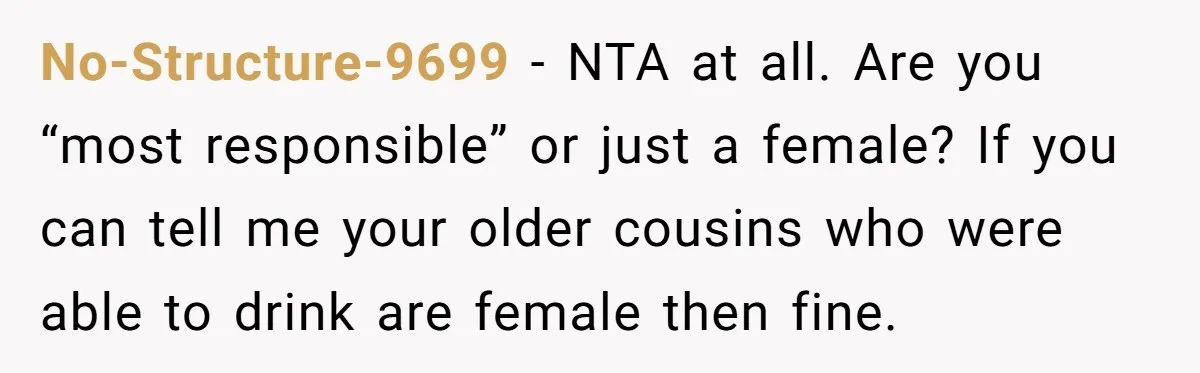


A few commenters offered more neutral or balanced perspectives, suggesting she could have been more direct while still agreeing the family was out of line.
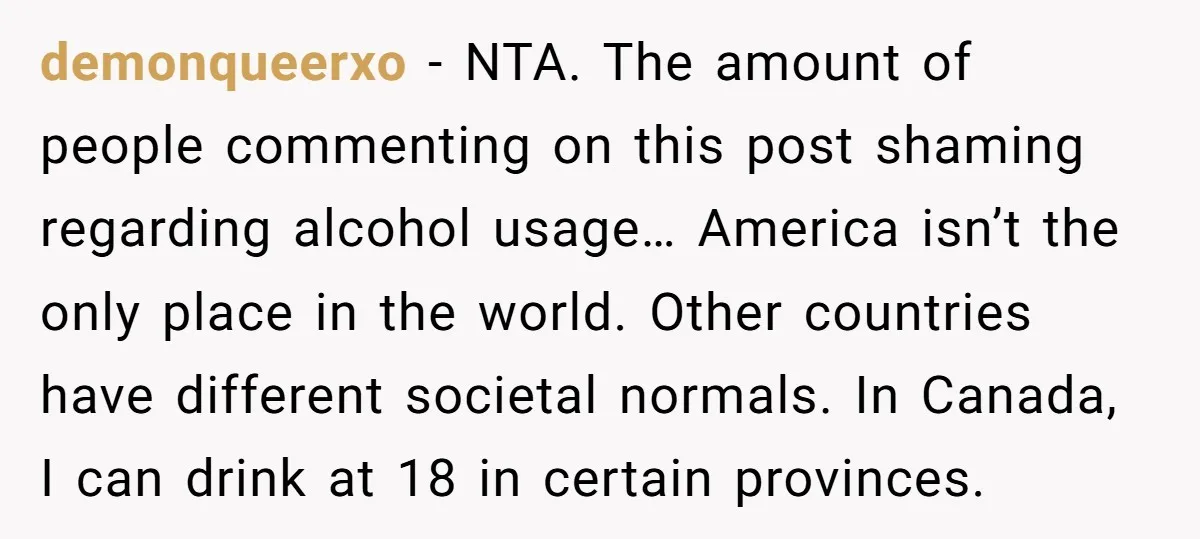

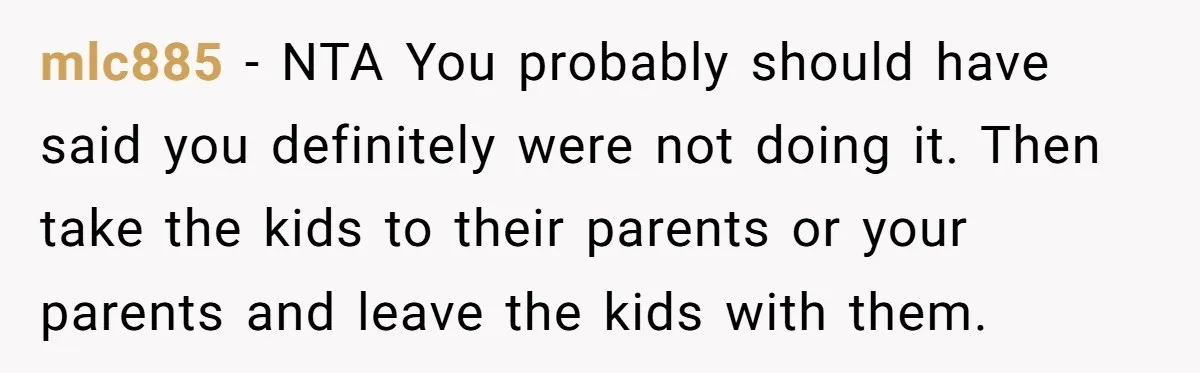
A couple of responses added a lighter or slightly cheeky tone to break the seriousness of the discussion.

![[Reddit User] − NTA. Your extended family can't force you to be an unwilling, unpaid babysitter. You didn't just abandon their kids, you walked them back to their parents.](https://loknam.com/aita/images/42e3bfbfd8/wp-editor-1768296147235-2.webp)
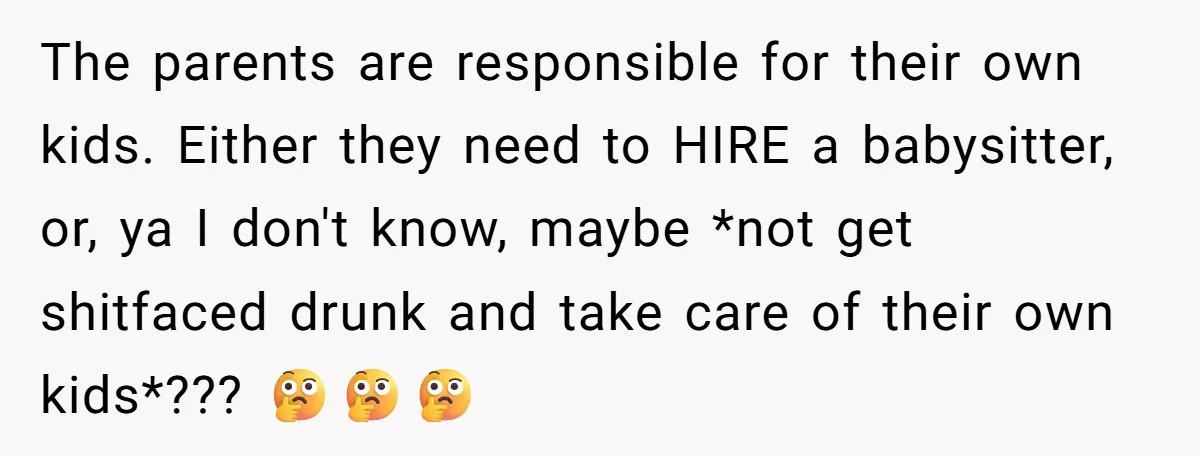

In the end, the overwhelming consensus on the social network leans toward the 17-year-old not being at fault—she followed established family traditions, never explicitly agreed to babysit this time, and ensured the kids were returned safely to their parents despite the surprise expectation.
This situation raises interesting questions about family roles and fairness: Have you ever been stuck with unspoken responsibilities at gatherings, and how did you handle it? Would you continue attending reunions if the same patterns persisted, or set firmer boundaries next time?