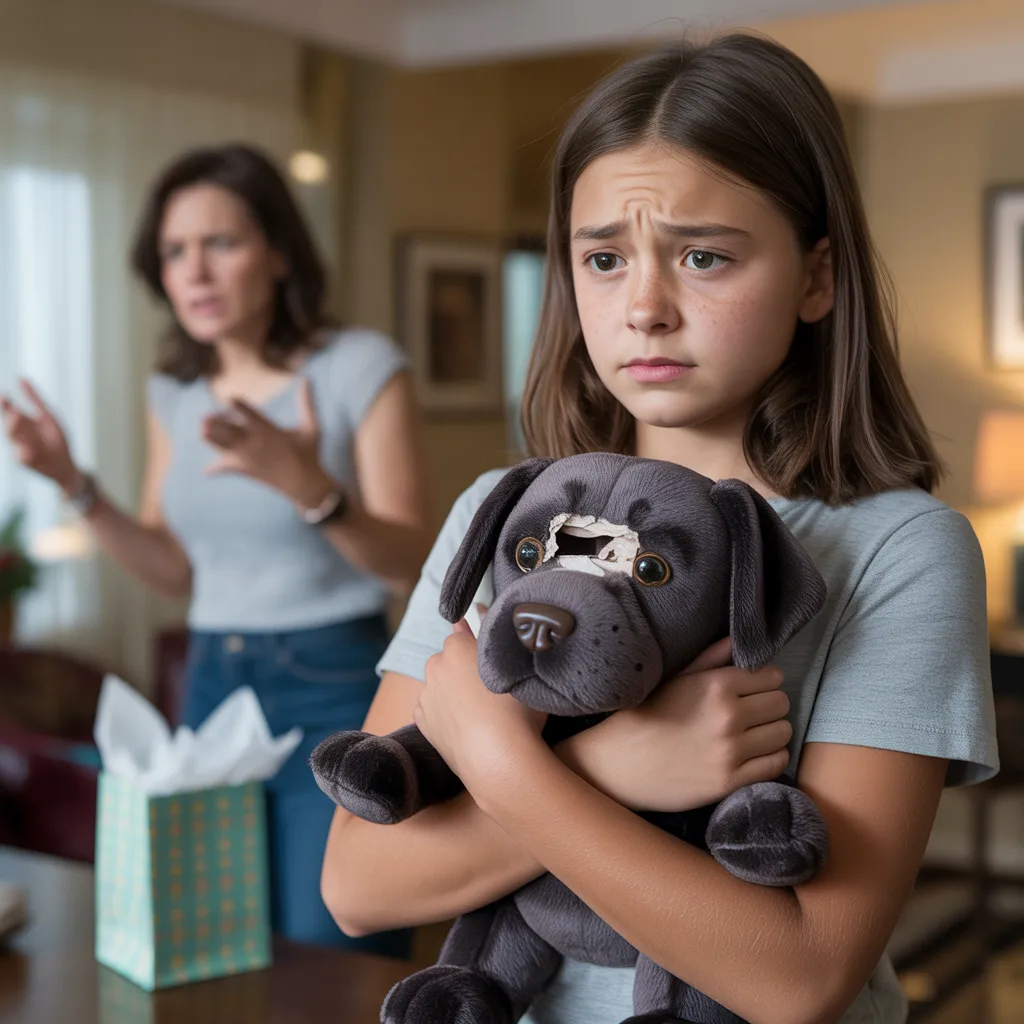
A 29-year-old woman with a chronic condition that weakens her immune system faced her worst health crisis yet: sepsis, the same illness that claimed her mom’s life just two years ago. Bedridden and terrified, she reached out to her sisters for help—only to be turned down.
Her best friend rushed to the hospital instead, while family stayed away. Now recovering but deeply hurt, she’s gone silent on her sisters, who always expect her support when roles reverse.

‘AITA for ignoring my sisters after they weren’t there in my time of need?’
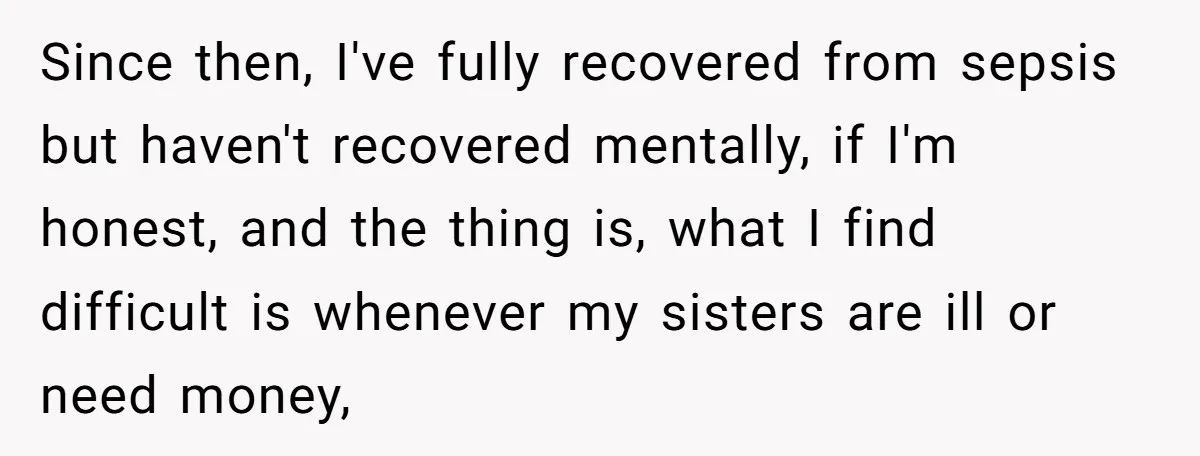
Living with a condition that makes illnesses hit hard and often shapes her daily reality:
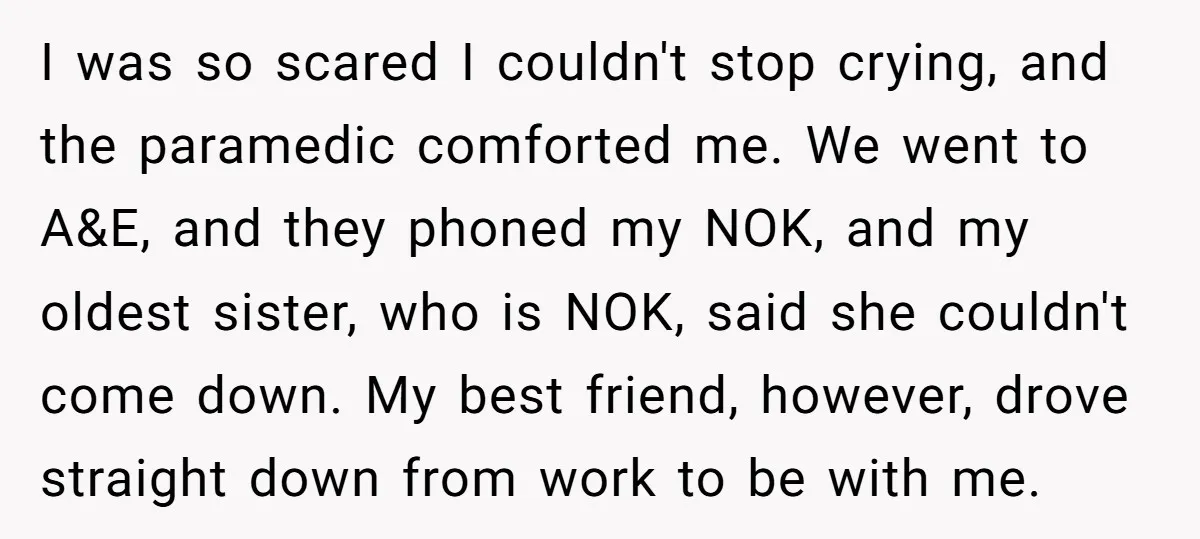
The crisis escalated quickly three weeks ago:
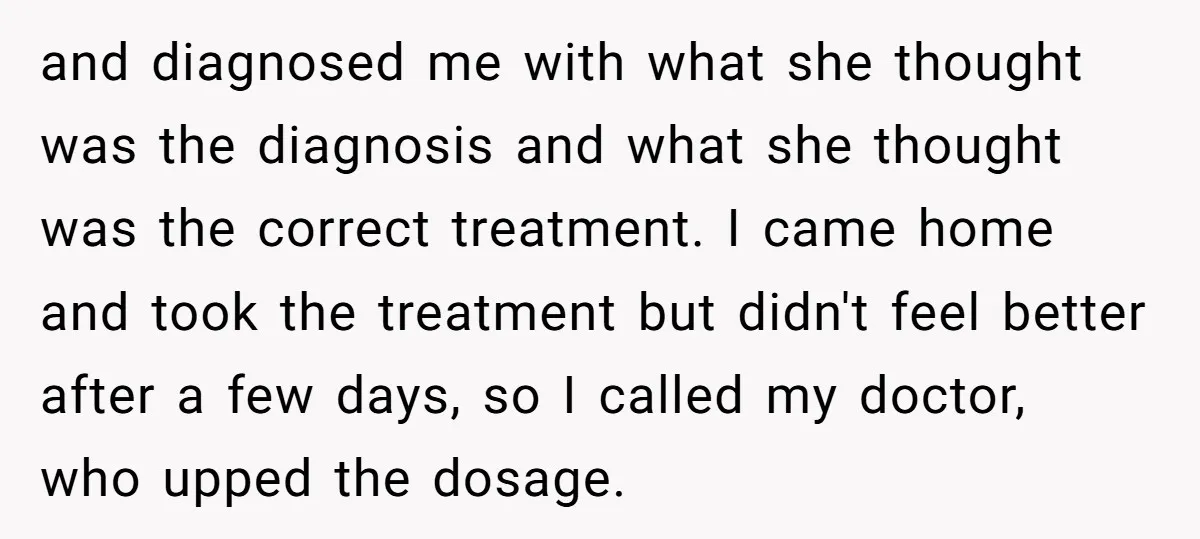
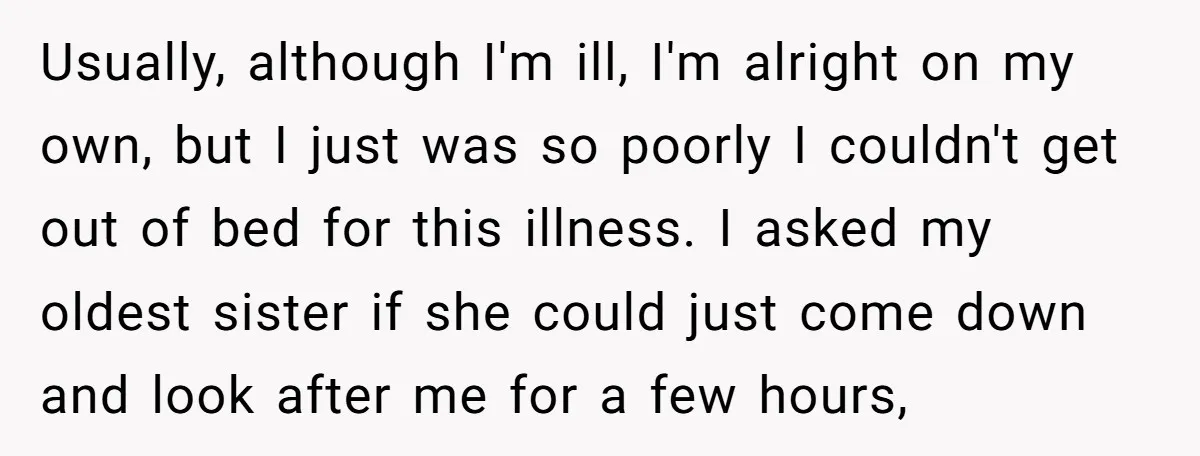
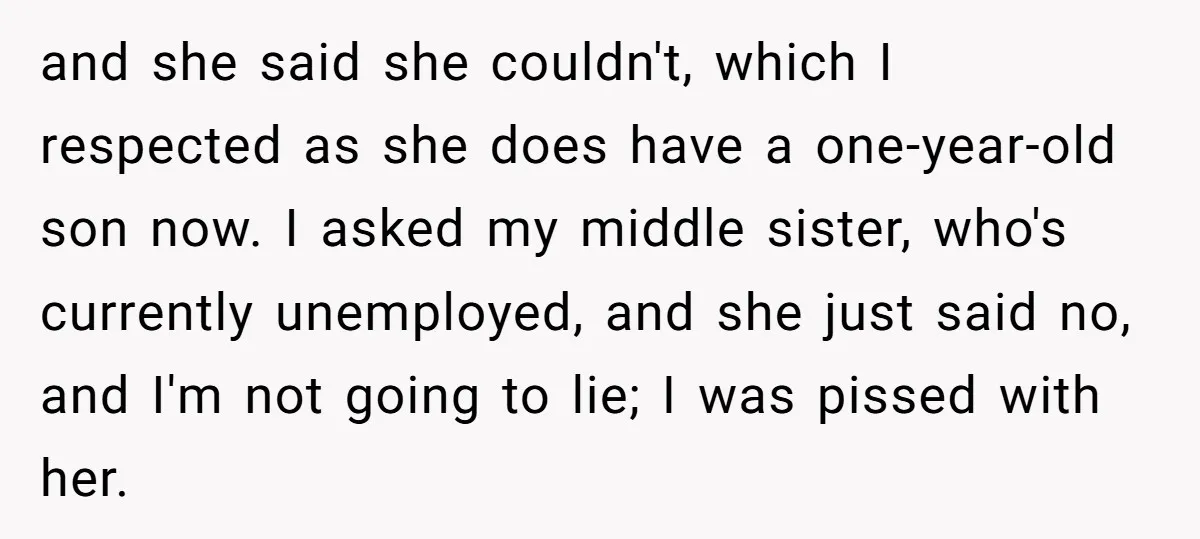
Things turned critical soon after:
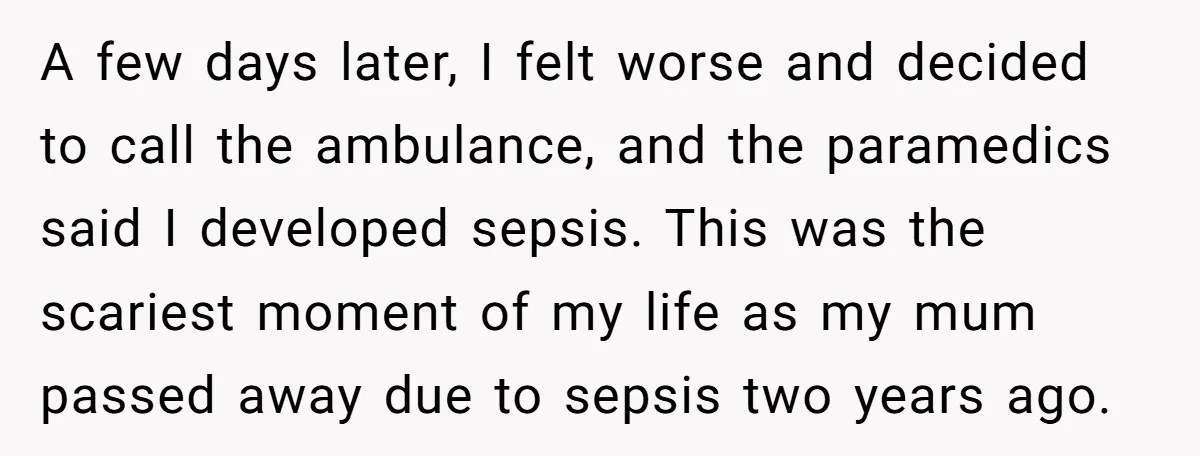
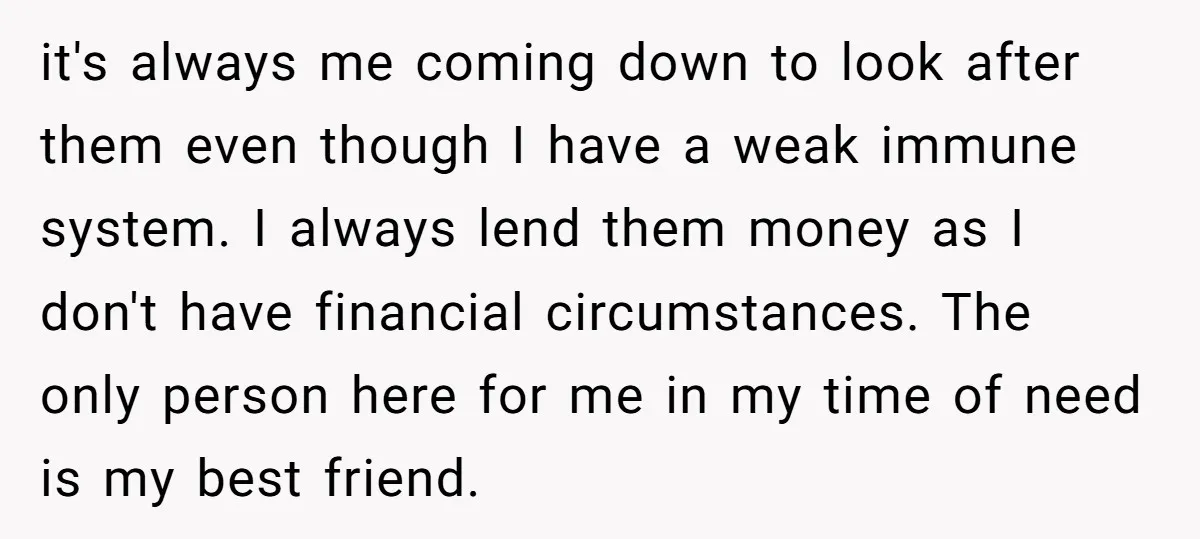
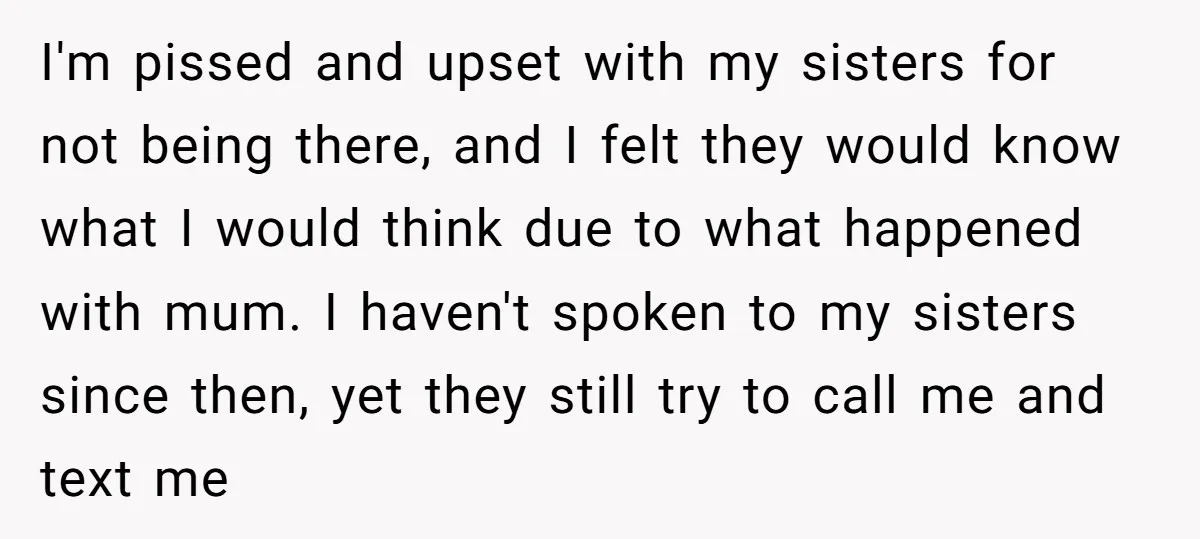
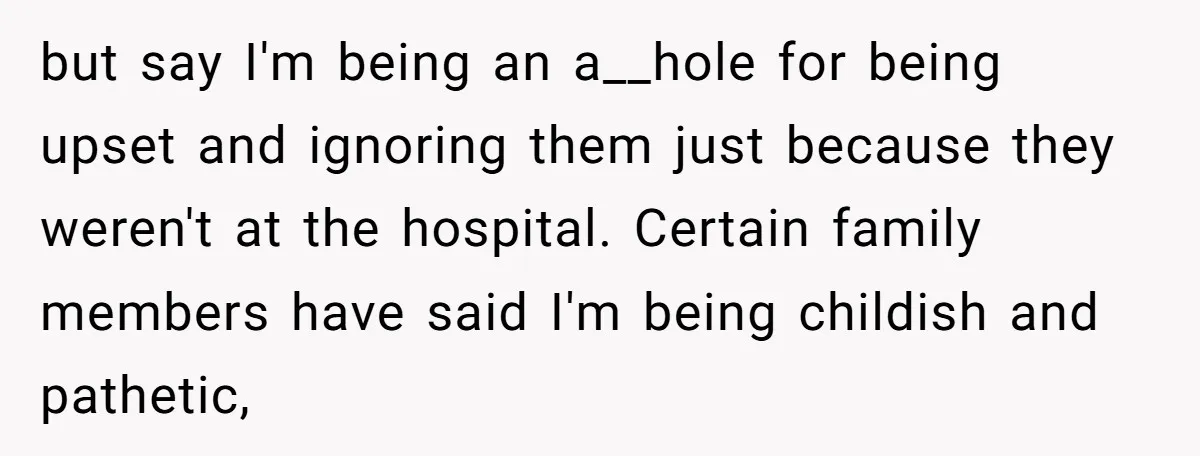
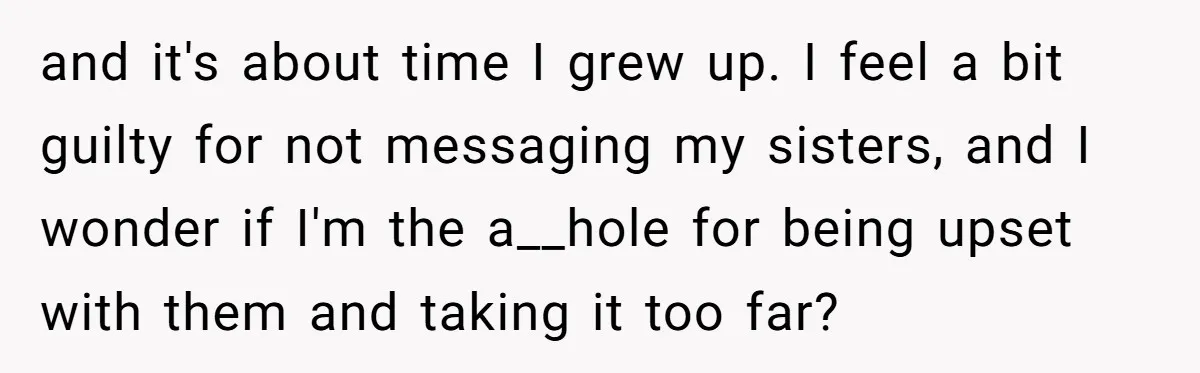
Facing sepsis alone—especially with the fresh trauma of losing a parent to the same thing—is unimaginable for most. Her sisters’ absence, despite her history of showing up for them (even risking her health), highlights a painful one-sided dynamic.
Chronic illness often leads to “invisible” support needs; people downplay it until crisis hits. Ignoring her now isn’t childish—it’s self-protection after a clear message that she’s not prioritized.
Therapists frequently advise reevaluating relationships post-trauma: stop pouring into those who don’t reciprocate, especially when it drains your limited energy. Change NOK, build a chosen support network (like that amazing best friend), and consider low-contact if guilt trips continue.
Healing mentally takes time—be gentle with yourself. You’re allowed to grieve the family support you deserved but didn’t get.
Here’s the comments of Reddit users:
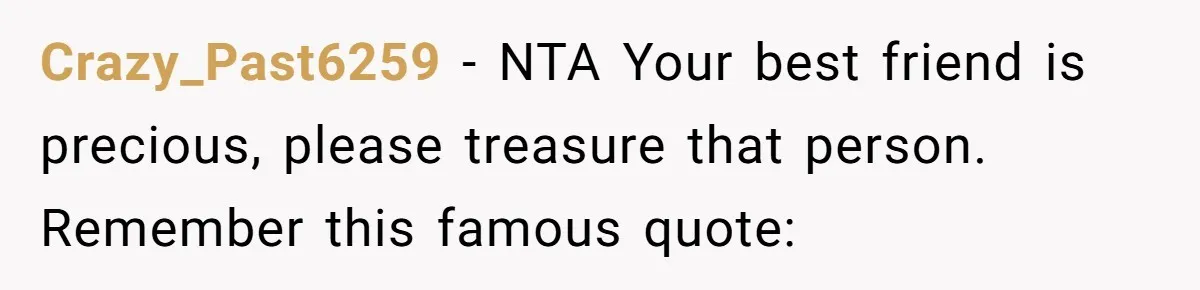
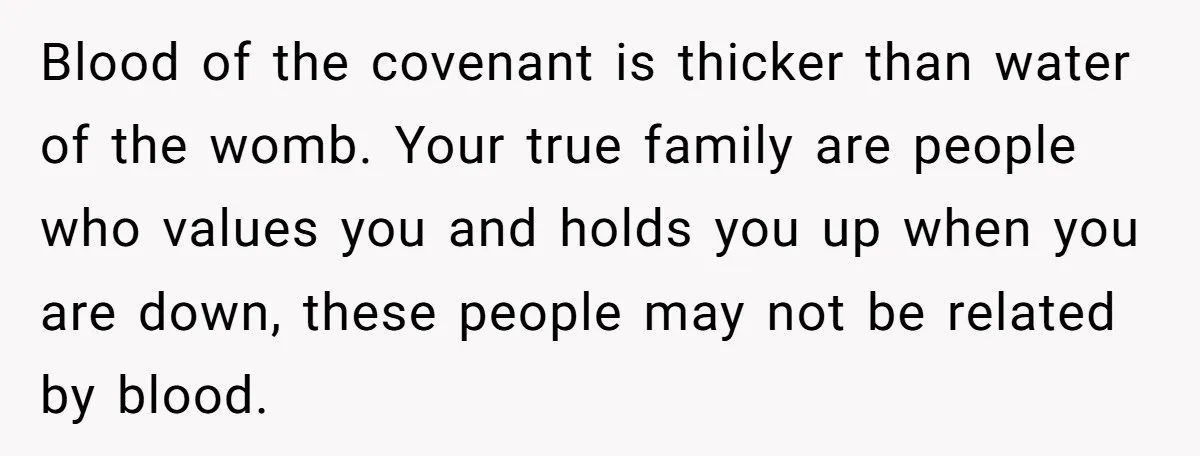
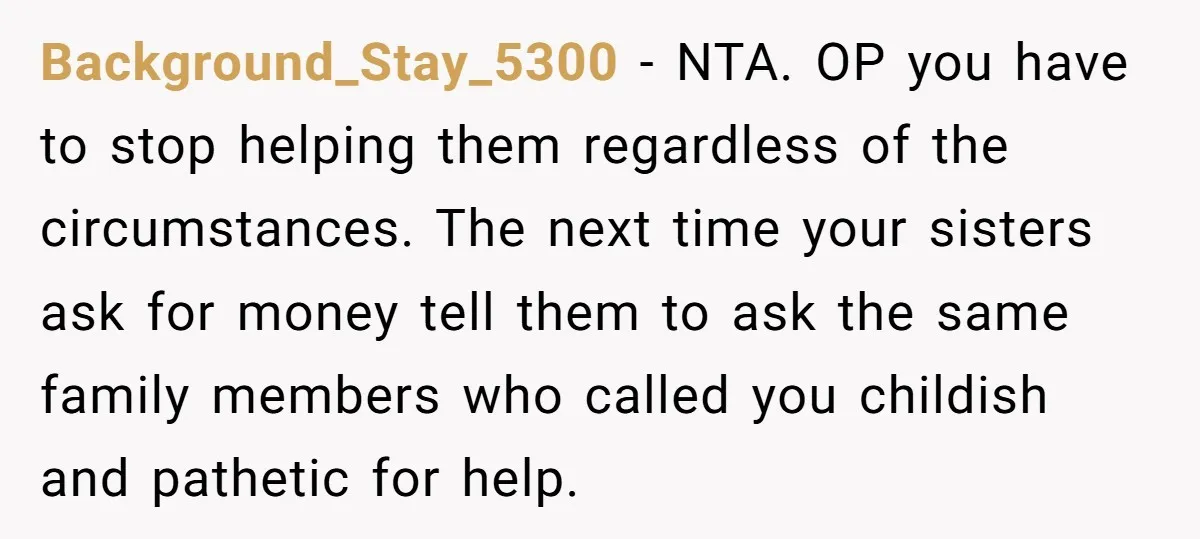
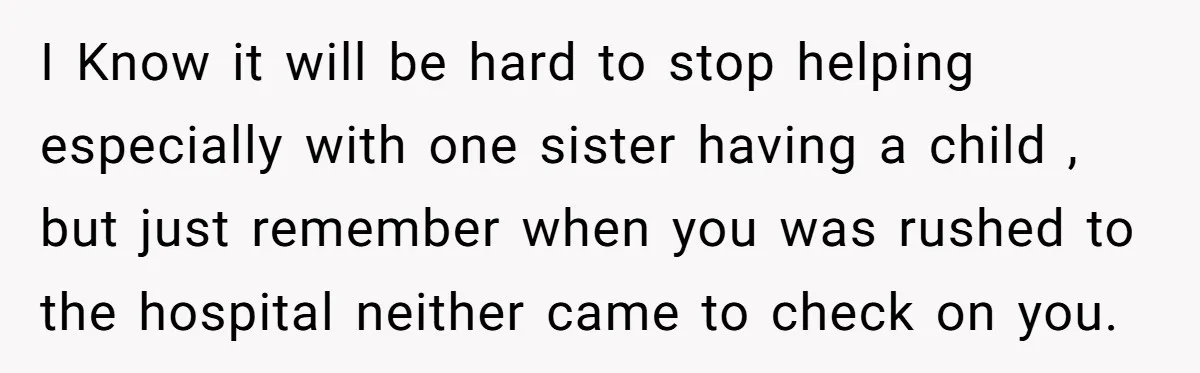
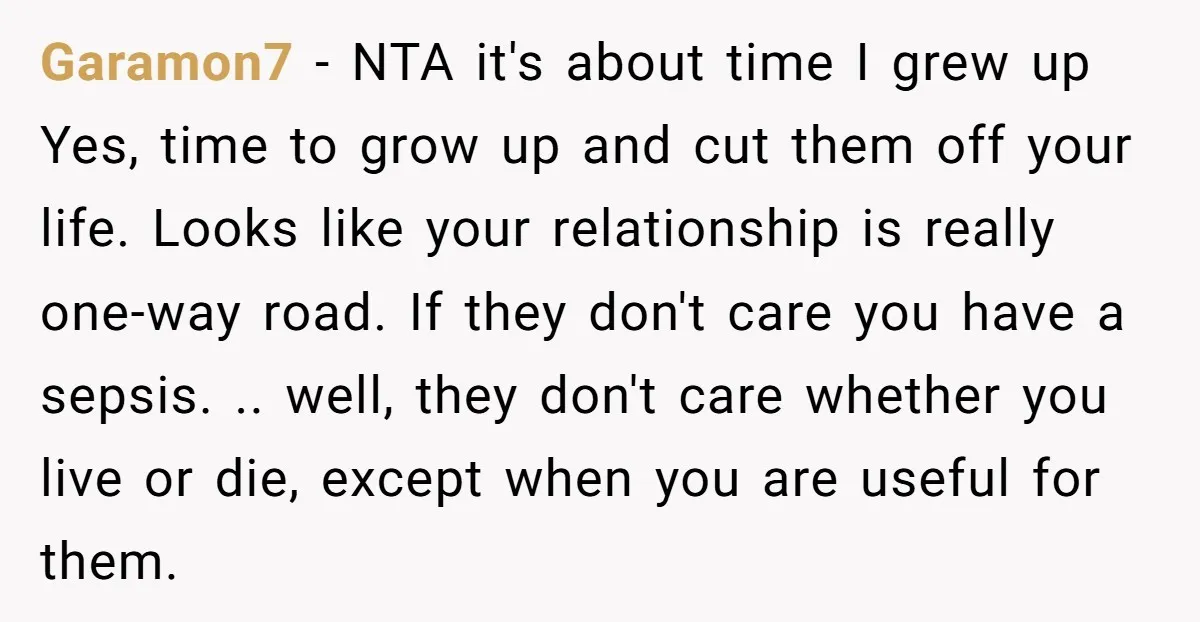
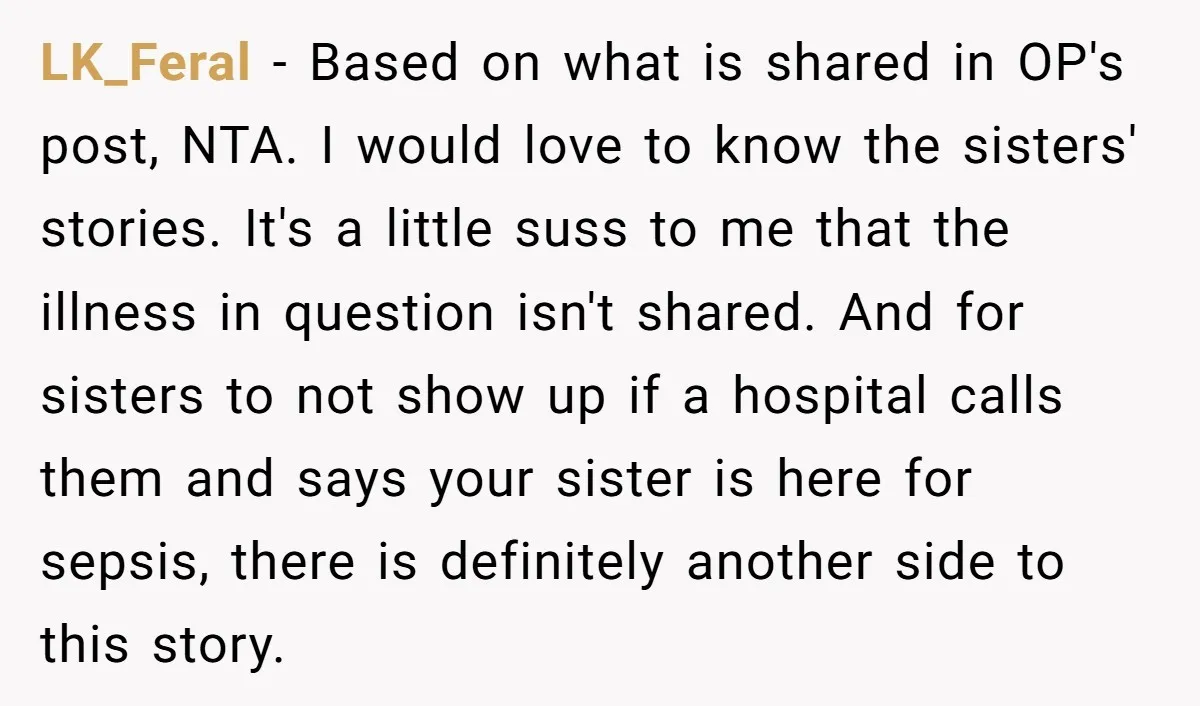
Overwhelmingly NTA, with praise for her best friend and advice to pull back from one-way relationships.
Many urged protecting her energy and cutting financial ties:
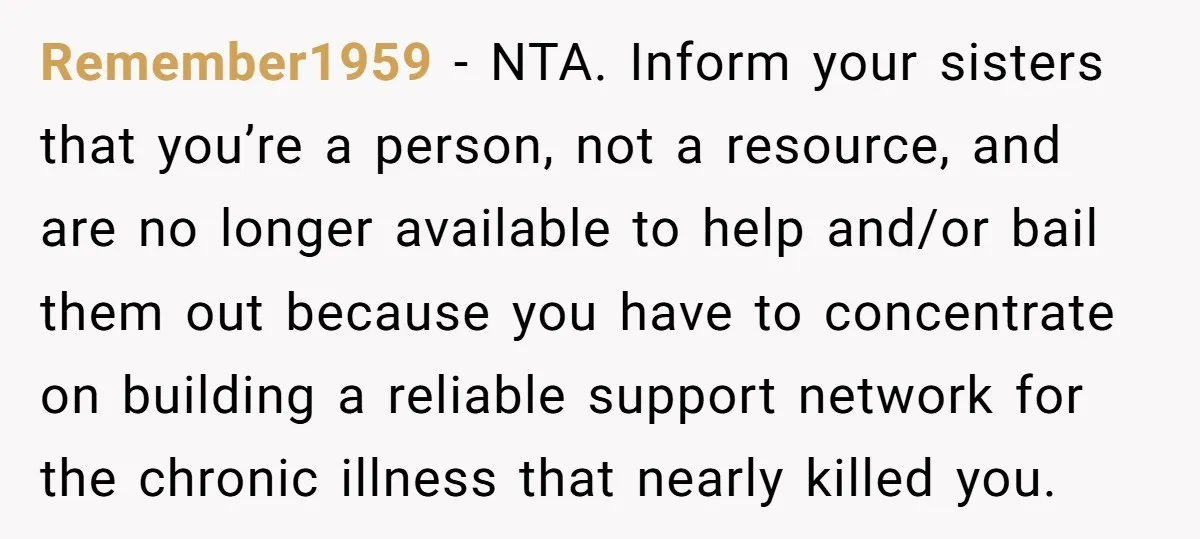
![[Reddit User] − NTA - your sisters told you loudly and clearly that you aren't a priority unless they need something from you. Your BF showed you that you are...](https://loknam.com/aita/images/6a11d0990c/wp-editor-1767861461468-2.webp)

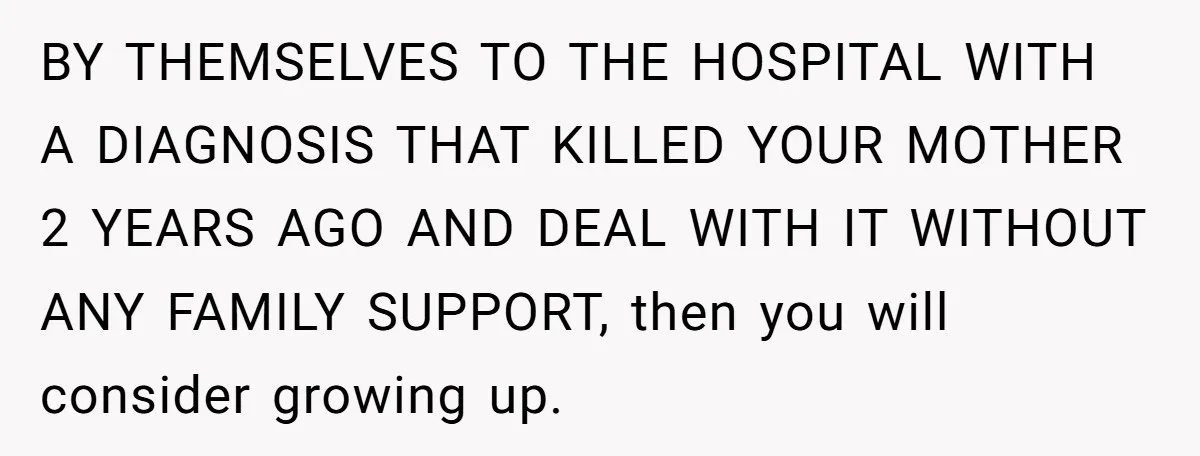

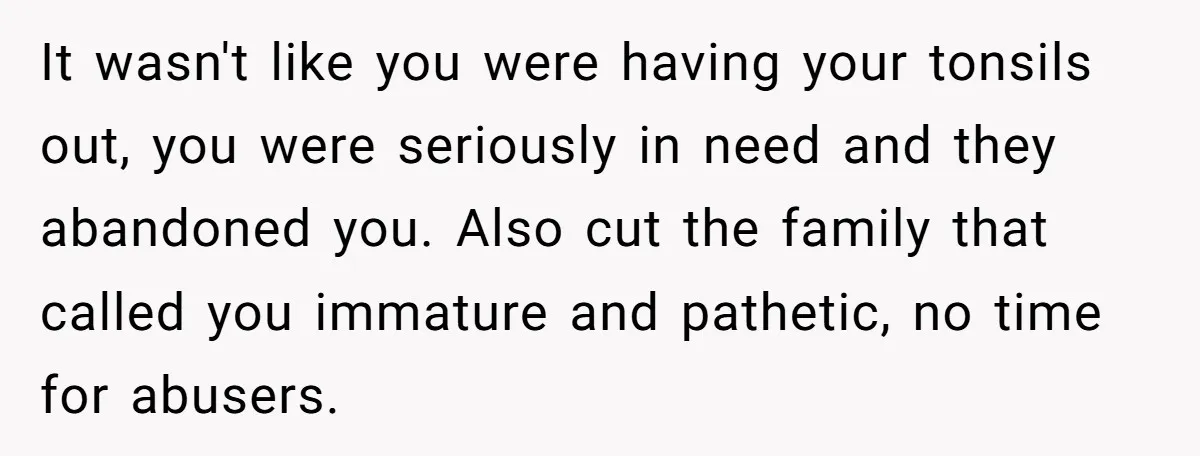
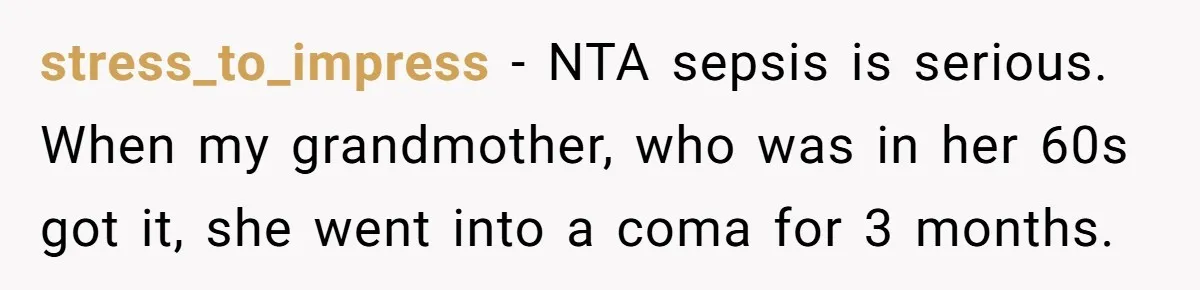
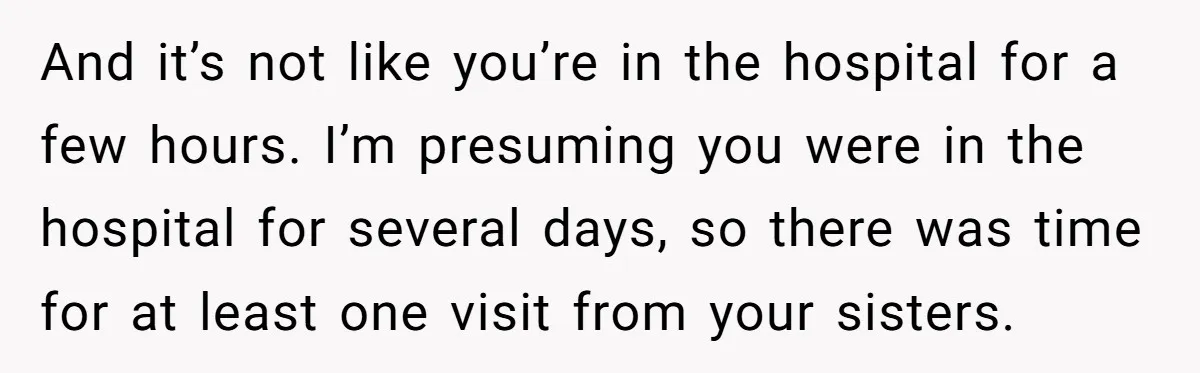
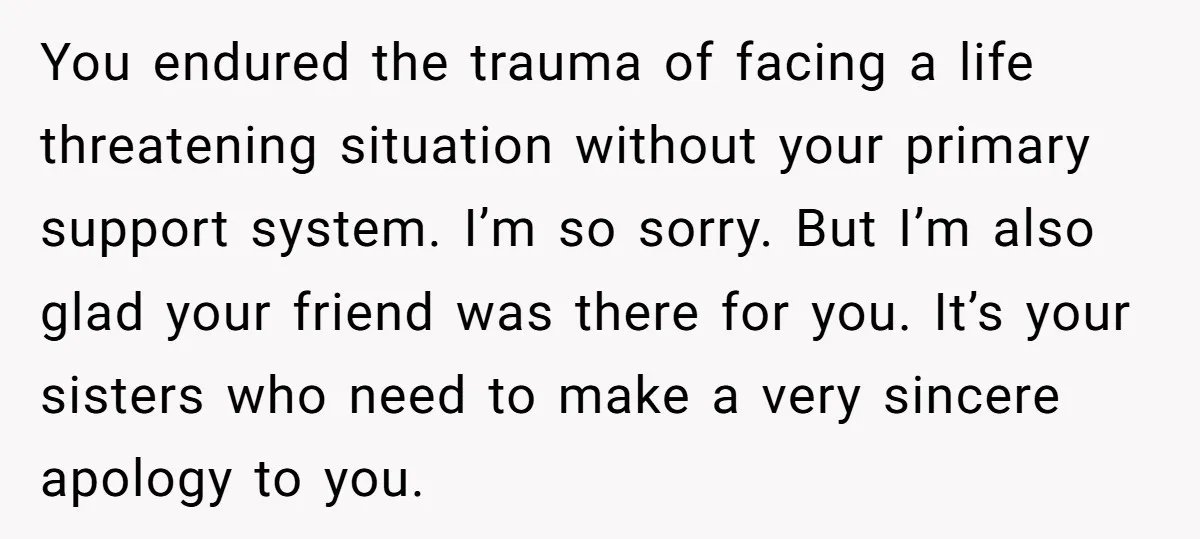
A balanced view questioned details but still leaned supportive:

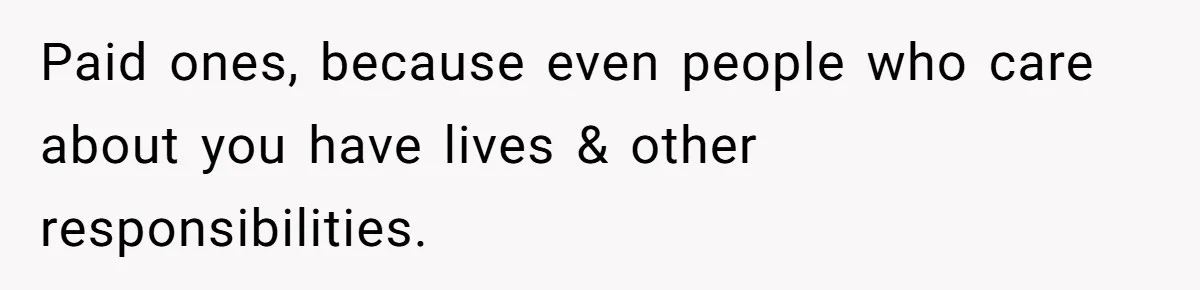
This scare revealed who truly shows up—and who takes without giving back. Going silent isn’t petty; it’s a valid response to feeling abandoned during a near-death experience.
Most say hold those boundaries tight. Have you ever realized mid-crisis who your real support is? And when does “family” stop excusing one-sided care?