
Family visits are usually exciting, but they can turn tense when one person’s needs clash with everyone else’s plans. When a sibling has a severe disability, accommodations often become the default — but what happens when those adjustments feel like they erase your own preferences?
One 24-year-old woman and her brother planned a special dinner at their favorite Mexican restaurant for their visiting parents. When the mom asked to change it because her disabled daughter (28, functioning like a 6-year-old) won’t eat Mexican food, the woman refused. She admitted she doesn’t enjoy her sister’s company and suggested the parents come alone. The fallout was immediate — her mom left upset, her dad demanded an apology, and she wonders if she’s the asshole for not bending.

‘AITA for not caring if my sister visits and not wanting to change my plans?’
The plan started simple: a nice family dinner at their favorite spot.
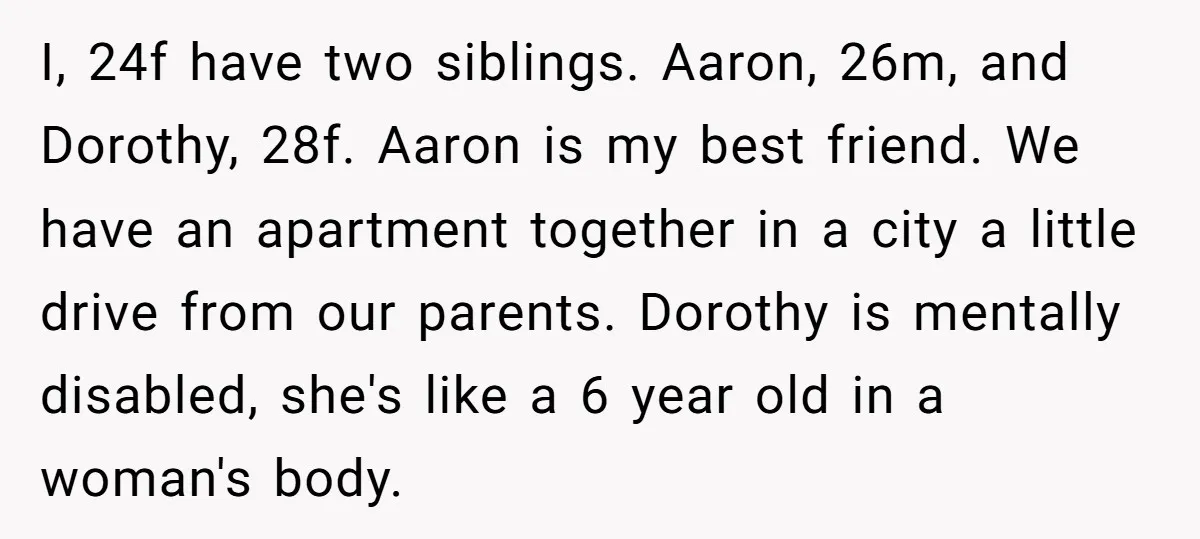

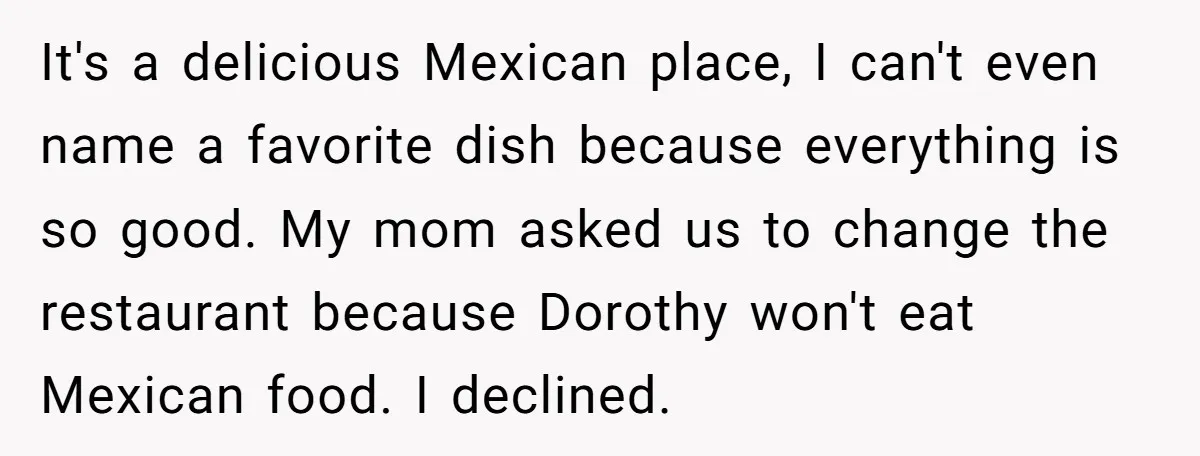
The disagreement quickly escalated into a painful confrontation.
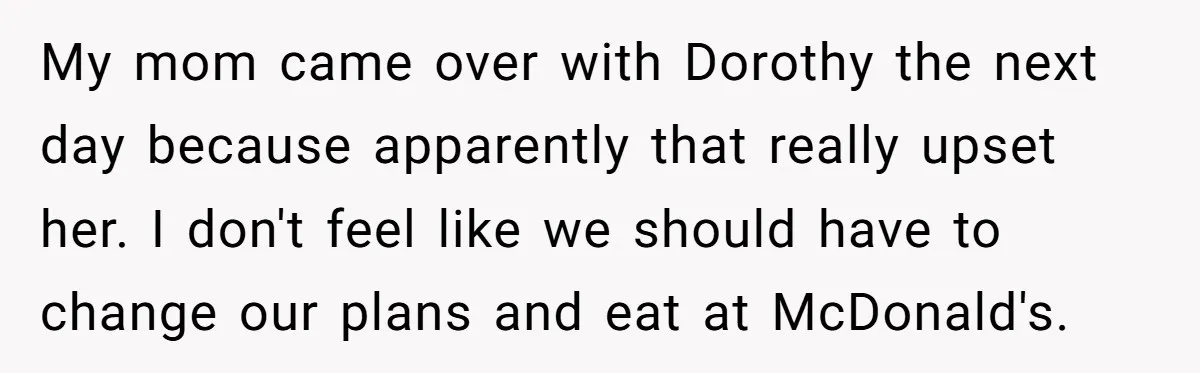

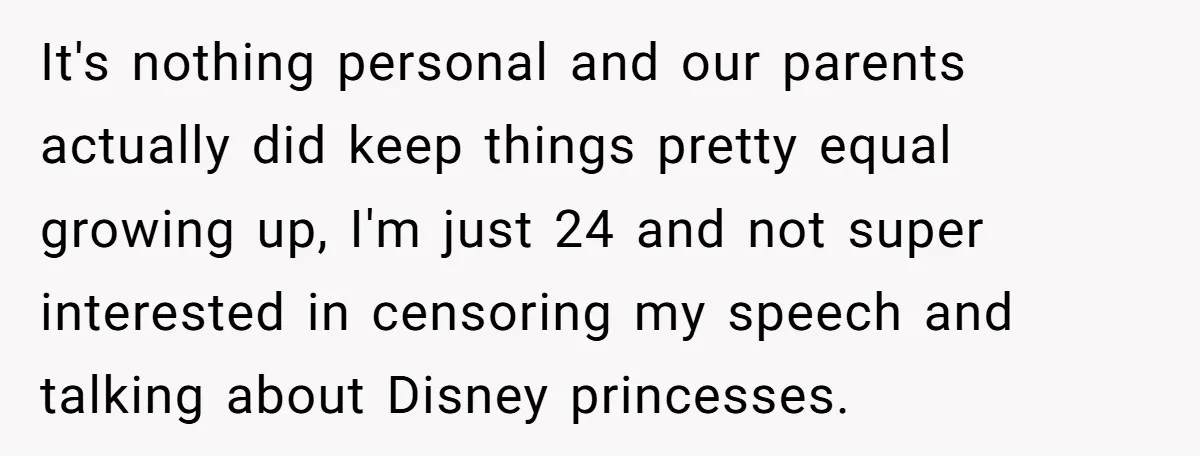

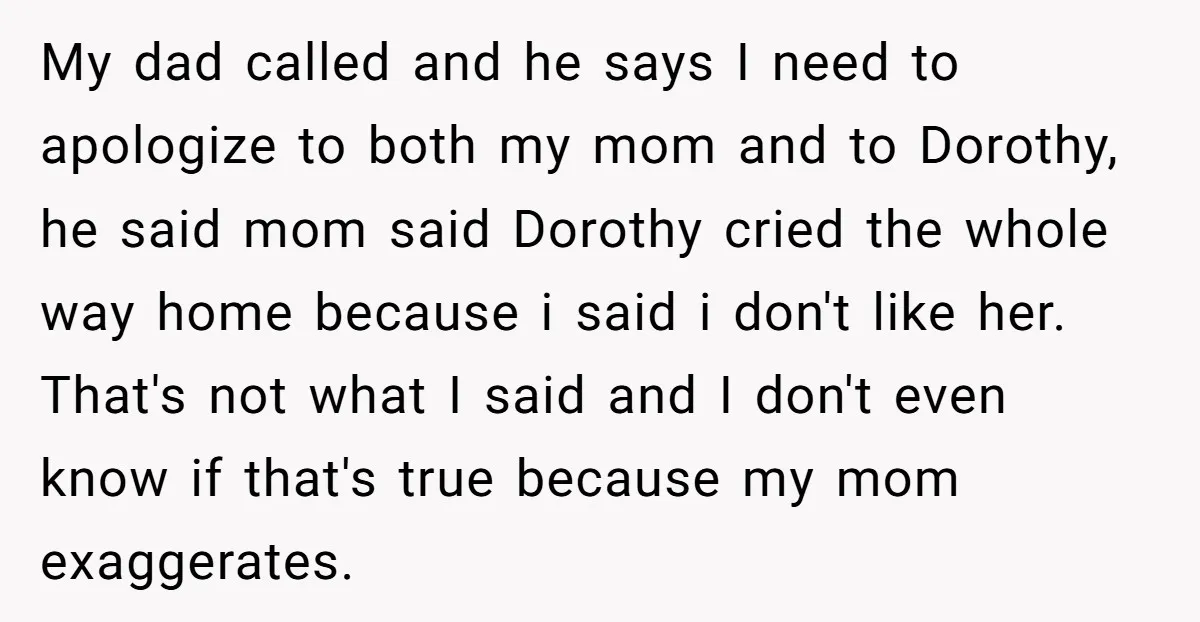

This situation involves the emotional exhaustion many siblings of people with severe disabilities experience over time. The woman feels her preferences are consistently sidelined, leading to resentment toward her sister — a common but painful dynamic. Her blunt admission (“I don’t like Dorothy”) was harsh, especially said in front of her mom, but it reflects years of built-up frustration rather than outright cruelty.
Her parents are likely overwhelmed and seeking inclusion for Dorothy, but insisting she always be accommodated can unintentionally create resentment in other children. Dorothy deserves inclusion, but so do the siblings — forcing participation without addressing everyone’s needs breeds conflict.
Family therapist Dr. Laura Markham has written that “when one child’s needs dominate family life, resentment can grow in siblings; open, age-appropriate conversations about fairness and feelings help prevent long-term damage.” Here, the woman’s suggestion to visit without Dorothy is a reasonable boundary for one occasion, not rejection forever.
The family needs a calm discussion: acknowledge her feelings, apologize for the phrasing, and explore compromises (e.g., Mexican restaurants with mild options, separate outings). Long-term, professional support for Dorothy’s independence and family counseling could ease the burden on everyone.
Let’s dive into the reactions from Reddit:
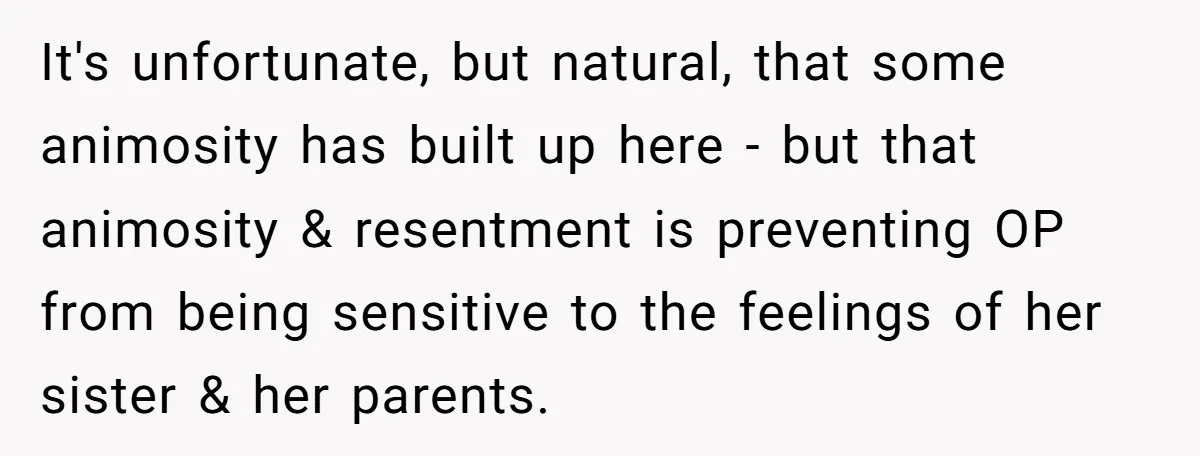
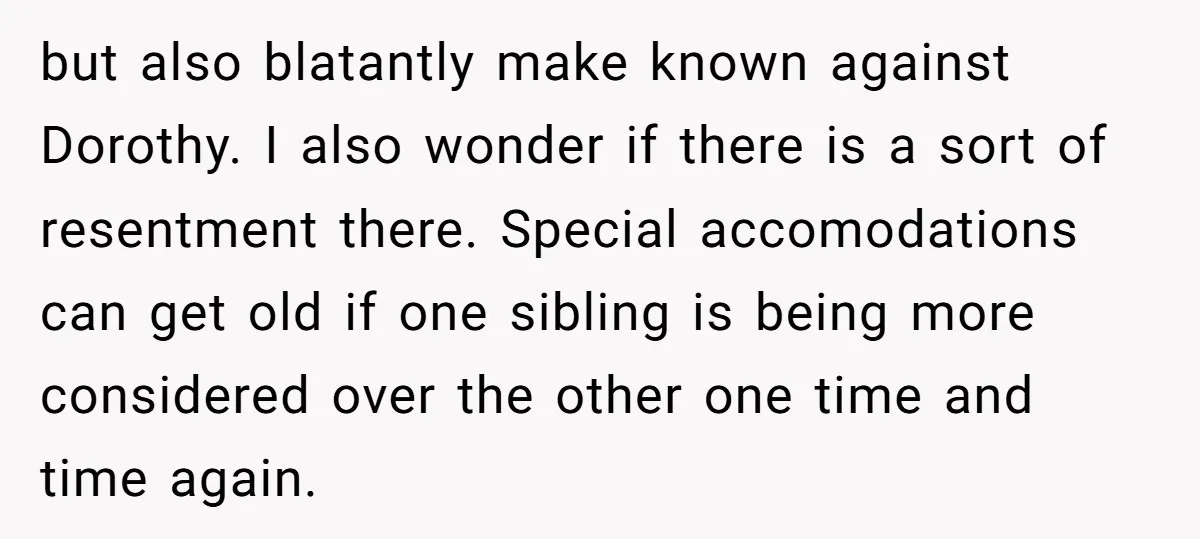
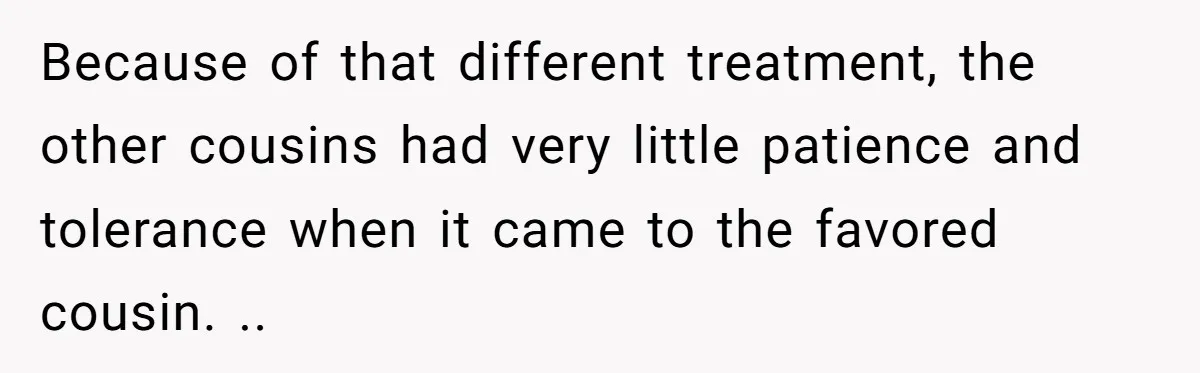
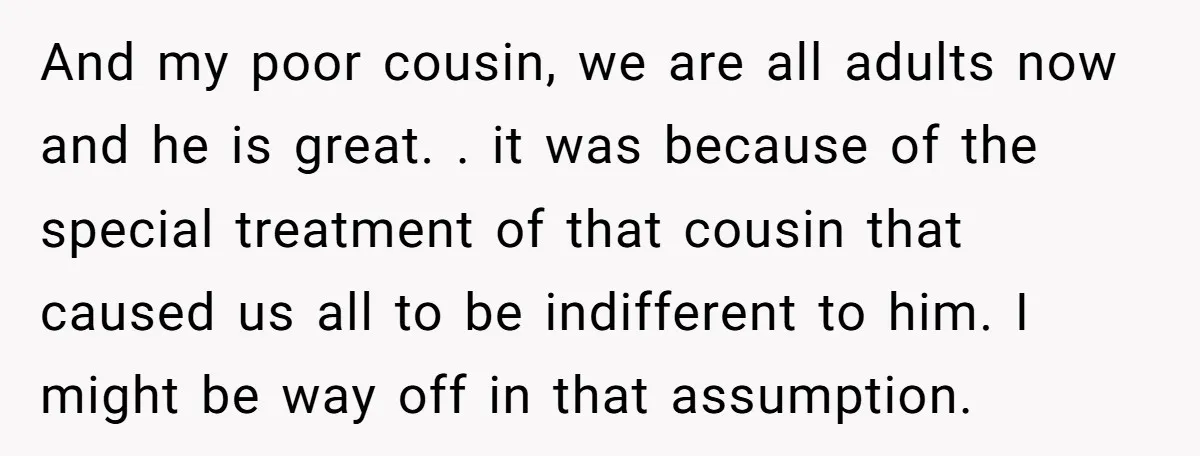
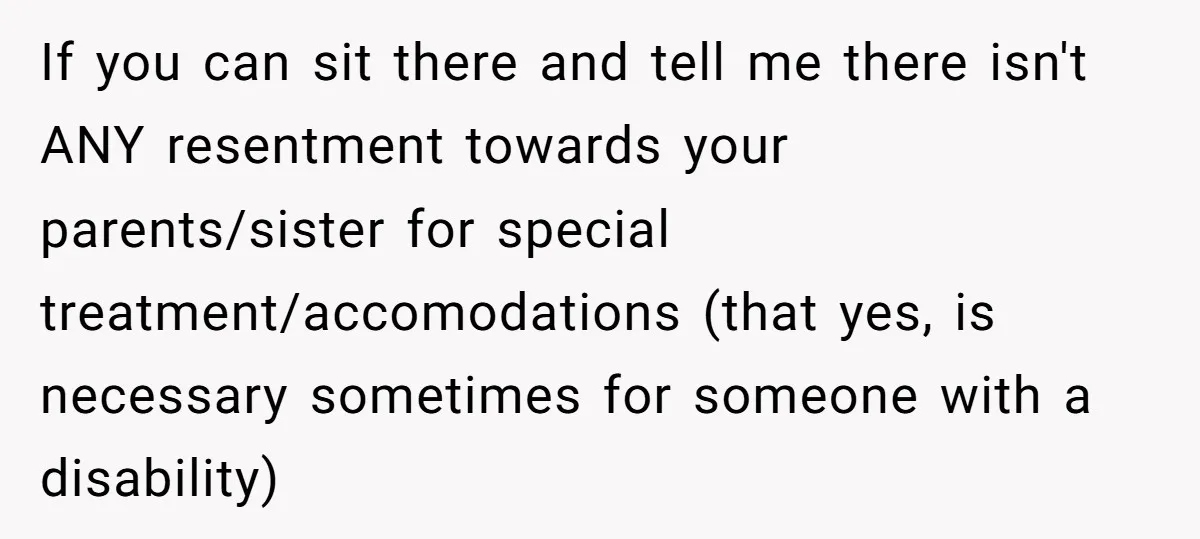
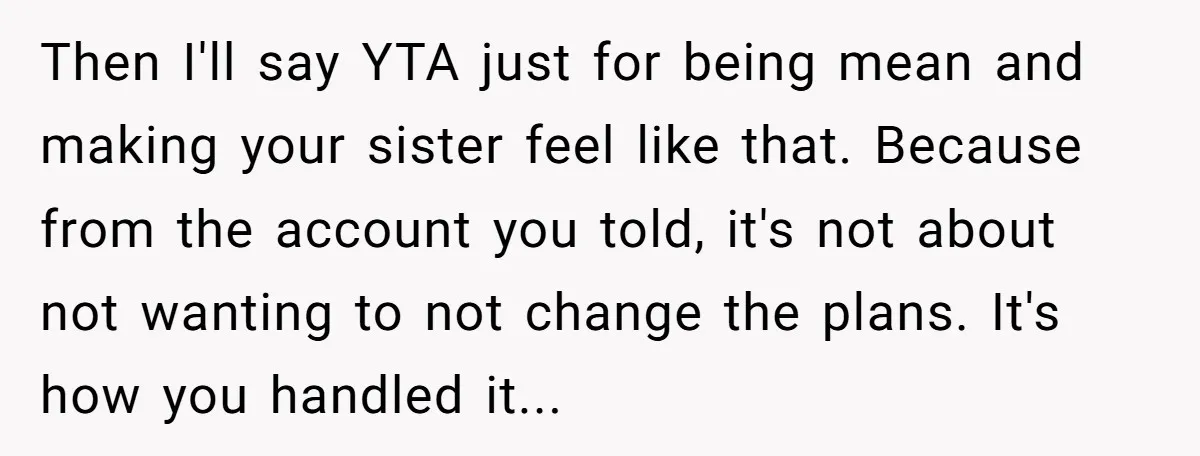
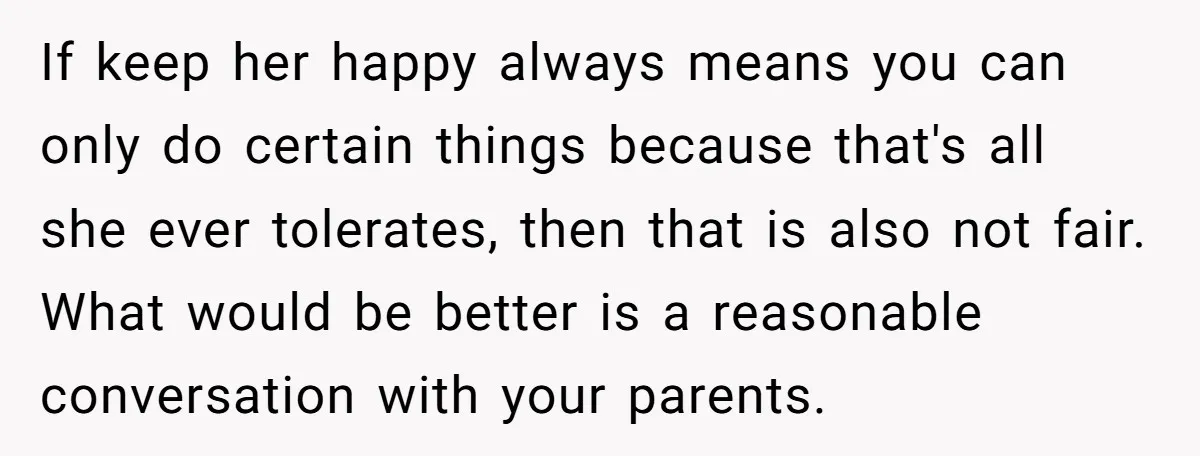
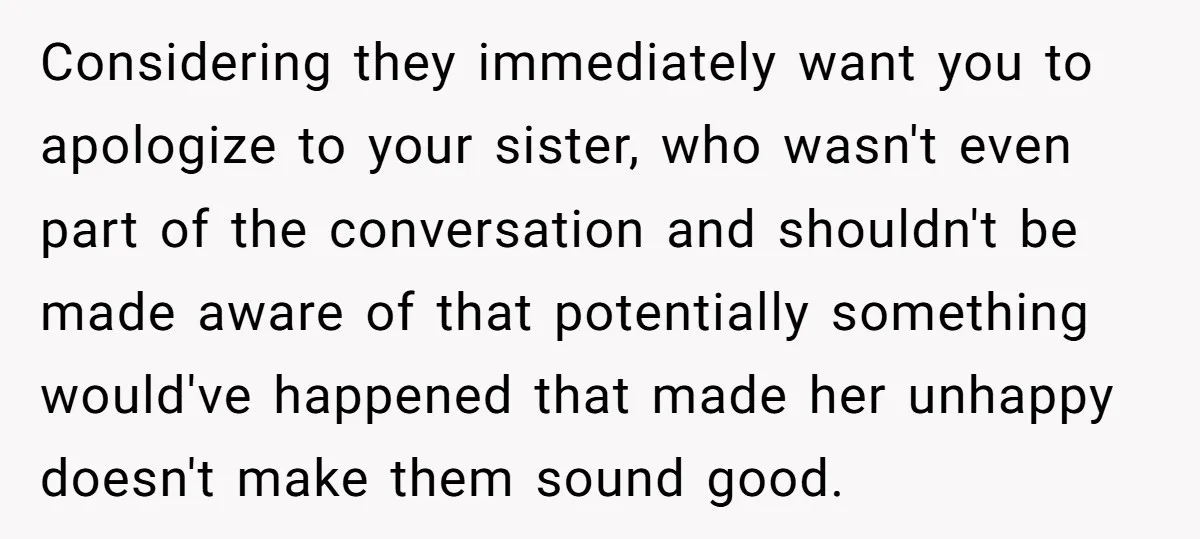
Social media responses were divided. Most called her the asshole for her bluntness and lack of empathy toward her disabled sister, viewing it as cruel and selfish. A smaller group defended her right to boundaries and criticized the parents for over-accommodating Dorothy at the expense of others.
The majority judged her harshly for her attitude and words.
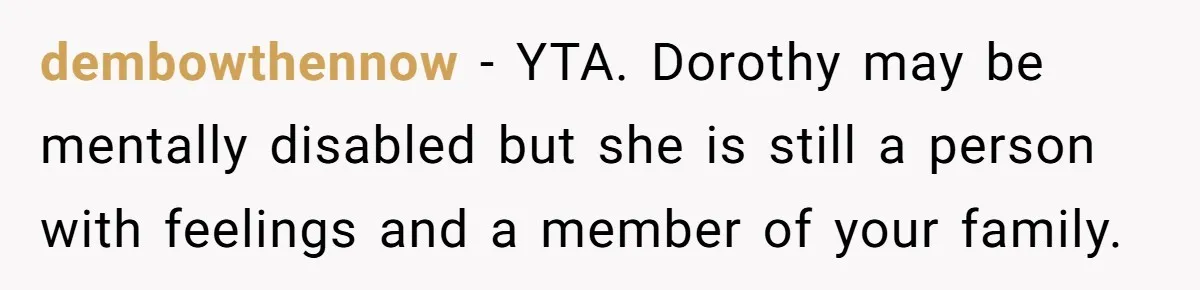
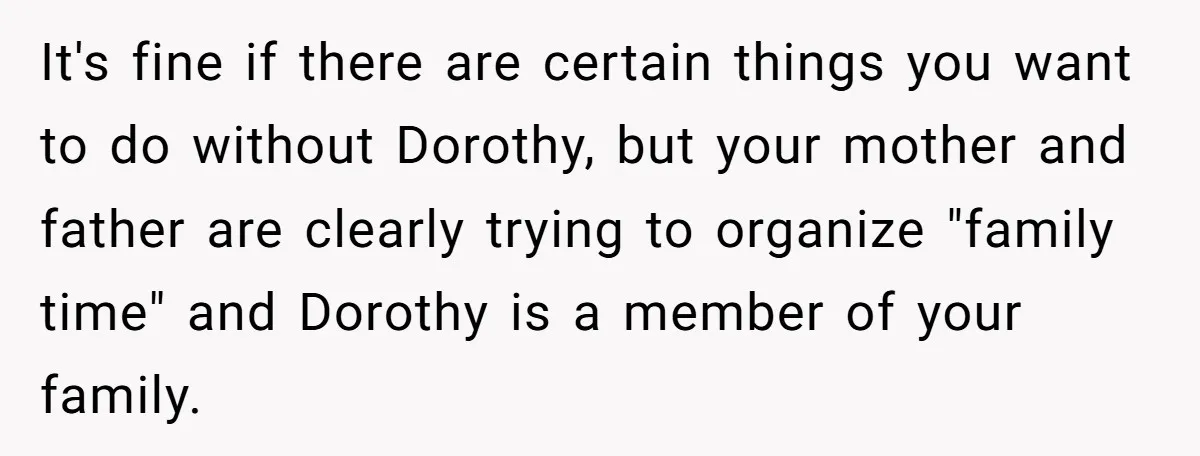
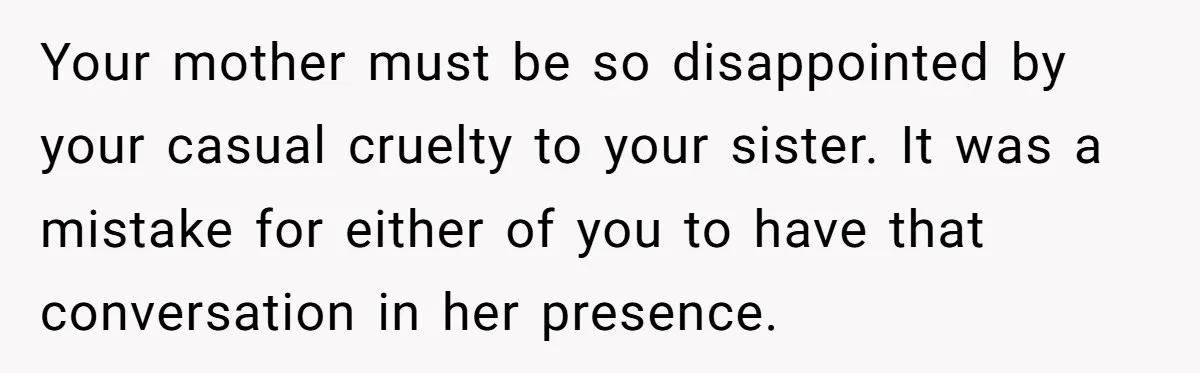
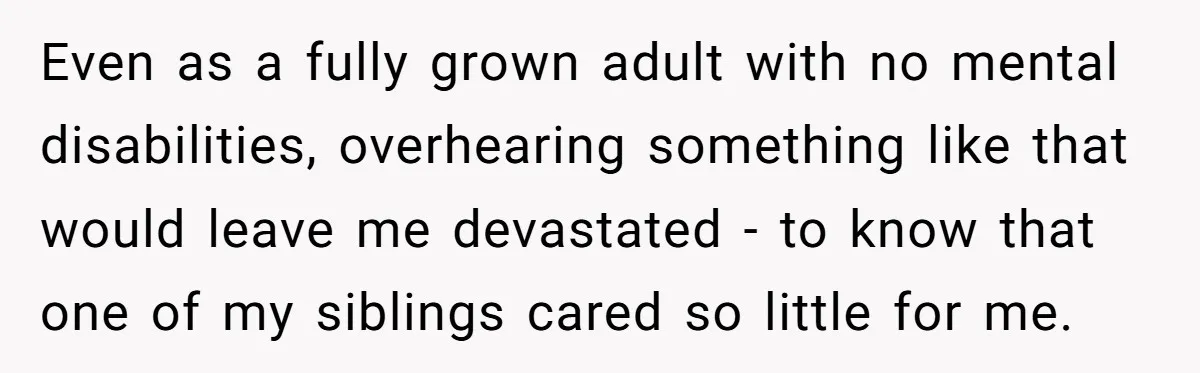
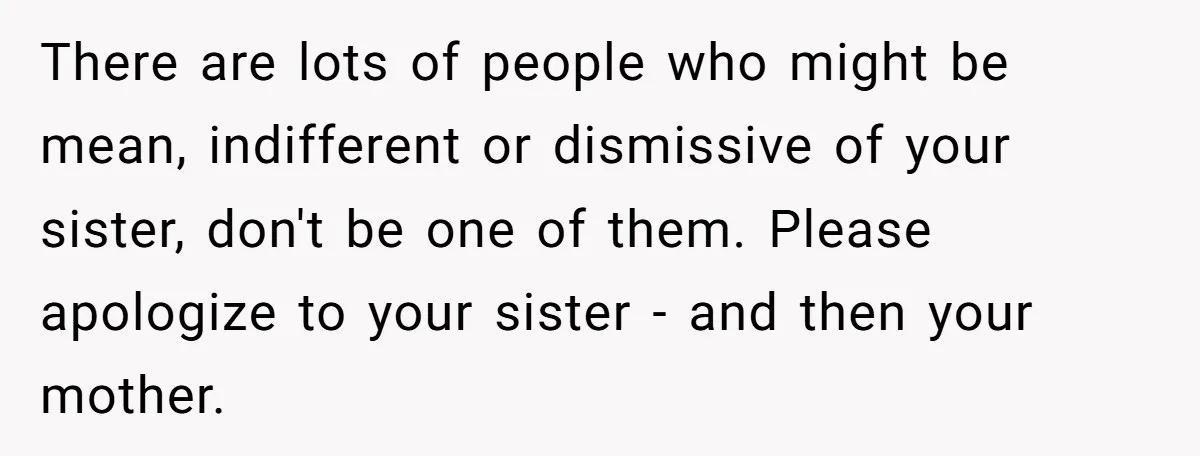

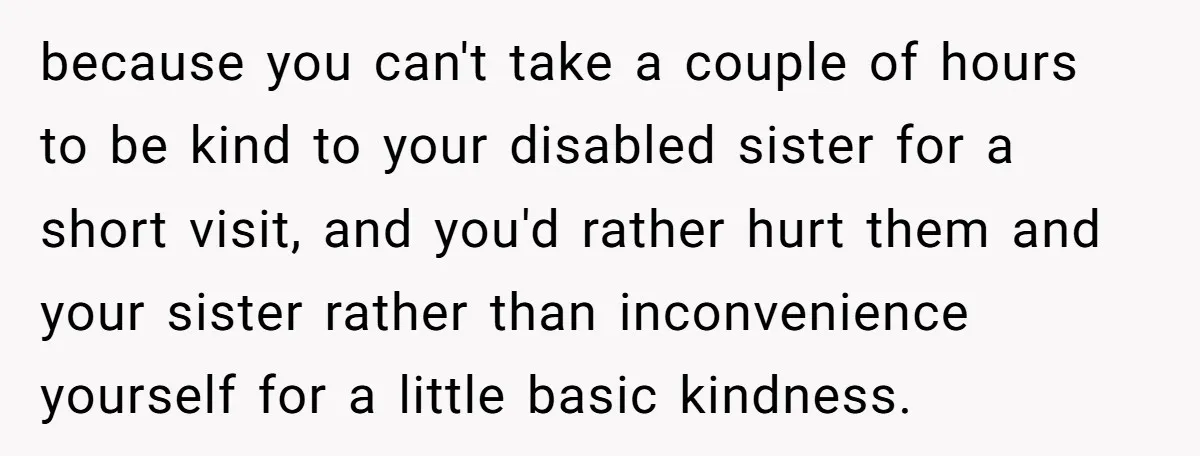





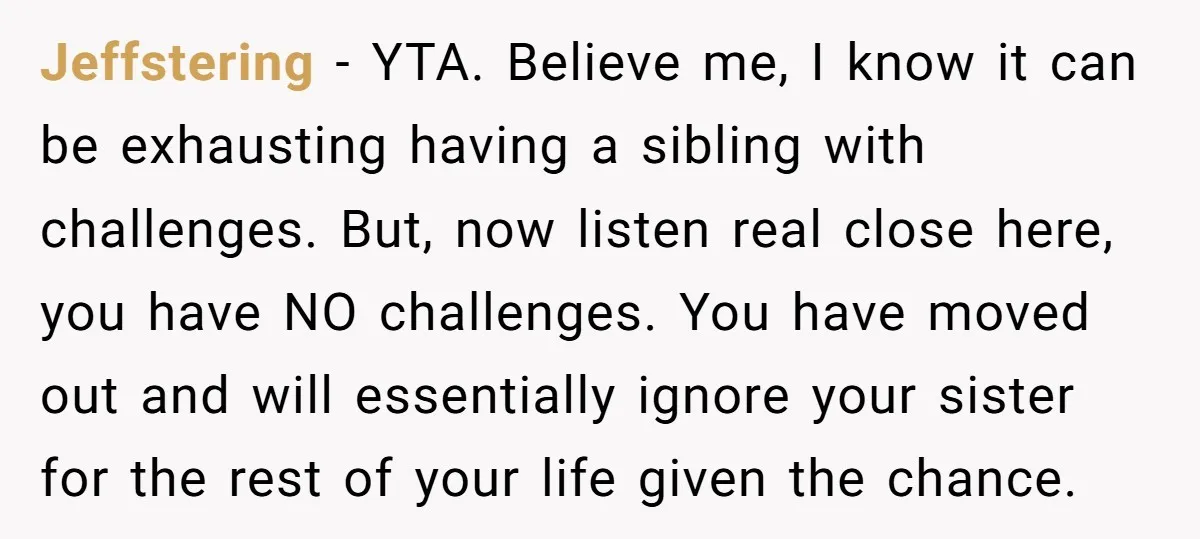
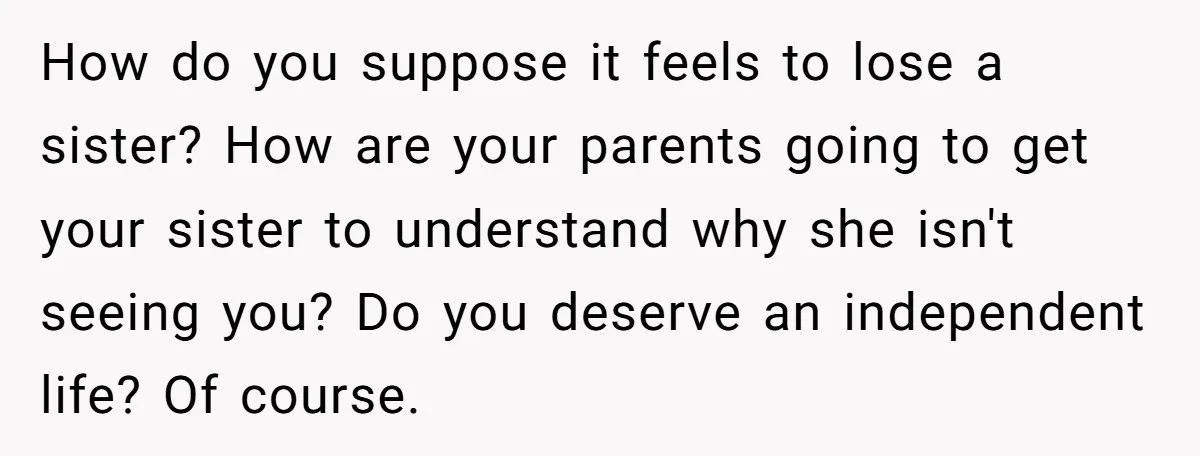
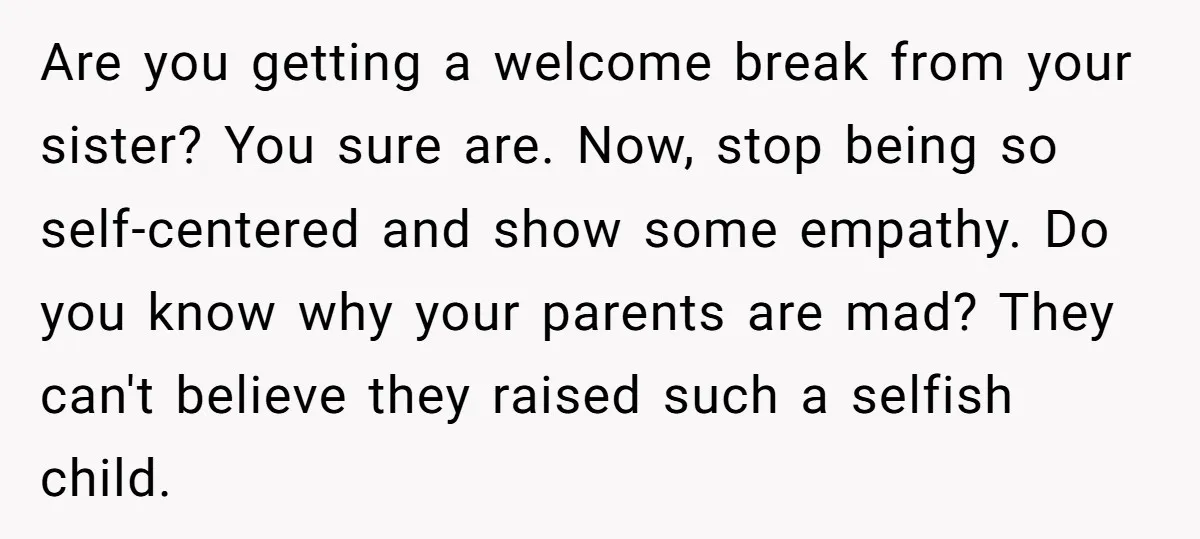
A smaller group acknowledged her frustration and defended her right to boundaries.
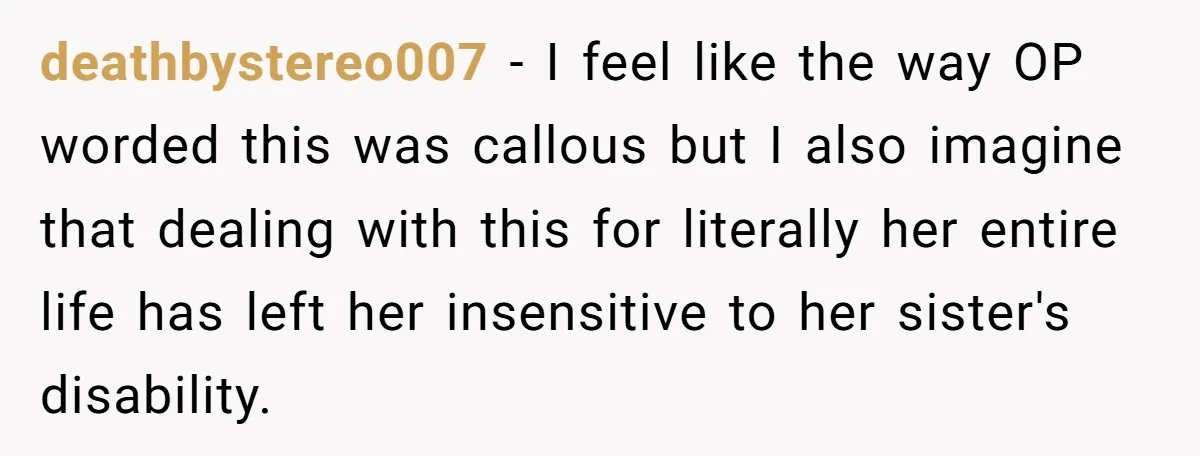


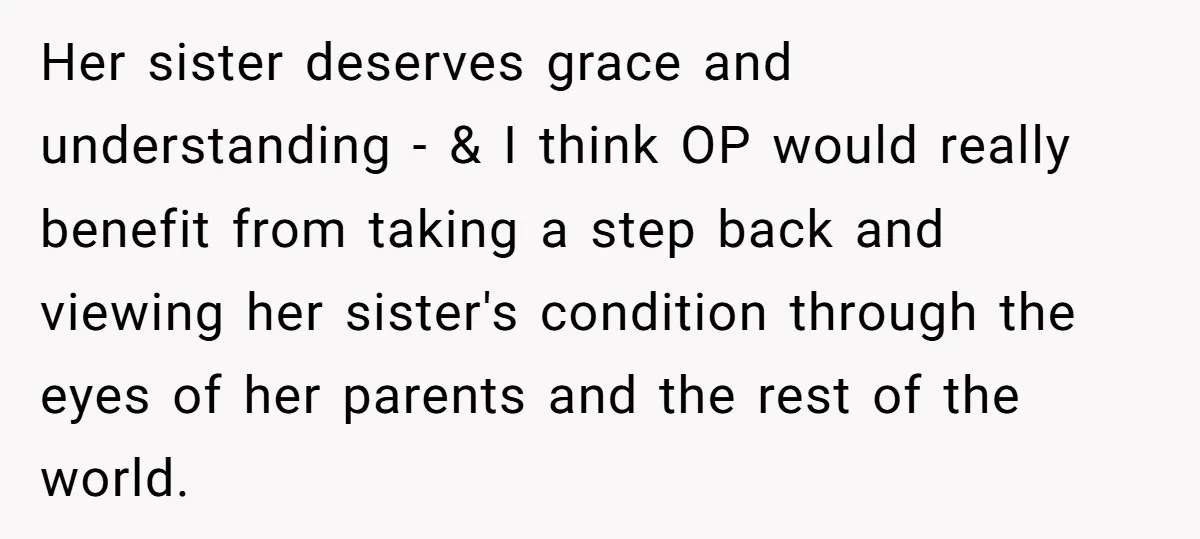




This story reveals the heavy emotional toll on siblings of people with severe disabilities. Years of accommodation can breed quiet resentment, and one poorly phrased conversation can explode into family conflict. The woman’s desire for one dinner without adjustments is understandable, but her blunt admission hurt deeply. The parents’ insistence on inclusion is loving, but their approach risks alienating other children. A compromise — a mild restaurant option or separate outings — might preserve everyone’s feelings.
Have you been in a family where one person’s needs dominated plans? Do you think she owes an apology for her words, or was her frustration justified?